
| Red Dead Redemption | |||
|---|---|---|---|
| Release Date | Gameplay & Story | Pre-Order & DLC | Review |
Red Dead Redemption Review Overview
What is Red Dead Redemption?
Red Dead Redemption focuses on a mixture of linear mission progression and open-world exploration. The main gameplay loop centers on completing story missions that advance John Marston’s journey, while players can also engage in activities like horseback riding, gunfights, hunting, duels, and side quests such as bounty hunting or mini-games.
Red Dead Redemption features:
⚫︎ Open-World Action-Adventure
⚫︎ Horseback Travel
⚫︎ Gunplay and Dead Eye Targeting System
⚫︎ Bounty Hunting, Duels, and Mini-Games
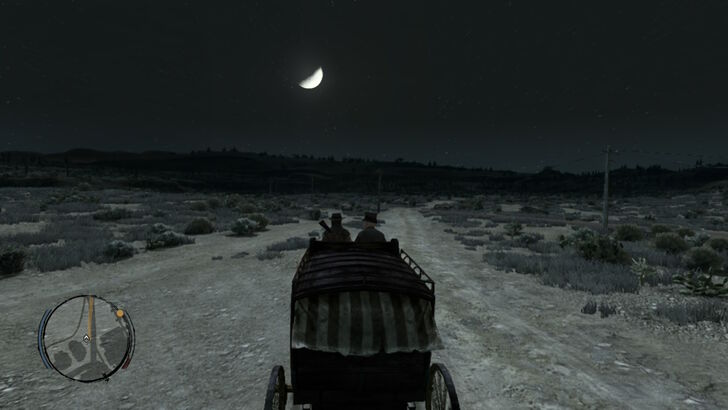
⚫︎ Dynamic Environment with Day-Night Cycles
For more gameplay details, read everything we know about Red Dead Redemption's gameplay and story.
| Digital Storefronts | |||||||||||
|---|---|---|---|---|---|---|---|---|---|---|---|
 Steam Steam |
 Epic Epic |
 Xbox Xbox |
|||||||||
 PSN PSN |
 eShop eShop |
 eShop eShop |
|||||||||
| $49.99 | |||||||||||
 Google Play Google Play |
 App Store App Store |
||||||||||
| Available via Netflix Subscription | |||||||||||
Red Dead Redemption Pros & Cons
| Pros | Cons |
|---|---|
 Smooth Performance on Switch 2 Enhanced Visuals for Switch 2 Tight Gameplay with Satisfying Combat and Exploration Engaging Story with Strong Protagonist Smooth Performance on Switch 2 Enhanced Visuals for Switch 2 Tight Gameplay with Satisfying Combat and Exploration Engaging Story with Strong Protagonist |
Underlying Assets Show Their Age Certain Side Activities and TasksAre Repetitive |
Red Dead Redemption Story - 8/10
The story of Red Dead Redemption still holds up remarkably well. John Marston is a compelling protagonist with clear motivations, and the narrative balances tension, tragedy, and quiet moments of reflection. Plot twists feel consistent with the world’s rules, and the pacing rarely drags, keeping you invested from town to desert. While some parts feel a bit dated compared to modern storytelling, the themes—freedom, consequence, and survival—still resonate.
Red Dead Redemption Gameplay - 9/10
Gameplay is where this game really shines. The missions are structured clearly, controls feel tight and responsive, and the combat loop—especially the Dead Eye mechanic—remains satisfying. Riding, shooting, and exploring never feel cumbersome, and side activities are engaging enough to make the world feel lived-in. There’s minor repetition in certain tasks, but it never outweighs the joy of wandering the frontier or taking down a gang hideout.
Red Dead Redemption Visuals - 9/10
Even more than a decade later, the world is gorgeous. Towns and deserts all carry character and atmosphere, and environmental details—dust settling on streets, distant silhouettes of mountains, weather changes—add real immersion. The Switch 2 port enhances the experience with a sharper, more stable presentation, giving the visuals weight without changing the original artistry. Minor signs of aging exist, but the overall look and style remain memorable and effective.
Red Dead Redemption Audio - 8/10
The audio in Red Dead Redemption continues to impress. The soundtrack perfectly matches the pacing of each scene, whether it’s tense shootouts, quiet exploration, or dramatic cutscenes. Voice acting is solid, capturing personality and emotion, though some lines feel a little dated in delivery. Environmental sound design—wind, horses’ hooves, distant gunfire—adds richness to the world. It’s not flawless, but it’s consistent and contributes heavily to immersion.
Red Dead Redemption Value for Money - 8/10
For what you get, the game is worth $49.99. The story and open world provide dozens of hours of content, and side activities and exploration extend the experience well beyond the main missions. Replayability is supported through challenges and collectibles, and the core game itself is substantial. Considering the technical improvements on Switch 2 and the ability to play anywhere, it represents excellent value for both new players and returning fans.
Red Dead Redemption Overall Score - 84/100
Red Dead Redemption is still a landmark game, and the Switch 2 port brings it to life in a way that feels fully realized. The improved visuals and performance enhance the world without altering what made the original special. Age shows in small details, but the core experience—story, gameplay, and atmosphere—remains as strong as ever. This is the definitive version of a classic that’s stood the test of time.
Red Dead Redemption Review: A Very Strong Port
A Return to the Frontier
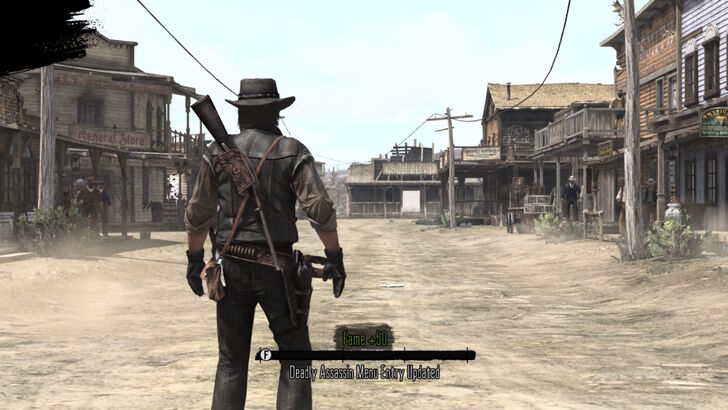
There’s a strange kind of deja vu that hits when you boot up Red Dead Redemption in 2025. I’ll admit it, I never played the original release back in 2010. I didn’t grow up with John Marston’s tale the way so many players did. My entry point into Rockstar’s frontier was Red Dead Redemption 2. And because of that, I’ve always been aware—almost reverently—of how the original RDR practically set the tone for the modern cinematic open-world game. It wasn’t just influential, it was foundational. The kind of game other games quietly study behind the saloon doors.
So coming into this version, I’m in this interesting spot. I know what Red Dead Redemption is, I know what it meant to the industry, but I’m experiencing the original story properly for the first time—through the lens of 2025 hardware and a completely different platform. And that’s where this review really rides in.
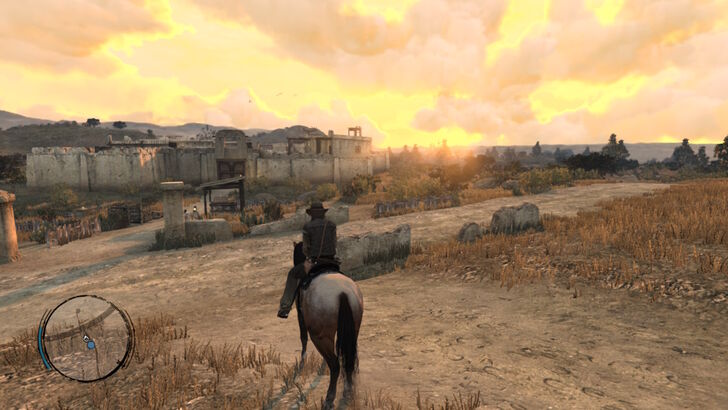
Because let’s be real, everyone already knows Red Dead Redemption is objectively a great game. Its reputation precedes it like an outlaw’s shadow. Whether you adore it, respect it, or have only heard people gush about it for over a decade, its impact isn’t up for debate. So instead of spending paragraphs pretending to "discover" that the story is good or the world is immersive (you already know that part), I want to focus on something far more relevant today.
How does Red Dead Redemption hold up—specifically as a Switch 2 port?
Land at the Edge of Change
But before we get lost in frame rates and portability, let me set the saddle down and walk you through what Red Dead Redemption actually is—at least narratively—because context matters. Especially if, like me, you’re coming into the original story after RDR2.
The game is set in 1911, right at the fading edge of the American frontier—one of those rare historical moments where the myth of the Wild West is already collapsing under the weight of modernization. This isn’t the Hollywood cowboy fantasy, this is a world being dragged—willing or not—into the age of government agencies, telegraphs, railways, and a very assertive sense of "law." You feel that tension everywhere, in dusty plains being carved into homesteads, in once-free gunslingers now under the thumb of federal badges, in towns that look like they’ve seen better days but refuse to give up.
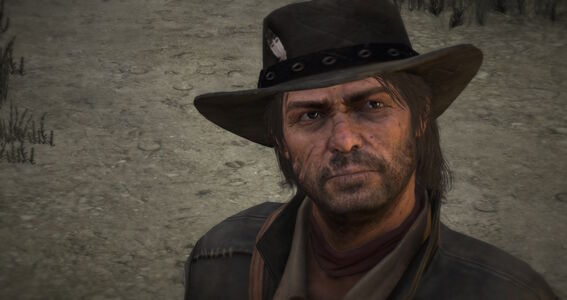
And in the middle of all that is John Marston. You play as a former outlaw who’s trying to live straight. But the past doesn’t believe in letting people go, and the Bureau of Investigation (the proto-FBI) decides to exploit that. They pressure him into hunting down the remaining member of his old gang. It’s not a request. It’s: Do our dirty work, or we’ll erase your family from the picture. So off you go, not out of heroism, but because the government has a tight grip around your life.
Of course, as soon as John arrives to confront his target, things go about as well as you’d expect… he gets shot. Left for dead. Not the strongest start to a redemption arc. Thankfully, he’s saved by a rancher, and from there, the classic Western rhythm kicks in—meeting strangers, forming uneasy partnerships, helping locals, and getting tangled in more than one mess that’s wildly above your pay grade.
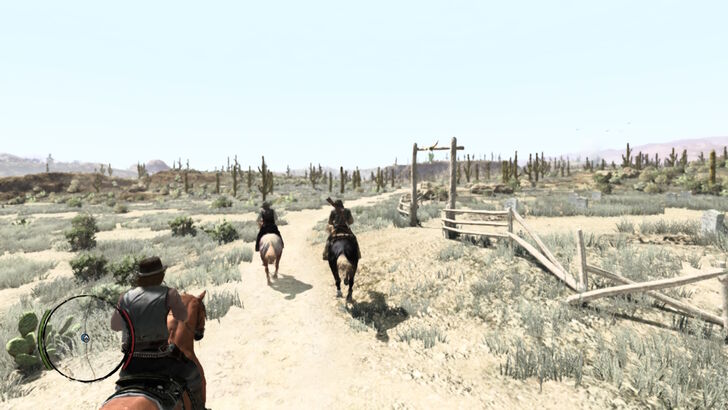
Now, to stay on the safe side, I won’t spoil the major beats, especially if this port is your first real dive into the tale. But what I can say is that the story ultimately revolves around themes that have aged almost uncomfortably well, government control, the illusion of freedom, the impossibility of outrunning your past, and the messy, generational cycle of violence that societies pretend they’re above but repeat over and over again.
And the wild part? Even though the game is set more than a century ago, its commentary still hits eerily close to home. It’s a Western, yes, but it’s also a mirror, reflecting how authority, morality, and survival still clash in today’s political landscape.
Riding, Fighting, Surviving
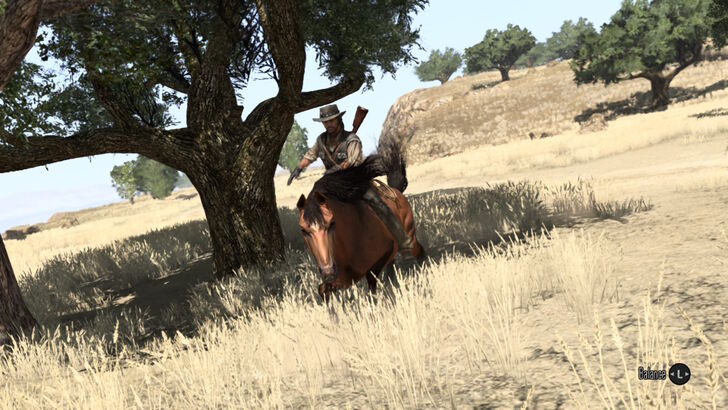
Moving on to the gameplay, Red Dead Redemption at its core is a third-person action-adventure game built around a very classic loop. You take on missions in a mostly linear sequence to push the story forward, while the larger open world around you expands and reacts as you go. This is a world with things to do, but not one drowning you in distractions. And honestly, that structure still feels refreshing.
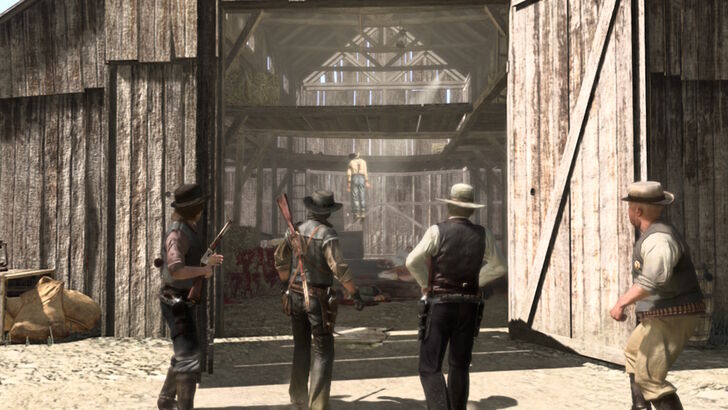
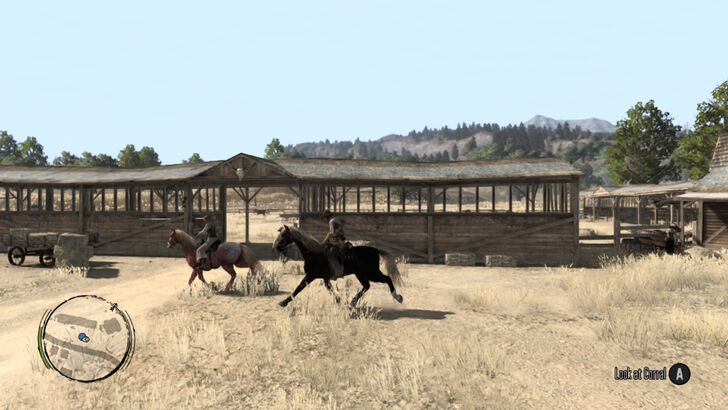
When you’re not chasing down the next main quest marker, the world becomes your dusty playground. You can ride across vast plains, wander through quiet frontier towns, explore Mexican deserts, or stumble into random encounters that range from ambushes to strangers needing help—or setting you up. Rockstar’s signature emergent mayhem already existed back in 2010, and it still shines here.
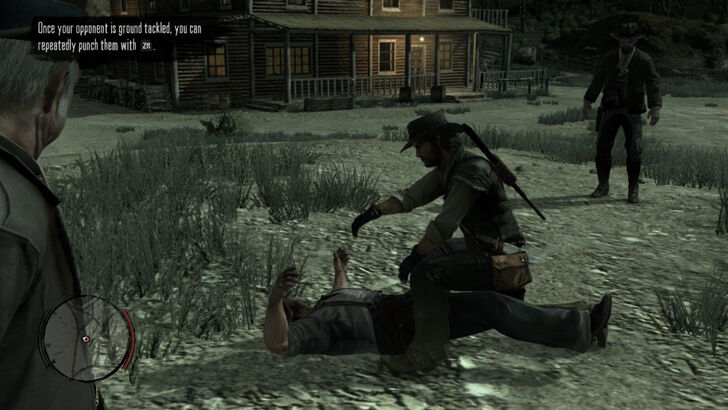
The moment-to-moment systems are exactly what you’d expect from a traditional Western experience. Gunplay that revolves around revolvers, rifles, and shotguns—tactile, weighty, and built around timing. Dead Eye targeting, which slows time and lets you paint targets before unleashing a satisfying barrage. Horseback combat and traversal, which becomes second nature the longer you ride. A morality system, with fame and honor shaping how NPCs react to you. Random events scattered across the map, keeping exploration lively. And side gigs like bounties, duels, poker, hunting, and other frontier side activities.
It’s very much the template that RDR2 later refined, but the bones of that modern Rockstar formula are right here—and they still hold up because they’re straightforward, punchy, and consistent. You always know what you’re working toward, and the game’s pacing ensures that every mission nudges the journey forward without overstaying its welcome.
So, let’s get on with the review.
A Legendary Frontier
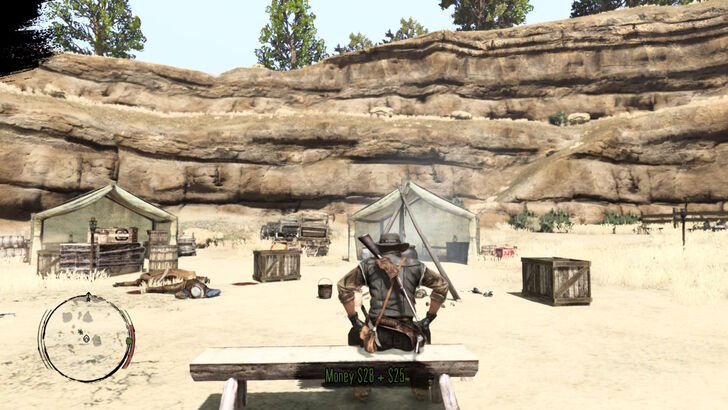
I’ll start with the story, because honestly, it’s the backbone that keeps Red Dead Redemption standing tall more than a decade later. The beats, the characters, the arcs. The game doesn’t rush you. It doesn’t spoon-feed you. It simply walks you through John Marston’s world with this deliberate, patient cadence that fits the narrative perfectly.
Where it absolutely still excels, though, is in the setting.
The game’s world doesn’t just look like the Wild West, it feels like the Wild West. Dusty, tired, and stretched thin between law and lawlessness. It’s that specific kind of frontier atmosphere where everything feels temporary—towns that seem like they could blow away in the wind, people who look like life carved them out of old leather, and landscapes that swallow you whole if you linger too long.
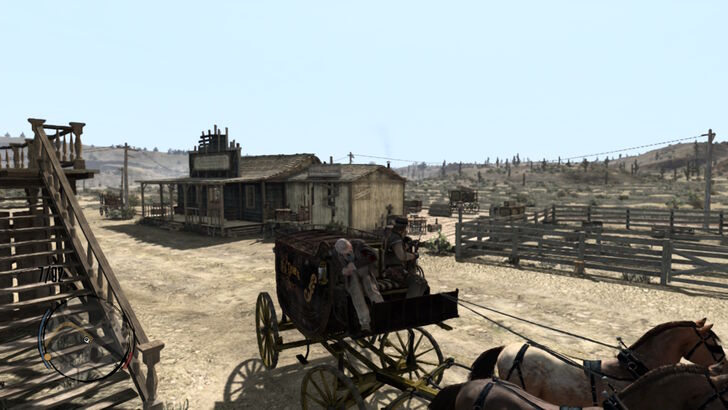
It made me feel like the Wild West wasn’t some glamorous cowboy fantasy—it was a place on the brink of extinction. And there were moments, riding out under that fading orange sky or hearing coyotes calling from miles away, where I genuinely felt like I was visiting a world that knew it didn’t have much time left.
Gunfights and Dust Trails
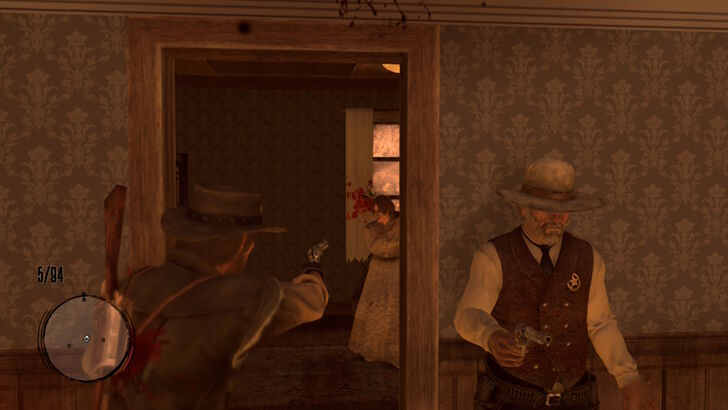
Of course, being one of the most celebrated action-adventure games of its time, the gameplay of Red Dead Redemption is still remarkably solid. Even after all these years, the fundamentals hold up in a way that makes you understand—instantly—why this game left such a mark on the industry.
Everything you do has this grounded, deliberate feel to it. Gunfights are punchy and weighty, the kind where every bullet feels like it matters. Dead Eye still gives you that hit of cowboy bravado even if you’ve used the mechanic a thousand times before. Horseback travel remains oddly zen—sometimes meditative, sometimes chaotic, sometimes just beautifully quiet. And the missions? They hit that sweet spot Rockstar used to excel at, not overly complicated, not bloated, just tight, clear, and satisfying building blocks that always push you somewhere new.
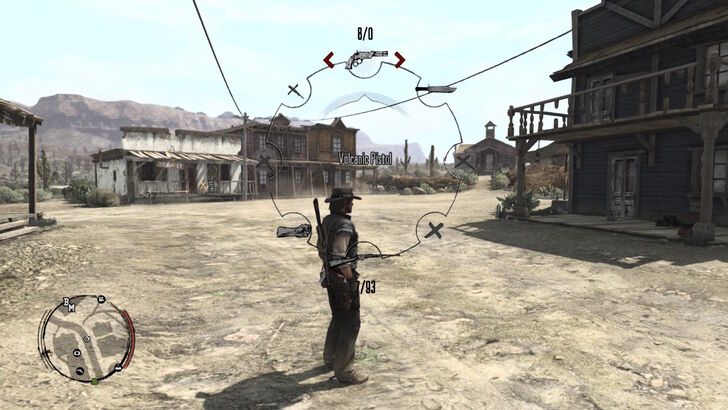
Even when the structure is linear, the game knows how to play with pacing. One moment you’re exchanging bullets with outlaws behind crumbling cover, the next you’re herding cattle, then picking off targets in a duel that feels ripped straight from an old Spaghetti Western. It’s that clean mix of action and downtime that makes the loop so addicting. You move, you shoot, you ride, you breathe—repeat. And it never gets old because the world constantly feeds you tiny surprises along the way.
Port That Delivers The Classics How It Should Be
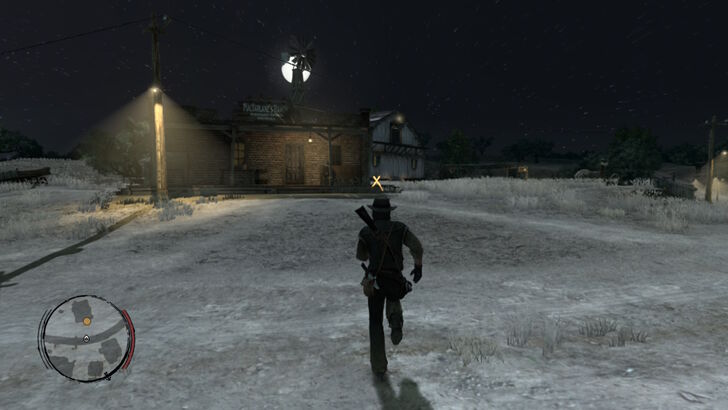
Now for the part you’ve probably been waiting for, how Red Dead Redemption actually plays as a Switch 2 port. Because yes, the story still hits and the gameplay still stands tall—but none of that matters if the game is ported badly. Thankfully, I have great news. The performance is excellent. Like actually excellent.
The first thing that hit me was just how clean the game looks. Docked mode isn’t some blurry, soft-edged mess—far from it. The image is sharp, stable, and way clearer than anything the previous Switch could dream of. Grass doesn’t dissolve into noise when the camera moves, far-off buildings don’t shimmer like a hologram, and the world in general just looks steady. Like you’re actually seeing the scene instead of watching it wobble in and out of focus.
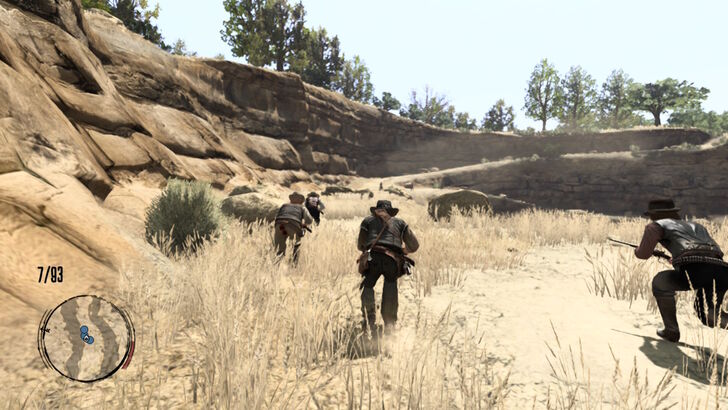
The world also pops in less aggressively. Riding across open fields or into towns feels more natural because the environment isn’t assembling itself three feet in front of you. Shadows look smoother and softer, lighting feels better balanced, and everything on screen reads more clearly whether you’re in the dusty plains or the busier Mexican towns.
And handheld mode? Genuinely impressive. You obviously lose a bit of crispness but the overall look holds up incredibly well. Text is readable, characters look defined, and the world doesn’t crumble into a pixel soup whenever you rotate the camera. Compared to the first Switch’s version, this is a massive step up.
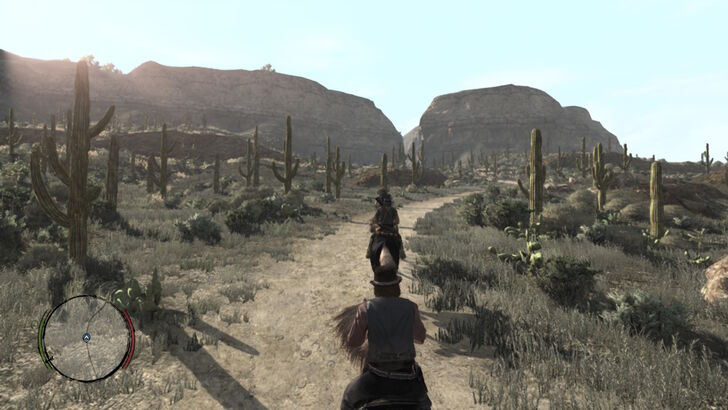
After spending hours in the Red Dead Redemption Switch 2 release, I kept circling back to the same quiet thought, and that is this is one of the best Switch ports I’ve ever played. And it might just be the best way to bring Red Dead Redemption with you anywhere.
Is Red Dead Redemption Worth It?
It’s The Definitive Way to Play
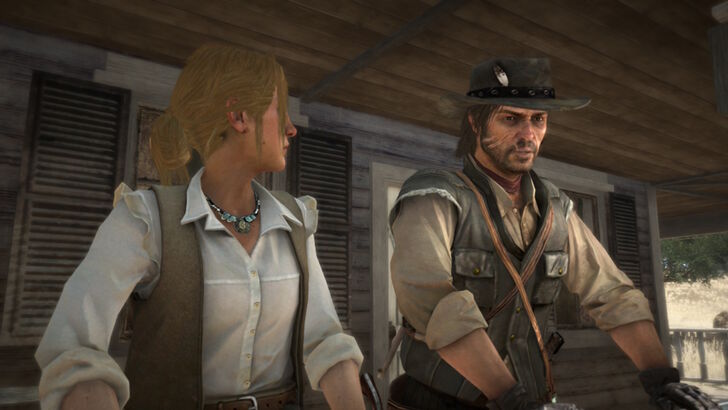
When you strip everything down—the re-releases, the debates, the comparisons, and the nostalgia—Red Dead Redemption remains one of Rockstar’s most tightly crafted experiences. The Switch 2 version doesn’t reinvent it, but it absolutely solidifies it. The sharper image, steadier performance, and cleaner presentation make this the smoothest, most practical way to revisit the frontier without dragging out old hardware or tolerating dated ports.
What you’re getting here is the full package, a still-excellent story, a world that hasn’t lost its weight or melancholy, and a version that finally feels like it respects the game’s legacy instead of surviving in spite of it. Yes, the underlying assets are unchanged. Yes, it’s still a 2010 game wearing 2010 textures. But it runs beautifully, it plays cleanly, and it delivers the experience exactly as it should—without technical distractions.
At $49.99, what you’re really paying for is convenience done right. No compromises, no struggling through blurry imagery, no patched-together ports. Just Red Dead Redemption, presented in a way that feels definitive for modern hardware.
| Digital Storefronts | |||||||||||
|---|---|---|---|---|---|---|---|---|---|---|---|
| Steam |
Epic |
Xbox |
|||||||||
| PSN |
eShop |
eShop |
|||||||||
| $49.99 | |||||||||||
| Google Play |
App Store |
||||||||||
| Available via Netflix Subscription | |||||||||||
Red Dead Redemption FAQ
What is the Difference Between Honor and Fame in Red Dead Redemption?
Honor reflects how morally upright or ruthless your actions are, influencing how NPCs react to John Marston and affecting certain story outcomes. High honor generally results from helping strangers, sparing enemies, and following the law, while low honor comes from crimes, killing innocents, or breaking the law. Fame, on the other hand, represents John’s overall reputation and notoriety in the world. Fame increases as you complete missions, perform notable actions, or complete events, and it determines how well-known or feared you are across towns and settlements.
How Do You Duel in Red Dead Redemption?
Duels are a timed combat mechanic where you face an opponent in a classic Western showdown. To initiate a duel, approach the character and follow the on-screen prompt. During the duel, you’ll enter a slow-motion targeting sequence. Wait for the proper timing cue, aim using the reticle, and fire at the correct moment and amount to defeat your opponent.
Game8 Reviews

You may also like...
 |
Tomb Raider Definitive Edition Review [Switch 2] Action, Adventure |
 |
Vampire: The Masquerade - Bloodlines 2 Review Action, RPG, Horror |
 |
Ghost of Yotei Review Action, Adventure |
 |
Dying Light The Beast Review Action, Adventure, Horror, Survival |
 |
Star Wars Outlaws Review [Switch 2] Open-World Action-Adventure |
Red Dead Redemption Product Information
 |
|
| Title | RED DEAD REDEMPTION |
|---|---|
| Release Date | May 18, 2010 (PlayStation 3, Xbox 360) August 17, 2023 (PlayStation 4, Nintendo Switch) October 29, 2024 (PC) December 2, 2025 (Android, iOS, PlayStation 5, Xbox Series X|S, Nintendo Switch 2) |
| Developer | Rockstar Games |
| Publisher | Rockstar Games |
| Supported Platforms | PC (Steam, Epic), PS5, Xbox Series X|S, Switch, Switch 2 |
| Genre | Action, Adventure, Shooting |
| Number of Players | 1 |
| ESRB Rating | M |
| Official Website | Red Dead Redemption Website |