| Pokémon Pokopia | |||
|---|---|---|---|
| Release Date | Gameplay & Story | Pre-Order & DLC | |
Overview
What is Pokémon Pokopia?
Pokémon Pokopia is a life simulation game by Koei Tecmo’s Omega Force and Gamefreak for the Nintendo Switch 2, released on March 5, 2026. Unlike traditional Pokémon games, it focuses on crafting and building a paradise for Pokémon.
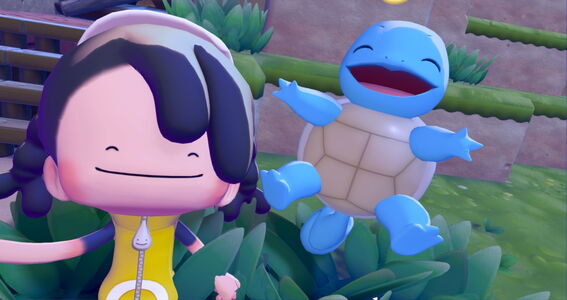
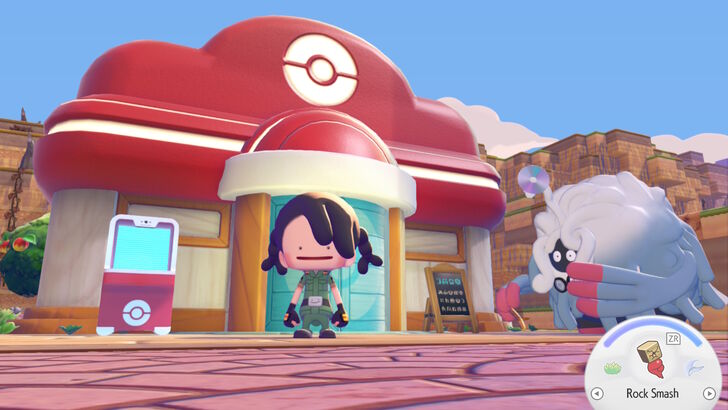
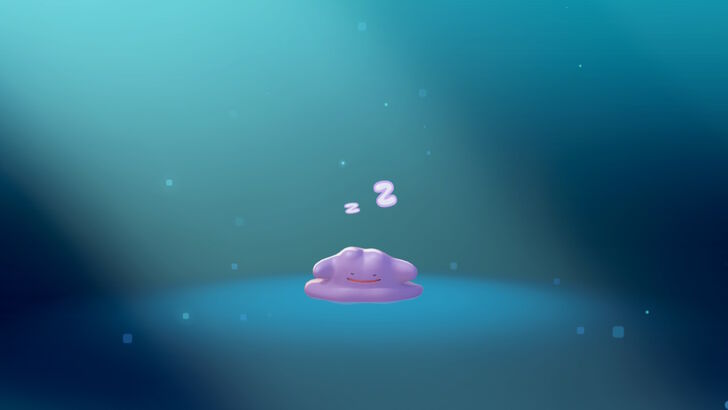
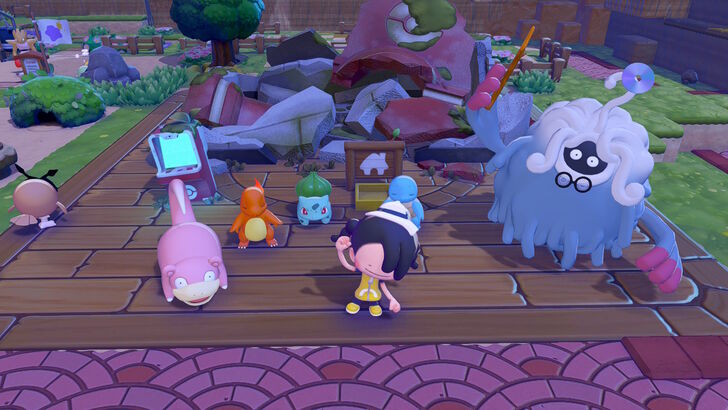
Players take on the role of a Ditto to restore an island’s habitats and shape it into a home for Pokémon. Ditto can gather, build, craft, and, by learning all sorts of moves from its peers, terraform the island. With a block-based sandbox world to build on and a cast of friendly creatures to interact with, players can grow their community and attract even more Pokémon as development and restoration continue.
Pokopia will feature a 20-40 hour story campaign. Even after the credits roll, the game will continue to introduce more content, similar to other life simulation and sandbox games like Animal Crossing: New Horizons.
Pokémon Pokopia features:
⚫︎ Play as a Ditto
⚫︎ Habitat Collecting
⚫︎ Learn Abilities Through Transformation
⚫︎ A Post-Apocalyptic Pokémon World
⚫︎ Advanced Town Building Mechanics
⚫︎ Real-Time Day and Night Cycle
⚫︎ GameShare and Local Multiplayer
For more gameplay details, read everything we know about Pokémon Pokopia’s gameplay and story.
| Digital Storefronts | |||||
|---|---|---|---|---|---|
 Switch 2 Switch 2 |
|||||
| $69.99 |
Pokémon Pokopia Review: The Very Best, Like No Spinoff Ever Was
"To Build Them is My Real Test…"
There is a massive library of Pokémon spinoffs that actually make a lot of sense when you think about them. Pokémon GO is the obvious one; Pokémon Mystery Dungeon is another. Then you have ideas that sound a bit more nonsensical but stick the landing anyway, like Pokémon Snap and even Pokémon Pinball back. It’s genuinely baffling, though, that it took this long for us to get a hybrid between Pokémon and a life simulator like Animal Crossing, when that was arguably the most logical spinoff the series could take.
Pokémon Pokopia arrives more than half a decade after the cozy-sim craze peaked with Animal Crossing: New Horizons, and although that urgency, brought in part by the pandemic, died down to a much more reasonable level, the demand for slow life games never went away. Combining Pokémon with the gameplay loop of Animal Crossing should have been a no-brainer years ago.
Like its inspirations, Pokopia isn’t a game you’re supposed to sprint through. It is designed to be savored in moderation, with you engaging with its world in small, daily doses. In fact, you are discouraged from exhausting everything the game has to offer in a single weekend.
However, I am only human; I am a victim of my own hubris. Despite the game repeating so many times to take it easy, I found myself completely unable to stop playing. I kept telling myself I’d just discover one more area or finish one more habitat, but I never stopped at just "one more." If it weren’t for my roommate literally prying the Switch 2 out of my hands, I probably wouldn’t have even sat down to write this review.
It is incredibly addictive, and after spending a significant amount of time with it, I can confidently say that out of every Pokémon spinoff that I’ve played—and I’ve played nearly all of them—Pokémon Pokopia is the very best like no spinoff ever was.
All Humans Are Gone; Why?
You wake up as a Ditto, having shifted into a slightly off-kilter version of your former human trainer, standing in a version of the Kanto region that feels completely alien. It is desolate. The bustling cities and crowded routes from the older games are gone, replaced by a haunting yet somehow cozy scenery.
Perhaps the most unsettling part of the beginning is the total absence of people. Every human is missing, and even the older Pokémon you encounter in the wild have no idea what happened or where everyone went. There is a heavy sense of mystery that hangs over everything from the second you open your dotted eyes, and the game doesn’t give you any easy answers.
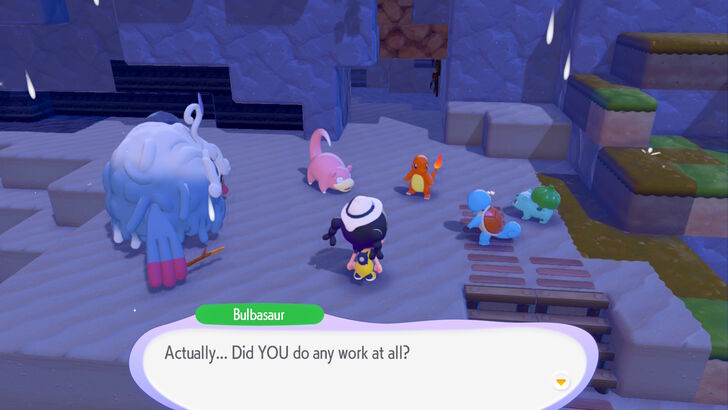
However, you aren’t completely on your own for long. Early on, you meet a Tangrowth who has taken it upon himself to look after what’s left of the land. In a classic series tradition, he essentially steps into the role of the local Professor, though he’s much more concerned with the environment than just filling out a digital encyclopedia. He’s the one who explains that, perhaps, if the world is better taken care of, the humans will reappear.
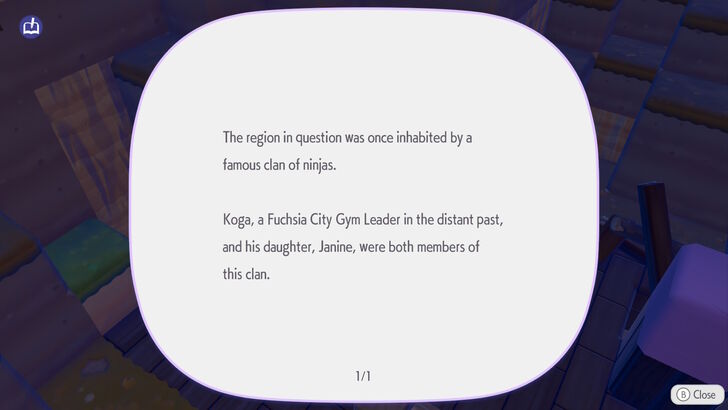
This sets up a fascinating contrast that defines your entire journey throughout this trainer-less world. Most of your time is spent picking through ruins and exploring places that nature has started to reclaim. As you clear away debris, you find things left behind by the people who used to live here: old newspapers, personal journals, interview transcripts. Some of these reference former Gym Leaders and landmarks like Mt. Moon. You might be busy arranging furniture or clearing out overgrowth, but then you’ll look up and see something that reminds you of the scale of the tragedy.
For me, the moment this really clicked was early in the game when I climbed a small ridge and looked out toward the coast. Far off in the distance, barely visible through the draw distance, were the beached remains of the S.S. Anne. It was a place that used to represent luxury and adventure in Vermilion City, now just rotting on sand.
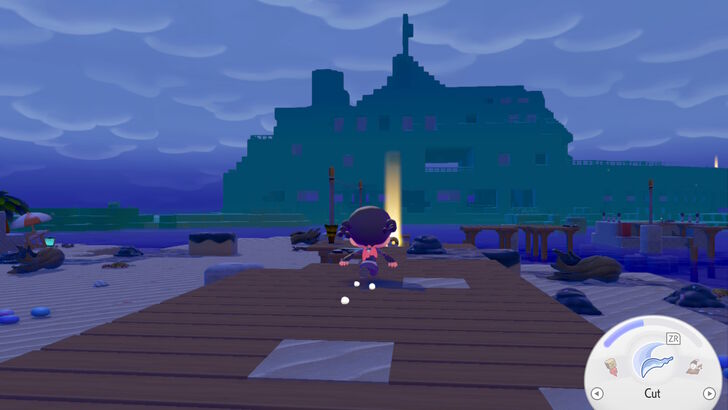
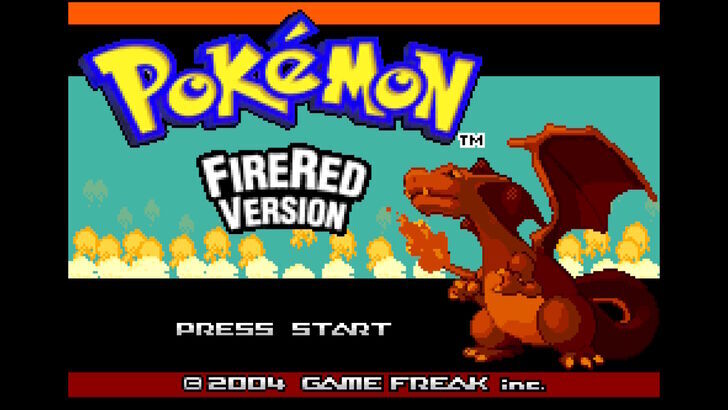
It is an effective way to show the passage of time and the weight of what was lost. Having recently visited Pokémon FireRed on the Switch, these landmarks hit much harder than they would have otherwise. The familiarity of the locations makes the current state of the world feel much more impactful.
The soundtrack plays a huge part in maintaining this atmosphere by layering in nods to the original Kanto games throughout its quirky yet melancholic score. It never tries to be too edgy or dark despite the post-apocalyptic nature of the setting; it just feels honest about the state of the world you’re in.
Friends, But Not Quite What They Seem
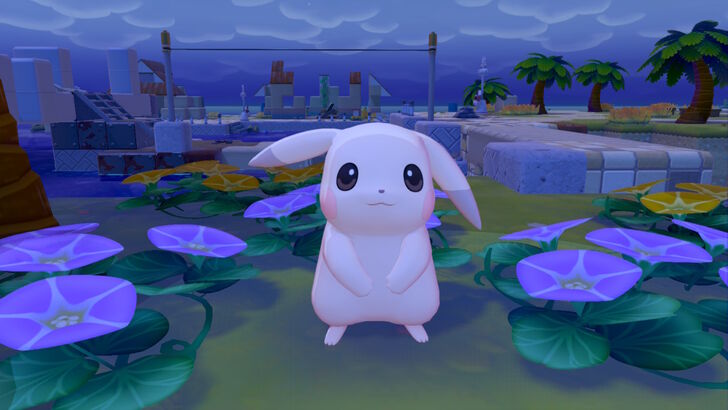
Although the setting is often heavy, there are many moments where the cozy nature of the game betrays it. You will sometimes encounter "unique" Pokémon in the wild. They give you the impression that there is a lot more to them than they are letting on: a Snorlax covered in moss snoring inside a cave, a Pikachu who cannot generate electricity. They feel like actual characters with memories of the world that was lost, and it makes you want to invite them back to your village just to hear more of their story.
However, once they actually move into your town and become a resident, that depth often starts to fade. It’s a bit disappointing to see a character go from having an air of mystery to suddenly using the same recycled dialogue lines as every other Pokémon in the same archetype. If you have three peppy Fire-type Pokémon living near you, their dialogue lines start to blur, for example. It breaks the immersion slightly when you realize that the deep connection you thought you were forming was mostly just part of the script you go through when recruiting them.
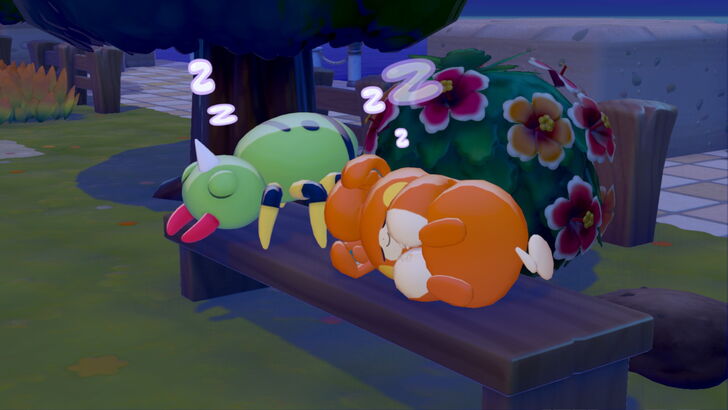
Nevertheless, the game never stops being cozy, and even with the repetitive dialogue, the Pokémon remain endearing. There’s a lot of work put into how these Pokémon interact with the world, so much so that many of them have their own way of speaking that fits their design. Slowpoke, for example, uses a lot of pauses. Trubbish is almost always shy. Zorua acts like a child.
I found myself spending a lot of time just watching how they moved around the town I built. You might see Squirtle playing tag with Bulbasaur or Meowth napping on a bench you recently crafted. Even if they aren’t constantly dropping the deepest of lore about the fall of Kanto, their presence makes the desolate world significantly less lonely.
A Slow Yet Addicting Life
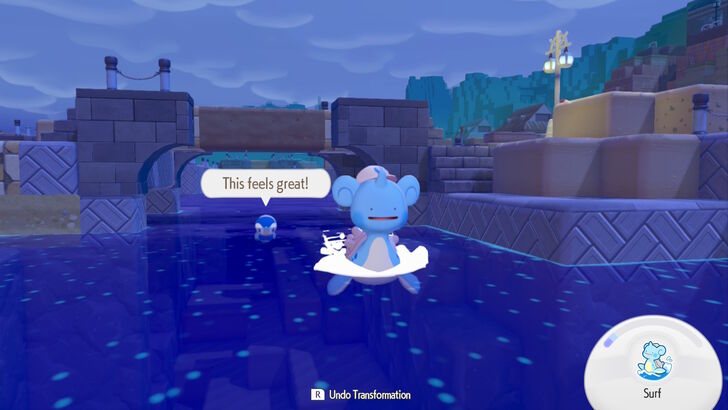
As the charm of the world begins to settle in, you start to realize that the way you interact with this version of Kanto is entirely different from any other life simulator. In games like Story of Seasons or even Animal Crossing, your progression is usually tied to buying better tools, a sturdier watering can, a sharper sickle, a more durable hoe. Pokémon Pokopia does away with these tools by leaning into the fact that you are playing as a Ditto.
As you Naruto run across a desolate Kanto, you learn moves from the Pokémon you interact with. Your "backpack" transforms into Squirtle's shell as you use Water Gun. Your arms turn to scythes as you cut down overgrown weeds or trees like Scyther. You still do some of the typical farming game chores, but the game cleverly anchors this as a natural part of the Pokémon world.
However, not every Pokémon you meet is there to teach you a new move. Many of them serve a more logistical purpose in helping you manage your growing town. Some Pokémon act as specialized labor; for instance, a Scyther can help you make lumber, while a Piplup might help wash away grime or sewage to keep the area clean.
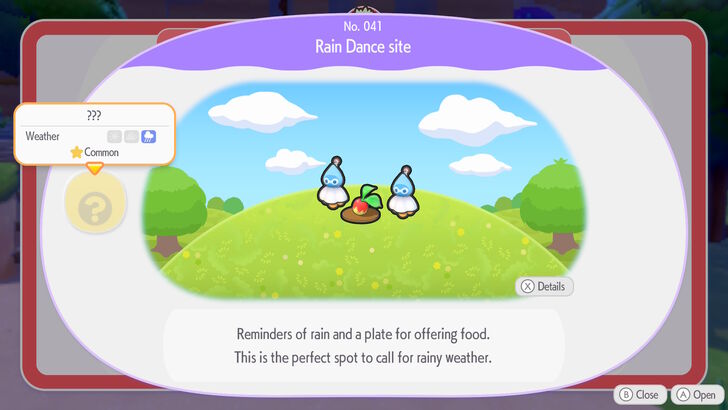
To get these Pokémon to move into your town, you have to build biomes that suit their needs, something specified by the Habitat Dex. Once you meet those requirements, the Pokémon will show up, and you can recruit them to help with the day-to-day operations of your settlement.
You’re constantly checking your Habitat Dex to see what environmental combinations you need to finish next. To complete these, you’ll hunt for Pokémon traces—sparkles in the world that give you hints about which habitats to build—to fill in the silhouettes in your Dex.
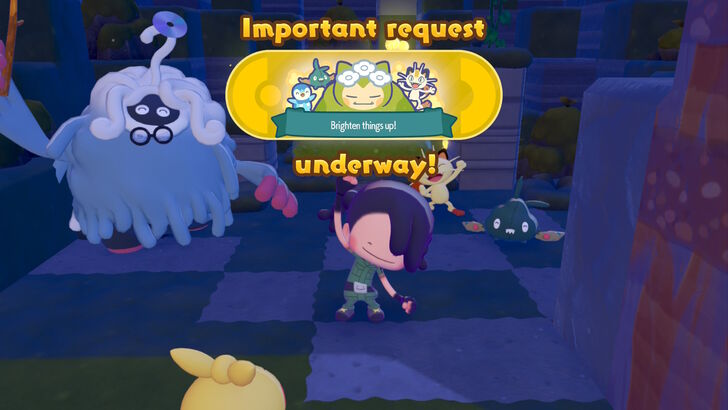
This feeds into a gameplay loop that is immensely satisfying and, frankly, quite addicting. There is almost always something to discover in the world, and the game does a great job of breadcrumbing your progress. You’ll constantly run into Pokémon Requests, where the residents ask for specific improvements to their living situations.
These start off simple; maybe you’ll get a request for a better bed or a desire to move to a drier area. However, they quickly snowball. Because you are constantly unlocking new moves and recipes from these friends, you always feel like you are just one task away from a major discovery. One request would lead to another, and then another, until I had completely forgotten about the original task I set out to do three hours prior.
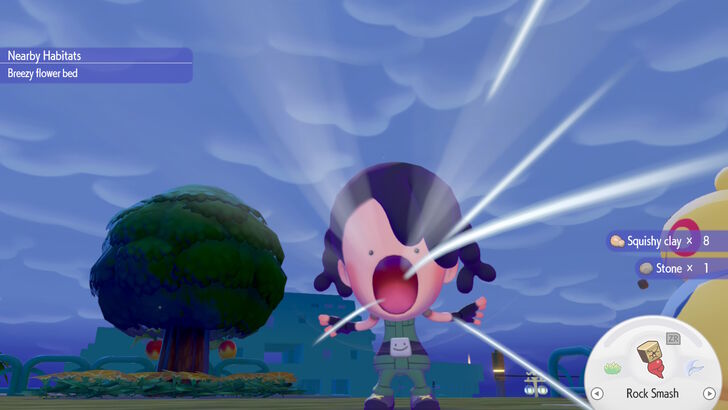
That sense of being overwhelmed is occasionally compounded by the game’s cumbersome storage problem. Although I love discovering new materials, managing them becomes a logistical nightmare as your settlement expands. Both small and large storage boxes have limited capacities, so you’re forced to build dozens of them across different regions.
There isn’t a centralized inventory, so you’re often left trying to remember the exact location of a rare item you tucked away somewhere ten hours ago. As projects grow in scale, you will then constantly fast-travel and hike miles just to play hide-and-seek with your own supplies.
Pokopia Forces You to Go and Touch Real Grass
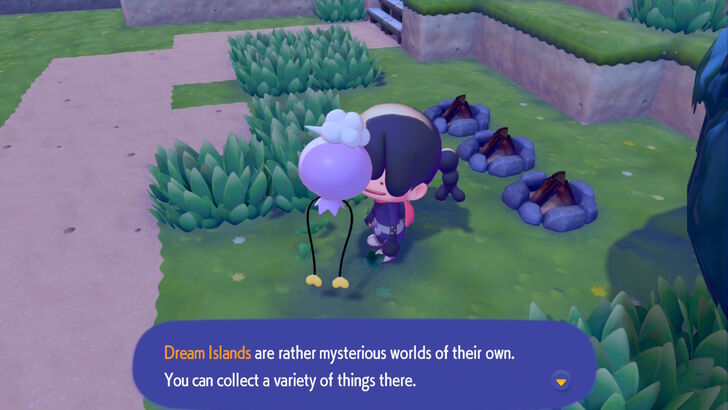
It is both fortunate and, in some ways, unfortunate, that, like Animal Crossing before it, much of the gameplay is gated by real-life time. To be fair, the game is very vocal about its philosophy; it tells you time and time again that you shouldn’t rush. This is a cozy game, after all, and the game evidently wants you to experience the world bit by bit. I get it. If the game didn’t force me to take a breath, I probably would have blitzed through the entire thing in a single weekend and burnt myself out.
However, it also often feels inconsistent. The most obvious example is the construction of buildings. Setting up a large home for a Pokémon takes an entire day to finish. That is a standard trope of the genre, but it is nonetheless frustrating.
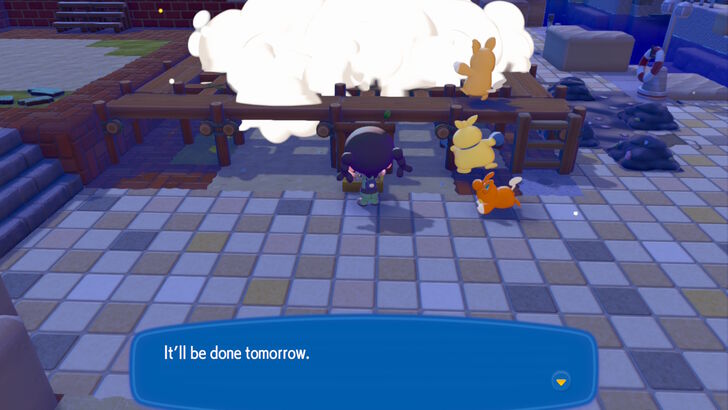
When you craft items from Pokémon, the game works on a timer of actual real-life minutes or hours. The game tells you that the Pokémon will finish making bricks at 4:15 P.M., for instance. But when it comes to larger projects, the game moves the goalposts. It simply tells you that you have to "wait until tomorrow."
This doesn’t mean you have to wait 24 hours from the moment you start construction; it literally means you have to wait until 5:00 A.M. in your local timezone. It boggles the mind because it creates an imbalance in how you spend your time. It makes the actual effort you put in feel secondary to what time of day you happen to be holding your Switch 2. It rewards late-night players while leaving daytime players stuck with a long wait for no reason other than the date on the calendar.
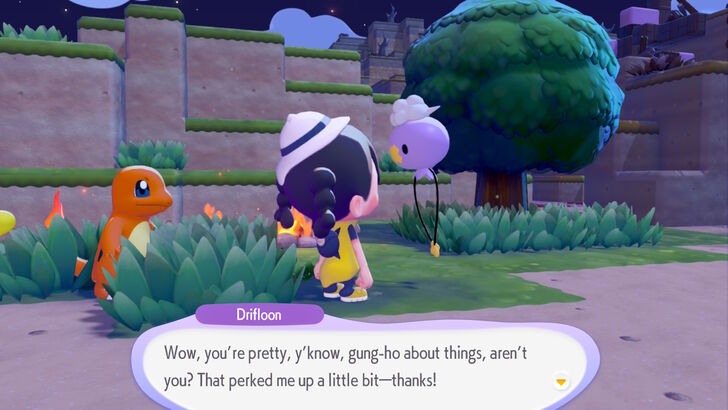
You are forced to live in sync with the game’s pace, which usually means doing a few chores, setting up some projects, and then putting the console down for the day and actually touching grass outside.
It gives you a reason, at least, to check back in every day, and make the game part of your morning or evening routine. I just wish it was handled with more consistency. If the game wants me to take my time, I’d prefer it did so through gameplay mechanics rather than just making me wait for the literal sun to go down.
Smart Pokémon, Smarter Game Design
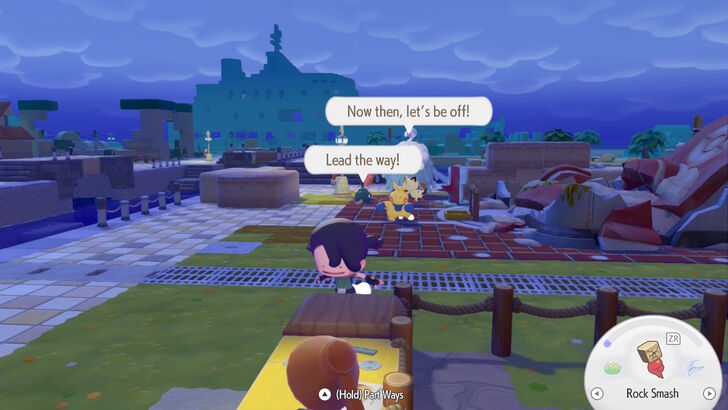
Thankfully, what keeps this loop from feeling like a slog is how streamlined and snappy the systems are. The user interface is designed so you can quickly switch from Water Gun to Rock Smash with the press of a button without ever operating a separate menu.
Even the way you interact with your Pokémon friends is simplified. You don’t need to navigate dialogue trees to get them to follow you; you just hold the up button, and they will immediately start tailing you.
The AI for these followers is smart, too. You can count on them to stay right behind you as you zip across the map, and they are generally great at navigating the terrain on their own. You don’t need to handhold them or worry about them getting stuck on a block, unless there is a physical gap that requires a specific path like a bridge or an elevator. Since the gameplay revolves so heavily around asking for their help with tasks across the map, having them follow you so reliably feels great. It removes much of the problems that plague escort-style mechanics in other games, which then allows you to focus freely on the joy of building your town.
Is Pokémon Pokopia Worth It?
Yes! It is as Addicting as It is Cute!
Pokémon Pokopia is priced at $70, which puts it right alongside many AAA titles released in the last few years. It is an expensive game, there is no way around that fact. However, when you look at the raw amount of content provided, the value starts to make more sense. Even if you don’t count the time you spend waiting real-world hours, the main story alone offers about 40 hours of gameplay. This is a solid length for a campaign where you are only exploring a small fraction of what the map actually has to offer. And that’s not even taking into account the free time-limited events that will come post-launch.
If you are the type of player who likes diving deep into mechanics and crafting the best towns, those 40 hours can easily balloon into the hundreds. The sheer level of customization available for your town and the surrounding biomes is massive. Between designing specific habitats and rearranging your settlement to fit your growing roster of Pokémon friends, there is always a reason to keep playing.
I’ve spent countless hours already trying to figure out the best way to house my growing community, and I still feel like I’ve barely started. The game demands a lot of you, but it gives back just as much in return. I have a lot of work to do in Pokopia. My towns are far from finished, and there are still plenty of secrets waiting in the ruins.
Pokémon Pokopia FAQ
How to Participate in the More Spores for Hoppip Limited-Time Event in Pokémon Pokopia?
To access the event, you must first rebuild the Pokémon Center in at least one town. Once unlocked, you can collect special cotton spores from March 9 to March 24, 2026, to craft picnic-themed furniture and recruit Hoppip, Skiploom, and Jumpluff to your settlement.
Is Pokémon Pokopia available on the original Nintendo Switch?
No, Pokémon Pokopia is title that is exclusive for the Nintendo Switch 2. You cannot run the game on the original Nintendo Switch, but you can use GameShare to stream the gameplay from a Switch 2 to an original Nintendo Switch via local play.
Game8 Reviews