| Nova Roma | |||
|---|---|---|---|
| Release Date | Gameplay & Story | Pre-Order & DLC | Review |
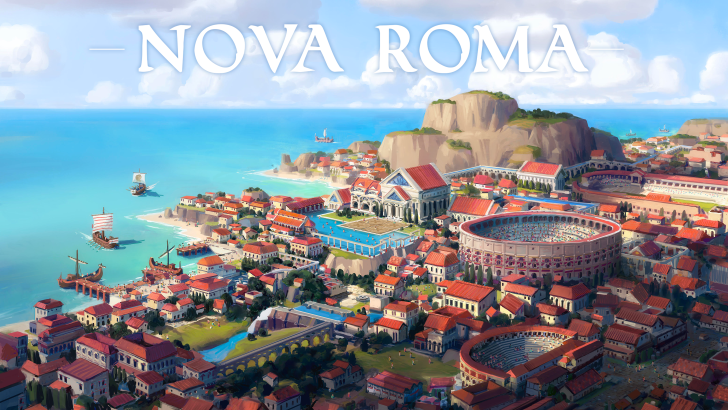
Nova Roma is a low-poly city-builder where you establish your Rome at the fall of the original. Read on to learn everything we know, our first impressions of its early access build, and if it's worth your money.
← Return to Nova Roma main article
Everything We Know About Nova Roma
Nova Roma Story
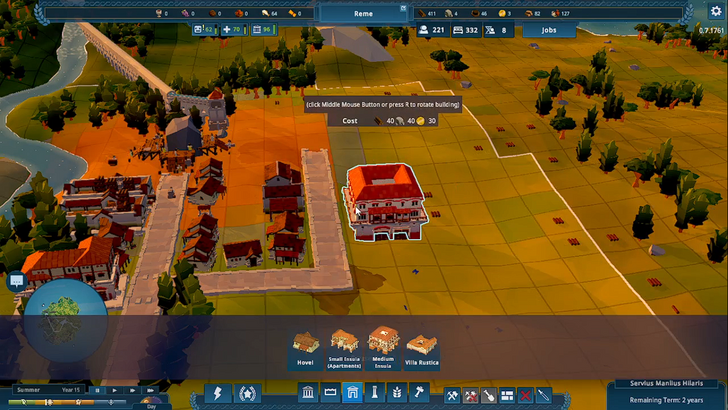
Nova Roma follows a small group of survivors from the fallen Roman Empire. Determined to rebuild, players will lead them into different lands and build a bastion that embodies the former greatness of the lost civilization—Nova Roma.
As they shape their city’s destiny, players can inscribe their own legacy into the annals of history through masterful leadership, visionary city-planning, and the ability to create a thriving civilization that stands the test of time.
Nova Roma Gameplay
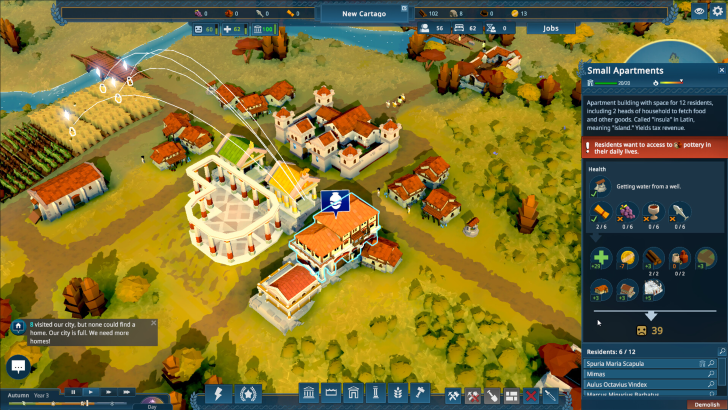
Nova Roma is a top-down Roman city-builder sandbox game. Players must lead a band of citizens into new lands and develop them into a bastion worthy of the fallen Roman Empire. Players must harvest resources and use them to build more structures, from shops to large coliseums, while meeting the citizens’ needs.
On top of this expansion, players must also appease the gods by building temples in their honor. Fail, and they will rain down heavenly devastation through natural calamities.
Nova Roma Release Date
Released March 26, 2026, on Early Access
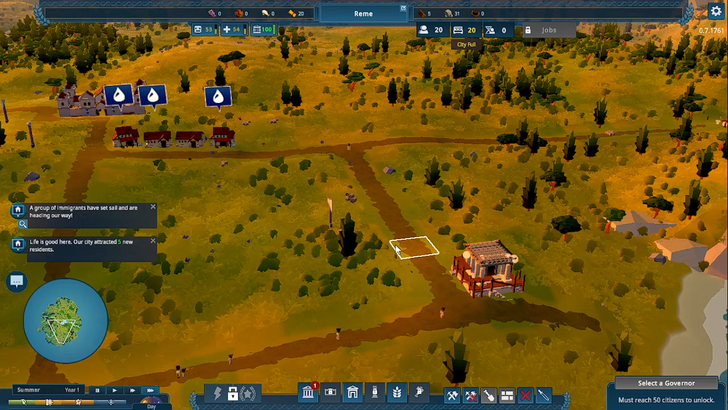
Nova Roma was released on Early Access on March 26, 2026, for Steam and Epic Games.
| Digital Storefront | |||||||
|---|---|---|---|---|---|---|---|
 Steam Steam |
 Epic Games Store Epic Games Store |
||||||
| $29.99 | |||||||
Nova Roma Review [Early Access]
Newer, Better, and More Confusing
Rome stands eternal, or at least that’s the sentiment many people prefer whenever one of mankind’s greatest empires crosses their minds. It certainly crosses mine at least 5 times each day, so having a city-building game emulate that greatness 1-to-1 is exactly the stress relief and artistic expression I’d need.
Fortunately for me, there are plenty to choose from. I semi-recently reviewed Ubisoft’s attempt at recapturing Rome’s glory with Anno 117: Pax Romana and had a grand old time. I tried something smaller with MEMORIAPOLIS and had a lesser time that I nonetheless appreciate.
Now, I have Nova Roma to loose my fascinations on and, to its credit, it has a lot going on for it that earns its own on-the-nose namesake.
A new Rome, it calls itself. I’ll be the judge of that.
Reestablishing a Fallen Empire
How do you build a city that’s already been built? This is the narrative hurdle all Rome-themed city-builders have to face. Some games don’t really worry about it and just have you building the great city from scratch in a sort of alternate history. Others, like Anno 117: Pax Romana, preserve the history somewhat by having you expand Rome as one of its governors.
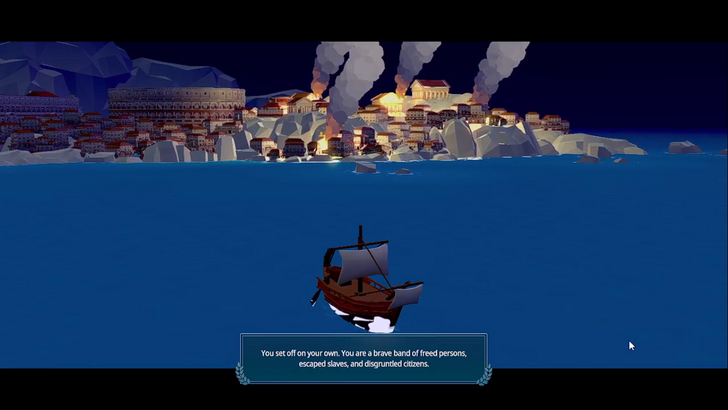
Nova Roma prefers the rebuild approach, setting itself after the historic fall of the Roman Empire, after it spread itself too thin. As a survivor of its fall, you yearn for a better Rome, a new Rome, and some faraway island will be the breaking ground for this dream of yours.
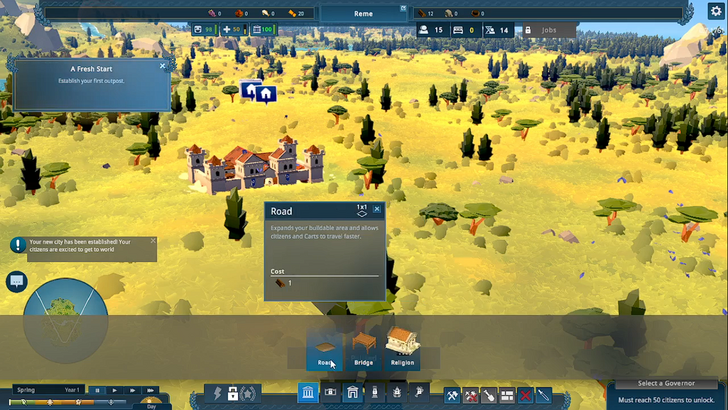
I’ll just go and say that this is a unique enough premise to set Nova Roma apart. You’re chasing a previous glory instead of rewriting history, so there’s more of an emotional stake in your urban planning. That said, narrative really isn’t the main medium of expression for a city-builder, so after the short intro, this theme doesn’t come to play mechanically, and is likely forgotten.
Fine by me, I think it did its job well, setting things up at the start and giving way to the main spectacle right after. It won’t win any writing awards, but by virtue of its premise, Nova Roma definitely earns its title.
Grid-based Urban Layouts with Rough Terrain Restrictions
Moving on to gameplay, Nova Roma further shakes things up by not giving you a set map to break ground on. It generates a random island or landscape for you at the start of each save, with the option to generate new ones if you’re not feeling the one you got.
I appreciate the option of being able to reroll generated lands. Heck, I appreciate that you can randomize your lands at all. Even Anno 117: Pax Romana didn’t generate islands from scratch, so Nova Roma has this above that. It lets me challenge myself by picking worse islands, or, if I’m feeling more creative than strategic, I can just reroll until I get a starting island that practically hands me the win.
Terrain generation is relevant to your chances of winning at all because Nova Roma employs a rather special terrain system that operates on multiple axes. The horizontal axis is governed by a traditional grid that many city-builders use. Buildings and roads go on these and snap onto the grid for ease of planning. Standard fare so far.
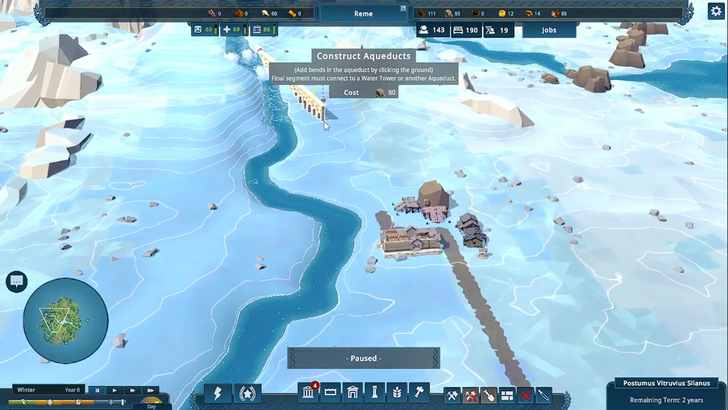
The vertical axis comes into play much later, as elevation serves a two-fold purpose: limiting building space and determining aqueduct effectiveness. Since real-life cities prefer flat land and real-life aqueducts rely on gravity, both of these mechanics keep the whole urban planning loop grounded in reality and intuition.
Your city does not curb the land; it adapts to it, forcing your hand to be creative with your layouts, at least at the start. Eventually, you can bend the land to your will, but before that, you need to build a city.
Proximity and Planning are Everything
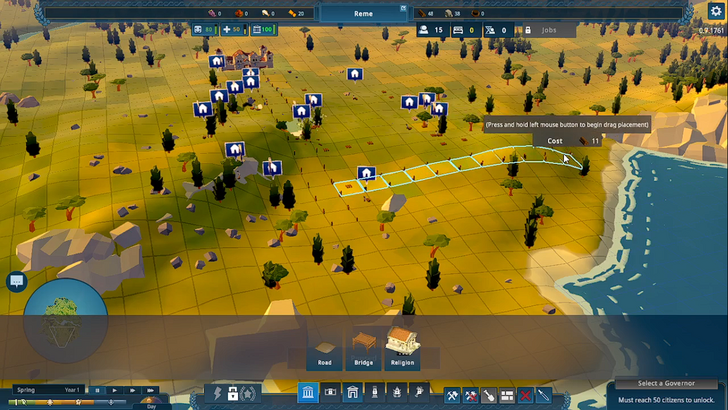
Building a city requires buildings, obviously, and Nova Roma operates on a proximity-based system instead of an arterial one. Roads expand your influence and allow you to build in areas you otherwise could not, but they do not transfer the benefits of buildings across the entirety of your city. Instead, related buildings must be close to each other to benefit from one another. The easiest example pair is any residential building and the basic water well. All residential buildings need water, and the water well provides it to all residential buildings in a 5-tile radius.
This means that, with terrain restrictions also in consideration, you must also plan clusters of symbiotic buildings, according to what can fit where. Resource nodes can also influence this planning, since those can’t be moved, and must be harvested where they lie.
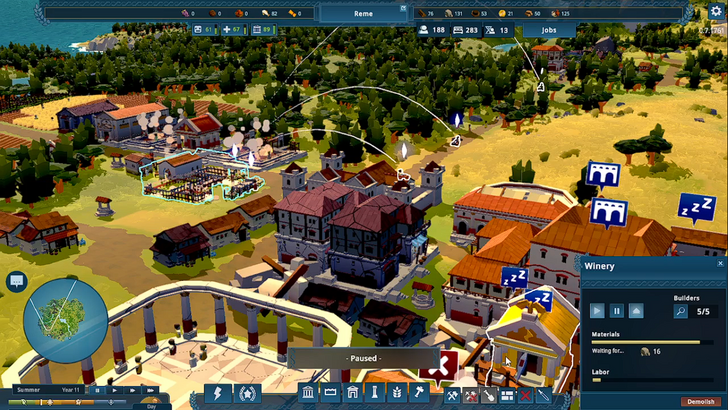
I like this system more than Anno 117’s, if I’m being honest. Anno 117 has a hybrid arterial/proximity system that befits its grander scale. For something smaller like Nova Roma, which doesn’t have you expanding beyond your island, something more compact and observable is more appropriate.
The only downside to this that I can pinpoint is that it doesn’t pair very well with the snap-to-grid, tile-based system Nova Roma also has. Without free-building spacing options, it’s harder to min-max layouts, though it does make basic strategy much easier. There’s no space to eke out between buildings since each covers a specific number of tiles every time.
At least some buildings are nested and can be built on top of each other. That saves on the very little space you get, if only just.
Gods, Growth, and Governance
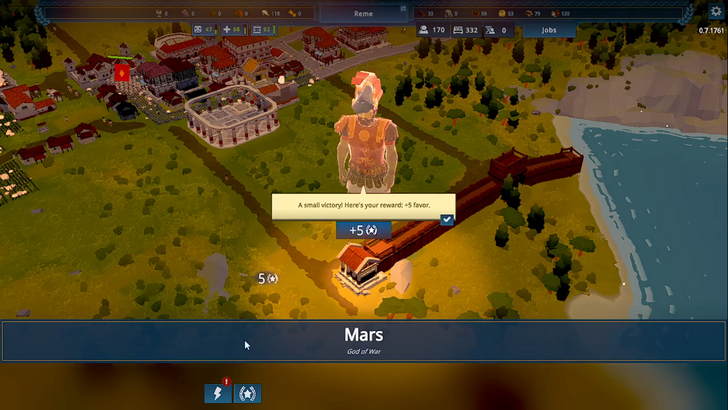
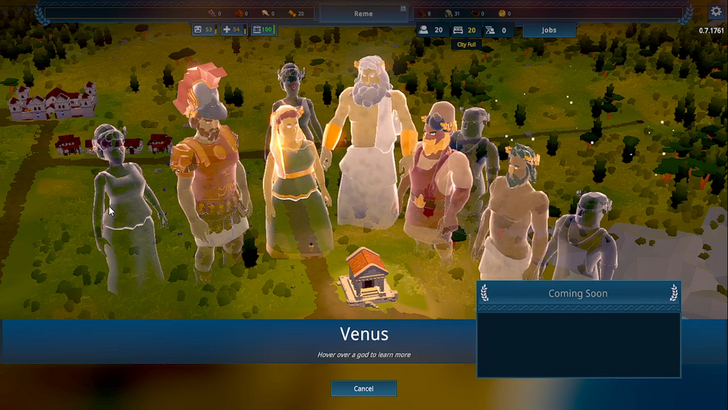
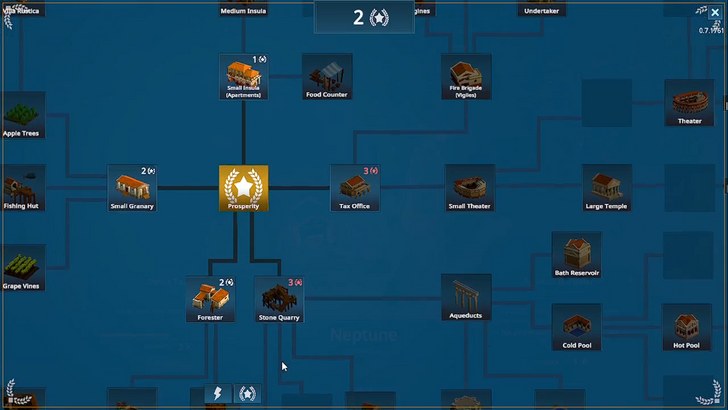
Buildings aren’t the only parts of your city that make it tick. From the very beginning, Roman Gods play a huge role in your prosperity and innovation, as they provide massive bonuses to areas around their temples according to their divine domain, while also being the only source of research for new buildings and technologies.
Each god has demands that, when fulfilled, give you divine inspiration that you can spend to unlock new buildings. This isn’t a simple mission mechanic either, as the gods are impatient, and taking too long to finish a mission can incur their divine wrath, wreaking havoc on your city in a similarly appropriate way according to their divine domain.
I particularly like this mechanic because the Roman Gods were fickle, historically speaking. In Anno 117, they just measured devotion as a simple resource like everything else, making it a static bonus you either have or don’t. In Nova Roma, things are more dynamic. You never know what action (or inaction) will incur a god’s wrath, so you’re always on your toes, but in a fun way.
A similar shakeup that Nova Roma has exclusively is its Governors, who have roguelike-style randomized features that improve and worsen specific conditions in your city during their reign. There’s even a cool little mechanic where rehiring the same governor will lead to eventual corruption, forcing you to pick a different bonus each time one ends office.
Lastly, there are your growth options, which mostly manifest as population and job priority. Jobs aren’t assigned in Nova Roma, at least not individually. The best you can do is determine the priority order in which jobs are filled, and the idle population will fill them in as directed.
This makes job assignment much closer to how real life does it, making it mostly out of your hands, but not taking you out of its control either. Together, these mechanics make Nova Roma something fresh, despite being based on something ancient and being part of a very popular niche in its genre.
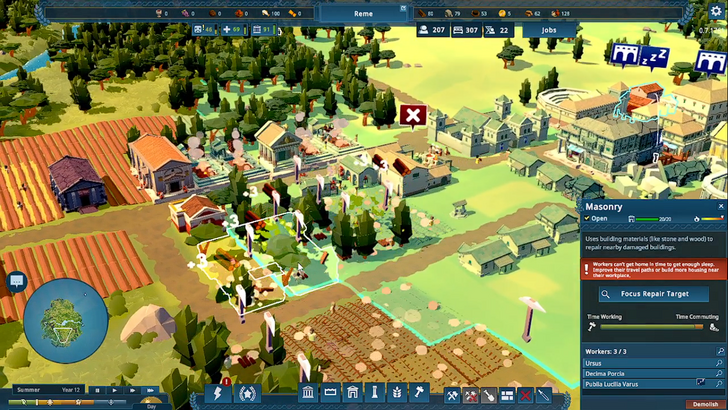
Unfortunately, all this greatness comes with a glaring problem that prevents it from being stellar, and makes it perfectly clear why the game is still in early access. Nova Roma has no tutorial, and a lot of the tactics you could be using to optimize your city go unspoken.
Lots of Gameplay Nuance Goes Unexplained
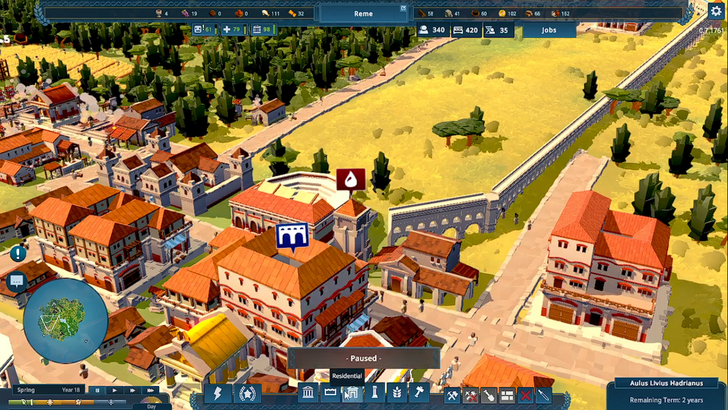
Nova Roma’s biggest issue at the moment is not that its mechanics are awful or that its presentation is lackluster. No, it has the chops to impress, it just sucks at presenting it. Granted, most of its mechanics are standard for the city-builder genre, like the grid, surplus logistics, node harvesting, proximity bonuses—the works. The cooler mechanics require a little bit of tinkering and pre-existing knowledge, though, and I don’t imagine most newbies will have either of those.
Let’s use the aqueducts as an example. These buildings require water input from natural water sources or water towers on higher elevations than where the water is taken to, since it’s a gravity-driven system. Does the game say as much? No. It does feature elevation measurements for water towers and aqueducts alone, letting you arrive at that conclusion, but it sure won’t tell you.
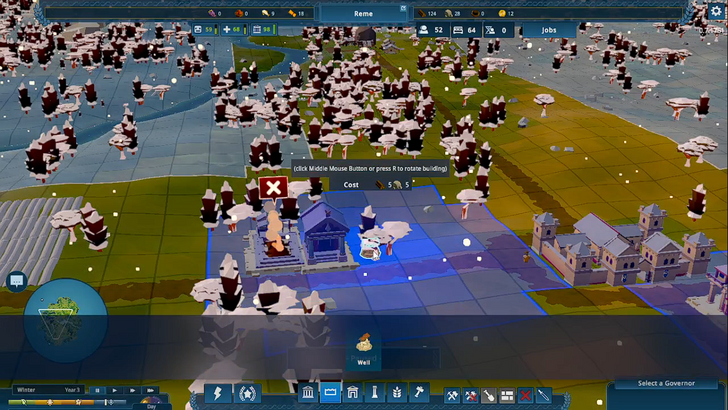
What about the game’s combat system? I haven’t talked about it yet because it barely comes up in-game, but it does have one. It’s just a simple RTS-adjacent point-and-click strategy layer with no unit variance and no build-up. You just get the notification that someone’s attacking and that you need to rally a militia to fight them. Healthbars just go down; there really isn’t any suspense or anything deeper going on there.
It’s a shame, really, that Nova Roma has so many good things going for it that it doesn’t help the player discover. It’s like a Picasso painting in a storage unit; valuable, great, but hidden from the world.
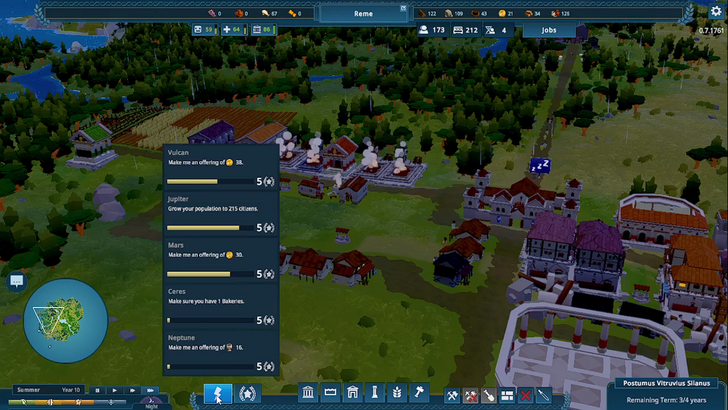
In the end, the best I can say about Nova Roma is that it has to work on presentation. It has to create a dedicated tutorial going over all its moving parts, as they come up if need be, but ideally as a dedicated scenario, as they did for Anno 117. Newer isn’t always better. In this case, it’s just new.
Game8 Reviews

You may also like...


Nova Roma Product Information
 |
|
| Title | NOVA ROMA |
|---|---|
| Release Date | March 26, 2026 (Early Access) |
| Developer | Lion Shield |
| Publisher | Hooded Horse |
| Supported Platforms | PC (Steam, Epic Games) |
| Genre | Strategy, Simulation |
| Number of Players | 1 |
| ESRB Rating | RP |
| Official Website | Nova Roma Official Website |