
| Screamer | |||
|---|---|---|---|
| Release Date | Gameplay & Story | Pre-Order & DLC | Review |
Overview
What is Screamer?
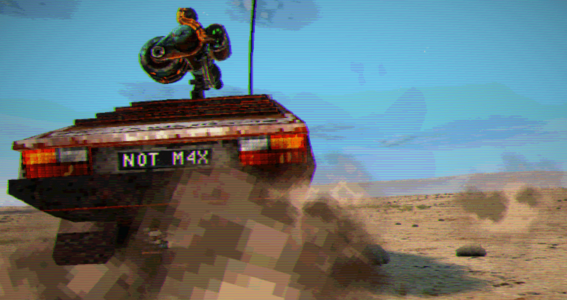
Screamer is a fast-paced arcade racing game set in a futuristic, cyberpunk-inspired world where all characters have neural implants allowing universal language comprehension. The game centers around the Screamer tournament, an illegal street racing competition with a massive cash prize, featuring five competing teams and fifteen playable characters, each with unique cars, special abilities, and driving styles.
Screamer features:
⚫︎ Fifteen Playable Characters
⚫︎ Sync & Entropy Systems
⚫︎ Diverse Race Modes
⚫︎ Visual Novel Style Storytelling
⚫︎ Online and Local Co-op
⚫︎ Cyberpunk Aesthetic
For more gameplay details, read everything we know about Screamer's gameplay and story.
| Digital Storefronts | |||||||
|---|---|---|---|---|---|---|---|
 Steam Steam |
 Epic Games Epic Games |
 PlayStation PlayStation |
 Xbox Xbox |
||||
| $59.99 | |||||||
Screamer Review: Fun, Fast, and Just a Tad Furious
Arcade Racers that Grind Your Gears
I should probably get this out of the way first, I’m a recovering competitive person, with an emphasis on being a sour sport. It’s not a great combination and I’m better now, I promise, but Screamer gave me war flashbacks to the days I’d play arcade racers and lose, then immediately start screaming why I’m so slow and why it’s so complicated to overtake one car. Arcade racing games were never about realism anyway—they’re fast, colorful, loud, and over before you even had time to be mad.
That short-burst, high-intensity design, the kind I grew up with in games like Daytona USA, is exactly why I learned to lock in at such an early age. Rage quitting wasn’t an option when you’re the middle child because if you quit, you’re probably not getting the controller back.
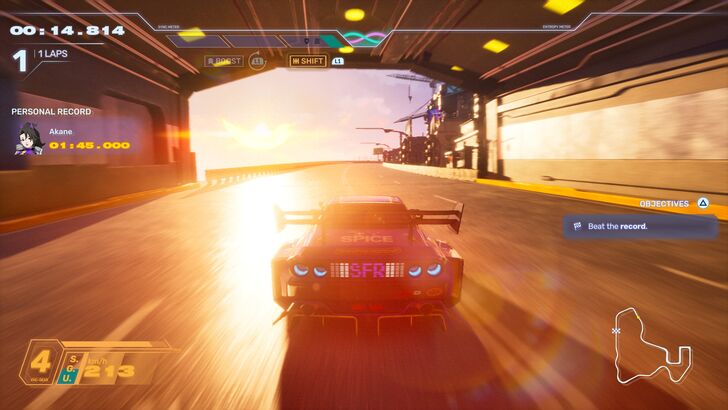
While a lot of modern racing games are focused on hyper-realistic simulation, there are still a few here and there—games like JDM: Japanese Drift Master—that remind us racing can just be chaotic, stylish fun. And Screamer comfortably sits in that space. If you’re like me, someone who enjoys both the sim side of racing and the more arcade, pick-up-and-play chaos, this is another game where you’ll feel right at home.
Tournament Worth a Hundred Billion
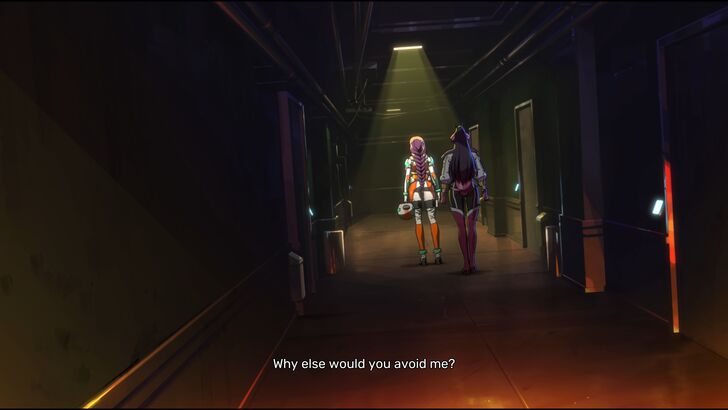
Screamer drops us into a futuristic world where language isn’t a barrier anymore because everyone has a chip in their brain that lets them understand each other regardless of what language they speak. It’s a very cyber-esque setup, but instead of getting lost in technobabble, the game keeps things focused with five teams, three racers per team, all entering the Screamer tournament—an illegal street racing showdown organized by a mysterious man known only as Mr. A. The prize? A hundred billion dollars. Not million. Billion.
And of course, no one joins a death-defying illegal street tournament for fun or money alone. Every racer here has their own reason to win. Some want the money, some want revenge, and some are here because this race is the only way they can prove themselves against the people who are trying to ruin their lives. While the story lets us see things from multiple perspectives, the initial main protagonists are the Green Reapers, also known as the Banshees, led by Hiroshi, a stand-in for their former leader who died, seemingly because of the actions of Gabriel from Anaconda Corp, a massive corrupt empire that also happens to be a team participating in the tournament.
So yes, there’s a lot of moving parts here—different teams, different motivations, and a tournament that’s clearly more than just racing. But before we get into why the story actually works as well as it does, it’s important to first understand how Screamer actually plays, because the way the game is structured is a big part of why you end up caring about any of this in the first place.
More Than Just First Place
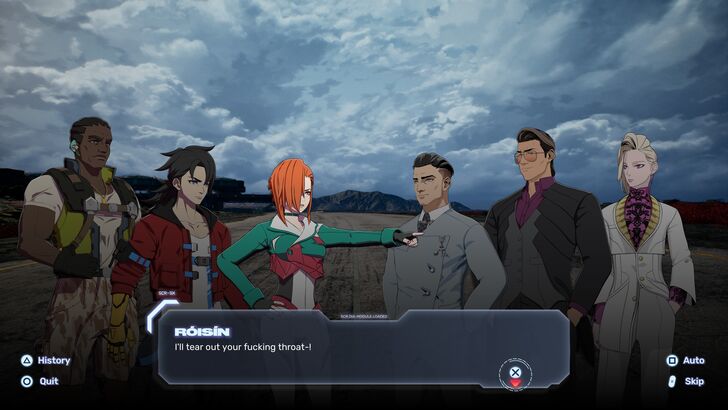
The story campaign, a.k.a. "The Tournament", is divided into four arcs, each made up of a different number of episodes, and the overall loop is pretty straightforward but very effective. You’ll go from anime-style cutscenes, to visual novel-esque dialogue, and then into the races themselves. It sounds simple on paper, but the constant switching between storytelling and racing gives the campaign a rhythm that keeps you hooked as you move forward. You’re not just racing non-stop, but you’re also not stuck watching cutscenes for too long either. It understands pacing, and more importantly, it understands that if you’re here for an arcade racer, you want to be behind the wheel as often as possible.
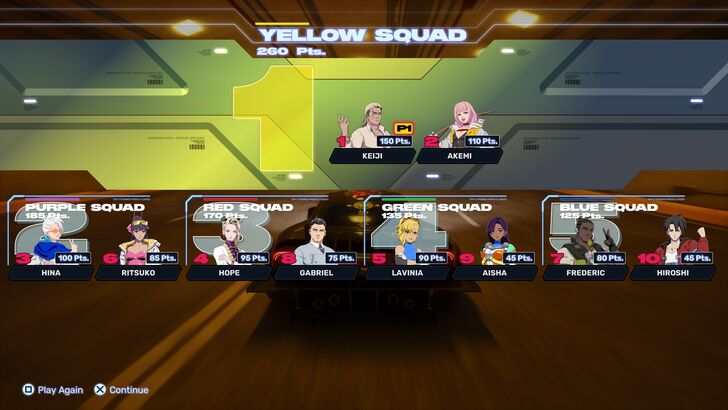
What I also appreciated is that the races aren’t always just "start at the back and finish first." (Though you’ll always start at the back) Some races are traditional and require you to win or place within a certain position, but a lot of them are actually challenge-based. There are duels where it’s just you and one rival, timed challenges where you need to beat a record or reach a checkpoint before the countdown hits zero, and team-based events where your entire team needs to have the highest combined score on the track to win. That last one in particular changes how you play because it’s not just about you doing well, it’s about making sure your team does well, which means every overtake and every mistake matters more than usual.
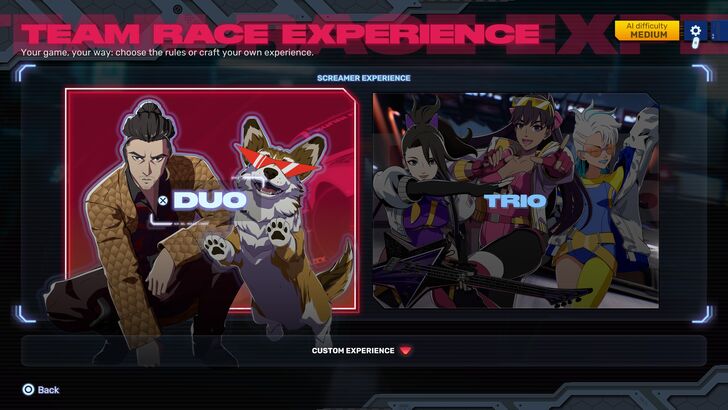
Outside of the story campaign, the game is pretty generous with its modes. Once the main menu is unlocked, you can jump into the other modes mentioned above anytime, and that also includes online play and even local split-screen co-op. Having all these different race types and modes means the game rarely feels repetitive. Just when you think you’ve settled into a rhythm, the game throws a different objective at you and suddenly you have to adjust how you drive again—and that constant change is one of the things Screamer does really well.
Twin-Stick Controls, Sync Management, and Controlled Chaos
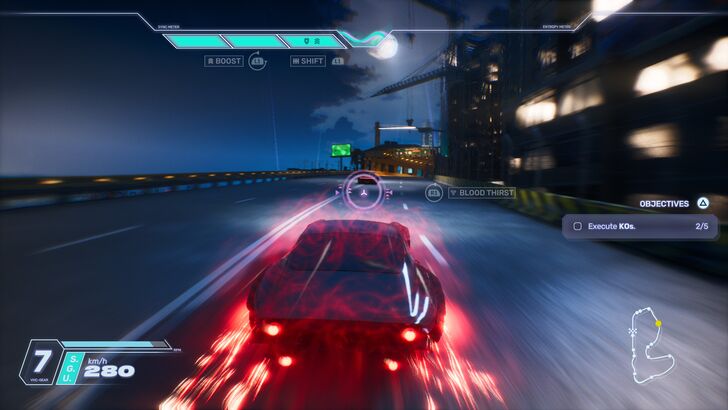
But don’t worry, you’re not JUST racing in Screamer. Like any good arcade racer, it has mechanics that make the act of racing itself feel different. The biggest one here is the twin-stick control system. The left stick is for normal steering, while the right stick controls your drift. If you’re like me—someone who has tried and failed more times than I’d like to admit to drift properly using a DualShock—this setup is a blessing. No more awkward braking while turning just to initiate a drift. You steer with one stick, you drift with the other. It’s simple and this immediately gives you more control once you get used to it. Because now drifting is something you can precisely control.
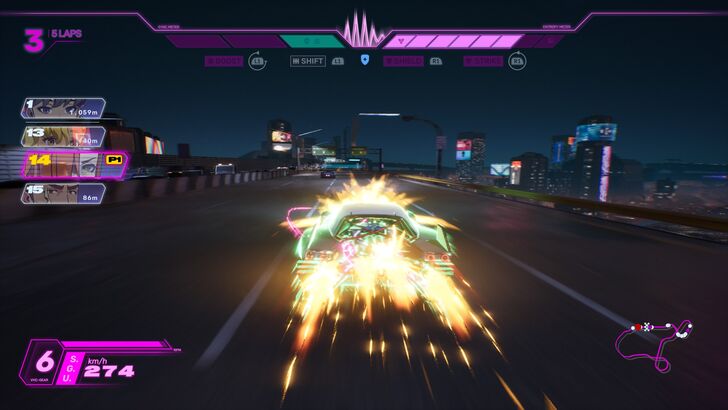
All cars are automatic, but pressing L1 triggers an Active Shift, and if you press it at the right time, you generate Sync. You can also build Sync passively just by driving well—clean racing, good drifting, not smashing into every wall. Sync essentially acts as your battery for Boost and Shield. Boost gives you a short burst of speed, but if you time it perfectly, a Perfect Boost gives you a longer, more powerful burst. So even boosting has a skill element to it, you don’t just press a button and go fast, you press it at the right time and go really fast.
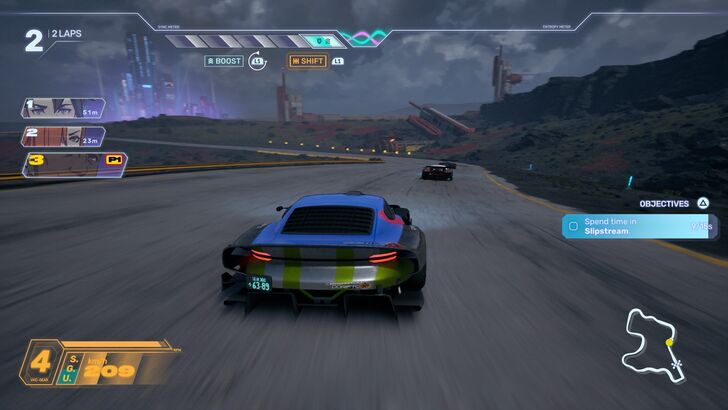
Personally, this system really hooked me, because it rewards you for driving well rather than just driving aggressively. If you’re doing well, the game gives you more tools to keep doing well, and that feels incredibly satisfying because improvement is very tangible. You can actually feel yourself getting better race after race, not because your car is stronger, but because you’re learning the timing.
Then there’s Entropy, which powers Strike and Overdrive. Strike is a forward burst that can be used normally to propel yourself ahead, but it can also lock onto another racer, turning it into an offensive move. Overdrive, on the other hand, is pure chaos. It turns you into this unstoppable force where you can plow through other racers and fly past everyone, but if you hit a wall, you explode. This is also where a bit of that fighting game energy comes in, something that reminded me a bit of the aggressive, rival-focused racing in Tokyo Xtreme Racer, because racers have health bars and you’re not just trying to be fast but also trying to survive and keep the Overdrive status as long as possible.
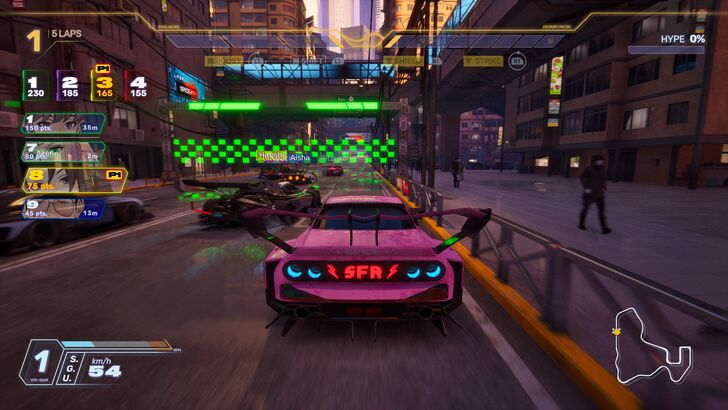
This is great because it means races don’t feel decided in the first few seconds. Even if you’re behind, a well-timed Strike or a properly used Overdrive can completely change the outcome of a race. It keeps every race tense until the very end as you’re constantly engaged because you know you’re never completely out of the fight.
The best part about all of this is that the controls are actually very easy to understand. The learning curve, at least in terms of basic control, is almost nonexistent, I was able to control my car comfortably pretty early on. The real challenge is mastering everything, because like any arcade racer, your opponents are insanely fast, and one wrong move—one bad drift, one missed boost, one crash—and you’re stuck trying to catch up instead of trying to win.
What I also like is that none of these mechanics feel random because they’re tied into the story. All racers have a device installed in their cars called the ECHO, which is what allows them to use all the mechanics above, and even rematerialize when they explode on track. It’s a small thing, but tying gameplay mechanics into the narrative makes the whole tournament feel more believable within its own ridiculous, high-speed world.
Fifteen Racers, Fifteen Driving Styles
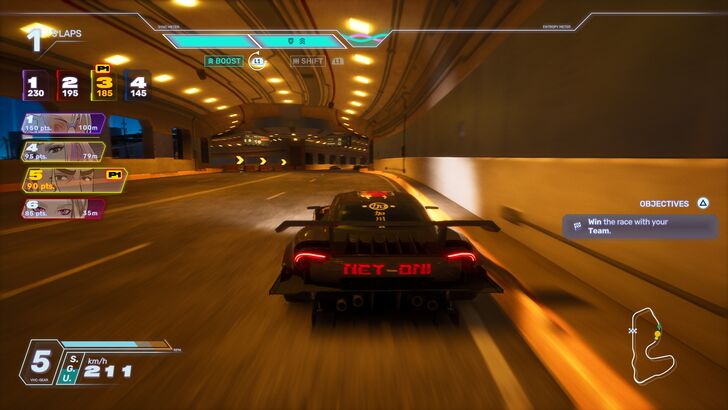
You might be wondering, with all these arcade mechanics, boosts, strikes, and explosions, does the game even care about car handling? Surprisingly, yes. A lot, actually.
There are a total of 15 playable characters, and their cars are tailored to them. Each one has their own special skills. For example, Roisin from the Green Reapers uses less Entropy when activating Strike, while her teammate Frederic generates additional Sync when knocking out opponents using Strike. So right away, the game is already pushing you to think about who you want to use, not just how you want to drive.
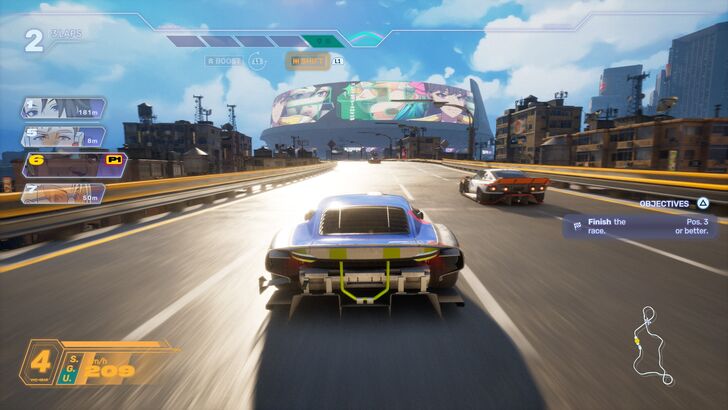
On top of that, their car handling also differs. Some cars feel lighter and faster but harder to control, while others feel heavier and more stable, but this also means it might be a tad slower. This is great because you get to figure out who fits your driving style. You’re not just picking a character because they look cool, you’re picking a character because their car feels right to you. It adds a layer of personal preference that makes a big difference the longer you play.
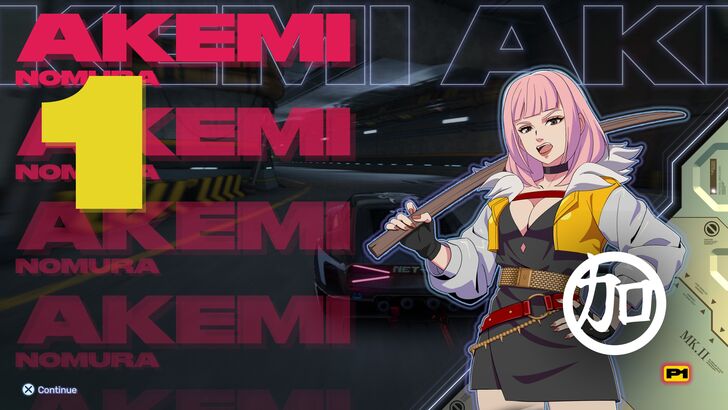
That said, it does go both ways. During the campaign, there are moments where you’re required to use specific characters, and if you don’t like how their car handles, it can be a bit frustrating. I got stuck using Frederic at one point and I was annoyed the whole time because I just didn’t like how his car felt on the road. Meanwhile, when I was using Kagawa Kai’s Akemi or Strike Force Romanda’s Akane, it was smooth sailing for me because I much preferred how their cars handled. So yes, the differences are very noticeable, which is good for variety, but not always good if the game forces you into a car that doesn’t match your playstyle.
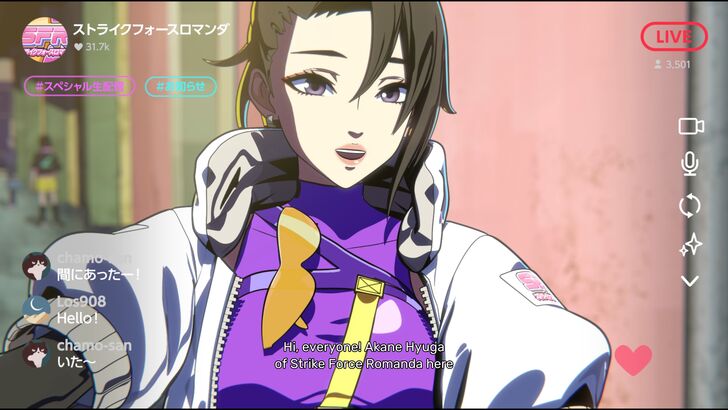
And then there’s the music. Each team, each character, has their own OST that plays when you use them, which adds a lot of personality. You start remembering who you like for specific races, because each one comes with their own sound, their own vibe, and their own identity on the track.
Customization Stops at Visuals
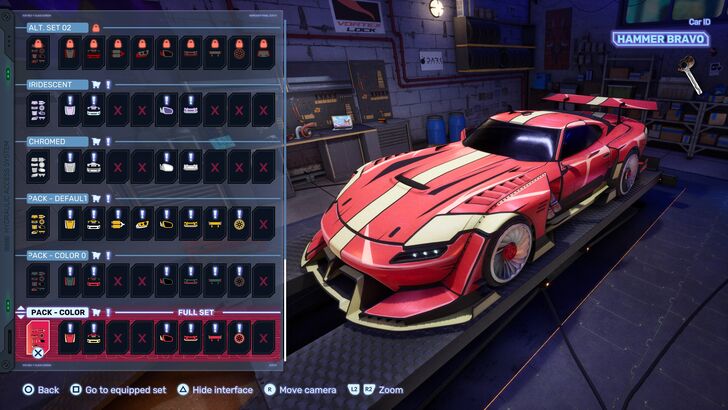
However, this is also where the customization mostly ends. Outside of the story campaign, progression is nonexistent. You can’t upgrade cars and you can’t tune performance, all the customization that is here is purely visual. Decals, paint, cosmetic changes… that’s pretty much it.
And it’s a bit of a shame, because the game already has a strong mechanical foundation that could have supported a deeper progression system. Imagine being able to build cars around specific roles. One character tuned specifically for racing, another tuned for timed challenges, maybe another built around aggressive play. I understand why this might be difficult to implement in the story campaign where characters are tied to the narrative, but for the other modes, it feels like a missed opportunity. It would have added another layer of personalization, something that lets players experiment and really tailor a racer to their playstyle.
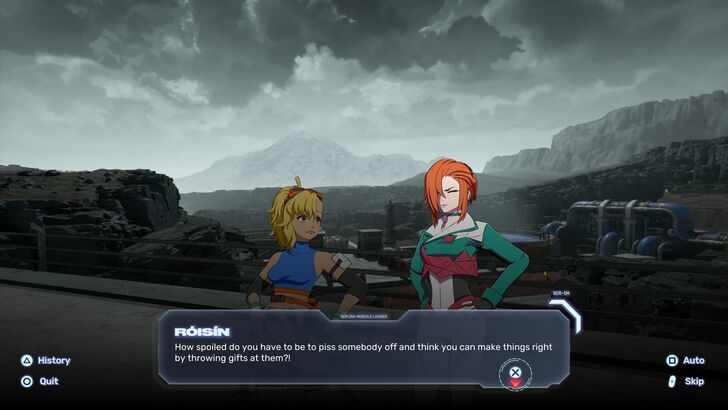
As it stands, what you see is what you get. The upside is that there’s a variety of fixed abilities, so it becomes more about character skill rather than who has the better build. But the downside is that if you’re the type of player who enjoys tinkering, upgrading, and slowly building the perfect machine, that part of the experience isn’t here.
Racers Have Their Own Motivations
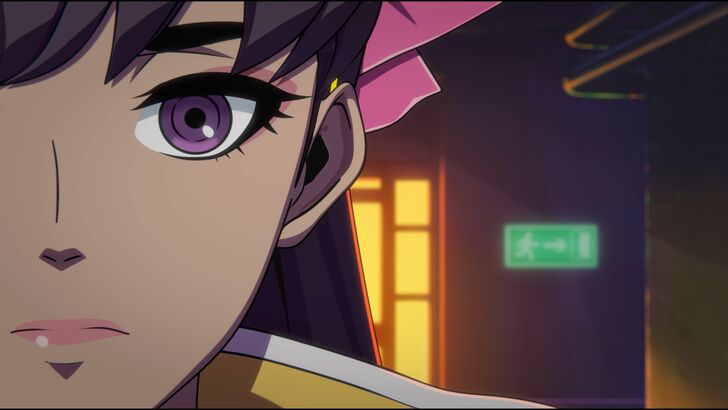
These characters, though, aren’t just different on the track, they’re also well built in the narrative. We get a taste of their perspective, their goals, and what’s driving each of them to risk their lives in this tournament.
The Green Reapers are there for revenge. Anaconda Corp, despite clearly being a corrupt empire, has a leader trying to prove himself worthy of becoming the next heir. The Jupiter Stormers are astronauts looking to get their hands on certain technologies. Strike Force Romanda, an idol group, is there to uncover the truth behind their leader’s partner’s death. And Kagawa Kai? They’re there for the money. Mostly.
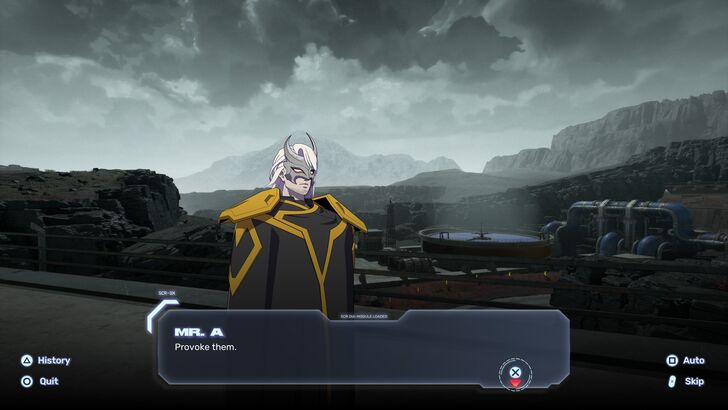
While each team has its own overarching goal, the game also spends time exploring the individual characters within those teams, which was something I genuinely didn’t expect coming from an arcade racer. This is great because usually arcade racing games don’t really focus on story that much, and even when they do, it’s usually just a single protagonist being supported by a cast that doesn’t get much development. Here, the storytelling feels more holistic. The world doesn’t revolve around just one person. It feels like everyone is moving at the same time, for their own reasons, whether they’re with you or against you.
And because of that, you end up getting attached. You end up picking favorites. (Mine was Ritsuko, the leader of Strike Force Romanda.) Not just because of how they drive, but because of who they are, what they want, and how they fit into this very chaotic, very dangerous tournament. It gives the races more weight, because you’re not just trying to win a race anymore. Most of the time, you feel like you’re trying to help someone. And that alone makes the entire tournament feel a lot more meaningful than just finishing in first place.
Is Screamer Worth It?
Yes, It’s The Ultimate Arcade Experience

Screamer, at $59.99, doesn’t just offer a standard arcade racing experience, it also has an entire narrative backbone and that alone already makes it stand out. It’s flashy, colorful, fast, and fun in the way arcade racers are supposed to be. The kind of fun where races are chaotic, wins are satisfying, and losses feel like they were your fault, not the game’s.
It’s not perfect in any sense. The lack of performance customization and meaningful progression outside the story mode feels like a missed opportunity, especially when the core mechanics are strong enough to support deeper systems. There are also moments in the campaign where being forced to use a specific character whose car doesn’t match your playstyle can be frustrating. But even with those issues, the game knows exactly what it wants to be, and more importantly, it knows who it’s for.
If you’ve been looking for your next arcade racing fix then Screamer is very easy to recommend. This is a game about speed, chaos, rivalries, and last-second wins, and if that sounds like your kind of racing, then this is definitely worth your time.
Screamer FAQ
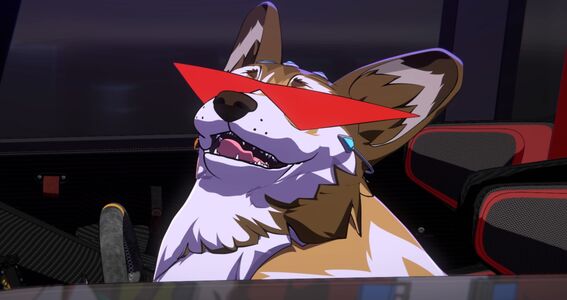
Is The Corgi Playable in Screamer?
Sadly, Fermi, the mechanic dog, is not a playable character.
What’s the Difference Between Screamer (1995) and Screamer?
Screamer is a huge leap from the original, as this new release is a much more narrative-driven experience.
Game8 Reviews

You may also like...
 |
JDM: Japanese Drift Master Review Racing, Simulation, Adventure |
 |
F1 25 Review Simulation, Racing, Sports |
 |
#DRIVE Rally Review Arcade, Racing |
 |
Assetto Corsa EVO Review [Early Access] Racing, Sports, Simulation |
 |
Fumes Review [Early Access] Vehicular Combat, Boomer Shooter |