| Pokémon FireRed and LeafGreen | |||
|---|---|---|---|
| Release Date | Gameplay & Story | Pre-Order & DLC | Review |
Overview
What is Pokémon FireRed and LeafGreen?
Pokémon FireRed and LeafGreen are classic Pokémon titles first released in 2004 for the Gameboy Advance, now released on the Nintendo Switch consoles on February 27th, 2026. Fans return to the Kanto region once again to hone their Pokémon trainer skills, exploring the land and meeting all kinds of Pokémon to fill out the Pokédex, catch Pokémon allies, and battle it out with other trainers and Gym Leaders to eventually become the Pokémon League Champion.
With this new-generation console port comes several modern upgrades, such as the Pokémon Wireless Club for trading, battling, and chatting with other local players. Support for Pokémon HOME will also be arriving sometime after launch.
Pokémon FireRed and LeafGreen features:
⚫︎ Local Wireless Multiplayer
⚫︎ GameChat Support
⚫︎ Pokémon HOME Integration (Coming Soon)
⚫︎ Sevii islands and Post-Game Content
| Digital Storefronts | |||||||
|---|---|---|---|---|---|---|---|
 Pokémon FireRed Pokémon FireRed |
Pokémon LeafGreen |
||||||
| $19.99 | |||||||
Pokémon FireRed Review (Switch): As Beautiful as the Day We Left Them
Welcome Home to Pallet Town
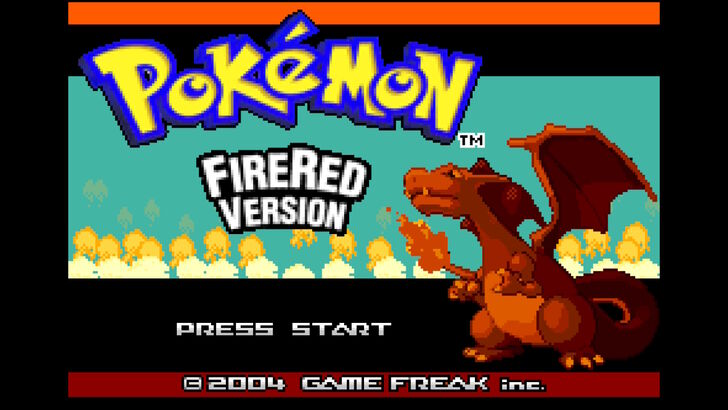
It has been more than two decades since the remakes of the Kanto classics, Pokémon FireRed and LeafGreen, first graced the Game Boy Advance (GBA). For many millennials, like myself, those translucent cartridges were from a time of link cables and AA batteries. Since then, these specific versions of the Kanto journey have been notoriously difficult to access. They never made their way to the 3DS Virtual Console, and for a long time, they remained trapped on original hardware, slowly becoming expensive relics for collectors.
I didn’t start with Kanto, though. My first real steps into the Pokémon world were taken in the Hoenn region with Pokémon Emerald. Despite this, I ended up spending an incredible amount of time with FireRed on my old GBA. My older brother and I used to spend countless hours tethered by a Link Cable, trading exclusives and battling to see whose team was better. However, as usually happens with growing up, I eventually lost both my original cartridge and my GBA to the passage of time, and I never found a way back to Kanto’s routes.
But it’s now 2025. We’ve reached a point where the kids who once huddled over backlit GBA screens are now adults with careers, bills, and the desire to heal their inner children with the comforts of their youth. I myself feel a sense of relief to have these GBA classics back in my hands finally, and Kanto is as beautiful as the day I lost it.
"I Wanna Be the Very Best…"
You won’t get an epic odyssey here. The story is rather simple. You play as a ten-year-old kid from Pallet Town who is suddenly thrust into the world with nothing but a single Pokémon and a dream to fill up the Pokédex.Your goal is straight; you travel across the Kanto region, challenging eight Gym leaders to earn their badges and eventually earning the right to face the Elite Four. It is the classic hero’s journey made manifest, where you start as a nobody and work your way up to becoming the League Champion.
Along the way, you constantly run into Team Rocket, a criminal organization that doesn’t have the world-ending ambitions of later villains. They are essentially a Pokémon mafia, who, thank Arceus, aren’t trying to rewrite reality or expand the oceans. They simply want to treat Pokémon as tools for profit. Nothing big.
Thwarting their plans as a ten-year-old kid feels unrealistic, but so is having a blue turtle that spontaneously evolves into a tortoise with shoulder cannons.
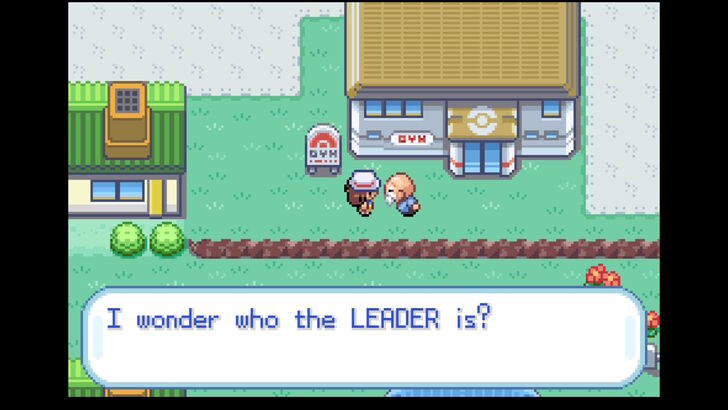
That is really all you need to keep the momentum going. Back when these remakes were first released in 2004, the focus was more on the sense of discovery. That remains true here. Aside from the specific Pokémon you can catch in the wild, you aren't missing out much by picking one over the other.
It is important to note that this Switch release is a one-to-one port of the GBA titles. You won't find any new story expansions, updated dialogue, or modern cinematics here. This is effectively the original Kanto experience from the 90s, just running on the engine that introduced things like Pokémon Natures and Abilities. If you’ve played these games before, you know exactly what to expect. There are no surprises, but for a lot of people, that lack of change is exactly why they’re buying it.
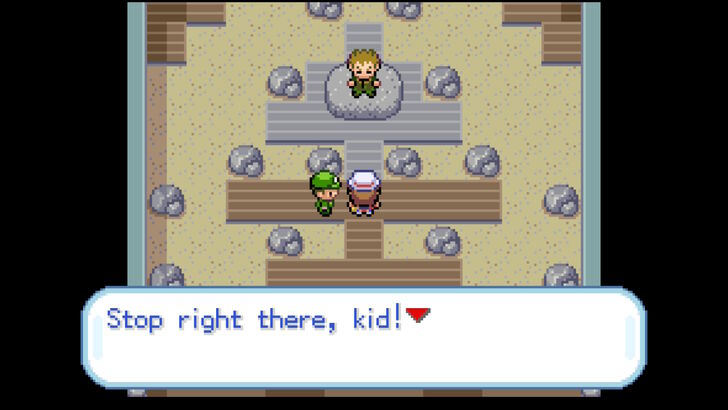
Realistically, the main reason people are flocking to this release is that it is currently the only way to play FireRed and LeafGreen officially without spending a fortune on the second-hand market. But outside the convenience and the obvious nostalgia, Kanto is still one of the better-designed regions in the franchise.
The region is remarkably more open compared to the style of newer games. Once you get past the first few gyms, the map loops back on itself and allows for a surprising amount of non-linear exploration.
Moreover, because the story is so tight, the game never stops you for ten-minute cutscenes or unskippable tutorials (outside the first grandpa that teaches you how to catch a Pokémon). You are almost always in control, moving from one town to the next at your own speed.
It's Super Effective!
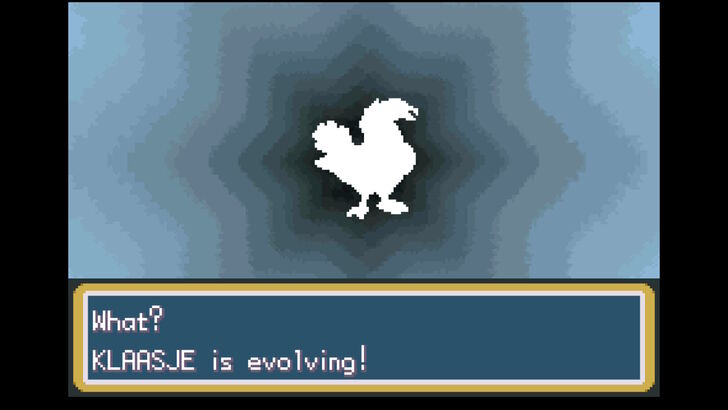
Since this 2026 release of Pokémon FireRed and LeafGreen is a strictly one-to-one port, its gameplay is exactly as it was on the GBA. There are no quality-of-life updates nor added mechanics from the later generations, not even a way to stretch the display to widescreen. For anyone who hasn't touched a Pokémon game since the early 2000s, this is exactly what you remember: a turn-based RPG where you catch monsters, level them up, and use a rock-paper-scissors elemental system to win battles. You explore a top-down world, manage a party of six, and navigate menus to select moves. The usual early 2000s JRPG affair.
On one hand, this is a positive. The turn-based formula of Pokémon is legendary for a reason; it simply never gets old. Although the series has tried many new things in the years following Generation 3, like Mega Evolution or the open world of Scarlet and Violet, I still like the loop of "catch, train, battle" remains as satisfying as ever. It's Pokémon in its most distilled form, and for many, that’s where the series peaked.
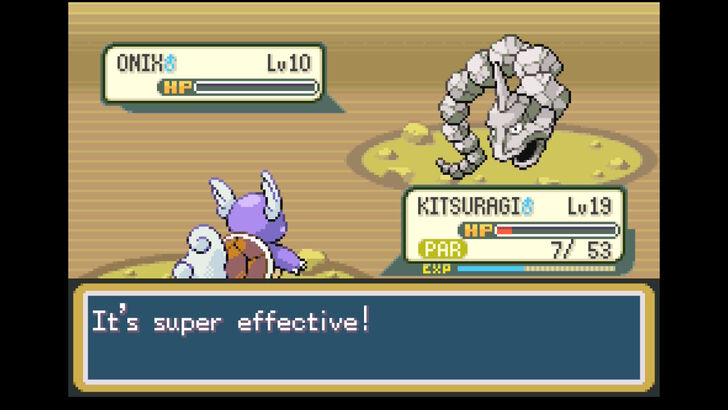
However, being a one-to-one port means this game also drags along all the original’s problems. If you are coming back to Kanto after playing recent titles, you really need to temper your expectations.
The biggest hurdle for modern players—myself included—is undoubtedly the lack of the Physical/Special split. In every game from Generation 4 onwards, a move is categorized as Physical or Special based on the move itself. For example, a punch is Physical; a beam of energy is Special.
In FireRed and LeafGreen, however, this is determined entirely by the move's type. All Water, Fire, Grass, Electric, Ice, Psychic, Dragon, and Dark moves are Special. Everything else—Normal, Fighting, Flying, Ground, Rock, Bug, Ghost, Poison, and Steel—is Physical.
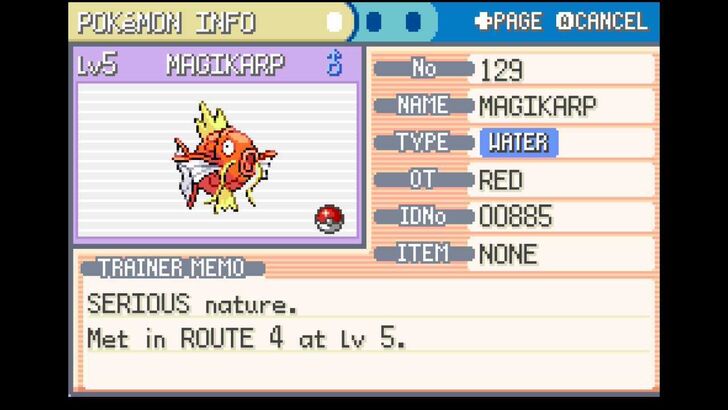
This creates some really awkward situations for certain Pokémon. Take Gyarados, for example. It has a massive Physical Attack stat but a very weak Special Attack. Because it’s a Water-type, and all Water moves are Special in this game, its Surf or Hydro Pump will do little damage.
It can’t effectively use its own elemental typing to its full potential, so I had to rely on Return or Hyper Beam just to deal significant damage. It’s a relic of older game design that can be frustrating if you’re used to the more logical system of today.
Temper Expectations, Modern Trainers
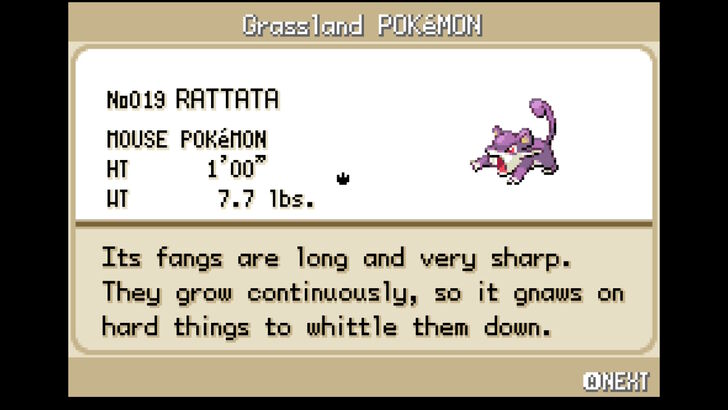
There are also several mechanics we’ve grown to take for granted that simply aren’t here. TMs (Technical Machines) are single-use items. If you use your one copy of Earthquake on the wrong Pokémon, it’s gone forever.
This means, too, that you often have to go back to having an HM Slave. In the 2020s, Pokémon games have moved away from Hidden Machines, but in Kanto, you still need moves like Cut, Fly, Surf, and Strength to finish the game. These moves cannot be easily deleted, so like most players, I ended up dedicating my sixth party slot to a "slave" Pokémon—usually a Nidoran—that exists purely to carry these moves so the main team’s movesets stay clean.
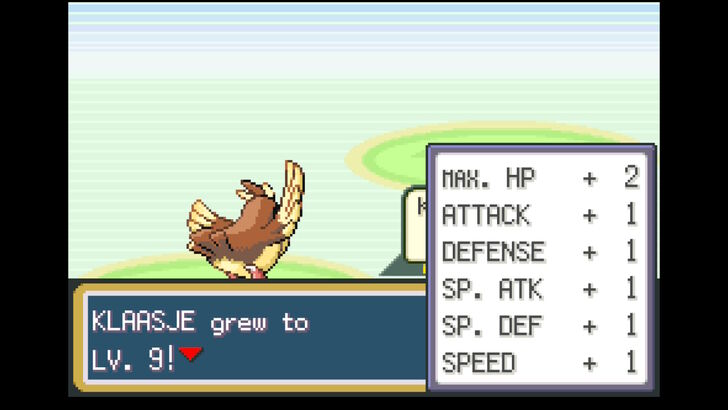
Since this is an old game, you also have to take into account using the Exp. Share. In modern games like Sword and Shield or Scarlet and Violet, experience points are automatically shared with your entire party after every battle. In FireRed and LeafGreen, however, the Exp. Share is a single item you have to find and then give to one specific Pokémon to hold. That Pokémon will then get half the experience from a battle without having to actually fight.
This was a major point of contention when the series changed. Many people felt that the change made games too easy, often leaving your team overleveled in Gym battles without any way to turn the feature off.
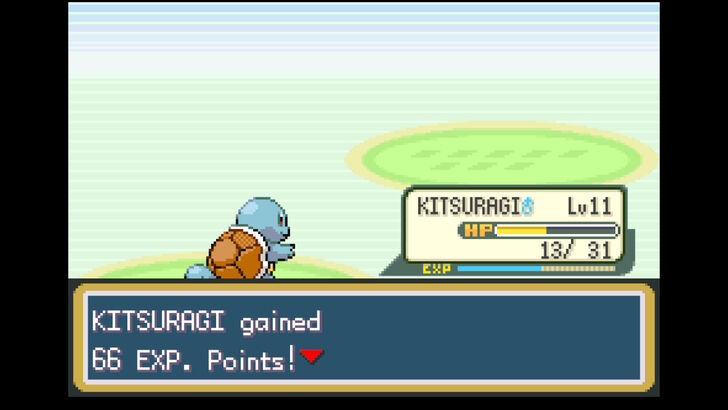
However, going back to the old way means grinding more often. If you want to level up a whole team, you have to do it the old-fashioned way: by "switch-training," where you send out a weak Pokémon first and immediately swap it for a stronger one. It required a level of patience that modern gaming has largely abandoned. I like the charm of training Pokémon like this, as it feeds into the aforementioned gameplay loop. However, it can often feel like a chore to run around the same patch of tall grass just to level your, say, Magikarp up to the same level as your other Pokémon.
I still wish this were an option that players can toggle on and off at will. But regardless, these gripes don’t take away from how strong Gen 3’s gameplay experience is. Yes, there are a lot of outdated mechanics I wish were abandoned, but I still found the bulk of the experience very enjoyable. Battles are still fun and creative even without the Physical/Special Split, and training Pokémon is grindy, but that just solidifies the fact that this is a product of its time.
I Wish There Were More to This
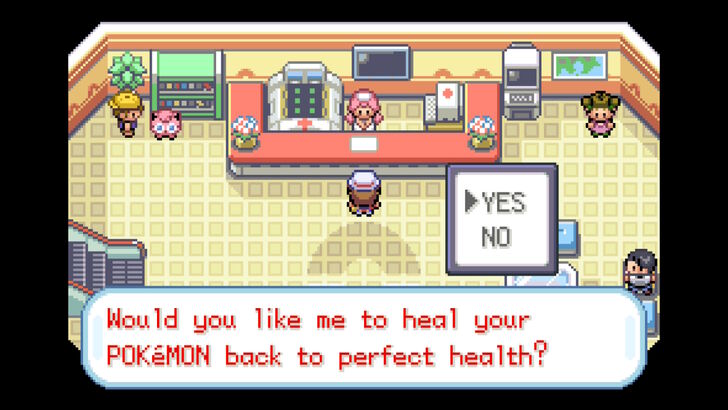
Ultimately, we have to view this 2026 release of Pokémon FireRed and LeafGreen for exactly what it is: a port. This carries both a sense of relief and a bit of disappointment. It is a relief because it remains the same great game many of us remember from 2004, preserved with all its quirky faults and original charm intact. However, because it is such a faithful translation, it doesn’t do anything to address the rough edges that have become more apparent over the last two decades.
This isn't the first time Nintendo has handled its legacy titles this way. We saw a very similar approach back in 2017 and 2018 when Pokémon Gold, Silver, and Crystal were added to the 3DS Virtual Console, their old digital storefront. Those versions were also direct ports, and while they were great for accessibility, they didn’t try to do anything new either. They were meant to be digital archives that people could finally own again without needing the original bulky cartridges.
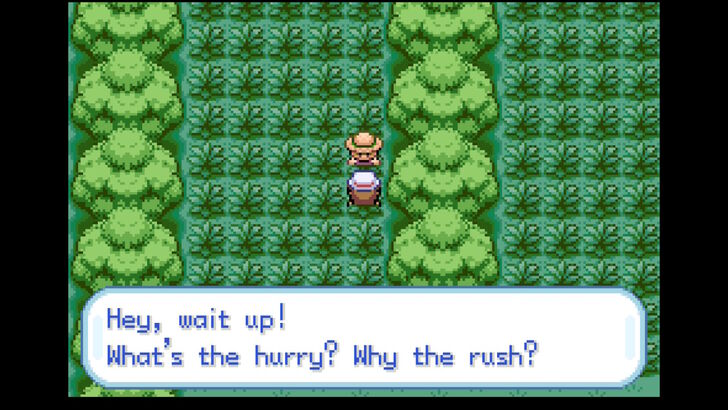
It would have been a better port if they had added a few more changes. For example, an internal clock system. In the original FireRed and LeafGreen, there was no day-and-night cycle, which meant you couldn't evolve Eevee into Umbreon or Espeon even though these Pokémon existed in Ruby and Sapphire at the time. An update like that, or perhaps even implementing the Physical/Special split from later generations, would have gone a long way in making this a modern way to play an old favorite.
It is also disappointing that there is no way to play multiplayer online. You can still trade and battle locally, but this glaring omission makes these titles even more stuck in the past. At the very least, we have confirmation that Pokémon HOME support is coming soon. Being able to eventually move these classic ribbons and teams up to the modern cloud is a small mercy, but it doesn't change the fact that they could have done much more with these titles.
Don’t fix what isn’t broken, sure, but even if the gameplay remained untouched, I’d at least like the ability to customize the sides of the display. Currently, you’re stuck with static black bars on either side of the 4:3 image. Being able to swap those out for themed borders would have made the screen feel less empty while playing.
Is Pokémon FireRed Worth It?
Yes, These Are Still Amazing Games, Two Decades Later
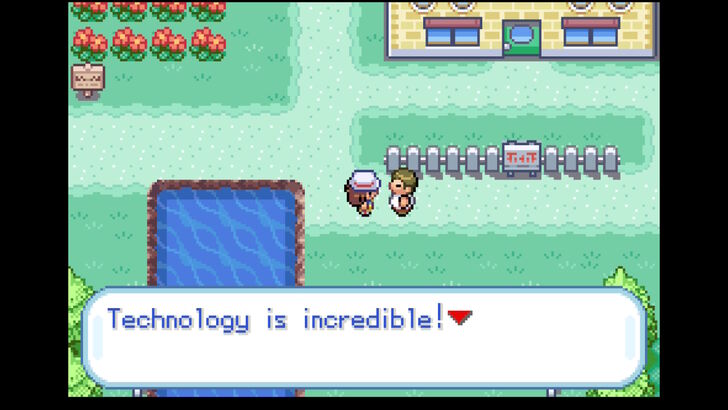
These Switch ports are priced at $20, which feels reasonable enough for a classic. But even then, it is hard not to hope for just a drop of meaningful change to make the experience feel fresh for those who have already played through Kanto a dozen times.
Regardless, though, I still think these ports are worth picking up for the sheer convenience and nostalgia factor. They remind me how solid the foundation of Gen 3 really was. I genuinely hope Nintendo doesn't stop here; I’d love to see Pokémon Emerald get the same treatment soon. Looking further ahead, I’m curious to see how they would handle the DS games. Bringing titles like Platinum, HeartGold and SoulSilver, or the Gen 5 games to the Switch would be a massive win for fans, though those dual-screen layouts would definitely require a bit more creative thinking than these GBA titles did.
I just hope that if they do decide to bring those back, they're willing to put in a little more effort to make them feel at home on modern hardware.
Pokémon FireRed and LeafGreen FAQ
What are Pokémon FireRed and LeafGreen’s Version Exclusives?
FireRed players gain access to Pokémon like Arcanine, Scyther, and Electabuzz, while LeafGreen trainers can catch Nintetales, Pinsir, and Magmar. The versions also differ in their Johto-region Pokémon , with FireRed having Skarmory and LeafGreen getting Sneasel and Misdreavus.
For a full list of version exclusives, check out our walkthrough below!
Game8 Reviews