


| Hyrule Warriors: Age of Imprisonment | |||
|---|---|---|---|
| Release Date | Gameplay & Story | DLC & Pre-Order | Review |
Hyrule Warriors: Age of Imprisonment Review Overview
What is Hyrule Warriors: Age of Imprisonment?
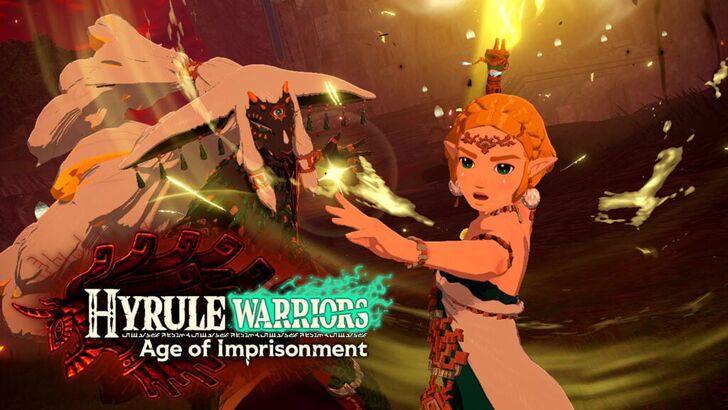
Hyrule Warriors: Age of Imprisonment is an action game for the Nintendo Switch 2, released on the 6th of November, 2025. Developed by Koei Tecmo in collaboration with Nintendo, this title serves both as a sequel to Hyrule Warriors: Age of Calamity and a prequel to The Legend of Zelda: Tears of the Kingdom.
It takes place in the distant past of Hyrule, during the Imprisoning War that ultimately led to the events of Tears of the Kingdom. Building upon the hack-and-slash mechanics characteristic of the Hyrule Warriors series, players will be able to control key characters, such as Zelda and King Rauru, each with their own unique abilities and playstyles, as they confront hordes of monsters and strive to thwart Ganondorf’s plans.
Hyrule Warriors: Age of Imprisonment features:
⚫︎ Tells a Canon Story Set During the Imprisoning War
⚫︎ Musou-Style Gameplay
⚫︎ Seamless Character Switching and Sync Strikes
⚫︎ Expanded Character Roster
⚫︎ Zonai Devices
⚫︎ GameShare Functionality with Switch and Switch 2
For more gameplay details, read everything we know about Hyrule Warriors: Age of Imprisonment’s gameplay and story.
 Switch 2 Switch 2 |
|||||
| Price | $69.99 | ||||
|---|---|---|---|---|---|
Hyrule Warriors: Age of Imprisonment Pros & Cons
| Pros | Cons |
|---|---|
 Musou Combat is Just Satisfying Zonai Devices and Elemental Combinations Looks and Sounds Great Musou Combat is Just Satisfying Zonai Devices and Elemental Combinations Looks and Sounds Great |
Laughably Bad AI and Repetitive Structure More Than Half of the Roster Feels Underwhelming Little Replay Value |
Hyrule Warriors: Age of Imprisonment Story - 7/10
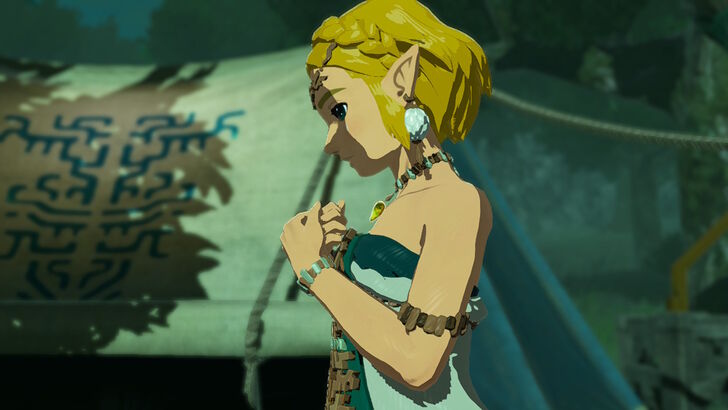
Zelda’s journey through ancient Hyrule during the Imprisoning War has plenty of promise and sets up what could’ve been one of the more interesting takes on her character yet. Unfortunately, she shares screentime with another character who ends up stealing much of the spotlight. Because of that, Zelda’s own growth feels uneven, and the game’s roster doesn’t do much to make up for it. Most of them feel underdeveloped. It’s still a good story, but one with a lot of wasted potential.
Hyrule Warriors: Age of Imprisonment Gameplay - 8/10
Age of Imprisonment doesn’t stray far from what you’d expect in a Musou game. You still hack, you still slash, but it adds enough touches to keep things exciting. Character abilities and elemental mechanics give fights a bit more "oomph," even if the core loop stays mostly the same. The bad AI and repetitive objectives can drag things down, but the moment-to-moment action still feels satisfying.
Hyrule Warriors: Age of Imprisonment Visuals - 9/10
The game sticks closely to the art style of Breath of the Wild, and it works well here. Character models look great, with detailed designs that fit right into the era of the Imprisoning War, and the art direction gives the world a familiar yet distinct tone. It also helps that the game runs at a mostly steady framerate, even with hundreds of enemies on screen. However, the repetitive gameplay extends to the environments too. After a while, many of the battlefields start to blend together.
Hyrule Warriors: Age of Imprisonment Audio - 9/10
The game’s audio utilizes familiar sound effects and cues from the series, but there’s plenty of new music here. A strong soundtrack from Manaka Kataoka, Keiichi Okabe, and the rest of the game’s composers gives battles the energy they need, and the voice acting is solid across the board. The sound design generally complements the action well. However, there are some notable audio-mixing issues, particularly in handheld mode, where music can occasionally overpower dialogue.
Hyrule Warriors: Age of Imprisonment Value for Money - 7/10
Finishing Age of Imprisonment takes around 20 hours, which feels fair for a Musou title, but it doesn’t leave much reason to return once the credits roll. There are postgame missions, extra outfits, and some side content to chase, yet the repetition sets in fast. Its structure and pacing don’t do much to keep things fresh either, so it’s best enjoyed in shorter bursts. Even so, when the action hits its stride, it’s easy to lose track of time mowing through waves of enemies
Hyrule Warriors: Age of Imprisonment Overall Score - 80/100
Hyrule Warriors: Age of Imprisonment succeeds delivering the fun and spectacle one would expect from a Musou game, with combat that’s satisfying and layered enough to keep things interesting. The game’s story is interesting, though it is a shame that it often squanders its potential instead of just focusing on Zelda herself. Regardless, the highs are memorable enough to make it an engaging experience from start to finish.
Hyrule Warriors: Age of Imprisonment Review: Simple and Fun Musou
A Canonical Zelda-Musou
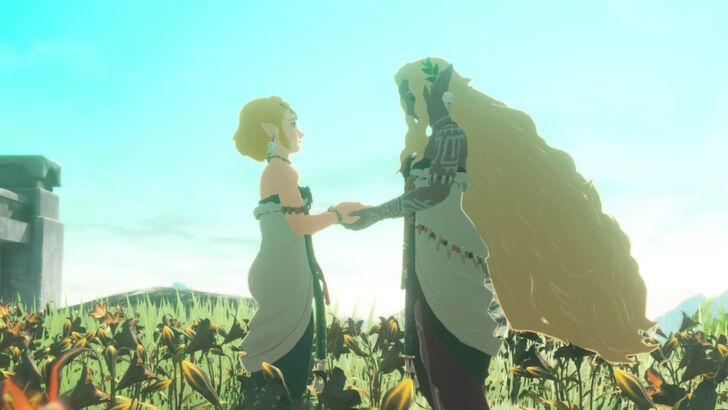
There’s no shortage of Musou games these days. Over the past decade, the genre has found its way into all kinds of franchises, and for good reason. It’s a simple yet satisfying formula of you hacking, slashing, and winning. The screen fills with hundreds of enemies, you mow them down, and it feels good every single time. Koei Tecmo and Omega Force have spent years refining this type of large-scale action and blending it with different properties to create familiar yet unique experiences. Persona received one in 2021. Fire Emblem got two crossovers. Even One Piece received four iterations of Pirate Warriors.
Among these collaborations, though, Hyrule Warriors has always stood out to me. The first game released back in 2014, serving as a kind of celebration of The Legend of Zelda’s long history. It was later ported to the 3DS then to the Switch, complete with all its DLC and characters. That first entry was all about fanservice, though. After that success came Hyrule Warriors: Age of Calamity, which positioned itself as a prequel to Breath of the Wild, tying its massive fights to the Great Calamity that reshaped Hyrule. Although the gameplay was received well by most players, the story… not so much. Its alternate timeline twist pulled it away from Zelda’s canon and left fans divided about its place in the series.
Rather than reimagine history, Hyrule Warriors: Age of Imprisonment, however, aims to connect to it, to fill in the missing spaces of the Imprisoning War mentioned in Tears of the Kingdom. It builds on the foundation of Age of Calamity’s large-scale battles but promises a story that’s very much canon; players who hated Age of Calamity’s ending need not fret.
Contextualizes Things Tears of the Kingdom Hinted at
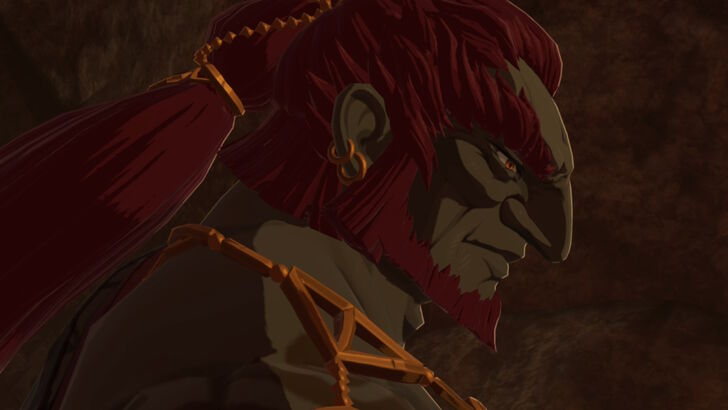
As mentioned earlier, Hyrule Warriors: Age of Imprisonment doesn’t go down the same road as Age of Calamity. Rather than present an alternate timeline or a "what if" version of events, this game stays closer to the canon of Tears of the Kingdom—or more accurately, to the other side of that game’s story: Zelda’s. It fills in the blanks of what we only heard about in Tears of the Kingdom in regards to the Imprisoning War, that major historical conflict that shaped much of Hyrule’s ancient past.
What I appreciate most is how Age of Imprisonment, even as a Musou title often dismissed as "just mindless fun," takes its story seriously. The game makes a strong effort to tell a meaningful narrative. There are a lot of cutscenes, and, as with Age of Calamity before it, you can tell that the developers wanted to make sure the story matters.
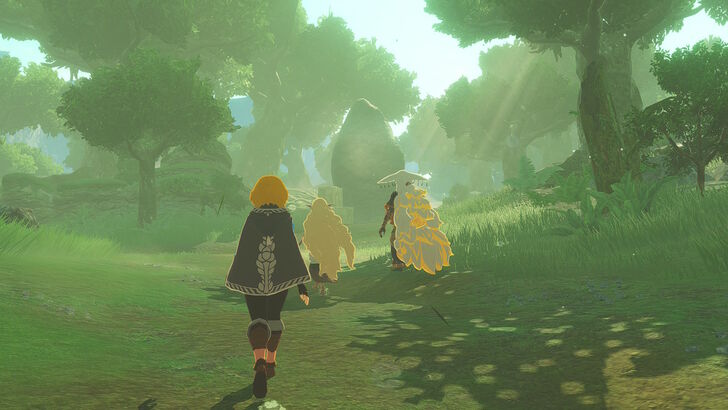
The story begins right after Zelda is sent back in time at the start of Tears of the Kingdom. She’s discovered by Rauru and Queen Sonia, the first rulers of Hyrule, who take her in and help her adjust to life during Hyrule’s founding. From there, we follow Zelda as she learns about this ancient kingdom and its people while also figuring out her role in its fate. Ganondorf being Ganondorf, however, he isn’t going to sit quietly while peace reigns. His growing threat kicks off the events of the Imprisoning War, and the game follows Zelda, Rauru, and Mineru, and other key characters as they try to stop his plans before everything collapses.
It’s a great setup, and I really like how it contextualizes what Tears of the Kingdom only hinted at. That gave us pieces of this war through flashbacks and dialogue, but Age of Imprisonment let you see it all unfold in real time. You get to witness the rise of Ganondorf’s forces, the alliances formed by the early heroes of Hyrule, the decision that led to the sealing of the Demon King. It’s one thing to know that Rauru made a great sacrifice; it’s another to stand beside him and take part in those battles.
For fans of Tears of the Kingdom, there are plenty of familiar details and callbacks that make the story feel rewarding. You’ll recognize certain lines, locations, symbols, characters that tie directly to scenes from the mainline games. Seeing all of it here in motion adds depth to what was once just lore.
However, it’s not all perfect. There are a lot of things holding it back from being as strong as it could’ve been.
A Construct’s Journey… and Everyone Else

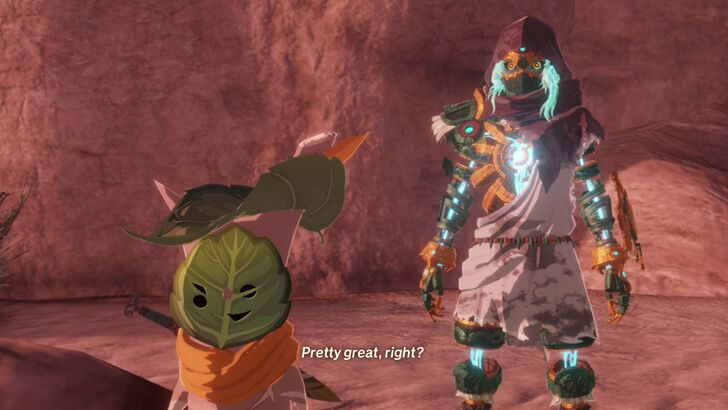
Although the game is marketed and structured as Zelda’s story, she often doesn’t feel like the main focus. Strangely enough, this happens because of one of the game’s new characters, the Mysterious Construct. This figure, a Zonai-Device warrior who resembles Link, ends up becoming the second lead and sharing the spotlight with Zelda for most of the game. It is accompanied by Calamo, a Korok who acts as its companion, much like Navi or Midna did in previous Zelda games.
The problem is that both the Mysterious Construct and Calamo are fun characters. Their dynamic ends up drawing a lot of attention, sometimes more than Zelda herself. They get some of the best interactions, and because of that, Zelda feels slightly pushed to the side in favor of this Link lookalike. It’s not that she’s absent or unimportant; many of the game’s emotional beats are still told through her eyes, but her role often feels shared when it could’ve been hers alone. Considering Zelda’s contribution to the Imprisoning War, I wanted the game to explore more of her growth, her doubts, her experience as a displaced princess learning to become a leader.
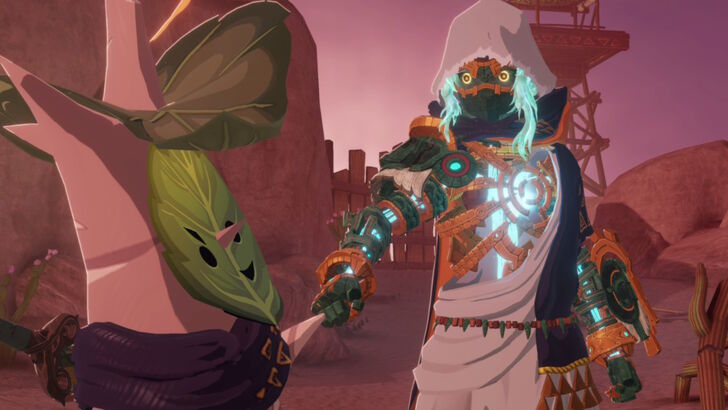
I can’t deny, though, that the Mysterious Construct is a strong addition to the narrative. Its existence adds another perspective to the war and gives the gameplay a solid narrative tie. The bond between it and Calamo, despite the former not even speaking a word, is heartfelt. Because of this, though, Zelda can often feel as though she’s being edged out of her own story—not completely, but enough to notice.
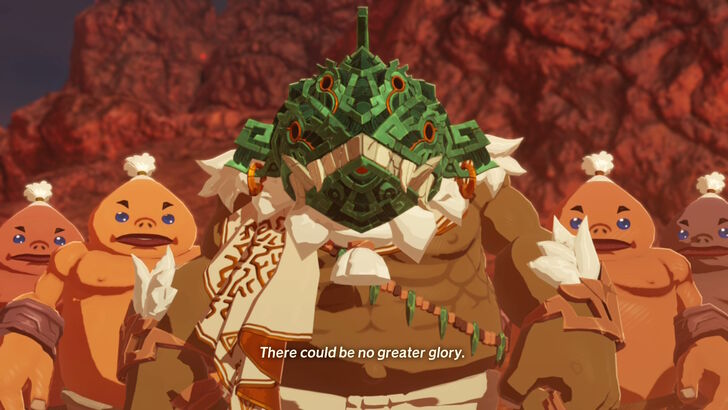
The rest of the cast doesn’t help much either. Although the key characters like Zelda, Rauru, Mineru, the Construct, Calamo, and a few others like Ardi and Qia get some development, many of the other playable characters feel like they exist purely to pad out the roster.
Some appear briefly then fade into the background. You can sense that the developers were limited by how much they could invent while still keeping things canon. Because of that, they couldn’t just create entirely new major characters out of nowhere, especially since they already took creative liberty with the Construct and Calamo. Half the cast feels underwritten. They fight alongside you in battle, but you never really get to know them beyond their surface traits.
Fighting at Massive Scale
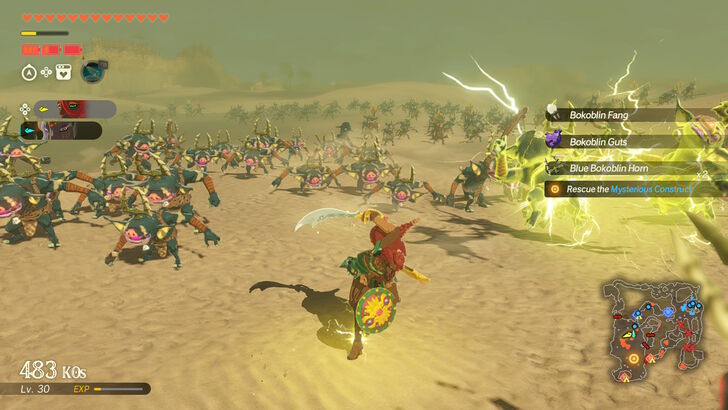
A Musou game lives and dies by its gameplay. In that regard, Age of Imprisonment is both familiar and refined. This is still the trademark one-versus-a-thousand experience that the series is known for, just dressed in Zelda’s world and lore. You charge into battle, cut through waves of Bokoblin, Moblins, and the like, and send dozens of enemies flying with a single combo. The basic combo loop remains the same. Here, you’re still stringing regular and heavy attacks to create combos that fill the screen with effects. It’s still the fluid and satisfying Musou gameplay we have grown accustomed to. Even if you’re simply button-mashing your way through, the game makes it feel good.
This doesn’t mean that the game is entirely mindless, though. Although you can breeze through lower difficulties by mashing, the game asks for a bit more thought once you start facing tougher enemies and bosses. Like Age of Calamity, it builds on the elemental system of The Legend of Zelda series. Each element has specific strengths and weaknesses, and using the right one can make all the difference. Certain enemies covered in mud can be washed clean with water to expose them to attacks, fire melts ice, electricity can stun foes standing in puddles, and so on. This element-based combat encourages you to switch between characters and adapt on the fly rather than just repeating the same combo chains. You’ll often find yourself juggling which abilities to use, managing cooldowns, and exploiting elemental weaknesses to break an enemy’s Weak Point Gauge and deal massive finishing damage.
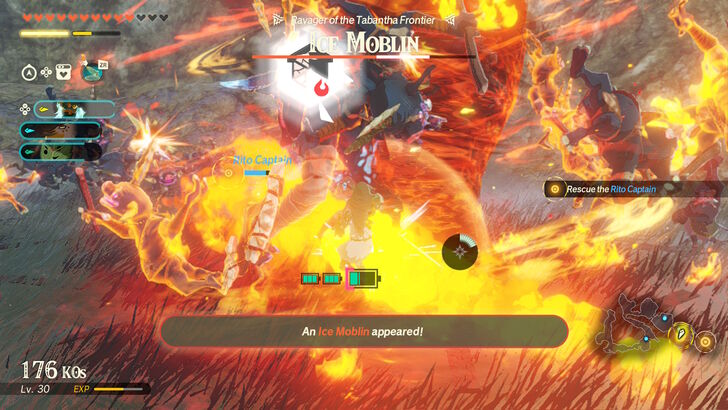
Because this game takes place before Tears of the Kingdom, it also borrows a few ideas from it, like the Zonai tech. Here, the developers have smartly built those mechanics into combat and exploration. Every character can make use of Zonai Devices, such as fans, flame emitters, and time bombs to turn the tide of battle.
These devices are great for crowd control and elemental combos. You can, for example, set up a fan to create a gust of wind, then use a flame emitter to turn that gust into a fire tornado that sucks in groups of enemies. It’s fun to experiment with combinations and see how different elements interact. These, though, are limited in energy, so you can’t just spam them endlessly.
What makes it even more engaging and fun is how distinct each playable character feels. Special attacks are unique to each hero, and they’re very much flashy. Zelda’s light-based magic differs from Mineru’s Zonai tech-attacks. The Mysterious Construct fights like a mechanical version of Link, but his attacks can be mixed with Zonai Devices. You can switch between characters freely during missions, which keeps the pace lively and lets you cover ground across multiple fronts. It’s a small thing, but it does a lot to make the game feel bigger and more strategic.
Moreover, aside from special attacks, there are also Sync Strikes, which are special moves where two characters "high-five" or "fist-bumps" to perform a joint attack once a certain gauge is filled. These are not only powerful but also visually distinct for every pairing. Zelda and Mineru, for example, perform a combined attack where Mineru summons a massive construct for Zelda to ride. Meanwhile, the Mysterious Construct and Calamo’s Sync Strike has Calamo riding on the Construct and unleashing elemental damage from above. These sequences break up the usual combat rhythm with something that feels cinematic. They’re easily among the highlights of battle.
Enemy behavior also has more variety this time. Some enemies can’t be staggered by normal attacks, forcing you to dodge or counter instead. Perfectly dodging at the right time triggers a Flurry Rush, just like in Breath of the Wild, letting you punish enemies with rapid attacks. Aerial enemies require different tactics; you might need to use a bow, a projectile, or a character with strong vertical attacks to bring them down.
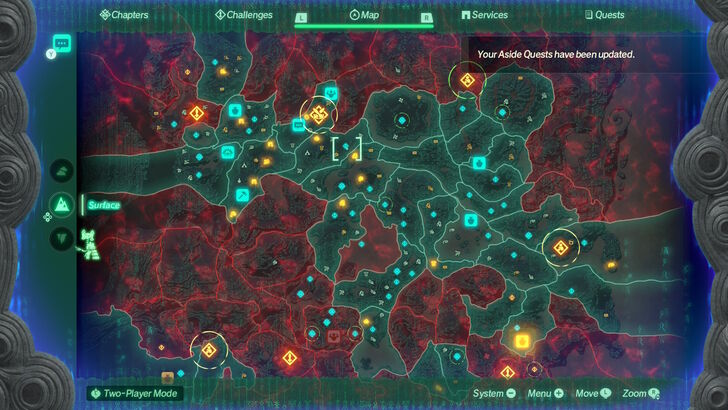
There are also a lot of things to do outside of fights. The game’s world map functions similarly to Age of Calamity’s. This means the more you do missions, the more you unlock side quests, upgrades, characters. Every new story mission expands your reach. You can strengthen characters, fuse weapons to improve stats, gather materials to unlock new abilities, and more. It can be overwhelming at first, as the map fills up fast, but it’s satisfying to see your progress laid out visually as Hyrule slowly comes under your control.
As you advance, enemy forces will occasionally launch invasions against the areas you’ve already liberated. You’ll need to drop into these skirmishes to defend your territory. Each battle contributes to a larger sense of momentum, as if you’re truly leading a campaign across Hyrule.
Bad AI and Too Repetitive
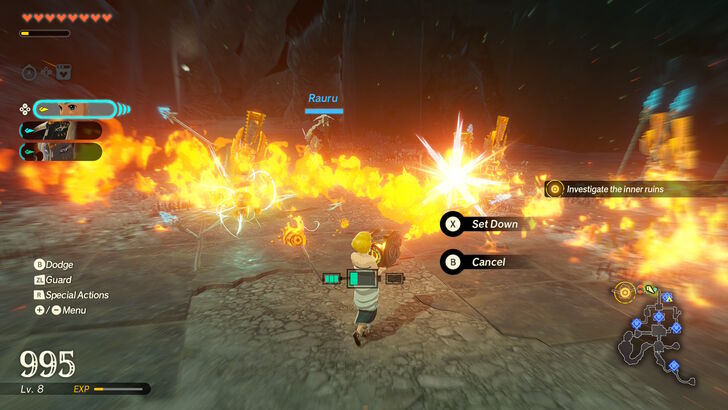
One of the things, though, that Age of Imprisonment can’t escape, simply by virtue of being a Musou game, is a sense of repetitiveness. Yes, this isn’t a problem unique to Musou games; plenty of genres lean on repeating patterns, but it’s especially noticeable here because the core gameplay loop is still so focused on going from one objective to the next in perpetuity. Most missions boil down to heading to a point, cleaning out mobs, and then moving to the next point. Over the course of dozens of missions, that loop can feel predictable.
There are moments when the game does try to mix things up. Some missions have boss-specific gimmicks or environmental hazards, but for the most part, if you’ve played enough of the main campaign, you’ll get a strong sense of déjà vu. Playing on higher difficulties—hard in my case—doesn’t seem to fix this entirely. Sure, enemies soak up and deal more damage, but the AI itself doesn’t act smarter. They still charge mindlessly at you and rarely make strategic use of the battlefield.
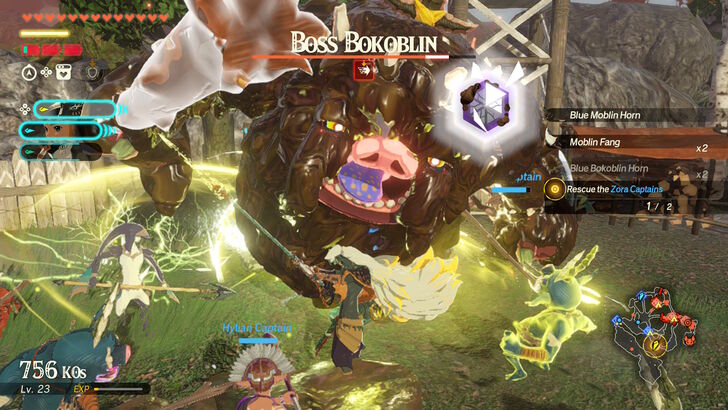
The lack of strategy is especially noticeable when you try to use your allies to handle objectives. You can order characters to, say, defend areas or attack enemy bases, which sounds promising, but the AI is frustratingly bad. Most of the time, it barely scratches the enemy and just stands there defending, meaning that you end up having to do all the heavy lifting yourself.
On more than one occasion, I let an AI-controlled ally attempt to capture an objective on its own, and an hour later, it still hadn’t defeated the enemy captain. Because of that, it often feels like you’re just giving orders to characters to "attack" a base just so you could swap to them later on. You’re technically commanding your troops, but the execution relies entirely on you.
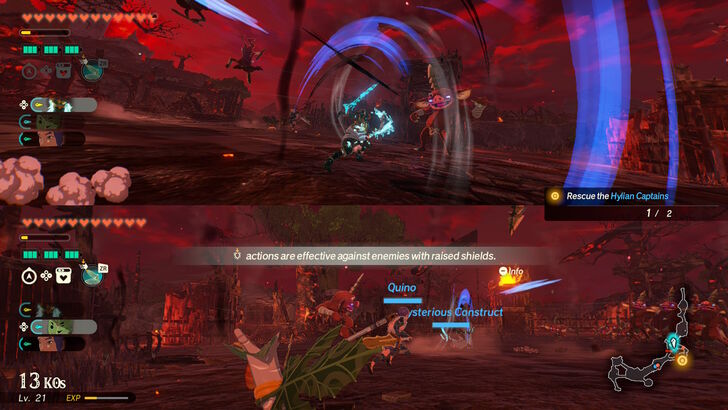
It’s a relief, then, that Age of Imprisonment offers local co-op. You can play splitscreen with another person, which immediately makes the repetitive nature of missions a little easier to handle since two players can divide the work and make fights more dynamic. If you have a Switch or Switch 2 on you, you can also use GameShare to join friends remotely for two-player co-op.
Having another person there to help clear objectives improves the experience significantly. It doesn’t fix the repetitive mission structure, but it makes running through objectives and managing multiple characters far more fun than playing solo.
Is Hyrule Warriors: Age of Imprisonment Worth It?
Yes; It’s a Musou Game Through and Through
Hyrule Warriors: Age of Imprisonment took me about 20 hours to get through the main story, which is a fair amount of content for a Musou game, but it’s also worth noting in today’s pricing climate. At $70, that’s a steep cost for a single playthrough, even if you factor in some post-game content. The missions largely stick to the same objectives, so there isn’t a strong incentive to replay the game multiple times unless you’re chasing completionist goals. Combined with the repetitive nature of the gameplay, this makes the game feel like it peaks in its initial 20 hours. Once you’ve seen the story and tried out all the characters you like, the drive to keep playing starts to fade.
However, it’s hard to deny that Age of Imprisonment has its moments. Some missions are just gloriously fun, as you mow through waves of enemies with flashy combos and elemental attacks that feel satisfying to pull off. The game leans fully into the Musou formula, and if you’re buying into it, your expectations should probably align with that. Yes, it’s dressed up in a Zelda coat of paint, but underneath, It’s a Musou game first, a Zelda game second, and if you’re expecting anything beyond that, you’ll probably be disappointed.
| Switch 2 |
|||||
| Price | $69.99 | ||||
|---|---|---|---|---|---|
Hyrule Warriors: Age of Imprisonment FAQ
How many characters are there in Hyrule Warriors: Age of Imprisonment?
There are, overall, 19 characters in Age of Imprisonment, and a lot of them require players to do certain tasks to unlock.
Game8 Reviews

Hyrule Warriors: Age of Imprisonment Similar Games
Hyrule Warriors: Age of Imprisonment Product Information
|
|
| Title | HYRULE WARRIORS: AGE OF IMPRISONMENT |
|---|---|
| Release Date | November 6, 2025 |
| Developer | AAA Games Studio |
| Publisher | Nintendo Koei Tecmo Games |
| Supported Platforms | Nintendo Switch 2 |
| Genre | Action, Hack and Slash |
| Number of Players | 1-2 |
| ESRB Rating | ESRB Teen |
| Official Website | Hyrule Warriors: Age of Imprisonment Website |