
| Etrange Overlord | |||
|---|---|---|---|
| Release Date | Gameplay & Story | Pre-Order & DLC | Review |
Overview
What is Etrange Overlord?
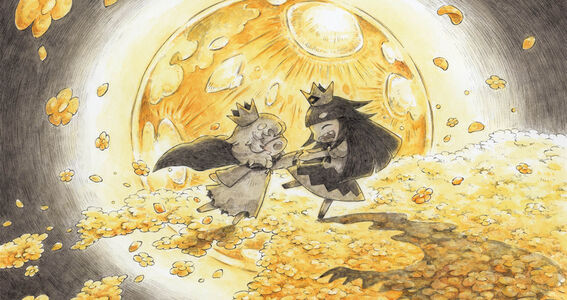
Etrange Overlord follows the story of a young noblewoman who was framed for the murder of the king and subsequently sentenced to death by her own fiance, the son of the king. After she is summarily executed, she wakes up in the middle of a desert in hell. She later resolves to make the best possible life for herself there by setting off on a colorful and musical journey to overthrow the tyrannical Overlord of hell.
Etrange Overlord features:
⚫︎ Isometric shooter gameplay
⚫︎ Multiple playable characters
⚫︎ Material-based progression
⚫︎ Optional side stories
⚫︎ Dozens of different stage objectives
⚫︎ Customizable stage power-ups
For more gameplay details, read everything we know about Etrange Overlord’s gameplay and story.
| Digital Storefronts | ||
|---|---|---|
 Steam Steam |
 PS PS |
 Switch Switch |
| Wishlist Only | $49.99 | |
Etrange Overlord Review: So Cringe It’s Cool
The Villainess Experience: A Musical
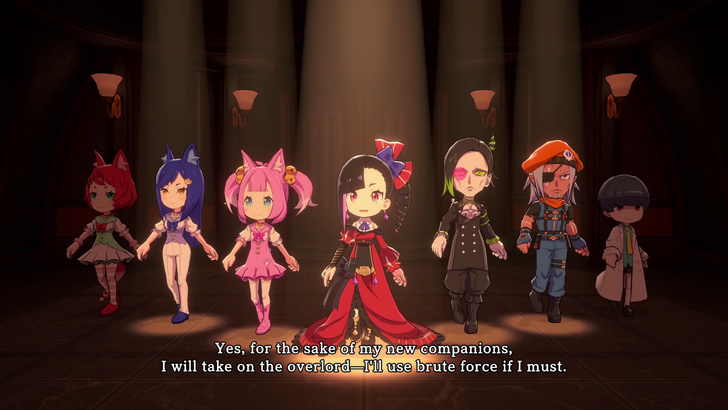
Nippon Ichi’s side projects have some of my most loved titles of all time. These include my favorite JRPG, Soul Nomad & the World Eaters, and my favorite platformer, Prinny 2: Dawn of Operation Panties, Dood!
That’s why I’m always excited to play anything they make outside the mainline Disgaea series. Etrange Overlord, in particular, is a special one. While it isn’t developed by Nippon Ichi themselves, it’s still by a few of their alumni such as Sohei Niikawa, the original creator of Disgaea, and Yuichiro Kitao of Rhapsody III.
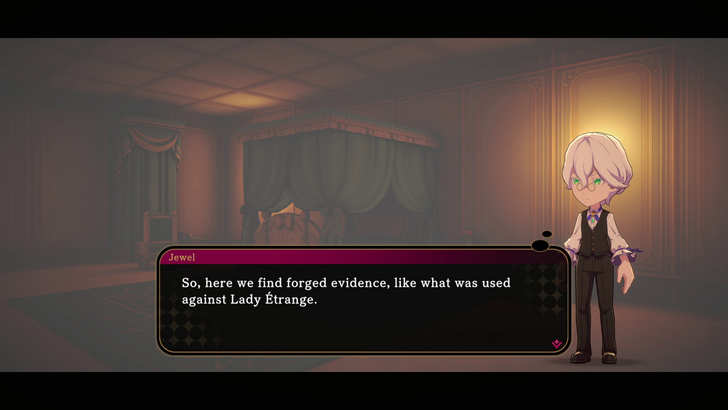
In a nutshell, Etrange Overlord is an isometric shooter featuring the “villainess” Etrange and her bunch of misfit companions. It features some very simple controls and progression systems, mainly propped up by its incredibly diverse stage objectives and hilariously over-the-top use of tropes and cliches.
Classic Nippon Ichi behavior, really. And it really shows in how the story is written.
Welcome to a Strange Hell

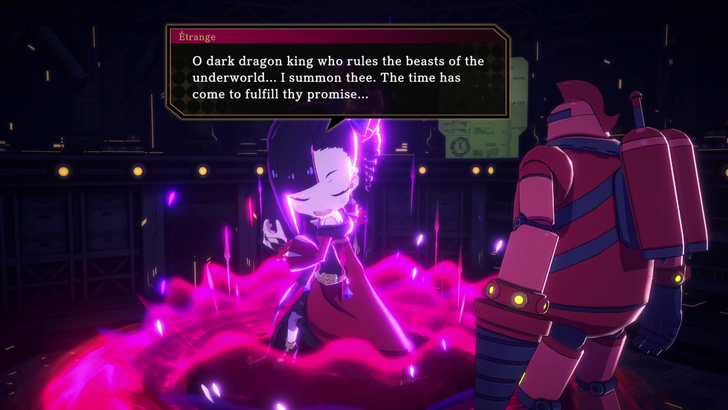
The story starts with the game’s titular character, Etrange von Rosenberg, getting executed by guillotine without much context besides a few lines from a princely character. The crimes she was charged with were, of course, a setup; yes, we’re starting strong with a standard villainess trope. But unlike most stories that lead up to this point, there’s no isekai mob character who comes to save her at the last moment, nor does she wake up at an earlier point in time so that she could lead a new life.
She simply finds herself in hell.
In a very normal progression of events, she then suffers through all the tortures hell has to offer and the story ends in a tragedy… is what would have happened if this wasn’t a game. Instead, she uses her Dark Arts (she’s still innocent here, by the way) to subjugate hell’s inhabitants, turn the most powerful of them into her vassals and companions, and then come to terms with the reality of her execution by indulging herself in sweets, spreading the risk of type 2 diabetes everywhere, and uhh, world domination.
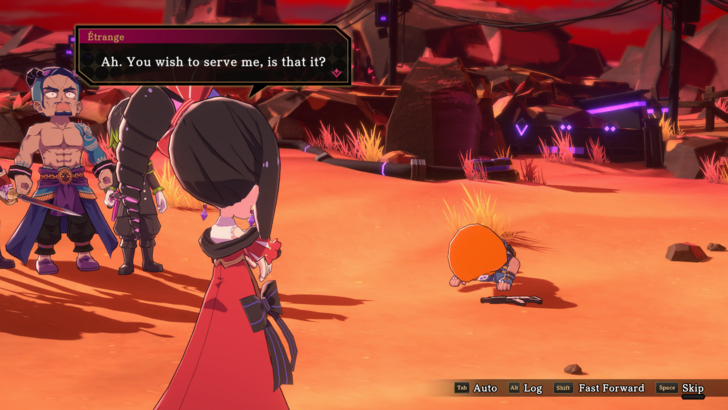
Standard Nippon Ichi stuff, really. I mean, what do you expect from the writer who created Disgaea: Hour of Darkness where an angel with a love and giant mecha obsession has to subjugate the son of a demon lord that, supposedly, “choked and died on a pretzel”? It can only really be described as “utterly glorious.”
Etrange Overlord, at the start, doesn’t need complex, gut-wrenching epics or depressing manifestos of tragic anti-heroes. Sometimes, stories are perfectly fine being presented as lighthearted gagfests that don’t need more than two seconds of thinking for every event in order to understand everything. This, in turn, elevates everything around it. The light, colorful isometric shooter gameplay feels more upbeat because of it, while the cute, super deformed art style lands even better.
Of course, it also serves as an incredible jumping point for when you arrive at the later parts of the story…
Even the Story Feels Like a Game

Normally, most games separate story and gameplay into distinct sections. You start every stage with a narrative introduction, read through a bunch of text and watch the characters frolic about, and then move onto the gameplay part where bullets fly and damage numbers pop.
“Normal” isn’t really something you can use to describe most things about Etrange Overlord, though, and the game is acutely aware of it. And in its pursuit of the wack and the wild, it bleeds the most playful part of itself—the game, obviously—into the story, mostly via the audiovisuals, without any apparent restraint.
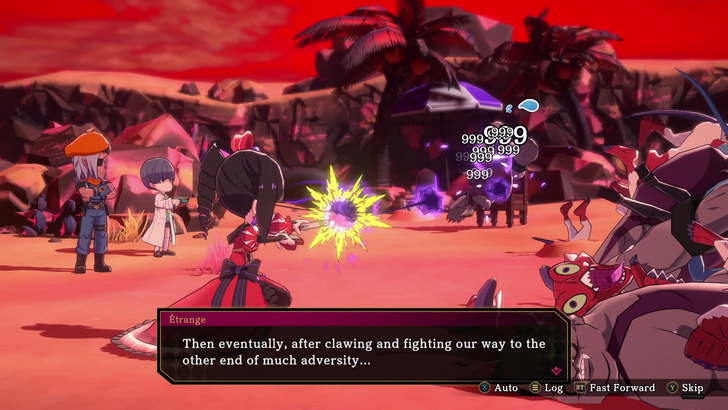
What you get is an almost embarrassing display of excess commitment to the bit, from enemies spawning out of nowhere simply because the scene demands bodies, to cutscenes displaying damage numbers just to make sure that the reader knows that they’ve been hit. And, it works incredibly well because it’s able to exploit your own expectations of itself. They even went out of their way to create musicals that sound so uncomfortably forced in both singing and choreography that it’s ironically hilarious.
Considering that we’ve been conditioned by this point to expect a seamless, immersive experience, this all feels like a whiplash. Not even previous Disgaea games lean this hard to make sure nothing is taken seriously. It really keeps you on your toes—and yet it will still get a punch in where you least expect it.
Complexity in Simplicity
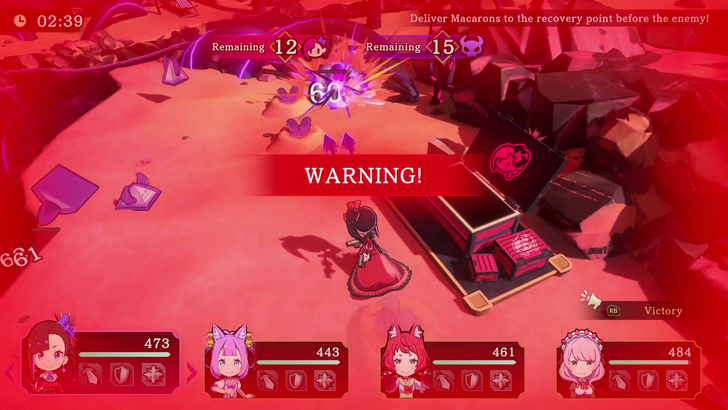
Even as an isometric shooter, you’d be surprised at just how simple Etrange Overlord’s core mechanics are. In combat, you can dash, throw items, attack, and use a skill—yes, singular—and that’s pretty much it. Outside of that, you’re really only limited to walking around the map, talking to NPCs, and picking items up, aside from the occasional special interaction with objectives.
That’s usually a cause for concern since it just creates a game that grows too old way too fast. Nobody wants a game where you’ve seen everything in just a few hours, after all. It’ll just feel like a waste of money, especially considering that this has a fifty dollar price tag slapped onto it.
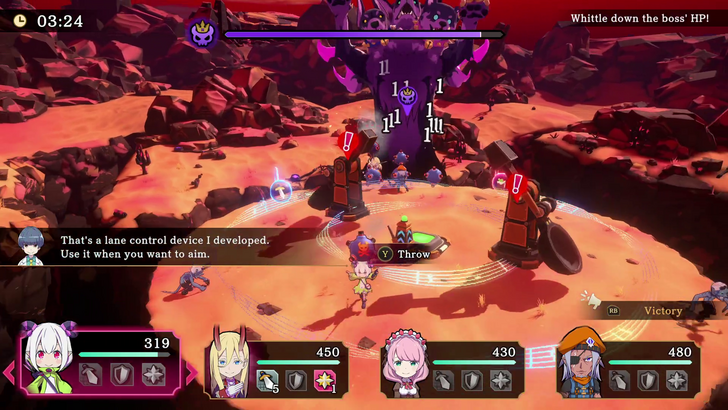
Fortunately, what Etrange Overlord lacks in depth, it certainly makes up for with variety in stage mechanics. Because while yes, the controls are as shallow as it comes, the way it mixes and matches objectives and items across stages is eye-popping. You could find yourself playing a vanilla isometric shooter in one stage, dueling a boss in a pinball-like stage the next, and then aiming catapults at giant monsters the following.
In this way, its very simple control scheme works heavily in its favor, allowing the diverse stage designs to take center stage and not let the experience be diluted with convoluted controls. It’s almost like playing different isometric shooters with one system. But though these stage mechanics are spread out so you can’t play favorites as you progress, it turns every stage into a surprise worth sticking around for.
Progression Gives a Rough First Impression
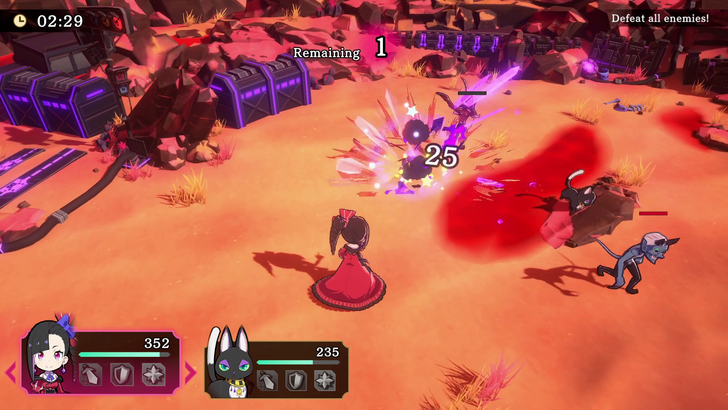
Before the game starts mixing things up, though, you’ll have to sit through a short but noticeable stretch of standardized gameplay. That means for several stages, the game won’t ask you for anything more than beating up thirty or so mobs that spawn in predictable waves.
To its defense, these stages are there to introduce its core mechanics. But at the same time, none of them have the kind of depth that needs dedicated stages for their exploration. It’s obvious how and why attacking, dashing, and swapping characters are important, after all. The only exception is probably the throwing mechanic since many stages feature items with unique properties upon being thrown, such as bombs to blow up the baddies and energy packs to charge devices like turrets or giant magnets.
But since we’re already here, this lack of excitement for the first few stages can easily make the game feel far more shallow than it actually is.
Camerawork is Wack
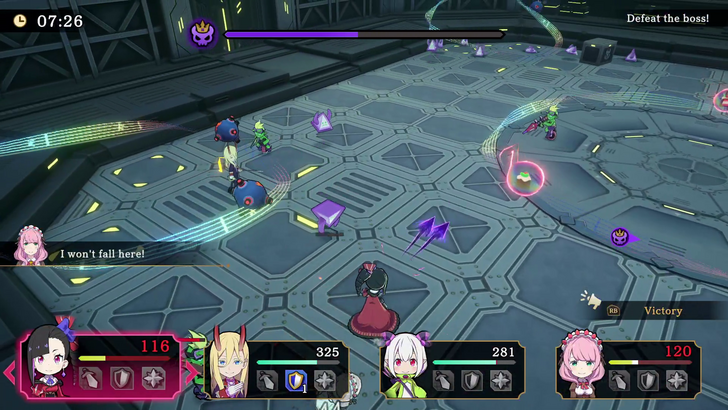
What’s even worse is that one major problem regarding its gameplay, at least with the gamepad, manifests itself very early; the camera controls. See, because of your character’s position on the screen and the relatively close proximity of the camera, half of your immediate surroundings will always be out of sight. In a way, you can even consider the camera as one of your enemies.
This matters a lot more if you, like me, prefer to play these games using a controller. Since your right thumb will be responsible for controlling the analog stick alongside all the other buttons for attacking, dashing, throwing items, and using skills, you can’t exactly do multiple things at once unless you're born with two of them. And you’ll really feel the restrictiveness of this design once you’re in stages that require strict timing. You can easily miss these windows due to having to juggle both the camera and your other actions.
Generally speaking, though, you might be able to adapt to the game’s quirks after enough time playing. And once you do, the only thing that will remain is everything else that makes Etrange Overlord such a great game to experience. It’s fun, unpredictable (despite its excessive use of tropes, at that), and even has a good narrative to boot.
Is Etrange Overlord Worth It?
It Sure Is
Though Etrange Overlord might look, sound, and play too much like it should be asking for half the price it’s currently worth, its true value is actually cleverly hidden between the surface level layers, revealing itself through its variety-driven stages and unpredictable design. It’s the kind of game that reveals its strengths the more you play with it. However, that would also make it more niche, even compared to Nippon Ichi’s other side projects.
Most importantly, it really shows the growth of the Nippon Ichi alumni behind this title, particularly in how they balance simplicity with variety.
The gags are also classic them. So, if you're a fan of their works, definitely try this out.
Game8 Reviews