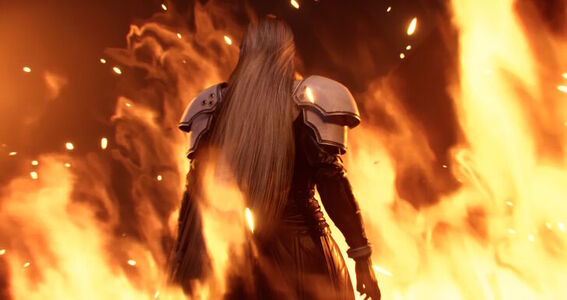
| Final Fantasy VII Remake | |||
|---|---|---|---|
| Release Date | Gameplay & Story | DLC & Pre-Order | Review |
Overview
What is Final Fantasy 7 Remake Intergrade?
Final Fantasy VII Remake (also known simply as FF7 Remake) is an action role-playing game developed and published by Square Enix. Initially released in April 2020 for PlayStation 4 and later for PC, PlayStation 5, the Nintendo Switch 2, and Xbox Series X|S, it serves as a modern reimagining of the original Final Fantasy VII. Rather than covering the entirety of the original game, however, the remake focuses solely on the Midgar section of the PS1 game.
Exploration this time around alternates between linear story-driven segments and semi-open areas that feature side quests and activities. Character progression relies on traditional RPG elements, like leveling up and equipping weapons and Materia—crystallized Mako energy that grants users the ability to wield magic in combat.
FF7 Remake is set in Midgar, an urban city controlled by the Shinra Electric Power Company, a megacorporation exploiting the planet’s life force—the Mako energy—for industrial power. Players follow Cloud Strife, a former soldier-turned-mercenary, who joins the eco-terrorist group Avalanche. Avalanche seeks to dismantle Shinra and protect the planet from ecological collapse. As the story unfolds, Cloud and his friends will uncover deeper conspiracies and face threats beyond Shinra’s machinations, including Cloud’s ties to Sephiroth.
Final Fantasy 7 Remake Intergrade features:
⚫︎ Integrated Lighting and DLSS Upscaling
⚫︎ Head Start Mode
⚫︎ Episode INTERmission Included
⚫︎ Hybrid Resolution Targets
⚫︎ Hybrid Combat System
⚫︎ Materia and Weapon Growth
⚫︎ Expanded Midgar Lore
For more gameplay details, read everything we know about Final Fantasy 7 Remake Intergrade’s gameplay and story.
| Digital Storefronts | |||||
|---|---|---|---|---|---|
 Steam Steam |
 Epic Epic |
||||
 PS PS |
 Xbox Xbox |
 Switch 2 Switch 2 |
|||
| $39.99 Intergrade |
|||||
FF7 Remake Intergrade Review: Midgar on the Switch 2 is Not So Mid After All
A Limit Break for Nintendo Hardware
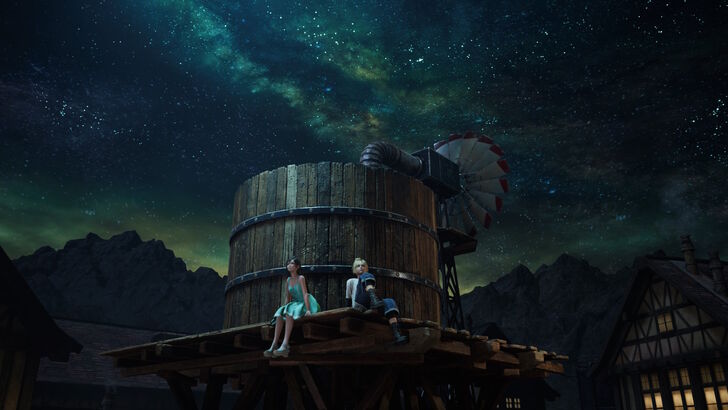
It’s been a long wait, but seeing a modern, numbered Final Fantasy game running on a Nintendo console still feels surreal. The last time Nintendo hardware hosted a mainline 3D entry was Final Fantasy XII: The Zodiac Age on the Switch in 2019. It’s an excellent game, but hardly representative of the series’ modern era. That transition arguably began with Final Fantasy XIII, a generation of the franchise that never appeared on Nintendo systems at all. As Square Enix pushed the series toward increasingly cinematic presentation and larger-scale production, Nintendo’s hardware simply wasn’t designed to keep pace with the power of competing consoles.
That's what makes seeing Final Fantasy 7 Remake Intergrade running on the Switch 2 feel like such a massive win. This is a game originally designed for the PlayStation 4, later enhanced for PlayStation 5 and PC, now running on Nintendo hardware without significant compromise. Square Enix’s push toward wider platform releases certainly helps, but none of it matters without capable hardware. For the first time in a long while, Nintendo has a system that can handle this kind of production.
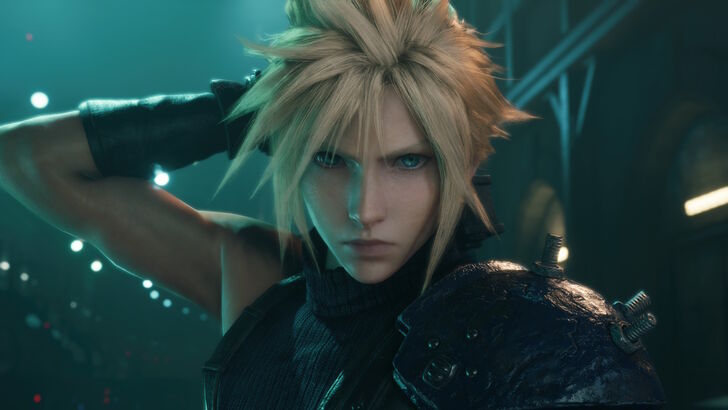
Of course, this is still running on a Nintendo console, even in 2026, so expectations need to be set accordingly. This isn’t going to match a high-end PC or a PlayStation 5 in terms of performance or visual options. However, what’s here is far better than I anticipated. Final Fantasy 7 Remake Intergrade on Switch 2 feels like a genuine way to experience the game, especially for players like me who enjoy having big JRPGs on the go.
For anyone who missed it the first time around, whether by choice or circumstance, this version is a well-handled port that makes a strong case for itself, even knowing its limits.
Final Fantasy 7 Remake Intergrade Switch 2 vs. PS4 vs. PS5
Compromises are to be Expected
When I first booted up Final Fantasy 7 Remake Intergrade on the Nintendo Switch 2, doubt came naturally. I’ve seen enough ports to underpowered consoles to know how brutal they can be. I remember games where the resolution was so low it felt like you were peering through a screen door, and every edge was jagged because anti-aliasing wasn’t even a thought. The question when porting a giant like this to the Switch 2 is no longer whether the Remake can impress on a big screen at maximum fidelity, but whether its ambition survives translation to a hybrid system without compromising too much of itself.
Fortunately, it does. Not perfectly, not without some compromises, but well enough that the doubts faded fast. The Switch 2 port is somewhere in between the original 2020 PS4 release and the enhanced PS5 version, yet closer to the latter than I ever thought it would be. It doesn’t have the raw, unbridled power of newer hardware, but it also avoids many of the rough edges that made the PS4 version feel dated.
⚫︎ Note: Final Fantasy 7 Remake Intergrade on (1) Switch 2, (2) PS4, and (3) PS5.
The PS4 release was always pushing uphill. Even then, it was evident that the game was straining against the limits of the hardware. Texture streaming was inconsistent, environments often snapped into clarity too late, load times dragged just enough to chip away at the game’s pacing. These issues were largely forgiven because the game’s presentation everywhere else is just too good that they felt worth the hassle.
When Intergrade released a year later on the PS5, it reframed those compromises. The option for 60 frames-per-second (FPS) performance mode alone felt like a gift from god. Faster load times fixed much of the game’s pacing, while improved lighting and better textures made it look even better. The Switch 2 version enters this lineage by translating a game that benefited enormously from next-gen headroom back onto a hybrid platform without reducing it to a novelty.
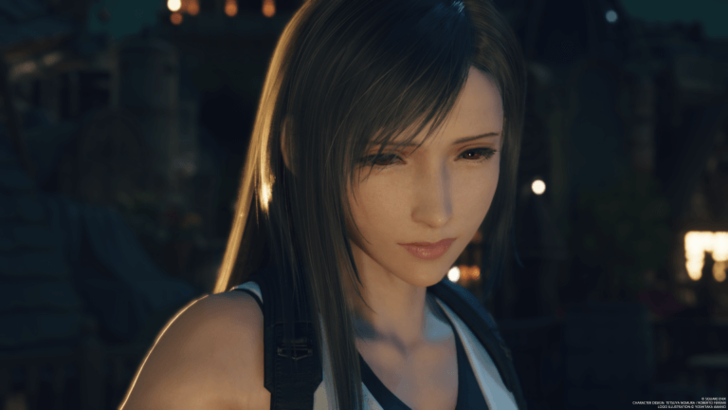
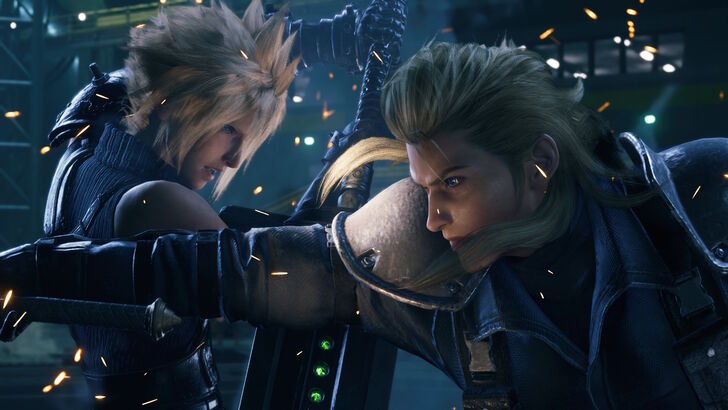
Visually, this is not the massive downgrade from the PS5 release one might expect. In many scenes, especially character-focused moments, the game holds up beautifully. Character models retain strong facial detail to the point where you can actually see the pores on Cloud’s face, and the animation quality remains entirely intact. The game’s cinematic framing survives the transition almost untouched, and when Cloud lunges mid-fight with the Buster Sword raised, particle effects litter the screen like fireworks.
However, when you stop looking at the sweat on a character’s brow and start looking at the world they inhabit, the technical cost of portability is laid bare. Compared to the PS5, the lighting here feels flatter. The city loses some of its oppressive density; shadows are less dynamic and often appear dithered or jagged at the edges.
Texture pop-in is frequent. You can be standing perfectly still next to an NPC and watch as a high-detail layer snaps into place a second too late. These aren’t dramatic failures, but they accumulate, especially if you’ve played the game on the PS5 before.
The textures themselves are still a bit muddy. Certainly not as distracting as the low-res backgrounds of the PS4 version, as the Switch 2 port uses the higher-quality assets introduced with Intergrade, but it’s not pristine either. They still look like smudges when viewed up close.
This, though, makes it so that you aren’t forced to endure the forty-second load times required by the PS4’s aging hard drive. They don’t match the near-instantaneous transitions of the PS5, but it only takes, more or less, ten seconds to load into a new area.
30 FPS, DLSS, Handheld Mode
Performance remains the most contentious point of the experience. When docked, the game stays locked at 30 FPS. This stability is bolstered by the Switch 2’s use of NVIDIA’s DLSS technology, which upscales the lower-resolution image without sacrificing performance. It is a pragmatic choice, a necessary concession for a hybrid console, and while it is a more consistent 30 than what the base PS4 ever offered, it is hard to ignore the loss of the 60 FPS found on the PS5.
Unlike the PS4, which often looked soft or blurry on modern displays, the Switch 2 output still looks sharp at 1080p. However, the DLSS can occasionally struggle during combat. Here, you can sometimes spot shimmering or faint ghosting around quick movements or bright effects, especially when characters like Tifa or Yuffie are darting across the screen.
If you are playing in handheld mode, the situation becomes more precarious. The game occasionally dips into the 20s. It doesn’t happen constantly, but it’s pretty noticeable, especially when it happens during cutscenes.
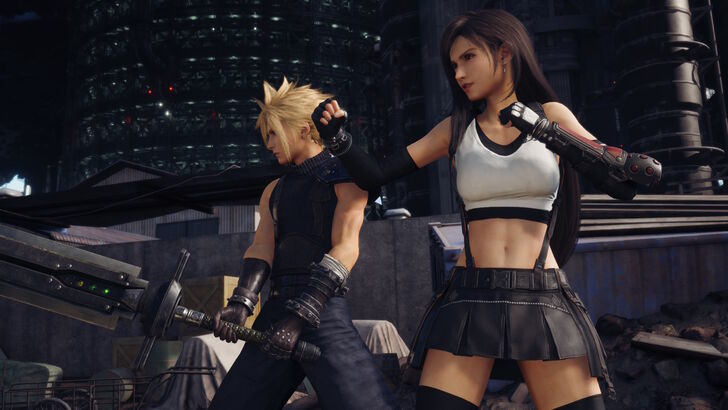
At least many of these shortcomings are easy to forgive when you’re on the go. The smaller screen of the Switch 2 hides a multitude of sins that smooth over the dithered textures. The simple fact that a game of this scale is running at all in the palms of your hands feels impressive. It brings back that same sense of disbelief I felt seeing Cyberpunk 2077 somehow look and run insanely well on a handheld.
On a TV, though, the gap between this and the PS5’s performance mode is undeniable. You are consciously trading away the fluidity of combat and visual polish for the sheer convenience of taking Midgar with you to, say, the comfort of your bed or the park.
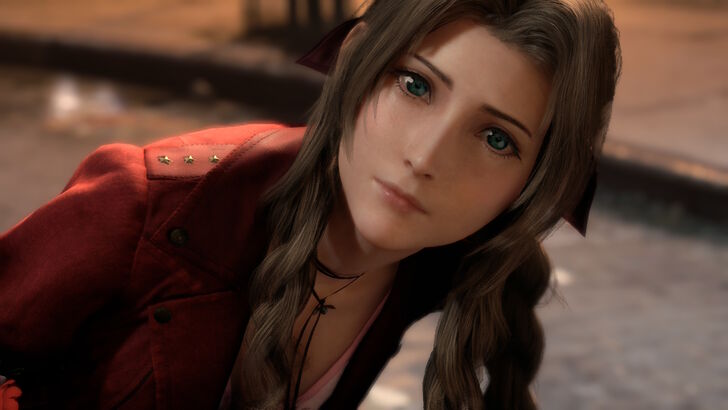
I am not one to clutch pearls at the sight of a low polygon count or a muddy texture. I’ve lived through enough grief in my youth, through enough low-effort ports on the PSP or the Wii, to be desensitized to it. Compared to those dark days, the technical hiccups here are minor. Yes, 30 FPS feels slow in an era where people talk about 120 FPS like it’s a human right, and sure, the dithered textures look fuzzy, but you have to go looking for those problems for them to become a bother.
This port doesn’t add any new content or quality-of-life upgrades beyond what Intergrade already offered on PS5. There’s little technical reason to choose this over the PS5 version if you have that console and are sitting on a couch in front of a 4K television. In fact, the console’s most powerful state—docked mode—is probably the least interesting way to play it on something you can take on the go, because it only makes what’s missing more noticeable. Aside from a limited-time bonus that gives you the original 1997 Final Fantasy 7 if you buy before January 31st, there isn’t much to lure in those who’ve played the game before. You’d essentially be paying for the privilege of seeing the same world through slightly less capable eyes.
Even so, I still appreciate this version. The primary advantage of buying the Switch 2 port is the luxury of portability. There is something fundamentally different about playing in bed. The weight of the console in your hands changes the relationship you have with the world; it becomes a private thing you carry with you. It’s ideal for newcomers who own only a Switch 2 or for anyone who wants to take this massive game on the go, to revisit Midgar without being tethered to a living room.
An Amazing Evolution of the ATB System
Despite everything I’ve said above, it’s still something of a wonder that Final Fantasy 7 Remake plays as well as it does. Square Enix has taken what was once a purely turn-based RPG and translated it into something much closer to the modern action-adventure style the company has been exploring in recent Final Fantasy games. At first glance, you might expect the change from turn-based to real-time combat to be a jarring change, but the game manages it well.
The ebb and flow of the Active Time Battle (ATB) system is still present, but it now happens in real time. You directly control one character at a time, swapping between characters on the fly, while the other party members act semi-autonomously unless you intervene. The ATB gauge fills as you land attacks and defend. You’re given two bars to work with. Once a bar is full, you can pause or slow down time to spend it on an ability, a spell, or on an item.
These actions are often fueled or enhanced by Materia, orbs slotted into your equipment that allow you to customize how spells, buffs, and summons work in combat. Here, you are essentially building your deck of options. You can link Materia together to make spells hit multiple enemies or grant elemental properties to your attacks.
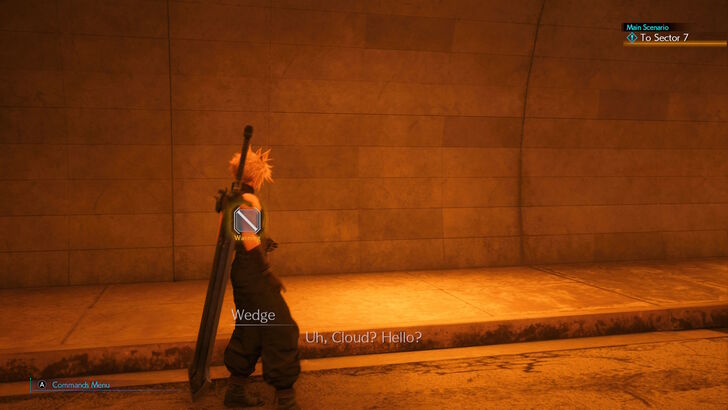
However, the game is not without its frustrations. It is extremely linear, which is the same kind of design choice that immediately brings to mind the backlash that Final Fantasy 13 received back in 2009. People used to mock that game as a "hallway simulator," and even though Remake has more interactable towns and more opportunities to explore some areas, it fundamentally follows that same restricted pathing.
You, more often than not, are being funneled through the industrial guts of a city. There’s very little room to wander off the beaten path, and when the game does let you loose in open hubs, they often feel small and contained compared to the grand scale the visuals suggest.
Seeing Midgar on the Go
This restrictive structure, though, is largely a byproduct of the project’s scope. Final Fantasy 7 Remake only adapts the Midgar portion of the original 1997 classic—a section that took about five to ten hours to finish in the original three-disc saga. To turn that sliver into a 50-hour JRPG, Square Enix had to stretch every single moment.
This inevitably leads to a significant amount of filler. Some of this content is actually great; it fleshes out characters like Jessie, Biggs, and Wedge. You actually care about them now. On the other hand, you also get a fair amount of padding that feels like a chore to get through. There are sections when you’re forced to walk slowly through rubble, flip switches in repetitive sewers, or complete fetch quests that add very little to the world.
Despite this, the questionable parts rarely break immersion completely. Rather, expanding the Midgar section allows players to breathe in the world to an extent the original simply couldn’t. Even at its most indulgent, it rarely feels insulting or empty.
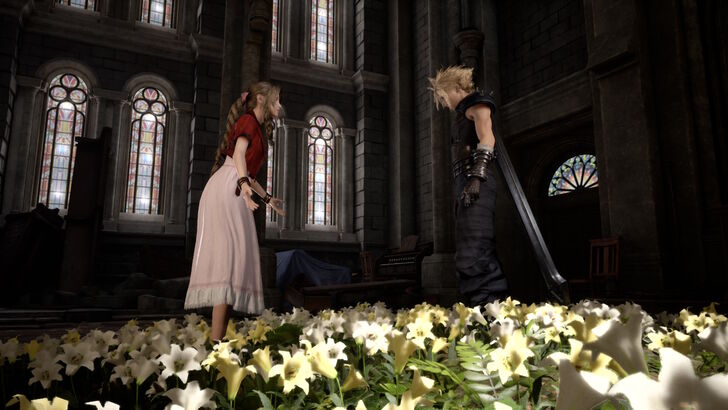
The story itself is probably the element of the game that will feel most familiar, yet also most divisive. Almost everyone who has picked up a controller in the last thirty years knows the basic beats of Final Fantasy 7. You play as Cloud Strife, an emo mercenary with a giant sword who joins an eco-terrorist group called Avalanche to stop the Shinra Electric Power Company from sucking the planet dry of its life force. Even if you haven't played the original, you’ve probably been spoiled on the major twists involving the villain Sephiroth or the fate of certain party members.
However, describing this game as just a "remake" is actually somewhat misleading. The game starts as a faithful recreation, yes, but it quickly becomes clear that something else is going on. Tetsuya Nomura of Kingdom Hearts fame is its creative director, so you can expect it to become as convoluted as that series. This is largely due to ghostly entities that seem to be trying to keep the plot on its original tracks.
It’s a meta-narrative move that serves as a commentary on the very idea of remaking what many see as a masterpiece. By the time you reach the final hours, the game makes a choice that is incredibly contentious with long-time fans. I understand why some people find it needlessly messy. I personally enjoyed the direction, though explaining why would venture too far into spoiler territory.
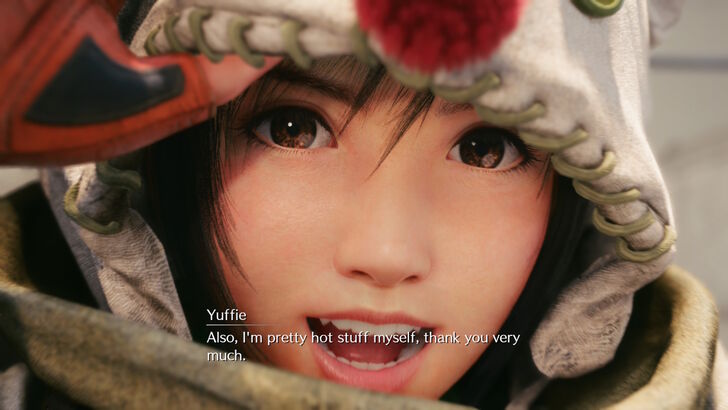
Intergrade also includes the INTERmission DLC, which introduces the Materia hunter Yuffie Kisaragi earlier than her original debut. It takes place during one of the game’s middle chapters and follows Yuffie and her partner Sonon as they infiltrate Shinra to steal a rumored "Ultimate Materia."
This bridges the gap between Remake and its sequel, FF7 Rebirth, while providing world-building for Wutai, a region previously mentioned only in passing. It gives Yuffie a personal stake in the conflict before she is even introduced to Cloud and the gang.
Is Final Fantasy 7 Remake Intergrade Worth It?
Yes, It’s a Massive Game You Can Take on the Go!
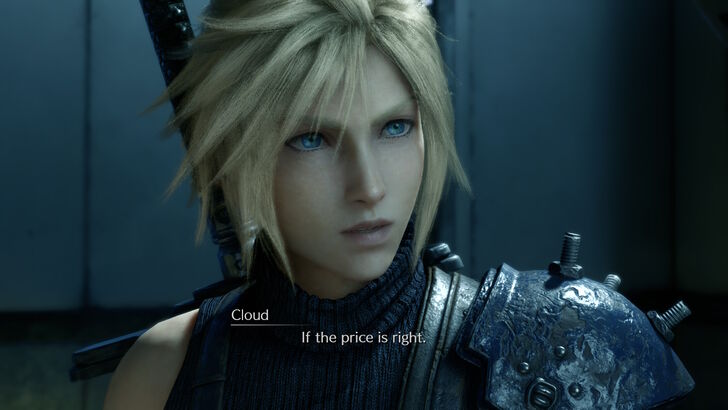
Final Fantasy 7 Remake Intergrade on the Switch 2 is priced lower than many current full releases at just $40. If you’ve never experienced Midgar before, this is a great way to do so, especially with the added benefit of portability. Being able to play a game of this scale anywhere gives it a sense of luxury that helps offset its technical limits. Although this version doesn’t add anything new for players who’ve already experienced the game on other consoles, it is still a strong and commendable port.
With the Remake safely tucked into the Switch 2’s library, the question of the future looms large. My mind keeps drifting toward Rebirth. We know it can run on a Steam Deck if you’re willing to spend enough time in the settings menu, so the dream isn’t dead. If this hardware can handle the neon-soaked density of Cyberpunk 2077, surely it can handle the grasslands of Gaia.
I already fear for my Switch 2's storage space when that time comes, given that Intergrade is already 90 GB, but I hope we see it happen before the third part of the trilogy is revealed. The prospect of the full trilogy on one portable system is hard to resist, even if the hardware has to sweat bullets just to make it happen.
Final Fantasy 7 Remake Intergrade FAQ
What is FF7 Remake Part 3’s Title?
As of January 2026, the official title for the final entry in the Final Fantasy VII Remake project remains under wraps. However, Director Naoki Hamaguchi has confirmed that the subtitle for the third game has been finalized.
Game8 Reviews