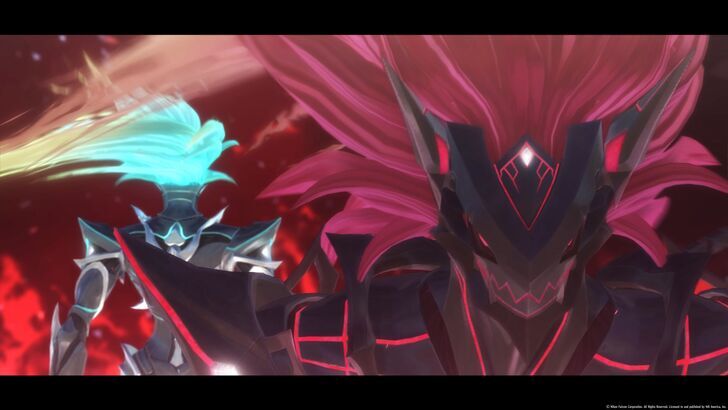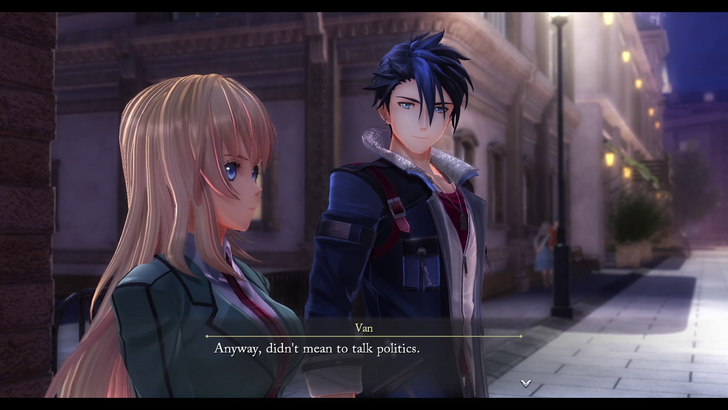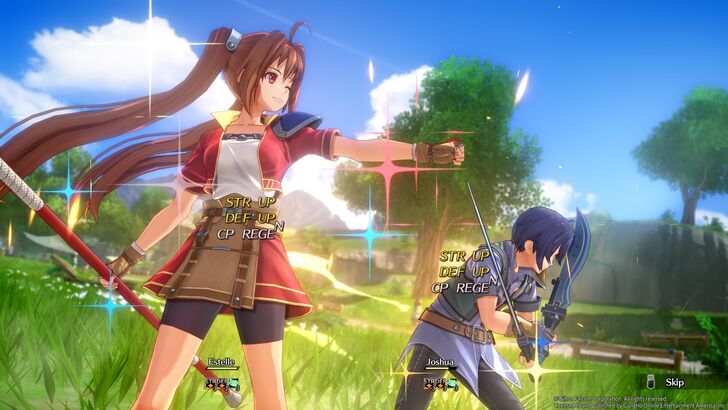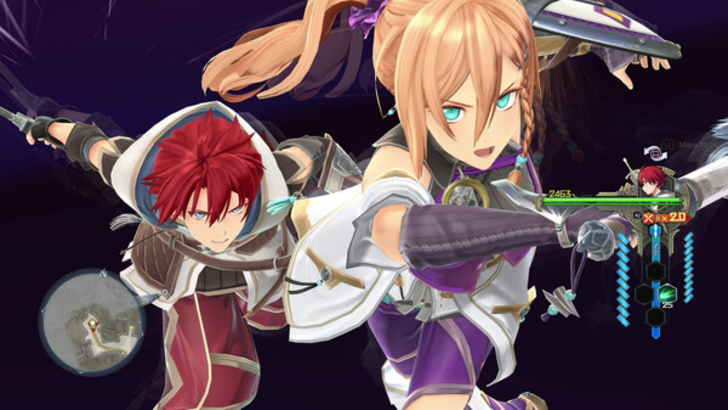




| The Legend of Heroes: Trails Beyond the Horizon | |||
|---|---|---|---|
| Release Date | Gameplay & Story | Pre-Order & DLC | Review |
Overview
What is Trails Beyond the Horizon?
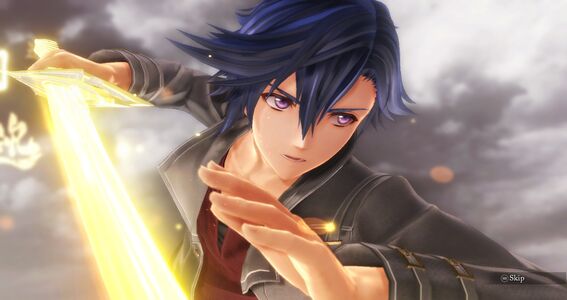
The Legend of Heroes: Trails Beyond the Horizon (or simply Trails Beyond the Horizon) is a role-playing game developed by Nihon Falcom and released in Japan on September 26, 2024 for the PlayStation 4 and PlayStation 5. It serves as a sequel to Trails Through Daybreak 2 (2022) and continues the narrative within the Calvard story arc of the Trails series, which is part of the larger The Legend of Heroes franchise. A Chinese and Korean version for PC was released by Clouded Leopard Entertainment on January 23, 2025, with a worldwide launch by NIS America, including Nintendo Switch and PC releases, released on January 15, 2026.
Trails Beyond the Horizon follows Van Arkride, a Spriggan—a mercenary who undertakes various tasks ranging from detective work to bounty hunting. He is on a mission that could alter the fate of the continent of Zemuria. As humanity prepares for its journey into space, an unexpected summons from the Marduk organization leads Van, Rean Schwarzer (the protagonist of the Trails of Cold Steel series), and Father Kevin Graham (the protagonist of Trails in the Sky 3rd) to confront the mysteries tied to the very origins of their world.
The game introduces several gameplay enhancements, including the Shard Commands, Awakening, and Z.O.C. systems, which provide greater depth in both field and turn-based combat scenarios. Players can assemble their ideal team from characters across Calvard and beyond to tackle the Grim Garten, a highly customizable special dungeon.
Trails Beyond the Horizon features:
⚫︎ Three Protagonist Routes
⚫︎ Hybrid Real-Time and Turn-Based Combat
⚫︎ Grim Garten Roguelike Dungeon
⚫︎ Return of Shard Commands
⚫︎ Updated Alignment System (Law, Gray, and Chaos)
For more gameplay details, read everything we know about Trails Beyond the Horizon’s gameplay and story.
| Digital Storefronts | |||||
|---|---|---|---|---|---|
 Steam Steam |
 Epic Epic |
 GOG GOG |
|||
 PS PS |
 Switch Switch |
||||
| $59.99 | |||||
 Switch 2 Switch 2 |
|||||
| $69.99 | |||||
Trails Beyond the Horizon Review: Payoff at Last
What a Great Time to be a Trails Fan

It feels strange to say this without hedging it with a dozen caveats, but it really is a great time to be a Trails fan. The series has always rewarded patience, but patience used to mean waiting years just to see the next chapter officially leave Japan. That gap has slowly closed over time, and with Trails Beyond the Horizon, it’s finally gone. For the first time in a long while, fans outside Japan are standing on the same page of Zemuria’s timeline, able to talk about the same events without tiptoeing around spoilers or release dates that feel impossibly far away.
This is helped by how accessible the series has become lately. With Trails in the Sky 1st Chapter already out and the 2nd Chapter remake on the way, newcomers no longer have to wrestle with aging releases just to understand where all of this started.
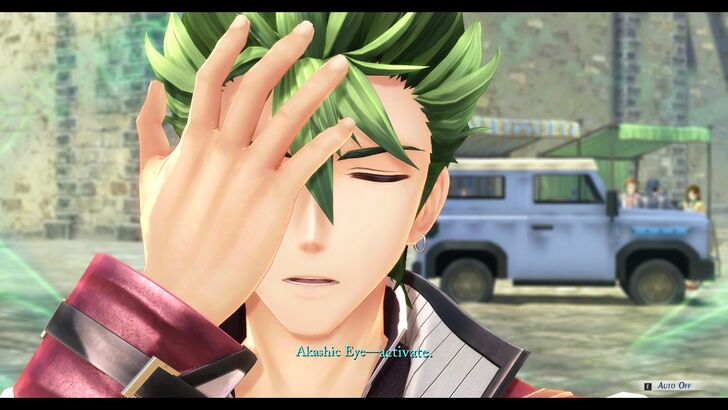
Trails through Daybreak saw Western shores in 2024, and we noted then that it is a great entry that introduces so many fresh faces and new mechanics while still feeling firmly like Trails. Its sequel, Daybreak 2, proved to be a more divisive entry; although mechanically sound, it struggled with pacing and focus, and much of its runtime felt like setup without enough payoff. The story moved forward, but only slightly, and some of its problems were hard to ignore.
Trails Beyond the Horizon course-corrects this. The game delivers some of the most important reveals the series has had in years, tying together threads that fans have been following for a long time while also cleaning up issues that have lingered since earlier entries. It feels like a payoff in the truest of senses, one that understands its place in the franchise and commits to it without hesitation.
Zemuria’s Story Keeps on Growing

As the third entry in the Calvard arc and the thirteenth game in the Trails series overall, Trails Beyond the Horizon is not an easy story to talk about in isolation. Trails has never been a franchise where each game is a standalone experience. It’s a long-running saga that keeps stacking stories on top of one another, all taking place within the same continent of Zemuria. Each arc shifts focus to a new nation and a new cast, but the larger plot never pauses. Political shifts, old conflicts, character relationships carry forward, sometimes across multiple arcs, and Beyond the Horizon embraces that history harder than most.
Even though this is technically a Calvard game, it’s a tough title to digest if you have yet to play earlier entries. A large part of the cast consists of returning characters, some of whom bring years of baggage with them. The game also regularly references past events and organizations that evidently assume the player already knows what happened. If you don’t, a lot of these moments will still make sense on a basic level, but their full weight can easily slip by.
I felt this firsthand. Although I’ve played through the Trails of Cold Steel games, I skipped the Crossbell arc and am still waiting on the Trails in the Sky remakes before jumping into those. That left noticeable gaps in my understanding, especially when certain characters or events were treated as a big deal without much explanation.
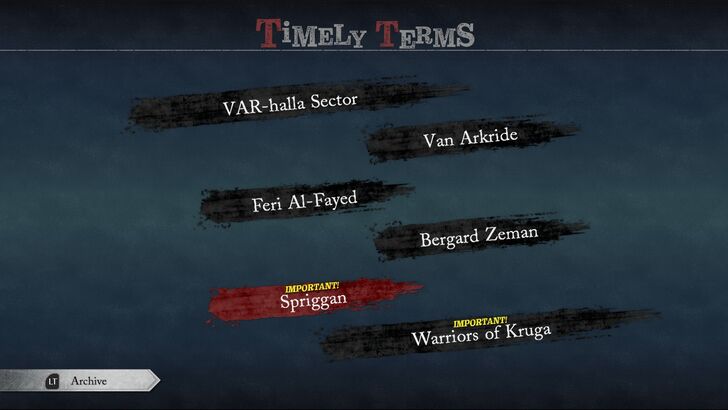
To the game’s credit, it does try to help. The archive section does a solid job summarizing previous stories, and the "Timely Terms" feature during dialogue is very much useful. Being able to pull up quick explanations for key terms, factions, characters, and past events keeps confusion to a minimum and helps conversations flow better. It doesn’t replace actually playing those games, but it does make Beyond the Horizon more manageable for players who aren’t fully caught up.
You don’t need an encyclopedic knowledge of the Trails series to enjoy the plot; the game provides enough context for new players to follow along, even if some of the deeper implications might fly over their heads.
However, it is still a game that clearly wants you to have that background. Like a long book series deep into its later volumes, Beyond the Horizon builds tension and payoff through accumulated knowledge. Relationships resonate more deeply because you’ve seen them evolve. Conflicts gain gravitas because you know what’s at stake beyond the current arc. The story trusts the player to remember things, and when it pulls threads together, it rarely stops to explain itself in detail.
Three Days, Three Routes, Three Protagonists
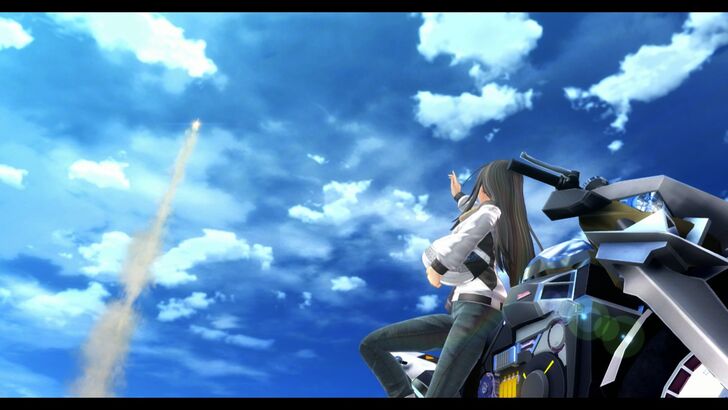
As for the plot itself, Trails Beyond the Horizon is one of the more impressive narratives I’ve experienced in a JRPG. The entire story, which spans roughly 70 to 100+ hours, unfolds over the course of just three days, all leading up to Calvard’s first manned space mission, known as Project Startaker.
The game follows three different perspectives from across the franchise’s history: Van Arkride, the Spriggan from the Daybreak games; Rean Schwarzer, the Divine Blade from Trails of Cold Steel and Trails Into Reverie; and Kevin Graham, the Heretic Hunter from Trails in the Sky.
As expected from a Trails title, politics play a huge role here, but the story also digs deep into personal trauma and larger-than-life conflicts typical of Trails. While the world watches the rocket launch as a symbol of progress, the characters uncover shocking truths that shake the very foundation of their reality. Experiencing these revelations in-game is far more effective than me trying to explain them here, but I will say that the ending had me gripping the edge of my seat, desperate to see what comes next.
The game’s acts are structured around these three routes. Since this game serves as the climax of the Calvard arc, Van naturally receives the most screen time. Unfortunately, this creates an imbalance; Rean and Kevin are seasoned veterans with world-altering consequences, yet their segments feel truncated compared to Van’s.
This wouldn’t be an issue if the pacing were consistent, but Van’s chapters (especially in the first half of the game) feel incredibly slow. The first act is dedicated entirely to him, and it spends an exhaustive amount of time reintroducing the cast and delivering exposition that often feels like padding. For those who aren't longtime scholars of the series, these sections can be particularly daunting, as you may find yourself drowning in technobabble and hyper-specific terminology.
In contrast, Rean and Kevin’s routes are packed with action and lore-heavy reveals that have massive implications for the entire series. Because Van’s early sections act as a long buildup for the final chapter, the opening hours can feel like a slog to get through.
Like many JRPGs of this scale, there are several sequences that feel like filler tucked between the major plot beats. But once you push past that initial stretch, though, the story picks up considerably, and the payoff is worth it.
Connecting With a Huge Cast
One of the first things you’ll notice about Trails Beyond the Horizon is just how huge the cast has become. Since the story pulls characters from nearly every arc of the series, it was always going to be a challenge to balance everyone. At first, the sheer number of familiar faces can feel a little overwhelming. Seeing multiple protagonists, side characters, and returning supporting casts all converging in one story can make the world feel crowded. It’s something any long-running series like Trails has to deal with eventually, but Beyond the Horizon, to my surprise, handles it better than I expected.
This is thanks, in large part, to how the narrative is structured. By dividing the game into three separate routes, each group of characters receive more room to breathe than if they were all shoved into one giant party from the start. It allows for more specific interactions and keeps each group’s objectives clearly defined.
Of course, it’s not perfect. Because there are so many people involved, there are moments where it feels like the script is trying too hard to give everyone a line. You’ll have a plot development occur, and then you have to sit through five or six different characters offering a variation of "I agree" or "Let’s do this." It occasionally feels like some minor characters are there for fan-service.
Despite the crowded roster, I can’t help but love seeing these characters again. As someone who started with the Trails of Cold Steel arc, I find the evolution of the Class VII alumni to be the most compelling part of the game. Rean, Fie, Crow, and even Towa have matured significantly; they carry a weight now that they didn't have as teenagers, back before the fate of the world rested on their shoulders.
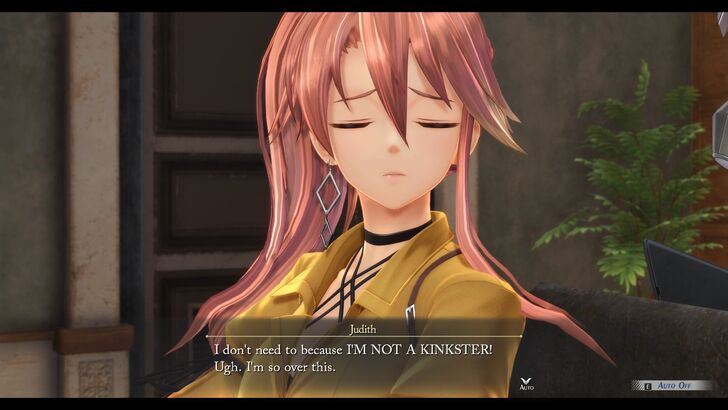
The newer characters are great too, especially when it comes to their banter. The chemistry within the Daybreak cast remains strong, but Judith and Aaron are particularly hilarious. Despite their limited development in this entry, their dynamic is electric because both are big personalities constantly trying to outmaneuver each other. Aaron often slips into a boke and tsukkomi (funny man and straight man) trope with the rest of the group, which works perfectly against Judith; her attempts to maintain a "sophisticated actress" persona usually crumble the moment Aaron says something annoying enough to break her composure—or, just as often, when her own clumsiness betrays her.
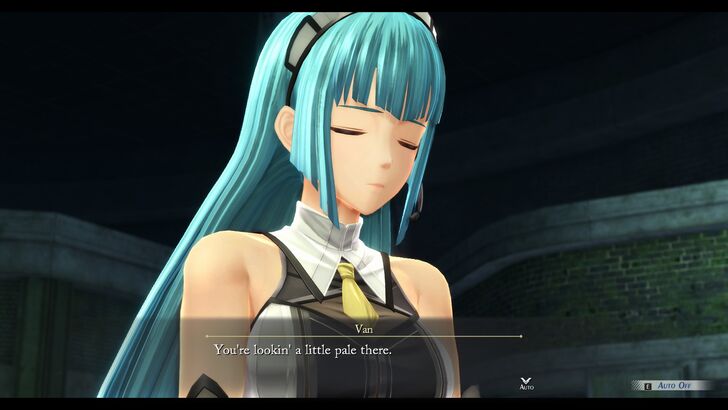
What I appreciated most, however, was the character work done for Agnes and Risette. In previous games, Agnes often felt like she functioned primarily as a MacGuffin; even though she was always empathetic and kind, her character was frequently tied so tightly to the search for the Genesis devices that her personal agency took a backseat. She was often the person things happened to, rather than the person making things happen. Here, she is given a profound emotional arc that sets the stage for a major payoff in the next installment.
Risette sees a similar transformation. Previously, she functioned almost too perfectly as the party’s aide. She was reliable, but perhaps a bit robotic in terms of her role in the group. Beyond the Horizon delves into the circumstances that have her grappling with her own sense of self and her place in a world that is rapidly approaching its "promised day."
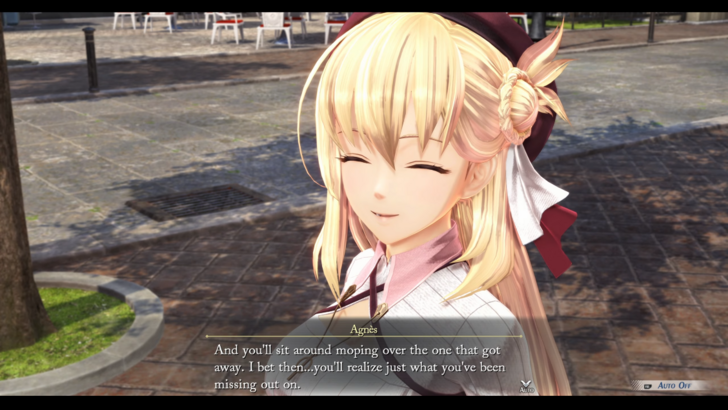
To help mitigate the fact that some characters don’t get much development in the main story, the game brings back bonding events, called Connections. These are scenes that see the character you control hanging out with other party members or the game's supporting cast during major plot points in the story. Unlike the previous games where you had to choose and miss out on others, you can now see all of these events in a single playthrough, which is a neat change, as they show you exactly what the characters are up to at that point of the story.
One such event that I remember fondly involves Agnes and a group of orphans. This scene does more than just expose the scars of Van’s past; it grounds his childhood trauma and the regrets he had with someone he saw as his father. It simultaneously cements his friendship with Agnes, as she tells him she hopes he can "find happiness" and "not regret thinking back on the people he cares about." It’s also interesting how the end of that talk foreshadows what happens later in the story.
Command Battles are Great; Field Battles Not So Much
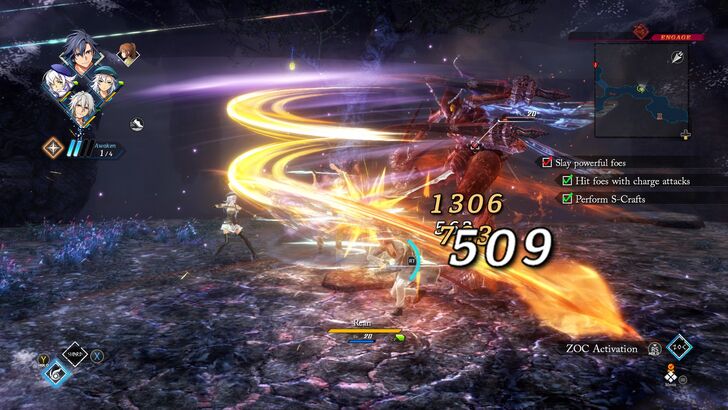
Trails Beyond the Horizon largely sticks to the idea of not fixing what isn’t broken. If you’ve played Trails through Daybreak and its sequel, very little of the game’s combat will feel unfamiliar. The game still has you fighting enemies in real-time and in turn-based combat. This hybrid loop still works well overall, but it also means the game retains some of the same strengths and weaknesses of the titles that came before it.
The real-time action combat is mostly unchanged, a fact that is both a blessing and a curse. You’re still dodging attacks and stringing together basic combos to chip away at enemy HP. Beyond the Horizon introduces a few new ideas to spice things up, like the ZOC (Zone of Control) abilities that slow down time and lets you pile on damage for a short window, and the Awakening mechanic that boosts a character’s damage while fighting in the field.
These are nice additions, and they do make encounters feel a bit more active. However, much of the game’s combat remains pretty simple. There’s not a lot of depth in it beyond something you use mainly to soften enemies and get that "Stun" status before triggering a command battle with the press of a button.
That feeling is made stronger by how similar characters play during real-time combat. Most of them follow the same basic three-attack pattern that leads into a charged attack or a Quick Art for magic damage. The only noticeable difference comes down to whether a character fights up close or from a distance. Although this does make the game easier to pick up and helps speed up grinding, it also means individual characters don’t stand out as much as they could outside of command battles.
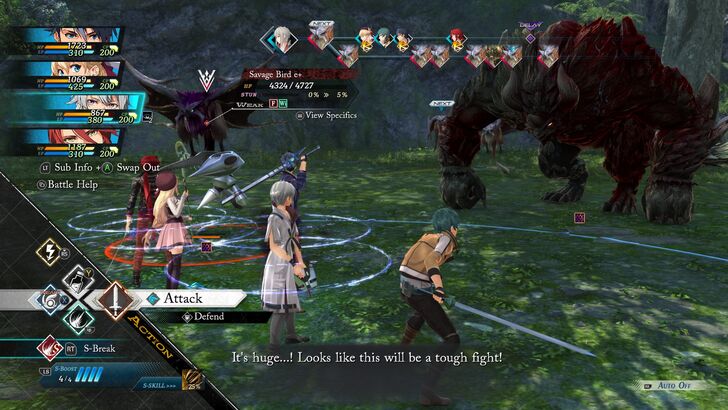
Once you transition into the Command Battles, things get much more interesting. This is the heart of the Trails experience, where positioning and turn-order manipulation matter. Here, you manually move your characters around the field to line up Area of Effect (AoE) attacks or stay close to allies for SCLM link attacks.
The big addition here is how those real-time mechanics translate to the turn-based side. For instance, by double-boosting a character to trigger ZOC, you gain an extra turn without delay. However, because this consumes two bars of your Boost Gauge, you must weigh the benefit of an immediate action against saving those resources for a high-damage S-Craft.
There is also the BLTZ system, which brings in support from your bench. If you have this turn bonus, characters not in your active party can jump in for follow-up attacks or boost the effectiveness of your Arts (spells) and Crafts (skills). It makes the massive roster feel useful even if they aren’t in your main four-person lineup.
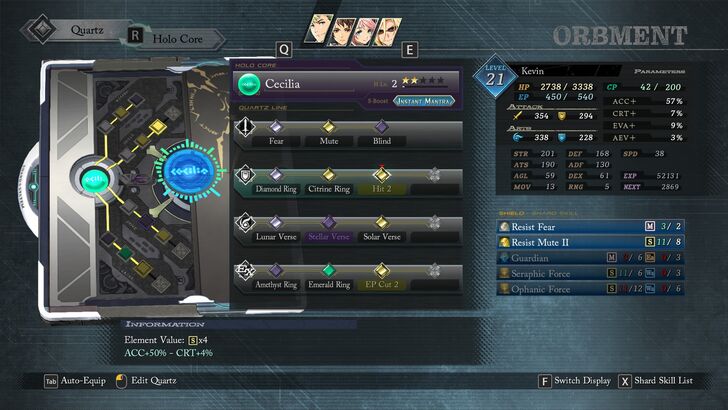
Of course, your success in those battles is dictated by the time you spend in the menus. Sepith farming is the bread and butter of the whole ordeal. For the uninitiated, Sepith are elemental shards you get from winning fights, and you use them for two things: opening up slots on your Xipha (Orbment) and forging Quartz. This system is where you’ll spend a lot of your time because it’s how you actually build your team.
Quartz are elemental gems, essentially "materia" for those who’ve played a Final Fantasy 7 before, that you slot into your orbment to give your characters stat boosts, new Arts, or passive Shard Skills.
The beauty of the Xipha system is the "Line" setup. Each character has four lines: Weapon, Shield, Divine, and Extra. Depending on the elemental value of the Quartz you slot into these lines, you unlock Shard Skills. For example, if you stack enough Water and Earth quartz on your Shield line, you might unlock a skill that automatically grants you a shield at the start of a fight. It’s arguably the most addictive part of the game; if you want to min-max your characters, you’ll spend hours tweaking these setups, but it never feels like a chore because the payoff in combat is so immediate.
Grind Garten
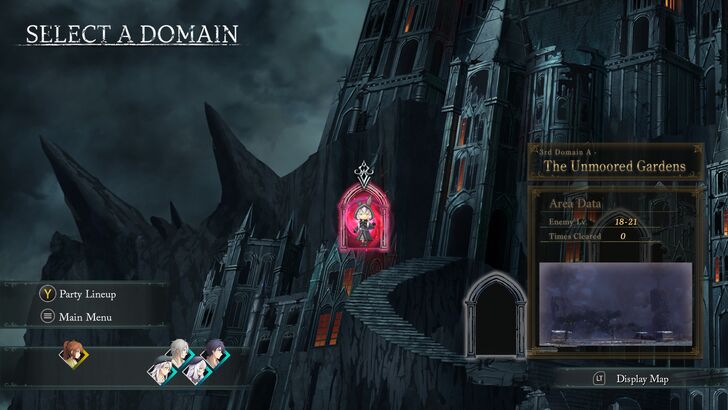
When you aren’t running through the streets of Edith or the desert sands of Tharbad, you’ll be putting your combat setups to the test in the Grim Garten, the game’s dedicated roguelike dungeon. If you played Daybreak 2, this is basically the new and improved version of the Märchen Garten.
The Grim Garten is a virtual space originally built by the military company Marduk, but it’s been hacked and reshaped by Ouroboros. You’re here to reclaim the system from the organization’s interference. As you progress through the main story, new domains unlock, usually coinciding with major events.
Clearing these areas is technically optional after a certain point, but you’d be doing yourself a disservice by skipping them. It’s one of the only places where the three separate parties can actually interact and work together. Plus, it hides Memento Orbs that fill in huge gaps in the lore and Ouroboros’ true motives, which are essential if you want to understand the finale.
It’s still very much a grindy dungeon. You’re going to spend a lot of time running through procedurally generated floors and hitting trash mobs and mini-bosses. However, it’s still a massive upgrade from the Märchen Garten, which was a total slog.
The main reason you’ll keep coming back, though, is the loot. In-between floors, your chibified character will be moving across tiles to trigger events, treasure, or battles. By clearing them, you earn Grim Tokens. You take these back to the hub to perform a Grimoire Decryption, which is the game’s version of a gacha system. You spend your tokens to roll for high-tier Quartz, rare accessories, and even cosmetic items. It’s a gamble, but it’s the most efficient way to get the gear you need for the late-game boss fights.
It might be annoying to leave your favorite build up to luck, though.
Is Trails Beyond the Horizon Worth It?
Yes! Already Excited for What Lies Beyond the Horizon
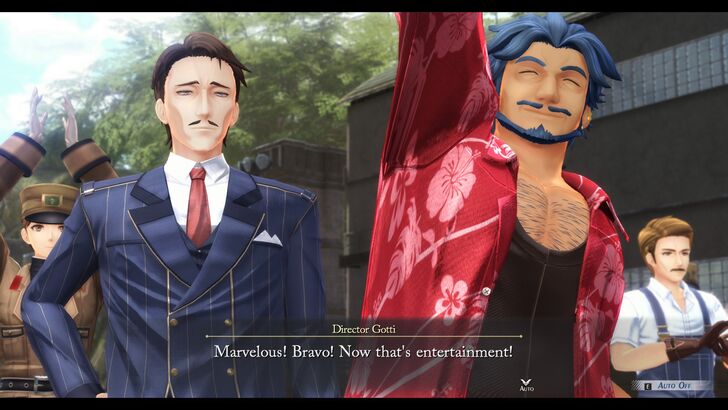
If you’re a fan of the series, the answer as to where it is worth your money is an easy yes. For its $60 price tag, you’re getting a massive experience with a story that dives deep into the lore and answers questions that fans have been obsessing over for years. The payoffs here are satisfying, and the world-building feels like it’s finally reaching a boiling point.
There is, however, a giant barrier to entry. As the third entry in this specific arc, you absolutely need to have played the previous two games to even get an inkling of what is going on. But it goes deeper than that. Even if you’ve cleared Daybreak and its sequel, some of the terms and historical events mentioned here will probably go over your head if you haven’t touched the earlier arcs like Cold Steel or Azure. It’s a lot to keep track of, but in terms of stakes and tension, it really does feel like the Empire Strikes Back of the Calvard era. It’s the bridge that connects the local drama of the Republic to the global (and even celestial) fate of the world.
You’re looking at a solid 70 to 100+ hours of gameplay depending on how much you get lost in the Grim Garten, side quests, and mini-activities like fishing. It’s a huge time investment, and there really isn’t much reason to play through it a second time unless you want to experience the story beats again. The game is designed so that you can see and do almost everything in a single playthrough. It leaves you with nothing left to do but look toward the "sky" and wonder what final secrets wait for us beyond that distant, "flickering" horizon.
Trails Beyond the Horizon FAQ
How Long to Beat Trails Beyond the Horizon?
A single playthrough of Trails Beyond the Horizon ranges from 70 to over 100 hours, contingent upon the amount of optional content completed.
Game8 Reviews