
| Never Grave: The Witch and The Curse | |||
|---|---|---|---|
| Release Date | Gameplay & Story | Pre-Order & DLC | Review |
Overview
What is NeverGrave: The Witch and the Curse?
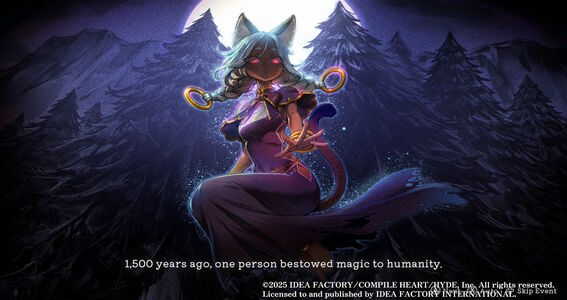
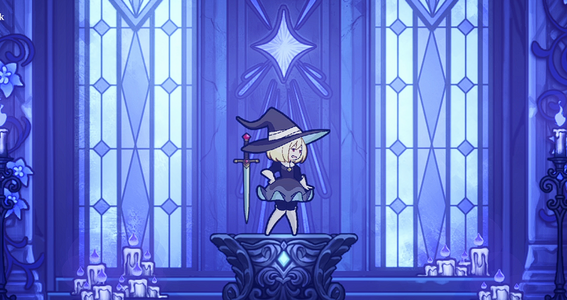
NeverGrave: The Witch and the Curse is an action roguelike Metroidvania that puts players in the magical shoes of a fallen witch, or rather, the homunculus hat piloting a witch’s body. Fallen from the height of its power and sent to the lowest depths of a now destroyed realm, the witch and her hat must fight through waves of possessed and equally cursed enemies back to the top and regain power that was once theirs.
NeverGrave: The Witch and the Curse features:
⚫︎ Fluid animation style
⚫︎ Roguelike perks and Dead Cells-adjacent progression system
⚫︎ Grid-based base-building system
⚫︎ Real-time crafting, cooking, and farming systems
⚫︎ 1 to 4-player online co-op multiplayer
For more gameplay details, read everything we know about NeverGrave: The Witch and the Curse's gameplay and story.
| Digital Storefronts | |||||||
|---|---|---|---|---|---|---|---|
 Steam Steam |
 PS PS |
 Xbox Xbox |
 Switch Switch |
||||
| $16.99 | |||||||
NeverGrave: The Witch and the Curse Review: Unoriginal in the Best Ways
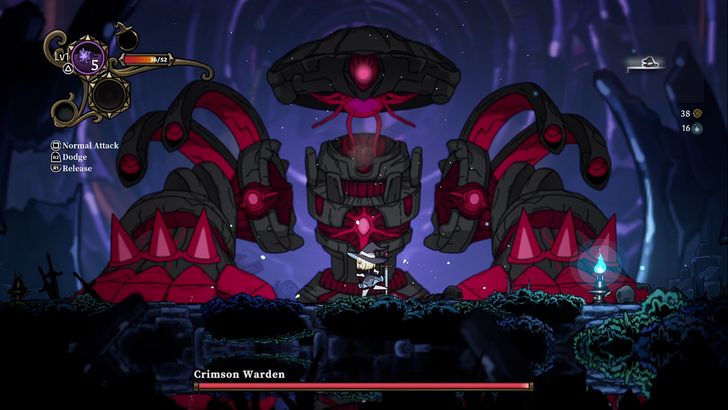
I've always been a fan of Metroidvanias, even if I didn't have the skill to reach the absolute peak of its gameplay. I'm very good at them, as I've had the Dead Cells 100% achievement under my belt for years now; I’ve just seen what inhuman feats Hollow Knight players have gotten up to, and that was all before Silksong. One specific sector of the genre has had me by the neck for the longest time, though. So long, in fact, that I’d know it anywhere, even if it had…say…a cutesy dark arcana filter attached to it.
NeverGrave: The Witch and the Curse is not a copycat. It is its own game with accolades and pitfalls earned through its own merit, or lack thereof. It is a blend of many things that have worked for other games, and is a new entity for it, but I, for the life of me, can’t unsee the similarities between it and a certain pixelated indie staple that took the world by storm many years ago.
I have much to dissect about this game and its inspirations, what it does well on its own, and what it does well by virtue of doing what’s been proven to work. Consider the same for its negatives, and you’ve a preview of what this review’s about.
The Fall from Grace, and the Struggle to Rise
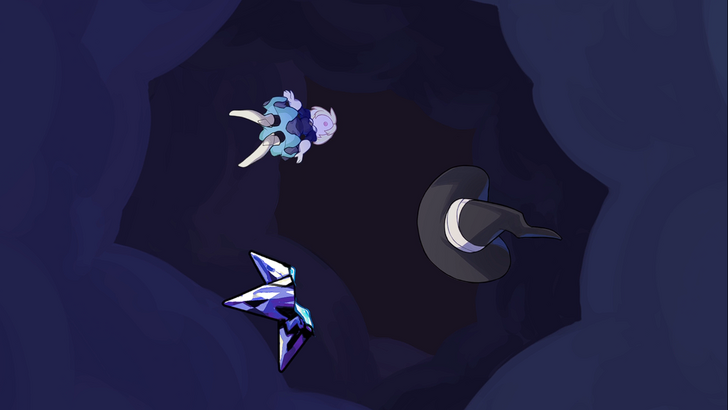
Let’s begin with the game’s story, which sees the protagonist reduced to a sorry state after falling from a position of power. Usurped by a similar force, they must now commandeer a body that isn’t their own and fight their way back to the top, come what may.
That’s the intro to NeverGrave, but it’s also the intro to Dead Cells. I didn’t catch the similarities at first, but they’re all there. Instead of being an algae-like homunculus, you’re a magic hat, but in both instances, you’re piloting a disposable body that you can just regenerate if you ever die. You were the strongest witch among your peers instead of being the king of a dying kingdom, but you’re still ousted from your position by someone who wanted you out of power. It’s actually quite the mirror, but I’m willing to cede that it’s not an imitation if we’re willing to compromise that it’s at least very clearly inspired by something else
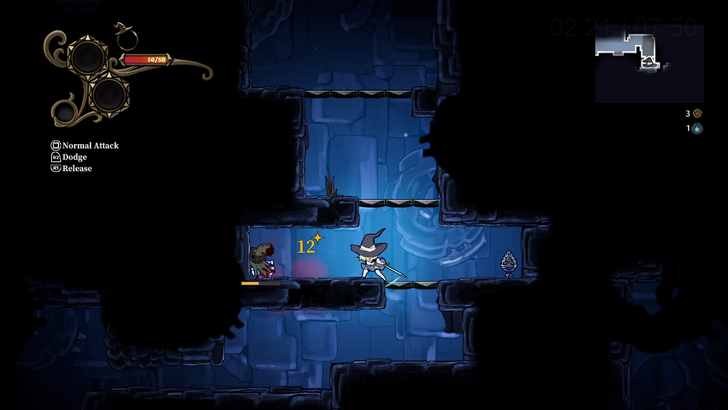
Even if the similarities are too difficult to ignore, NeverGrave’s story has a problem unique to its delivery that poses a much larger problem than being unoriginal: it is so hard to follow. There’s no dialogue in the framing cinematic, and the NPCs you start with aren’t of any help whatsoever. It is unclear what you were, what role you served, who usurped you, and to what end you were stripped of your status.
Dead Cells at least had lore rooms and many more NPCs to help you paint the bigger picture, but NeverGrave doesn’t have any of those, not to the same degree or quality. I’ve had to piece together what story I could from the voiceless protagonist and oft-unhelpful people I meet along the way, which was not pleasant.
At least the tedium was worth it, putting forth a world rotted by corruption and wracked by the whims of a careless power. As far as I know, Dead Cells doesn’t have anything like that.
Actually, wait a minute…
Mixing Metroidvanias with the Endless Fun of Roguelikes
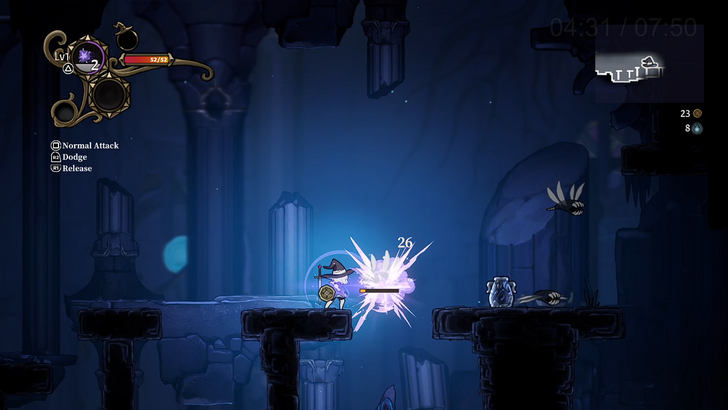
Moving on to how NeverGrave plays, it operates on the standard roguelike metaprogression loop, with Metroidvania sections taking up the majority of the core gameplay experience. At the start, and whenever you die hence, you begin each run at a church overseen by various nuns. From here, you pick which area you want to visit by choosing one of its many exits, and your run commences.
The meat of the game encompasses the standard Metroidvania experience of precision platforming of a vertical 2D map populated by enemies. You have many means to attack and move that we’ll get to, but the most important mechanic to discuss right now is NeverGrave’s first unique mechanic: possession.
Since you’re just a hat possessing a humanoid body, you’re not limited to your starting ride, however cool it may be with its floating sword attacks. Certain enemy types, when downed, can be possessed and controlled indefinitely, giving you a new set of moves, a separated healthbar, and a completely different way to play.
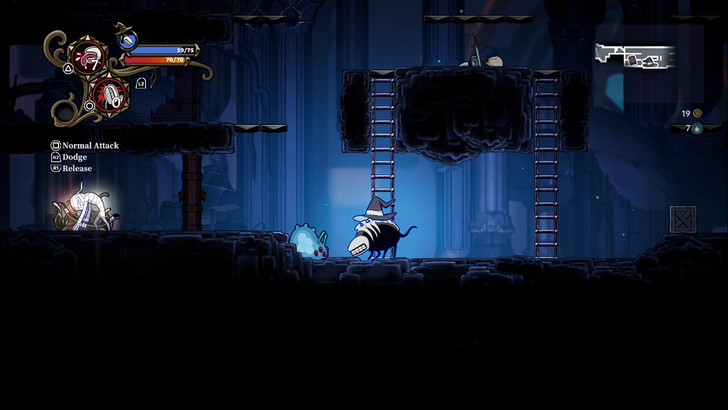
This part of the game is great because it breaks the mould in all the right ways. Dead Cells has something similar in that you can break off your host body to damage enemies in much the same way, but you could never control them. This feels like a natural evolution of the idea, executed perfectly for the game’s unique context.
Unfortunately, when you’re not possessing enemies, you’re just playing as John Dead Cells himself, only worse. You have a standard means to attack in every direction, as well as two slots for spells and a slot for consumable tools that you find around the stage as you progress. This is where the gameplay meets its first bump, because NeverGrave is much less varied and has far fewer combat options than almost any other roguelike metroidvania I’ve ever seen, mostly because the weapons don’t change.
Only the spells and tools can be changed depending on what you have unlocked; your weapon stays the same for all of it, unless you choose to possess a body. That last option isn’t as common as you think, so for the most part, you’re just swinging a sword and chucking a spell or tool or two until enemies die.
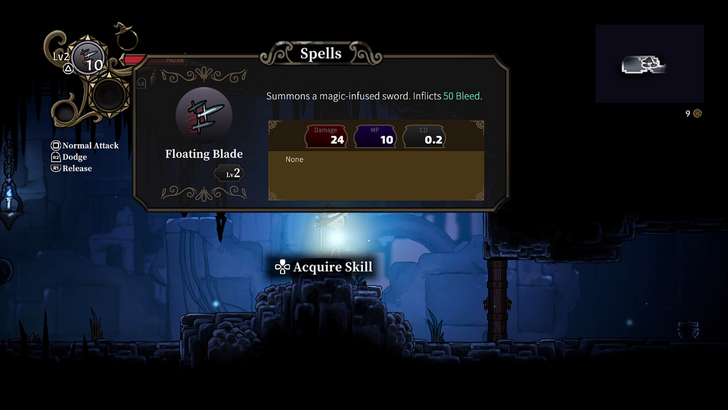
Spells and weapons can have status effects like bleed, burn, poison, and freeze, which are all built up in a soulslike accumulation meter, but they don’t really play off of each other the same way other Metroidvanias do. Take Skul: The Hero Slayer, for example. It has a similar possession mechanic using the skulls you find, but does way more with its Skull upgrades, equipment set bonuses, and switch attacks. NeverGrave pretty much just has basic attacks, some spells, and the ability to switch it up every now and then.
It’s not all bad, though, since the basic moves you do get are crisp, responsive, and actually satisfying to you. They just get old much faster, even with the game’s skill tree in the mix. Yeah, NeverGrave has a skill tree that you unlock once you have the resources necessary to do so. They offer significant stat boosts to almost every aspect, while also promoting different playstyles, so they get a pass in terms of design, but not in terms of staying power.
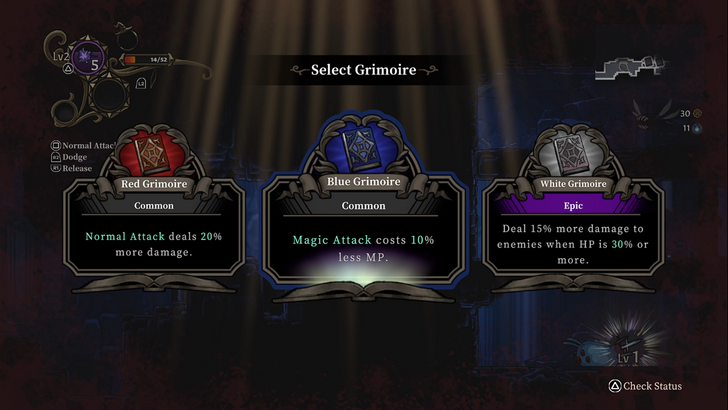
Each upgrade is a significant power jump, so it takes a lot of resources to get them. It starts as a few coins, a few souls, and a stick or two. Eventually, though, it’s asking for Stardew Valley Community Center levels of requirements to reach the next level. No way you’re getting that from a few runs, which is why NeverGrave actually has base-building, and it’s the most original thing the game has from what I’ve described so far.
Rebuilding the Village, One Dirt Block at a Time
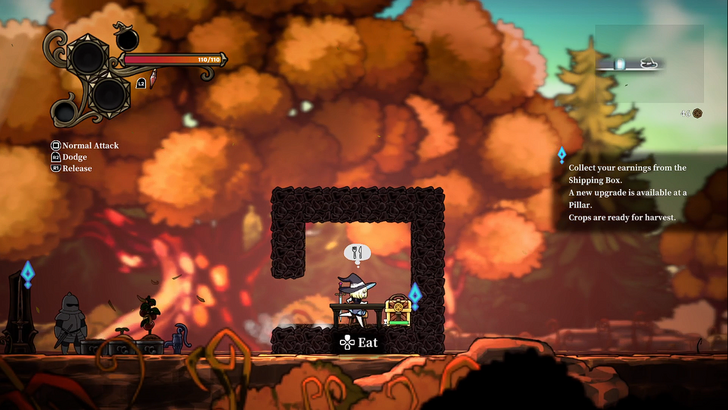
You read that right: NeverGrave has base-building and crafting mechanics. It seems completely random and disconnected from the Metroidvania half of its gameplay, but, as stated earlier, the demanding upgrade requirements of the skill tree require it.
NeverGrave is a 2D Metroidvania through and through, though, so traditional base-building is out of the question. 3D blocks aren’t possible, so a Terraria-style building system is employed, with players building homes on the X and Y axes exclusively, usually with dirt blocks at the start.
Players can sculpt terrain and build bases on the site of the former village, which was destroyed after its hostile takeover. Once you set up your terrain, you can build new ways to process the materials you find while adventuring, and set them to work while you’re out collecting more. These processes include farming plots, witch cauldrons for item synthesis, and even a collection box for things you don’t need but want to sell.
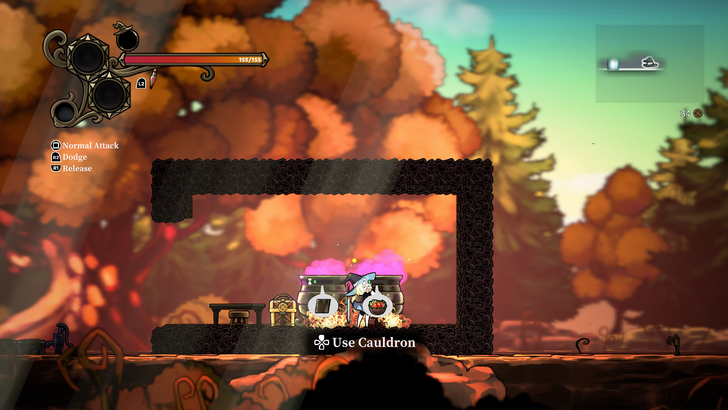
It can actually get pretty fun if you’re creative enough. Just know that this game’s building system is in no way as expansive or advanced as Terraria’s; it just operates in the same way. Expect a floor or two of furniture, maybe some decorative blocks here and there at most. Doors, walls, the works.
In any case, you’re gonna wanna spruce the village up, because here is where you’ll spend most of your time, even more than the adventures themselves. That’s because this is where most metaprogression happens, and I don’t just mean the skill trees.
Getting Stronger the Roguelike Way
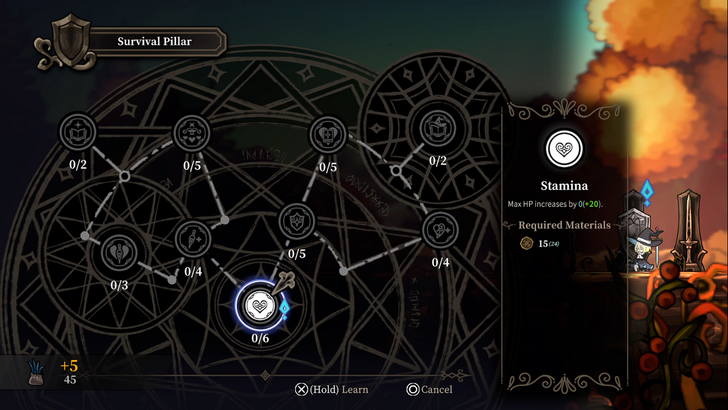
During a run, killing an enemy or attacking destructible objects rewards you with resources. Usually, it’s just wood, stone, and the odd corrupted soul, but sometimes it’s coinage and normal souls, both of which are helpful in their own way.
Souls are in-run currencies you can use in shops and different stations around each stage. They aren’t kept between runs, but are far more common. Coins, on the otherhand, are meta progression materials, and are about as common as Cells are for Dead Cells; not quite rare, not quite common, but just as necessary.
These coins are how you unlock new ways to fight, like new spells, tools, or even new furniture for your oddly polygonal home made out of dirt. You do so through different stations you build yourself, like the Laboratory. Some of these blueprints are for resource-processing furniture, but others are for temporary buffs you can take with you on your adventures.
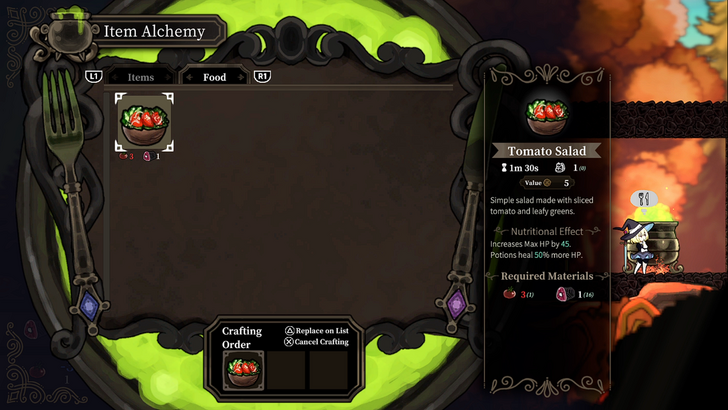
The table is the best example, letting you eat plants you harvested, and granting you appropriate buffs depending on what you ate. As you unlock more and more recipes, the buffs get better and better, but the resource requirements inflate exponentially.
And thus, the loop is set. You go on a run, collect coins, spend coins on recipes, use recipes to build new things, these new things help with the next run, so on, so forth. Sound familiar? Well, yeah, that’s how Dead Cells does it, except in NeverGrave, the guy you’re giving your metagame progress to isn’t glowing green and bonkers, at least not to my knowledge.
I appreciate that NeverGrave is at least differentiated by the Village’s existence as an end-of-run progression, as opposed to Dead Cells’ mid-run submission of resources. NeverGrave also doesn’t require you to make it to the Village to submit your resources, as all found resources are permanent until you spend them.
Sights and Challenges that Capture Attention, and Sounds that Lose It
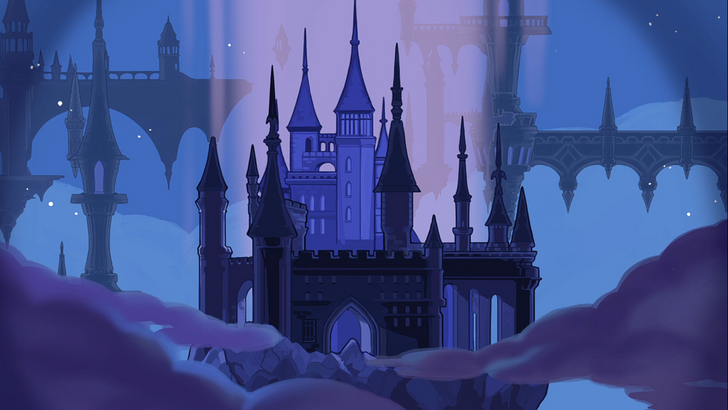
Now discussing sights, challenges, and sounds, NeverGrave is in a tough situation where the sights are impeccable and unique, the challenge is substantial but not unfair, while the sounds are barely worth mentioning. To be clear, the game has SFX and music; neither of the two is worth mentioning more than once, though, since nothing is outstanding about them. There’s no voice acting to save the audioscape at all, and everything auditory veers closer to forgettable, if not repetitive.
The sights, though, are comprised of smooth animations, a very distinct aesthetic that the game never fails to deliver, and a subtle, cool palette that’s easy on the eyes. That last bit is a necessity when you’re sweating hard over the game’s difficulty, because while it’s not Silksong levels of making you want to throw your controller, it doesn’t pull its punches either.
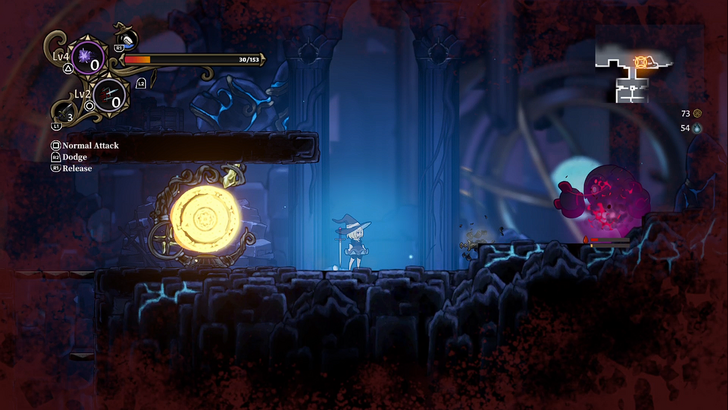
Enemies deal damage on contact, attacks are quick and wide, and enemies can both pile on to make your life hell, as well as chase you through the entire level until you die. Three difficulty settings move from actual baby mode to regretting you were ever born, so there’s something for everyone.
The good part about the difficulty is that it never feels unfair. You died because you’re careless, no other reason. Everything feels achievable, and the metaprogression is always significant enough to give you a better fighting chance when you head out. As long as you’re playing, you’re winning, even if you didn’t make it to the end. Again, very Dead Cells, but this game does make its upgrades its own by branching skill paths and requiring you to build your stations.
Clearly Inspired By Something and Better for It
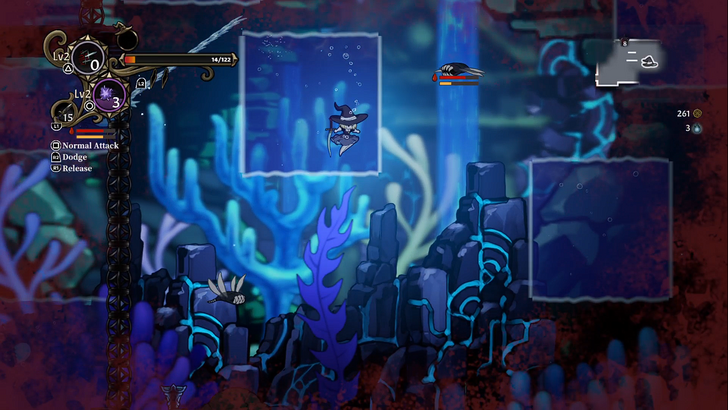
And that’s NeverGrave in summary. It is a good game with clear inspirations and mistakes it can own up to. I won’t pretend I’m not seeing the parallels between it and many of its kind, none of which can be attributed to genre-staple mechanics, but I won’t call it a copycat, because it did synthesize what it sought to emulate and created something similar, but technically different.
The game’s story is byzantine, and not in a fun way, while its audio is forgettable and lacking as a baseline. The base-building is fun and functional, though, and the metroidvania/roguelike loop is as addictive as ever. It’s unoriginal in the best ways, and I’m all for it.
Is NeverGrave: The Witch and the Curse Worth It?
Surprisingly Cheap for Its Kind
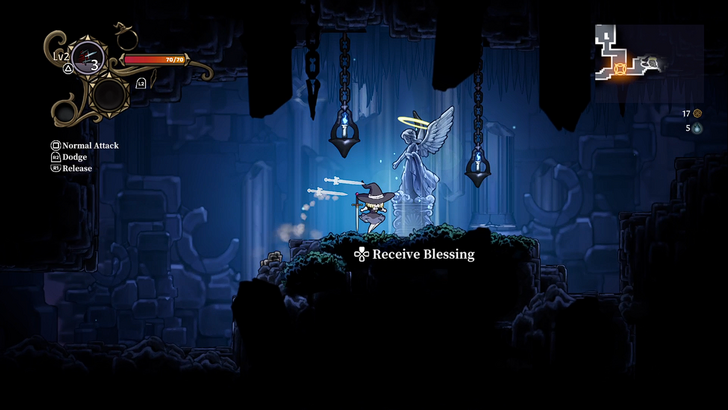
NeverGrave could’ve retailed at $20, and I would’ve considered it a good deal. It’s not completely groundbreaking, but it’s nonetheless a well-made game. Imagine my surprise when I figured out it was only asking for $16.99.
Considering the replayability its roguelike mechanics can bring, and the winding nature of its narrative, you're looking at many hours of gameplay here at the cost of a burger. If that’s not a good deal, I don’t know what is.
NeverGrave: The Witch and the Curse FAQ
How Do I Unlock Multiplayer in NeverGrave: The Witch and the Curse?
Players can unlock online multiplayer functionality for NeverGrave: The Witch and the Curse by completing the game’s tutorial and reaching The Village. Once cleared of debris, players can use the building menu to create a Laboratory to unlock special furniture that allows online multiplayer lobby creation.
How Do I Unlock the Air Dash Ability in NeverGrave: The Witch and the Curse?
Players can unlock the Air Dash ability by completing a maze puzzle in the second level of The Ruins.
Game8 Reviews

You may also like...
 |
Silksong Review | Hornet’s Ascension is Painfully Beautiful |
 |
Hollow Knight Review | The Prime Example of a Metroidvania |
 |
Animal Well Review | Who Wants To Sleep Peacefully, Anyway? |
 |
[ex_link:Nine Sols Review | Parries The Competition Away(https://game8.co/articles/reviews/nine-sols-review] |
 |
Shadow Labyrinth Review | Lost in Its Own Maze |