


Path of Exile’s Game Director Mark Roberts confirmed that Path of Exile will continue to be developed for "decades," even going as far as to say "forever" alongside its sequel, Path of Exile 2.
GGG's Mark Roberts & Christopher Laferriere Discuss Mirage Expansion and Concurrent PoE 2 Development
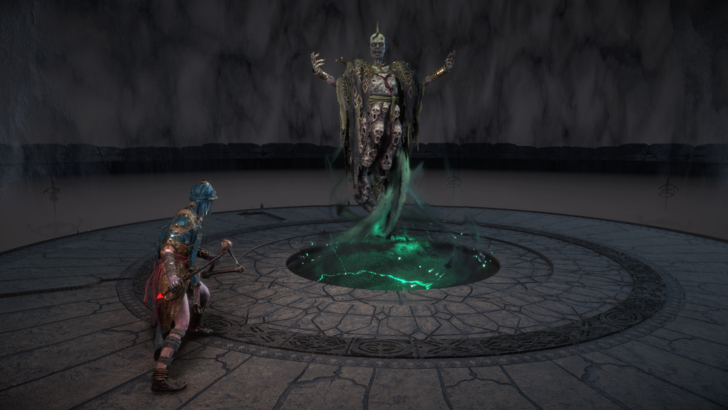
We sat down with Game Director Mark Roberts and Game Designer Christopher "Octavian" Laferriere at a recent media event for the newest update, the 3.28 Mirage Expansion, to discuss the team's creative process, the challenges of concurrent development, and what players can expect from the future of Wraeclast.
The Future of Path of Exile 1: "It Will Go Forever"
No Future Where It Stops Getting Developed
The most pressing concern for any long-running franchise is its future, especially with a sequel on the horizon. Roberts was clear that Path of Exile 1 is here to stay.
"No, it will go forever," Roberts stated, directly answering the question of whether the game would ever be sunsetting. He elaborated that the decision is fundamentally a business one, but he sees no end in sight.
"The responsible answer is that it will continue to be developed as long as it’s financially viable," he clarified, something he's not worried about as the large and consistent player base ensures that PoE 1 and 2 will continue to be developed concurrently. "We’re doing it now, so we’re just going to keep doing it."
Roberts further surmised that it would take an "epic-tier global catastrophe slash natural disaster" to stop the team at this point.
"I cannot see a future and where Path of Exile stops getting developed. If that exists, I am unable to see it."
Solving the Challenge of Concurrent Development
With Path of Exile 2's Early Access release over a year ago, Grinding Gear Games (GGG) has spent time optimizing its approach to managing two live-service ARPGs. This dual development, Roberts admits, initially led to significant strain on the team, particularly among the senior leadership.
Roberts described the issue as a "constant rush and back and forth between the games," which created persistent context switching issues that were especially taxing for designers and game directors—the most critical constraint on the production pipeline.
He pointed to the two-month gap between Path of Exile’s 3.28 Mirage expansion and Path of Exile 2’s 0.5 update, noting that such a timeframe led to rushed products.
"Two months is not enough time to make a quality product for us. Three months is great. Four months is great. Two months? Everything comes in a bit rushed."
The solution, Roberts explained, was a clear separation of development teams, with distinct leadership for each project. This change drastically improved efficiency and team morale. This separation, Roberts explained, has made things "so much easier," allowing him to focus on PoE 2 and "just trust a lot of what's happening with PoE 1."
"That's the biggest shift, because now effectively we have parallel leadership on both games that isn't fighting with one another," he went on. "We've got this healthy balance."
This empowerment had a profound impact on team morale and productivity. Resources, including VFX artists, animators, and modelers, were distributed across both projects to ensure they had the necessary support, with a clear process for the new leaders to secure more if needed.
"Honestly? Overall, stress went down because people adopted responsibility; people stepped up. And now we’ve got this peak level of passion and creative thing coming through for both games."
"It's certainly been pretty tough, but I would say we're in the best spot we've been, and it's only getting better."
No Cannibalization Concerns, Just Designing for What's Best
Another major concern with both games was that given they’re in the same genre, it could lead to unintentional competition or to design ideas being cannibalized between teams. Roberts said this is addressed by the separation of teams, which fosters independence in the creative process.
Roberts described the design meetings as casual and highly focused.
"What it currently looks like is pretty much, it gets to 5 PM, and Andrew and Octavian and myself... will just talk about design, and we’ll just come up with ideas."
The entire focus during this time is singular: "What’s best for Path of Exile 1?" When the team pivots to PoE 2, the process is identical—focus only on what is best for the sequel.
This process ensures they are "not really directly cannibalizing in any regard," though Roberts concedes that inspiration may be drawn later if one game develops a feature similar to something in the other.
Furthermore, the narrative team is consulted to ensure that the world-building remains intact, and that the studio's core philosophies are not compromised.
Roberts clarified that the difference between the games lies mainly in practical elements, like balance, itemization, and overall speed, rather than two dramatically opposed philosophical approaches.
If an idea is "cool," meets their quality standards, and can be developed in time, they implement it. The entire creative cycle, he summarized, is "very organic" and a "seamless, fun, passionate design"—an "infinite process" that keeps both teams excited.
"We're currently in the process of doing a bunch of design meetings for 3.29, and I'm having a blast doing those as well."
3.28 Mirage Expansion Introduces New Class and Endgame Overhaul
Seeing Double with Your Mirage
Saving the Captured Djinn
The interview took place during the media event for the upcoming Mirage Expansion (3.28), which aims to shake up the endgame and introduce a new Ascendancy class.
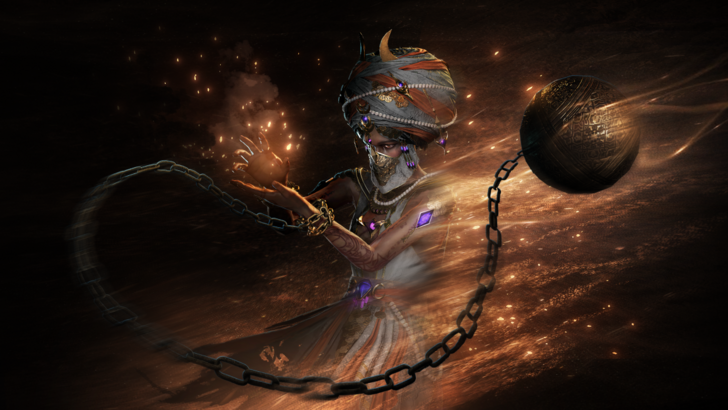
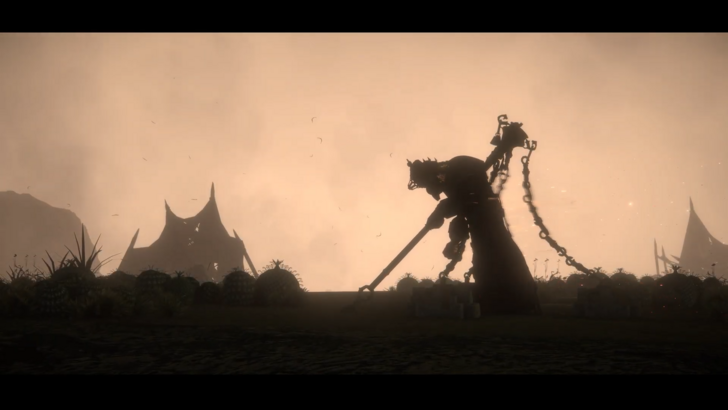
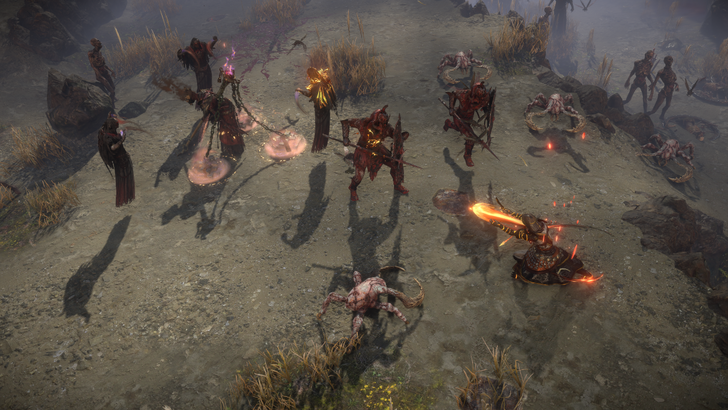
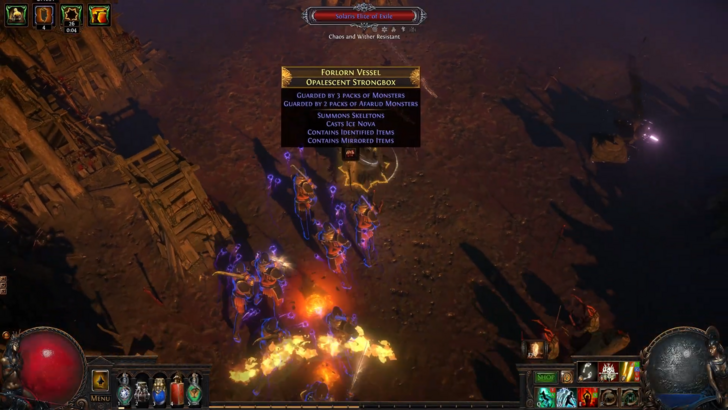
Path of Exile 3.28 introduces the Mirage league, where players will be fighting against a sect of desert necromancers called the Afarud. Under some mysterious agenda, they have captured the souls of Djinn throughout Wraeclast, and the Exile must help free them.
You’re not alone in this quest, however, as Varashta, an ancient Maraketh Sorceress, will help you enter the Astral Realm and break the tethers that bind them.
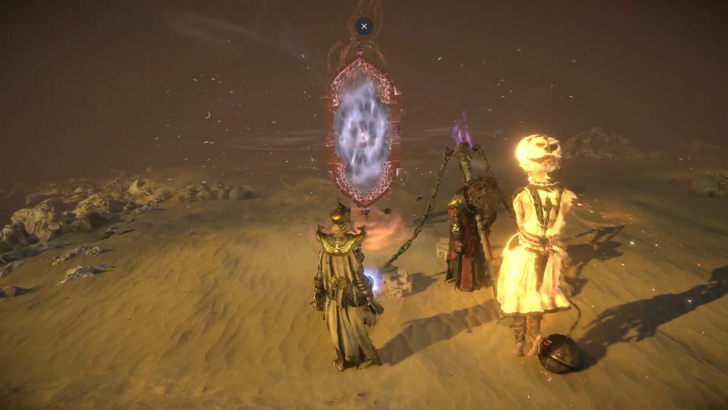
In-game, once players defeat the necromancers that chain the Djinn, Varashta will open the portal to the Astral Realm.
Varashta will then give you the choice between three Wishes to help you conquer the challenges of the mirage. Depending on the Wish chosen, you’ll be rewarded with different currencies to corrupt and augment max-level skill gems.
Mirages Allow for Retrying Maps
The mirage is an imperfect copy of the map you were originally on, copying almost anything within its domain. This means that all Atlas, Scarab, and other map modifiers existing in the map will be repeated for you to challenge once again.
While not all leagues will have direct copies of their encounters, they will have tailored rewards for those who succeed in their challenge. One particular reward is the Dextral Catalyst, earned by braving the Mirage version of Ultimatum, which enhances the suffix keyword on accessories.
New Scion Ascendancy: Reliquarian
An Incredibly Flexible Ascendancy
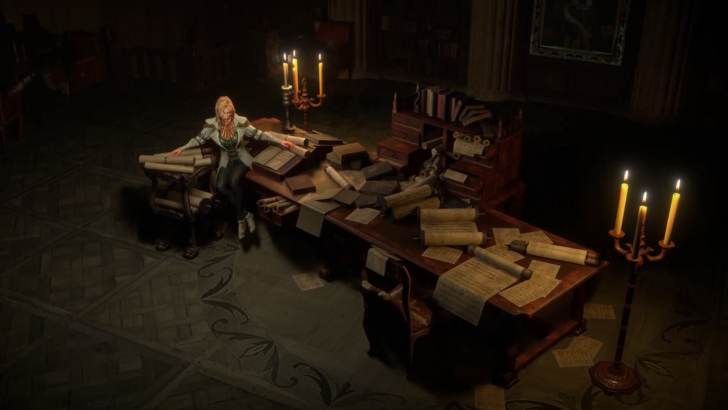
The expansion also introduces the Reliquarian, the Scion’s newest Ascendancy. The new Ascendancy is based around the passive effects of Unique items, where her Ascendancy nodes are quite literally the bonuses you get from said items.
The Reliquarian is shaping up to be the most flexible Ascendancy class in the game, especially since certain nodes can enable build paths that take advantage of certain Unique items. For context, one of the revealed nodes is the Astramentis passive skill, which functions similarly to the item itself, adding 60 points to all attributes.
Furthermore, the Ascendancy is revealed to be the first Ascendancy that changes with every league, meaning that the passive nodes will change for every league moving forward. This means that the currently revealed Astramentis passive skill may be replaced in the next league by a different Unique passive for an accessory or jewelry.
A Broken Atlas, A Better Endgame
Start Position and Map System Changes
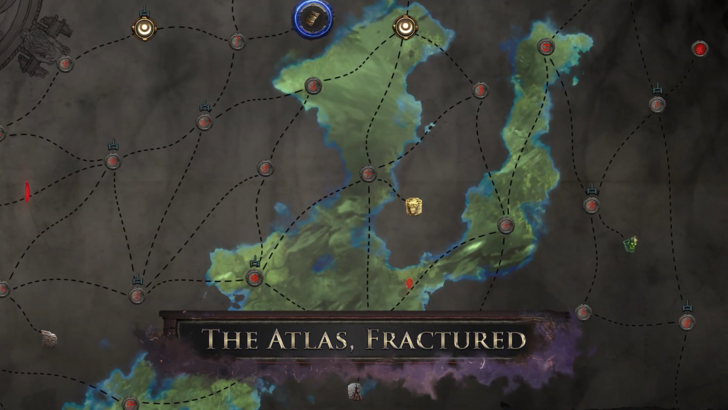
With Zana’s only recourse to destroy the Atlas in Keepers of the Flame, that meant that even the Atlas itself had changed for the players. In 3.28, the Atlas was completely overhauled, with players now starting at the center and able to explore four quadrants from the start.
The map system changed as well, where you’re simply farming for Map Tiers instead of looking for the actual Map itself. This means players can switch to different maps or repeat their favorite maps at higher tiers much more easily than before.
With the Fractured Atlas now split into four quadrants, this also changes how you juice your maps.
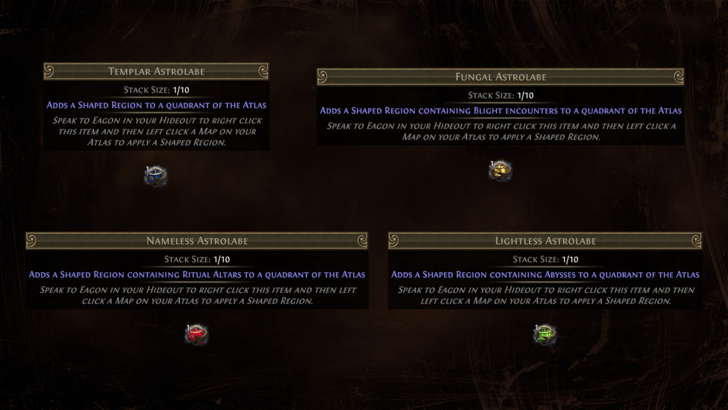
Astrolabes Gives Ability to Add Shaped Regions
The new Astrolabes now give you the option to add a shaped region of your choice to a specific quadrant of your Atlas, giving you access to more specific encounters of your choosing. For example, a Lightless Astrolabe allows you to add a region that’s influenced by the Abyss, giving you more Abyss encounters in that specific quadrant.
As you progress through that shaped region, it becomes more difficult to complete. Each completed node in the shaped region juices up the next encounter for that region, meaning that the last node will have at least more than four modifiers added onto it.
Finishing a shaped region will grant you entrance to one of four memory vaults, each housing varying rewards from Unique items, currency, enhanced support gems, and more, making it an enticing way to not only play the game but also progress your character.
QoL Improvements for Faster, More Streamlined Experience
Map Improvements
The new league also aims to streamline the endgame even further, adding more quality-of-life improvements to help you get to mapping faster and stare at menus and other screens less.
One example of this is having the ability to navigate to Unique maps immediately by right-clicking the required item in your inventory, making it faster from start to finish.
Tier 17 Maps have also been removed, instead being replaced as Nightmare maps that still serve as the game’s Uber Pinnacle Bosses.
Certain modifiers in Originator Tier 16 Maps have also been removed, as some of these made certain maps either more annoying to play in or impossible to beat.
Balance Improvements
More balance adjustments were made to several existing Ascendancies and even Atlas Skill Tree nodes, to make them more viable to use and run in favor of more popular builds.
Last, but not least, Kingsmarch shipping is also made more convenient, as you can now reroll rewards at the cost of gold.
Reworking Old Mechanics and Plans for New Classes
Harbinger Removed, But Not Gone Forever
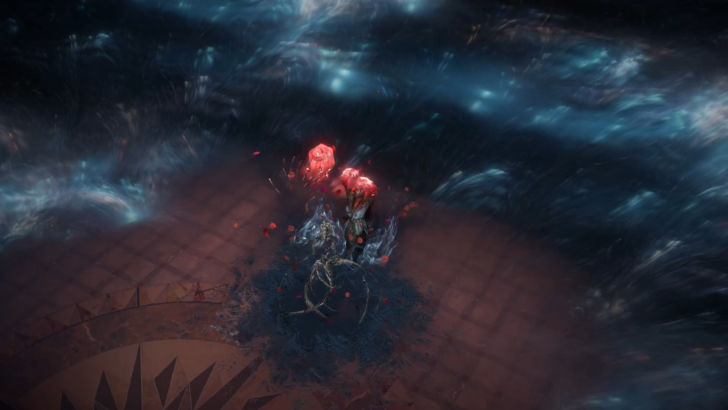
Building on the discussion of their creative process, Roberts spoke about the possibility of reworking older, outdated league mechanics, citing the previous league, Keepers of the Flame, which reworked the old Breach mechanic.
Roberts confirmed that the old Harbinger mechanic, released back in 2017, will be removed entirely in 3.28. The intention is to eventually bring it back, modernized and expanded upon to resolve its unanswered lore.
"Harbingers is very old and very simple, but it’s got a very weird and interesting thing to it, like its own language, where do they come from, and who they are. There’s all kinds of things that that are just left unanswered."
New Classes are Highly Unlikely
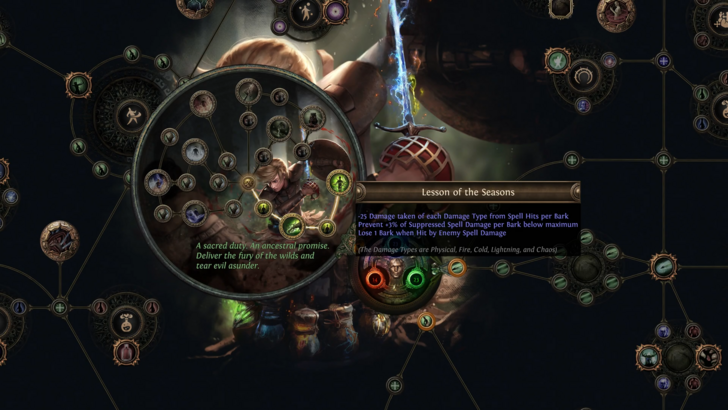
Too Many Classes Can Lead to Decision Paralysis
While new classes can generally generate a lot of buzz within the community, Roberts confirmed that while the team is adding a new Ascendancy this patch, the introduction of entirely new core classes is not to be expected. The primary reasoning is one of design philosophy and player experience.
"You don’t want too many classes," Roberts stated, "you get a lot of decision paralysis and it just gets overly complicated."
Though he conceded that systems like the Bloodline class system from a previous league served as a way to introduce a kind of temporary new class experience, new permanent core classes are unlikely.
Technical Constraints Also a Major Consideration
He didn't go so far as to say a new core class is "impossible," but it would be a "long time away," primarily due to technical constraints.
Laferriere reinforced Roberts' point, agreeing that new classes pose a technical challenge involving rigging and animation, rather than a budget or design problem.
"Some of my favorite content to work on is probably, new skills, new supports, character balance, classes, Ascendancies, that kind of thing," Laferriere confessed, "so it's certainly something that I want to keep giving some love and attention to. But Mark is absolutely right. An entirely new class is a challenge on a technical level."
"I wouldn't expect to replace most of the core classes or Ascendancy classes," Roberts concluded, "and I certainly wouldn't expect to add too many new ones that aren't replacing existing ones."
"You might see a 3rd Scion class later in life," Roberts teased non-committally, "You know, who knows, but um, yeah, I don't know."
Path of Exile 3.28 Mirage releases on March 6, 11 AM PST for PC, PlayStation 4, and Xbox One.