
| Life is Strange: Reunion | |||
|---|---|---|---|
| Release Date | Gameplay & Story | DLC & Pre-Order | Review |
Overview
What is Life is Strange: Reunion?
Life is Strange: Reunion is a narrative-adventure game that combines story-driven exploration with choice-based gameplay. Players alternate between Max and Chloe, using time-rewinding powers and backtalk mechanics to solve the mystery of a destructive fire in Caledon while rebuilding their fractured relationship. The game features branching dialogue, dual protagonist perspective, multiple endings based on small decisions, and subtle environmental storytelling.
Life is Strange: Reunion features:
⚫︎ Tme Rewind Ability for Max
⚫︎ Back Talk Ability for Chloe
⚫︎ Multiple Endings
⚫︎ Exclusive Soundtrack
⚫︎ Small Choices Ripple Throughout the Game
⚫︎ Surprising Twists
For more gameplay details, read everything we know about Life is Strange: Reunion's gameplay and story.
| Digital Storefronts | |||||
|---|---|---|---|---|---|
 PS PS |
 Xbox Xbox |
 Steam Steam |
|||
| $39.99 | |||||
Life is Strange: Reunion Review: Almost the Perfect Paradox
We’re Still Team Bae
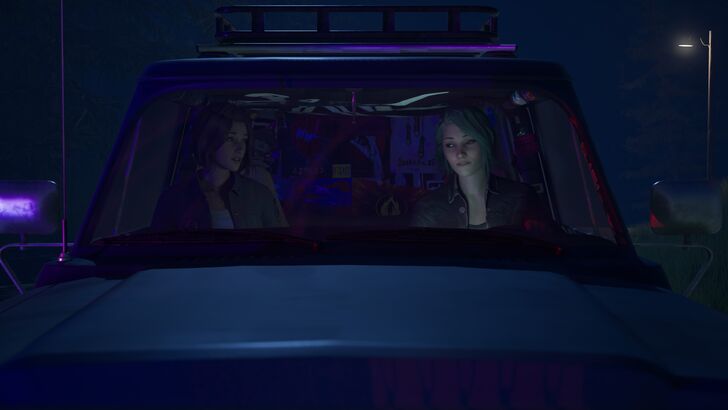
Life is Strange is probably one of my top five games of all time. It came out before I graduated high school and was about to step into college, so I was just a little younger compared to Max and Chloe when it was released. Their struggles with friendship, identity, and finding their place in the world felt almost like a mirror to my own experiences at that age. Obstacles by Syd Matters basically became my personal soundtrack for all of 2015, and if you’ve played the original game, you already know how the soundtrack is just immaculate.
So a decade later, it’s weirdly fitting that we’re here with Reunion. Seeing Chloe honestly feels like seeing an ex, not in a bad way, but in that way where history just rushes back all at once. But with the mixed reception to Double Exposure and the growing feeling that maybe Max’s story has been stretched a bit too far, I came into Reunion with one big question: can Deck Nine actually give proper closure to the Bae/Bay story?
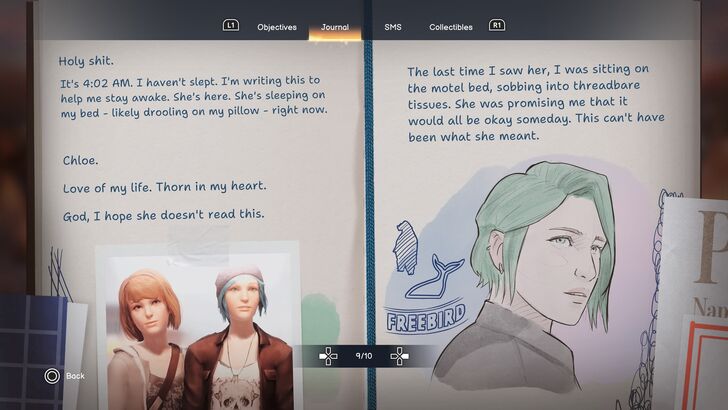
Because let’s be honest, no Life is Strange game will ever really match the magic of the original. And I don’t even mean that in a nostalgic, "the first one is always the best" kind of way. The original had this very specific gameplay loop where rewinding time wasn’t just a gimmick, it was a way to feel the consequences of your decisions. You didn’t just pick a dialogue option and move on—you picked it, saw the outcome, rewound, tried another, and slowly realized that even with literal time travel, you can’t fix everything. That idea carried into the narrative, into the relationships, and into the final choice that still has a lot of people on a chokehold today.
So yeah, following that up will always be a Sisyphean task. While I don’t think Reunion surpasses the original—I don’t think anything ever will—this might be the best finale we’re going to get for Max and Chloe.
A Town on Fire, and a Past That Refuses to Stay Buried
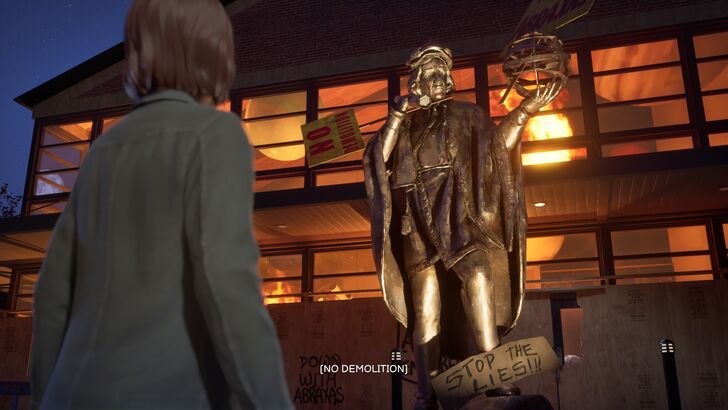
Reunion takes us back to Caledon after the events of Double Exposure. Max Caulfield—our time-bending protagonist who has spent years trying not to use her powers—returns from her art exhibit only to find the school and the surrounding area completely engulfed in flames.
Then Max sees Moses—her friend and a brilliant astrophysics student—fall to his death. And just like that, even though she’s aware of the consequences, Max goes back to a photo. She rewinds to just moments before she left for her big art exhibit, back to a point where maybe, maybe, this can all still be prevented.
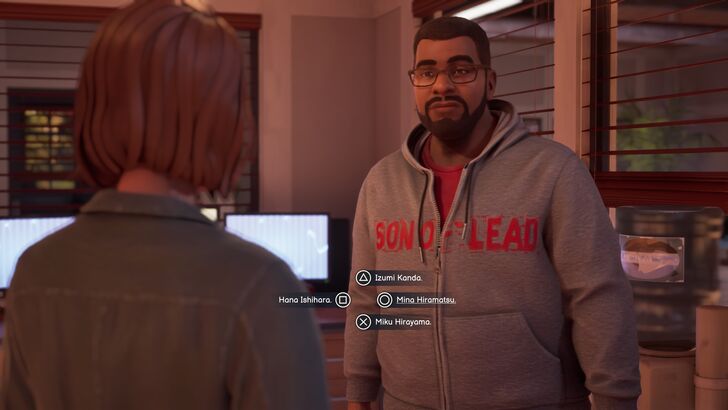
She finds Moses, tells him everything that happened, and he believes her immediately. Not because the story makes sense, but because he’s the only other person who remembers the events of Double Exposure. Somehow, everyone else in town has completely forgotten what happened, despite that game’s supposed happy conclusion. So now, it's up to Max and Moses to try and figure out what caused the fire and who’s involved.
Meanwhile, on the other side of America, Chloe Price is going through something just as strange. She’s been having visions, not just nightmares, but recurring moments where she sees Max over and over again, trying to kill her. And mixed into these visions is Safi, Max’s friend from Double Exposure, someone Chloe has never even met. Imagine that for a second: seeing people connected to someone you haven’t seen in years, acting out events you don’t understand, in a place you’ve never been. That’s the kind of confusion Chloe is dealing with. So, desperate for answers, Chloe travels all the way to Caledon to find Max.
Small Actions Complete the Story
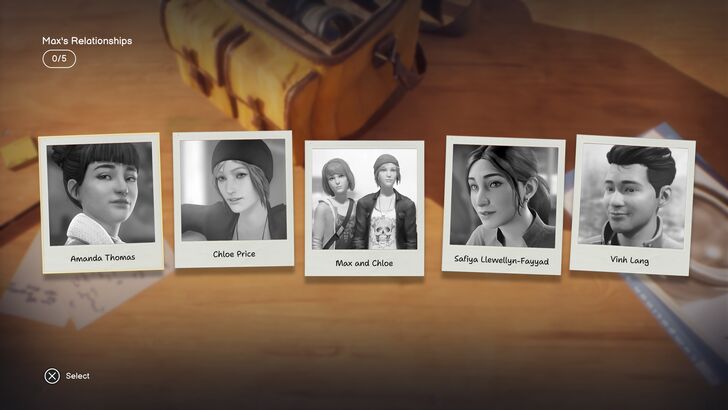
At the beginning of the game, you’re asked to choose certain relationship decisions from the original game and from Double Exposure. Having prior knowledge definitely helps, but the game does give you a recap so you’re not completely lost. That said, a large portion of Reunion really does feel like you’re watching more than you’re playing. There were long stretches where I felt like I was just letting scenes play out rather than actively doing something.
But oddly enough, it didn’t bother me as much as I expected. Because the truth is, even though the gameplay has evolved a bit, Life is Strange has always been more about being in the moment rather than doing a lot. Reunion still runs on that same DNA—conversations, exploration, rewinding time, making decisions—but it feels more restrained this time around.
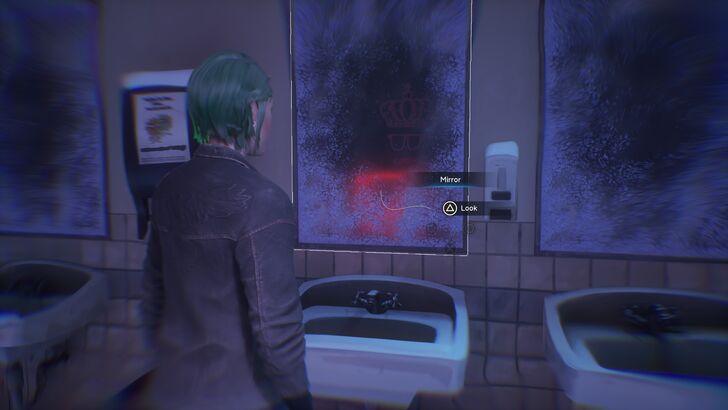
The game constantly shifts between Max and Chloe, and both of them use their abilities to push the story forward and get closer to the answers they’re looking for. Max no longer relies on traveling between parallel timelines like she did in Double Exposure. (By the end of that game, she merged the two timelines, so that mechanic is essentially gone.) Instead, she goes back to what we know best: rewinding time, just like in the first game.
You’ll still be making choices throughout the game, but the big difference is, here in Reunion, it no longer works on a chapter-by-chapter "this is the big decision" structure. In previous games, you could tell when a major choice was coming, and you knew that moment would probably determine the ending you’d get. Reunion doesn’t really do that anymore.
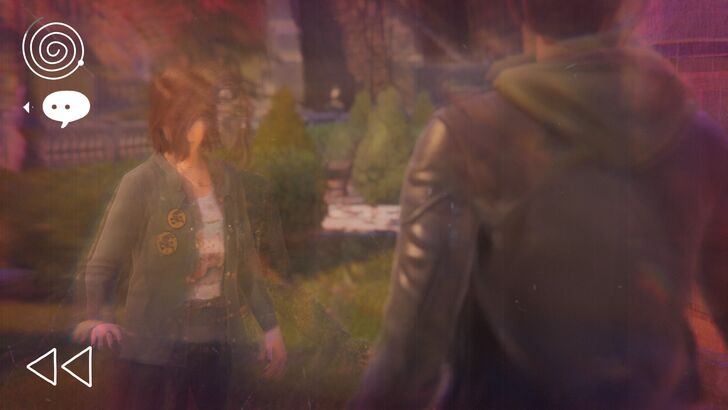
Instead, the ending you get is shaped by the smaller decisions you make throughout the entire game and how often—or how heavily—you rely on your powers.
And I actually like this approach more, because it feels more natural. There wasn’t a moment where I thought, "Okay, this is obviously the choice that leads to Ending A or Ending B." It’s more like my actions—how I treat people and when I choose to rewind—is what shapes the outcome. It’s less about one big decision and more about the kind of person you are while playing.
And that’s a very Life is Strange way of doing things.
Endings That Hit the Heart, But Pull Their Punches
Which brings me to my first big point: the endings. Paradoxical, I know. Life Is Strange: Reunion might have great mechanics leading up to the end, but the endings themselves—even though I did get choked up with the first ending I got, which was the good ending—felt like they lacked the consequences the original game had.
The whole point of Life is Strange, at least to me, has always been the butterfly effect. You can rewind, you can try again, you can look for a better outcome, but in the end, you can’t have everything. The original game understood that. Your choices cost you something. That was the point.
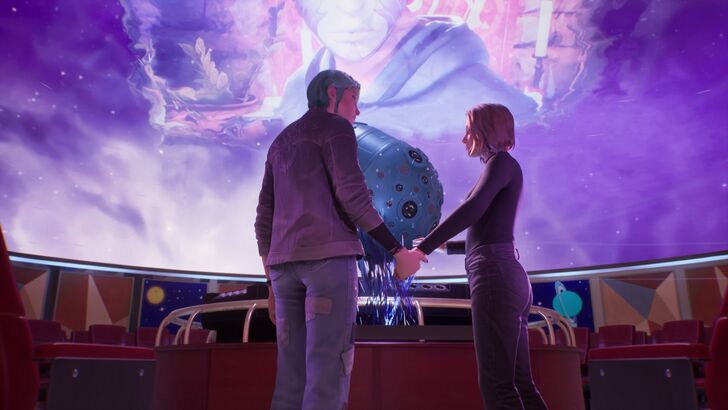
In Reunion, the best-case scenario is a little too clean. It leans more into the idea that maybe the right choices, the right attitude, and the right amount of "letting go" can lead to a version of events where you can move forward without a devastating loss. And I guess that makes sense, especially considering what Max has already been through. At some point, the story wants to let these characters rest.
But even the worst ending, at least for me, didn’t have the same emotional gravity as the endings of the first game. It didn’t leave me staring at the screen, questioning whether I made the right decision, or thinking about it days later. It was emotional, yes, but not in a way that haunted me.
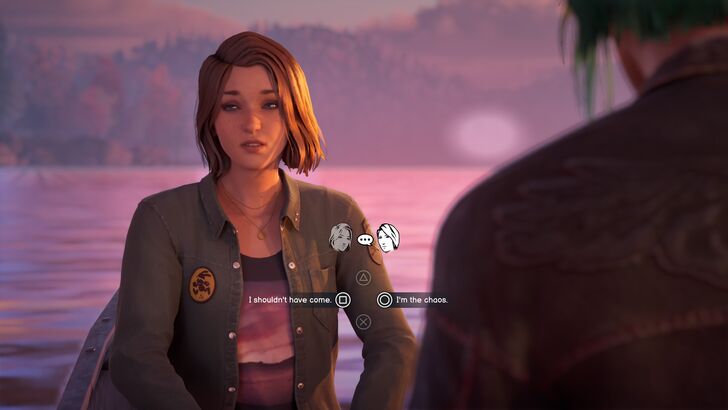
And I want to be clear, I’m not saying the endings are bad. I literally just said one of them got me choked up. You still care about how the story ends because by this point, you’re rooting for Max and Chloe. You want them to be okay. You want them to find some kind of peace after everything. I just wish Deck Nine didn’t play it quite so safe. Because if there’s any series that earned the right to completely break our hearts one last time, it’s Life is Strange.
The More You Rewind, The More the Game Remembers
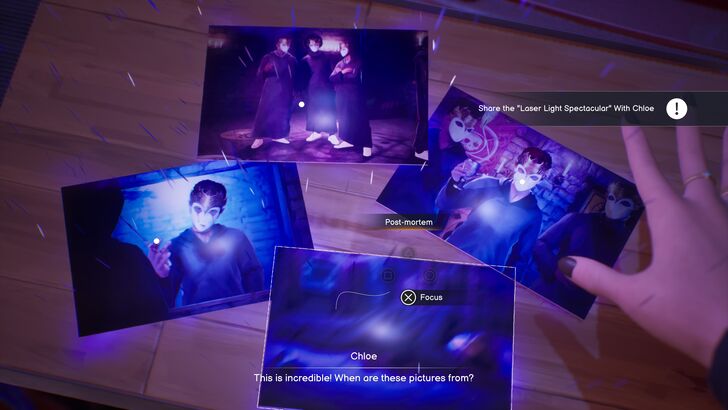
Now to get to the ending, the main factor was how much you let Max rely on her powers. Early on, the game tells you that you’re mostly on your own when it comes to figuring out who or what caused the fire. Each arc gives you objectives divided into main and secondary categories, and if you choose not to do some of them, well… that’s on you. The game doesn’t force you to see everything, talk to everyone, or fix every problem. But if you’re like me—someone who wants to exhaust every dialogue option and get the best possible outcome in every conversation—then reliance on rewind is inevitable.
If I’m being honest, outside of the decision-making and dialogue, the other mechanics are pretty simple. The puzzles are there, but most of them barely feel like actual puzzles. Life Is Strange: Reunion is a very easy game if you’re just trying to finish the story. The real challenge comes from you, the player, wanting to make everything perfect.
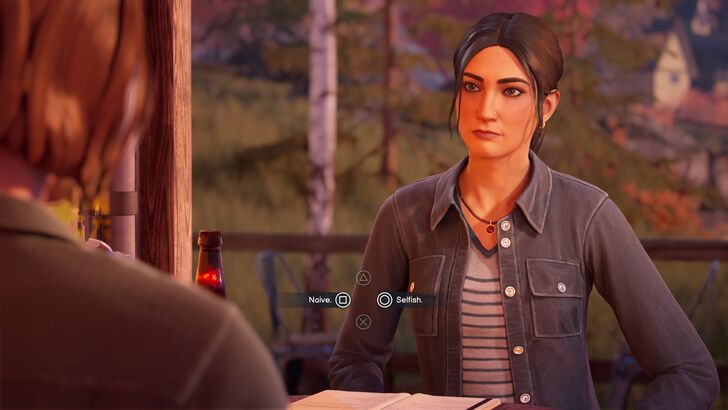
For Max’s sections, this meant rewinding constantly. And the thing is, it’s almost impossible to get the perfect dialogue path the first time because some of the best responses only appear after you’ve already chosen the wrong one and rewound. So the game quietly trains you to make mistakes, rewind, and try again until you get the outcome you want.
For Chloe’s sections, it’s different. Her Backtalk ability doesn’t rely on time powers, it relies on you actually paying attention. You have to listen, read, observe, and remember details about Caledon, the events happening in the university, and sometimes even the person you’re talking to, because when the moment comes, you need to pick the right responses in the right order to win the argument.
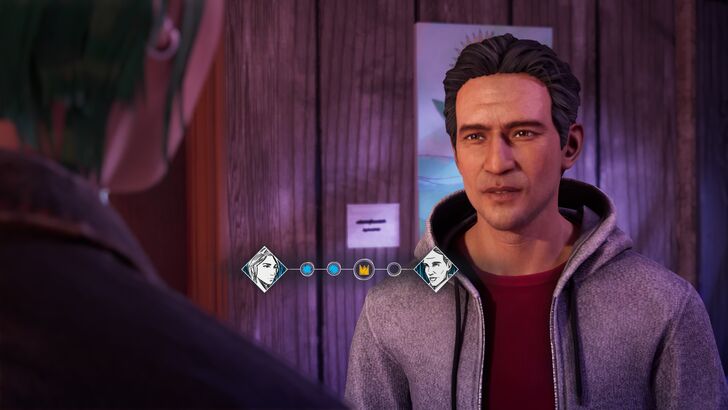
So while the game is mechanically simple, it becomes engaging in a different way. It’s not testing your reflexes or puzzle-solving skills, it’s testing how much you care. Are you the type of player who lives with mistakes? Or are you the type who rewinds until everyone walks away happy? Because Life is Strange: Reunion is very clearly watching how you play. And by the end, it has something to say about that.
Choosing Both Sides of the Conversation
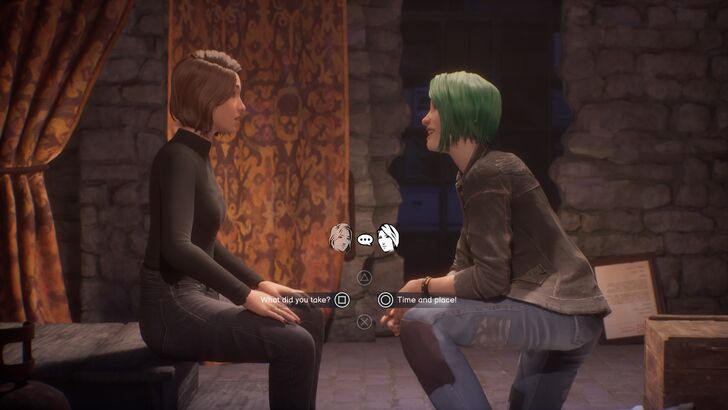
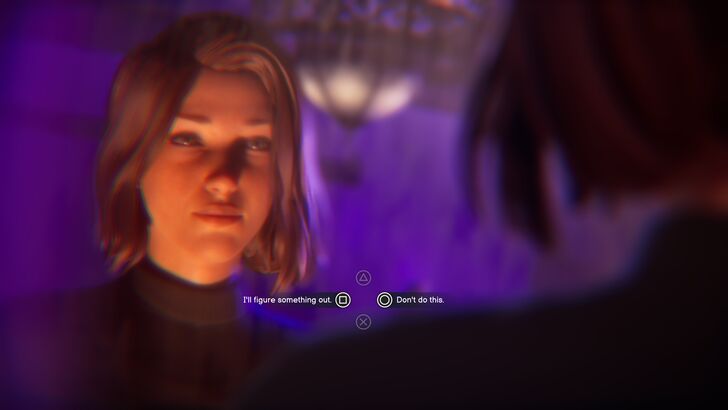
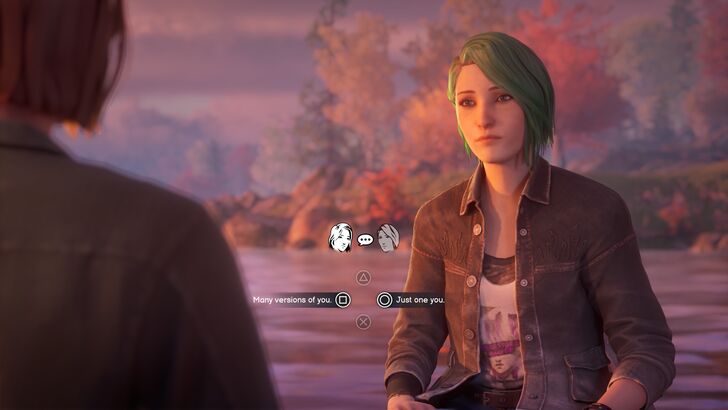
Another mechanic that really stood out to me, and one I genuinely liked, was the moments where you get to direct and choose Max and Chloe’s conversation as both of them at the same time. And it feels… weirdly intimate.
There’s something almost uncomfortable about it at first, like you’re stepping into a space you’re not supposed to be in. You’re not just influencing the outcome anymore, you’re shaping the entire tone of the conversation, the mood, the honesty, the hesitation, the vulnerability. You’re basically deciding whether this conversation becomes a fight, a reconciliation, a deflection, or something they both avoid.
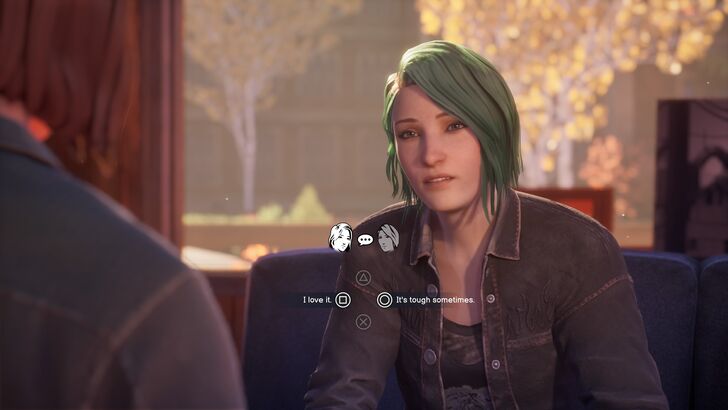
As a player, this changes how you think about dialogue. Normally, you pick what you want to say and then react to what the other person says. Here, you’re responsible for both people. It’s one of those mechanics that doesn’t sound like a big deal on paper, but emotionally, it does a lot of heavy lifting. Because Reunion isn’t really just about solving the mystery of the fire, it’s about Max and Chloe, their history, their guilt, their unresolved feelings, and whether or not they can actually talk to each other honestly after everything.
It’s the Small, Quiet Moments That Reunion Gets Right
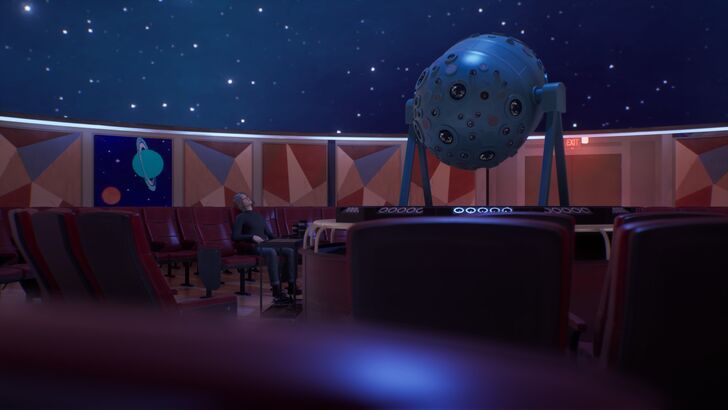
Speaking of intimate moments, one thing Life Is Strange: Reunion absolutely nails is the narrative weight of the small moment. Honestly, the part that affected me the most wasn’t the big fire, the mystery, or the bigger supernatural plotline. It was the build-up to Max and Chloe meeting again.
It happens relatively early in the game, but Deck Nine really understood what that moment needed to be. I’m not going to spoil how it happens or what exactly goes down, but you can feel just how important the other person is to the other with the way the scene is paced.
And the game knows that you have that history too. Not just Max and Chloe—you, the player who chose, who rewound, who picked Bay or Bae. There are moments where time and the universe don’t just feel like they’re messing with Max and Chloe, it genuinely feels like the game is messing with the player.

I won’t spoil those moments, but when they happen, it’s a great surprise. The kind of surprise that only works because this series understands that Life is Strange has never just been about powers or mysteries. It’s about memory and attachment.
Healing the Timeline Means Healing Themselves
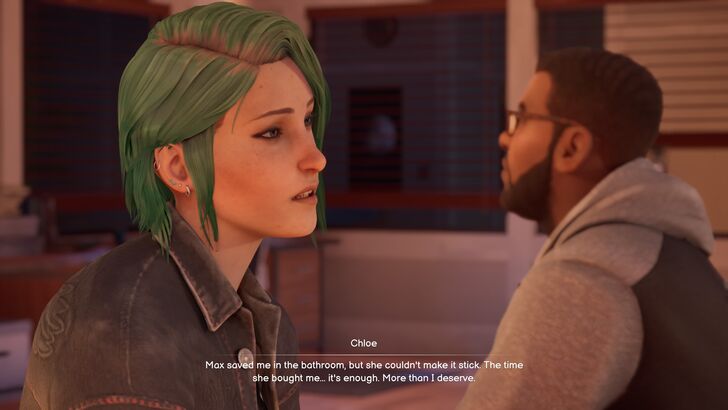
And of course, the narrative itself. While I did wish the ending had a bit more bite to it, the actual journey to get there was still very, very good.
Like I mentioned earlier, at the start of Life Is Strange: Reunion, you make several key decisions about past relationships and outcomes, and those choices basically build the emotional context of your version of Max and Chloe. It’s less about branching into wildly different timelines and more about tying everything together in a way that feels cohesive, as it tries to bring the entire series to a close.
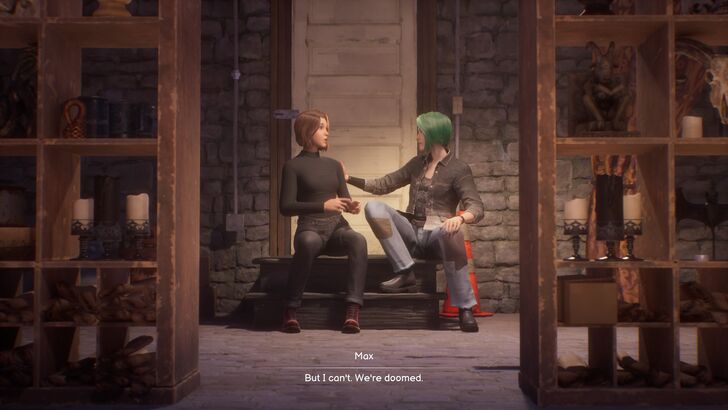
The journey here isn’t really just about solving the mystery of the fire or even Chloe’s predicament. That’s the plot, yes, but the story is really about Max and Chloe dealing with everything that’s happened to them. Everything that happened in the past didn’t just break time, it kind of broke them too. And Reunion, more than anything, feels like a story about trying to fix that. Not erase the past, not undo the pain, but learn how to live with it.
I do wish there was an ending that was devastatingly beautiful, an ending this series used to be known for. But even without that, the journey itself still lands because of the relationship they’re trying to rebuild.
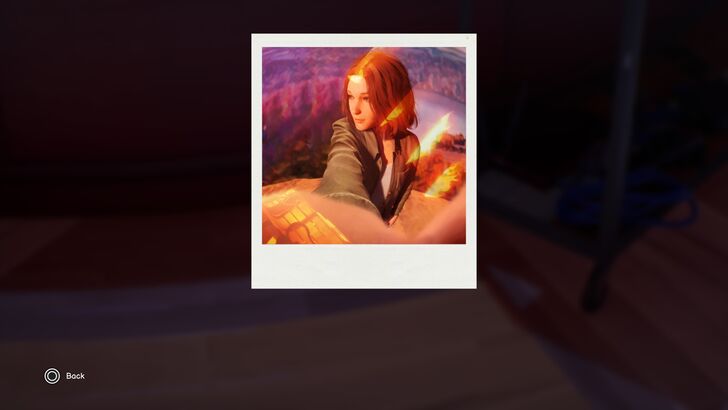
In that way, Reunion ends up feeling like a perfect paradox. It’s a story about accepting that you can’t change everything, while still trying to fix what you can. And for a series that has always been about time, choice, and regret, that feels like a very Life is Strange way to say goodbye.
Is Life is Strange: Reunion Worth It?
Yes, It’s A Reunion Meant for Those Who Stayed
I’m not going to sugarcoat it, nothing here tops the original. That lightning-in-a-bottle feeling, that once-in-a-lifetime emotional hit? It’s still unmatched. But Reunion doesn’t really try to beat it. Instead, it builds on it, reflects on it, and gives it a kind of closure that long-time fans will genuinely appreciate.
If you’ve stuck with Max and Chloe all this time, Reunion feels deeply personal. It leans heavily on your attachment, your memories, and your willingness to sit through slower, more reflective moments. It’s less about pulling in new players and more about rewarding the ones who stayed.
That said, even if you’re not deeply invested in the series and just enjoy narrative-driven games, there’s still something here for you. The mystery, the character interactions, and the way the game plays with choice and consequence still hold up on their own. You might not feel every emotion as strongly, but the experience is still engaging enough to carry you through.
At $39.99, you’re getting a story-heavy experience that prioritizes character, atmosphere, and choice over traditional gameplay challenges. It’s not a long game, and it’s not mechanically deep, but it knows exactly what it wants to be and for the audience it’s made for, it delivers where it matters most.
Life is Strange: Reunion FAQ
Do I Need To Play Life is Strange and Life is Strange: Double Exposure to Understand Life is Strange: Reunion?
While it’s definitely recommended for full context, it’s not necessary. Reunion provides a recap of events from both games at the start, giving you enough background to follow the story and understand the characters’ motivations. That said, having played the earlier games will make the story hit harder and some references more meaningful.
Can I Import My Save File From Life is Strange and Life is Strange: Double Exposure Into Life is Strange: Reunion?
No, Reunion doesn’t import save files. Instead, at the beginning, the game asks you to set the status of several key relationships.
Game8 Reviews

You may also like...
 |
Life is Strange: Double Exposure Review Adventure |
 |
Lost Records: Bloom & Rage Review (Tape 1) Adventure, Horror, Simulation |
 |
Lost Records: Bloom & Rage Review (Tape 2) Adventure, Horror, Simulation |
 |
Death Stranding 2: On The Beach Review [PC] Action, Adventure, Simulation |
 |
Pathologic 3 Review Adventure, Horror, Puzzle, Simulation |