



| DELTARUNE | ||||
|---|---|---|---|---|
| Release Date | Gameplay & Story | Pre-Order & DLC | Chapter 1 & 2 Review | Chapter 3 & 4 Review |
DELTARUNE encourages nonviolence not through morality meters, but by building a world that remembers your kindness. Read on to see how sparing enemies shapes Castle Town, deepens characters, and quietly defines your journey.
← Return to DELTARUNE main article
Deltarune’s Quietest System Is Its Most Powerful
Why Sparing Matters
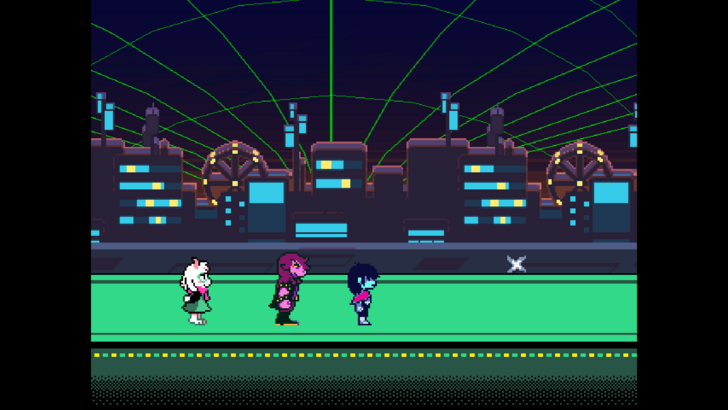
At first glance, Deltarune doesn’t seem too concerned with your morality. There’s no labeled "Pacifist" or "Genocide" route like in Undertale, where distinct story paths are based on how you treated your enemies. There are no endings that outright judge you, no world-breaking consequences for fighting an enemy or two. Unlike Toby Fox’s hit work, the world doesn’t scream when you get it wrong, at least, not yet.
But that doesn’t mean Deltarune has abandoned kindness. In fact, it quietly rewards it—subtly, emotionally, structurally. The monsters you spare don’t just forgive you. They remember you. They build with you. They join your town, open shops, compose music, and bring color and life to an otherwise quiet Castle Town. And if you don’t spare them? They’re gone. Your world stays emptier. Your allies, less expressive. The journey, a little more lonely.
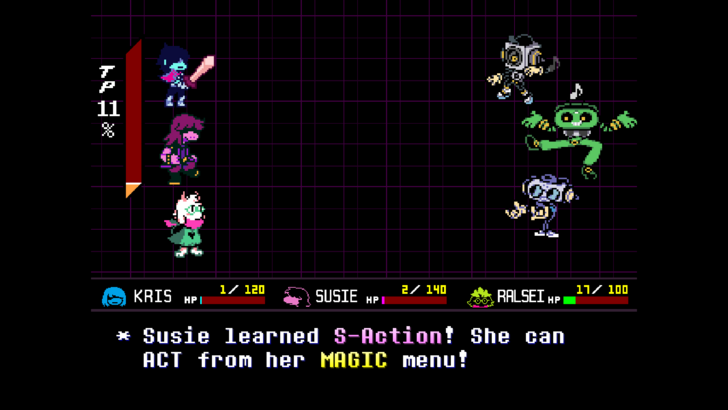
Mechanically, sparing in Deltarune happens through a mix of strategies: you can use the Act command to resolve a monster’s emotional or behavioral quirks, or rely on Ralsei’s Pacify spell once enemies are tired or once their HP is below 50%. Each encounter plays out like a puzzle—part empathy, part timing. And if you take the time to spare, those monsters don’t just disappear.
Sure, there are enemies whose post-sparing content is minimal—like Maus or Poppup—who show up later in Castle Town mostly as idle residents. But the ones that do change make it count. These monsters don’t just "not die." They live. They participate. They express. They become part of your story.
So while Deltarune never explicitly says "this is the pacifist route," it speaks through architecture. Through rhythm. Through flavor text and friendlier streets. Sparing monsters isn’t a path to a better ending—it’s a path to a fuller world. And that world wants to grow, if you let it.
Gentle Choices, Gentle Consequences
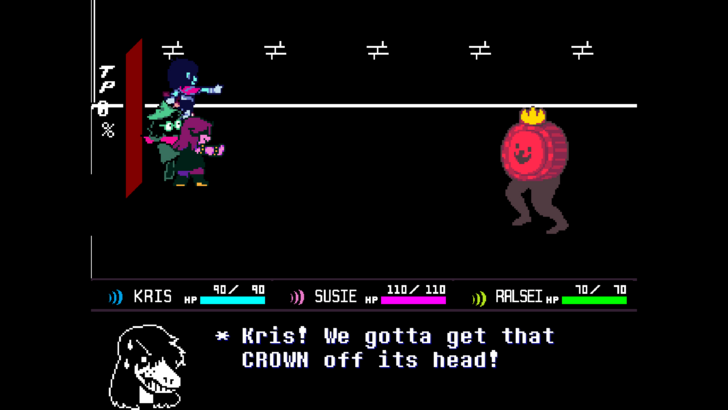
Chapter 1 of Deltarune introduces players to the core tension between action and empathy. Right away, Ralsei—the soft-spoken prince of the Dark—teaches the ACT system with a smile and a tutorial on kindness. Every encounter is a mini-puzzle: you can attack enemies directly, or observe their behavior and respond with the ACT command to disarm them emotionally. If enemies grow tired, Ralsei can use Pacify to end the battle peacefully. And if you resolve everyone’s needs properly, you can Spare them entirely—turning combat into communication.
Unlike Undertale, where sparing was tied to major branching storylines and morality judgments, Chapter 1 of Deltarune plays it more subtly. The game never chastises you for attacking. There’s no kill count screen. But the design gently nudges players toward pacifism—from tutorial encouragement to the way battles reward cleverness over brute force. There’s no XP in Deltarune. You don’t grow stronger by defeating enemies. So when you choose to spare, you’re not sacrificing progression—you’re just choosing a different kind of reward.
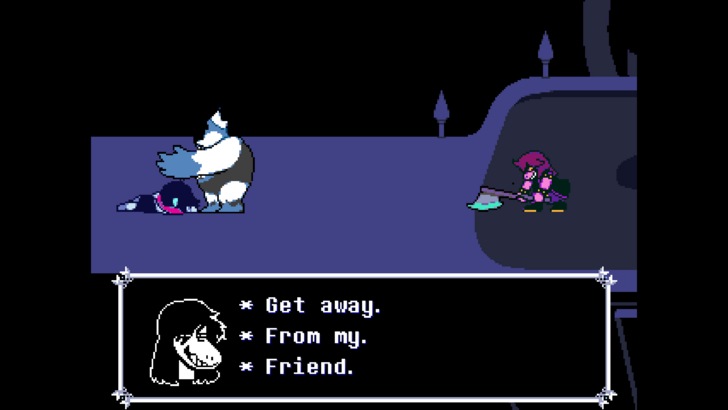
- The following paragraph contains spoilers for Chapter 1.
The most notable payoff comes at the end. If you spare every enemy in Chapter 1, your kindness resonates. When the King of the Card Castle defeats your team, it isn’t brute strength or magic that saves you. It’s everyone you showed mercy to. The very monsters you spared rush in to stand against the tyrant. Instead of the player needing to knock the King out and Ralsei having to forcibly pacify him, his own subjects revolt. The people of the Dark World overthrow their oppressor—not with your sword, but with your empathy.
This leads to a much lighter ending. You aren’t forced to flee the Dark World. You’re allowed to say goodbye. There’s a farewell sequence where Kris, Susie, and Ralsei speak with the friends they made—Rudinn, Hathy, and Lancer alike. It’s small, but powerful. A final touch that says: your choices didn’t go unnoticed.
In contrast, if you attack or defeat enemies, the ending plays faster. The townspeople still arrive—but instead of helping, they come to fight. There’s no organized revolt, just chaos. Ralsei is forced to pacify the King with magic, and the party flees back to the Light World. There are no goodbyes. No closure. Just an exit. Even in a game that resists moral binaries, Deltarune rewards kindness—not with numbers, but with meaning.
Other DELTARUNE Featured Articles
 |
DELTARUNE’s biggest mystery is Kris —are they a vessel, a victim, or something else entirely? |
Sparing As World-Building
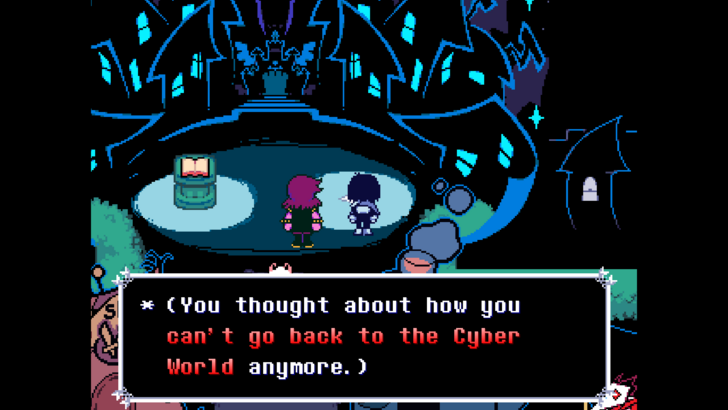
In Chapter 2, Deltarune takes the idea of "recruited enemies" and turns it into something more than just a headcount. After a certain number of spared monsters, they can be recruited back to Castle Town. It’s not immediate, and you’re never given a list of who you’ve missed. But if you go out of your way to engage with every enemy and resolve each fight peacefully, Castle Town starts to repopulate with the personalities you saved.
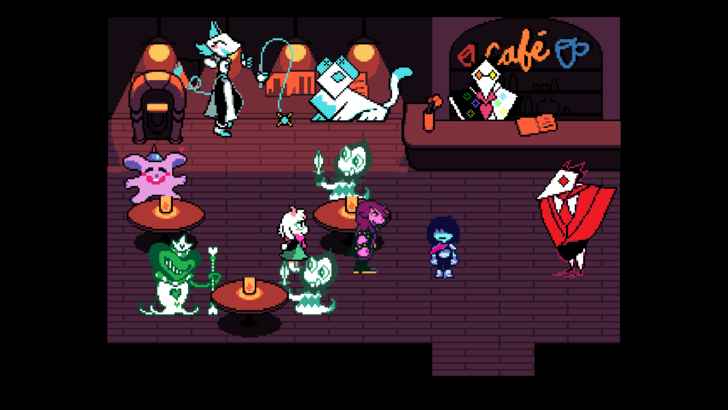
Castle Town expands into something like a lived-in community. Former foes become shopkeepers, decorators, comedians, background characters, or just friendly faces to chat with. It’s an organic evolution from Chapter 1’s subtle consequences, instead of one big payoff at the end, the rewards of sparing now show up and stick with you between chapters.
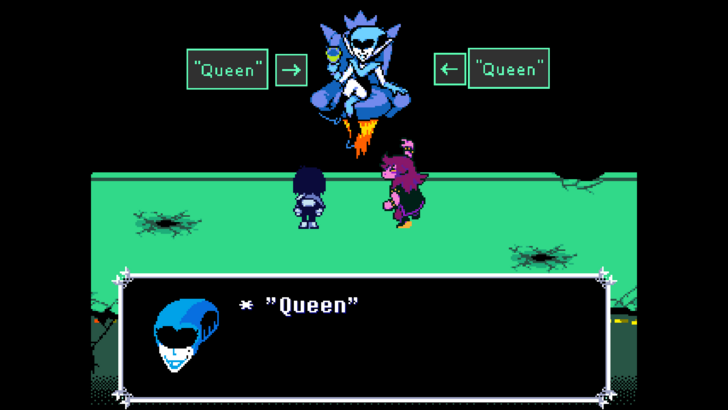
Even Queen, the flamboyant and overbearing ruler of the Cyber World, fits thematically into this shift. Her arc is about control, autonomy, and letting others choose their path. She goes from micromanaging dictator to affectionate mom friend because she learns to loosen her grip. If no one from Cyber World gets recruited, Queen looks for her subjects and retreats to her room, a surprisingly somber scene from someone usually so animated, reinforcing the emotional weight of your choices. Sparing her citizens is, in a way, the player embodying that same philosophy—choosing to understand rather than dominate.
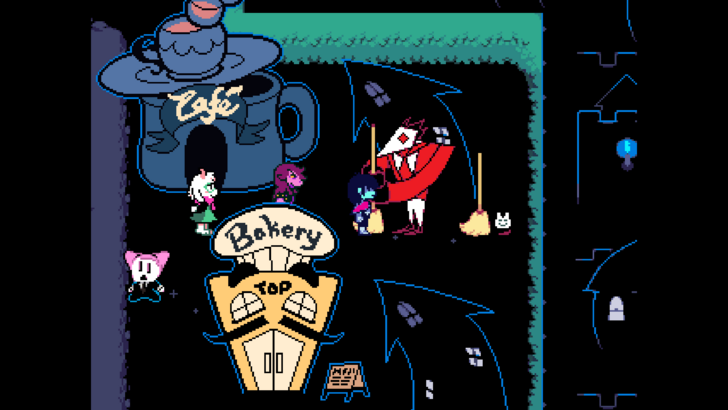
Castle Town is more than a hub—it’s a reflection of your effort. The more attention you give to empathy, the richer your version of the world becomes. The colors feel warmer, the jokes land better, the silence feels less empty. Even minor characters have unique lines tied to whether they were spared or not. Some unlock new shop interactions, others unlock music or purely aesthetic changes. These aren’t game-breaking bonuses. They’re emotional ones.
This all builds into a sense of continuity, the people you saved in Chapter 2 don’t just show up—they become part of the community. You carry your choices forward. If Chapter 3 and beyond continue this structure, your past compassion could shape the future in ways we haven’t seen yet.
Notable Recruits
While not every enemy in Deltarune gets deep narrative consequences, several stand out for how their personalities, behaviors, or presence evolve—both in and out of battle—when you choose kindness. Here are just a few that illustrate how much character can be packed into a single encounter.
Sweet Cap’n Cakes
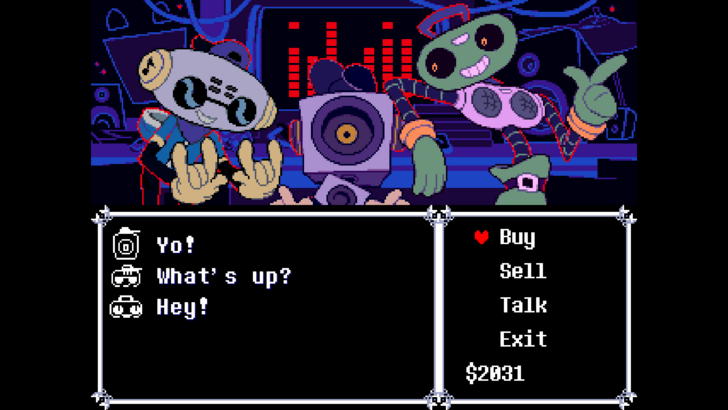
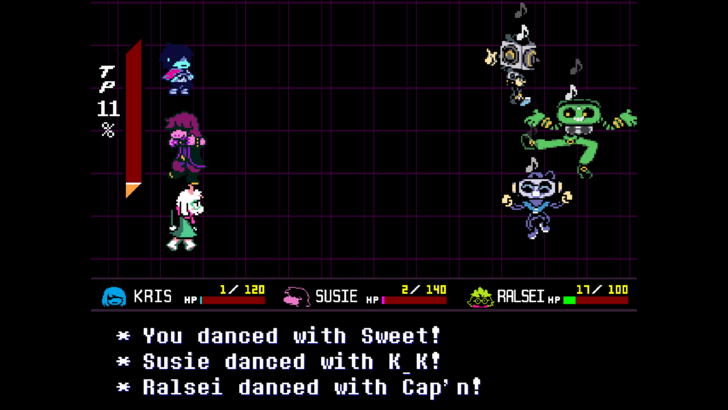
This energetic musical trio, encountered in the Cyber World, are all about rhythm and showmanship. Attempting to defeat them through violence proves ineffective, as they heal more damage than you can inflict. This mechanic reinforces the idea that understanding and cooperation are more effective than aggression. Engaging with them nonviolently turns the entire combat sequence to a dance battle. They’ll eventually set up shop in Castle Town, where they can play tunes depending if you’ve recruited enough monsters. Their presence underscores the game's theme of harmony through understanding.
Tasque Manager
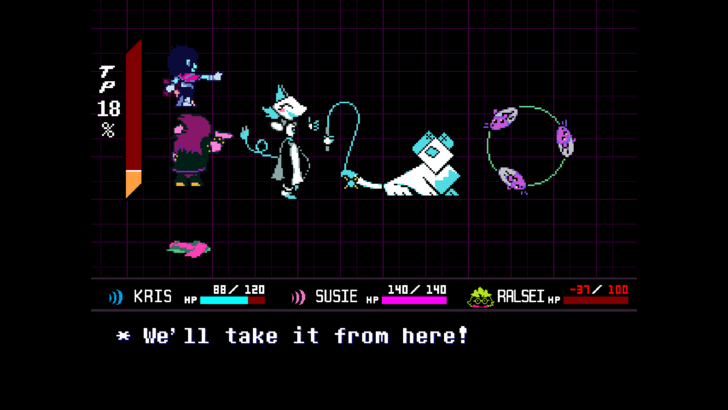
A poised and authoritative figure, Tasque Manager oversees the Tasques with a blend of discipline and flair. If one of her accompanying Tasques is defeated, Tasque Manager becomes enraged, making it more challenging to spare her. She expresses her disapproval through stern remarks. When approached the first time, Tasque Manager engages the party in a quiz. Answering all questions correctly allows her to be spared immediately. She appreciates order and discipline, and responds positively to respectful interactions.
Werewerewire
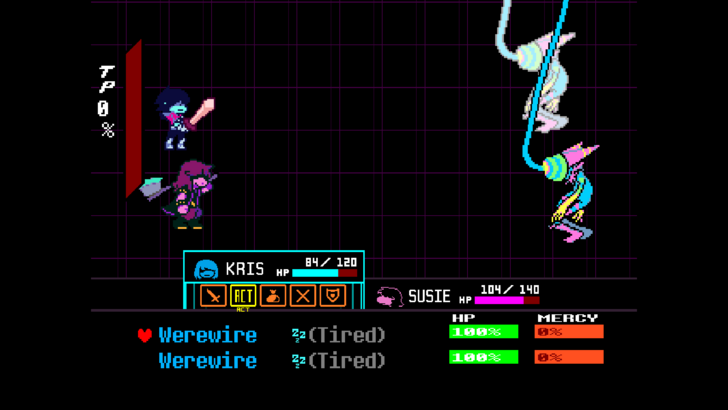
These electrified beings are aggressive when confronted with violence. Using specific ACTs like BeSweet and BeTough gradually increases Werewerewire's mercy, allowing for a peaceful resolution. One of the dialogue when choosing to be sweet is "You and Ralsei whispered sweetly to Werewerewire! It pretended not to care, but ACTs became more effective!" revealing a more approachable side of the enemy.
These examples illustrate how Deltarune encourages players to consider the consequences of their actions. Opting for nonviolence not only alters enemy behavior and dialogue but also enriches the narrative, emphasizing themes of empathy and connection.
Choosing Kindness In A World That Remembers
The enemies in Deltarune aren’t monsters in the traditional sense. They’re weird, wonderful, anxious, performative, and deeply charming. Sparing them feels less like taking the high road and more like extending a hand. You get a glimpse into who they are, what they want, and how they interact with each other. Choosing to ACT is an invitation to listen. Choosing to spare is a decision to leave space for their presence in your story.
Sparing a monster is rarely just about getting through a fight. It’s about what—and who—you bring with you after. From Castle Town’s shops to its stage shows to the Queen’s lonely remarks if her citizens never come home, the game steadily reinforces that mercy is more than a decision. It’s a form of worldbuilding. You are crafting not just an ending, but an ongoing community.
That’s what sets Deltarune apart. It doesn’t reward you with EXP or unlock secret bosses for choosing kindness. It gives you something softer, stranger, and far more enduring: a living, breathing space that reflects what you chose to keep alive.
And with Chapters 3 & 4 on the horizon, that continuity is more relevant than ever. Your recruits carry over. Your relationships persist. And Toby Fox himself has gently nudged players toward nonviolence in his recently posted gameplay reminder cheat sheet, hinting that sparing may continue to affect both mechanics and narrative across the rest of the game.
So no, Deltarune doesn’t scold you for fighting. It doesn’t moralize your mistakes. But it does remember. The world you build now will be the world you return to later—filled with friends, jokes, memories, or… silence.
You May Also Like ...

 |
DELTARUNE is the charming new game by the creator of UNDERTALE, Toby Fox! Join Kris, Susie, and Ralsei as they try to save the Light and Dark Worlds together! |
 |
Boss fights. You love them, you hate them, but are they necessary? Maybe for an RPG or action game, but what about a platformer? |
 |
Few character dynamics in video games are as iconic as a good old-fashioned rivalry. Fewer still are as old as the one between Mario and Donkey Kong. |
 |
Stuck on February 14th without an SO? We got you covered. Here are 8 Games for People who just have that extra time and money on their hands for that occasion. |