
Resident Evil Outbreak Review Overview
What is Resident Evil Outbreak?
Resident Evil Outbreak is a survival horror game that drops players into the chaotic collapse of Raccoon City from the perspective of ordinary citizens. Players can choose from eight distinct characters—ranging from a police officer to a journalist—each with unique abilities and inventory strengths.
Resident Evil Outbreak features:
⚫︎ Eight Playable Characters
⚫︎ Scenario-Based Progression
⚫︎ Multiple Endings
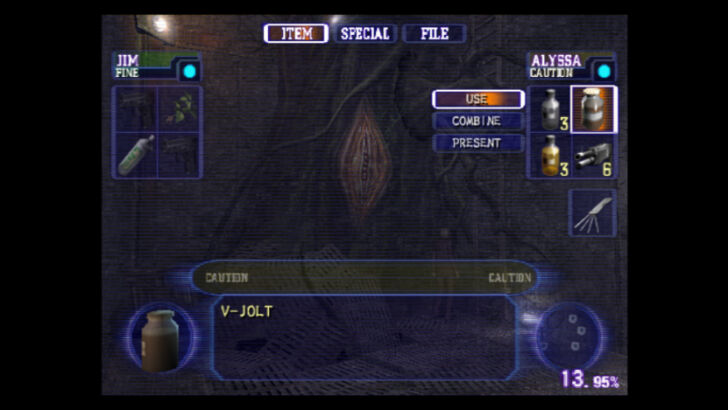
⚫︎ Virus Meter that Shows Players’ Infection Rate
| Storefronts | |
|---|---|
 Resident Evil Outbreak File #1 Resident Evil Outbreak File #1 |
Resident Evil Outbreak File #2 |
| $25 | $50 |
Resident Evil Outbreak Pros & Cons
| Pros | Cons |
|---|---|
 Replayable Episodic Story Telling Innovative Companions Cinematic Audio Design Fresh Perspective Through Ordinary Protagonists Replayable Episodic Story Telling Innovative Companions Cinematic Audio Design Fresh Perspective Through Ordinary Protagonists |
Lack of Couch Co-op Network Play Largely Inaccessible Today Steep Learning Curve for New Players |
Resident Evil Outbreak Story - 8/10
Outbreak has a strong, citizen-focused narrative and gives each character distinct personalities, clear motivations and roles. Player choices reinforce the sense of a city under siege, with each scenario connecting to the others in meaningful ways and concluding in different ends. That said, some plot threads can feel thin due to its isolated, episodic structure, and a few characters come across as underdeveloped compared to a handful who are canonically central to the story.
Resident Evil Outbreak Gameplay - 8/10
The gameplay is inventive for its era, emphasizing survival, resource management, and cooperative mechanics that was ahead of its time back then. AI companions are functional and versatile, allowing creative strategies with inventory and combat, while the infection system adds a layer of tension not commonly seen in survival horror. However, it is held back by the absence of local co-op especially when the original network play was constrained by clunky communication between teammates, and lack of tutorial guidance which limits understandability for new players.
Resident Evil Outbreak Visuals - 6/10
The graphics lean into the limitations of the era, with character models rendering stiffly and environments that are functional rather than highly detailed. However, the design choices effectively support the tense atmosphere, and environmental storytelling conveys the city’s collapse in meaningful ways.
Resident Evil Outbreak Audio - 9/10
The audio remains one of the game’s strongest points. The music is cinematic, blending subtle cues with ambient sound to build tension, while effects like distant groans, environmental noises, and even the character heartbeat system enhance immersion. Some of the voice acting can border on cringe, but it largely supports the narrative.
Resident Evil Outbreak Value for Money - 9/10
Even in 2025, Outbreak delivers solid value. Its scenario-based structure offers replayability through multiple endings, varied characters, and differing strategies for survival. However, that value comes with a significant caveat which is unless you own a PS2, the game is effectively inaccessible through official means. Physical copies are increasingly difficult to find and there is no digital distribution anywhere. That being said, while network play is largely inaccessible today, the solo experience remains enjoyable, and the game’s connection to the series’ lore provides additional incentive for fans.
Resident Evil Outbreak Overall Score - 80/100
Resident Evil Outbreak stands out as an ambitious and forward-thinking entry in the franchise. Its focus on ordinary characters, coupled with innovative AI companions and a tense, scenario-based gameplay loop, keeps the game engaging even decades later. Its atmosphere, clever mechanics, and connection to series lore make it a rewarding experience especially for fans looking to revisit the world before Requiem arrives.
Resident Evil Outbreak Review: Ahead of Its Time and the Perfect Prelude to Requiem
The Racoon City Incident That Started It All
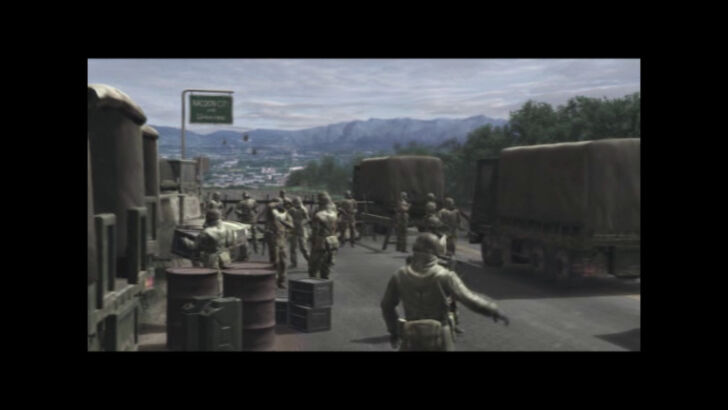
I still remember booting up Outbreak for the first time during my formative years, too young to be learning about Resident Evil’s language of fixed camera angles, limited ammo, ominous save rooms, and the idea that survival is never guaranteed.
Back then, playing outbreak immediately threw me off in a way I couldn’t quite articulate. It didn’t play like the mainline games I thought I understood. It felt looser, more chaotic, more brutal.

At that age, I didn’t have the vocabulary to explain why it gripped me in a different way. Now, I understand that Resident Evil Outbreak wasn’t trying to make you feel like a lone action hero trapped in a horror movie, it wanted you to feel like just another person caught in the collapse of Raccoon City, scrambling alongside others who were just as scared and underprepared as any civilian would be.
Fast-forward to today, with Resident Evil Requiem looming on the horizon and Grace Ashcroft—daughter of Alyssa Ashcroft, one of Outbreak’s canon survivors—stepping into the spotlight, Outbreak may still be locked to the PS2 but it no longer feels like a forgotten spin-off; it’s part of the series’ living history. So I did what any overly sentimental survival horror fan with a still-functioning PS2 would do: I went back to Raccoon City.
Ordinary People In An Extraordinary City
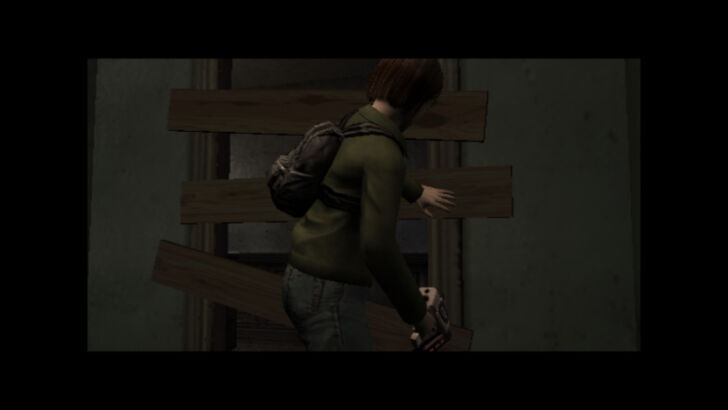
Resident Evil Outbreak tells the fall of Raccoon City from a perspective the series hadn’t embraced before this title; through the lens of ordinary citizens of Raccoon City, caught right as the outbreak begins to spiral out of control.
The game is split between two "files" and the first one, File #1—which I’ll mainly talk about in this review—is itself split across five scenarios: Outbreak drops players into Jack’s Bar as chaos first erupts, Below Freezing Point pulls back the curtain on Umbrella’s experiments inside a covert facility, The Hive turns a hospital into a breeding ground for grotesque leech-based monsters, Hellfire traps survivors in the Apple Inn as flames spread through the night, and Decisions, Decisions brings everything to a close within Raccoon University.
These scenarios overlap across the same timeline, painting a fragmented but cohesive picture of Raccoon City’s final days. For a player preparing for Requiem, experiencing these diverse districts offers a more complete understanding of the city and its people.

But what you really need to know is that each scenario exists to show a different failure point of Raccoon City and a different side of Umbrella’s experimentation. Every scenario also introduces new enemy types and hazards that are locally unique symptoms of the wide and uncontrolled outbreak, slowly escalating the horror by sequentially revealing the different kinds of monsters Umbrella Corporation was trying to create.
Each scenario has a character who serves as its canonical lead, but you’re never locked into that role. Any of the game’s eight playable characters can tackle any scenario. That roster includes Kevin Ryman the police officer, Mark Wilkins the security guard, George Hamilton the surgeon, Yoko Suzuki the student, Jim Chapman the subway conductor, David King the plumber, Alyssa Ashcroft the journalist, and Cindy Lennox the waitress.
Their professions aren’t just flavor too; they subtly inform how each character interacts with the world and survives it, reflected in the specific items they carry and the roles they naturally fall into during a scenario.

Alyssa, who carries a lockpick that allows her to uncover secrets which would otherwise be buried if you chose another character, is worth paying attention to. As a journalist, she balances survival with her need to discover the truth. Choosing her reframes the outbreak as something to be uncovered, documented, and investigated, not merely endured.
Interestingly, after surviving a scenario, Alyssa’s closing line is more worried than relieved, which is unique compared to other characters who may be alarmed about the endeavor they went through, but are relieved to be free from the situation they were in. "We managed to beat whatever that thing in the meat locker was, but is it over? I may have just unleashed something terrifying." That suggests there’s a story beyond the end of each scenario, which feels newly relevant in light of Requiem’s renewed interest in Raccoon City’s lingering secrets.
Survival Isn’t Solo Anymore
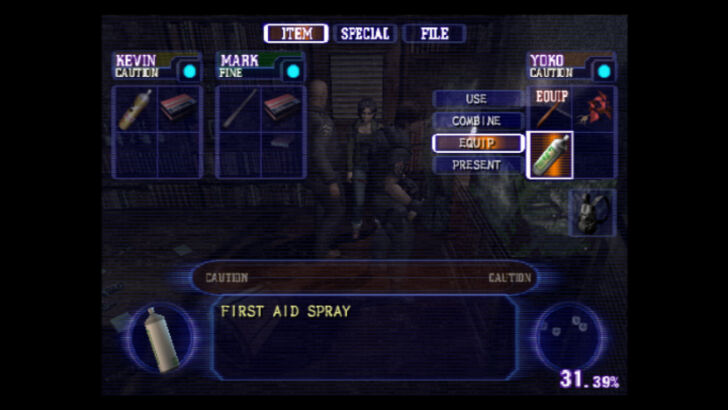
Outbreak forms a snapshot of Raccoon City that feels less like a single storyline and more like a mosaic of desperate last stands happening all at once, where players have a clear goal: survive and find a way out. When played offline, AI-controlled companions fill out your group. Network play, on the other hand, allows up to four players to tackle these scenarios together—if you can get three others who still have PS2s to play it with you.
The core loop is accompanied by environmental puzzles, timed challenges, and spreading infection inside the players’ body. This is an idea I’d like Requiem to revisit, or at least seriously engage with on a mechanical level. It’s easy to imagine Requiem refining this idea; starting the player as an infected, tying the narrative stakes to worsening conditions, or using progression that reflect decline rather than growth. Or they may simply fully incorporate Outbreak’s approach, letting infection act as a persistent pressure rather than a fail state.

Instead of extensive backtracking across a sprawling environment like mainline titles before (and after) this game, Outbreak funnels you forward through escalating situations. You move from location to location with purpose, managing limited resources while reacting to threats. The tension doesn’t come from solving a puzzle and returning later with a key—it comes from whether your group can make it through the next encounter without someone bleeding out on the floor.
To survive, characters can share items, heal one another, and even communicate through contextual commands: Help Me, Come Here, Over There. While it’s normal for Resident Evil to have dual character progression—like having Jill and Chris in the first game, or Claire and Chris in RE2 and Code Veronica—Outbreak’s emphasis on group survival feels distinct. For players looking ahead to Requiem, it raises the possibility of a more intertwined progression model where both Leon and Grace don’t just coexist narratively, but meaningfully affect each other’s survival.
Surviving While Everything Falls Apart
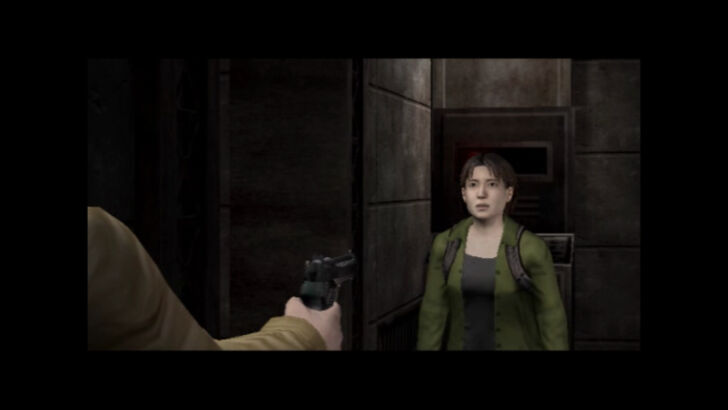
Outbreak’s moment to moment mechanics were also strikingly forward-thinking for its time. Combat is deliberate and often messy, encouraging avoidance and teamwork over heroics. Ammunition is scarce, melee is risky, and every fight forces a calculation: is this worth the infection risk? The gameplay loop revolves around moving forward as a group, scavenging what you can, solving environmental obstacles, and deciding when to push ahead versus when to regroup.
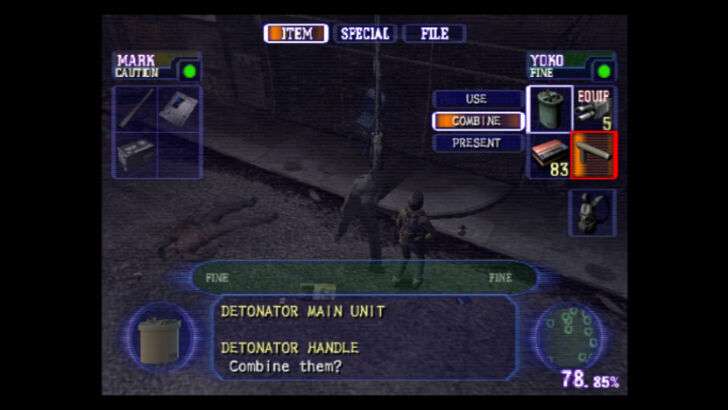
Offline companions were surprisingly substantial as well for a game of that era. They’re not just there to pad out numbers, they’re active participants. You can assign them to carry items, effectively turning them into extensions of your inventory. You can request supplies, pass weapons, and rely on them to cover angles you can’t. They’ll engage enemies on their own, pick up items without being prompted, and even come to your aid when you’re downed. For a PlayStation 2-era game, that level of autonomy was ambitious but Outbreak managed to deliver.
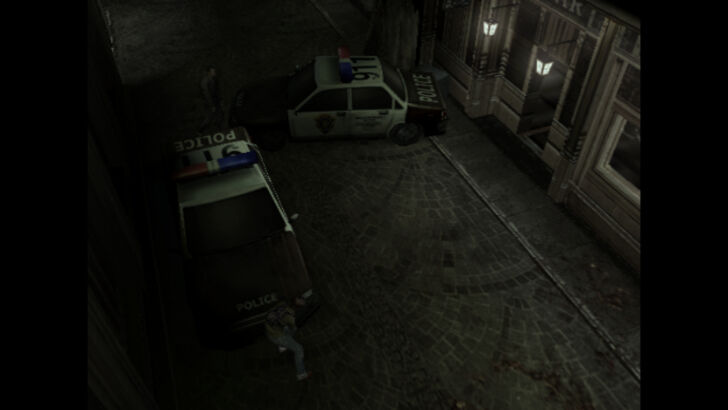
The result is a kind of controlled chaos. You’re constantly juggling your own survival while paying attention to the status of the group as a whole. When everything clicks, Outbreak creates moments that feel uniquely its own. Messy, stressful, and deeply cooperative, even when you’re playing alone.
A City Falling
One of the things that hit me almost immediately when I booted Outbreak back up recently was the music. The moment those familiar tracks kicked in, I was reminded just how cinematic Resident Evil’s music is, and how deliberately it’s used to shape tension and mood. You hear the faint thump of a heartbeat as you transition between rooms, ambient noises bleeding in before danger ever appears, and the distant groans of zombies echoing from places you can’t yet see.
Visually, while clearly a product of its era, Outbreak did a solid job of selling urgency and fear. Characters stumble, recoil, and struggle in ways that feel realistic rather than exaggerated. Combined with the soundscape, it created an experience where tension isn’t just something you see, it’s something you hear and feel.
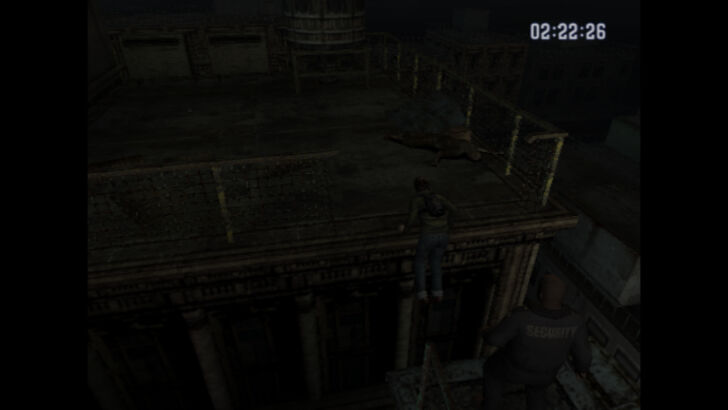
Of course, no game is perfect, and Outbreak is no exception. One of the first things that stood out—even decades later—is how the game drops you into the starting area without much guidance. For someone who had been steeped in Resident Evil before this game was released, this chaotic introduction may barely register as a problem. But for new players, especially those unfamiliar with survival horror, the lack of a proper tutorial or onboarding can be disorienting, even frustrating. You’re left learning the ropes while zombies are already closing in, and that tension while trying to understand how the game works isn’t for everyone.
Another area where the game stumbled is the lack of local co-op. Considering that network play was already hampered by the era’s limited online infrastructure and poor communication options, having the option to team up on a single console could have mitigated some of that friction. The absence of couch co-op was a missed opportunity to make the teamwork element more approachable, fun, and less prone to the frustrations of early-2000s online play. It would have even aged the game better than it did, especially in 2025 where accessing its co-op features now requires outdated hardware and specific network setups.
Is Resident Evil Outbreak Worth It?
Still Holds Up in 2025
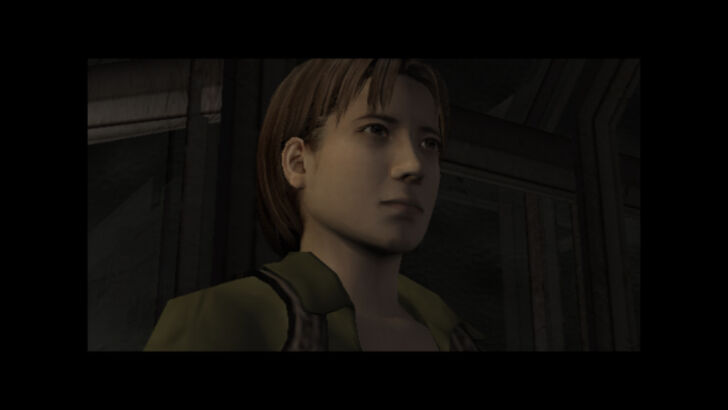
In 2025, Resident Evil Outbreak absolutely still holds value, provided you have a working PS2 and can get your hands on a copy. Otherwise, you will have to jump through some hoops to play it, as not even GOG has a copy. Even as a solo or offline experience, the game’s scenario-based structure, tense survival mechanics, and character-driven storytelling make it a uniquely engaging trip back into Raccoon City. If you happen to have a friend and can somehow get network play working, that adds another layer of fun, though realistically, online functionality is likely a relic at this point.
Revisiting Outbreak now feels especially timely with Resident Evil Requiem set to release soon. The main draw is seeing the lineage of characters like Alyssa Ashcroft and understanding what became of her after the Raccoon City outbreak. Did she contribute to containing the aftermath, or did her actions inadvertently make things worse? Did she and other confirmed survivors like Yoko survive together, or did their paths diverge? Are the threats introduced in Outbreak truly gone, or did their survival group create new complications? If they did manage to do some good, did that make them targets for Umbrella or other factions? These are the kinds of questions that outbreak planted which Requiem seem poised to explore, tying the narrative back to the consequences of Umbrella Corporation’s experiments and the chaos it left.
That said, it’s not strictly required to play before Requiem—the upcoming release will stand on its own for new players. But for fans, returning to the chaos, cooperation, and grimly charming survival horror of Outbreak is still worth your time. It’s a chance to see how far the series has come, while appreciating just how ahead of its time this experiment in citizen-focused horror really was.
| Storefronts | |
|---|---|
| Resident Evil Outbreak File #1 |
Resident Evil Outbreak File #2 |
| $25 | $50 |
Resident Evil Outbreak FAQ
Do I need to play Outbreak before Resident Evil Requiem?
Not strictly. Outbreak offers background on characters like Alyssa Ashcroft and the early collapse of Raccoon City, which gives context to Requiem. However, the upcoming game is designed to stand on its own, so new players can enjoy it without prior knowledge.
Will Grace Ashcroft in Requiem Inherit Her Mother’s Survival Skills?
While official details are limited, it’s likely Grace will share at least some traits with Alyssa, such as resourcefulness and determination. Fans hope she avoids the "helpless sidekick" trope seen in other series characters, taking a more proactive role.
Game8 Reviews

You may also like...
 |
Resident Evil 4 Remake Review Survival Horror |
 |
Whisper Mountain Outbreak Review Lovecraftian, Isometric, Survival |
 |
Resident Evil Requiem (RE9) Gameplay and Story Action, Survival, Horror |
 |
RESIDENT EVIL Survival Unit Gameplay and Story Strategy, Survival, Horror, Simulation |
 |
Resident Evil Requiem Grace Aschroft Confirmed as the "New Main Character" |
Resident Evil Outbreak Product Information
 |
|
| Title | RESIDENT EVIL OUTBREAK |
|---|---|
| Release Date | File #1 December 11, 2003 File #2 September 9, 2004 |
| Developer | CAPCOM |
| Publisher | CAPCOM |
| Supported Platforms | PlayStation 2 |
| Genre | Survival-Horror |
| Number of Players | 1-4 |
| ESRB Rating | M |
| Official Website | Resident Evil Outbreak Website |