



| UNBEATABLE | |||
|---|---|---|---|
| Release Date | Gameplay & Story | Pre-Order & DLC | Review |
UNBEATABLE Review Overview
What is UNBEATABLE?
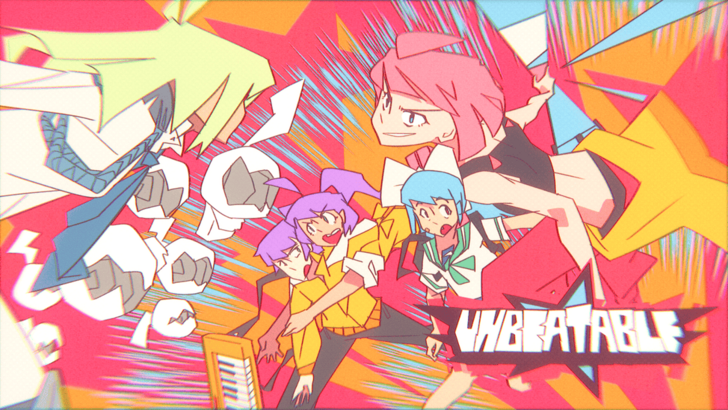
UNBEATABLE is a rhythm adventure game set in a strange world where music is illegal. Players take on the shoes of rocker girl Beat who, along with her ragtag band of on-the-run musicians, go on a journey to bring back the passion of music to a silent world, while also discovering more about themselves along the way.
There are several chapters of the game to go through, each in chronological order and focusing on a certain point in Beat and the gang’s timeline. Gameplay is a mix of exploration and visual novel elements, alongside the game’s signature rhythm game scattered throughout in sections as either a combat sequence or a mini-game. Aside from Story Mode, UNBEATABLE also has an endless Arcade Mode complete with an online leaderboard for players who would want to focus on the rhythm game aspect instead.
For more gameplay details, read everything we know about UNBEATABLE’s gameplay and story.
UNBEATABLE features:
⚫︎ Engaging Rhythm Game Gameplay
⚫︎ Captivating Visuals
⚫︎ A Vibrant, Colorful Cast to Meet
⚫︎ Several Locations To Explore
⚫︎ Doing "Crime"—Musical Crime
| Digital Storefronts | ||
|---|---|---|
 Steam Steam |
 Playstation Playstation |
 Xbox Xbox |
| $27.99 | ||
UNBEATABLE Pros & Cons
| Pros | Cons |
|---|---|
 Enjoyable Rhythm Gameplay A Banger Soundtrack Eye-Catching, Eye-Pleasing Visuals Vibrant Characters With Spunk Enjoyable Rhythm Gameplay A Banger Soundtrack Eye-Catching, Eye-Pleasing Visuals Vibrant Characters With Spunk |
Janky In Many Aspects Confusing, Messy Narrative |
UNBEATABLE Story - 7/10
UNBEATABLE’s story starts off with a pretty gripping premise and should have a good foundation to kickstart the narrative, but it’s bogged down by its rather slow pacing (unless, of course, you’re a fan of the slow burn type of plotlines) and its confusing way of storytelling, giving out bits and pieces of lore with little to no context. Everything feels all over the place, but nevertheless, it’s intriguing, and it's got the heart and soul…if you can stick around, especially seen through the cast—a bunch of absolute gems with personality and spunk that keep you entertained with funny, quirky dialogue.
UNBEATABLE Gameplay - 7/10
The game’s Story mode gameplay with exploration and visual novel elements, plus the solid rhythm segments, is engaging. Arcade mode, for those who just want the rhythm game options, is just as enjoyable to play as well. However, its weakness lies in its controls outside of the rhythm game which has evident input lag in several dialogues, and a plethora of other bugs and glitches such as softlocking and crashes that can dampen the overall experience.
UNBEATABLE Visuals - 8/10
UNBEATABLE is visually stunning in a vibrant, cartoon-y way. It’s so unapologetically stylish with the 2D sprites of the characters against vivid 3D backgrounds, and its plethora of animated cutscenes that gives off the 90s anime aesthetic. As pleasing as it is to the eyes, the game has the tendency to lag either in exploration or even in between rhythm sets, has a number of typos, audio not syncing with the dialogue, as well as having choppy transitions between story scenarios.
UNBEATABLE Audio - 10/10
It’s a rhythm game whose gameplay centers around beats and catchy tunes, so it’s expected that it’ll have a solid soundtrack as well. UNBEATABLE delivers in that regard, and is further enhanced by the well-done voice acting. While not all lines and characters are voiced, the main cast and important characters are, making them seem much more fleshed out and alive. UNBEATABLE’s audio is…well, unbeatable.
UNBEATABLE Value for Money - 7/10
For $28, you get an endless arcade mode with sick beats to play, fun rhythm gameplay, eye-popping visuals, a colorful cast of characters to meet, and an interesting premise. A pretty solid deal—however, it could still use some polish mainly in optimization, with a lot of the game feeling rugged around the edges. Still, if you don’t mind the jank, UNBEATABLE is definitely worth its price.
UNBEATABLE Overall Score - 78/100
UNBEATABLE is an intriguing and stylish narrative-adventure game with engaging rhythm game mechanics, a vibrant cast of characters to meet, and aesthetically pleasing and bright visuals that make it worth a run. However, at its current state, its weaknesses lie in its evident slew of technical issues and unpolished jank, as well as the slow pacing and general messiness of its story. Once those have been remedied, or you don’t mind the glitching out, then UNBEATABLE will surely be a game to remember.
UNBEATABLE Review: UNPOLISHED, But Fun
I absolutely love rhythm games in almost any shape or form—I’m not the best, but I can hold myself pretty well in several Expert or Master-tier beatmaps in different games. From more simple games like Theatrhythm Final Fantasy and Piano Tiles (to an extent) to titles like Project Sekai/Hatsune Miku: Colorful Stage, osu! and even arcade cabinets like Maimai DX, rhythm games and music have always been a mainstay hobby and fixation of mine.
So when UNBEATABLE’s trailer popped up on my YouTube feed as a recommended video during one of those particular binges of watching other players’ perfect runs, I was more than intrigued. The aesthetic was what initially piqued my interest—it was so punchy, vibrant, and reminded me of those old school anime I used to watch on the television back when I was a wee child. Accompanying these cool graphics was a catchy soundtrack, full of spirit and spunk that got my jaw dropping.
And, of course, the odd premise at the end of the trailer where they explicitly state that it’s "a game where music is illegal and you do crimes". Music is illegal in this game? What a crazy thought. And doing crimes? …Okay, maybe count me in.
A World Where Music Is Banned
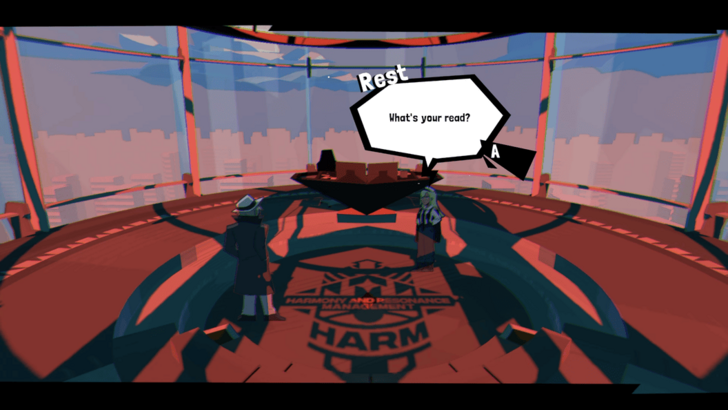
UNBEATABLE is set in a strange alternate Japan-like world where music is outlawed and peace is dictated by the lack of catchy beats. However, it wasn’t always like this—musicians were well-loved and famous like the world we live in…that is, until the Silence arrived. These odd and hostile spirit-like blobs manifest themselves through any type of melodic tune, whether it be music, humming, or rhythmic banging against a door.
To combat against the Silence, the Harmonics and Resonance Management (aka. HARM for short) has been established to officially deem music and musicians illegal for the sake of humanity and their safety. Judging from the state of the domes and music shops that used to boast thousands of headbanging enthusiasts, it may as well be over a decade or more since that incident. No fear, HARM is here to save the day! As ironic as that sounds.
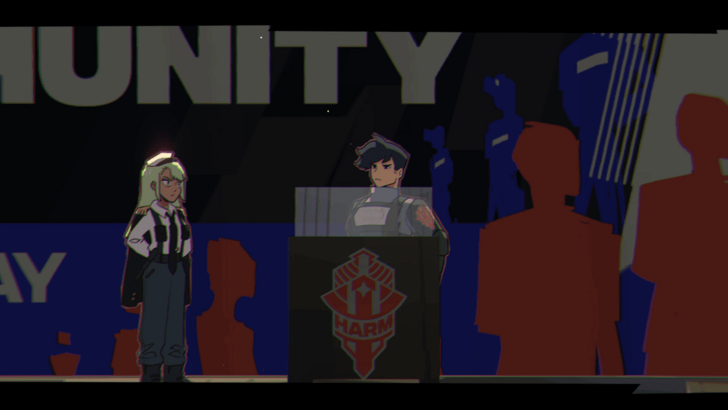
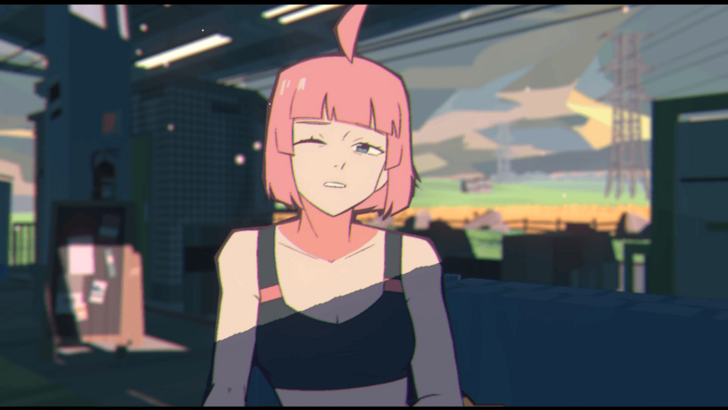
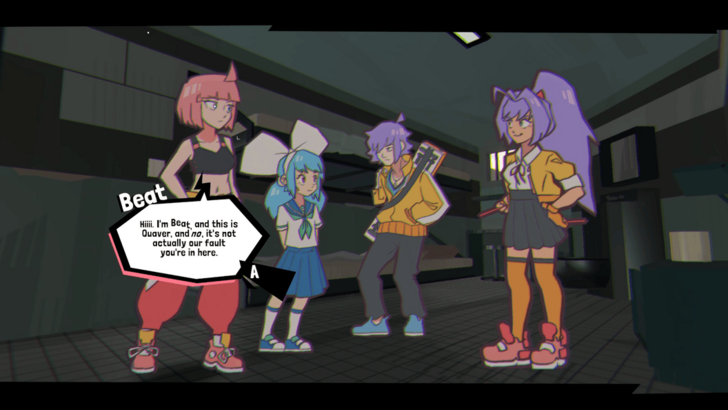
Sounds pretty heroic, right? Yet, UNBEATABLE places you on the other side of the spectrum—the very musician who decides that this stupid ban has got to go. Meet Beat, a pink-haired vocalist from a land farther away from the city with a fiery personality, who seems to be going through her own set of problems and issues. She runs in with Quaver, the young daughter of Eve, the vocalist from presumably one of the most popular bands back in the day, One More Final. Despite being young and living life being musically oppressed, she visibly carries the same attitude and love for music her mother had. Eventually, they also meet the musician prodigy twins Clef and Treble after a particularly eventful prison break-in.
All these misfits of society together create a ragtag band—Quaver on guitar, Treble on keyboard, Clef on drums, and Beat as the vocalist. This unbeatable (heh) squad, along with several allies along the way, then go on a journey across the land to bring music back where it should be—to be shared and loved by everyone.
A Chaotic Rhythm Narrative Adventure
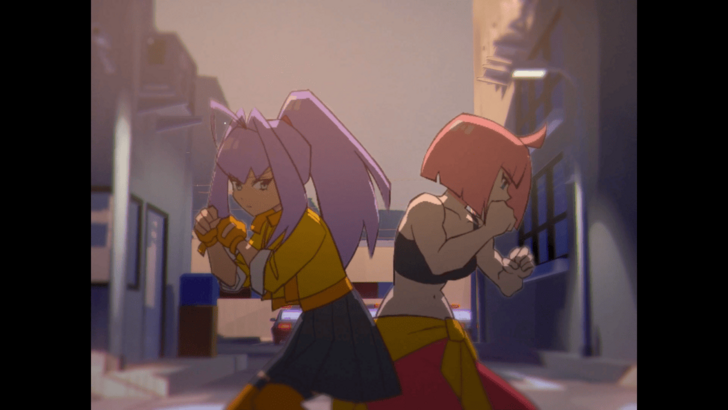
Story Mode is the main gameplay mode of the story, featuring its signature rhythm gameplay as well as exploration and visual novel-adventure elements. While the rhythm game mechanics are the star of the show, most of the time you’ll actually be exploring and interacting with the picturesque environment around you, forwarding the story through several events and dialogue. A lot of dialogue, even. There are also times Beat can choose her dialogue choices, changing up the other character’s response quite a bit.
Along the story, you also encounter a few side-quests and collectibles here and there, some of which can only be found if you actually pay attention to the world around you. UNBEATABLE’s locations aren’t terribly big, but it does feel like there’s a lot of content to cover, even outside of the rhythm game.
The rhythm game sections are employed in different ways, usually through combat sequences with HARM operatives, the cops, or the Silence. It’s deceptively simple—there’s only two buttons for two tracks, and you press the corresponding key for Up or Down beats (keybinds can be customized in the menu) with the notes moving at a certain speed (which can be adjusted) towards where Beat is—which makes perfect sense, because you have to hit the note…to the Beat. Ba dum tss.
Stupid jokes aside, I do say deceptively simple because, as any rhythm game enthusiast knows, you don’t just press buttons to the beat. Sometimes, you have long notes, double notes, double long notes, notes you have to dodge by pressing the opposite button of where it is…the more complex the beatmap, the harder it gets. With dozens of songs with different, varying feels, it easily makes the game super replayable and enjoyable without getting stale too quickly. The developers evidently put a lot of effort into the mechanic, and it shows—it’s fantastic.
Also, I’d like to point out that it has a note release mechanic for long notes at the end—a feature that’s not always standard in rhythm games. Sometimes the game lets you hold the note without counting it as a miss even when the note ends, and others, like this one, makes you let go of the note lest it breaks your combo streak.
Arcade Mode For The Less Adventurous
Arcade Mode, on the other hand, is basically just the rhythm game where you can play endlessly to your heart’s content. It has its own progression system through challenges and an online leaderboard to beat. If you’re not too interested in the plot or need a breather to hit some notes after particularly frustrating segments in story mode (I’m about to tear my hair over the baseball shooting mini-game), Arcade Mode might just be for you.
All unlocked songs are listed in an easy to scroll through menu, just like most rhythm games like Project Sekai and osu!. Simply select your song, adjust the difficulty and the timing, and you’re good to go. Luckily, you can unlock songs as well even when you’re exclusively playing Arcade Mode, so you can grind your way to the top of the leaderboards without issue.
A Visual Treat For The Eyes All Around
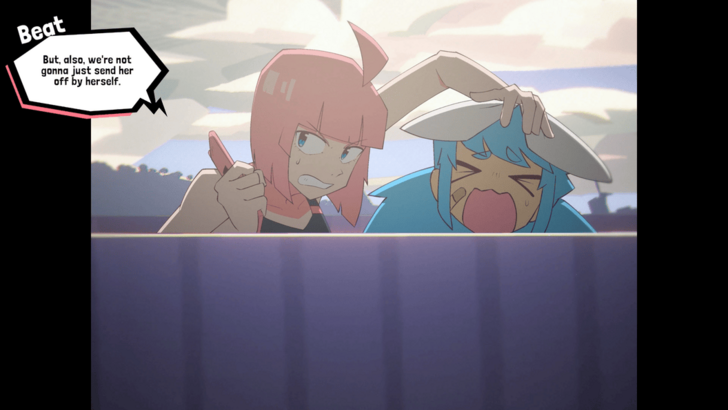
With all that said, the visuals in this game are absolutely stunning. The 2D sprites against a 3D-rendered background is done well, and while some angles make it look weird, it’s still visually pleasing to the eyes nonetheless. I love the character designs and how colorful they are, befitting their equally colorful personalities. Aside from the main cast, even the non-cop characters look amazing, such as Penny, the Poco twins (as insufferable as they are), Crest, and even the guy simply named the Tired Bartender.
The animated cutscenes, which there are a lot of, are also beautifully made. They’re obviously high quality works, and it feels like I’m watching a modernized version of the afternoon anime shows I used to watch when I was younger, only brighter and more colorful and at 120 FPS.
The Narrative Could Use Some Work
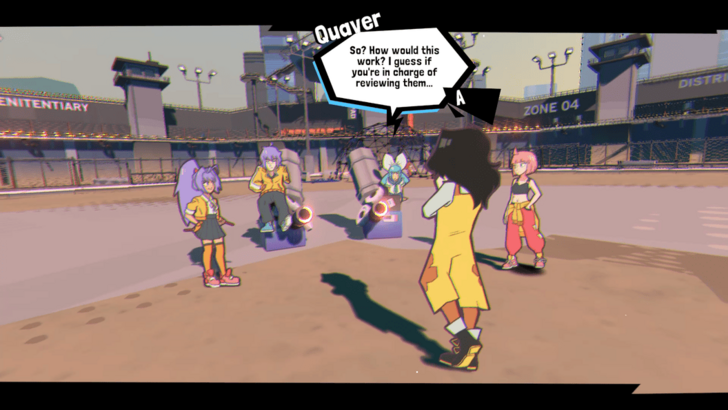
The plot feels like it’s all over the place, even early on. Perhaps it’s part of the mystery and the intrigue surrounding it, but most of the time I feel like I’m lacking way too much context to understand. For example, I had absolutely no idea Quaver wanted to form a band—I thought she just wanted to visit the locations where her mom used to take pictures for memory keepsakes. The beginning starts with her and Beat just meeting out of the blue on a scenic field, and she goes "oh no, you can’t have those instruments out in the open!" and then she goes and takes your guitar and gear…and practically whisks Beat (or kidnaps, really) to an adventure of a lifetime.
And…it doesn’t get any clearer from there. With every new event, more and more bits of lore and storyline just keep adding to your already messy understanding of what exactly is going on, and you’re left with more questions than answers. Again, this might be some way of storytelling with grande finale at the end, but it feels too much, too many unknowns all at the same time that it may feel like a chore to slog through.
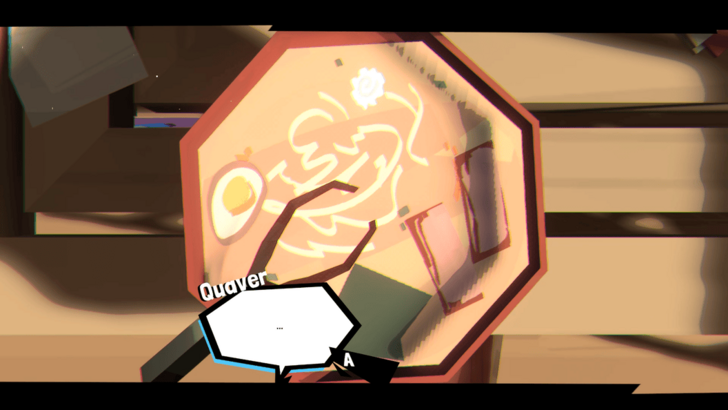
It doesn’t help that the entire prison chapter feels unnecessarily long, and it’s the second part of the whole story. A lot of repetitive tasks there—which I do see the vision for, to slowly break down Beat’s defenses and make her question what she really wanted to do—but it carried on for far too long for my liking, and it might actually turn off several players from the get go.
Honestly, the best part begins after the initial draggy beginning, and it feels like it gets better from there, little by little. Good luck on getting to that point though. I loved the characters and the gameplay enough to try and power through, as well as the deeper themes and feelings it eventually delves into, but not everyone may be as forgiving or patient.
Failing A Sequence Means You Lose Important Lore
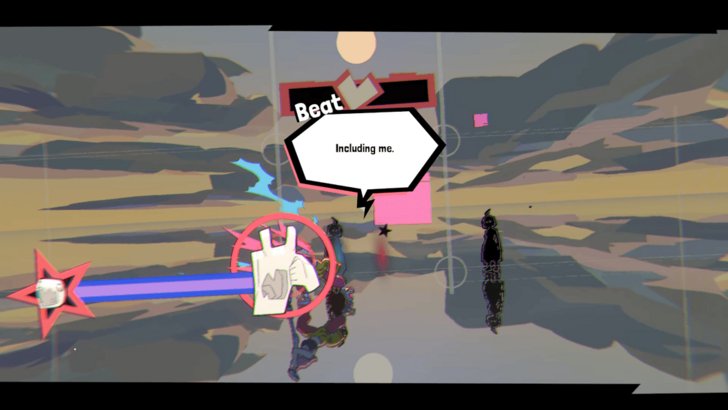
Speaking of lore, this point is kind of a con for those who like lore and knowledge in general, and at the same time not so much, especially for those who play honor runs in games like Baldur’s Gate 3 and the like. Later on in the story, Beat begins to have these solo dream sequences where she squares off against Silence while reminiscing about her mysterious past. Conversations between her and the people of her life before all this are played out as you whack those ghouls up and down and into oblivion. Listening to the beat while also keeping track of the dialogue and pressing the buttons to play the rhythm game…that’s a lot of multitasking, and can be quite difficult to clear if you’re not used to it.
Unfortunately, if you screw up this dream segment, say goodbye to the rest of the conversation because Beat wakes up in response to your poor hand-eye-ear coordination (er, my…poor coordination), leaving you with even more questions than answers about our enigmatic protagonist. These seem to be important bits and pieces of who Beat really is, and with no retry button to help you out when you fail the level, you might just get left in the dark about Beat’s identity for a bit longer.
So far, I haven’t found the option to perhaps replay those parts or if there is any—in fact, there’s no option to go back to previous chapters as well. So if it’s gone, it’s gone forever until your next full playthrough, as far as I know. On the other hand, you can take it like a champ and count it towards your honor run of sorts, maybe.
Jank Here, Jank There
It looks gorgeous, sounds fantastic…but technically, it’s got more than a couple of lapses all across the board. Despite looking polished, there are more than a few instances that indicate that it’s anything but that.
For instance, there’s evident frame lag in the very beginning of the game where Beat is running through the fields to meet Quaver. The scene wasn’t keeping up with Beat’s pace, and the grass around her looked strange stuttering. I initially dismissed it as a one off thing, but it happened again later on—in the middle of a rhythm gameplay segment, no less…and you can imagine what happened.
While on the subject of frame lag and visuals, transitions could use some work, with scenes just abruptly cutting into each other, making the experience feel extremely janky and weird. Most of the larger events have proper transitions, but other scenes, especially those in the middle of something, just feel…off.
Aside from that, controls, while smooth in rhythm gameplay, doesn’t translate well to…everything else. During the beginning of Chapter 2 while Beat and Quaver were talking to Treble and Clef, I accidentally hit the pause button. For some reason, unpausing skipped out the rest of the dialogue (I was sure there was still dialogue, because Clef was arguing with Quaver) and jumped me straight into a rhythm game battle.
In particular, input is a bit laggy during dialogues with choices, which sometimes require an extra button push of some sort before it gets registered to move on to the next line—or it gets registered as a double press, which kicks you right into the next two lines instead, losing your context of the first. Oop.
It also has a major bug early on—the game left me on a black screen after a certain scene with Beat for about 5 minutes before I realized that something was wrong. With how finicky the controls are, I was afraid of accidentally skipping over dialogue, and I thought the prolonged silence was just part of its turtle-slow pacing of storytelling. Apparently, this is an experience shared with other players as well based on other comments.
More Visual and Audio Jank
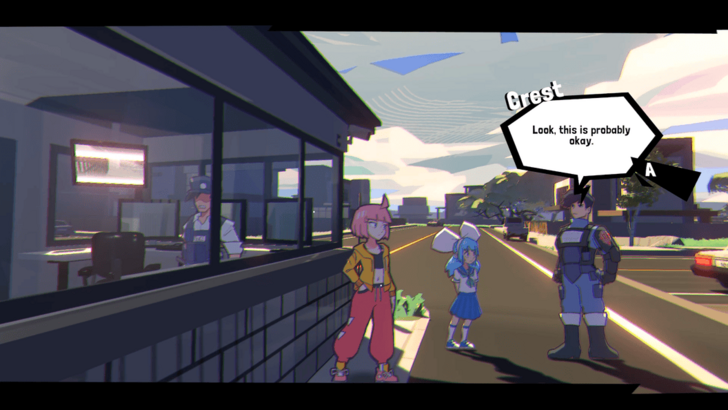
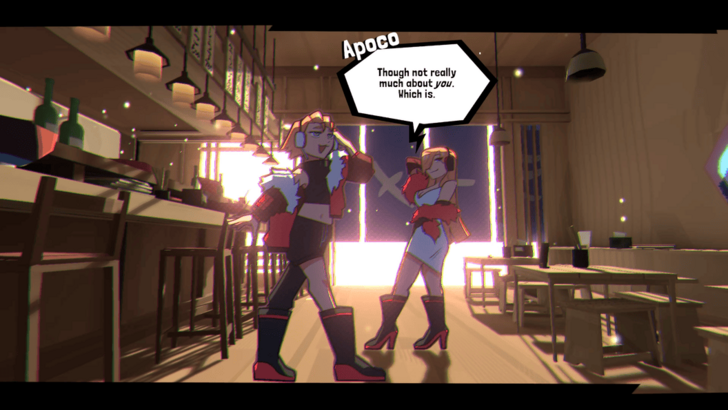
There are instances where the dialogue doesn’t match the speech bubbles, which can be a bit jarring if you’re listening and reading at the same time. It doesn’t help that sometimes the speech bubbles overlap—quite heavily so, since most characters tend to talk over each other. There’s no dialogue log to look back at either, so if you missed something…then, it’s gone forever.
There are several types, and quite a bit of them. Missing punctuation marks, unspaced words, several misspelled words (not stylistically either). An example would be the word "migraine" being misspelled as "migrane" in one of Treble’s earlier dialogues, and at a certain point during the prison breakout, the cops’ bulletproof vests read JIAL instead of JAIL—which is extra funny because the latter is part of an animated cutscene.
Is UNBEATABLE Worth It?
Worth It, But Wait For A Sale or Update Patches
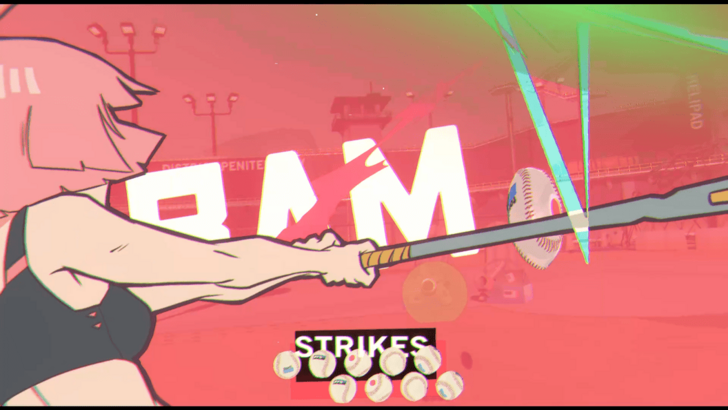
UNBEATABLE was a highly-anticipated game, and it mostly lived up to expectations, especially in the rhythm game department, a charming cast of spunky characters, and the stellar audio-visual presentation. It’s definitely a game that I would continue playing up until the end. However, as enjoyable as that all is, the obvious technical lapses, glaring janks, and a slow-paced narrative might turn off some potential players.
Luckily enough, aside from the narrative, the other issues can be fixed in future update patches for a better gameplay experience. Until those creases have been ironed out, perhaps you can wait a little longer for these changes to take place. But if you’re not bothered by it, then by all means, grab a copy now and get ready to save the world with Beat and her motley crew!
| Digital Storefronts | ||
|---|---|---|
| Steam |
Playstation |
Xbox |
| $27.99 | ||
UNBEATABLE FAQ
Will UNBEATABLE be available on Nintendo Switch consoles?
As of writing, D-CELL GAMES and Playstack have yet to announce a port of the game on Nintendo Switch consoles. They have previously expressed the desire to port it there, but they haven’t confirmed if this is in actual development.
Game8 Reviews

You may also like...


UNBEATABLE Product Information
 |
|
| Title | UNBEATABLE |
|---|---|
| Release Date | December 9, 2025 |
| Developer | D-CELL GAMES |
| Publisher | Playstack |
| Supported Platforms | Steam, PlayStation 5, Xbox Series X|S |
| Genre | Rhythm, Adventure |
| Number of Players | 1 |
| ESRB Rating | RP |
| Official Website | UNBEATABLE Official Website |