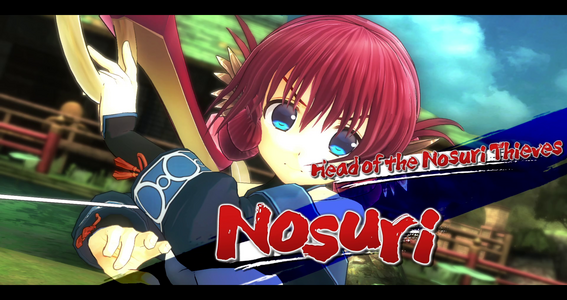

Utawarerumono ZAN Review Overview
What is Utawarerumono ZAN?
Utawarerumono: ZAN is an abridged version of Utawarerumono: Mask of Deception, condensing its story into brisk cutscenes broken up by new real-time battles. The tale begins with Haku, who awakens in a strange land with no memories. He is then rescued from a monster by a beautiful traveling healer known as Kuon. From there, he begins his journey, meeting an eclectic cast of warriors, scholars, princesses, and heroic bandits before getting embroiled in a nation-spanning conflict that would change his life forever.
Utawarerumono ZAN features:
⚫︎ Real-time action combat to replace the series’ turn-based tactics gameplay
⚫︎ Build a party of four from the cast of Mask of Deception
⚫︎ Co-op support and multiple side quests available at any time
⚫︎ Condensed retelling of Utawarerumono: Mask of Deception
⚫︎ RPG elements such as stat manipulation, equipment, etc.
| Digital Storefronts | |
|---|---|
 Steam Steam |
 Playstation Playstation |
Utawarerumono ZAN Pros & Cons
| Pros | Cons |
|---|---|
 Solid Action Combat Fundamentals Fast and Accessible Gameplay Runs Extremely Well It’s Hard Not to Enjoy It Solid Action Combat Fundamentals Fast and Accessible Gameplay Runs Extremely Well It’s Hard Not to Enjoy It |
Not Entry Friendly Brisk Pace Sacrifices Engagement Lacks Any Sort of Difficulty Gameplay Loop is Rather Basic |
Utawarerumono ZAN Story - 7/10
Despite being heavily condensed from Mask of Deception, Utawarerumono ZAN still tells a compelling story provided you’ve already read the former. Newcomers, however, risk being severely disappointed by the game’s breakneck pace, which glosses over key character development and endearing fillers. That would be a shame, especially if this ends up being someone’s gateway to the series before moving straight into the sequel story, Mask of Truth.
Utawarerumono ZAN Gameplay - 6/10
As an action game, Utawarerumono ZAN suffers from a number of issues. For example, the controls feel sluggish, the AI behaves as if it’s having an existential crisis half the time, and missions rarely last long enough to build any real momentum. On the other hand, the core mechanics are solid, leveling up feels genuinely rewarding, and the optional content meant to pad out the playtime is engaging enough that grinding isn’t unbearable.
Utawarerumono ZAN Visuals - 7/10
Despite being released many years after the original visual novel and featuring full 3D models built for action combat, Utawarerumono ZAN somehow ends up looking less appealing than its VN counterpart. Sure, the character models themselves are well-made, but animations are stiff and limited, and the half-hearted lip-syncing makes dialogue scenes awkward to watch. Visual effects, too, are serviceable at best, while the UI is nicely designed but weighed down by transitions that take far too long to complete that it becomes impossible to ignore.
Utawarerumono ZAN Audio - 7/10
Utawarerumono ZAN’s audio is a textbook case of a severely disappointing core experience being hard-carried by everything surrounding it. The sound effects, arguably the most important element of an action game, are shockingly flat. Even with a good pair of headphones, attacks feel like they’re simply acknowledged rather than celebrated. In contrast, the voice acting is phenomenal, and the background music is excellent, which ends up being the only delightful aspects about the whole thing.
Utawarerumono ZAN Value for Money - 6/10
Honestly, Utawarerumono ZAN would have had a much stronger value proposition if it included the full original story rather than a heavily abridged version. That’s especially hard to ignore when it’s priced the same as Mask of Deception, a game whose turn-based tactical combat feels far more complete than ZAN’s half-baked systems. Instead, ZAN offers a comparatively shallow action experience paired with an almost offensively condensed retelling of the story, all at full price.
Utawarerumono ZAN Overall Score - 66/100
If treated as an appetizer for the next entry in the series, Utawarerumono ZAN is a halfway decent purchase that may appeal to visual novel fans who also dabble in action games. In any other case, however, it’s simply not worth the asking price. That’s not to say the game isn’t fun; rather, its strengths don’t justify its base cost. At the very least, it’s a game best experienced after a sale.
Utawarerumono ZAN Review: An Enjoyably Expensive, Downsized Experience
The Series That’s as Incredible as It Is Niche
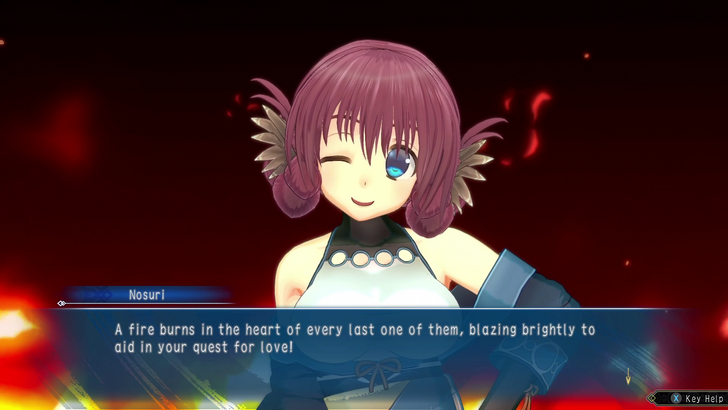
Utawarerumono, which later rereleased as Utawarerumono: Prelude to the Fallen, is one of, if not the, most important visual novels I’ve ever played. I really cannot overstate how much I love the original. I still remember spending quiet nights on my old VAIO notebook sometime before or around 2010, headphones jammed tightly into my ears, nervously wishing someone didn’t walk in on me because, after all, it was a commercially sold eroge.
I watched the anime adaptation too. Multiple times, even (Karulau and Eruruu were the best)
That’s because despite featuring many of the familiar harem tropes of its era, Utawarerumono stood out as something special. Beyond the romance, it told a story of nation-building grounded in themes that were unusually gritty for the time, such as slavery, dark myths, and human experimentation. Compared to its contemporaries, it felt rawer, more brutal, and far less interested in comforting the player.
Even its canonical ending leaned into separation rather than catharsis. There was no neat, happy conclusion; only parting. For those of us who waited years for a sequel that might never have existed, that ending wasn’t just bittersweet—it felt final. Tragic.
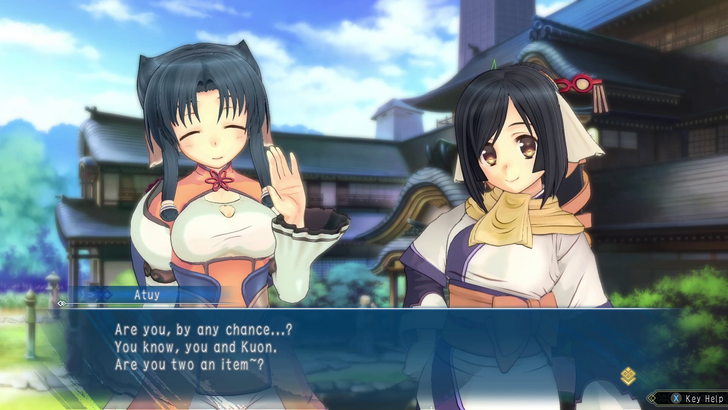
On the other hand, Utawarerumono: Mask of Deception, released more than a decade after the original if we ignore fan translation timelines, felt less like a direct continuation and more like a graduation from the series’ origins. It modernized nearly every aspect of itself such as pacing, narrative structure, combat, and, most importantly, the balance between all three.
Though that evolution felt necessary to reach a broader audience, especially one far less tolerant of the slower tempo and barebones gameplay typical of older visual novels, I still have warmer memories of the original. But that may simply be nostalgia talking. Maybe that’s also why I’ve never actually touched the re-release of the first game.
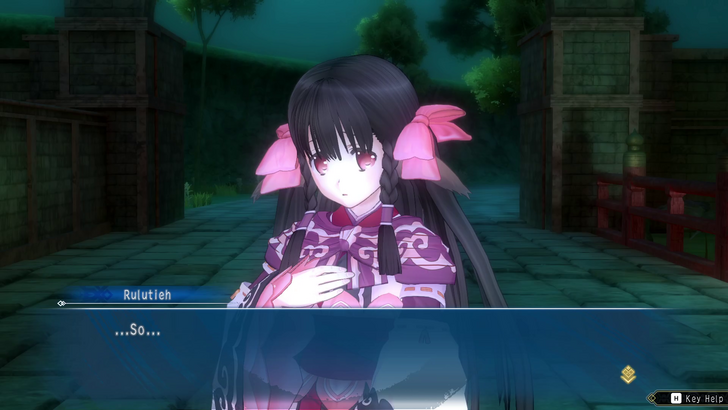
Utawarerumono ZAN is essentially that sequel retold as an action RPG, complete with a heavily compressed version of its story, in place of the series’ signature turn-based tactical combat. In that sense, it’s positioned as a more entry-friendly take on the franchise; one clearly aimed at players who don’t have the patience to spend dozens of hours reading through a traditional visual novel.
For clarity’s sake, though, this review is based on the PC release, whereas the English localization first arrived on PlayStation back in 2019. That said, it’s hard to imagine ZAN significantly expanding the series’ audience. As good as Utawarerumono is, it still very much carries the aura of a niche title. And ZAN, for better or worse, doesn’t quite change that.
Starting Fresh, Abridged
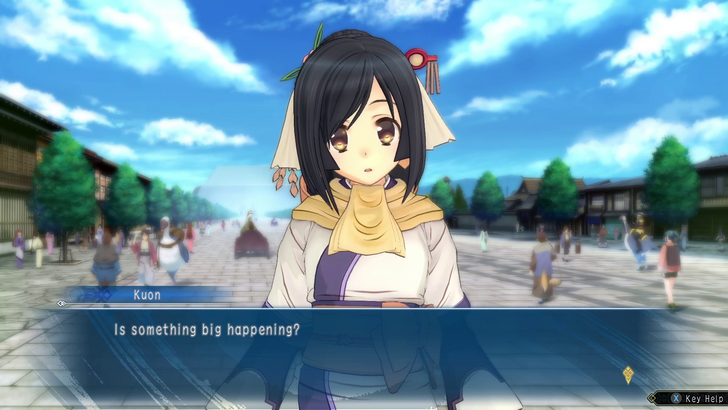
Utawarerumono ZAN, or rather, the game it’s based on, Utawarerumono: Mask of Deception, follows Haku and Kuon as they are, for the most part, dragged into Yamato’s affairs by a high-ranking official who befriends them early on. Haku himself fits a familiar visual novel archetype: an amnesiac protagonist surviving largely through circumstance. Kuon, his benefactor, is likewise more than what appearances tell, despite presenting herself as nothing more than a traveling apothecary; another heavily-used trope for these stories.
For a good while, the narrative follows a predictable pattern. The duo becomes entangled in local troubles, forms bonds with those around them, and inevitably finds themselves pulled directly into larger conflicts.
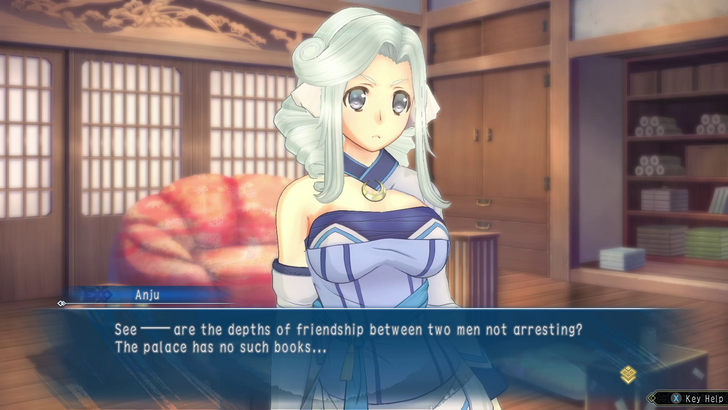
In ZAN, however, many of the finer details that gave these moments their charm are lost due to how aggressively the story has been cut down to keep scenes short. Even smaller, arguably just as important character-defining moments suffer as a result. Take Rulutieh’s love for boys’ love literature, for example: rather than being properly introduced and explored, it’s reduced to a trait that only surfaces when there’s a need for comedy.
Is this a bad thing? Not really. At the end of the day, ZAN doesn’t feel like it was designed to get new players into the series. Instead, it feels like something meant to give those who’ve already played Mask of Deception and Mask of Truth (at least in the English-speaking world) something to chew on while waiting for the next entry into the series, Shiro e no Michishirube. Just don’t expect ZAN to provide the same emotional groundwork that Mask of Deception originally laid for what comes next.
Weirdly Action-Packed Combat
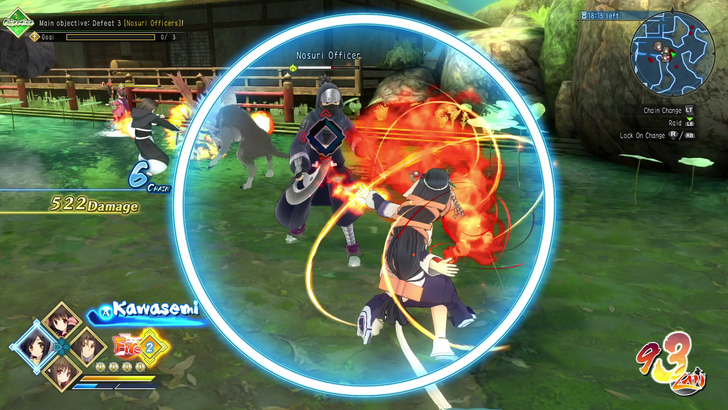
There’s a reason the original 2002 Utawarerumono and nearly every entry that followed—Utawarerumono Battle excluded (if you remember that one, how’s the back pain?)—leaned heavily into turn-based tactical combat. That format was designed to simulate warfare, placing the player in the role of a commander overseeing clashes between entire factions rather than individual skirmishes.
By contrast, ZAN’s hack-and-slash approach feels far more personal. In the context of Mask of Deception, or rather its ZAN adaptation, that shift isn’t entirely out of place, as truly high-stakes battles don’t become common until much later in the story. Still, the original combat format fit the game better.
At its core, though, the combat system is solid enough. You can chain normal attacks into combos, use a variety of special moves, switch between characters fighting alongside you, and occasionally trigger combination attacks. On the RPG side, characters can be equipped with weapo—err, scrolls, have their stats customized, and be slotted into team compositions that can either make or, in my case, consistently break your chances of clearing higher-difficulty missions… which is just an issue of matching numbers than improving your skills.
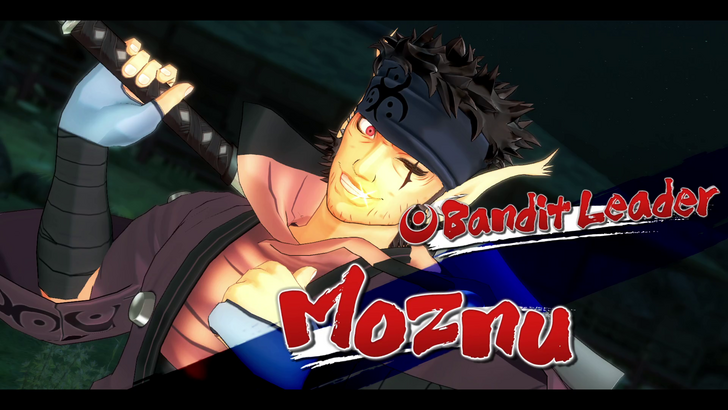
The problems lie in everything surrounding it. Enemy AI, for example, routinely behaves like underpaid extras in an action movie, rarely conveying any sense of urgency. Most enemies prefer to stand at a polite distance as if they’re practicing proper social distancing, occasionally remembering what they were paid for before closing in to take a swing. Bosses aren’t immune to this either, though they at least try to enforce their personal space… although that’s likely because they’re often encountered in duel-style encounters.
Just kidding. You usually gang up on them. Very fair.
You’ll Forget What Happened, Often
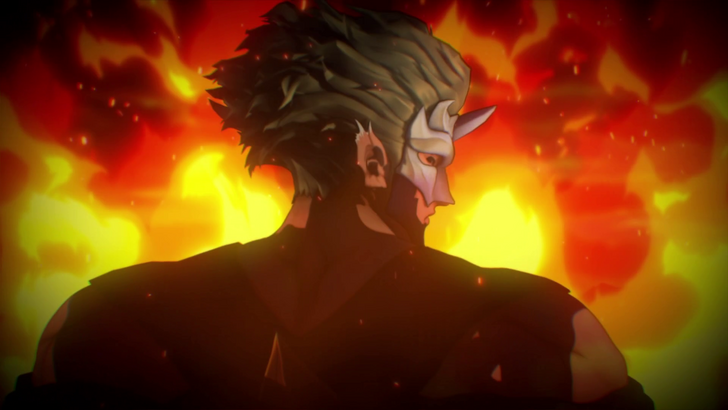
Besides the predictable narrative engagement issues that come with a visual novel’s story being heavily condensed, the entire experience also inevitably moves at a breakneck pace.
See, visual novels are kinda slow, right? I mean, they used to be even slower back then, but even modern visual novels still have a rather languid pace. For Utawarerumono, however, the turn-based tactical gameplay’s steadiness paired very well with the genre. With ZAN, they tried to match the action combat with an abridged version of the story, which works… on paper.
Fast gameplay, fast story. It fits, right? But if you zoom out a bit, you can see that it also results in an extremely quick scenario turnover. One chapter can basically be cleared every ten minutes, half of it spent reading and the other half spent bullying the AI or picking herbs without any real context. So within an hour, you would have blasted through enough content that a visual novel would have taken a handful of hours to deliver. And honestly, that’s not very engaging, in terms of either gameplay or story.
Though, it is perfectly fine if you just treat it as a warriors-style companion game to Mask of Deception.
Is Utawarerumono ZAN Worth It?
Not Unless You Love the Series a Lot
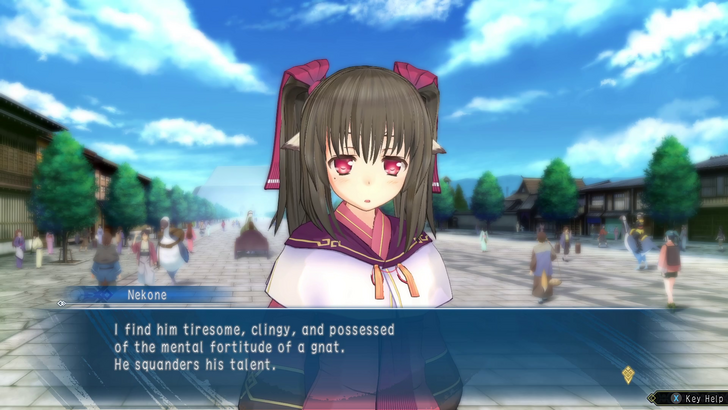
Utawarerumono ZAN feels like the kind of title meant solely to expand the scope of the series. Though the three visual novels are undoubtedly some of the best the genre has to offer, it is still incredibly niche and I can only imagine that the number of people who’ll get to play ZAN will be even smaller, despite the PC release.
That said, despite my misgivings with the format, I did enjoy the game a lot. It still is, after all, Utawarerumono, a series I love and keep close to my heart, and its blood still persists (though rather weak) in a compressed reimagining of the second game. But if you ask me if you should get the game, it’ll depend entirely on your existing sentiments and experience with the series.
Do you love the story? Do you want to read through a summary of Mask of Deception? If both are a resounding yes, then get the game. But if even one of them is a no, then this game is a skip (or wait for a discount).
Or just get Mask of Deception if you haven’t read it yet. Or Monochrome Mobius if you have.
| Digital Storefronts | |
|---|---|
| Steam |
Playstation |
Utawarerumono ZAN FAQ
Is Utawarerumono ZAN canon?
Yes, it is just a condensed version of Mask of Deception, but with added scenes and lines to fit the faster narrative.
Will there be a sequel to Utawarerumono ZAN?
Yes, Utawarerumono ZAN 2 is on the pipeline to be released globally.
Game8 Reviews

You may also like...




Utawarerumono ZAN Product Information
 |
|
| Title | UTAWARERUMONO ZAN |
|---|---|
| Release Date | December 16, 2025 |
| Developer | AQUAPLUS |
| Publisher | Shiravune |
| Supported Platforms | PC, PlayStation 4, PlayStation 5 |
| Genre | Action, RPG |
| Number of Players | 1 |
| ESRB Rating | T |
| Official Website | Utawarerumono ZAN Website |