
Overview
What is Timberborn?
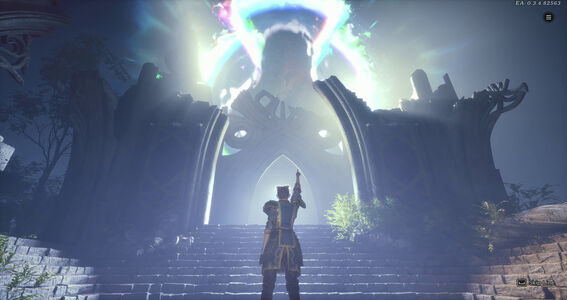
Timberborn is a 3D factory-automation city-building game themed around a beaver society’s rustic architecture. Set in a post-apocalyptic human world and manned entirely by adorable, flat-tailed, dam builders, Timberborn lets players build a fully automated, high-traffic, utopian beaver city of their dreams using nothing but wood, iron, and some old-fashioned hard work.
Timberborne features:
⚫︎ Two beaver factions with unique architecture and bonuses
⚫︎ 3 beginner maps, 4 challenge maps, and 9 unique maps
⚫︎ Voxel terrain with 3D Free-camera controls
⚫︎ Map creator feature with community map support
⚫︎ Late-game automation gameplay
⚫︎ Early-game city-builder mechanics
| Digital Storefronts | ||
|---|---|---|
 Steam Steam |
 GoG GoG |
 Epic Epic |
| $27.99 | ||
Timberborn Review: Almost the Best of Both Its Worlds
Close Enough–Welcome Back, Factorio!

Every fan of factory automation has to encounter Factorio or something like it at some point. Its core loop is what weeds out the casual spaghetti conveyor belt-makers from the true heirs of optimization, although I will concede that, even for the veterans, all those belts can become too much when played for long enough.
The perfect factory automation, then, would be something like Factorio, but has something else going for it that’s just as satisfying to build and doesn’t encroach on the factory side of things. Timberborn isn’t that, but it comes pretty close, which is harder than it sounds.
It’s missing the variety to entertain genre fanatics and lacks the training wheels to entice the greenhorns, but it’s a dam good game worth the hours it demands. It quite nearly became the best of both its worlds: factory automation and city-building, but couldn’t quite gnaw through its own troubles.
Beavers Carry the Torch of Civilization
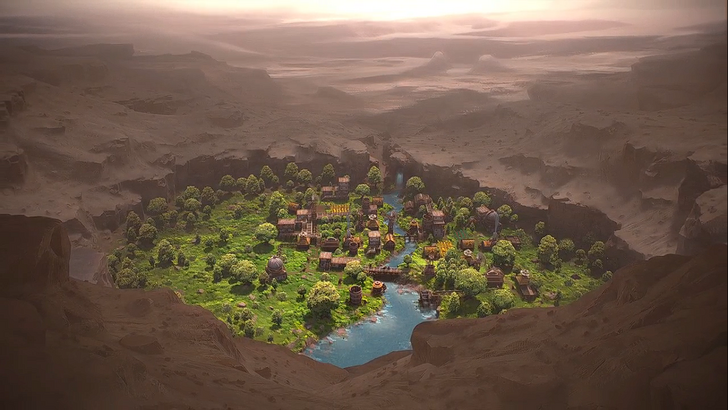
Before we dive into the basics of this game’s wilderness automation and the intricacies therein, let’s discuss the game’s setting and story, because despite being one factory automation/city-builder among many, Timberborn actually bothers to make a unique setting and story for its gameplay.
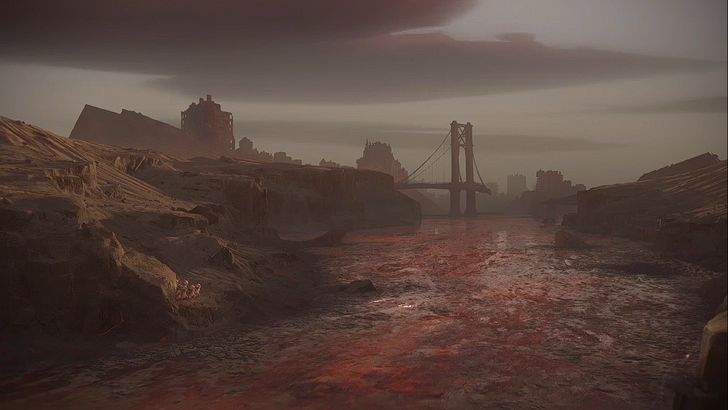
Timberborn is set in a post-apocalyptic, post-human Earth that’s now dominated by bipedal, sapient Beavers. Although they ended up being the surprising heirs to civilization, nature has been anything but kind to them, and Timberborn has players building their last final hope for a better life by expanding a settlement in a region not yet ravaged by storm or badwater.
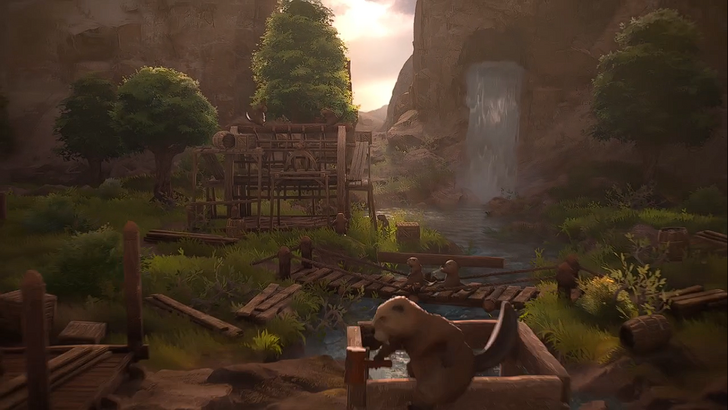
Already, this is a strong start for Timberborn because the emotional and moral stake in your city-building and automation goes beyond a simple desire for order amid chaos. Where most games from these genres are happy to keep things simple by not having a story at all or just having the most basic beats of a narrative, Timberborn asks us to care about every life in the city we’re about to build beyond its value in the grand logistics of its byways.
I will say that the story isn’t as prevalent past the very solid intro cinematic because gameplay takes center stage past then, but that’s not really a problem in the long run because the game’s strong visual identity and careful gameplay design carry the themes set up by the intro forward to its end. It's also the kind of storytelling you'd expect from a game drawing from two genres not known for their intricate storytelling. That is for the player to decide through gameplay.
Building a City to Start
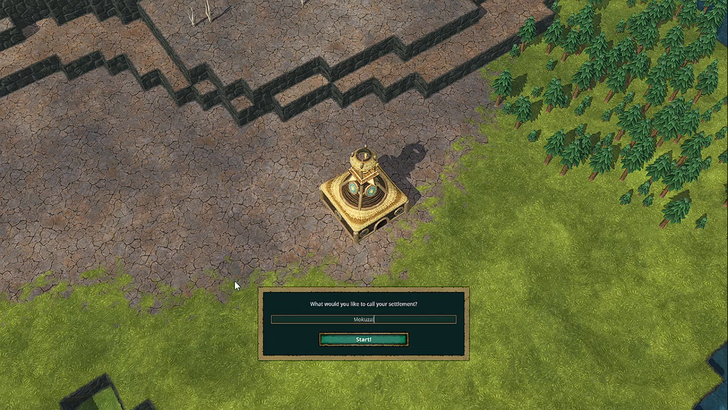
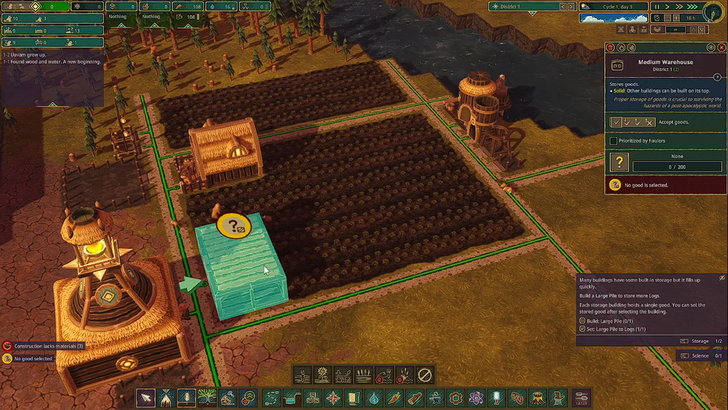
Timberborne is both a city-builder and a factory automation game, but it doesn’t play both halves of its core blueprint at the same time or to the same degree. The game very notably starts as a rather basic, but well-designed city-builder, where simple roads, classic resource gathering, and population needs mechanics are at the forefront of gameplay.
As the settlement’s leader, it’s your responsibility to utilize the game’s grid-based placement system, logistics pipeline-centric production mechanics, and range-based resource gathering to your people’s benefit. You create buildings that fulfill their needs using what the land provides you, connecting each facility, hovel, and warehouse to the growing capillaries of your municipal system.
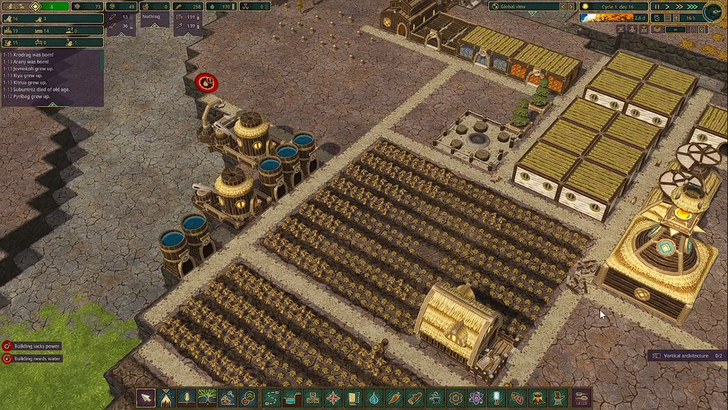
It’s all standard-fare city-building up until you reach materials processing, which is when the game’s factory automation half starts to take shape, roughly ten minutes into every playthrough. Keeping to the game’s city-building half for now, though, I find it delightfully effective and very by-the-book in its implementation. That might sound like a bad thing, but the basics are the basics for a reason, and it’s usually because they work.
In the case of Timberborn, its city-building mechanics are intuitive to a genre player of any level, from the grid-based building and road placements to the simplified population system that operates on two caste levels only (adults and dhildren). I believe that any more mechanical innovation than that would encroach on the game’s factory automation half, which represents the finer details of running these wooden cities, not the largest portion of which by size is even automation.
Yes, just as the early game has you erecting simple and elegant wooden structures as foundations for survival, the mid-to-late game has you carrying the torch of civilization forward into the future with the introduction of rotational energy.
Optimizing a Factory to Finish
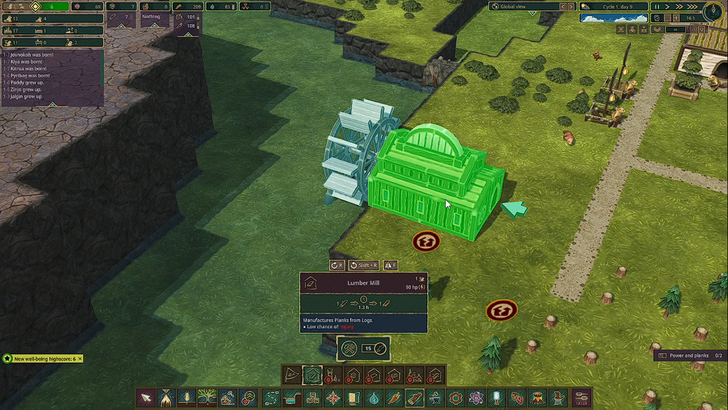
Timberborn’s comparisons to Factorio begin when you’ve created the bare necessities for a city, like food, shelter, and water, and have moved on to more sophisticated constructions using wooden planks. Making those requires a sawmill, and if you’re a Minecraft CREATE Mod buff like I am, you know that means you need energy, and it similarly comes to Timberborn as rotational energy.
This is achieved by constructing various forms of rotational energy sources, like waterwheels, windmills, or even manual beaver mills. You can then harness this energy by transferring it to specific buildings around the city using different axles, gearboxes, and clutches, which themselves are unique structures that operate on the same grid as your basic city infrastructure.
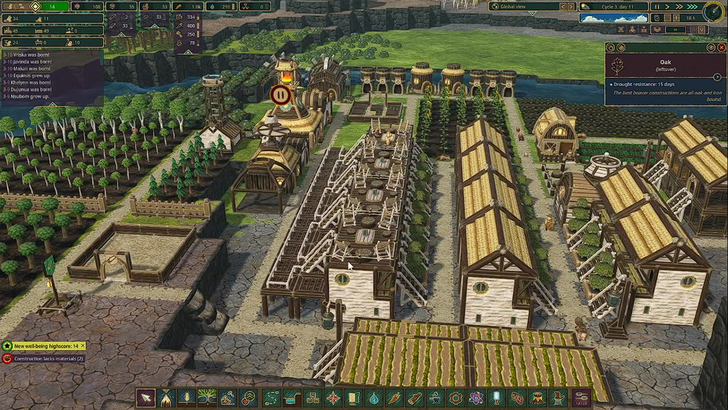
This is the most basic form of factory automation in the game, and it directly entwines itself with the core city-builder mechanics we’ve discussed earlier. There isn’t a distinction between the macro and micro layers here, as every part of the city’s necessary architecture shares the same roads and pathways as the axles, platforms, overhangs, depots, and production chains of factories as well.
This marriage of both genres highlights each of the game’s thematic halves while synthesizing something from what’s common between them. In this case, logistics and strategic placement are what cities and factory floors have in common, so let the roads be the belts, and the buildings be the machines.
It’s a rather beautiful way to interpret the genres Timberborn draws from, though it’s not without its missteps as well.
Strong First Steps, With a Second Half That Came Too Late
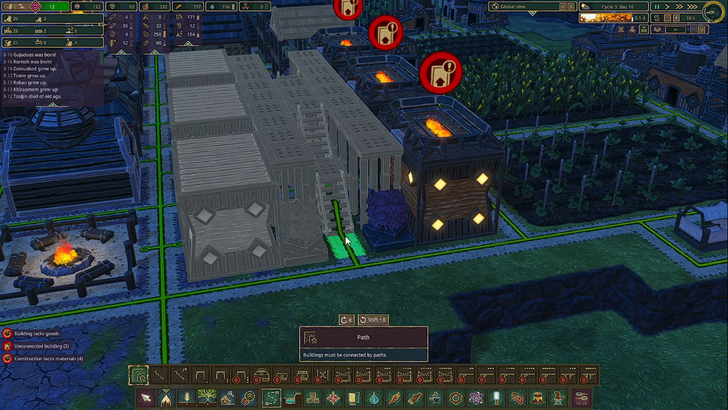
What I’ve shared about the game’s automation isn’t actually all of it. Though it comes into play in the early-midgame, the wonders of rotational energy processing are but the tip of the iceberg for Timberborn’s potential. No, the actual automation comes in once you’ve expanded past wood, processed or otherwise, and have begun collecting metal from the ruins of the human cities. With scrap metal in paw, it’s time for factory automation to actually get automated, though be warned, it comes much later than it should.
Logic gates, sensors, manual inputs, wiring, and machinery to the likes of Minecraft redstone can all be unlocked in the late game to make your city run itself, but by then, in my opinion, it’s far too late. The thrill of production has passed, and the game reaches critical mass in complexity, with a tutorial too ill-equipped to help you through it.
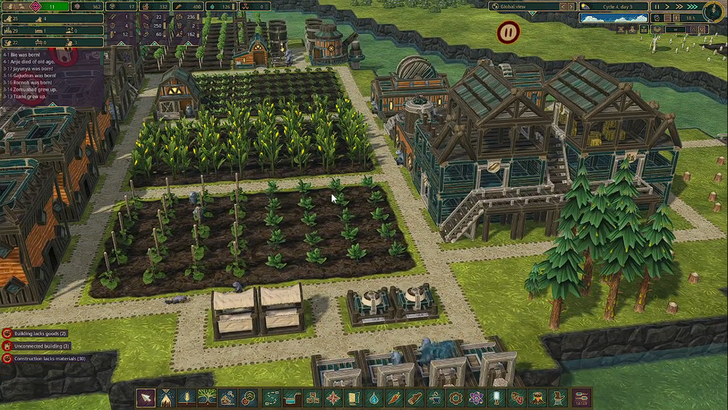
The game has the potential to open up to something huge, which I’m not against, even if it spits at the rustic feel of the early-to-mid-game. I just think it takes far too long for the last major section of the game to become part of the core loop, and by then, you’re likely to get whiplashed by the sudden tonal shift in theme and mechanics. Heck, your very first run is likely to end the moment automation comes to play, and it’ll be because nothing prepared you for it.
A Tutorial That Doesn’t Teach Much Past the First Hour
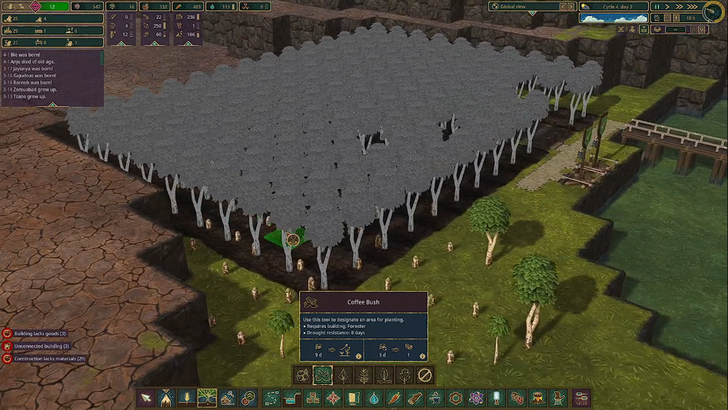
Timberborn’s tutorial is satisfactory for the first hour or so. It puts you through the basics of city-building, then it dips your toes into rotational energy mechanics as they becomes relevant. Then it vanishes off the face of the earth like the humans in this setting.
Where did it go? It doesn’t exist until you stumble into the next thing you can learn about. You can’t really opt into the tutorial or its many chapters yourself until you meet the parameters of its next instructional set of missions, which should be fine if the game were linear.
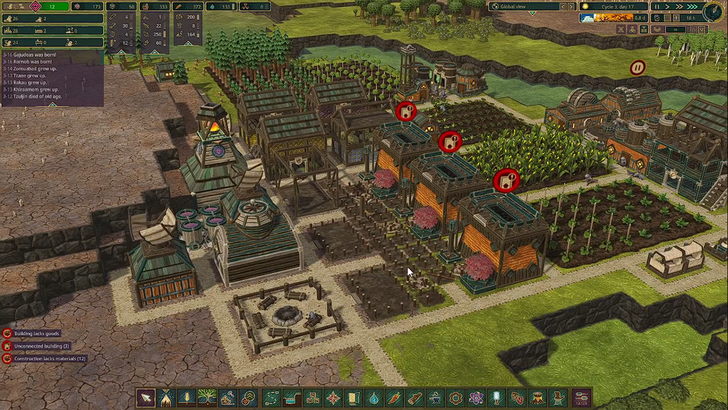
As it is, though, you can discover every which way of solving a problem before you arrive at the actual solution, as provided by a prompt that showed up too little too late. By then, you’ve likely screwed your city over some optimizations that would’ve come up naturally, had the tutorial been available from the start.
Obviously, this is the bit that makes the late-game automation so weird to deal with for your first few games. Eventually, trial and error will turn you into a Factorio-level savant of logistics and optimization, just prepare to fall flat on your face a few times before that, though.
So Many Beavers, But Also Too Few
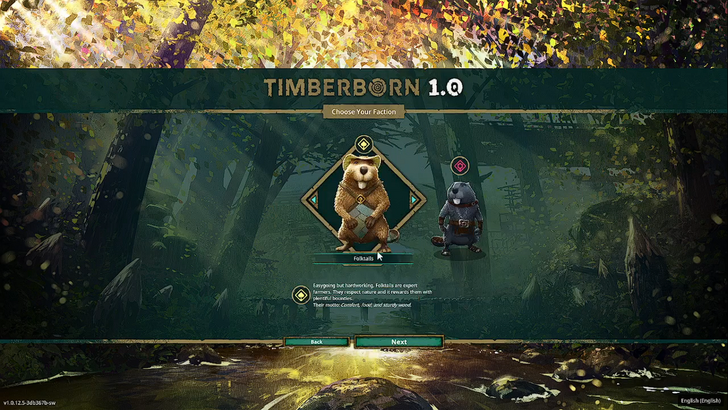
The last thing I want to say about Timberborn is that its available factions are far too few, despite how well done the ones we actually got ended up being. You can choose between the Folktails and the Iron Teeth factions whenever you start a new game, representing the community-centric and efficiency-centric playstyles, respectively.
Each of the factions plays incredibly well into their strengths, with Folktails being food production and resource gathering savants, and the Iron Teeth being much more utilitarian, but way more efficient in their use of space and resources. Each presents a very distinct experience of Timberborn, which, combined with the context of your selected map, ups the game’s replayability by a lot.
That said, two is an abysmal number of factions to choose from, particularly from something touting itself as a 1.0 build. More content is likely to come in the future, but combined with the lack of metagame progression, Timberborn has a very visible limit to its replay value as it is. Choosing between increasing production baselines and making more efficient use of limited resources are good avenues for playstyles, but there's plenty of design space left untapped that the game just ignores. What about a faction hyperfocused on the game's vertical building? Perhaps a faction made with automation at the forefront to solve the game's pacing issues?
The sky is the limit for Timberborn, and I can't help but think that this is a poor showing for all the time it spent in early access. I'd have been happy to wait another year or so if it meant new factions would've been introduced and the tutorial would've been hashed out come the later release. But this is what we got, and, imperfect as it is, I can't help but appreciate what it does well. Too bad there's bad to highlight the good. Getting the best of both worlds is a tricky thing; one can't expect it every time.
Is Timberborn Worth It?
Cheap, Fun, and Satisfying—What More Could You Want?
Timberborn comes in at an okay price, costing players no more than $27.99, and that’s not even considering the frequent publisher and genre sales that Steam hosts. For that price, the slightly reduced replayability, unhelpful tutorial, and rather late-to-the-party automation don’t feel so bad at all, especially since Factorio and similar titles come in at $29.99 or more.
The game is slightly more costly than your usual AA game of similar quality, but nowhere near the most expensive of its kind, so there’s not much to complain about in this regard and much to gain for a more than reasonable price.
FAQ
How Do I Unlock the Iron Teeth in Timberborn?
Players can unlock the Iron Teeth faction by reaching 15 average well-being as the Folktails in any playthrough.
How Do I Unlock Bots in Timberborn?
Bots are a late game automation feature that players can produce by unlocking two buildsings: the bot part factory, and the bot assembler. Each building requires significant science investments to build (1,250 total), and a pipeline of power and resources to optimize its production.
Game8 Reviews