| Rune Factory: Guardians of Azuma | |||||||
|---|---|---|---|---|---|---|---|
| Release Date | Gameplay & Story | Pre-Order & DLC | PC Review | Switch 2 Review | |||
Rune Factory: Guardians of Azuma sees players reviving four different seasonal villages and the land of Azuma itself. Read our review to see what it did well, what it didn't do well, and if it's worth buying.
← Return to Rune Factory: Guardians of Azuma main article
Rune Factory: Guardians of Azuma Review Overview
What is Rune Factory: Guardians of Azuma?
Rune Factory: Guardians of Azuma (simplified as Guardians of Azuma or RF:GoA) is an upcoming action RPG and life-simulation game developed by Marvelous Inc. It is set to release this June 5, 2025. Similar to Rune Factory Frontier and Tides of Destiny, this game is a spin-off in the Rune Factory series, which is itself a spin-off of Marvelous’ Story of Seasons (formerly Harvest Moon) series.
The game takes place in Azuma, an eastern land heavily inspired by Japanese aesthetics and traditions. Players assume the role of an Earth Dancer, tasked with restoring hope and vitality to the land after it has been ravaged by a cataclysmic event known as the Celestial Collapse and the subsequent spread of a corrupting force called the Blight.
Guardians of Azuma keeps the series' core gameplay loop of farming, combat, and social interaction, but it introduces several new features. Players can now use the power of dance and sacred treasures, along with new weapons like bows and talismans, to fight the Blight. A key new mechanic, not seen in previous Rune Factory games, is the ability to rebuild entire villages, construct buildings, and attract residents who contribute to the village's growth. The game also emphasizes building relationships with other characters, with options to romance and recruit them to help in battles.
Rune Factory: Guardians of Azuma features:
⚫︎ Extensive Village Builder Mode
⚫︎ Deepened Farming Mechanics
⚫︎ Revamped Romance and Relationship System
⚫︎ 15 Romanceable Characters
⚫︎ Robust Action RPG Combat
For more gameplay details, read everything we know about Rune Factory: Guardians of Azuma’s gameplay and story.
 Steam Steam |
 Switch Switch |
 Switch 2 Switch 2 |
|||
| $59.99 | $69.99 | ||||
|---|---|---|---|---|---|
Rune Factory: Guardians of Azuma Pros & Cons

| Pros | Cons |
|---|---|
 Progression is Visibly Rewarding I Live and Breathe for the Village Builder Mode QoL Features Improves Series Formula All Characters are Likeable Sound Design Brings Azuma to Life Progression is Visibly Rewarding I Live and Breathe for the Village Builder Mode QoL Features Improves Series Formula All Characters are Likeable Sound Design Brings Azuma to Life |
Story Takes Its Sweet Time Developing Romance Scenarios for Cuilang and Pilika are Locked Behind Paid DLC |
Rune Factory: Guardians of Azuma Overall Score - 94/100
Rune Factory: Guardians of Azuma gets so much right. It breaks from series tradition in bold ways, yet adds features I never knew I wanted until they were in my hands. Managing multiple villagers and the new Village Builder Mode breathe fresh life into the series' formula, while smart quality-of-life tweaks make every moment more enjoyable. It’s not perfect—the story often takes its sweet time to develop—but Guardians of Azuma still stands as one of the series’ most ambitious and rewarding entries.
Rune Factory: Guardians of Azuma Story - 9/10
Rune Factory: Guardians of Azuma may start with the familiar amnesia trope, but it quickly unfolds into a story far grander than its predecessors. Azuma itself feels like a living character, its scarred lands and fading guardian deities creating a tone that's both somber and hopeful. As an Earth Dancer, you'll slowly cleanse the corruption in a classic Rune Factory slow burn. But what truly roots you are the villagers; their stories, routines, and quiet moments that make each day feel worthwhile, even when nothing "important" happens.
Rune Factory: Guardians of Azuma Gameplay - 10/10
Rune Factory: Guardians of Azuma really nails that sweet spot between everything you love about the series and some fantastic new ideas. Juggling four villages never feels like a chore thanks to intuitive farming and Village Builder mechanics that streamline the grind without losing depth. Combat is fluid and fun, with Sacred Treasures doubling as both weapons and tools. It all culminates in a genuinely charming and deep experience you can easily lose hundreds of hours in.
Rune Factory: Guardians of Azuma Visuals - 9/10
Guardians of Azuma simply pops with color. Every village feels so alive and inviting that you’ll want to explore every nook and cranny. And while the character portraits from previous games have been ditched, the 3D models more than compensate. They’re expressive and bursting with personality and expression. There are a few spots where buildings look a little blurry up close, even on max settings, but honestly, the game's overall look perfectly captures that cozy vibe Rune Factory fans have come to expect and love.
Rune Factory: Guardians of Azuma Audio - 10/10
The audio in Rune Factory: Guardians of Azuma brings its Japanese-inspired world vividly to life. The traditional-sounding soundtrack captures both the serenity and energy of the setting, but it’s the voice acting that truly elevates the experience. A stellar cast—including Brandon McInnis (Male Alear, Fire Emblem Engage), Suzie Yeung (Invisible Woman, Marvel Rivals), and Mark Whitten (Kyojuro Rengoku, Demon Slayer)—delivers performances that make the world feel alive and immersive.
Rune Factory: Guardians of Azuma Value for Money - 9/10
For $60, Rune Factory: Guardians of Azuma delivers an absolute ton of content. We're talking hundreds upon hundreds of hours that'll just melt away as you get lost in farming, fighting, falling in love, and building something you can be genuinely proud of. However, it's hard to overlook the paid DLC that gates off bonding events for Cuilang and Pilika, especially since they're already part of the main story. Still, the sheer joy packed into the base game makes this an easy recommendation.
You May Also Like...
Rune Factory: Guardians of Azuma Review: From Azuma, with Love

Rune Factory is a series full of contradictions. I mean, where else can you alternate between planting turnips and slaying monsters in the same afternoon? Born as a fantasy-laced spin-off of Harvest Moon (now Story of Seasons), Rune Factory has always stood as a strange yet lovely hybrid: part life-sim, part dungeon-crawler, part dating game, and entirely its own thing. From its earliest days on the Nintendo DS, the series carved out a niche with a deceptively cozy exterior masking surprisingly deep RPG mechanics. Over the years, it’s become a cult favorite. It never quite reached the mainstream, though, but it has always been cherished by those who knew what it offered.
Rune Factory Frontier marked my first descent into the series. Since then, I’ve played every Rune Factory title. Yes, even Tides of Destiny, even the infamous Rune Factory 2 child-time-skip arc, and yes, I held my breath like everyone else when the series went silent for what felt like an eternity after Neverland’s closure.
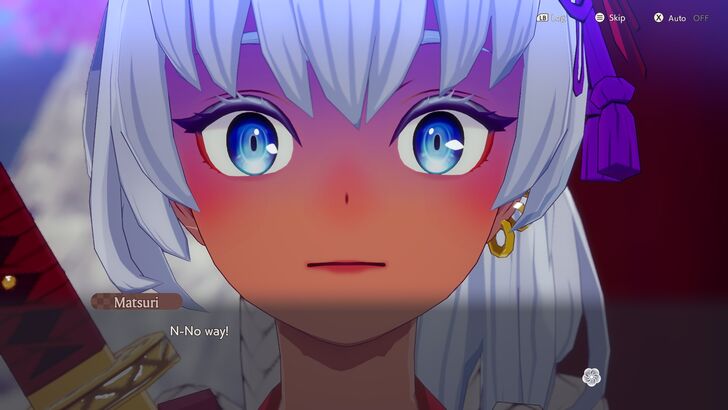
Rune Factory: Guardians of Azuma arrives with a lot riding on it, especially after Rune Factory 5, which, while decent, didn’t quite strike the same chord with fans (myself included) as its predecessor, Rune Factory 4.
I was cautiously optimistic for Guardians of Azuma. I held a mix of hope and that familiar longing for a game that gets it: the quiet bliss of morning chores, the thrill of a dungeon boss fight, the charm of quirky villagers, and the satisfaction of losing entire in-game months to obsessively min-maxing my farm.
But without hesitation, I can say that Guardians of Azuma exceeded my expectations in ways I didn't even know I was hoping for.
The Burden of an Earth Dancer
Like most Rune Factory entries, Guardians of Azuma opens with a classic series trope: your protagonist is suffering from a convenient bout of amnesia and wakes up in unfamiliar territory. It’s a familiar curtain rise for longtime fans, and although the memory-loss setup has long since become something of a running joke, the character you choose—either Subaru or Kaguya—feels more defined than the typical blank-slate hero. Their past, it turns out, has a larger role to play in the story. There’s history here, romantic and otherwise, and the story doesn’t shy away from letting that emotional baggage hang in the air either.
Whichever one you don’t pick becomes an NPC in your journey, and yes, a potential love interest, which can make certain conversations charged in ways that Rune Factory rarely leans into.
The world of Azuma itself is perhaps the game’s most tragic character. You only hear that the continent was once vibrant and full of life; it has since then been ravaged by the Celestial Collapse, a disaster that shattered the very balance of nature and weakened the guardian deities of the four villages. It’s a rather bleak backdrop for a series that usually starts off rather chummy, but it works surprisingly well. The fallout has left Azuma a fractured land, scarred and struggling to recover. There’s a yearning here for people to restore what once was, and that longing seeps into everything you are tasked to do.
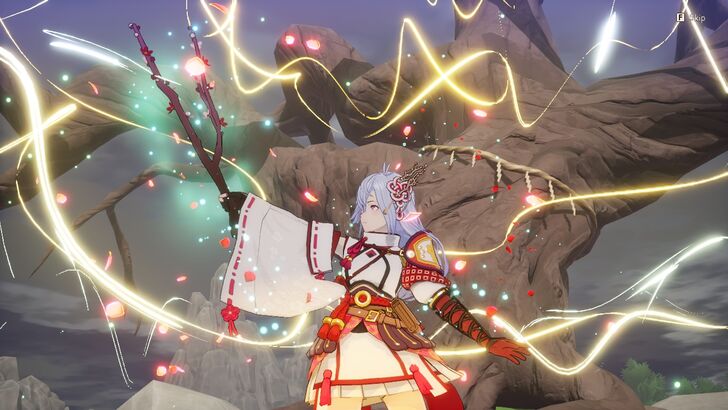
Instead of being an Earthmate like in past games, you are now an Earth Dancer. You literally dance to cleanse corruption and use Sacred Treasures. Yes, it’s the typical "save the world" plot that plagues many games, but it’s especially charming here. This is because you see your progress as an Earth Dancer and as village chief through how these villages transform and flourish under your care.

That said, Guardians of Azuma is very much a Rune Factory game in pacing—for better and for worse. It’s a slow-life sim through and through, which means the story blooms really late into the game. That’s par for the course in this series, which often splits its narrative into distinct arcs that only fully reveal themselves deep into the experience, and I do understand that this kind of pacing won’t be for everyone. In fact, it took me an embarrassingly long time to finish what could be considered as its first act.
Four Seasons, Four Villages, and Endless Possibilities
But that's probably due to the fact that I had villages to build, and that feature alone makes Rune Factory feel more densely packed than ever before. There’s almost always something you need to do for today, tomorrow, and the day after that. The game builds smartly on the series’ hybrid formula, but it throws in so many new and refined mechanics that even veterans will find themselves jotting down notes or making their own calendar simply to adjust to routines.
First and foremost, you’re no longer tethered to a single plot of farmland just outside town. Rather than one central hub surrounded by different biomes, as in past entries, you’re now juggling four permanent locales: Spring, Summer, Autumn, and Winter Villages, each nestled in their own eternal season. Think of them like the seasonal dungeons of old Rune Factory games, but blown up into actual communities you can shape and grow.

This is where Village Builder comes in, a new system that genuinely surprised me with how much I enjoyed it. At the press of a button near a development area, you snap into Village Builder Mode. Press another button, and you snap into an overhead, grid-based interface that lets you redesign your villages however you like. Move homes, place lamp posts, plant a large tree near the general store—it’s all in service of improving the village’s Scenic Score.
There’s a real sense of ownership here, not just for your farm, but of the world itself. Towns have Scenic Scores based on the buildings and decorations in them, and these scores directly influence things like your character’s stats, the happiness of your villagers, and more. Each village has a capacity limit tied to its Village Level, which gradually increases as you invest time and resources into its development.
Sowing the Seeds of Success
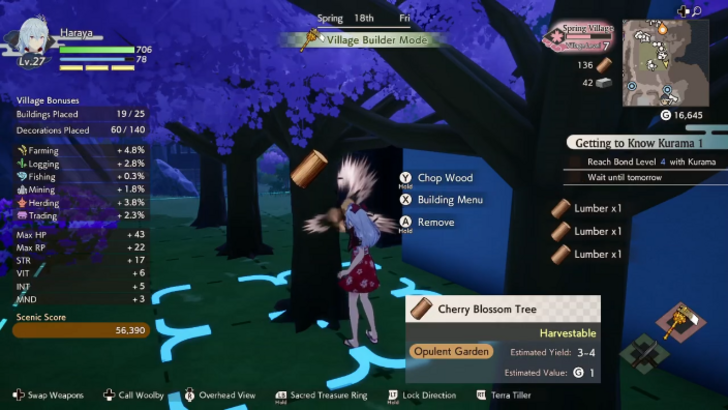
But manual labor is the core aspect of any Rune Factory title, and it has never felt smoother or more immediately rewarding. Gone are the early-game days of picking weeds and chopping stumps one swing at a time until you collapse from losing Rune Points (RP), the series’ equivalent of mana/stamina. Cleaning up your field is now a single button press away. You can remove rubble and wood instantly and with efficiency. It’s one of those changes that makes you wonder how you ever lived without it. You’re still rewarded for putting in the effort, but the busywork is trimmed down, which frees you up to engage more with the rest of the game’s many systems.
You still have the old tools: the hammer, the axe, the watering can. But this time, most of your basic farming activities don't cost RP. It might sound small, but it’s a huge quality-of-life improvement. No more collapsing in the dirt after only a couple of swings of your hoe. You’re free to go wild with your field layout, experiment with crop placement, and design the landscape however you like, without worrying if your character will keel over before the day ends.
This also addresses one of the series’ long-standing quirks of having to wait around in the early game because you’ve burned through all your RP for the day. Guardians of Azuma gives you so much to do, even early on, that you are almost always on the move. This is primarily due to two factors: not only are simple actions devoid of RP cost, but there’s also simply more variety in the tasks available to you, from developing your towns to gathering materials, questing, exploring, or just hanging out with the villagers. You’re constantly nudged forward without feeling pushed.
Of course, it'll be nearly impossible to manage all four villages solo. Thankfully, your villagers are more than happy to help. In previous games, only befriended monsters could help with your farm, often limited to repetitive tasks like watering or harvesting. Here, the villagers themselves can be hired to man stores, tend to crops, chop lumber from trees, and so on. It’s a mechanic that feels lifted from a sim management game, but again, it slides neatly into the flow of Rune Factory’s systems.
You’ll pay them daily wages (a fair trade), and in return, you get a bustling little community that feels alive and collectively helps each other out.
You May Also Like...

Villages Built on Bonds
But a village is only as strong as its people, and this is where Guardians of Azuma most confidently plants its flag: in its characters, their stories, and the quiet joys of simply spending time with them. Days fill up fast, and not just with chores. You’ll find yourself drawn to interactions that don’t necessarily push the story forward but still feel meaningful. Even now, over a hundred hours in, I’m nowhere near seeing everything in the game. Not because I lacked the opportunity, but because I couldn’t help but want to slow down, to see what everyone’s up to, to stop and hang out—even if hanging out with a single character eats up a sixth of an in-game hour (or sometimes the whole hour).
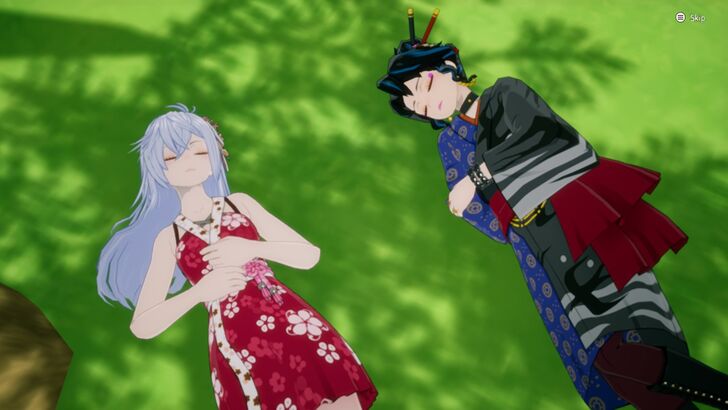
Speaking of, "hanging out" in Guardians of Azuma is deceptively simple. After conversing with a character, you're presented with options to spend more time with them. These choices span a spectrum, from everyday actions like small talks and gift-giving to more personal expressions such as holding hands or sharing a kiss. Although these actions consume in-game time—most lasting around 10 minutes, with grander gestures taking an entire hour—they often manifest as short non-verbal cutscenes. You might see your character and a villager sharing a quiet moment, enjoying a dango at Iroha's Teahouse, or even napping under a tree. But despite the absence of dialogue or branching paths, these quiet, shared moments can feel deeply intimate.
These interactions build Bonding Points, which in turn unlock more elaborate character quests down the line, filled with unique scenarios and revelations that deepen your understanding of each villager.
And yes, not all of these charming townsfolk are available for romance, in true Rune Factory tradition. The heartbreak of falling for a gorgeously designed NPC only to find out you can’t date them is ever-so real here. Tsubame, the traveling merchant from Summer Village, is, personally, one such example. It stings, sure, but the romanceable cast helps soften the blow.
Love in the Time of the Celestial Collapse

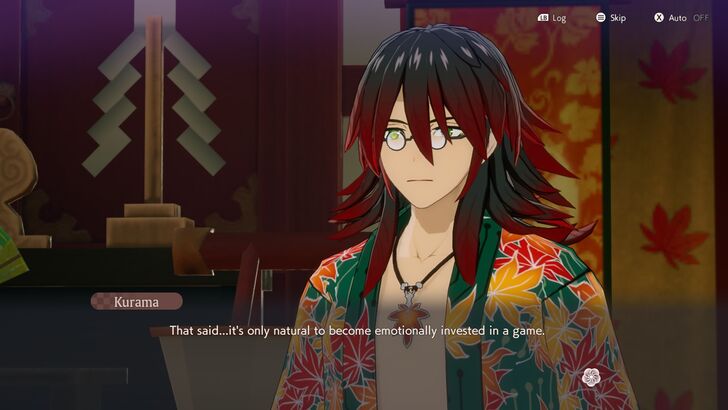
Fifteen characters are available to woo, and they are uniformly fantastic. Every bachelor and bachelorette is distinct, well-written, and thoughtfully animated, both in personality and in their relationships with the world around them. Kurama, for instance, has this platonic love-hate relationship with Kai. Iroha and Ulalaka help each other tend to the needs of Spring Village.
Their character events are among the game’s best writing, as it pulls you into slices of life that oscillate between lighthearted, poignant, and sometimes outright absurd. Choosing whom to marry becomes less about stats or aesthetics and more about who you actually click with. Sure, that's not unheard of in dating sims, but the way Guardians of Azuma manages to make these relationships feel organic, rather than a checklist of stats or gifts, is deeply appreciated.
Adding to this, Guardians of Azuma embraces inclusivity by allowing players to pursue same-sex relationships. Much like in Rune Factory 5, your chosen protagonist’s gender doesn’t restrict your romantic options, and you’re free to pursue any of the charming bachelors or bachelorettes.
And if you can’t choose? Well, the developers knew you couldn’t. Guardians of Azuma effectively wants you to romance them all. Later on in the game, you'll unlock Rewoven Fates. Here, you can step into a parallel world, a "what if" scenario where you can romance a different character without losing your original spouse, your children, your levels, or your items. It’s the kind of feature that feels like a wink from the developers, an acknowledgement that players have been pining for something like this for years.
You’re free to start your harem across the multiverse, and the game won’t judge you for it. In fact, it practically hands you the keys to them.
Taking Flight with Woolby
But what truly makes Rune Factory: Guardians of Azuma feel like an evolution of the series is how all its disparate systems are seamlessly stitched together. Echoing previous spin-offs that dared to experiment with gameplay mechanics—from Frontier's infamously obtuse Runey system to Tides of Destiny's rideable golem—Guardians of Azuma similarly embraces bold new mechanics. Aside from the Village Builder Mode, it also has you flying and visiting various sky islands, à la The Legend of Zelda: Skyward Sword.
A lot of this is thanks to your companion Woolby.
And allow me to take a moment to appreciate him, because rarely does a game get its mascot sidekick this right. He’s the kind of non-human companion that could have been grating (ahem, Ocarina of Time's Navi and Genshin Impact’s Paimon), but instead Woolby is both adorable and funny. I mean, he even transforms into a massive dragon you can ride to the many islands of Azuma—what more could you ask for?
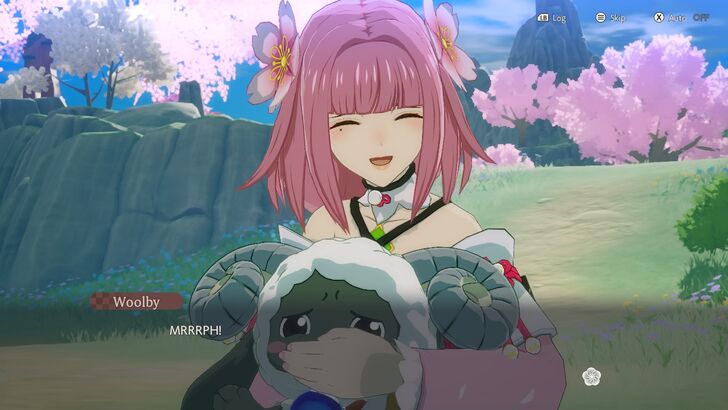
Flying isn’t just for show, either. Some areas hold precious loot or frog statues that grant new recipes, while others are tied to side quests that ping-pong you between villages and sky-island shrines.
The transition from one floating biome to the next is buttery smooth, and with new points of interest now marked on the minimap, it’s far easier to seek out whatever you’re hunting—be it a side-quest marker, a statue, or just a regular mining spot.
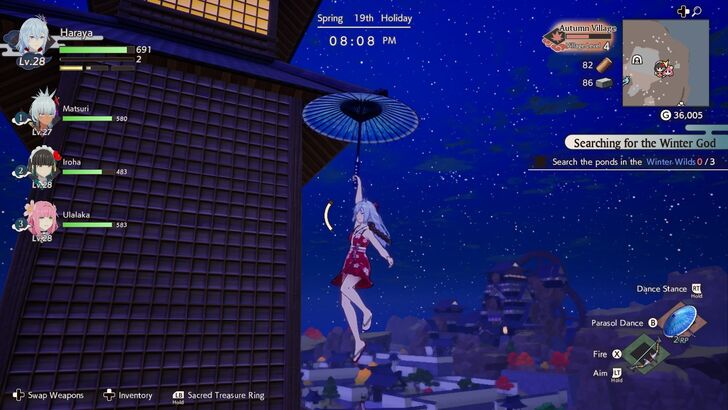
There will be some changes that might be divisive to fans of the series, though. The more open-ended nature of the world extends to the villages themselves, where buildings are often open-air or lack detailed interiors.
Outside of the bathhouse in Summer Village or a handful of character events, you’ll rarely enter buildings the traditional way. Personally, this is a non-issue. The game is great regardless, but it’s hard not to mourn the loss of such a feature.
Taking Your Sacred Treasures to Battle
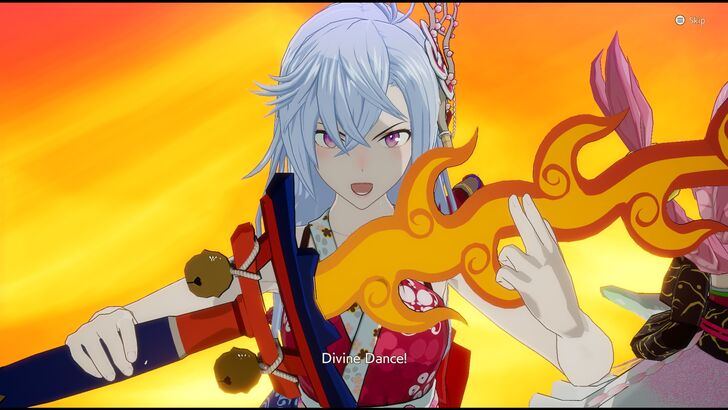
But exploration is only half the equation. Combat is back, faster, and more fluid than ever. The core combat loop will be familiar to anyone who has played a Rune Factory game before, and it's somewhat akin to other action RPGs: you lock on, dodge attacks, strike, unleash a special move, and so on. This time around, the game introduces long-range weapons like bows and talismans. But, really, the big change here lies in the Sacred Treasures—god-given tools that double as weapons and farming equipment.
The Sacred Parasol can water your crops and summon lightning to smite your enemies; the Sacred Drum accelerates plant growth and heals your party. There’s something fun about using the same tool to harvest a crop and, at the same time, torch a boss. Each Sacred Treasure consumes a certain amount of RP, and special attacks called Kamiwaza or Sacred Dances are fueled by Spirit Points you build up through battle. It’s such a Rune Factory idea, and it works better than it has any right to.
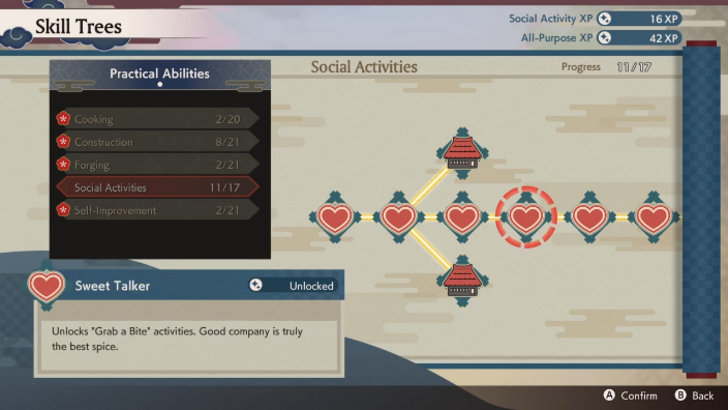
Progression is now also more streamlined thanks to new skill trees. While you still improve skills through repetition (e.g., use a sword to get XP for swords), you also earn All-Purpose XP daily. This XP can be spent in any skill tree, so you can invest in areas you haven't explored. For instance, if you've been using short swords but want to switch to bows, you can funnel your All-Purpose XP into it and begin with similar skill upgrades, rather than starting from scratch.
You May Also Like...

Is Rune Factory: Guardians of Azuma Worth It?
Worth Every Second, and Then All the Seconds After

If you’re wondering whether Rune Factory: Guardians of Azuma is worth your time and money, the answer is a confident yes. At its $59.99 base price, you’re getting a game that can easily stretch past a hundred hours, depending on how much time you lose to building your village, chasing relationships, or just exploring its world. Every in-game day is an invitation to discover something new, and that persistent sense of discovery is the game’s most powerful hook.
Though it is a shame that the bonding events for Cuilang and Pilika are locked behind paid DLC. This stings, especially since these aren't new characters introduced post-launch; they're already integrated into the main story. Tying their romance options to the Seasons of Love DLC feels artificial and a step backward for a series usually so generous with its heart. While not a deal-breaker—you can still enjoy the game even without their character events and see them in the villages—it's hard not to feel disappointed when a piece of such a lovingly crafted world is gated off, particularly something as intimate as who you can love.
Still, measured against the totality of the experience, Guardians of Azuma stands tall. It's probably my favorite entry in the series right now, even beating Rune Factory 4. It streamlines so many core mechanics that, as much as I adore the slow-life farming aspects of its predecessors, it'll be hard to go back. If this is the future of Rune Factory, then may it continue to grow—like a well-tended field—into something even more beautiful with time.
| Steam |
Switch |
Switch 2 |
|||
| $59.99 | $69.99 | ||||
|---|---|---|---|---|---|
Rune Factory: Guardians of Azuma FAQ
Who are Rune Factory: Guardians of Azuma’s Bachelors and Bachelorettes?
Guardians of Azuma has a diverse selection of marriage candidates, totaling 16 in all. This includes 14 characters available in the base game, plus two additional marriage options introduced with the Seasons of Love DLC. The candidates include:
⚫︎ Subaru: One of the main protagonists on a mission to save Azuma from the Blight.
⚫︎ Kaguya: One of the main protagonists who is on the same mission as Subaru.
⚫︎ Iroha: The owner of Iroha’s Teahouse in Spring Village.
⚫︎ Murasame: A samurai whose goal is to become the world’s greatest swordsman.
⚫︎ Hina: A returning character from Rune Factory 5 who claims to be an archeologist.
⚫︎ Mauro: A self-proclaimed treasure hunter from a foreign land.
⚫︎ Ulalaka: Azuma’s kind, gentle god of spring and merriment.
⚫︎ Matsuri: Azuma’s carefree god of summer and swords.
⚫︎ Kurama: Azuma’s calm, cool-headed god of autumn and wind.
⚫︎ Fubuki: Azuma’s warmhearted wolf god of winter and water.
⚫︎ Kanata: Azuma’s god of light and the heavens.
⚫︎ Kai: A leader of the oni feared for his incredible strength.
⚫︎ Clarice: Leader of a mysterious group who arrived in Azuma with an unknown goal.
⚫︎ Ikaruga: A mystic from the capital who leads the Jingasa Corps.
⚫︎ Pilika: From the Seasons of Love DLC. She is a hunter who hails from Azuma’s far north.
⚫︎ Cuilang: From the Seasons of Love DLC. He is a mechanical expert who lives in Autumn Village.
Game8 Reviews

You May Also Like...
Rune Factory: Guardians of Azuma Product Information
|
|
| Title | RUNE FACTORY: GUARDIANS OF AZUMA |
|---|---|
| Release Date | June 5, 2025 More Details |
| Developer | Marvelous Entertainment |
| Publisher | XSEED Games Marvelous USA, Inc. Marvelous Europe |
| Supported Platforms | PC (via Steam) Nintendo Switch 2 Nintendo Switch |
| Genre | RPG, Action, Adventure, Farming Simulator |
| Number of Players | Single-Player (1) |
| ESRB Rating | ESRB Teen |
| Official Website | Official Website for Rune Factory: Guardians of Azuma |