
Overview
What is Resident Evil Village?
Resident Evil Village is a survival horror that blends exploration, combat, and puzzle-solving as players journey through castles, a cursed village, and sinister factories save his kidnapped daughter, Rose.
Resident Evil Village features:
⚫︎ Gold Edition Includes Shadowa of Rose and The Mercenaries
⚫︎ Stable Performance for Switch 2
⚫︎ Classic Resident Evil Loop
⚫︎ Merchant System is Back
⚫︎ Distinct Areas
| Digital Storefronts | |
|---|---|
 Gold Edition Gold Edition |
Generation Pack |
| $49.99 | $89.99 |
Resident Evil Village Review: Almost Flawless Port
Returning to Village

Rejoice Resident Evil fans, both Resident Evil 7: Biohazard and Resident Evil 8 Village are now available for Switch 2 to coincide with Resident Evil Requiem’s launch. With the recent resurgence of Resident Evil, I believe this is an opportune time to return to these titles, as I have a unique perspective when it comes to Resident Evil Village.
Although I love everything about this series, I don’t regard Village (7 as well, to some extent) as the best in the franchise. The protagonist—Ethan Winters—isn’t as compelling as others in the past, and the story threw me in for a loop the first time I played it. However, the one thing that kept me glued to my console while playing Village was the actual gameplay. When Capcom gets the gameplay side of things right in the Resident Evil franchise, it’s almost impossible to turn off.
So even though it’s not my top game in the mainline titles, I still had to get the new Switch 2 port. This review will therefore look at things from a different angle. I’ll still talk about the game, of course, but the primary focus will be on how well Resident Evil Village plays and looks on the Switch 2. When it comes down to it, the quality of the graphics and the performance are going to influence whether or not players are going to buy a port or not.
Desperate Search for Rose
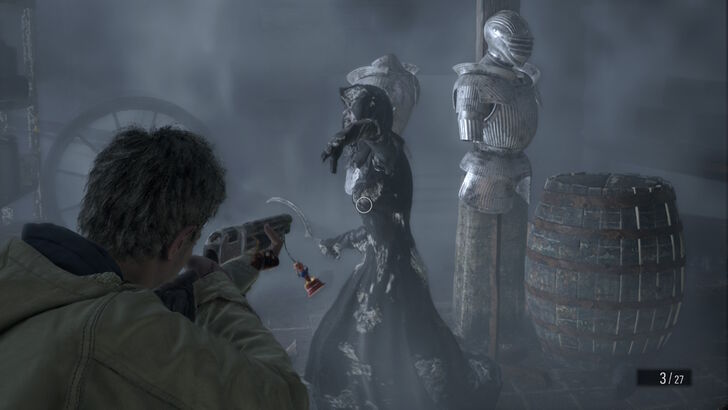
Ethan Winters is once again being put to the test, after finding himself stranded in an isolated village in Eastern Europe. The game does not specifically say where, but for its vampire imagery we can deduce it’s somewhere in Romania. The story kicks off with Ethan being transported when the vehicle he’s in gets attacked, leaving him stranded in the middle of a hostile and unfamiliar village. With no clear allies and danger lurking in the form of different mutated humans, he quickly pieces together that the massive castle looming over the settlement might be where his daughter has been taken.
And so Ethan starts his journey through the village, determined to find Rose Winters. There’s a lot more happening beneath the surface involving Chris Redfield and the Bioterrorism Security Assessment Alliance (BSAA), but if this is your first encounter with Village, don’t worry, I won’t talk about it since that’s a territory best left unspoiled.
Familiar Loop of Exploration, Locks, and Inevitable Confrontations
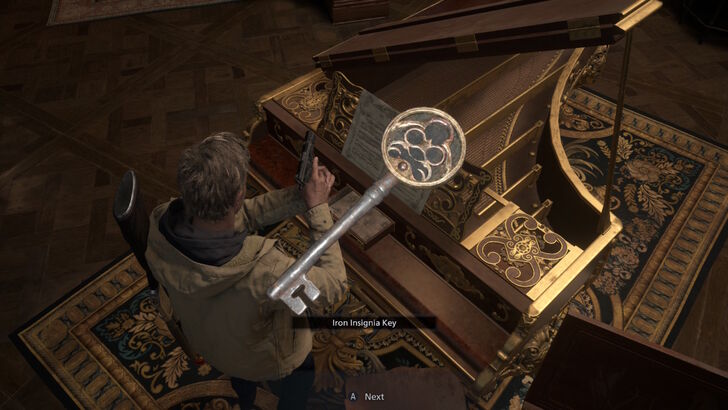
Village retains many of the same design principles that make earlier entries so memorable to its audience. Mainly, finding ways to progress through interconnected areas (backtracking) while exploring, looking for locked doors, puzzles, and pathways that you don't currently have access to. Progression looks like venturing forward just long enough to find a key item, tool, or clue that sends you circling back through places you’ve already been.
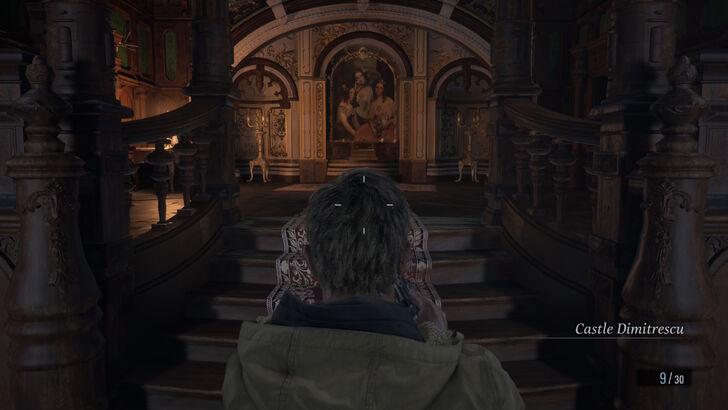
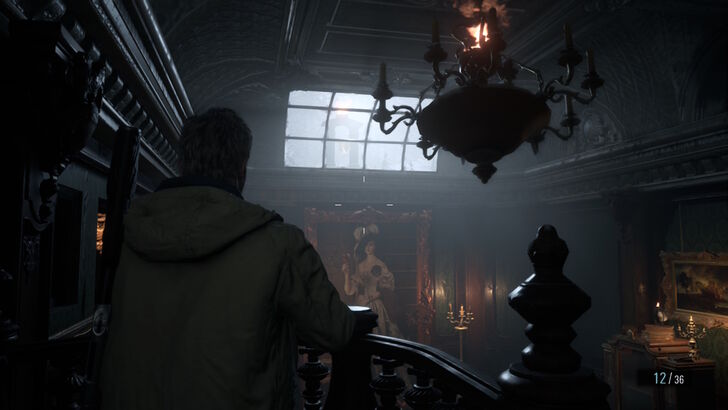
It is during these backtracking loops where the majority of tension gets created. On any return visit to an area such as a hallway in the Dimitrescu castle, you have the potential to discover something unexpected waiting for you (mostly, new enemies). While resources are abundant, enemies are aggressive, so unless you plan ahead whether you want to fight, run for your life, or conserve ammo, you'll be left feeling desperate during your gameplay.
Each arc of the game involves some time of confrontation, that is another hallmark of the series. Sometimes it involves surviving a specific number of enemy waves; other times it is an intense boss battle that caps off that specific arc.
Now that you have somewhat of an idea what Village is about, let’s talk about how it performs on the Switch 2.
Docked Mode is Better Than Handheld
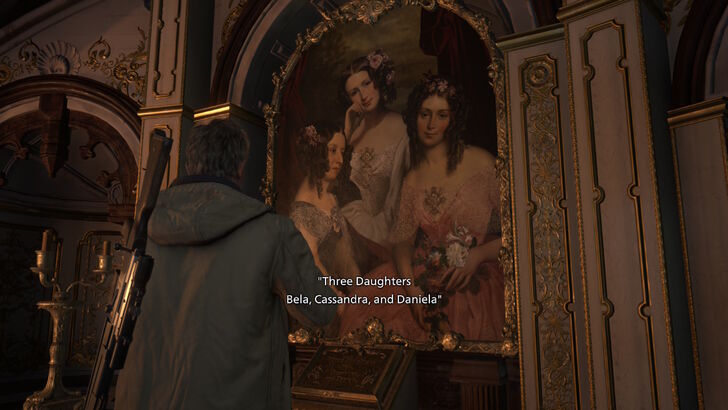
Having just experienced Requiem on Switch 2, I already knew that this little portable beast would be able to run high-performance games just fine, but seeing how smoothly Village ran only solidified my opinions.
When I played the game in Docked Mode, it was an incredibly smooth experience. The frame rate remained locked at 60 fps throughout my entire run and I never saw any significant drops whether I was exploring, fighting an enemy, or during one of the many action-packed sequences the game has to offer. When you consider that the visual effects in Village are so extensive (lighting, enemy encounters, and large open environments) it is truly remarkable to see a portable system operate efficiently with such visual density.
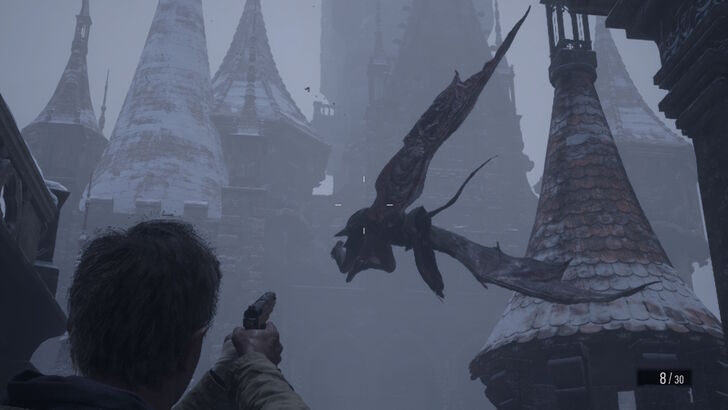
The only area I saw a little evidence of weakness from the Switch 2 was in Handheld mode. Although it was still completely playable, there were moments in larger open spaces where I saw slight stutters. The most noticeable one occurred while fighting the flying Samca on the roof of the Castle Dimitrescu.
To be clear though, these weren’t massive performance drops, just brief stutters that reminded me a portable gaming device still isn’t as powerful as consoles. It’s a small thing in the grand scheme of the experience, but if you’re someone who primarily plays portable, it’s definitely worth knowing about.
A Modern Take Where Resident Evil 4 is Reborn
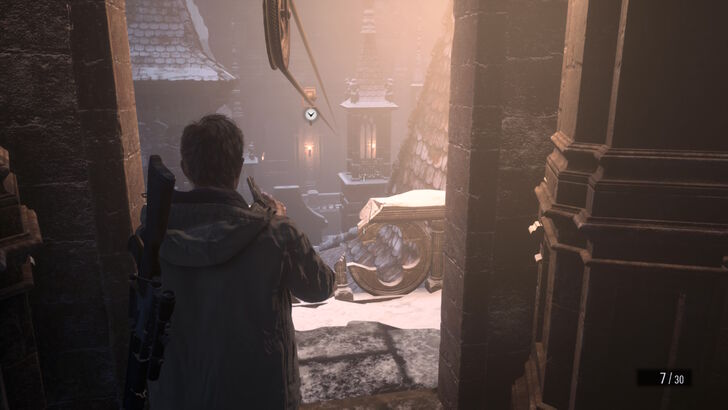
Before Requiem came into the picture, playing Resident Evil Village always felt like a renaissance moment for the series. It took the first-person, survival framework introduced in 7 and blended it with design ideas that fans will immediately recognize from 4. Even now, revisiting it on the Nintendo Switch 2, that mix still works incredibly well.
The biggest reason for why it's so great is because the loop constantly pushes you through a cycle of exploring new areas, uncovering locked routes, gathering resources, and eventually facing whatever monstrosity is guarding your next objective. It's that classic Resident Evil loop which makes its players triple-check areas to see if you missed the ammo inside a drawer or even to unlock a puzzle for a treasure that doesn't progress the story forward. Each time I run this game, I’m spending longer than I should (especially in Lady Dimitrescu’s castle) to make sure I haven’t forgotten anything. To make sure that I haven’t left any crate in the mazelike dungeons, because while you’re forced to navigate your way out, you’re also spending half the time taking out Lyras.
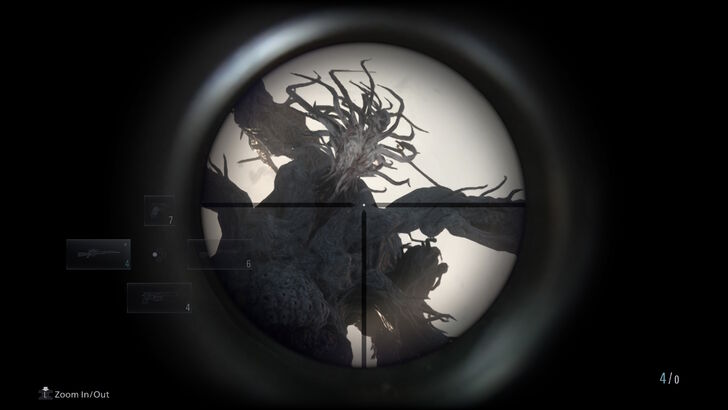
Then there’s the return of the merchant, a staple many fans like myself were happy to see. Much like in Resident Evil 4, stumbling across the Duke becomes a moment of relief. You get a chance to upgrade weapons, sell valuables, and rethink your strategy before the next stretch of danger. It adds a layer of preparation that breaks up the tension in a satisfying way, giving players just enough breathing room to plan their next move, while listening to the duke say lines like "What're ya buyin? Haha, just something an old friend of mine used to say.", a nod to 4’s merchant.
Inventory management also plays a much bigger role here than it did in 7. While the previous game technically used a grid system, the spaces were smaller and the number of items you carried was more limited. Village leans much more into the briefcase-style juggling act that 4 made famous. Between weapons, healing items, and ammunition, you’re constantly rearranging things to squeeze in just one more pickup. The organization becomes therapeutic in a way, a much needed break from the survival experience.
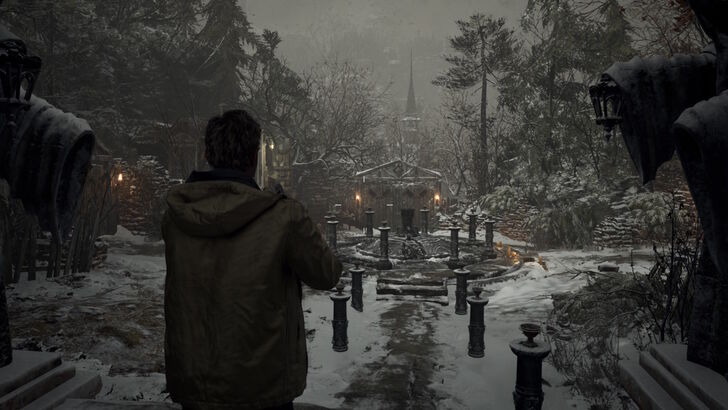
And of course, there’s the atmosphere. The village itself carries strong echoes of 4’s rural setting. Isolated communities, unsettling traditions, and villagers who follow a religious order that seems more like a cult. But like many things in Resident Evil, the supernatural vibe is really just a thin veil over bioweapon experimentation.
All of these systems come together to create a loop that’s easy to fall into: explore, survive, upgrade, and push deeper. On the Switch 2, that loop is satisfying because the performance holds steady enough. When you’re lining up a shot or desperately trying to survive the next ambush, the game keeps up with you. That consistency is exactly what a survival horror game like Village needs to keep players locked in even when on the go.
Story Leans on Atmosphere and Vibes
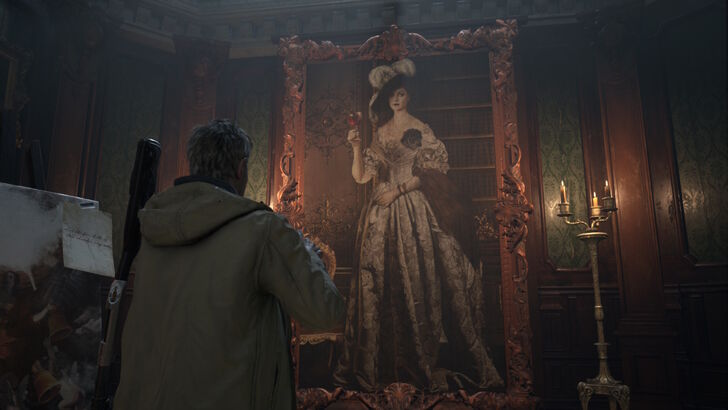
Moving on to the story, Village is definitely one of the stranger entries in the franchise. Compared to many other Resident Evil games, the narrative feels like it’s running more on vibes than structure. When it first released, it very much felt like Capcom experimenting with something new.
The narrative that keeps Ethan moving is structured around 4 different villains, each with their own specific areas. First Castle Dimitrescu, then House Beneviento, followed by Moreau's Reservoir and eventually Heisenberg’s factory. Each has its own tone and style. Resident Evil has always experimented with shifting settings—like the mansion in Resident Evil eventually revealing the laboratory hidden beneath it—but those changes usually felt like a natural escalation of the same story. In Village, the progression feels less cohesive, as if each area is its own horror vignette loosely connected by Ethan’s search through the village rather than one steadily building narrative.
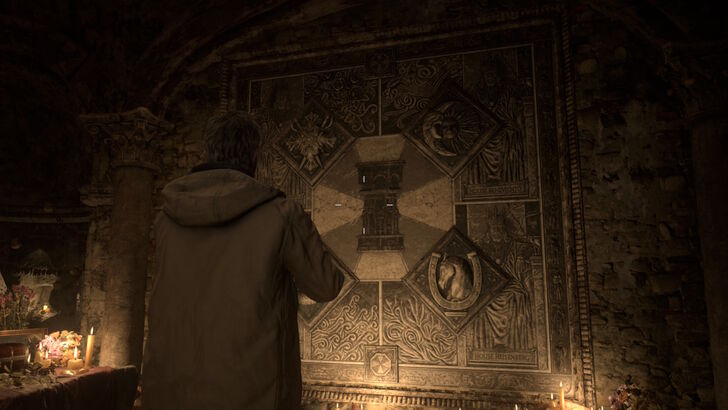
In hindsight (especially looking at the wider franchise today) these plot seeds actually help contextualize the larger Resident Evil universe. But when playing through Village for the first time, those heavy supernatural elements are like the series stepping into unfamiliar territory on fawn legs. For a franchise long defined by bioweapons and corporate conspiracies, the initial presentation almost makes you wonder if Resident Evil is becoming something else entirely.
Then there’s Ethan Winters himself. This isn’t meant to start an Ethan hate train (please calm down) but even back when he debuted in 7, he was always a bit harder to connect with compared to the franchise’s classic leads. Characters like Chris Redfield or Leon Kennedy come with strong personalities and histories. Etan, on the other hand, was bland and flat, and had nothing else going on for him aside from "I have to find my wife". I understand that this is because Ethan was clearly designed to be closer to a blank slate to function almost like a self-insert, a normal person reacting to impossible circumstances.
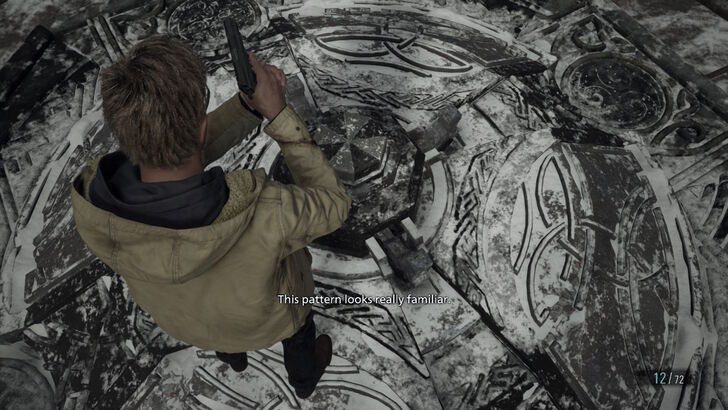
Village does try to give him more emotional grounding, outside of his determination to save Rose Winters. But even with that added development, there were moments where I still felt strangely detached from him.
It's bad enough that I found myself agreeing more with Lady Dimitrescu, during the castle arc. Eventually, she'll start hunting Ethan after we murder her daughters, and while doing so, she shouts these questions about how he can claim to be desperately searching for his daughter after he has just killed hers. And even though I killed her daughters, because I was controlling Ethan, I was agreeing with her. Ethan is so detached as a protagonist, that the game got me agreeing with a villain that's terrorizing an entire village. Maybe it's because of how her she’s her fury was shown. Even in death she is still protective of her daughters in her own twisted way.
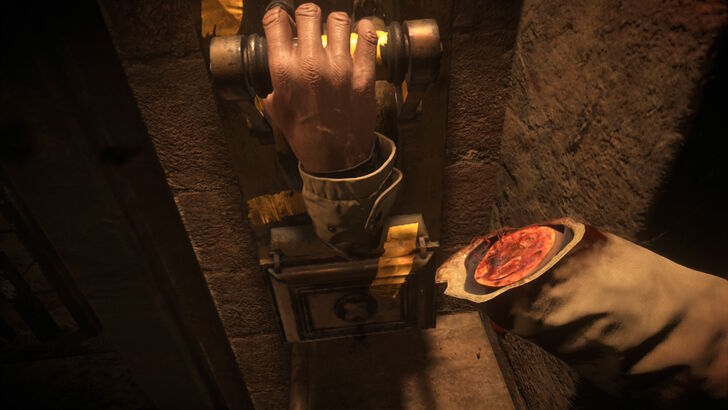
Again, I know that Etan is going through the same emotional stakes, but his characterization just didn't land. To be clear, the story isn’t bad and neither is Ethan. It’s just that when you step back and look at the entire Resident Evil catalog, Village’s narrative ends up feeling more like an experimental chapter than one of the franchise’s strongest storylines.
Is Resident Evil Village Worth It?
Yes, It's Still a Strong Gameplay Experience That Holds Up on Switch 2

Even years after its original release, Resident Evil Village is still a worthwhile pickup, and arguably even more so now that it has landed on the Switch 2. This version arrives as the Gold Edition, priced at $49.99, and it comes with additional content like The Mercenaries (arcade mode where you need to survive hordes of enemies) and the story DLC Shadows of Rose.
For those looking to dive even deeper into Resident Evil, there’s also the Generation Pack, a bundle priced at $89.99 that includes Resident Evil 7: Biohazard, Village, and Resident Evil Requiem (Gold Editions of both 7 and 8). If you’ve been wanting to catch up on Ethan’s storyline while getting ready to dive into Requiem, it’s easily the best value.
While Village’s story may feel disjointed compared to other entries in the series, the gameplay remains incredibly engaging. The exploration loop, the return of the merchant, the satisfying inventory management, and the constant push between survival and preparation all come together to create a Resident Evil experience that’s easy to get lost in. So even if the narrative doesn’t land for everyone, the core of what makes Resident Evil fun is still very much here.
And on Switch 2, where the game holds a stable performance in docked mode and remains largely smooth in handheld, the experience is a full-fledged way to play Village rather than a compromised port. The gunplay is responsive, the tense encounters keep their pacing, and the larger environments never feel like they’re pushing the hardware past its limits. The tension, the exploration, and the survival mechanics all land the way they’re supposed to, making this version not just portable, but genuinely reliable for players jumping into Resident Evil Village for the first time or revisiting it again.
Resident Evil Village FAQ
Why Was Rose Kidnapped in Resident Evil Village?
Rose was kidnapped by Mother Miranda because she has a unique connection to the Cadou, a parasite that mutated from The Mold.
Who is Mother Miranda?
Mother Miranda is the primary antagonist of Village. She's a scientist but also a cult leader who spent decades perfecting immortality. Her research is what inspired Oswell Spencer to start Umbrella Corporation with James Marcus and Edward Ashford.
Game8 Reviews

You may also like...
 |
Resident Evil Requiem (RE9) Review Action, Horror |
 |
Resident Evil Outbreak Review Survival-Horror |
 |
Resident Evil 4 Remake Review Survival Horror |
 |
How Every Resident Evil Game Connects Back to Umbrella Corporation |