


| Ratatan | ||||
|---|---|---|---|---|
| Release Date | Gameplay & Story | Pre-Order & DLC | Demo Review | Early Access Review |
Ratatan sees players drum to the beat of their own drum! Read on to learn everything we know, our review of the demo, and more.
← Return to Ratatan main article
Everything We Know About Ratatan
Ratatan Plot

Players step into the shoes of a Ratatan, creatures known for their affinity for rhythm and their ability to harness Melodium, a power derived from music. These beings make use of this to direct and command armies of Cobun. Their objective involves a journey across the world of Redo, with the ultimate goal of reaching The Everafter, a place believed to be the residence of The Goddess.
Their journey is not without peril, however. During this expedition, they will face hostile pirates who pose a threat to the region’s stability. Success in these encounters hinges on the Ratatans’ ability to use music to command their army to victory.
Ratatan Gameplay
Ratatan’s development is spearheaded by key figures from the team behind its spiritual predecessor, Patapon. As such, the game exhibits parallels with the original strategy rhythm concept. While maintaining the core mechanics, it distinguishes itself from being merely Patapon 4. Ratatan not only features a more vibrant art style, but it also adds more roguelite mechanics.
Players will command their armies by performing command songs, which requires the input of seven buttons, an increase from Patapon’s four, in precise rhythmic sequences. These commands direct troops to march, defend, or attack. Errors in timing will result in either performing the wrong move or not making a command at all. Conversely, consistent rhythmic accuracy will trigger Fever Mode, and subsequently, Super Fever Mode, both of which amplify the army’s capabilities.
Players can assume the role of diverse Ratatan characters and lead various Cobun troop types. Each Ratatan and Cobun unit possesses distinct traits, specializations, and vulnerabilities. Moreover, Ratatan also features procedurally-generated levels, with randomized power-ups and over 100 unique rewards per run. Additionally, Ratatan supports up to four-player online co-op.
Ratatan Release Date
Release Date TBA

Ratatan's Kickstarter campaign stated an April 2025 delivery date. However, that window has now passed, and Ratata Arts has clarified on an April 2025 Kickstarter update that it was merely "an estimate of when we expected to deliver rewards to our backers." The developers have not yet announced an official launch date or window, though the game is planned for release on PC, PlayStation 5, PlayStation 4, Nintendo Switch, and Xbox Series X|S.
The game’s demo did, however, launch on June 5, 2025, at 8:00 A.M. ET / 5:00 A.M. PT on Steam.
Ratatan Review (Demo)
Not Patapon 4, But It Might As Well Be
It starts with a single beat. Then another. A few taps of the drum later, a chorus of Cobuns marches to your command, cheeks puffed from whistling war cries. The screen shakes, and just like that, the demo for Ratatan whisks you away to something that feels instinctively familiar, yet still somehow new. Ratatan isn’t Patapon 4 by name, but it might as well be. Ratatan arrives with the pedigree of a spiritual successor, backed by a creative force with a deeply beloved legacy, and it absolutely shows.
To understand why Ratatan carries an aura of anticipation, you need to go back—way back—to the PSP era, where Patapon made its mark as one of the most inventive titles to grace Sony’s handheld. It was a rhythm game unlike any other, where players used a four-beat chant to command a tribal army of eyeball-shaped warriors. I still remember playing Patapon 2 in the backseat of a car during a road trip, earbuds in, fully lost in the loop of attack and retreat. I broke a PSP (much to the dismay of my parents and older brother) trying to finish a boss in Patapon 3 that took me almost a week of grinding to beat.

But as the handheld era waned and Japan Studio shuttered, the series went quiet. That is, until BitSummit 2023, when the original creator of Patapon, Hiroyuki Kotani, resurfaced with a new project. Teased with a strikingly familiar aesthetic and a teaser full of pulsing drums, Ratatan was announced via Kickstarter—and the response was explosive. The campaign smashed its funding goals in mere hours, pulling in over a million dollars in pledges and drawing attention from fans, developers, and curious newcomers alike. It revived hope for the series that had lain dormant for far too long.
Yet, it’s clear that Ratatan marches to the beat of its own drum. Even in its rather short demo form, there’s a palpable energy that feels like it’s recreating that old magic that Patapon had, but remixing it into something more wilder. When you’re locked in, though, there’s nothing quite like it. The world melts away, and all that remains is the beat, the chant, the march forward.
Your Army Screams “Murder!”
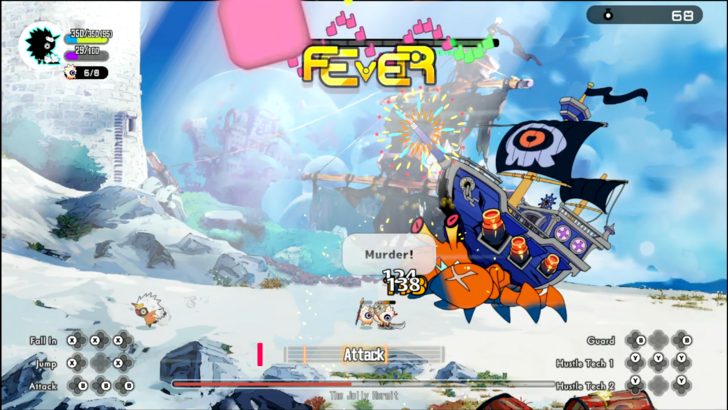
If you’re hoping for some epic cinematic or a deep dive into the game’s lore, you might want to adjust your expectations. This demo, much like its spiritual successor, doesn’t really bother with all that. Instead, it just slaps a percussive beat on you and points you in a direction, essentially telling you to go forth and create music. True to its rhythm-action roots, the narrative here is pretty much barebones. The game wisely chooses to throw you straight into the thick of it—pure, unadulterated joy of rhythmic combat and command—rather than bogging you down with tons of backstory or the geopolitical issues, if there are any, of its world.
You are, however, given a few key truths to start your adventure. First off, you control creatures known as Ratatan, who wield the power of song and have a quirky array of instruments, collectively known as Melodiums. These have a kind of musical essence that allows you to control your army of Cobuns, which are little gremlin-like critters who follow your every beat and chant, and they do so with the manic energy of children high on sugar. And if their adorable squeals of "Murder!" every few seconds are anything to go by, these guys are fiercely devoted, surprisingly vocal, and ready to march, defend, attack, and, as the demo makes hilariously clear, kill the second you hit the right beat.
Your mission is simple and, frankly, unsettlingly humorous in its candor. You move from one level to the next, through beautifully illustrated landscapes, and engage in an unabashed campaign of extermination. The ultimate goal, as cheerfully articulated by your little bloodthirsty Cobuns is to reach The Everafter, which is apparently the residence of The Goddess herself.
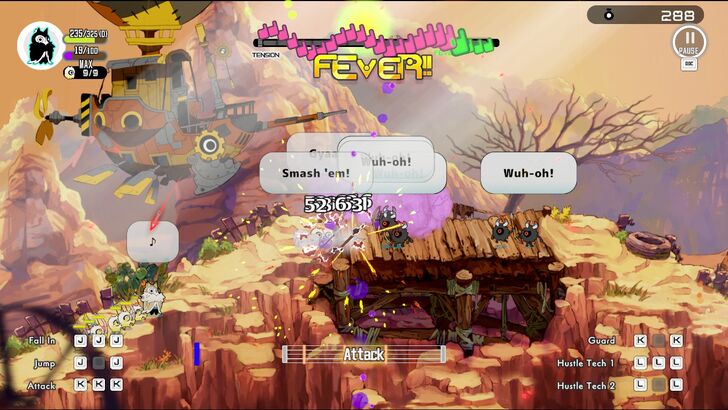
This whole setup gives Ratatan a strong vibe that reminds you of its predecessor, Patapon. That game had players control the Patapon tribe in their journey to reach Earthend and gaze upon whatever "IT" is. Ratatan isn’t much different from this blueprint. Neither of these games, to their immense credit, ever felt the need to bore you with an overly complex story. They smartly understood that the narrative framework is just that—a frame. It’s there to hold up the supremely satisfying gameplay loop.
Essentially, you’re here, you’ve got the awesome power of Melodium, you’re commanding an ever-growing army of super cute, yet enthusiastically murderous, Cobun, and you are, without a doubt, murdering pretty much everything that gets in your path in the most adorable way.
Get Into the Groove
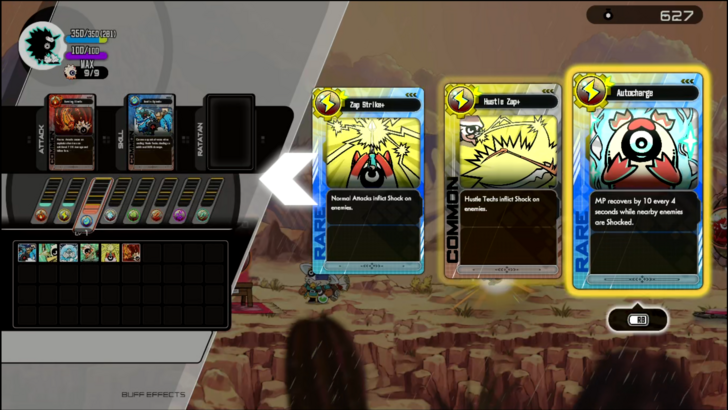
From the very first battle chant, Ratatan’s gameplay snaps into rhythm with a kind of gleeful precision that makes it hard not to grin. At its core, this is a game about issuing commands to your army of Cobuns to the beat of a song's 4/4 time signature, but the deeper you go, the more layers start to reveal themselves, as it sprinkles some roguelike mechanics that genuinely elevate the experience. It’s not Hades deep—yet, it is a demo after all—but the foundation here is solid enough, and there’s a distinct joy in seeing your little murder-squad grow deadlier with each passing beat.
I'll admit, when I first learned Ratatan was a roguelike, I found it hard to believe. I couldn't imagine a Patapon-style game working as one, but to my surprise, it works really well. Each world or level is divided into different sections. After completing a section, you're presented with a choice of rewards for the next stage. These can range from Cobun upgrades, buffs like shields or health boosts, or materials for crafting weapons.
It's a smart structure that keeps things moving quickly, as you constantly weigh risk versus reward. For instance, do you choose a barrier to survive longer in a future boss fight, or do you take on a miniboss for crafting material you can use later on? You're never entirely sure what the next encounter might throw at you. Failure resets the run, but the more you play, the more you'll get into its rhythm and understand its flow.
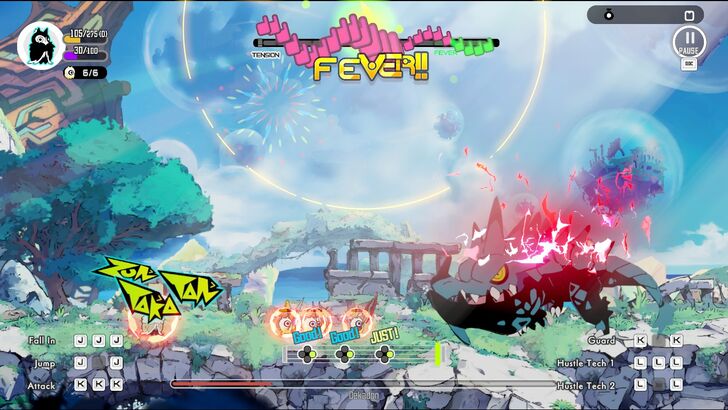
Now, if you’ve played Patapon, you’ll feel right at home with the general rhythm-command structure. Instead of four drums—PATA, PON, CHAKA, DON—Ratatan uses three: RATTATTA, ZUNTAKA, YAHOI. These correspond to three face buttons, and you tap three of them in repeating four-beat bars to issue commands to your Cobuns.
Where Patapon could squeeze nine command combinations out of its four drums, Ratatan’s demo only includes six. That doesn’t sound like a lot, and truth be told, it isn’t, but what’s here is functional, even if it’s a little less intuitive. For example, there’s no simple drum combo to make your Cobuns retreat to safety. Instead, you’ll have to physically move your Ratatan to the edge of the screen and issue a "Rally" command, which cues the Cobuns to follow. It works, but it’s clunkier than just having a dedicated "run away" beat.
There’s also no cure-all chant like Patapon’s PATA PON DON CHAKA. If your Cobuns are poisoned, burning, or stunned, well—tough luck. On the upside, the game does introduce two "Hustle" commands, which are essentially powerful, MP-consuming special attacks that your Cobuns can unleash depending on their weapon type. They’re a welcome addition, though it’s hard not to hope for more button combinations in the full release.
Keeping Time and Staying Alive
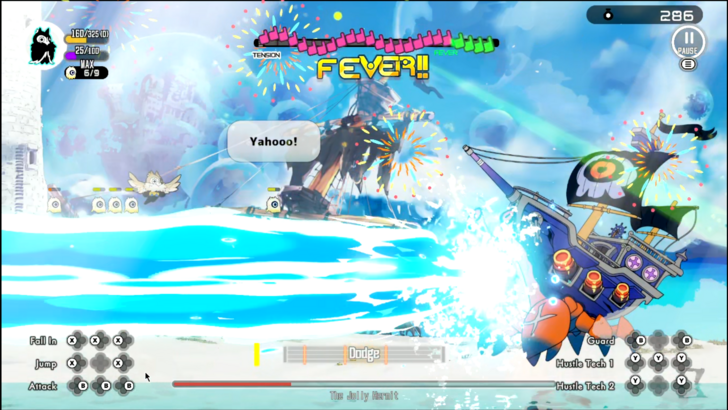
One improvement over its predecessor that I appreciate very much is how Ratatan handles timing. Where Patapon forces you to listen and memorize the rhythm entirely by ear, Ratatan gives you a visual aid. There is always an onscreen staff with a vertical line that moves across it like a metronome. It's clean and immensely helpful. You just time your button inputs to the exact moment that line crosses the beat markers. It's a small change that keeps you in sync without making you guess, which is especially nice during more hectic moments.
On top of that, available commands are always displayed on screen. The six button combinations are easy to learn, but a little helping hand is much appreciated.
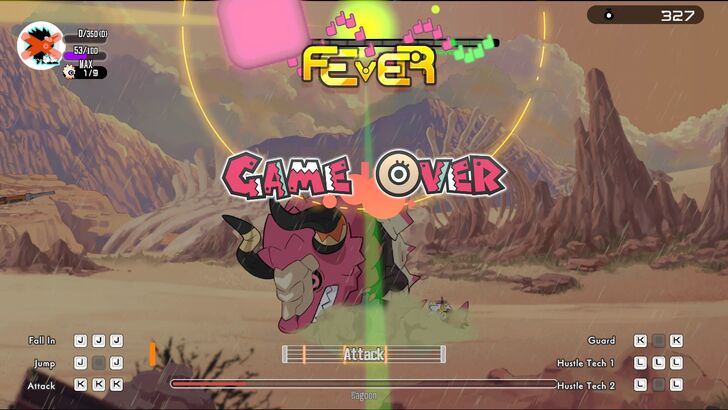
However, and I know this borders on "git gud" territory, the game does have a bit of a learning curve, particularly when it comes to boss encounters. If you’re new to the game or, like me, a lot rusty, you’ll often find yourself needing to anticipate the boss's movements and attacks before they even happen. Why? Because if that helpful vertical line reaches the beat on the staff and you haven't committed to a button combination, your Cobuns are just going to stand there, looking adorable but utterly useless, waiting for your next order.
Thankfully, your Cobuns are functionally immortal. Even if they get squashed, sliced, set on fire, pierced to death, they’ll respawn after a short delay. You, the Ratatan, are not so lucky. If your character goes down, that’s it. Run over. This means that not only doyou have to constantly juggle your Cobuns’ actions through beat combinations, but you also have to be acutely aware of your own positioning and ensure that you don’t take too much damage before a boss fight. It’s frantic in all the right ways.
A Taste of What’s to Come
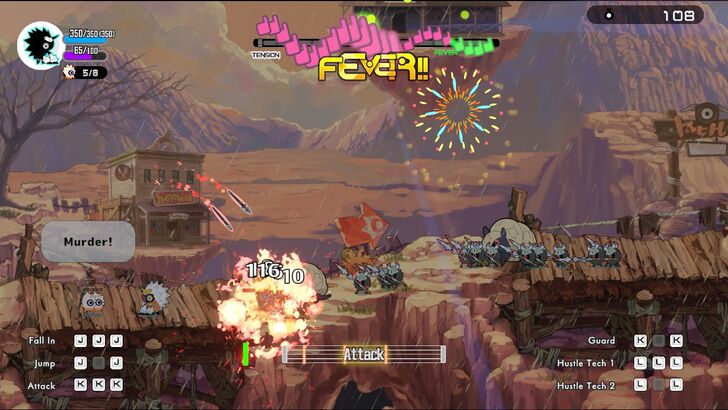
The demo, which clocks in at about two hours or so, lets players experience the introductory scene and tutorial, followed by two early-game worlds: Pirates of Parabbean and Bad Day on Yeehawler Mountain. Each area has its own visual flair, enemy types, and musical style, and while the stages themselves are fairly linear, the challenge ramps up quickly if you’re not paying attention to your command timing.
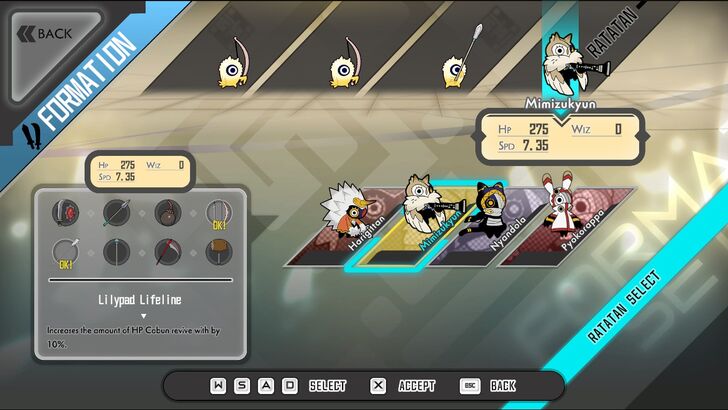
The Ratata demo currently features four Ratatans: Harigitta, Nyandola, Pyokorappa, and Mimizukkyun. The Ratata Arts Kickstarter, however, promises a much larger roster for the full game, teasing Kamonelo, Mashuma, Buttonda, and Kerroronpa, with more reveals to come.
Each Ratatan possesses a unique passive skill and a distinct chant voice. Youhei Azakami's lower register for Mimizukkyun provides a strong contrast to Haruna Yuzuki's aptly cat-like voice for Nyandola.
But, perhaps more crucially, your Ratatan choice also dictates the weapon type of your accompanying Cobuns. These weapon types directly impact your horde's battle behavior, positioning, and their effectiveness against specific enemies. For example, Mimizukkyun's Cobuns use bows and lances, while Harigitta's are armed with swords, and spears.
The Grind Got Easier, At Least
It wouldn’t be a proper spiritual successor to Patapon if Ratatan didn’t come with a little bit of grinding. And sure enough, the demo makes it clear that, despite the roguelike loop, you’re still going to be running through the same battles again and again in pursuit of something, like that one drop you swear the game knows you need and just refuses to give you. If that sounds familiar to anyone who has played Patapon before, it should.
Patapon veterans will remember the grind all too well. That game practically built its post-tutorial loop on fighting the same missions over and over to coax rare materials or gear drops out of stingy enemies and treasure chests. A boss would drop different loot depending on how quickly you dispatched it, and many of the most valuable resources were locked behind opaque conditions or frustrating RNG.
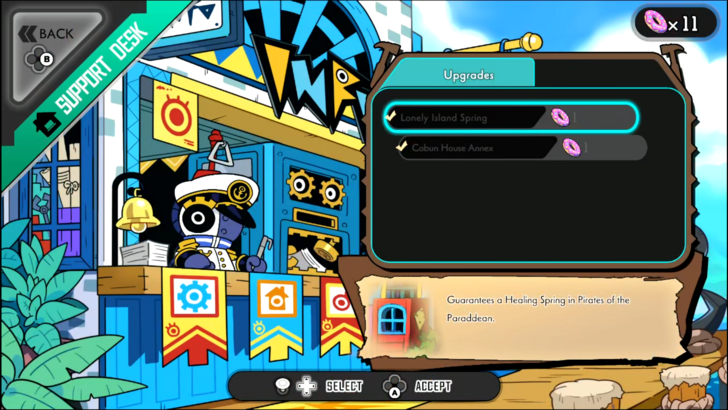
Ratatan makes the grind feel less daunting by breaking it down into much more manageable objectives. In typical roguelike fashion, each run showers you with incremental currencies and unlocks. One of these is Donuts. These are used to unlock features at the Support Desk, which functions like your metaprogression hub. Spend enough of them, and you’ll start unlocking useful upgrades, like the ability to make Healing Springs appear during runs or increase your max Cobun count. None of these feel overpowered, but they stack up and make your runs feel easier each time.
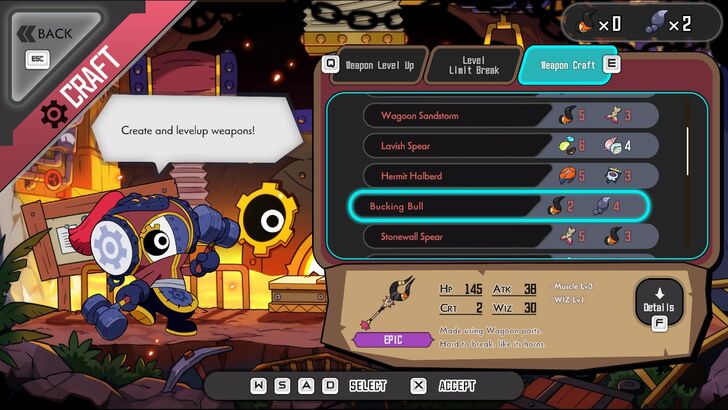
The other major system where grinding raises its head is weapon crafting. Yes, much like Patapon’s evolving gear tree, Ratatan lets you forge new weapons, strengthen them, and even increase their level caps. Unlike Patapon, though, it’s a little more player-friendly. You’ll still need to collect special materials that drop randomly from certain enemies, but the randomness feels less cruel. It’s not like Patapon’s cursed "open this chest and pray it’s not garbage" setup. Here, there’s a clearer sense of what drops where, and upgrades feel within reach without the game wasting hours of your time.
Granted, you’ll still have to grind a bit, but at least you won’t be spending hours upon hours for loot that you have little use for.
The Loneliest Ratatan in the World
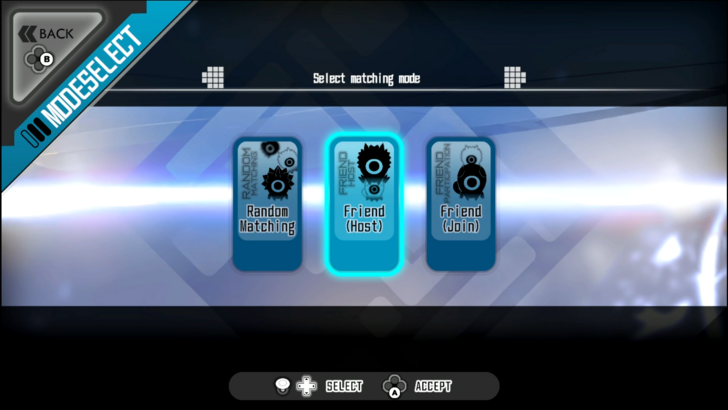
The demo also comes with a multiplayer feature, where you and three other players can team up and play together. In the name of this review, I tried—really, truly—to get some friends on board. But alas, timing and scheduling weren’t on my side, and my only option was to wade into the lonely waters of random matchmaking. I gave it a few attempts; I sat there for a while. Unfortunately, I wasn’t able to find anyone to link up with during my sessions.
Still, I did poke at the multiplayer interface enough to appreciate what’s on offer. If you do manage to assemble a full party, each of you can take control of your own Ratatan and lead your own Cobun battalions. There’s even a thoughtful revive mechanic built in—if one of you falls in battle, a teammate can sacrifice half of their own HP to bring the downed player back into the fray. I wish I could have experienced it for myself; I want to hear all four Ratatans chanting for their lives.
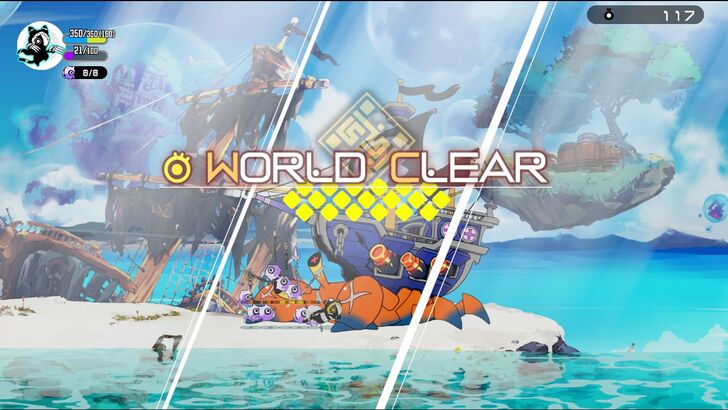
Still, even without that full multiplayer experience, the demo left me with a firm sense of what Ratatan is shaping up to be. It’s undeniably rooted in the cadence of Patapon, but it’s also not afraid to strike out on its own. The moment-to-moment gameplay is already compelling, and though the beat mechanics still have some room to grow—especially when it comes to command variety and intuitiveness—it’s a game that’s clearly bursting with potential.
So here’s hoping. Hoping that the full game shows more of its system’s depth. I’ll be watching this one closely, waiting for that full release, and hopefully next time I won’t be jamming to the beat alone.
Game8 Reviews

Ratatan Similar Games

|
Rift of the NecroDancer Music |

|
Astro Bot Platformer, Adventure |

|
Yasha: Legends of the Demon Blade Roguelite, Action-Adventure |

|
The Plucky Squire Action, Adventure, Platformer |
Ratatan Product Information
|
|
| Title | RATATAN |
|---|---|
| Release Date | TBA More Details |
| Developer | Tokyo Virtual Theory Ratata Arts |
| Publisher | Game Source Entertainment |
| Supported Platforms | PC (via Steam) PlayStation 5 PlayStation 4 Nintendo Switch Xbox Series X|S |
| Genre | Rhythm, Action, Roguelike |
| Number of Players | Online Co-Op (1-4 Players) |
| ESRB Rating | ESRB RP |
| Official Website | Official Website for Ratatan |