
| Shadow Labyrinth | |||
|---|---|---|---|
| Release Date | Gameplay & Story | Pre-Order & DLC | Review |
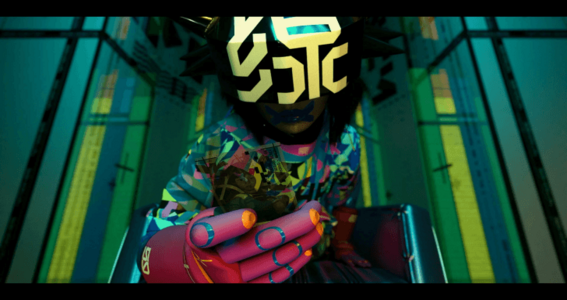
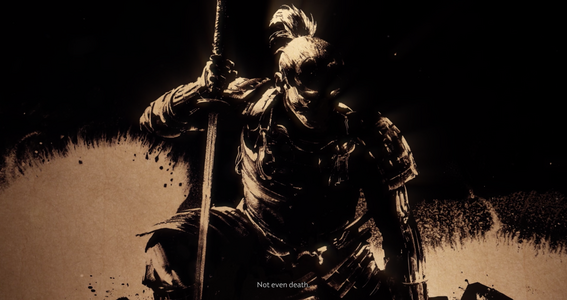
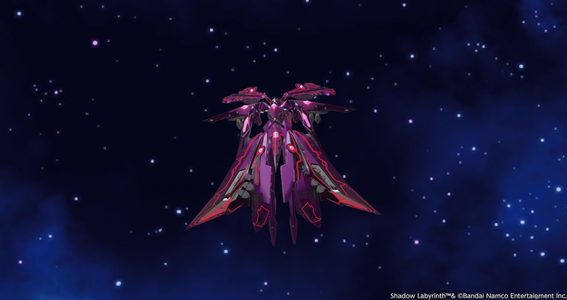
Play as the mysterious Swordsman and a unique reimagining of Pac-Man named PUCK, as you awaken on a strange planet and fight to uncover its secrets in Shadow Labyrinth. Read our review to see what it did well, what it didn't do well, and if it's worth buying.
Shadow Labyrinth Review Overview
What is Shadow Labyrinth?
Shadow Labyrinth, a bold 2D action-platformer from Bandai Namco Studios released on July 18, 2025 for Nintendo Switch, PlayStation 5, Xbox Series X|S, and PC (Steam).
Marking a drastic departure from the classic Pac-Man formula, but still emulating its basic idea, Shadow Labyrinth thrusts players into a high-stakes adventure across a planet determined to consume them. It’s a brutal game of eat or be eaten, and the Chosen is starving for survival. Get ready to step into the shadows and face the ultimate challenge in Shadow Labyrinth!
Shadow Labyrinth features:
⚫︎ Metroidvania
⚫︎ Adventure
⚫︎ Action
⚫︎ Platformer
⚫︎ 2D
⚫︎ Reimagining
⚫︎ Sci-fi
For more gameplay details, read everything we know about Shadow Labyrinth's gameplay and story.
 Steam Steam |
 PlayStation PlayStation |
 Xbox Xbox |
 Switch Switch |
||||
| Price | $29.99 | ||||||
|---|---|---|---|---|---|---|---|
Shadow Labyrinth Pros & Cons
| Pros | Cons |
|---|---|
 Huge Map and Unique Level Designs Pac-Man Gameplay is the Best Part Challenging Boss Battles Huge Map and Unique Level Designs Pac-Man Gameplay is the Best Part Challenging Boss Battles |
A Convoluted and Unsatisfying Narrative Bland Art Direction Clunky Platforming and Hit Boxes |
Shadow Labyrinth Overall Score - 56/100
Shadow Labyrinth is a fun concept on paper—Pac-Man meets Metroidvania—and it occasionally delivers with some clever ideas. But overall, it fumbles the execution. Clunky platforming, bland art direction, awkward combat hitboxes, and a weirdly convoluted story drain the energy from what could’ve been a thrilling reimagining. By the end, you’re left wondering: what the puck happened to the fun?
Shadow Labyrinth Story - 5/10
The game’s story acts as a direct sequel to Secret Level, reimagining the Pac-Man franchise with a dark, brooding twist, set in the expansive world of the United Galaxy Space Force. Unfortunately, it leans so heavily into its grim makeover that it becomes convoluted and confusing, almost as if you're expected to watch the series beforehand just to make sense of what’s happening. While there are moments of intriguing lore and concepts, the narrative ultimately stumbles due to a lack of clear direction and a cast of characters that fail to leave any lasting impression.
Shadow Labyrinth Gameplay - 7/10
Shadow Labyrinth presents itself as a metroidvania with a massive world and some genuinely clever level design—most notably in how it incorporates classic Pac-Man mechanics into its exploration and boss encounters. This creative fusion stands out as the game’s strongest feature. However, beyond that nostalgic twist, the experience doesn’t venture far from genre conventions. The platforming feels unpolished, often turning traversal into a frustrating chore, while combat is hindered by inconsistent hitboxes that can make even simple encounters more irritating than engaging. While the gameplay does improve as the game progresses, these lingering issues continue to hold back what could have been a much more memorable experience.
Shadow Labyrinth Visuals - 5/10
The game’s art direction goes for a puppet-style aesthetic, but it unfortunately comes off as cheap and lifeless. Most of the characters—from your playable avatar to the standard enemy types—lack personality or visual flair, with only a handful of bosses and Puck himself standing out. While some environments, particularly the Pac-Man-themed stages, show sparks of creativity, much of the world feels generic and uninspired.
Shadow Labyrinth Audio - 6/10
Shadow Labyrinth features passable audio design—some stages have decent background tracks, but nothing that truly stands out or sticks with you after the game’s over. The characters speak in gibberish, so there’s no real voice acting to speak of, which makes the world feel a bit empty at times. That said, there are a few satisfying sound effects sprinkled throughout, especially when you're playing as Pac-Man and chomping down on orbs—but beyond that, the audio doesn’t do much to elevate the experience.
Shadow Labyrinth Value for Money - 5/10
Unfortunately, I wouldn’t recommend Shadow Labyrinth at its current $30 price tag. It’s much better to wait for a sale, as it doesn’t do enough to justify a full-price purchase or stand out in a crowded genre. While there are glimpses of fun, the experience is bogged down by too many negatives—clunky design choices, lackluster execution, and a failure to truly focus on what makes its concept unique.
Shadow Labyrinth Review: Lost in Its Own Maze
Honestly, Shadow Labyrinth has a genuinely intriguing and ambitious premise. The idea of a Pac-Man game tied to the Amazon Prime series Secret Level and set within the UGSF timeline is such a creative and unexpected twist. When I first saw the trailers and learned it was going to be a Metroidvania, I was immediately intrigued. A Pac-Man-inspired Metroidvania sounded like a concept with real potential—one that could offer something fresh and exciting if executed well.
Unfortunately, after playing the game, I was met with an experience that feels confusing, jumbled, and unsure of its own identity. It often comes across like it expects players to be familiar with the Secret Level series just to make sense of the story, which can be overly convoluted for newcomers. But I’m getting ahead of myself—let’s start with what the game does right.
A Labyrinth of Surprising Depth

As a 2D Metroidvania-style action platformer, Shadow Labyrinth offers a surprisingly expansive world that encourages exploration and experimentation. While the overall design and layout aren’t particularly groundbreaking and can sometimes leave much to be desired, the game’s non-linear progression is a highlight. I like that the game doesn’t force a linear progression path; instead, players are free to navigate the world in any order. This open-ended structure can occasionally lead to confusion or frustration, but it also provides a sense of discovery and freedom that rewards curious players.
Throughout the game, players will encounter various restoration points known as Miku Sols, which act as checkpoints. These come in different types—some fully restore the player’s health and replenish healing flasks, while others only offer partial support. Regardless, they provide crucial moments of relief and act as respawn points should the protagonist, Swordsman No. 8, fall in battle.
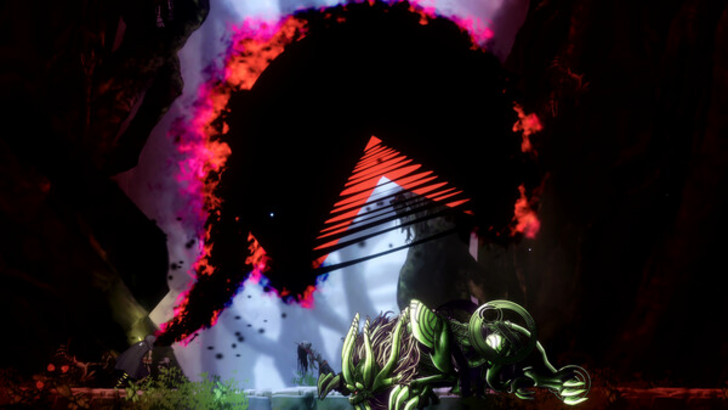
The world itself is dense with platforming challenges, unique enemy encounters, and intriguing environmental design. While not every corner of the map offers a tangible reward, the journey often makes up for it with clever mechanics and occasional bursts of creative puzzles.
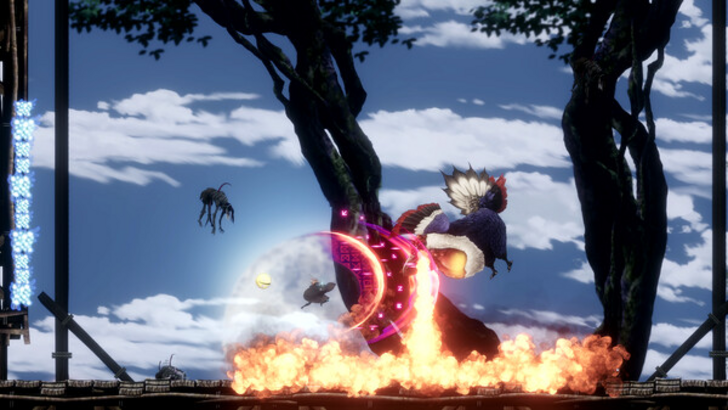
Combat is fast and movement-focused. Swordsman No. 8 wields a sword for both attacking enemies and platforming via the ACTIV Shot, which functions like a grappling hook. Players must master precise dashing, dodging, and swordplay to survive. Combat and traversal blend well with the game’s intricate “maze-like” level layouts, particularly those inspired by Pac-Man.
These Pac-Man-inspired segments are among the game’s most memorable. In these sections, players briefly take control of PUCK, the Swordsman’s floating drone companion.
PUCK navigates through maze-like corridors, collecting orbs in a manner reminiscent of classic arcade gameplay, with added features such as manual or automatic movement, jumping between tracks, and switching back to Swordsman No. 8 to fight enemies. These sequences are clever, fun, and highly interactive, though sadly limited to specific areas. It’s a shame they aren’t used more frequently.
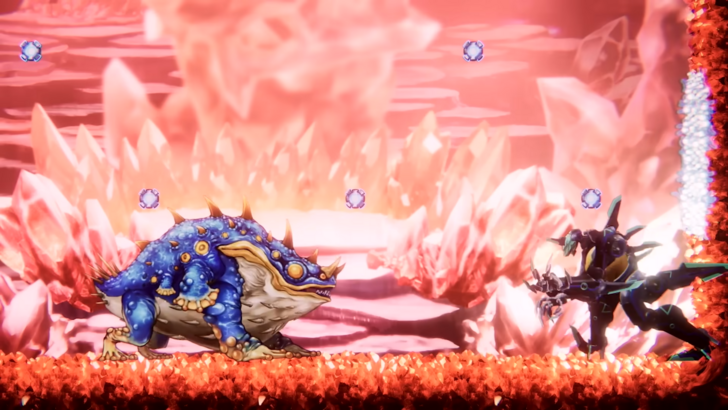
One of the game’s key features is the GAIA power-up—a creative reimagining of Pac-Man’s classic Power Pellet. When activated, it transforms the duo into a powerful robotic form capable of devouring enemies and collecting upgrade materials. These resources can be spent at terminal-like shops to enhance various abilities, such as increasing air-dash distance, improving defense, boosting item effectiveness, or upgrading a mysterious stat known only as ESP.
GAIA can be quite fun to use, especially during intense moments, but it’s primarily reserved for boss battles. Its impact is somewhat limited by its short duration—it only lasts around 30 seconds—making it feel more like a temporary burst of power than a game-altering mechanic.
While the early game is resource-scarce, Shadow Labyrinth isn’t overly punishing. Death simply returns you to your last Miku Sol, allowing you to retry paths and experiment without severe setbacks.
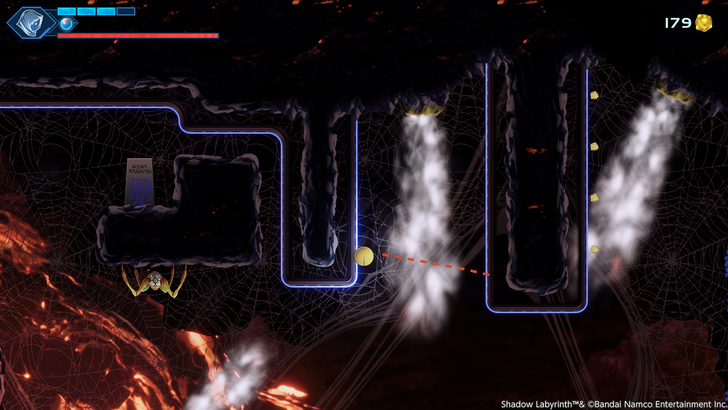
Ultimately, Shadow Labyrinth succeeds most when it embraces its experimental side—particularly with the inventive Pac-Man-style mechanics and exploration-driven design. It's not without its flaws, but there’s a creative spark here that shines through, especially when the game lets players engage with its more imaginative systems.
Tough but Rewarding Boss Battles
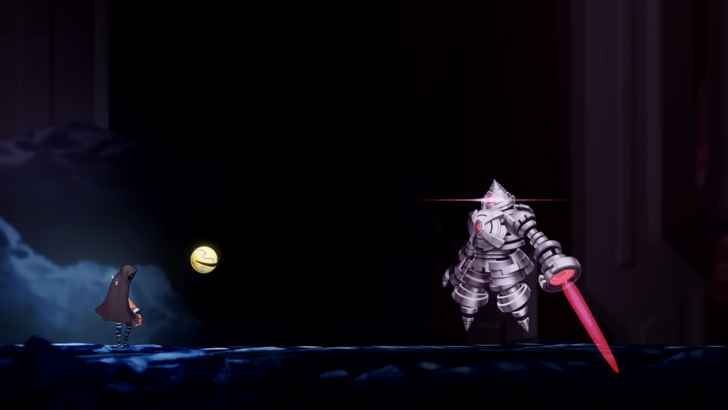
If you enjoyed the boss battles in games like Mega Man, you'll likely appreciate what Shadow Labyrinth offers. The boss fights follow a similar structure—pattern recognition, quick reflexes, and tightly timed attacks—which can make them genuinely challenging and rewarding. From the very first encounter, I found myself needing to study attack patterns, learn through trial and error, and adapt my strategy. That learning curve makes victories feel earned.
While the boss battles can be fun and fast-paced, they're not without flaws. Some hitboxes feel inconsistent, leading to frustrating moments where dodges don't register or invincibility frames seem to fail. Additionally, there’s a bit of repetition among the bosses, which can undercut the excitement. Still, when everything clicks, the fights are intense and satisfying—and eagle-eyed players may even catch some fun Easter eggs referencing Pac-Man and other Bandai Namco titles.
What the PUCK is Going On?
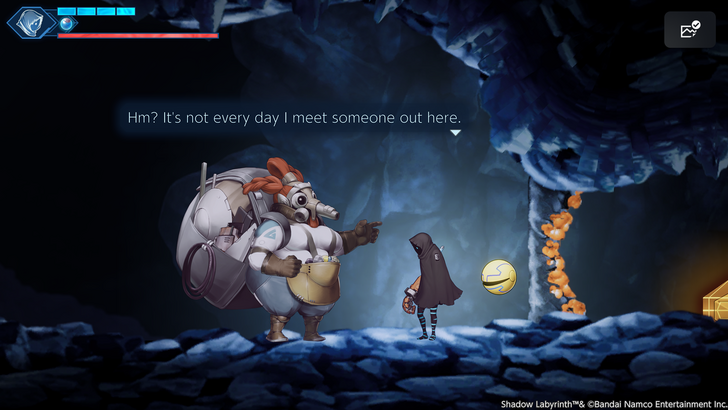
Shadow Labyrinth presents a genuinely fascinating premise: a dark, narrative-driven reimagining of Pac-Man set within a Metroidvania framework. Even more impressively, it’s not a standalone title—it serves as a sequel to the Secret Level episode “Circle” and ties directly into Bandai Namco’s larger United Galaxy Space Force (UGSF) lore. For those unfamiliar, UGSF is a shared sci-fi universe that spans numerous classic Namco games like Galaga, Dig Dug, and others, all interconnected through an official timeline.
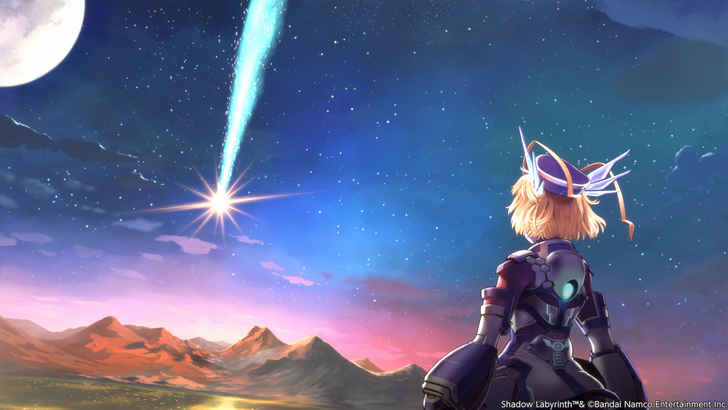
In Shadow Labyrinth, players control Swordsman No. 8, an amnesiac humanoid who awakens from stasis in an underground facility. You're accompanied by PUCK, a floating yellow drone with a caustic attitude and unclear motives. Your objective? Survive the hostile alien world by defeating and absorbing monstrous enemies—growing stronger through a literal cycle of consumption and evolution. It’s an intriguing blend of survival mechanics, identity exploration, and cosmic mystery.
On paper, this concept is loaded with promise: a bleak, mature spin on Pac-Man woven into a deep sci-fi universe? It sounds like a dream pitch. Unfortunately, the execution leaves much to be desired.
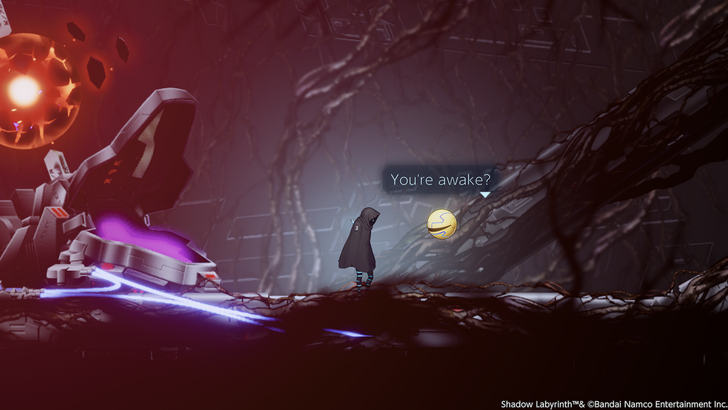
From the very beginning, Shadow Labyrinth struggles with onboarding. The game immediately floods the player with obscure jargon, fragmented cutscenes, and vague exposition, offering little grounding for newcomers. PUCK, who is clearly meant to be a twisted reimagining of Pac-Man, is more irritating than endearing—often berating the player and speaking as though you’re already familiar with the broader UGSF lore. Instead of feeling like a clever reinterpretation of a gaming icon, PUCK comes off as smug and unlikable, sapping much of the story’s charm.
To make matters worse, the narrative leans hard into cryptic “mystery box” storytelling. Rather than unraveling naturally, much of the lore is buried in optional notes and environmental clues, requiring players to do significant legwork to make sense of the plot. And while uncovering secrets can be rewarding in the right context, here it feels more like a chore—an obligation rather than a treat. The game hints at depth, but the story feels more convoluted than compelling, weighed down by self-serious writing that mistakes obscurity for intrigue.
Now, to be fair, I don’t mind a story that plays coy or leaves players in the dark—mystery is often a vital narrative tool. But Shadow Labyrinth mishandles that balance. The game confuses ambiguity with lack of clarity and mood with incoherence, ultimately making the experience feel more alienating than immersive.
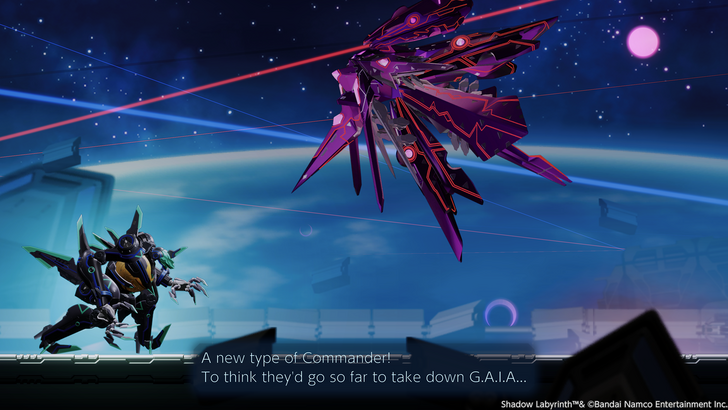
I will give it credit. The lore is ambitious, the concept is bold, and the idea of integrating Pac-Man into a larger mythos is undeniably creative. But ambition alone isn’t enough. Without thoughtful execution and proper narrative grounding, even the best ideas can feel hollow. Sadly, that’s the case here.
And while you technically can play without watching the prequel episode, the game constantly feels like you should have. Instead of inspiring curiosity about the broader UGSF universe, it often breeds frustration and disconnection. In the end, Shadow Labyrinth has all the right pieces for a gripping sci-fi reimagining—but those pieces never quite click into place.
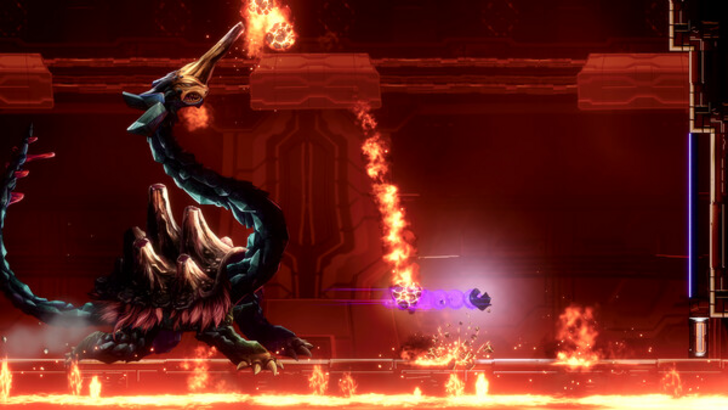
I also found the art direction to be one of the game’s weaker aspects. Visually, Shadow Labyrinth feels a bit cheap and inconsistent, with character designs that lack distinctiveness or charm. Aside from a few standouts like PUCK, most of the cast comes across as generic and forgettable, which makes it harder to feel connected to the world or its story. The paper-like aesthetic feels more awkward than stylish, and it doesn’t quite gel with the tone or gameplay.
I can’t help but feel that a more cohesive visual approach—perhaps a detailed 2D pixel art style—would’ve elevated the experience. Unfortunately, the environmental design also suffers from the same lack of identity. Many areas blur together and fail to leave a lasting impression, which undermines the sense of exploration and discovery that's so important in a Metroidvania.
Clunky Platforming and Hit Boxes

Shadow Labyrinth introduces some genuinely interesting mechanics—like the GAIA transformation and the ability to control PUCK—but it struggles with many of the core fundamentals. While the ambition is there, the basic gameplay systems often feel undercooked. Platforming, in particular, is clunky and frustrating. Jumping between platforms feels sluggish and imprecise, making traversal a chore rather than a satisfying challenge. For a Metroidvania, the game lacks the smooth, flowing movement that defines the genre at its best.
Although new abilities unlocked later in the game help ease some of the friction, the overall gameplay loop feels slow and disjointed. Backtracking, a key component of any Metroidvania, is made more tedious by awkward level layouts. While the world is technically interconnected, the design often feels fragmented, with small, isolated areas that don’t transition smoothly into one another.
Platforming sections are especially punishing—not necessarily because they’re difficult by design, but because the controls often feel unresponsive. There were numerous moments where jumps didn’t register correctly or I’d miss a platform due to awkward physics, leading to frustrating restarts. Frankly, I often found myself wishing the game leaned more into its Pac-Man-inspired segments, which felt far more polished and enjoyable by comparison.

To make matters worse, the hitboxes can be wildly inconsistent. I’d take damage from attacks that didn’t visibly connect, or enemies would react to proximity in ways that felt unfair or unpredictable. These issues don’t just affect platforming—they bleed into combat too, especially during boss fights, where unclear hit detection and imprecise movement make encounters feel more grindy than rewarding.
Is Shadow Labyrinth Worth It?
Pac-Man? Pac-Meh

As much as I love the creativity and reimagining that went into this game, it just doesn’t quite live up to what the developers might’ve envisioned. It feels like a cluster-puck of ideas, with the devs getting lost in their own maze. The interesting concepts are there—but they’re not honed in or refined enough to truly shine. There’s definitely some fun to be had, but I wouldn’t recommend it at its current price.
| Steam |
PlayStation |
Xbox |
Switch |
||||
| Price | $29.99 | ||||||
|---|---|---|---|---|---|---|---|
Shadow Labyrinth FAQ
Is Shadow Labyrinth a Pac-Man Game?
Shadow Labyrinth is a reimagining of the Pac-Man franchise and serves as a sequel to the Amazon Prime Video anthology series Secret Level.
Shadow Labyrinth PC System Requirements?
Minimum Requirements
| Minimum Requirements | |
|---|---|
| OS: | Windows 10/11 |
| Processor: | Intel Core i3-3225 / AMD A6-7400K |
| Memory: | 4 GB RAM |
| Graphics: | Intel Arc A580 / AMD Radeon R9 270X / GeForce GTX 750Ti |
| DirectX: | Version 11 |
Recommended Requirements
| Recommended Requirements | |
|---|---|
| OS: | Windows 10/11 |
| Processor: | Intel Core i7-4770K / AMD Ryzen 3 3100 |
| Memory: | 4 GB RAM |
| Graphics: | Intel Arc A750 / AMD Radeon RX Vega 64 / GeForce GTX 1660 Super |
| DirectX: | Version 12 |
Game8 Reviews

Shadow Labyrinth Similar Games


Shadow Labyrinth Product Information
 |
|
| Title | Shadow Labyrinth |
|---|---|
| Release Date | July 18, 2025 |
| Developer | Bandai Namco Studios |
| Publisher | Bandai Namco Studios |
| Supported Platforms | PC, PS5, Xbox Series XIS, Switch |
| Genre | Metroidvania, Adventure |
| Number of Players | 1 |
| ESRB Rating | T |
| Official Website | Shadow Labyrinth Website |