
| Eriksholm: The Stolen Dream | |||
|---|---|---|---|
| Release Date | Gameplay & Story | Pre-Order & DLC | Review |
Eriksholm: The Stolen Dream is an isometric stealth game that follows Hanna, as she looks for her brother, Herman. Read our review to see what it did well, what it didn't do well, and if it's worth buying.
Eriksholm: The Stolen Dream Review Overview
What is Eriksholm: The Stolen Dream?
Eriksholm: The Stolen Dream is an isometric stealth-adventure game set in a politically fraught city, where players control multiple characters to uncover secrets, solve puzzles, and move undetected through richly detailed environments.
Eriksholm: The Stolen Dream features:
⚫︎ Isometric Stealth Gameplay
⚫︎ Character Switching
⚫︎ Environmental Puzzles
⚫︎ Lore-Rich World
⚫︎ Full Voice Acting
⚫︎ Strict Checkpoint System
⚫︎ Dynamic Camera Controls
For more gameplay details, read everything we know about Eriksholm: The Stolen Dream's gameplay and story.
| Digital Storefronts | |||||
|---|---|---|---|---|---|
 Steam Steam |
 Epic Epic |
||||
 PlayStation PlayStation |
 Xbox Xbox |
||||
| Price | $39.99 | ||||
Eriksholm: The Stolen Dream Pros & Cons
| Pros | Cons |
|---|---|
 Gorgeously Rendered Isometric Vusuals Rewarding Stealth That Demands Precision Great Worldbuilding Puzzles Add To Depth And Variety Gorgeously Rendered Isometric Vusuals Rewarding Stealth That Demands Precision Great Worldbuilding Puzzles Add To Depth And Variety |
Little Room For Experimentation Harsh Checkpoint / Autofail System Occasional Disorientation From Camera Angles |
Eriksholm: The Stolen Dream Overall Score - 84/100
Eriksholm is quiet, deliberate, and emotionally gripping. Its commitment to thoughtful stealth, atmospheric storytelling, and carefully crafted visuals make it feel both intimate and ambitious. But the lack of flexibility in its systems and the rigidity of its fail states mean it won’t click for every player, especially those who prefer experimentation. It’s a polished, affecting experience—just not a universally accessible one.
Eriksholm: The Stolen Dream Story - 9/10
Hanna’s journey is deeply personal, but the narrative never loses sight of the larger world unraveling around her. From corrupt officials to crime syndicates and secret movements, Eriksholm’s political rot is revealed with restraint and elegance. It doesn’t hold your hand, expecting players to engage and observe, but that’s what makes its revelations so satisfying. However, not every player will connect with its quiet, letter-driven delivery.
Eriksholm: The Stolen Dream Gameplay - 8/10
The core stealth loop is tense, rewarding, and well-paced, especially with the addition of puzzle-driven teamwork later in the game. But while it plays smoothly, Eriksholm leaves very little room for deviation. There’s usually one right answer, and failure often means repeating tricky sections from rigid checkpoints. That design choice will frustrate players who value improvisation in their stealth games. It’s smart and tightly built, but sometimes at the cost of flexibility.
Eriksholm: The Stolen Dream Visuals - 9/10
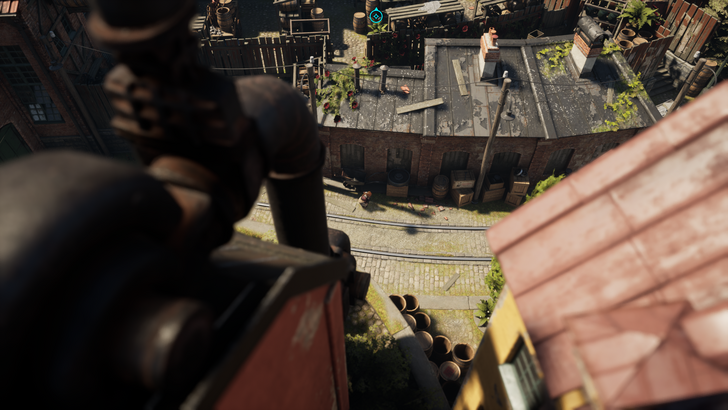
From sweeping isometric shots to cinematic cutscenes, Eriksholm is one of the most visually striking games in its genre. Characters emote with subtlety, the environments are rich with detail, and the lighting does half the storytelling. There’s a unique softness to the art style that enhances the mood without sacrificing clarity. However, some camera angles—especially during more complex stealth sequences—can be slightly disorienting.
Eriksholm: The Stolen Dream Audio - 8/10
The audio work in Eriksholm supports stealth beautifully, blending ambient tension with effective sound cues and excellent voice acting. Hanna and the rest of the cast deliver grounded performances, and every footstep and whisper feels deliberate. That said, the soundtrack itself doesn’t always leave a strong impression. Atmospheric, yes, but not particularly memorable outside of the game. It’s a strong, supportive soundscape, just not a standout.
Eriksholm: The Stolen Dream Value for Money - 8/10
At $39.99, Eriksholm delivers a focused, meaningful stealth experience without filler or bloat. It’s not a long game, but the hours you spend with it are rich in atmosphere, challenge, and emotion. However, with no real replayability, multiplayer, or branching paths, its value depends heavily on how much you enjoy linear, narrative-driven stealth. For fans of that niche, it’s money well spent—just don’t expect post-game content or multiple endings.
Eriksholm: The Stolen Dream Review: The Quiet Ones Strike Best
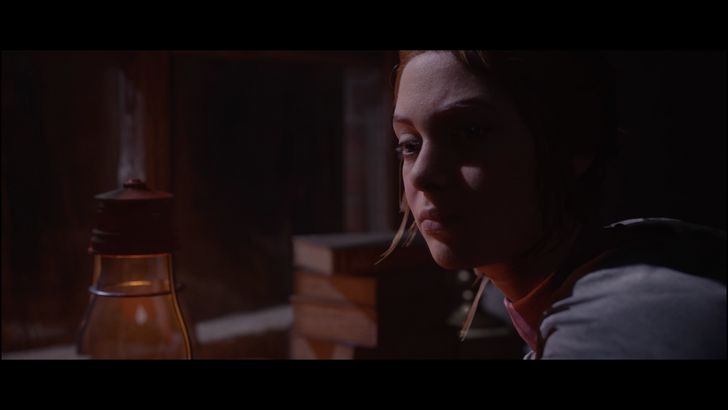
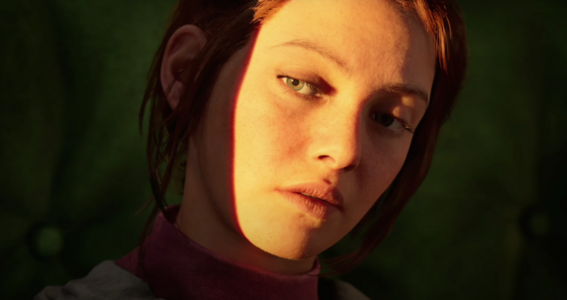
Somewhere tucked away in a city called Eriksholm, a young girl named Hanna is recovering from something called Heart Pox. A cruel, near-always fatal epidemic that’s ravaged the lives of so many, Heart Pox hangs over the world like a lingering breath—quiet, invisible, but deadly. And yet, against all odds, Hanna survives. When we first meet her, she’s bedridden and cared for by her brother, Herman, who seems to be the one stable thing in her fractured little world.
That is, until he’s wanted and suddenly disappears.
And so begins Eriksholm: The Stolen Dream, a somber, tightly-wound stealth adventure that lets you creep through alleyways, shadows, and secrets in pursuit of answers. What happened to Herman? Why does the police want him? And what is really going on in the city of Eriksholm? It’s not long before the game starts unraveling more than just a sibling’s disappearance. You’re pulled into something deeper, darker. The kind of tale that starts with one person and quickly becomes about everyone else too.
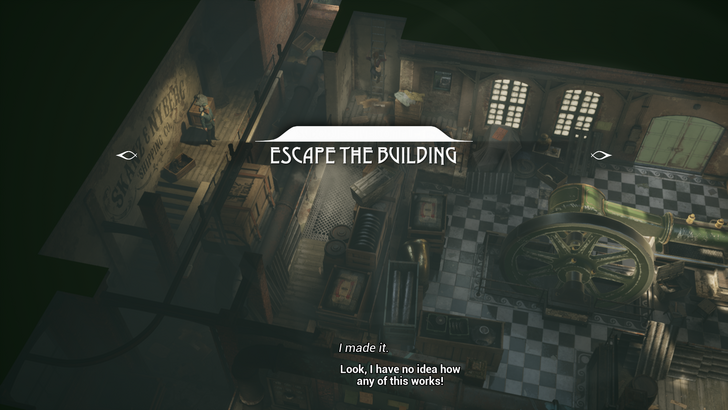
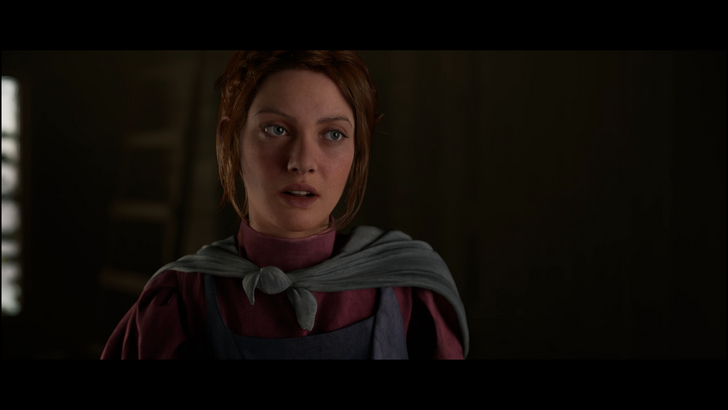
At first glance, Eriksholm wraps itself in the quiet dignity of an isometric stealth game. You control characters from a top-down, angled perspective. Immediately, what caught my eye—and wouldn’t let go—was just how beautiful this game is. The character designs (during cutscenes) are expressive in that storybook way that makes every movement, every flicker of concern or determination, feel like it matters. The city, too, is beautifully realized—drenched in golden lighting, often looking like a forgotten painting trying to remember itself. It's the kind of game that invites you to stop moving and just look, even when you probably shouldn’t.
Eriksholm may seem quiet on the surface, but beneath it lies a tense, unforgiving system of rules. You’ll sneak. You’ll think. You’ll mess up and try again. Because no matter how beautiful the world is, or how tight the mechanics feel, what really pulled me through was the quiet desperation of Hanna’s search. This is a story not just about saving someone—but about surviving in a world that’s already tried to kill you once.
So, without further ado, let’s talk about how it feels to actually play Eriksholm: The Stolen Dream.
Stealth As A Core Mechanic
Let’s get one thing out of the way, if a game gives me the option to stealth, I will stealth. No questions asked. I don’t care if I’m underpowered or if the game doesn’t reward it, I’ll hug walls, wait behind crates for minutes at a time, and take the long way around just for that one perfect, silent takedown. It’s not just a playstyle, it’s a compulsion. If I can go through a game without alerting a single soul, that’s not just a win—that’s art.
So imagine my surprise when Eriksholm: The Stolen Dream handed me a stealth game from an isometric perspective.
It threw me off at first, not going to lie. This isn’t the tight, over-the-shoulder camera I’m used to from games like Star Wars Outlaws where every breath of the enemy feels uncomfortably close. Here, you’re perched from above, watching the world from a slanted, almost detached viewpoint. At first, I didn’t love it. The distance made me feel like I wasn’t in the game, just guiding someone else through it. It was almost too clean, too orderly. Where was the tension in that? But the thing is… that distance? That top-down clarity? It’s not a flaw—it’s a feature.
Eriksholm makes smart, tactical use of its perspective. The isometric angle gives you a wider view of the space, turning each room into a puzzle box waiting to be solved. Sightlines, patrol paths, hidden corners—everything is laid out before you, but never in a way that hands you the answer. You still have to earn it. You still have to see it.
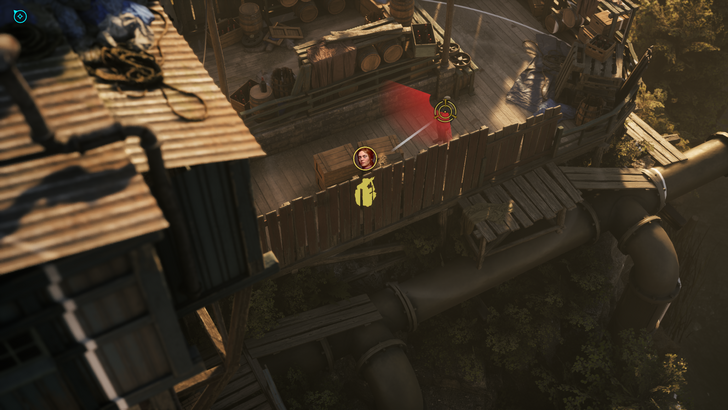
And once I adjusted to that shift, once I stopped fighting my instincts to be inside the character’s head and started thinking like someone watching over them, something clicked. Suddenly, I wasn’t missing the intimacy of third-person stealth—I was enjoying the clarity of command. I could see ahead, rotate the camera to get the best angle, and actually plan. It became a stealth game that felt more like chess than improv, more about foresight than reaction.
That doesn’t mean it’s easy, though. Eriksholm is still brutally punishing if you get caught. It doesn’t give you an inch, doesn’t let you brute-force your way through sloppy timing. If you’re spotted, you’re booted back to the last checkpoint, no dramatic chase sequences, no firefights. Just failure. And that’s important. It reinforces what this game isn’t. This isn’t an action game with stealth elements—it’s a stealth game, full stop. Your goal is to never be seen. Which is why my favorite feature in the game is tranquilizing enemies and dragging their bodies into the shadows. It’s clean, controlled, and quietly satisfying—exactly what stealth should feel like.
Which brings me back to why I love this genre in the first place. It’s not about violence. It’s about control. It’s about reading a room like a map, waiting for that perfect beat to move forward, and knowing that success means no one even knew you were there. So while Eriksholm may have looked like it was keeping me at arm’s length with its isometric view, it turns out it was just offering me a better vantage point. And I took it.
Sharp Minds, Silent Feet
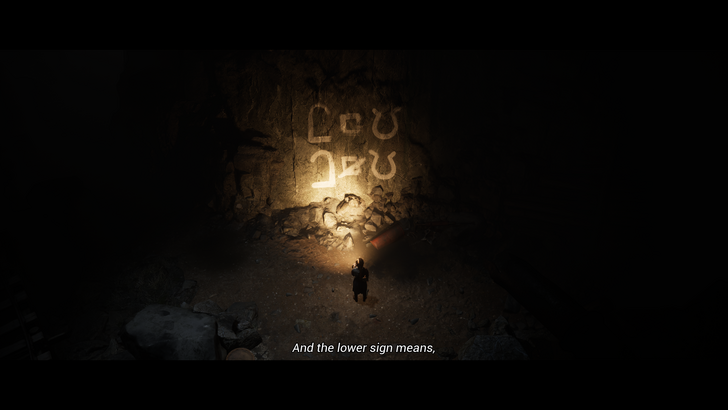
For a game that starts with just one girl sneaking past guards and crawling through alleyways, Eriksholm: The Stolen Dream slowly unfolds into something more intricate, more tactical, almost like peeling layers off a clockwork machine. At first, it’s just Hanna. Just you, a dart, and a world that will happily boot you back to the last checkpoint if you so much as breathe too loud. It’s tight, it’s simple, and it works.
But then, something changes. Without spoiling too much, let’s just say Hanna doesn’t stay alone forever. You’ll eventually gain access to other playable characters, and with that comes a layer of cooperative stealth that shifts the entire equation. Suddenly, it’s not just about hiding in the shadows or timing a guard’s turn—it’s about orchestrating movement. One character distracts a patrol while the other slips by. One takes out an enemy, while the other pulls the body into cover. It’s still stealth, but now it’s stealth by way of choreography.
And that’s where the puzzles come in. You see, Eriksholm doesn’t just slap stealth and puzzles side by side—it weaves them together. Getting past a locked gate isn’t just about finding a key. It might mean flipping a lever on one side of the map, coordinating a second character to time a switch on the other, all while avoiding overlapping patrols and timing every move to the rhythm of enemy footsteps. The game never spells things out for you. It trusts you to observe, to experiment, to fail, and try again.
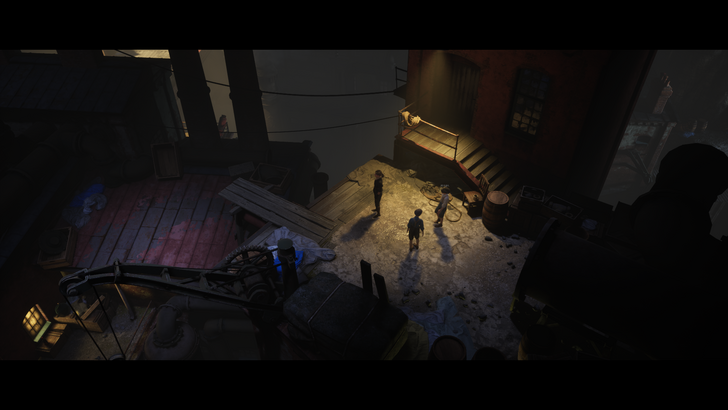
The puzzles, in this sense, are less "solve the riddle" and more "solve the moment." They ask you to understand how space works—how characters interact with their environment, and how those interactions open up possibilities. Sometimes it’s as simple as timing your movements with a moving crate to block a line of sight. Other times, it’s working out a full sequence of steps that require two characters to be in exactly the right place at exactly the right time.
And the best part? Every one of these moments feels earned. Not because the game is generous—honestly, it isn’t. It’s strict. Unforgiving, even. If you mess up, there’s no fallback. You restart. And yet, because the design is tight and intentional, you never feel cheated. You know where you went wrong. You saw it, you rushed, you got cocky. And when it finally clicks—when your plan goes off without a hitch, the guards are unconscious in the dark, and your characters slip past into the night? It feels incredible.
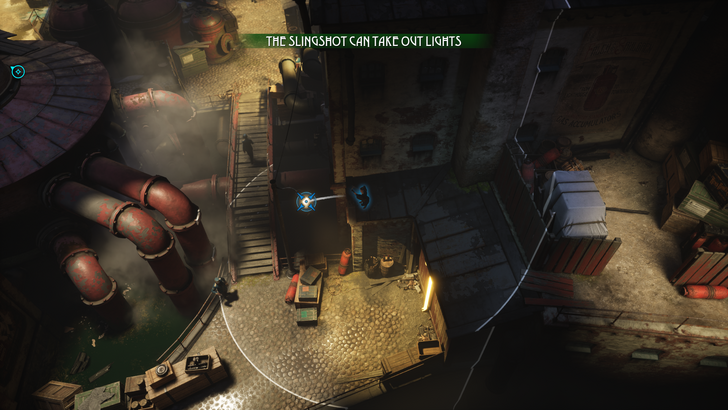
So many stealth games either become too rigid—solvable only one way—or too loose, letting players brute-force through encounters. Eriksholm definitely leans toward the former. There is usually one correct path, one right sequence of actions, and if you deviate from that, you’ll be spotted, caught, and kicked back to the last checkpoint. And yet, somehow, it doesn’t always feel suffocating. The way the game sets up its levels, the way you're forced to study enemy patrols, time distractions, and sync movement across characters, it still feels like you are solving it. The solutions may be set in stone, but your brain still gets to do the heavy lifting to discover them.
It never feels like you're just performing someone else’s choreography. It feels like you're inventing your own—even if, behind the scenes, the steps were already written.
Where The Systems Strain
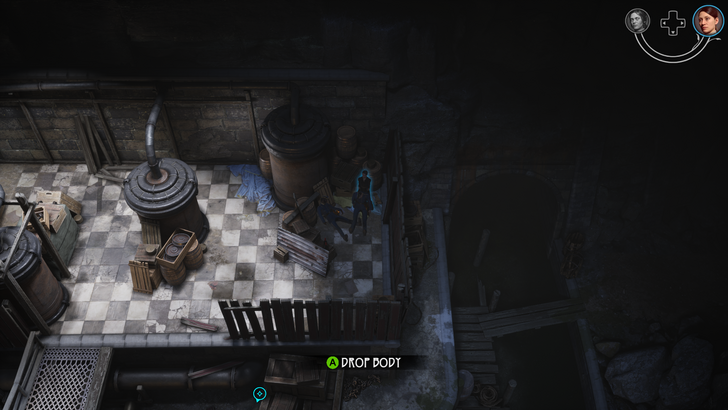
As much as I enjoyed stalking across rooftops and knocking guards out cold in Eriksholm, there were definitely moments where I felt the game's tight design crossed into constricting. It’s not that the stealth isn’t good—it’s very good. But it’s also very strict. So strict, in fact, that I sometimes found myself wishing the game would let me breathe, just a little.
Here’s the thing, I love stealth. I will always choose stealth over going loud. If a game gives me a tranquilizer dart, I will lovingly cradle it through the entire campaign. But what makes stealth fun, for me, is experimentation—testing out different timings, improvising when something goes wrong, adapting to chaos. Eriksholm, on the other hand, doesn’t really let you improvise. Once a body’s found, once a sound is heard, you’re not given a chance to recover or pivot. You’re booted back to the checkpoint. Every time.
And yes, I get it. That’s the game’s design philosophy. It wants you to plan ahead, to execute the plan perfectly, to treat every moment like a tactical puzzle. I respect that. But after a while, especially in longer sequences, it started to wear me down. There’s a kind of pressure that builds—not the good kind that comes from tension, but the frustrating kind that comes from repetition. When I had to replay the same section five or six times because a body got spotted while I was already hidden away, it didn’t feel like I failed. It felt like the game wouldn’t let me try.
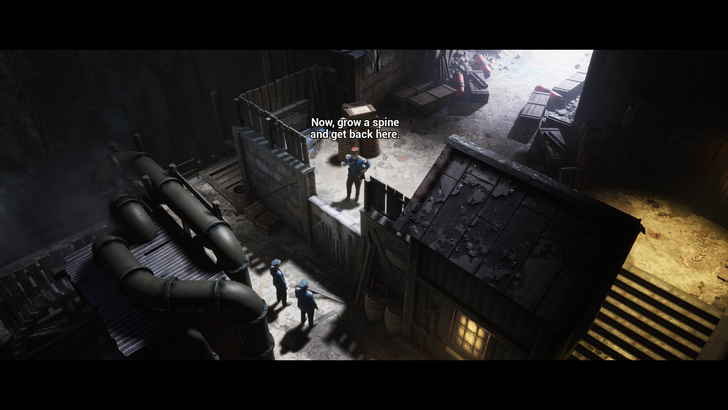
That’s the core of my qualm, really. Eriksholm presents itself like a thinking game, but it doesn’t always let you think your own way. The path forward is often singular, and while discovering that path can be satisfying, it also means there’s little room for creativity. Most of the challenge is about figuring out what the developers wanted you to do—and then doing exactly that.
And to be fair, it does feel great when everything clicks. When you solve a stealth encounter in one smooth, perfect run, there’s real triumph in that. But the punishment for failure is so absolute—so binary—that it discourages exploration. You’re not solving an open problem. You’re solving a lock. And there’s only one key.
For a game about outsmarting your enemies, I sometimes wished it would trust me a little more to outsmart it.
A City Sick With More Than Just Disease
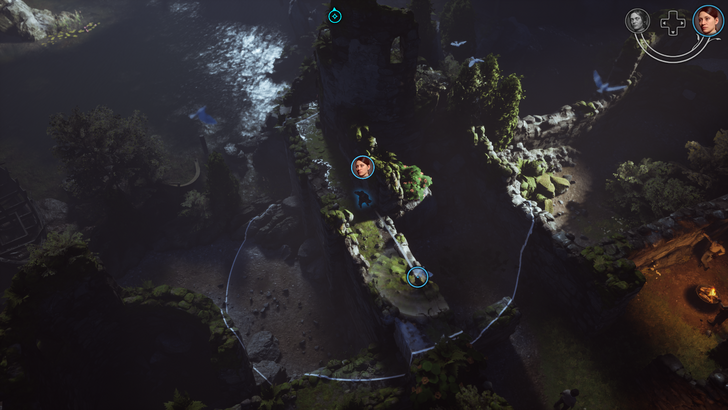
Eriksholm is a tight game, after hours of planning your every step and dealing with the strictest of fail states, you might expect the world to feel just as rigid—buttoned-up, mechanical, like it only exists to serve the stealth. But here’s the thing, the world is where Eriksholm: The Stolen Dream truly breathes.
Yes, Hanna’s story begins with her recovering from Heart Pox, but the real sickness of this city runs deeper than illness. Eriksholm is infected with rot—political corruption, silent oppression, a kind of societal decay that festers in the background of every alley and apartment you sneak through. And the game doesn’t shout it in your face. It doesn’t flash mission text saying "Expose the Regime" or dump exposition on your lap. Instead, it asks you to notice.
And if you do notice, if you read the letters tucked away in drawers, examine posters peeling off the walls, (both collectibles, by the way), and pay attention to whispers of the people—then you start to feel it. There’s something moving beneath the surface. A quiet resistance. A syndicate with bloody hands and suspicious ties to the government. The police? Pawns of a corrupt government. And while Hanna is looking for her brother, you start to understand that this story is about more than a single family. This is a city on the edge, and you’re caught in the slow, suffocating middle of it.
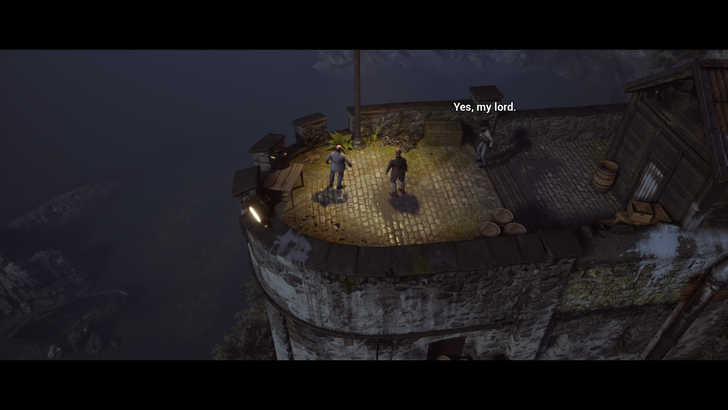
Each chapter brings new locations and with them, new glimpses into lives pushed to the margins. Workers keeping their heads down. Families broken by unseen systems. You don’t get full answers, but you get enough. Enough to feel the weight of what's been stolen—not just from Hanna, but from everyone.
What I love is how Eriksholm handles this storytelling. It’s not here to spoon-feed you lore. It respects your curiosity. If you just want to follow Hanna and get out, you can. But if you linger—if you chase the threads—it rewards you with a richer, heavier narrative. There’s a method to the way it builds its world, it gives you fragments, but trusts you to assemble them.
And visually, that world is stunning in its sadness. The art direction doesn’t just look good, it communicates. From industrial zones soaked in grime to city blocks wrapped in fences and silence, everything feels loaded with meaning. The environments don’t just set the stage, they are the story. So sure, I had my gripes with the gameplay. But I never stopped caring about the place. Eriksholm itself is one of the most compelling characters in the entire game—haunted, beautiful, and entirely believable.
Sight and Sound in the Shadows
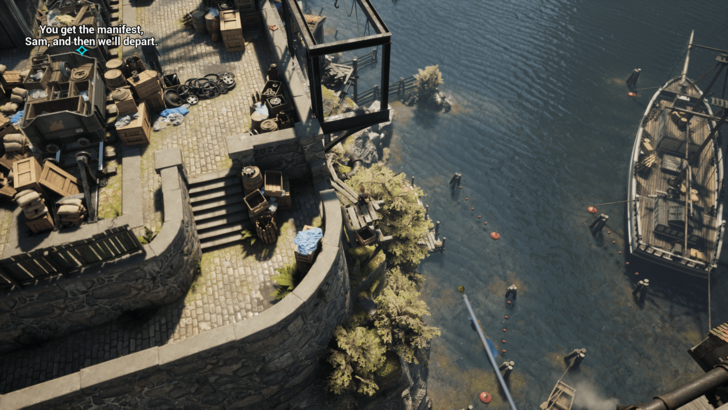
Eriksholm makes slowing down beautiful. Visually, the game is a quiet marvel. I didn’t expect an isometric stealth game to look this cinematic, but there I was, adjusting the camera not just to scout ahead, but to admire the scene. Cobblestone streets reflect dim lantern light. Tall buildings loom, casting long shadows that swallow your character whole. And even though you’re always watching from above, the world never feels far away.
But visuals are only half the equation in a stealth game. The other half? Sound. Every step, every breath, every whisper matters in Eriksholm. Footsteps echo just enough to make you paranoid. Metals clank, laborers conspire, patrolmen murmur—and you listen to all of it. Sound becomes your ally and your enemy. I found myself holding my own breath when sneaking past guards, just because the audio design had me so tense. It’s immersive in the best, most stressful way.
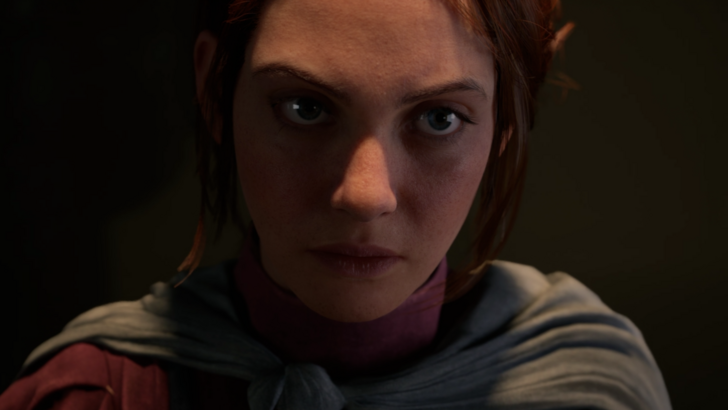
The voice acting is another surprise. This isn’t the kind of indie game that skimps on dialogue—every line is voiced and all of it works. Hanna in particular feels nuanced and real, sometimes overly dramatic but never flat. She speaks with the kind of determination that fits a story about survival and resistance. You believe her. You want to follow her.
The visuals and audio of Eriksholm turn stealth into atmosphere, patience into poetry. And when I finally set the controller down, I didn’t just feel like I’d beaten a game. I felt like I’d been somewhere—somewhere dark and full of secrets, but also full of dreams. Dreams of freedom. Dreams of something better.
Is Eriksholm: The Stolen Dream Worth It?
Demanding, But Deeply Rewarding
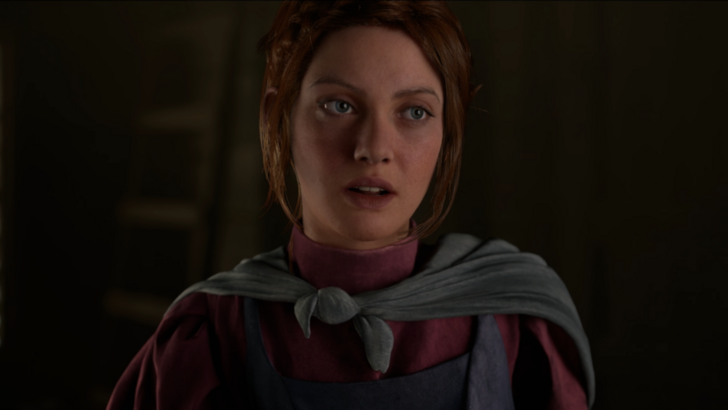
At $39.99, Eriksholm: The Stolen Dream isn’t a casual investment—and to be fair—it doesn’t want to be. This is a game that asks for patience, precision, and a little bit of your mind. Its stealth mechanics are strict, sometimes even punishing. There’s little room for improvisation, and the single-solution approach to its challenges may frustrate players who thrive on experimentation.
But what you get in return is an experience that feels carefully composed. It’s not just about sneaking past guards—it’s about moving through a city crumbling under the weight of corruption, threading yourself through the cracks of a regime that leaves its people to rot. Every step you take in Eriksholm is a small rebellion, every shadow a place to breathe.
From its tense gameplay to its gorgeous cinematic cutscenes, Eriksholm understands how to turn stealth into storytelling. Its political backdrop isn’t just noise, it’s part of the fabric of the world, one that you uncover in fragments and whispers, piece by piece. And for those who appreciate thoughtful design, challenging systems, and atmospheric worldbuilding, that $39.99 will feel well spent.
No, it won’t be for everyone. But for players like me—those who crave tension and immersion, who are willing to slow down, think through every move, and treat patience as a weapon—Eriksholm offers stealth with purpose, a world with weight, and a story that lingers.
| Digital Storefronts | |||||
|---|---|---|---|---|---|
| Steam |
Epic |
||||
| PlayStation |
Xbox |
||||
| Price | $39.99 | ||||
Eriksholm: The Stolen Dream FAQ
Where Is Eriksholm Inspired From?
According to an interview with the developers conducted by VGTimes, the fictional city of Eriksholm draws its inspiration from real-world Scandinavian cities. The architecture, urban design, and cultural atmosphere reflect the cold elegance and quiet tension often found in Northern European settings, grounding the game’s fictional world in a sense of gritty authenticity.
What Are Eriksholm's PC Requirements?
| System | Minimum | Recommended |
|---|---|---|
| OS | Windows 10, Windows 11 | Windows 10, Windows 11 |
| Processor | Intel Core i7-8700K / AMD Ryzen 5 3600 | Intel Core i5-10400 / AMD Ryzen 5 5500 |
| Memory | 16 GB RAM | 16 GB RAM |
| Graphics | Nvidia GeForce GTX 980 / AMD Radeon RX 580 | Nvidia GeForce RTX 2070 / AMD Radeon RX 5700 XT |
| Storage | 15 GB available space | 15 GB available space |
Game8 Reviews

You may also like...
 |
Back to the Dawn Review RPG, Indie |
 |
Every Day We Fight Review Turn Based Tactics, Roguelite |
 |
The Precinct Review Sandbox, Action, Shooter |
 |
Indiana Jones and the Great Circle Review Action, Adventure |
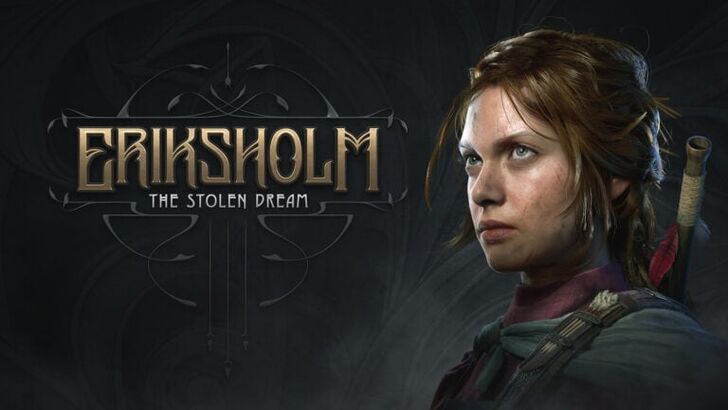
Eriksholm: The Stolen Dream Product Information
 |
|
| Title | ERIKSHOLM: THE STOLEN DREAM |
|---|---|
| Release Date | July 15, 2025 |
| Developer | River End Games |
| Publisher | Nordcurrent Labs |
| Supported Platforms | PC (Steam, Epic), PS5, Xbox Series X|S |
| Genre | Narrative, Stealth, Adventure, Strategy |
| Number of Players | 1 |
| ESRB Rating | T |
| Official Website | Eriksholm: The Stolen Dream Website |