

| Anno 117: Pax Romana | |||
|---|---|---|---|
| Release Date | Gameplay & Story | Pre-Order & DLC | Review |
Anno 117: Pax Romana is the latest city-builder in the Anno series. Read our review of its demo to see what it did well, what it didn't do well, and if it's worth buying when it fully releases!
← Return to Anno 117: Pax Romana main article
Everything We Know About Anno 117: Pax Romana
Anno 117: Pax Romana Story Plot

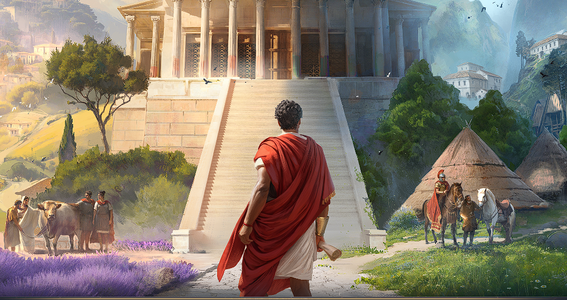
The game features a dedicated campaign that places you in the role of a young governor overseeing two distinct provinces: Latium and Albion. Set in 117 AD, during a period of relative peace within the Roman Empire, you’ll be tasked with shaping the development and direction of your territories. Your decisions on how to build, govern, and interact with the world around you will directly influence the narrative, the fate of your citizens, and the future of your provinces.
Anno 117: Pax Romana Gameplay
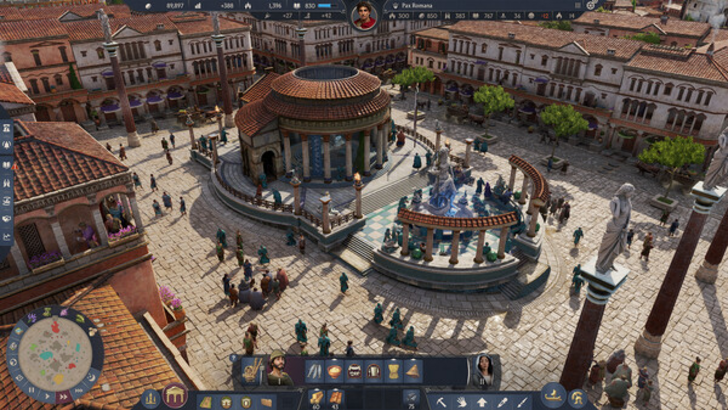
Anno 117: Pax Romana is a city-building strategy simulation game with real-time strategy (RTS) elements, presented from a top-down perspective. Players take on the role of a provincial governor in the Roman Empire, tasked with developing and managing their territory. Provinces can be shaped in various ways, such as aligning with Roman traditions, focusing on military strength, or emphasizing diplomacy. Choices made throughout the game influence the direction and outcome of the province.
The game allows players to design and expand cities by constructing buildings, roads, and infrastructure. Political and military decisions also play a role, with options to form alliances, engage in conflicts, and manage both naval and land battles.
Players can choose a province's religion, improve technology and welfare through the Discovery Tree, and address the needs of citizens—such as food and clothing—through a returning needs system. These needs must be met to certain thresholds to unlock residential upgrades, requiring players to consider both the environment and population demands.
Anno 117: Pax Romana includes both single-player and multiplayer modes, with support for cooperative and competitive play.
Anno 117: Pax Romana Release Date and Time
Releasing November 13, 2025
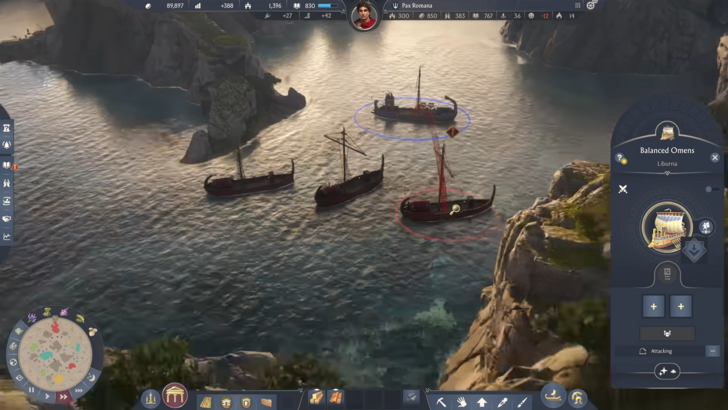
Anno 117: Pax Romana is scheduled for release on November 13, 2025, for PlayStation 5, Xbox Series X|S, and PC. According to the PlayStation Store, the game is expected to launch at midnight local time, based on your region.
 Steam Steam |
 Epic Games Epic Games |
 PlayStation PlayStation |
 Xbox Xbox |
 Ubisoft Ubisoft |
|||||
| Price | $59.99 | ||||||||
|---|---|---|---|---|---|---|---|---|---|
Anno 117: Pax Romana Review [Demo]
All Roads Lead to Excellence

When it comes to city-builders, two names usually dominate the conversation: Paradox’s Cities: Skylines with its mountain of DLC, and Ubisoft’s long-running Anno series. Sure, plenty of other city-builders have their fans—and more power to them—but it’s usually these two giants duking it out for the crown.
The thing is, Cities: Skylines II fumbled hard at launch and still hasn’t recovered, leaving Anno with the perfect chance to step up and carry the torch. I’ve enjoyed plenty of other city-builders in the meantime—Frostpunk 2, Against the Storm, even Timberborn—but Anno is the one I look to when I want to be blown away.
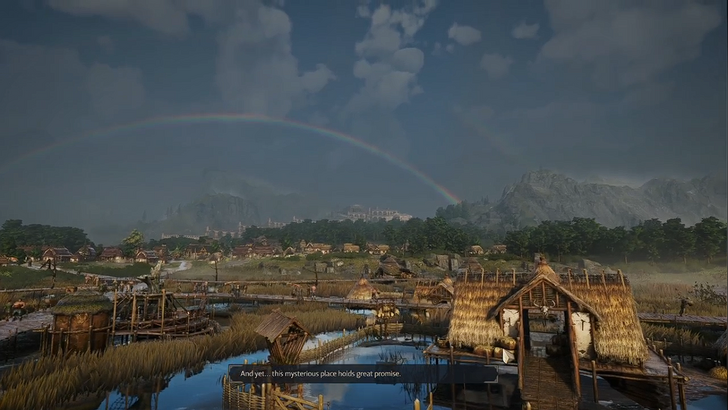
And what better way to do that than by stepping into the sandals of Rome, the empire many still call the greatest of antiquity? This is just a demo, mind you, but, not to get ahead of myself or anything, I can already tell that this tale ends differently from Cities: Skylines II’s fiasco.
So hail, fair traveler! Leave the reins to me, and let’s see together how all roads, including this one, lead to the glory of Rome.
The First Step to Rebuilding Latium and Integrating Albion

As with most city-builders, everything begins with the setting. It dictates where your city grows, what it produces, and how it ultimately thrives. As the title suggests, Anno 117: Pax Romana plants us firmly in the year 117 A.D.—a rare stretch of relative peace in Rome’s long and bloody history, marked by expansion into the marshlands of the Celts in the north.
Your starting province sets the stage for your governorship. In Latium, you step in as a governor-in-training tasked with rebuilding after a devastating disaster, while Albion puts you in charge of integrating the recently conquered Celts into Rome’s growing machine.
This choice at the outset isn’t just cosmetic. It’s not only about architectural styles or the names of your citizens. As you progress, it becomes clear that playing on the Celtic side of Rome’s industrial expansion isn’t just a gimmick; it’s central to Anno 117’s identity.
Proximity-based Bonuses and Expansive Logistics

Before we dive into the flavor of the game, we need to talk about the most important element of any city-builder, arguably even more than identity: the mechanics. Anno 117: Pax Romana revolves around proximity and logistics at its core. Unlike Cities: Skylines, which leans on district zoning and macro-scale planning, Pax Romana focuses on the intimate details of which buildings sit next to one another, and how that placement shapes your city’s growth.
Every building affects those around it, sometimes boosting productivity, sometimes dragging down happiness, health, or safety—and often doing all three. With so many building types vying for space, overlaps are inevitable, forcing you to make trade-offs and strategic placements.

Production buildings highlight this tension best. They’re essential for your city’s needs and income, but they tank residential quality of life if built nearby. That’s where the game’s logistics systems shine. Rome was famous for its roads—all roads lead to Rome, after all—and here they serve as the arteries of your city. Warehouses act like blood cells, ferrying raw materials to manufacturers, processed goods to craftspeople, and finished products into the hands of your loyal citizens.
Sure, you could say this is par for the course in city-builders, and to some extent, that’s true. But Pax Romana executes it with remarkable polish and without sacrificing style. Roads and buildings can even be laid out diagonally, giving the tired square grid a flexibility that feels smooth as butter, and opens the savant city planners among you the luxury of a city plan that isn’t just New York.
The best part is that if you choose Albion, the rolling hills eventually give way to muddy marshes. These areas require unique roads and resources, forcing you to adapt your building style when you need mud for tiles or reeds for tunics.

If there’s one drawback, it’s that building ranges feel a little too short. You’ll often end up overbuilding warehouses just to keep things running, and fire safety plummets into the negatives far too quickly. It feels unavoidable, since many of the structures that lower safety are also the ones that need to sit near other buildings to boost income and population.
It could also just be a skill issue. Either way, a tweak shouldn't hurt.
Solid Citizenship System

But a city is nothing without its people. In Pax Romana, your citizens live and grow much like the empire itself—by rising through ranks of status. A humble household of Libertas may one day become Plebeians, provided you keep them fed and clothed.
Each step up brings not only new desires but new responsibilities, as certain trades and workshops demand workers of a specific class. You quickly learn that Rome’s strength lies in balance: too many of the poor, and your ambitions falter; too many of the elite, and the very foundation of labor crumbles.
And as your citizens rise, so too does your city. Their elevated needs open the way to grander buildings and finer luxuries, ensuring that only a governor who tends to every rank of society will see Rome flourish.

This system isn’t new to city-builders—Rome, Egypt, even the medieval kingdoms have all tried their hand at classes and citizenship. But Pax Romana makes it feel especially rewarding. Progress doesn’t hinge on grinding out resources so much as planning wisely, listening to your people, and shaping the city around their needs. Each promotion of a household feels like the city itself taking a step forward.
And it isn’t confined to Rome alone. Should you govern Albion, you can choose whether your subjects become Rome-integrated Celts or remain true to their heritage, following an entirely different path of technology and growth. It’s a clever way of showing cultures in conversation, making every campaign feel less like repetition and more like a fresh chapter in Rome’s story.
Brimming with Unique Flavor and Identities

What truly sets Pax Romana apart is the choice between Latium and Albion. Rome has been the stage for countless city-builders, but here it isn’t just Rome that matters. The Celtic path is more than cosmetic; it reshapes the very direction of your city’s history.
Much like passing an age in Civilization VI, deciding whether to elevate your Celtic citizens as their own people or integrate them into Rome defines your city’s identity moving forward. A marshland settlement of Romanized Celts will never feel the same as one ruled by proud, independent tribes. In that divergence lies the game’s real magic of differing, but equally playable and represented identities.
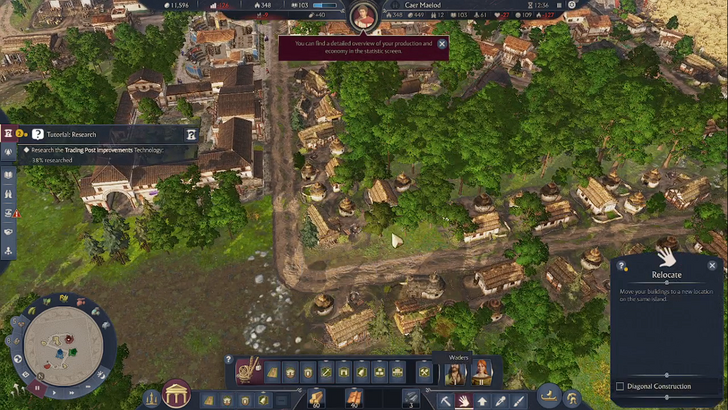
And it doesn’t stop with your chosen province. Once your ships set sail, the world opens wider. You’ll encounter other people—fellow Romans, wandering Norsemen, even far-flung Asian cultures—each with their own approach to diplomacy and their own resources worth trading or seizing. The system plays out through relationship scores, not unlike Civilization, but the variety of cultures gives it a richness that keeps every encounter fresh.
It’s a surprisingly expansive lens on the period, far broader than the title Pax Romana suggests, and it’s hard to see that as anything but a strength.
Some Things Unfinished, Some Poorly Explained

It isn’t all frescoes and mosaics, though, that’s to be expected from a demo. Many of the rough edges I noticed feel less like flaws and more like the growing pains of a work still in progress. Still, they’re worth pointing out for anyone stepping into this early build.
The research tree, for instance, is present but far from reaching its full potential. Most new structures come from climbing the citizenship ladder, leaving research to focus largely on building upgrades. There are some tantalizing options hidden deeper within, but with the demo’s strict hour-long limit and research unfolding in real time, you’ll be fortunate to unlock even a single breakthrough before your session ends.
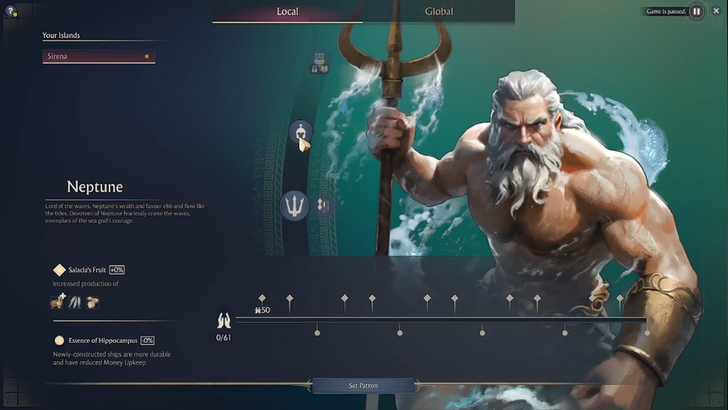
Religion, too, shows promise without yet reaching divinity. Rome’s gods are here, but not as living deities to smite or bless. Instead, they act as patrons, offering themed bonuses to shape your city. It’s a clever system that feels like it’s only scratching the surface, hinting at richer complexity when the full game arrives.
Finally, there are the citizen events, which are flashes of personality in your city’s daily life. They’re rare, almost too rare, and when they do appear, their impact is minimal. The bones of a great feature are here, one that could rival Civilization VII’s flavor events if given more weight and frequency.
These elements don’t detract so much as remind you: this is just the opening act. And if even these half-formed systems already spark curiosity, I can only imagine the full release weaving them into something far grander.
Stunning in Every Way

This demo left me floored. Its only true flaw that cannot be excused by its nature as a demo is its brevity—just an hour at a time, with each run erased when the clock strikes. But even so, I find myself eager to return, because every replay feels like a fresh chance to try a new path and glimpse the greatness ahead.
That glimpse is enough to outshine what Cities: Skylines II ever managed with its unfinished build and horrendously optimized engine. Anno 117 is both gorgeous and finely tuned, a rare mix of beauty and performance that most full releases struggle to capture.

I’ve played smaller, rougher AA titles that never came close to this level of craft. Here, every system sings, every choice resonates, and every vista tells its own story. This is city-building at its most ambitious and assured. In the end, all roads lead to Rome, but this time, they also lead to Anno 117: Pax Romana, a game that feels destined to stand at the genre’s summit.
Game8 Reviews

You may also like...
 |
Civilization 7 Review | Too Big to Be Perfect Strategy, Simulation, 4X |
 |
Frostpunk 2 Review | High Praise in Low Temperatures City-Builder, Survival |
 |
Against The Storm Review | A Near-Perfect Storm Strategy, City-Builder, Roguelite |
 |
Cities: Skylines 2 Review | Too Ambitious For Its Own Good Strategy, Simulation |
Anno 117: Pax Romana Product Information
 |
|
| Title | ANNO 117: PAX ROMANA |
|---|---|
| Release Date | September 2, 2025 (Demo) November 13, 2025 (Full Release) |
| Developer | Ubisoft Mainz |
| Publisher | Ubisoft |
| Supported Platforms | PC (Steam, Epic Games) PlayStation 5 Xbox Series X|S |
| Genre | Strategy, Simulation |
| Number of Players | 1-4 |
| ESRB Rating | ESRB E |
| Official Website | Anno 117: Pax Romana Website |