
Overview
What is Tokyo Scramble?
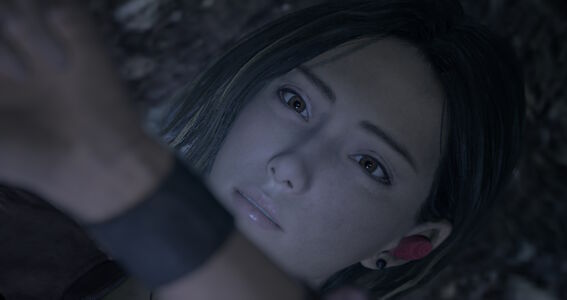
Tokyo Scramble is a puzzle-driven survival horror game set beneath Tokyo’s sprawling subway system. You play as Anne, an ordinary young girl trapped underground as monstrous creatures suddenly overrun the ruins. Rely on your wits and the surprising capabilities of your high-spec personal device to manipulate the station’s systems, outsmart your pursuers, and find a way to safety.
Tokyo Scramble features:
⚫︎ Structural manipulation
⚫︎ Stealth-based gameplay
⚫︎ Different monster archetypes
⚫︎ Stage rating system
⚫︎ Co-op system
| Digital Storefronts | ||
|---|---|---|
 Switch 2 Switch 2 |
||
| $29.99 |
Tokyo Scramble Review: It's a Scramble, Alright
A Red Flag in the Lineup
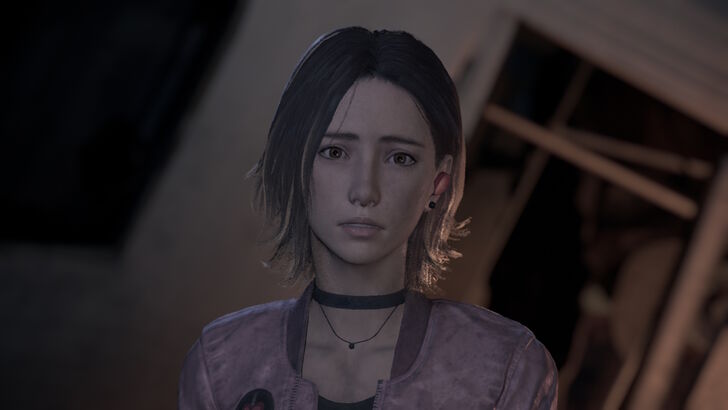
Adglobe is responsible for some of my favorite Metroidvanias of all time, Ender Lilies and Ender Magnolia. Naturally, I expected them to keep delivering banger after banger, even after hearing they were branching out into stealth horror with Tokyo Scramble.
Deep down, though, I did get a little nervous when I realized this would be a Switch exclusive. Their previous games were easily accessible on PC, so the sudden pivot to a platform-locked release felt odd. Like, why? That second red flag definitely did a number on my confidence—
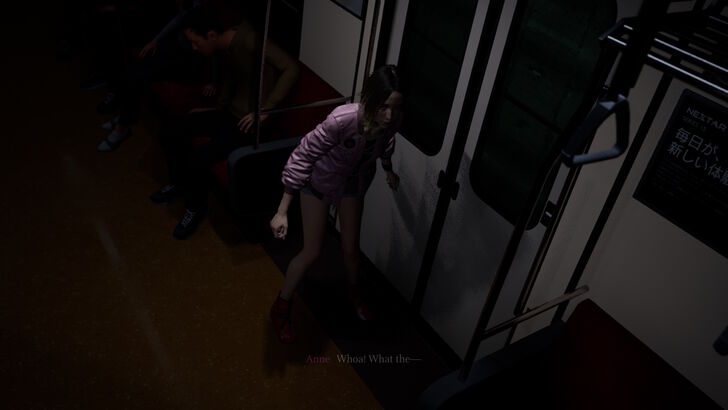
—and as it turns out, my misgivings were justified.
Tokyo Scramble, Adglobe and Binary Haze Interactive’s latest work, is, in a word, “mid.” Sure, it has a lot of good ideas baked into it, but there are so many things dragging it down that those bright spots are practically invisible.
Worst of them all is the story. I have no idea how this got past QA, but it’s some of the most irritating and distracting writing I’ve seen in horror in quite some time.
Monsters Versus Smartphones
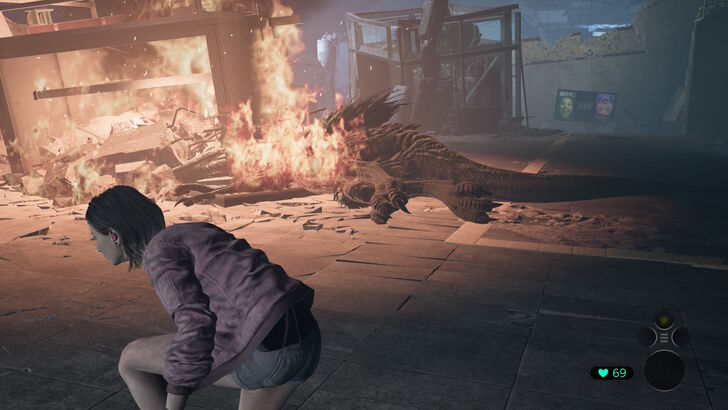
The basic premise of Tokyo Scramble’s story follows your average teenager, Anne, who finds herself isolated underground after a subway accident. When she regains consciousness, she realizes she’s surrounded by monsters resembling oversized goblins (dinosaurs), bats, and even tortoises.
Predictably, her goal is to escape with her face intact. But since Anne doesn’t have the backflipping skills of Leon Kennedy, she’s forced to sneak around and rely on whatever she has on hand to dodge, distract, and occasionally eliminate the monsters roaming the ruined subway stations.
The Underground at Your Fingertips
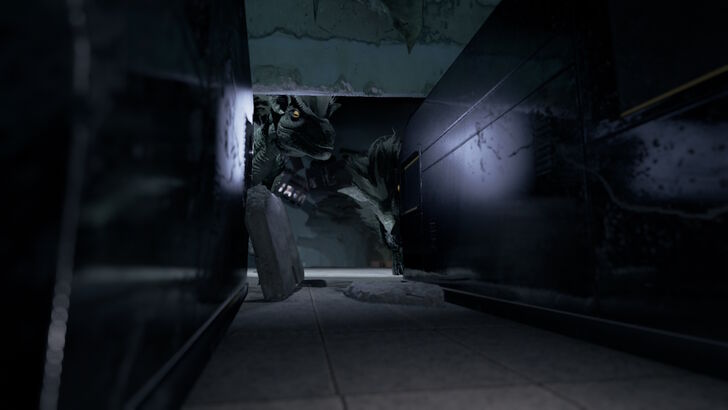
Her greatest asset, however, is her smart device, which, for some reason, does far more than function as a flashlight with internet access. It’s the game’s best mechanic and allows for the most creativity in any stage. I mean, it can remotely manipulate escalators, vending machines, elevators, and even crane claws…
Anyway, Tokyo Scramble’s gameplay is essentially something like espionage done for the sake of running away instead of breaking in. It’s all thanks to Anne’s weirdly powerful personal device, which can connect to much of what remains of the subway’s infrastructure and manipulate it remotely. This lets her trigger fare gates, vending machines, and other appliances to aid her escape, alongside basic functions like using the flashlight to temporarily blind enemies.
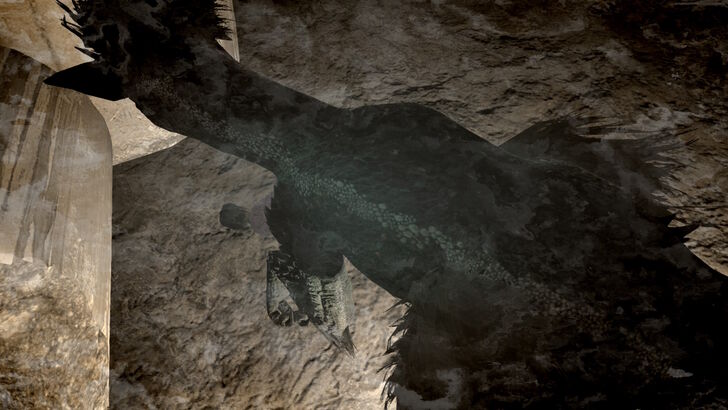
Beyond that, however, Anne only has her own body to rely on. And like any normal person, especially one that hasn’t done much cardio, her heart gives out quickly when she pushes herself too hard, turning a sprint into a limp in no time. As a result, you’re forced to sneak carefully, hug walls, and check corners before committing your meager stamina into a desperate dash to the exit.
Crouching and hiding behind solid objects won’t always save you, though. Enemies are varied not just in appearance, but in their abilities and behavioral patterns, making it surprisingly challenging to plan around them especially when multiple types share the same map. To make matters worse, the game grades your performance at the end of every stage, almost as if it’s judging you for every mistake.
Terribly Written Scenario
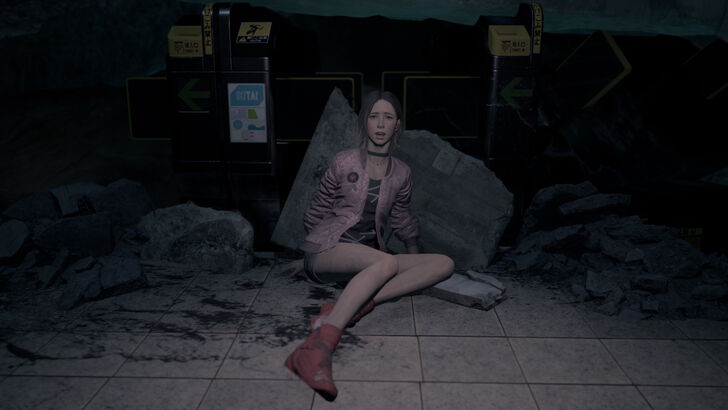
Honestly, though, the game penalizing you for a couple of minor slip-ups almost feels insulting given how much worse some of its own mistakes are. This is especially true for its writing, which I swear does more to ruin the experience than help it along.
The most obvious issue is Anne’s inability to shut up. She takes almost every opportunity to chime in, whether it’s with unfunny remarks about something you just did or entirely unnecessary lines that neither help the situation nor feel natural, even if she's almost within kissing distance from a monster.
It makes playing the game feel less like a personal experience and more like someone is backseating you the entire time. Someone very annoying. Which is a shame, because the story itself is… well, it’s not outright terrible. It’s serviceable, if somewhat contrived.
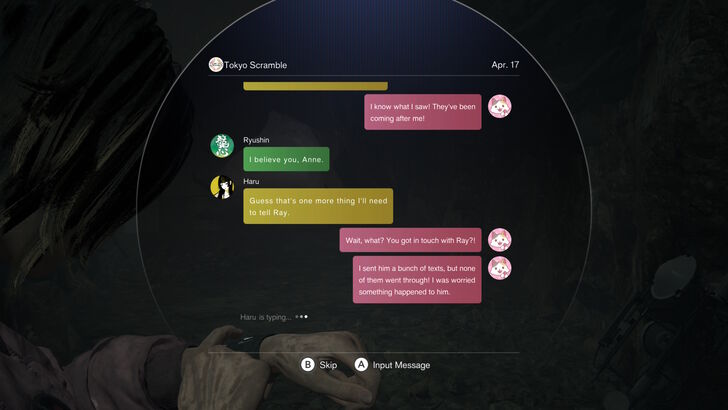
And what is up with how they designed Anne’s friends? They’re some of the most unconcerned and insufferable people I’ve seen in a video game in quite a while. You’re telling them you’re in danger of dying and their response is basically, “Be careful, m’kay?” Worse, they’ll often casually change the subject and drift into small talk that serves little purpose beyond dumping information that’s nearly useless to your immersion.
On top of that, Anne’s brother, who’s framed from the moment communications begin as her most reliable ally, isn’t much help mechanically either. He often shows up, does a brief Prince Charming routine, then peaces out, leaving you to fend for yourself again, even after long-awaited reunions
At one point, I actually dreaded finishing a stage because it often meant risking another barrage of notifications from Anne’s friends and their useless drivel. Sure, things improve later on, as you’d expect from something attempting narrative progression. But by then, you’ve likely already forgotten what was happening in the first place.
There’s No Tension at All
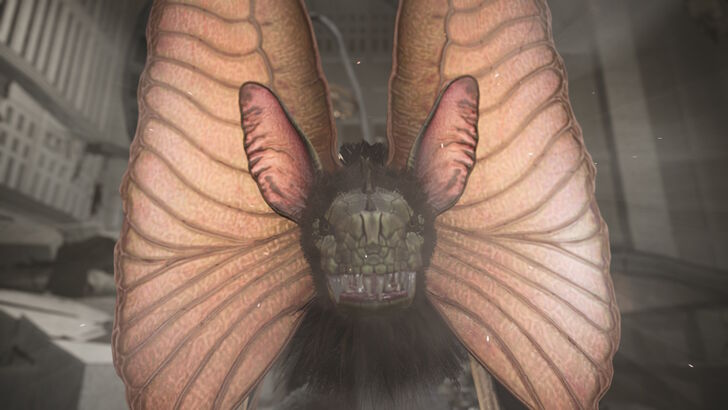
The game’s woes don’t end there. What about the gameplay, then? Surely the team behind incredible Metroidvanias like Ender Lilies and Ender Magnolia would pull through where it really matters, right? No. No, they didn’t.
First of all, deaths. If you’re going to die often, the least the game could do is let you go out with a bit of dignity, right? Instead, monsters just instagib you with zero ceremony. No dramatic sting, no brief cut-in, nothing. Upgrades, too, aren’t very satisfying to obtain. They're simply handed to you at save points, complete with a tutorial pop-up to make sure you don’t miss the moment.
As for the actual act of sneaking around, though, there is one silver lining: the heartbeat-based stamina system is genuinely interesting, forcing you not only to stop but to crouch in order to recover properly. Some enemies can even hear your labored breathing which, on top of the noise-based detection mechanics, restricts the options you’d normally rely on in a panic.
—Although I do question the plausibility of having only 69 (nice) to 70 BPM while supposedly surrounded by monsters. But I digress.
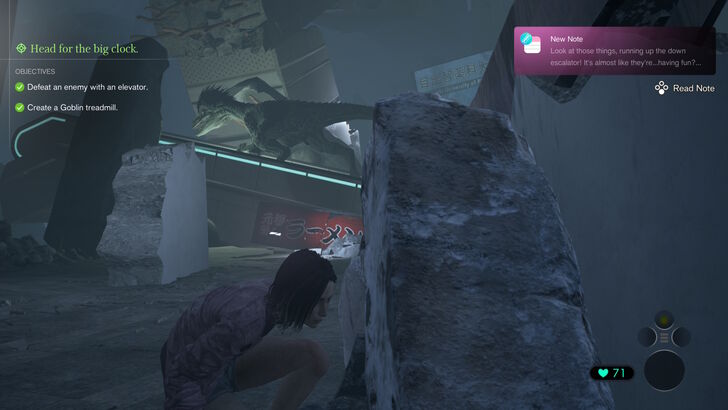
That said, unfortunately, once you understand an enemy’s limitations, it becomes far too easy to exploit them. Enemies without explicit sight-based abilities, for example, tend to freeze the moment they glimpse you, as if their last two brain cells are fighting for third place. And more often than not, if you keep yourself hidden all the while, they simply shrug it off and chalk it up to the wind… or the tornado
What about the app-based environmental manipulation, then? It’s a mixed bag, honestly, despite looking like the most engaging part of the game. Some interactions are genuinely creative and fun to exploit, true, but others feel outright ridiculous. Like, really? I can disable an enemy by forcing them to sprint endlessly on an escalator?
At times, it really feels like the game is blatantly telling you that the only way you’re finishing it is through sheer stubbornness and a few rounds of groaning in mental anguish. But once you actually get to that point, though, it’s hard not to see the vision.
Is Tokyo Scramble Worth It?
At Least It's Not $70
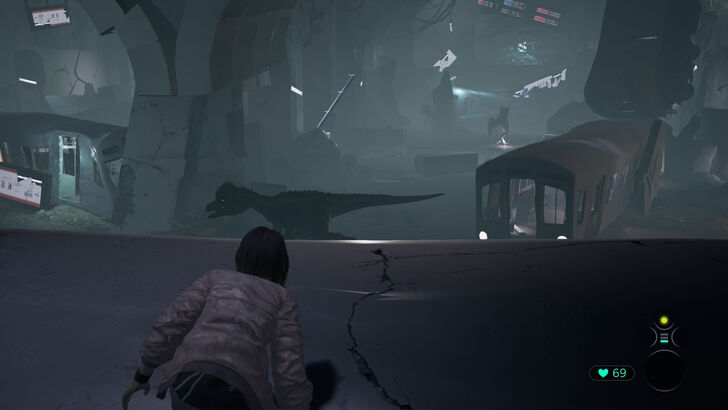
Look: I love Adglobe and Binary Haze Interactive’s work. Heck, I even liked Redemption Reapers, despite how limited it was. However, I’d be remiss if I recommended Tokyo Scramble to anyone remotely interested in what it promises.
That said, I’d argue it might be worth paying for the stress. $29.99 isn't that high of an asking price, after all.
Game8 Reviews

You may also like...
 |
REANIMAL Review | More Ruthless Than Any Little Nightmares Horror, Survival |
 |
Little Nightmares 3 Review Puzzle, Horror |
 |
Bendy: Lone Wolf Review Roguelike, Action, Horror, Survival |
 |
Bye Sweet Carole Review Action, Adventure, Puzzle, Indie |