



The Great Villainess: Strategy of Lily is a turn-based strategy game riding on the popular Villainess subgenre of anime, light novels, and manga. Read our review to see what it did well, what it didn't do well, and if it's worth buying.
The Great Villainess: Strategy of Lily Review Overview
What is The Great Villainess: Strategy of Lily?
Framed for the Emperor’s assassination, villainesses Scarlet and Lily are forced to fight back against the Empire—as the world’s first ever livestreaming rebels. The Great Villainess: Strategy of Lily is a turn-based strategy game where you can capture enemy generals to turn them into allies, or execute them to fully embrace your role as the Demon Queen. Victory is earned through these choices, while defeat comes the moment either Scarlet or Lily falls in battle.
Commanding limited forces from your mobile base, the Stream Airship, you’ll need to capture vital supply outposts and carve out invasion routes through enemy territory. Whether you favor ambushes, drawn-out sieges, or all-out assaults, every tactic is on the table.
The Great Villainess: Strategy of Lily features:
⚫︎ Strategy RPG gameplay
⚫︎ Capture generals or execute them live on air
⚫︎ Challenge runs
⚫︎ Rock paper scissors combat mechanics
⚫︎ Livesteam mechanics to influence the battle
| Platform | Price |
|---|---|
 Steam Steam |
$29.99 |
The Great Villainess: Strategy of Lily Pros & Cons
| Pros | Cons |
|---|---|
 Insanely Good Voice Acting Surprisingly Difficult Nobody’s in Their Right Mind Insanely Good Voice Acting Surprisingly Difficult Nobody’s in Their Right Mind |
Underdeveloped Support Cast Crazy Rushed Narrative Playtime is Rather Inflated |
The Great Villainess: Strategy of Lily Overall Score - 82/100
Probably one of my new favorite RPGs of the year, The Great Villainess: Strategy of Lily delivers a hilariously unhinged story that thrives on absurdity and a sharp sense of self-awareness. Its cast of crazy yet oddly relatable characters always steals the show thanks to the strong writing and standout performances, particularly through top-tier Japanese voice acting. While the narrative pacing is quite a mess, the game’s bold personality and audiovisual flair more than make up for it.
The Great Villainess: Strategy of Lily Story - 7/10
The Great Villainess: Strategy of Lily thrives on simplicity, making it immediately accessible and enjoyable even for those just casually paying attention. Each story arc kicks off with hilarious, eyebrow-raising situations that only escalate into even more outrageous developments, creating a consistently entertaining narrative flow. Its cast of characters, a blend of unhinged personalities disguised as ordinary people, adds layers of humor and unpredictability that elevate the absurdity. However, this breezy approach also limits its depth; character development, particularly for the supporting cast, often feels underexplored, and the pacing can suffer from how quickly the game rushes through its story.
The Great Villainess: Strategy of Lily Gameplay - 8/10
Just like its characters, The Great Villainess: Strategy of Lily’s gameplay is deceptively simple. It’s essentially a turn-based strategy RPG without many of the bells and whistles expected from the genre such as deep kit customization features and whatnot. However, that allows it to focus more on its strategic aspects, creating some real high-stakes situations where every move can mean the difference between victory and having to load from a previous file a dozen times.
The Great Villainess: Strategy of Lily Visuals - 8/10
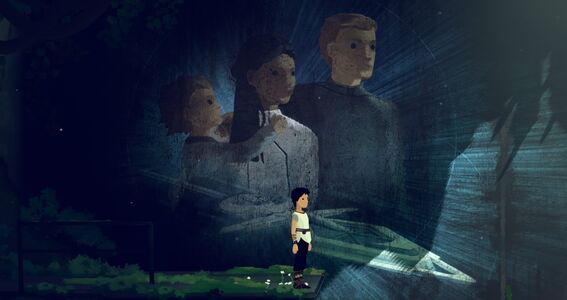
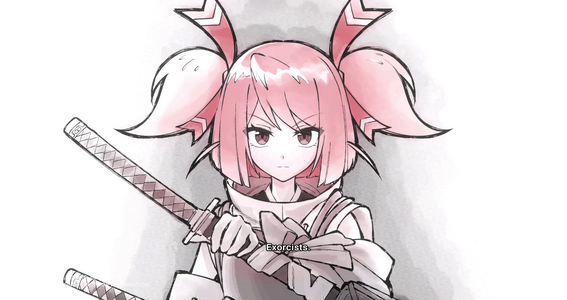
Despite primarily using pixel graphics on 2.5D backgrounds, the game delivers a charming visual experience through its stunning splash art, exaggerated visual effects, and a thematic commitment to its pixel aesthetic—even crafting “3D” renditions by simply tacking on a rough third dimension. It’s an endearing approach full of personality that works extremely well. Honestly, if not for the excessively barebones visual novel-style narrative delivery and a ton of reused assets, this could have easily scored a 9/10 or higher.
The Great Villainess: Strategy of Lily Audio - 9/10
If voice acting alone could earn a game a perfect audio score, this one would easily get a 10. The performances are exceptional, with each character overflowing with personality—especially standouts like Scarlet, whose manic obsession with beauty and violence is perfectly voiced, and Lily, who balances her as the straight-laced moral compass and almost motherly figure. That said, voice acting isn’t everything, and the game does lose a point for its inconsistent, hit-or-miss music.
The Great Villainess: Strategy of Lily Value for Money - 9/10
This is one of those games where I feel like the price perfectly justifies the experience. For just a cent short of thirty bucks, you’re getting a game that’s guaranteed to provide a handful dozen hours of enjoyment and torment in equal measure—a perfect harmony of the joys and pains of playing a rather challenging strategy title with the kind of story that’s hard to take seriously, yet also difficult to just brush off. It’s also quite replayable, especially if you consider the obscenely difficult challenges that the game hints that you can do.
The Great Villainess: Strategy of Lily Review: Smash That Genocide Button!
Reviewing, let alone playing, a yuri villainess strategy game wasn’t on my bingo card this year, yet here we are. But ever since discovering My Next Life as a Villainess: All Routes Lead to Doom! (乙女ゲームの破滅フラグしかない悪役令嬢に転生してしまった...), I’ve been hooked on the villainess subgenre to the point where it’s become a search term I routinely use for new shows, manga, and of course, games. So naturally, when I saw The Great Villainess: Strategy of Lily, I knew it would be an instant shoe-in to my Steam library.
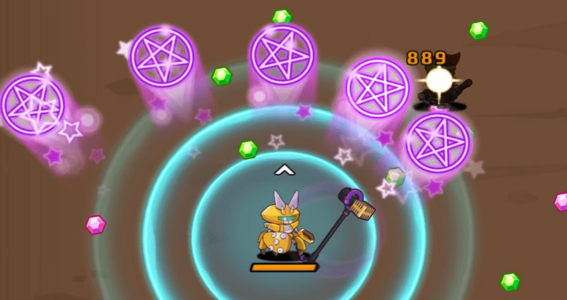
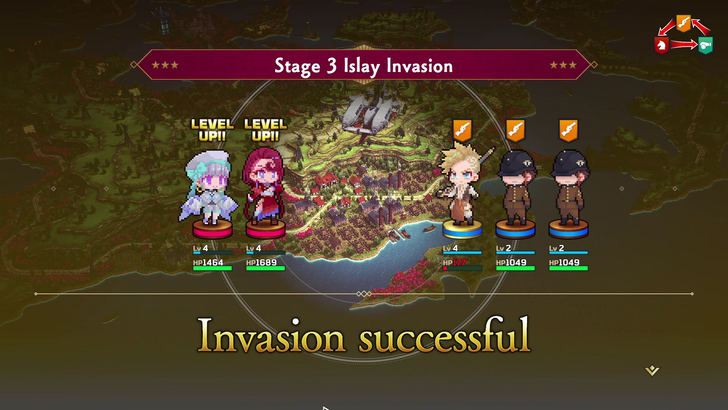
The game itself is a turn-based strategy RPG that resembles Advance Wars, though those with more, uhh, cultured tastes might see stronger parallels with Sengoku Rance or Eiyuu Senki due to their shared genre-spanning elements. Basically, instead of fighting with units, you fight with entire armies. But what really sets them apart from other strategy games is its combat reliance on HP as the core stat. That is, a unit’s effectiveness scales with the number of squad members still standing: the more you have, the more damage you can dish out and soak up. If too many fall, the squad leader takes the next hit and gets knocked out for a handful of turns before they can respawn.
And it’s not as if you’re only playing as the mobs that the protagonist surrounds herself with, too. Unlike most games in the villainess trend, Strategy of Lily puts its leading lady in the thick of battle. It’s not just another dating sim or linear visual novel with a noble title slapped on; here, the villainess isn’t there to be admired, but rather, someone who leads by example, even if it may be a bad influence to children everywhere.
You see…
Nobody’s in Their Right Mind, Yet They Are
Now, I wouldn’t put it past anybody to have the hots for crazy. It’s very understandable—a sentiment I myself sympathize with and even relate to. That might be a very sketchy sentiment to hold on to most of the time, but it’s actually very appropriate for some of the “crazies” in The Great Villainess: Strategy of Lily, because they’re at a level of unhinged where it stops feeling like a forced evil and circles right back into “realistically extreme, albeit acceptable” territory.
To understand their characters, you must first learn what the game is about. The Great Villainess: Strategy of Lily is set in a world that feels like the result of mixing the Victorian era, the Renaissance, and the Age of Information into one setting. There, not only are people rediscovering the arts and philosophy—they’re also engaging in tumultuous empire-building and industrialization, all of which happen simultaneously with the advent of the internet and livestreaming.
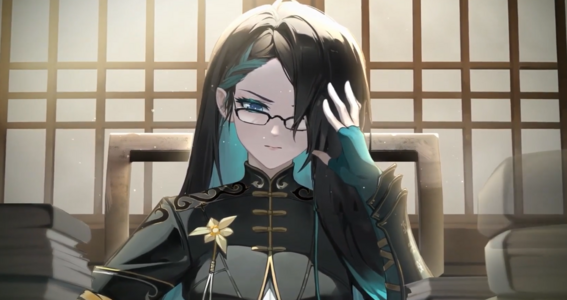
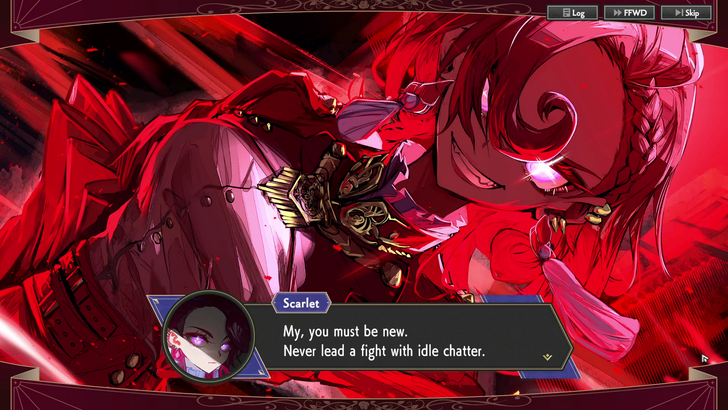
One half of the protagonist duo, Scarlet, embodies these different eras’ qualities perfectly; she is a brutally honest tyrant who loves beauty and exhibits such powerful charisma and relatability with the common populace that her mere words can leave even her enemies in a trance-like spiel whenever she holds her live talk shows. In fact, it’s exactly those characteristics that make her seem like a weirdo.
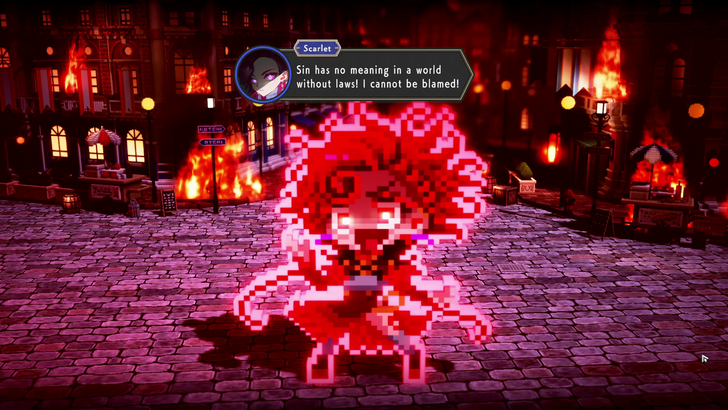
It’s not uncommon for her to go on lengthy monologues about dubious, yet somewhat understandable things, such as not having to take responsibility for a crime in a place where law and order have all but broken down. But, in a way, she’s not exactly wrong in most cases either, which warrants the negative reactions from those around her and gets her labeled as a villainess. It also certainly doesn’t help that Scarlet laughs like a deranged person with zero self-control.
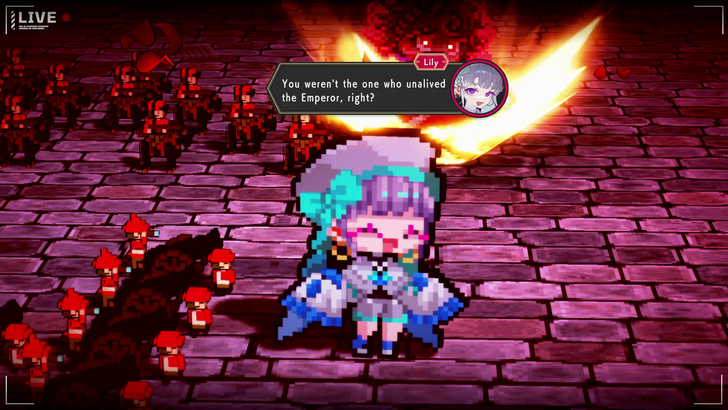
Her partner—or perhaps it would be more accurate to call her Scarlet’s “Master”—meanwhile, is the fidgety and paranoid titular character, Lily, who manages Scarlet’s new empire as its sort of prime minister. In reality, however, she mostly takes on the role of advisor and motherly figure who recommends the safest option at every opportunity—because she dislikes dying. I mean, don’t we all? But if you think “she’s just like us for real for real,” she has an underlying disposition to manipulate those around her in order to survive, even to the point of having them betray their countries. Heck, she even does so live, in front of thousands of eyes. In a way, she’s more of a villain than Scarlet, who simply acts in a way that she believes is justified according to the situation.
And that’s the point. The Great Villainess: Strategy of Lily’s protagonists may be unhinged sociopaths and manipulative schemers, but in the end, they’re moving according to their desires, driven by mutual misunderstandings between them and the enemy—which only results in them receiving the title of villainesses when their only real faults are stating the obvious and trying to live to the next day. As a result, they’re excellent characters that play on the villainess trope very well.
Peak Voice Acting
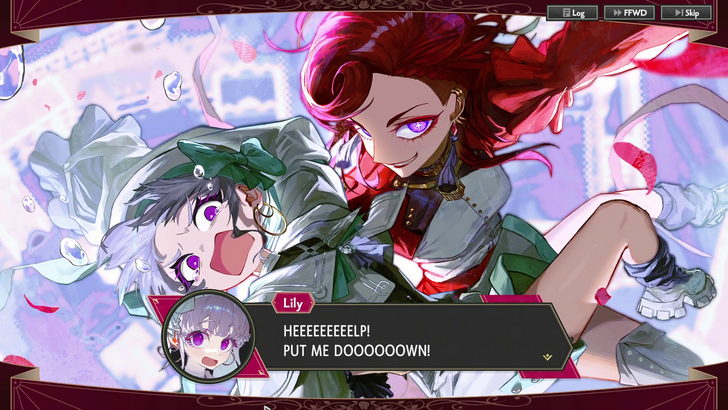
The Japanese have some of the greatest voice acting talent in the industry. They’ve delivered some of the most memorable performances across anime, games, and radio dramas from my childhood. So, in a way, it’s no surprise they’ve outdone themselves once again in The Great Villainess: Strategy of Lily.
Nonoka Obuchi’s performance as the main protagonist, Elizabeth Scarlet Penrose, especially deserves a standing ovation. She brings Scarlet’s unhinged rhetoric and brutally honest personality to life with every line. The rest of the cast have done an amazing job, too—Hikaru Iida’s portrayal of Lily, for example, is another standout, and Sally Amaki, as always, leaves an impression even with a less prominent role.
Unfortunately, you won’t get to enjoy their performances as much as you might hope. A significant portion of the game isn’t voiced, and it has less filler content than a typical RPG. Still, where it counts, the voice acting absolutely steals the show.
The Narrative Feels Half-Finished
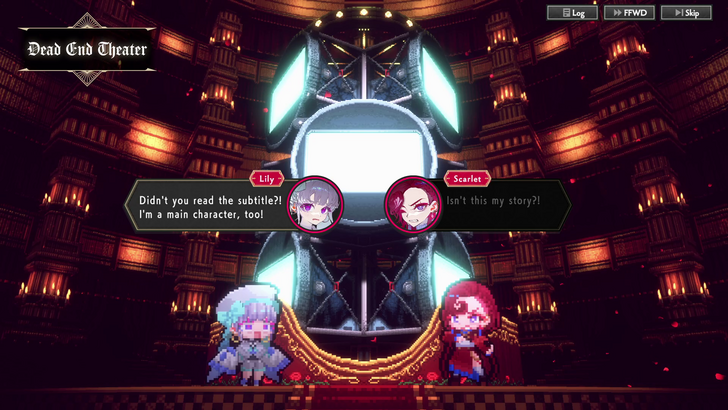
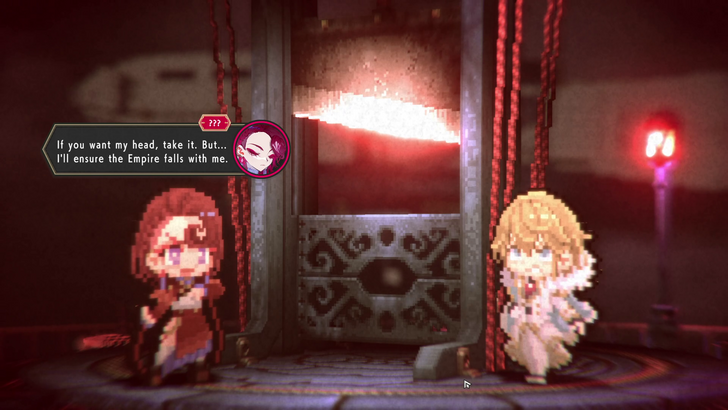
In my opinion, this is the one area where The Great Villainess: Strategy of Lily truly fumbles. The story opens with the burning of The City (yes, that’s actually its name) and, amidst the chaos, the assassination of the Emperor. As panic spreads and accusations fly, in walks Scarlet—blissfully unaware of the mood—who boldly declares that no one can be accused of a crime in a place where the law no longer holds sway.
To her—and perhaps to anyone who enjoys reading between the lines—what she says does make a strange kind of sense. But to everyone else, it sounds like a confession, leading the entire Empire to accuse her of regicide and hunt her down. It’s a brilliantly eyebrow-raising setup, and for a game like this, it’s exactly the kind of absurd premise that works.
Which makes it all the more disappointing that there’s so little of it. The main story only progresses in disappointingly short bursts between chapters or in scattered scripted scenes before major events. In between, you're mostly left with combat and a handful of character stories that offer minimal development for both the main cast and supporting characters.
Challenging, Frustrating, and at Times Repetitive
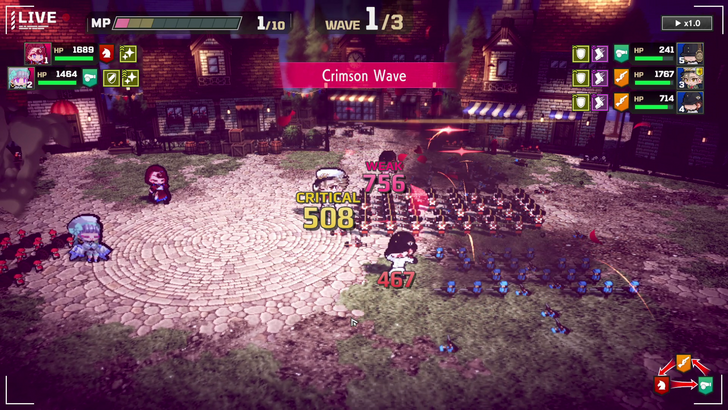
Honestly speaking, I haven’t played a single hour of Advance Wars. I have, however, played an unhealthy amount of Eiyuu Senki and Eiyuu Senki Gold, and let me tell you—if you’ve ever been frustrated by the strict timing right after declaring war in Eiyuu Senki, you’re in for an even tougher time with The Great Villainess: Strategy of Lily.
Before diving deeper, it’s important to understand how combat works—especially since around 90% of the game revolves around initiating battles and watching them unfold. As mentioned earlier, units rely on HP as their core stat, represented by the number of squad members still alive in a general’s squadron. In other words, your HP directly affects your damage output. Most arcs revolve around capturing a specific point or node on the map, usually guarded by an enemy general, whom you can either capture or eliminate, and surrounded by a web of interconnected territories.
To progress, you’ll need to seize control of these nodes by navigating through the network and engaging in battles, repeatedly exchanging men against each other, resupplying, and then battling it out again. But simply stepping on a tile isn’t enough; each node takes several turns to capture, leaving you vulnerable to enemy counterattacks while you wait.
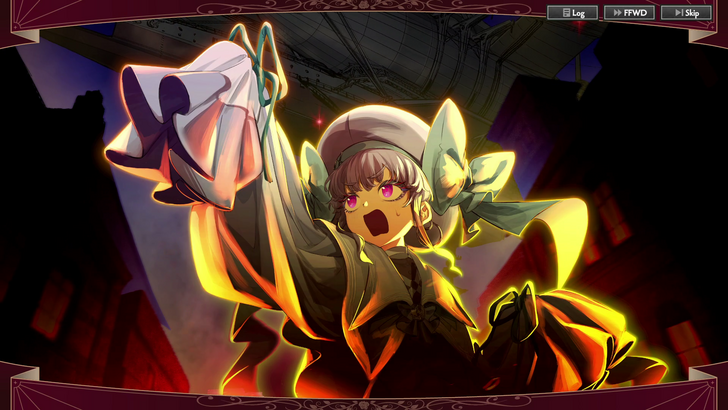
Again, the game has almost no filler content, meaning combat will make up the vast majority of your playtime—and yes, that can get exhausting.
To shake things up, Strategy of Lily introduces a unique mechanic through Lily’s personal Stream Airship: a blimp with a massive screen reminiscent of the DirecTV blimp. With it, Scarlet and Lily can broadcast various programs, talk shows, propaganda, blatant misinformation, and more, that affect battlefield conditions.
These broadcasts can halt enemy movement, prevent healing, or even publicly shame enemy generals into defecting. But even these clever tools can get repetitive after a while. Thankfully, not every battle is a breeze. Enemy ACE units in particular can punish poor planning with devastating losses, sometimes forcing a complete restart, and the enemy generals themselves will fight tooth and nail to keep their positions on the map.
Is The Great Villainess: Strategy of Lily Worth It?
It’s a Sin to Skip It
Despite its narrative flaws, you’d be doing yourself a disservice by not giving The Great Villainess: Strategy of Lily a shot. It’s the kind of game you’ll enjoy subjecting yourself to—flaws and all. Honestly, I’d even recommend it at full price; it’s just that fun and satisfying to play.
| Platform | Price |
|---|---|
| Steam |
$29.99 |
The Great Villainess: Strategy of Lily FAQ
Can you do genocide runs where you kill all of the capturable characters?
Yes, you certainly can. However, that will mean you will have a very real problem with managing multiple battlefronts.
How many hours does it take to finish the game?
It entirely depends on your habits, but you can finish it in 20-30 hours or even less.
Game8 Reviews

You may also like...



The Great Villainess: Strategy of Lily Product Information
 |
|
| Title | THE GREAT VILLAINESS: STRATEGY OF LILY |
|---|---|
| Release Date | July 24, 2025 |
| Developer | One or Eight, Alliance Arts |
| Publisher | Alliance Arts |
| Supported Platforms | PC |
| Genre | Strategy, RPG |
| Number of Players | 1 |
| ESRB Rating | TBA |
| Official Website | The Great Villainess: Strategy of Lily Website |