Overview
What is MIO: Memories in Orbit?
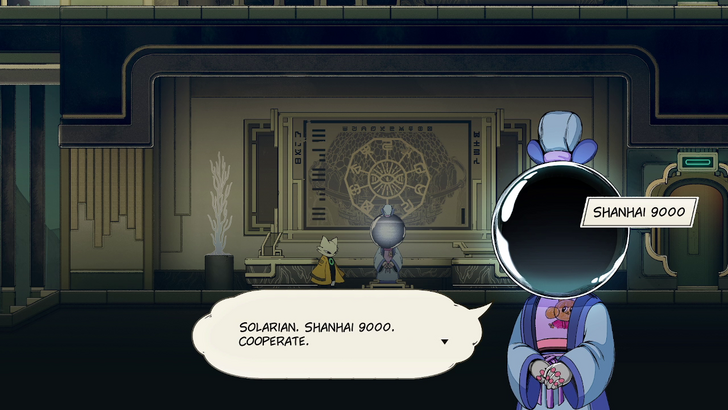
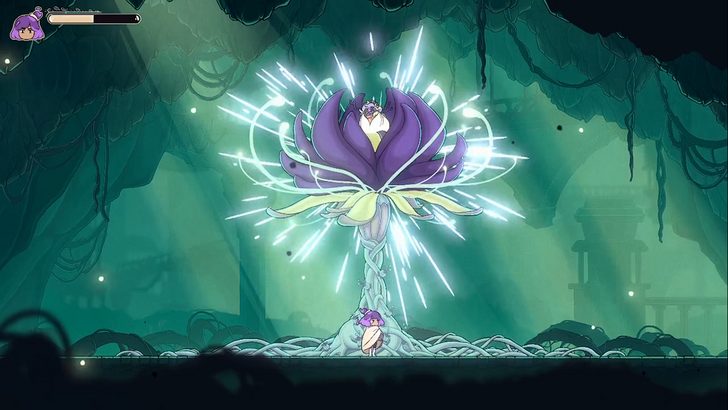
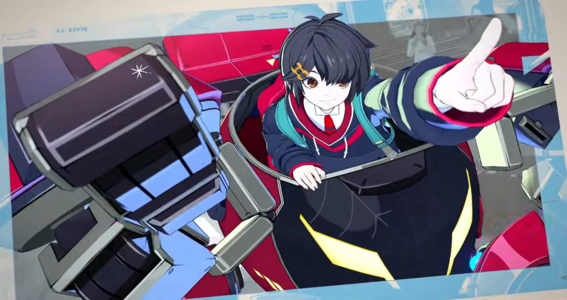
In MIO: Memories in Orbit, players awaken as MIO, a robot with extraordinary abilities, aboard the Vessel, a massive starship drifting aimlessly through the void. Once a pinnacle of technology, the ship has decayed into a labyrinth of ruins, reclaimed by lush vegetation and overrun by rogue machines. With the Pearls, the ship’s AI caretakers, mysteriously offline, the Vessel teeters on the edge of total collapse. To save it, MIO must venture into the ship’s deepest reaches to restore its lost memories and uncover a hidden past.
MIO: Memories in Orbit features:
⚫︎ The Allocation Matrix
⚫︎ Hand-Painted Art Design
⚫︎ Interconnected Biomes
⚫︎ Environmental Storytelling
| Digital Storefronts | ||||||||
|---|---|---|---|---|---|---|---|---|
 Steam Steam |
 Epic Epic |
 PlayStation PlayStation |
||||||
 Switch Switch |
 Switch 2 Switch 2 |
 Xbox Xbox |
||||||
| $19.99 | ||||||||
MIO: Memories in Orbit Review: The Little Spark That Could
How Are Indie Devs Dominating a Genre?
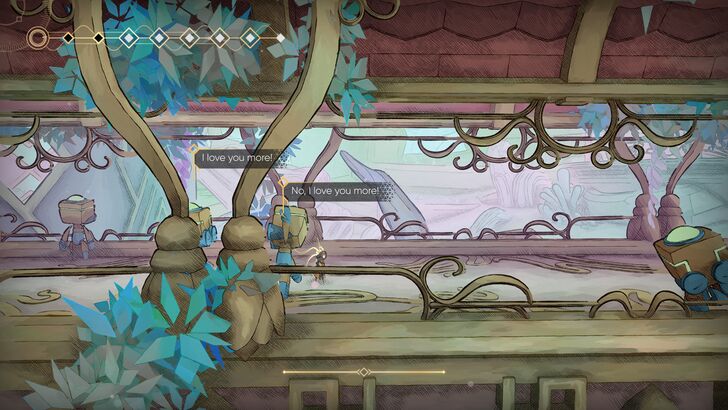
The changes within the gaming industry over the last decade have been impossible to ignore. There was a time when the biggest budgets guaranteed the best experiences, but lately, the most memorable titles are coming from small teams. This is especially true for the Metroidvania genre. We’ve been spoiled for choice since the 2010s, which gave us hits like Axiom Verge, Salt and Sanctuary, and Ori and the Blind Forest. Then, of course, Hollow Knight came along and changed the standard for everyone.
Since then, the momentum hasn't really stopped. We’ve seen a variety of successful releases, including the long-awaited launch of Silksong a few months back. But even with that major release now behind us, the genre doesn't feel like it has peaked or slowed down. Instead, it feels like the foundation is just getting stronger. Independent studios are still the primary drivers of innovation here, and they continue to fill the calendar with games that deserve just as much attention as the big-name hits.
Among these is MIO: Memories in Orbit, a title I’ve been eyeing for years. It enters an already crowded market, yet the more I played it, the more I felt it would carve out its own space almost immediately. Much like how Nine Sols became a hit in 2024 or Ori captivated players in 2015, MIO feels like it is on a trajectory toward becoming a staple in the genre.
A Ghost Inside the Overgrown Shell
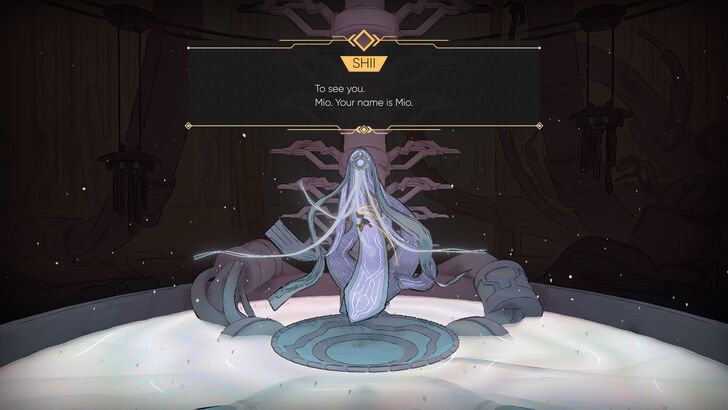
MIO: Memories in Orbit opens in a way that should feel familiar to anyone who’s spent time with the genre. You wake up as a "spark" inside a massive spaceship that is past its prime. The Vessel, an enormous ark meant to carry life safely through space, is breaking down. Systems are failing, entire sections are abandoned, and the artificial intelligence designed to keep everything running no longer seems capable of doing so. Whatever this place used to be, it isn’t that anymore. From the start, the game frames you as something small inside a problem that’s far bigger than you are.
Overgrown vegetation has spread throughout its metal corridors, twisting around machinery and replacing clean lines with tangled roots and glowing growths. Machines that once had autonomy now wander aimlessly, hostile and broken, stripped of their original purpose. The ship feels abandoned, but not empty. Something clearly went wrong, and the few systems that remain functional no longer agree on how to fix it, or even if it can be fixed at all. Your role, as this tiny robot, is to push deeper into the Vessel and figure out why everything is breaking down, and whether it can still be saved.
True to the genre, MIO doesn’t hold your hand through all of this. You’re dropped into the ruins with little direction beyond the instinct to move forward. When you hit a wall, you backtrack, find another path, unlock a new ability, and slowly open up more of the ship. The story moves alongside this structure. Progression is measured not by the distance traveled, but by a deepening realization of what the Vessel once was and the entity it has become.
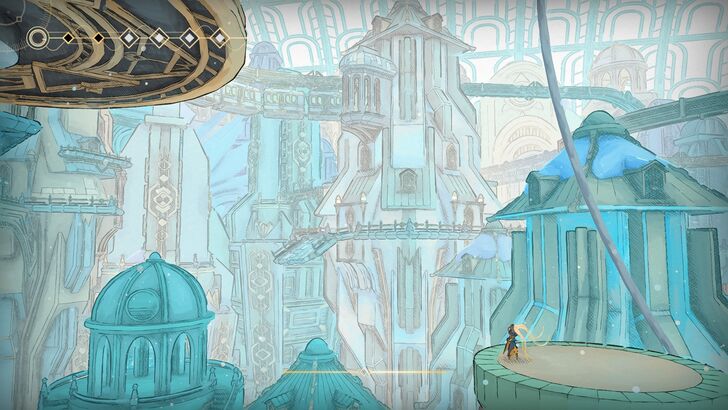
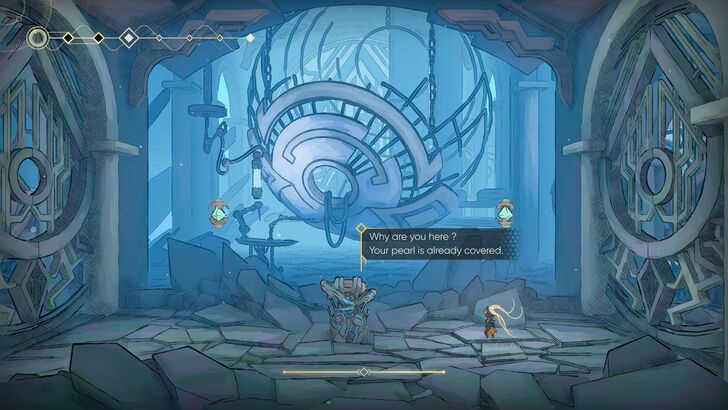
Dialogue is sparse, and while there are a few voiced lines for certain characters, the game communicates its story through the world itself. The state of the Vessel tells you almost everything you need to know. You can see how decay has transformed each area.
The Metropolis, for example, still looks like a city, with tall structures and layered spaces that hint at a once-busy hub. At the same time, it’s clear that even this area couldn’t escape the corruption spreading through the ship. Red vegetation snakes through the streets and infects the mechanical citizens. Machines and robots lie abandoned in hallways, some seemingly frozen mid-task. Industrial rooms strangled by roots, crumbling bridges, derelict control centers all speak to the ship’s tragic past. Here, you fill in the gaps yourself.
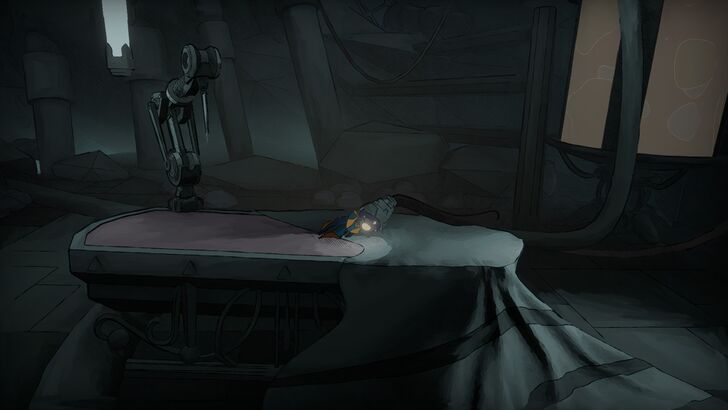
If you’ve read my thoughts on Hollow Knight: Silksong, you know I’m a big fan of fragmented storytelling. It’s rewarding to find clues and theorize about the history of a place while you play. I realize this isn’t for everyone, though. Some players find it frustrating when they don’t fully understand the "why" behind their actions until they are several hours into the experience.
MIO does, however, keep its premise simple enough that you never feel totally lost. At its heart, it’s a "chosen one" story, where an unlikely hero becomes the only hope for a collapsing world. It’s a somewhat predictable backbone for a game that is otherwise quite creative, though. It’s a tired trope, but the game gives enough context to make exploration worthwhile, and each new area you discover adds even more depth to the world.
Dancing through the Ruined Hull
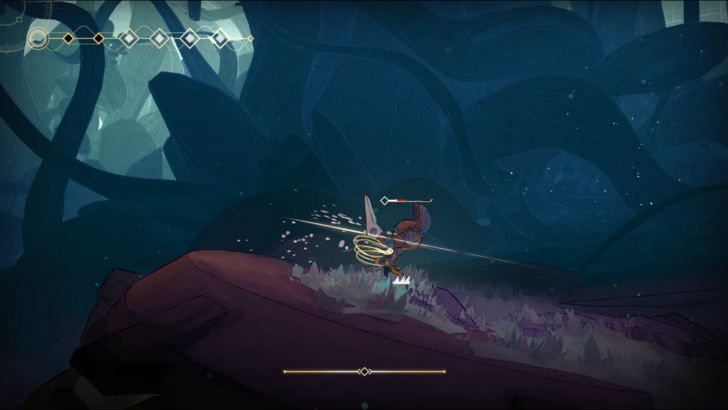
Since MIO: Memories in Orbit is a Metroidvania, the story and world would be completely stuck if the gameplay wasn't up to par. Coming off the back of Hollow Knight: Silksong, the very first thing that hit me was the pacing. It is significantly slower than anything Hornet or the Knight would experience. Although you are still performing the same kind of aerial acrobatics and pogo-bouncing off enemies to stay airborne, I was struck by how much more relaxing the general flow feels.
Don't let that fool you into thinking it’s an easy ride, though. It is still a difficult game that requires you to "git gud," and I’ve definitely had my fair share of embarrassing deaths during boss battles. The relaxing quality I’m talking about comes from a design choice I am in favor of: the removal of contact damage.
In most games in this genre, including both Hollow Knight titles, just grazing the shoulder of a tiny ant can send you flying back and take a chunk out of your health. In MIO, you can stand right next to an enemy and whack them without getting hurt, provided they aren't actively mid-attack. After losing so many runs in other games to accidentally moving the joystick where I didn’t want it to go, this change sold me on the game almost immediately. It removes the low-level anxiety of positioning and lets you focus on the actual mechanics of the fight.
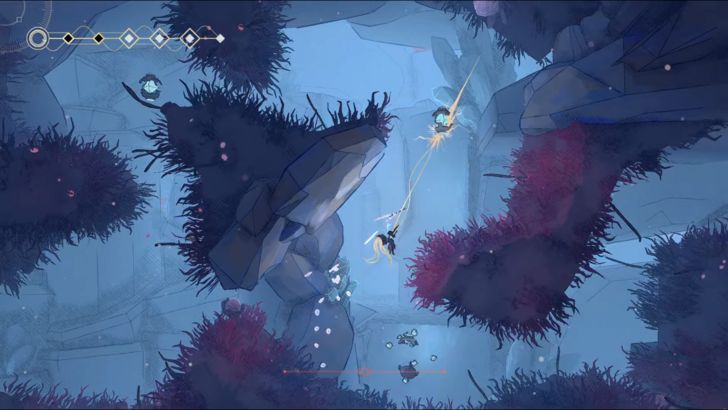
The game is definitely more forgiving than Silksong, but that’s largely because Silksong is designed to be a mechanical nightmare for anyone but the most hardcore fans. MIO feels more approachable because its toolkit feels incredibly satisfying to use.
Early on, you gain the Hairpin ability, which lets MIO latch onto airborne enemies or grapple across the environment. It’s a small feature, but it makes exploration feel almost like swinging through the levels like Spider-Man. This works alongside other abilities to create platforming challenges that are tense and precise. It’s not quite on the level of the Path of Pain or the late-game pogo-fests in Silksong, but it’s more than enough to keep you on your toes. The levels encourage you to use these abilities creatively, and figuring out how to chain movements to get past obstacles is rewarding in itself.
What’s even more clever is how these traversal tools transition into combat. The same tool you use to clear a gap can be used to reposition yourself during a fight. This makes combat feel much more interactive.
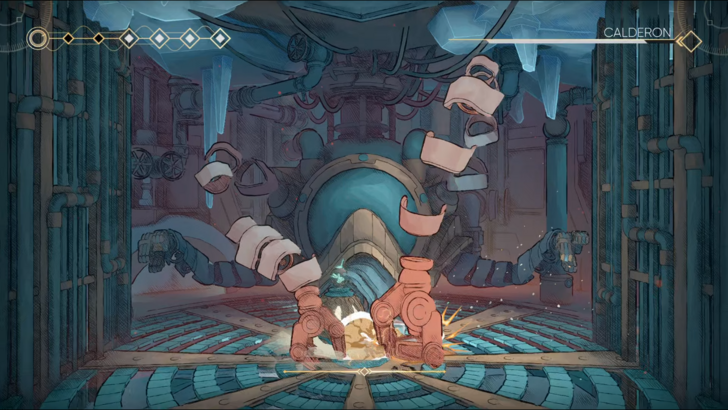
One of the best early-game upgrades is the dodge mechanic. It functions a bit like a parry; you have to time it almost perfectly as an attack is about to land. If you pull it off, you get a small window of invulnerability. Although the game originally introduces this to help you avoid environmental hazards, the real value is in boss fights.
I actually managed to "no-damage" a few bosses simply by staying close and timing my dodges perfectly. Because there is no contact damage, I could sit comfortably in the boss’ personal space and just wail on them until they went down.
Of course, not every boss is that simple. Many of the later ones required a lot of willpower and more runbacks than I’d like to admit. For players who might find this frustrating, the game actually offers some great accessibility options in the menu. There is a setting you can enable that gives you a protective shield if you stay on the ground for a few seconds. It essentially lets you tank one free hit, which can be a lifesaver during platforming segments or a particularly nasty boss phase.
I do admit that in certain sections of the game, I had that option turned on so that I could comfortably clear a segment or get through a tricky area without losing my progress. You could argue that this is a case of needing to "git gud" and master the mechanics more deeply, but I actually adore that the option exists.
It gives people—like me, I suppose—who just want to enjoy the game and soak in the incredible environments a way to keep moving forward without hitting a wall. It’s still a challenging game with or without it.
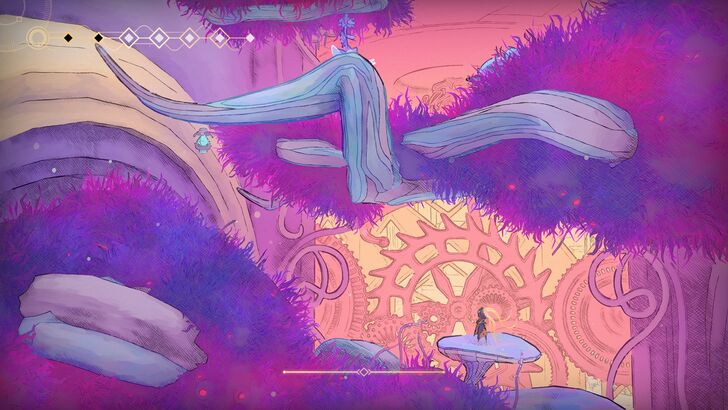
I do, however, have some reservations about how MIO actually feels to control. Some players might find MIO’s actions a bit too floaty, and I have to agree that the movement isn’t always as snappy as I’d like.
In a Metroidvania, precision is everything. You want to feel like every button press results in an immediate action. MIO has a certain weightlessness to their jump, which can make landing on small platforms tricky. It’s not that the controls are bad, but they require a much longer adjustment period than I expected. I wish the character felt a bit more "planted" in the world, as the current floatiness often turned what should have been a simple platforming challenge into a fight against the physics engine itself.
A Graphic Novel in Motion
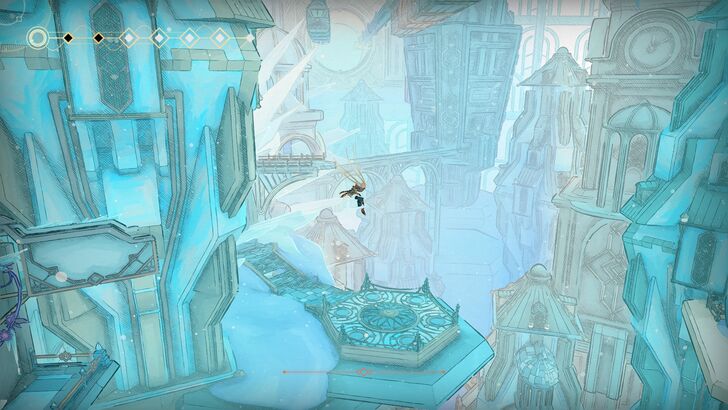
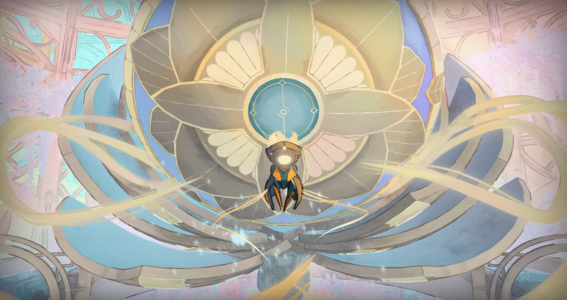
Part of the relaxing feeling you get in MIO: Memories in Orbit comes from just looking at it. I honestly cannot get over how gorgeous this game is. It’s like someone took a graphic novel, gave it motion, and then poured watercolors all over. It uses a hand-drawn style that feels so much more personal than your typical 3D game. Everything on the Vessel is covered in these lush colors and cross-hatching that makes every single room feel like a piece of art.
To make the art style work, the game uses cel-shading that is handled incredibly well. The shading is nice and clean, helping the characters stand out from the backgrounds without looking out of place. This is combined with a watercolor aesthetic used to paint the world. The soft yet bleeding edges of the colors make the environments feel organic and slightly surreal.
What’s even more impressive is how they use color and light to tell the story. Each area you visit has its own color palette, usually limited to just a few primary tones. You’ll be running through these moody and monochromatic industrial halls one minute, and then suddenly you’re in a room filled with nature and golden accents. The light guides your eyes toward where you need to go next.
Memory Management as a Challenge
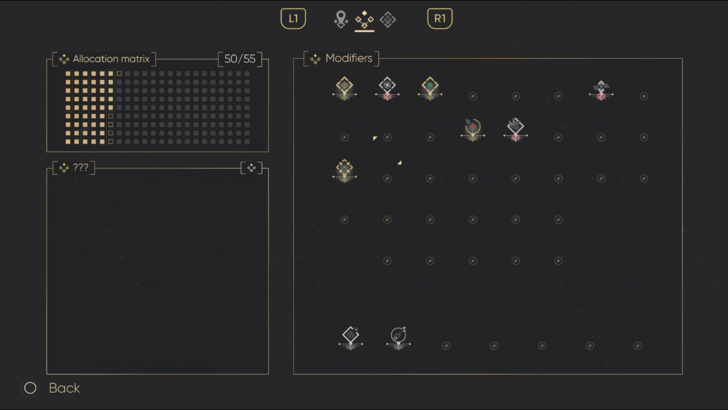
I also found myself impressed by the game’s Allocation Matrix system. This is essentially your character’s internal memory management, and it governs almost every advantage you have in the world. Instead of a traditional skill tree where you unlock a perk and keep it forever, MIO forces you to manage a limited number of memory slots. As you explore, you find modifications that offer various buffs, but since your space is finite, you have to prioritize what truly matters to your survival.
For example, basic conveniences like the UI that shows how many hits you can take before you are booted back to a rest point will cost you about five memory slots. If you want to go further and add an entire extra health point to your pool, that might set you back twenty slots.
What I find most interesting, though, are the ones with trade-offs. You can find modifications that grant you extra memory slots, but they come with a steep price. You might gain ten more slots for abilities, but in exchange, your dodge gets a slight delay, or perhaps you lose the ability to heal entirely unless you are at a resting point.
It doesn’t completely alter your playstyle as in Hollow Knight’s charm system, but it still forces you to weigh the very interface and mechanics of the game against your own raw power.
Is MIO: Memories in Orbit Worth It?
Yes, It’s a Metroidvania With a Lot of Soul
There is a massive amount of soul hidden within the machine that is MIO: Memories in Orbit. It manages to stand out in a genre that often feels like it is repeating itself, mostly by focusing on its art direction and atmosphere. For a price of $20, you are getting a substantial experience that easily spans 30 to 40 hours. This time will vary, of course, depending on how much you enjoy poking around for secret rooms or how long you spend staring at the map trying to figure out which corner of the Vessel you haven’t explored yet.
I do have to admit that the game feels a bit light when it comes to content beyond its narrative. If you step off the main path, there isn’t a massive number of things to do. There are some optional bosses and areas to explore, but the experience remains relatively contained. It doesn’t have the same gargantuan scale as something like Silksong, but that shouldn’t be taken as a lack of quality. The scale here is focused. Even though I’d like to explore more of the Vessel beyond what’s shown to us, the developers chose to make the journey to the credits as polished as possible.
Even with its smaller scope and the few mechanical quirks I mentioned, the experience remains deeply entertaining. It is a great example of an indie studio having a very clear vision and sticking to it. If you are looking for a world that feels profound and artistically unique, MIO is more than worth the entry price. It is a beautiful, melancholic trip through a dying world that offers a lot of heart for a very fair price.
MIO: Memories in Orbit FAQ
How Long to Beat MIO: Memories in Orbit?
A single playthrough of MIO: Memories in Orbit typically takes between 30 and 40 hours.
Game8 Reviews