
Constance is a vibrant precision platformer/Metroidvania about paint, art, and burnout. Read our review to see what it did well, what it didn’t do well, and if it’s worth your money.
Constance Review Overview
What is Constance?
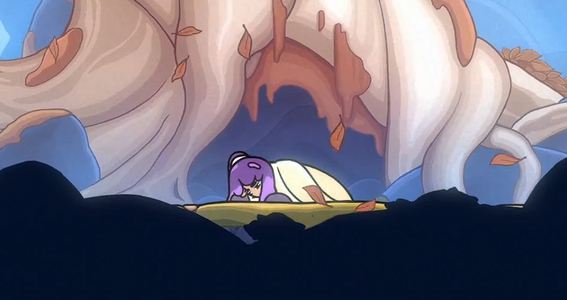
Constance is a 2D, paint and painting-themed precision platformer Metroidvania by btf that follows Constance, a brush-wielding artist who found herself in a strange world. Carrying with her the ability to wield and control paint, she must find her way back to her own world by exploring a painted realm and interacting with its many, many citizens.
Constance features:
⚫︎ High-stakes precision platforming
⚫︎ Replenishing combat and platforming resource
⚫︎ Simple Metroidvania combat
⚫︎ Photo mode and map pins
⚫︎ Animated 2D visuals
| Digital Storefronts | |||||||||
|---|---|---|---|---|---|---|---|---|---|
 Steam Steam |
 PSN PSN |  Xbox Xbox |  Switch Switch |  Switch 2 Switch 2 |
|||||
| $19.99 | Coming Soon | ||||||||
Constance Pros & Cons
| Pros | Cons |
|---|---|
 Satisfying Precision Platforming Clever Resource and Retry System Distinct 2D Style Satisfying Precision Platforming Clever Resource and Retry System Distinct 2D Style |
Not Very Substantial Very Basic Combat |
Constance Story - 7/10
Constance’s story is one that mostly goes unsaid, lying low in the background and relying a lot on subtext and representation. It’s like a painting in that way, although I’m more partial to spanning world-building and grand tapestries of lore. It’s not at all bad, but you’re going to do more interpreting than sleuthing to get the narrative here — if you even feel the need to.
Constance Gameplay - 8/10
Platforming has never been my strong suit, though that’s never stopped me from trying, and Constance’s forgiving precision platforming is just the experience I need to go from zero to hero. Having the choice to keep going at the cost of a hefty difficulty spike is great, and the platforming itself is as fluid and precise as a painter’s stroke. It’s comparatively thin in content, but what little it does have is far from mediocre.
Constance Visuals - 9/10
Easily, Constance’s biggest draw is its 2D style, which the devs made full use of. Although it doesn’t hold a candle to the pinnacle of its kin (e.g., Silksong), it holds a close second in my heart for most stunning 2D platformer visuals.
Constance Audio - 8/10
Although the game lacks dedicated voice acting, the music is very much up my alley in terms of quality and genre. It’s equal parts grand and entrancing, while also maintaining the quiet dignity of a masterwork. Not really earworm material, but I enjoy it immensely, especially if I don’t have a choice in the matter, given how many times this game kills me.
Constance Value for Money - 6/10
The game comes in at a reasonable $19.99, which would be completely fine if a better alternative didn’t come at the same price point. Knowing full well there are better options for literally the same price, you may find it a bit more difficult to justify getting the second best, but by no means is this an indication of the game’s poor quality. It’s good, but better won’t cost you any more.
Constance Overall Score - 76/100
Constance impresses with its bright, endearing 2D visuals, crisp precision-platforming, and somewhat clever progression mechanics, but misses a stroke in one simple way: it’s a second fiddle to one of the best in its genre. Though by no means a poor-quality game and commendable in its own merit, such merits don’t make it easier to choose over the pinnacle of its kind, which comes in at the same price. Still, it’s thoroughly enjoyable for more than one reason, and is a fun refresher when Silksong’s got you down in the meantime.
Constance Review: Silksong By A Lesser Name
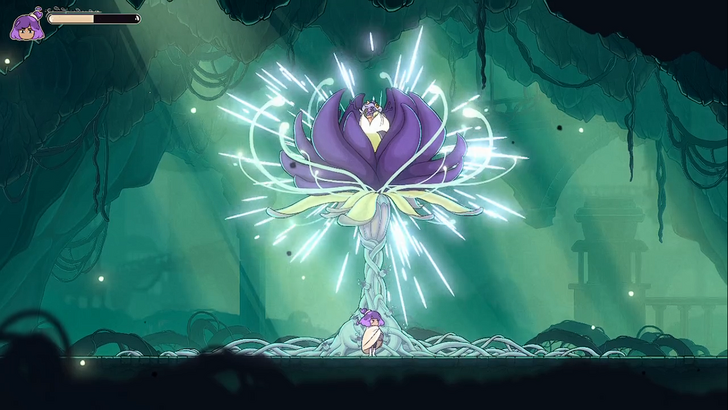
Constance is a game that ended up teaching me far more than I expected as I picked apart its inner workings. It showed me the outer edge of my patience for precision platforming, then nudged me past that edge and reminded me why hurling a controller at the wall is seldom the right answer. It taught me that quiet, representational storytelling can be genuinely charming when handled well. But above all, it taught me that being second-best doesn’t make you bad; it just means you’re standing slightly below the pinnacle of a very steep niche, but still head and shoulders above the riff-raff.
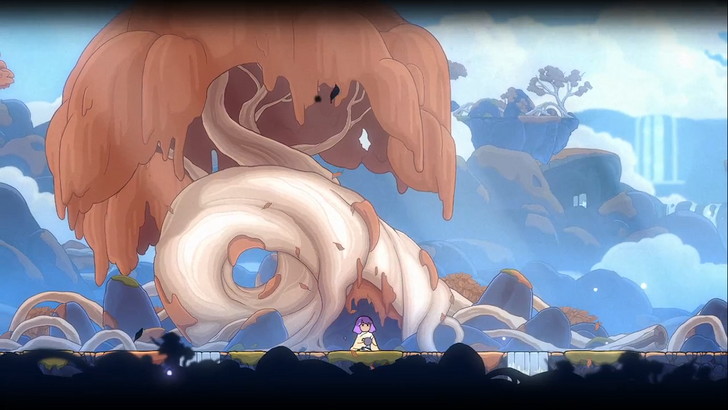
I went into this fully convinced that Constance couldn’t possibly impress me the way Silksong did… and I was right. It’s a completely unfair expectation, and it’s still unfair to hold the comparison now, but hear me out. Being "a bit worse than Silksong" isn’t an insult. It’s practically the highest praise a Metroidvania can receive.
So, with that tangle of contradictions swept aside, let’s put brush to paper and begin.
Lost in a Painted World
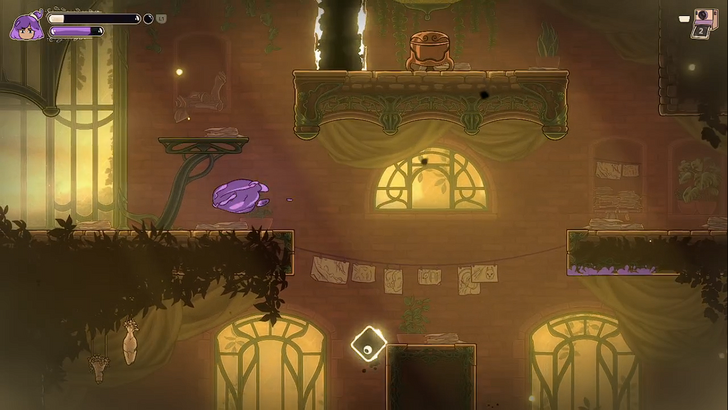
Constance tells the story of… well, Constance, a brush-wielding artist who drifts away from her own world and wakes up trapped in a strange, painted realm. Surrounded by robots, bugs, and a landscape bursting with color, she has to navigate a surprisingly hostile environment, lend a hand where she can, and ultimately find her way back home.
Narratively, this is about as classic as Metroidvanias get. It’s nowhere near as intricate or interwoven as something like Dead Cells — and that’s me deliberately dodging yet another Silksong comparison. There aren’t many moving parts here, and not a whole lot of motivations to peel back. But honestly, I don’t think that simplicity diminishes its impact.
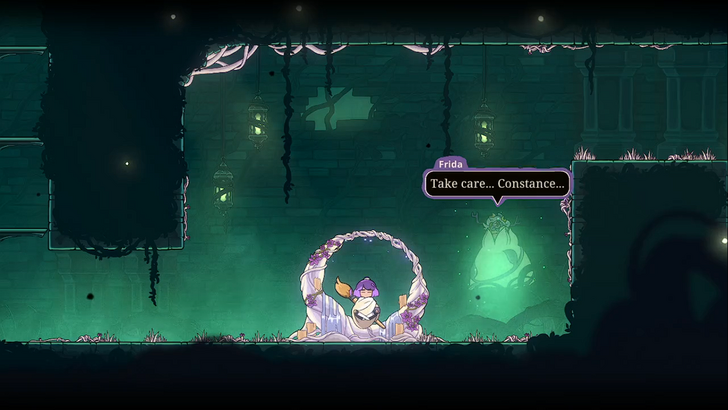
I’m usually a sucker for sprawling epics, layered lore, and worlds dense enough to drown in. Even so, I found Constance’s story compelling for a different reason: it’s a story built on ideas rather than plot mechanics. Not much happens, but what those events represent is open to interpretation. The game itself, as well as its promotional material, strongly suggests that this is a story about burnout.
I won’t impose my own interpretations on yours, so I’ll leave the specifics for you to experience firsthand. Just know that even in its simplicity, the narrative carries a surprising amount of weight.
Precision Platforming at its (Second) Finest
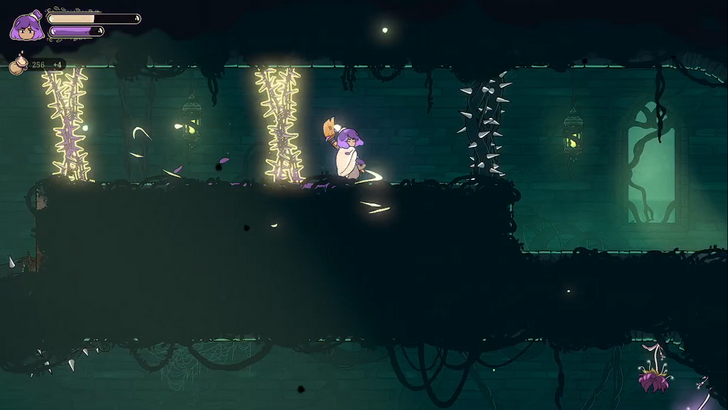
Moving on to the mechanical side of Constance, things stay relatively standard — light, even — for a Metroidvania. But it does slip in a handful of clever twists.
For one, progression here is non-linear, and not in the usual "branching paths" sense. It’s more of a Soulslike rhythm: if you hit a wall in one section, the solution often lies somewhere else entirely, like exploring for upgrade materials, gathering currency, or practicing a particularly stubborn jump sequence.
Constance isn’t unique in this approach; Silksong, to a lesser extent, plays with the same idea. But backtracking in Constance has its own flavor. Instead of relying on map pins or sheer memory, you use photographs you take yourself to mark locations worth revisiting.
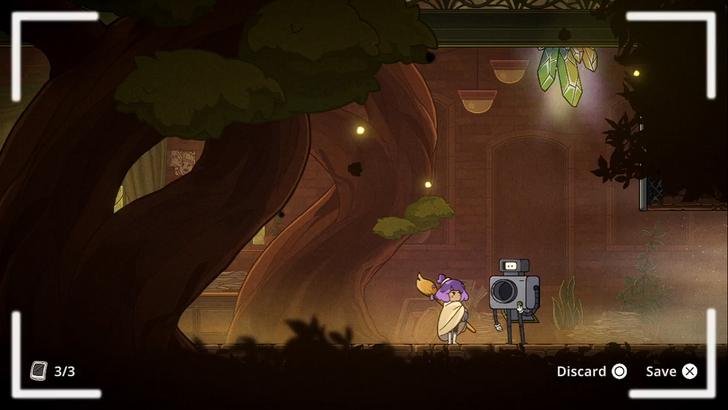
Maybe it’s a resource node you can’t harvest yet, a jump just out of reach, or a door you somehow walked past. Whatever it is, snap a photo and stick it onto your map. Functionally, it’s the same as a pin system, just more personal, more tactile. Do note, though, that Polaroids are consumable, and you can only place so many without purchasing more.
Is this necessary? Not at all. Is it better? Depends on who you ask. Is it unique? Absolutely, and Constance has a lot of that going for it.
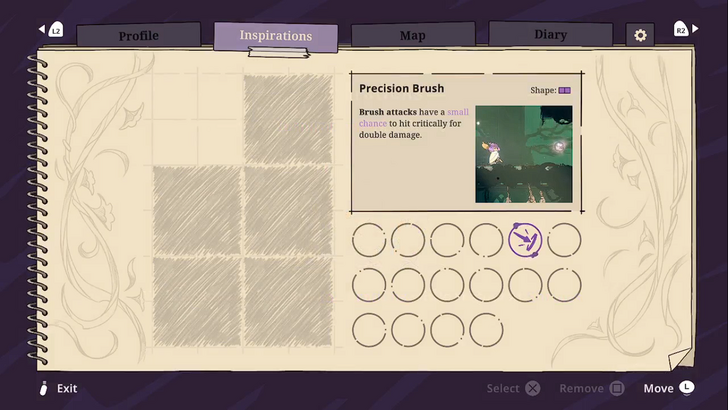
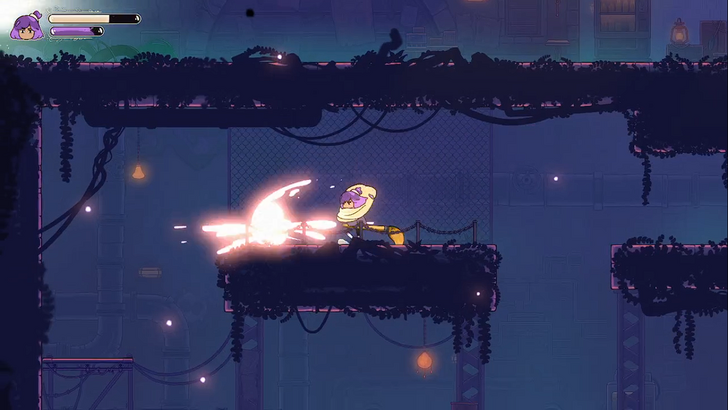
Another clever, not-strictly-needed-but-still-cool mechanic is the paint resource. While jumping is free, dodging, dashing, and ranged attacks all drain paint from your brush. It regenerates quickly, but if you overuse it without giving it time to refill, you enter a corrupted state.
While corrupted, any move that normally consumes paint also damages you. So spamming dodges isn’t just suboptimal, it’s actively harmful. Early on, this barely matters since your paint refills faster than you can burn through it. But later on, especially in boss fights, panic-dodging can get you killed faster than the boss itself.
And speaking of doom: what happens when you die? You’d assume you simply get punted back to the last checkpoint, and you’d be right… mostly.
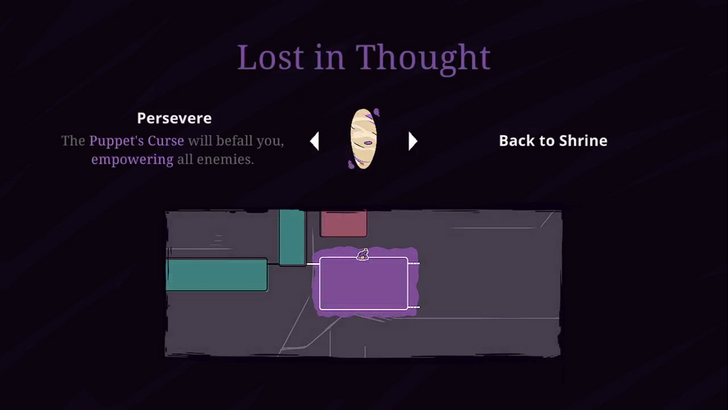
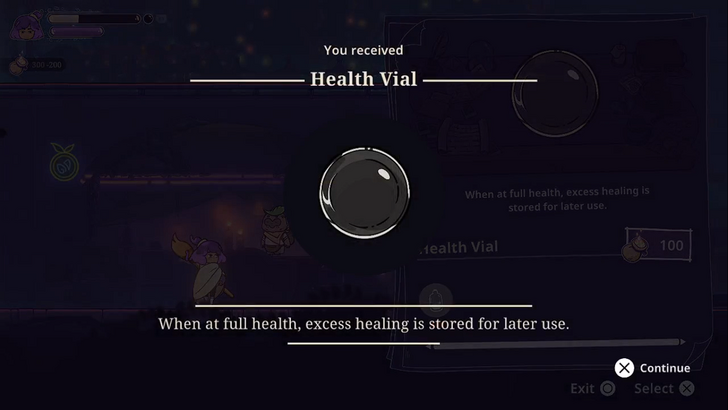
Constance gives you another option: restart the room instead of returning to the checkpoint.
Choosing this will temporarily supercharge all enemies, giving them more health and making them impossible to dash through without taking damage. But in exchange, you avoid a massive setback, which is no small mercy when checkpoints are spaced out like rare collectibles. You’ll use this feature a lot.
It’s a risk-reward mechanic you don’t often see in this genre that’s surprisingly beginner-friendly, too, since there’s no punishment for using it repeatedly. It smooths out frustration and keeps the game accessible for anyone not eager to spend ten hours losing their sanity on the same jumping puzzle.
Great 2D Graphics with a Charming Art Style
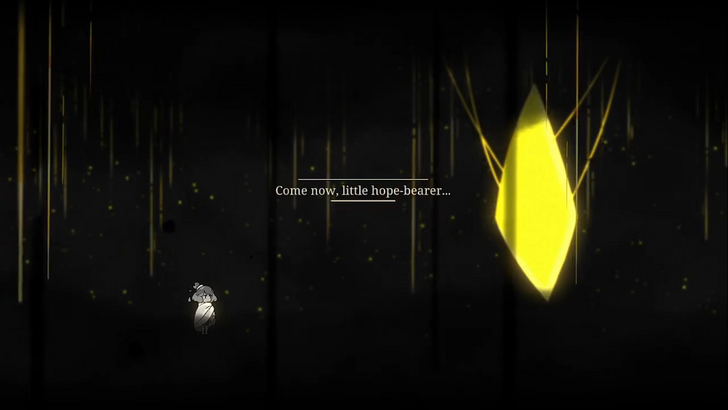
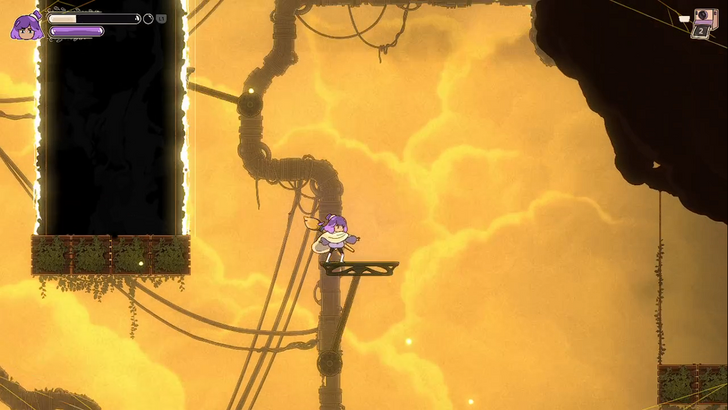
Another area where Constance excels, though not quite at Silksong’s level, is its 2D art direction. Most Metroidvanias lean on pixel art, a perfectly capable but heavily trodden aesthetic. So when a game opts for a more traditional illustrated style, it immediately stands out.
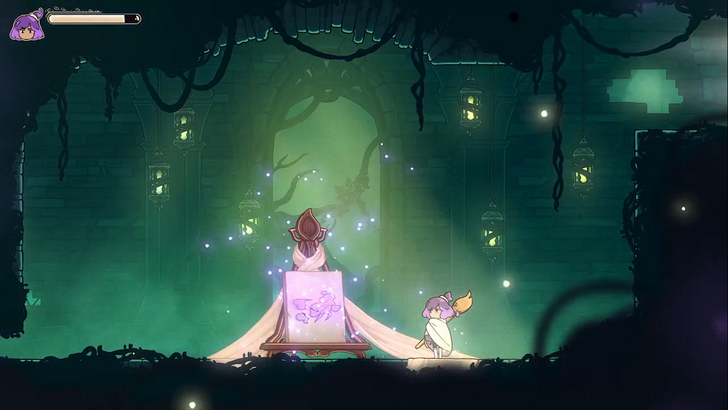
And stand out, Constance does. Its backgrounds are vivid, its platforming spaces cleanly composed, and its foreground elements richly detailed. The multiplanar layering gives the world depth without muddying navigation. This isn’t a paint-by-numbers indie environment; it’s a polished illustration set in motion, complete with fluid animation work and a soundtrack that complements the visual energy.
Combat Isn’t Complex Enough to “Git Gud” With (Except During Boss Fights)
Now, what exactly keeps Constance from reaching Silksong’s heights? Let’s talk combat. In a nutshell… well, the complexity of this game’s combat fits in a nutshell. Its simplicity has some appeal, especially for beginners just dipping their toes into the genre, but it quickly grows repetitive due to low enemy variety and predictable attack patterns.
Your moveset is actually quite limited, despite the supposed creativity unlocked by a paintbrush. You’ve got sideways stabs, dodges, rolls, and air variations of the same. Don’t expect Hornet-level mobility here, because there’s none of that. Clearly, Constance leans more heavily on platforming, though combat and movement do find some harmony during boss encounters.
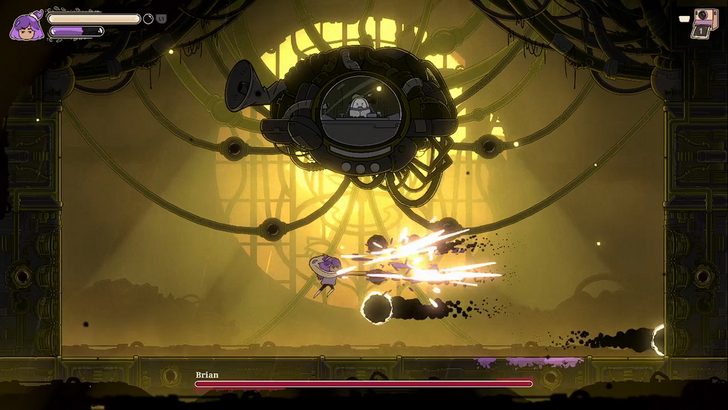
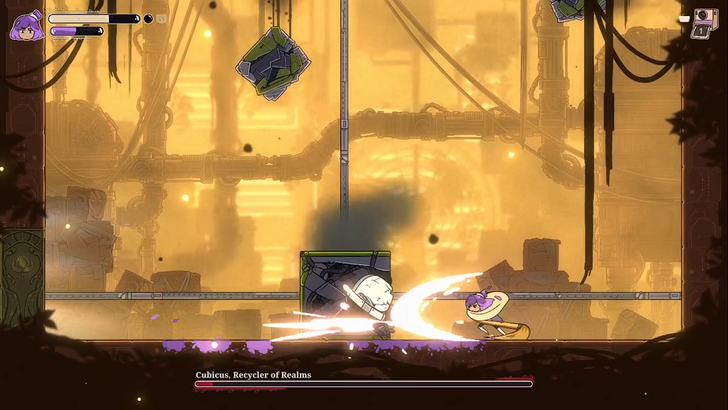
Boss fights are less about frantic dodging and more about clever strategy: identify weak points, exploit them, rinse and repeat. Unlike the flurry of attacks in Team Cherry’s games, Constance encourages methodical, satisfying patterns of attack.
The problem with this is that boss fights are rather sparse. Between them, combat tends to feel stale, leaving a lot of the game’s potential untapped, at least in this regard. On the bright side, the platforming is plenty challenging and creative to boot.
Rather Light on Content
The game’s mostly hands-off approach to storytelling leaves Constance feeling… a bit empty. Yes, there are NPCs to talk to, enemies to fight, and bosses to tackle, and you will interact with all of them. But compared to the sheer density of content most Metroidvanias pack in, Constance feels noticeably light.
It plays shorter than it actually is, even with all the deaths, retries, and platforming do-overs, because there simply isn’t much constant action, a clear narrative thread to follow, or any real stakes pushing you forward. It’s a completely casual experience, which isn’t inherently a bad thing, but it does contribute to that lingering sense of emptiness.
Second Best, But Still Better Than Most
And with that, the final stroke: our review of Constance comes to an end. It’s a good game — no, a great game — with plenty working in its favor. It looks beautiful, sounds fantastic, and hides a meaningful story within its painted frames. Its platforming challenges are well-crafted and often demanding. By no means is it a slouch; in fact, it outshines the vast majority of its peers.
But, unfortunately for Constance, Silksong exists, and this game will always sit just below that benchmark in combat depth, difficulty, lore, nuance, characterization, and sheer overall polish. Still, think about it: being in second place means there’s only one game above you.
That doesn’t sound so bad to me.
Is Constance Worth It?
Okay Price, But Not the Best Purchase
Although the game launches at a perfectly reasonable $19.99 — pretty much the AA standard these days — you can find stronger contenders at that same price point, including a certain TGA nominee that spent the better part of a decade in development.
And while Constance does boast some unique features, it still feels a bit light in key areas, at least in terms of how the experience comes across. There just isn’t quite enough here to make that price especially competitive. I’d still recommend picking it up, but preferably as part of a bundle or during a sale.
| Digital Storefronts | |||||||||
|---|---|---|---|---|---|---|---|---|---|
| Steam |
PSN | Xbox | Switch | Switch 2 |
|||||
| $19.99 | Coming Soon | ||||||||
Constance FAQ
Why Can’t I Attack in All Directions in Constance?
At the time of writing, all standard attacks in Constance strike horizontally. The only upward and downward options come from the Stab attack, which consumes Paint to use. As of now, the developer hasn’t indicated any plans to introduce full omnidirectional attacks in the future.
Game8 Reviews

You may also like...
 |
Silksong Review | Hornet’s Ascension is Painfully Beautiful Action, Metroidvania |
 |
Little Nightmares 3 Review | Still Great at Being Unsettling Puzzle, Horror |
 |
Donkey Kong Country Returns HD Review | Recycled Monkey Business Action, Adventure, Platforming, Puzzle |
 |
The Plucky Squire Review | Quite The Page-Turner Action, Adventure, Platformer |
Constance Product Information
 |
|
| Title | CONSTANCE |
|---|---|
| Release Date | November 24, 2025 (PC) |
| Developer | btf |
| Publisher | btf, ByteRockers' Games, PARCO GAMES |
| Supported Platforms | PC (Steam) PlayStation 5 Xbox Series X|S Nintendo Switch Nintendo Switch 2 |
| Genre | Adventure, Platforming, Puzzle |
| Number of Players | 1 |
| ESRB Rating | RP |
| Official Website | Constance Website |