



Megabonk Review Overview
What is Megabonk?
Megabonk is a roguelike survival game that challenges you to endure relentless waves of enemies and powerful bosses across procedurally generated maps. As you fight your way forward, you’ll gather loot, level up, and upgrade your weapons to push your limits even further.
Megabonk features:
⚫︎ Over the shoulder perspective
⚫︎ Twin stick shooter gameplay
⚫︎ Roguelite progression
⚫︎ 3D maps
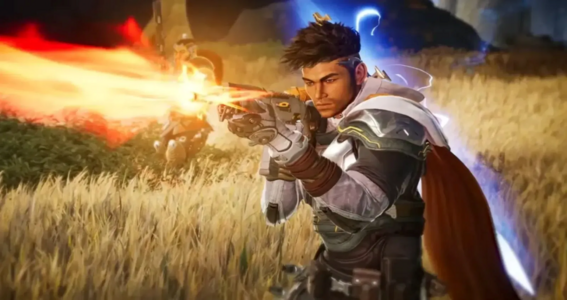
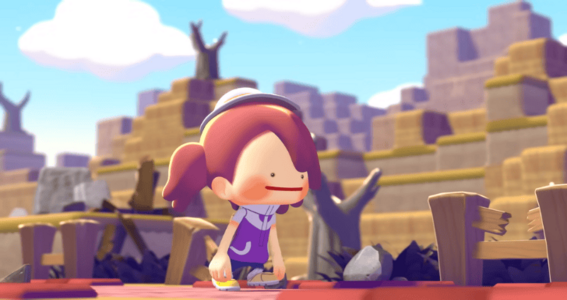
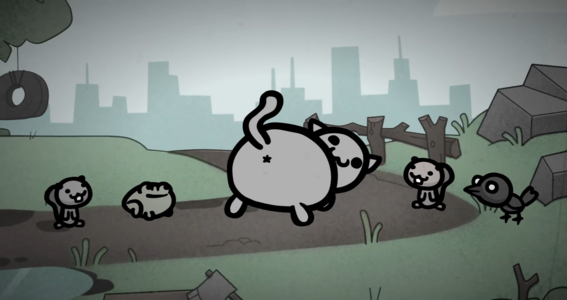
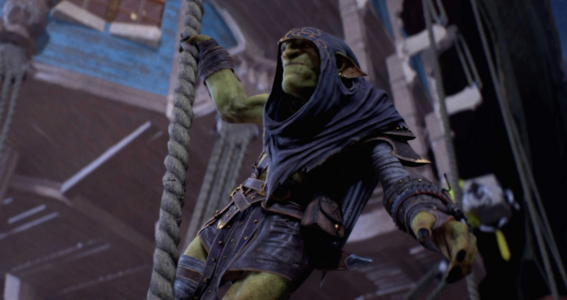
⚫︎ 20 playable characters
⚫︎ 29 unique weapons
⚫︎ Unique challenges per stage
 Steam Steam |
$9.99 |
Megabonk Pros & Cons
| Pros | Cons |
|---|---|
 New Perspective, New Experience Verticality Matters Unlockables for Days You Scale Only Through Options New Perspective, New Experience Verticality Matters Unlockables for Days You Scale Only Through Options |
Same-ish Final Bosses Rather Slow Start Too Reliant on RNG Secondary Weapons Aren’t Rewarding |
Megabonk Story - 7/10
Contrary to what its 7/10 score might suggest, Megabonk doesn’t actually have a story. The reason it scores so high is precisely because that absence works in its favor; its purely arcade-focused design thrives without a narrative to pull attention away from the action. That said, a good story could’ve served as an extra hook for players beyond its already stellar gameplay.
Megabonk Gameplay - 8/10
You can easily sum up Megabonk’s brilliance in two defining features: its over-the-shoulder perspective, which contrasts the usual top-down or isometric view of its peers, and the added verticality built into every map. These elements make it feel more like an action game than a traditional twin-stick shooter or bullet heaven, perfectly complementing its arsenal of weapons that take full advantage of the third dimension. Unfortunately, it does lose a couple of points for its unusually, and at times painfully, slow start, even by genre standards, and its excessive reliance on RNG.
Megabonk Visuals - 8/10
Despite lacking the stylistic flair of many of its peers, Megabonk still leaves a strong impression with its 3D stages and models that blend practicality and efficiency with the humor of internet culture. Sure, navigating those stages can be a massive pain, and there’s a noticeable disconnect between the very 2D icons and visual effects, but overall, it’s a joy to dive into each run and watch hell break loose.
Megabonk Audio - 8/10
Megabonk’s music and sound effects have one clear goal: to keep you hyped up no matter what’s happening on screen. Every track is loud, punchy, and full of momentum, especially during moments like choosing a new weapon, unlocking an upgrade, or buying an item. That said, the soundtrack tends to fade into the background during longer stretches of mob farming, which makes it feel repetitive and a bit exhausting after a few hours.
Megabonk Value for Money - 10/10
A game that delivers dozens of hours of playtime for just ten dollars feels like an absolute steal. Sure, it’s repetitive—such is the nature of roguelikes—but Megabonk executes the genre’s fundamentals so well that fatigue only sets in after you realize that you’ve already sunk too much time into it. On top of that, it offers plenty of objective-based achievements and challenge modes to keep you experimenting long after your first few runs.
Megabonk Overall Score - 82/100
Megabonk is an excellent bullet heaven title that stands out through a few clever design choices that make it feel like something entirely its own. It has solid audiovisual presentation, and its gameplay, while slow to start, quickly becomes the kind that grips you for hours. It’s not without flaws, of course, particularly in its music that wears thin over time, but it remains one of the strongest entries the genre has seen in recent months.
Megabonk Review: My New Addiction is Megafun
Reverse Bullet Hell is Heaven
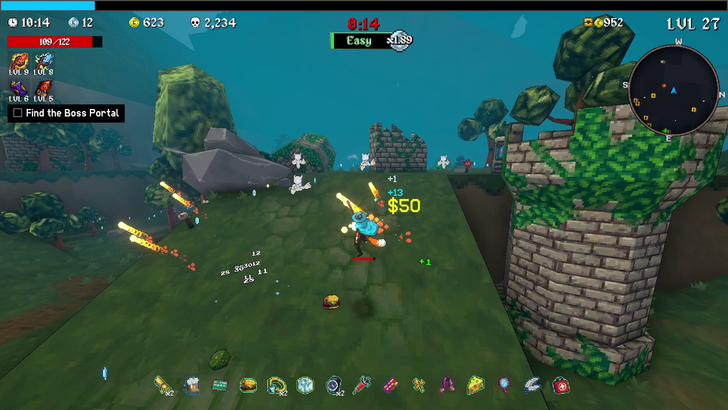
It’s incredible to see just how far bullet heaven games have gone since Vampire Survivors popularized the current template. I’ve personally sunk hundreds of combined hours into titles like Heavy Storm Shadow, Death Must Die, and of course, HoloCure. But while I’m stuck in limbo waiting for Shishiro Botan to finally get added to the game, a new bullet heaven title has just landed; one that doesn’t follow Vampire Survivors’ formula and instead dares to add a third dimension of movement to the genre, along with a whole new perspective to play from:
Megabonk.
Now, let’s get this out of the way. Yes, I learned about Megabonk the same way most people did before release. But for those not in the loop, this is one of those games that had to push its release date back thanks to Team Cherry suddenly announcing that they’d be dropping Hollow Knight: Silksong, arguably the most anticipated indie game ever, just weeks before Megabonk’s original launch.
No Story, Just Action
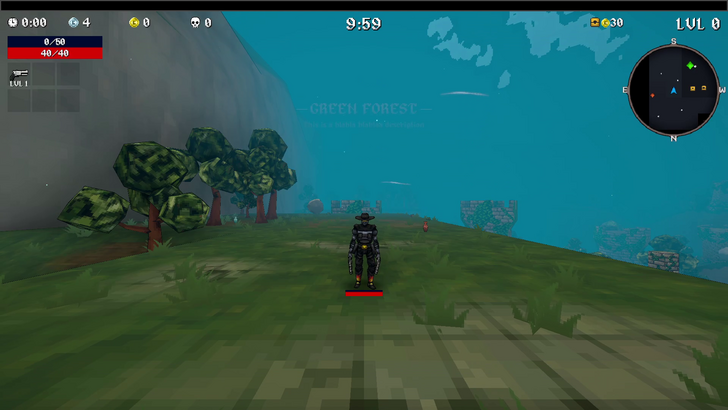
That said, what is Megabonk even about? Truth be told, I have absolutely no idea. I’ve been playing for over 12 hours now, and I still don’t have the slightest clue why I’m there or what I’m supposed to be doing—outside of chasing the objectives listed in the achievements menu, of course.
But honestly? Who cares. It’s not like Minecraft or Deep Rock Galactic: Survivor ever stopped to explain your purpose either. You just… knew. Well, the latter did nudge you along with objectives and Mission Control telling you what’s what, but that was that.
The absence of a story—any story, really—doesn’t hurt Megabonk in the slightest. If anything, it works to its advantage. This is a game built for short, punchy bursts of fun: log in, obliterate thousands of mobs in ten minutes, and peace out after an hour or two. Of course, a good story would work to its advantage, but this is also fine. You don’t have to keep track of lore or plot; you can drop it for weeks and jump right back in like nothing happened.
Which I’ll probably do, right after Shishiro Botan finally makes it into HoloCure.
The Stage Verticality Adds Literal and Tactical Depth
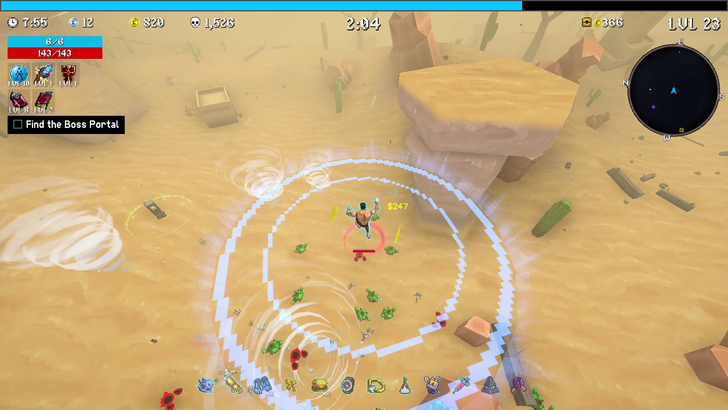
Megabonk plays much like your typical bullet heaven roguelite, but with a handful of standout twists. As usual, you pick a character, drop into a stage, blast through hordes of enemies for experience, upgrade your weapons as you level up, and scavenge for power-ups before taking down the final boss before the timer runs out.
However, unlike most games in the genre, Megabonk’s stages aren’t confined to flat 2D arenas dotted with a few token obstacles. Here, you’re dropped into fully 3D environments where verticality plays a massive role in both survival and strategy. The Forest, for instance, features crumbling stone towers to climb—if your jump height’s up to par—and uneven terrain that rises into slopes or plunges into cliffs, all of which you can use to your advantage when juking enemies.
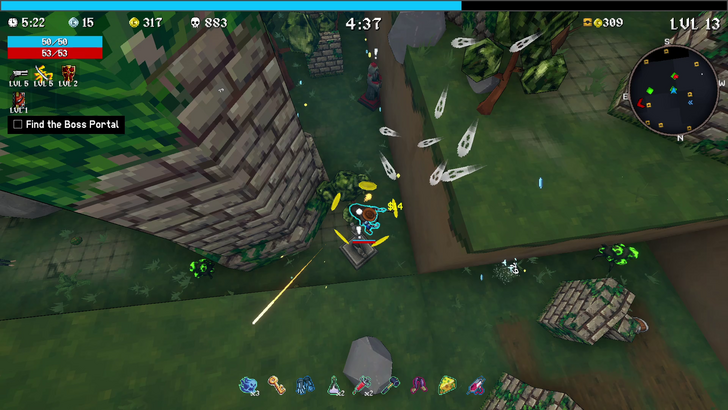
This sense of height directly influences your movement as well. Beyond the usual walk, dash, or sprint, you can jump, double jump with the right upgrades, slide across inclines, and even cling to walls to negate fall damage.
Unfortunately, your enemies are just as capable. They scale walls, dive-bomb from above, and attack from angles your weapons might not cover, forcing you to stay constantly aware of threats from every direction. It’s a small change that dramatically alters how every encounter feels—less like mowing a field of enemies, and more like surviving an ambush in motion.
Change Views, Change Minds
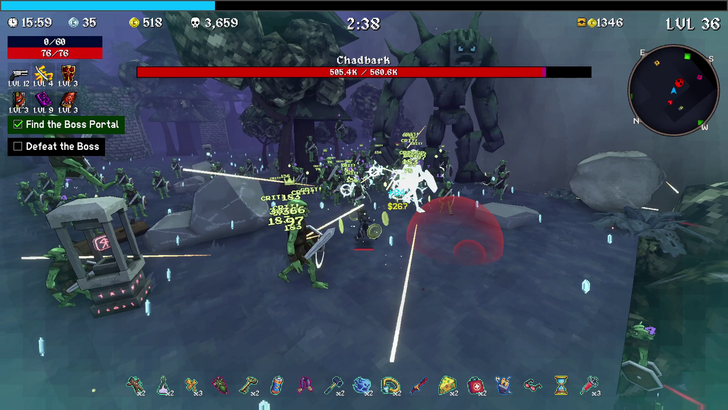
Another standout feature of Megabonk is its use of an over-the-shoulder perspective rather than the typical top-down or isometric view popularized by most bullet heaven games. It might seem like a small deviation, but the change drastically alters how the game feels and plays. For one, it pushes Megabonk closer to the territory of a full-fledged action game, especially when paired with its expanded movement options like jumping, sliding, and wall-hugging.
The shift in perspective also changes how you perceive and respond to danger. You can now see much farther ahead, but your rear vision is heavily restricted, which means enemies can—and will—sneak up on you if you’re not careful. It also makes looting trickier since any mob, especially a group of them, can obscure your view of valuable drops.
That said, the benefits far outweigh the drawbacks, particularly when you realize how Megabonk’s stage progression works.
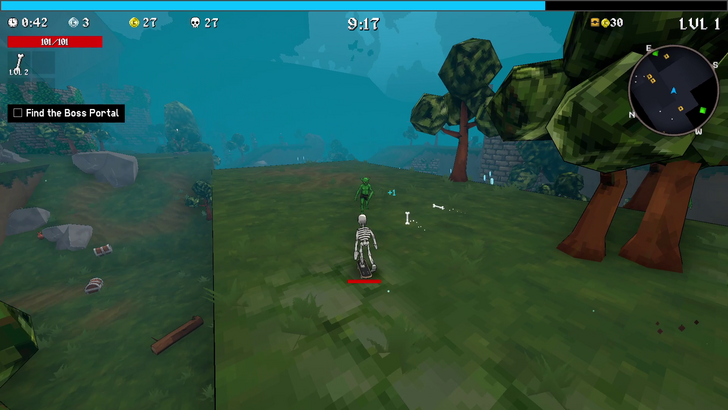
For one, unlike most of its peers where objectives or bosses spawn automatically after certain intervals, you need to actively search for the portal that triggers the boss encounter before the timer expires. And that’s easier said than done. The terrain itself works against you; the forests are rugged and mountainous, the desert obscures your view with blinding sandstorms, and the portals blend in with other map markers, making them tricky to locate. Oh, and every map is quite large, especially considering how you need to navigate through the terrain.
Because of this, exploration becomes an obligatory part of the gameplay loop rather than a suggested side activity. You’re not just mowing down mobs for drops; you’re scouring the map with intent, seeking objectives, and keeping your eyes on the mob waves at all times.
Strangely enough, this camera angle also injects Megabonk with a strong action-oriented identity. It feels kinetic and purposeful, almost begging for a manual attack system tied to button inputs rather than pure auto-fire. Whether intentional or not, this makes Megabonk appeal not just to bullet heaven fans, but to action enjoyers looking for something a bit more simple in both mechanics and visuals.
Your Arsenal is the Limit
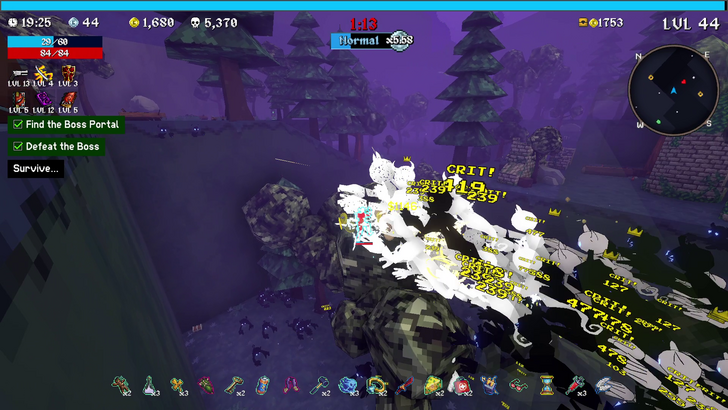
If you’ve been around the reverse bullet hell scene that Vampire Survivors, while not the first, undeniably popularized, you’re probably familiar with the concept of persistent upgrades. These are the global stat boosts you buy with coins or currency earned from runs, gradually increasing your damage, health, defense, or luck across all characters.
Most games that follow Vampire Survivors’ template, from HoloCure to Valkyrie Squad: Siege Breakers, rely on this mechanic to push players past their old limits. It’s reliable, consistent, and immediately rewarding—an easy way to feel stronger after each attempt, regardless of failure or success.
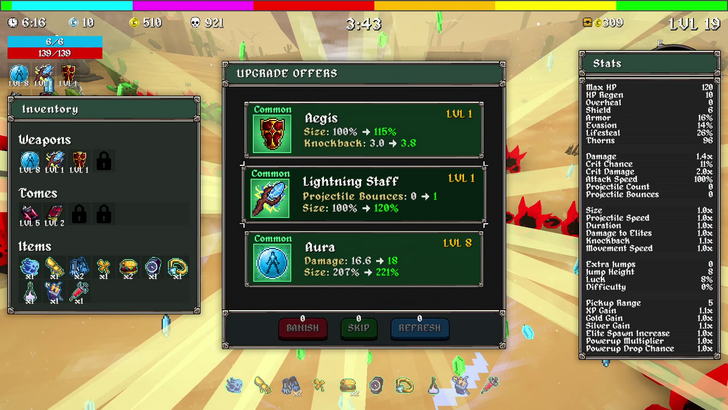
Megabonk, however, leans harder into its roguelike design. That is, outside of upgrading your reroll, removal, and skip options—which simply improve your odds of getting the weapons or tomes you want—there are (almost) no permanent stat boosts to purchase or speak of.
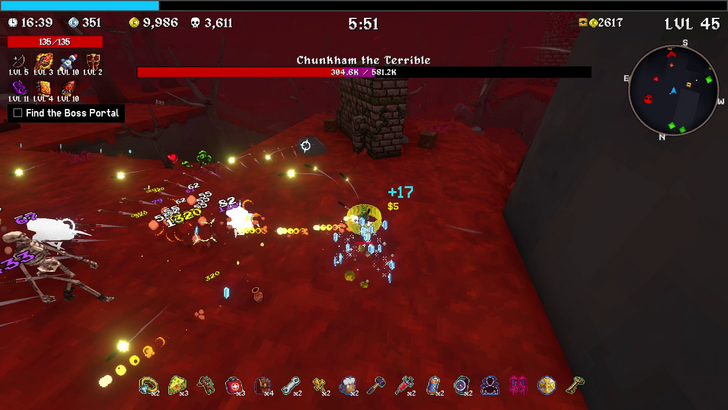
Instead, progress comes from unlocking better weapons and gear after the runs where you discover them. This makes the game far more reliant on good RNG than others because you can’t rely on higher base stats, which can and will break builds and ruin runs. And I don’t know about you, but relying on luck isn’t something I find much enjoyment in.
In other words, you’ll always start from scratch. The character you drop into a stage with on your first run will be functionally identical to the one you use after ten hours of play. But—and this is important—I said “almost” earlier because there are two exceptions: you can permanently purchase up to two additional weapon and tome slots per character, where tomes are basically just weapons that serve only to upgrade all your other weapons.
It Starts Way Too Slow
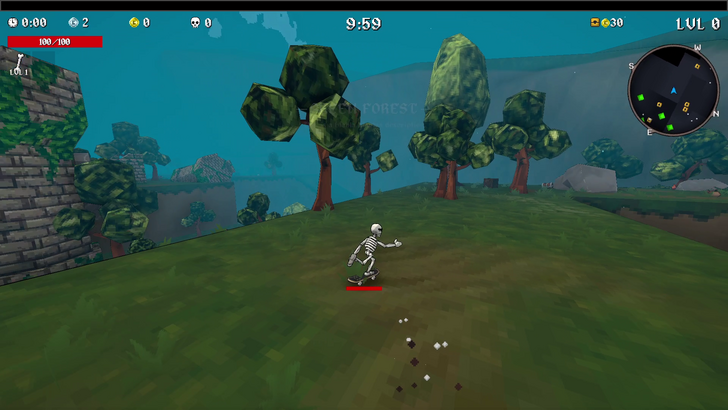
That said, having to purchase additional weapon and tome slots also has another rather annoying effect on the game. That is, it has an incredibly slow and unsatisfying start. Considering that you start with two and could have a maximum of four each, you can imagine playing Vampire Survivors or HoloCure and only having access to three weapon slots and three item slots each at the beginning. For these kinds of games where much of the satisfaction involves seeing yourself blast hordes of enemies away, it’s not very fun, is it?
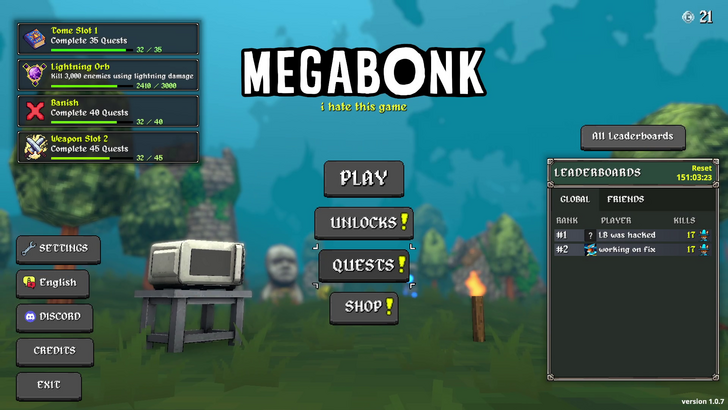
What’s even worse is that not only are the additional weapon and tome slots locked behind the shop, they’re also locked behind achievements. That means if you want to unlock more, you need to grind not just currency, but also specific objectives. Effectively, you only really obtain all four weapon and tome slots by midgame when you’re already starting the endgame preparations. And quite frankly, that’s too long a time to take just to get the most satisfaction out of your game.
Oh, and by the way; characters are also locked behind achievements and currency. Sure, this isn’t new or anything, but most of the time it’s only really one or the other. Having both be the condition to make a character usable, however, doesn’t really serve any purpose other than to put a damper on your momentum.
The Final Bosses are Practically the Same
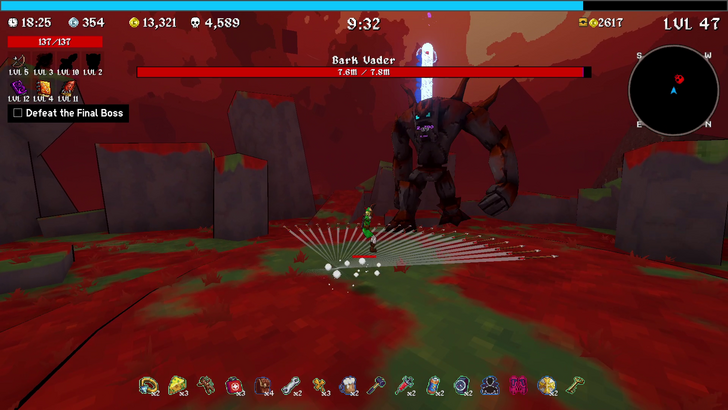
Megabonk has two main stages, each divided into three tiers. You move from one tier to the next by defeating the area boss, which you can summon at any time through the boss portal—except for the final tier, where you’re thrown into a massive raid-style fight against a giant version of the same boss you’ve been dealing with up to that point.
That said, while the stages are separated by entirely different themes and designs, the bosses themselves are functionally quite similar. They differ in health pools and attack patterns, sure, but their core mechanics—how they fight, what they do at the start, and even how you beat them—are mostly the same.
To be specific, the Forest boss specializes in punishing you for staying in one spot by smashing those areas with massive branches, while the Desert boss forces you into cover with rotating and homing lasers. Beyond that, though, both share the same gimmicks: they steal all your secondary weapons at the start, summon pylons that make them invulnerable, spawn smaller versions of themselves, and even use identical attacks like homing wisps.
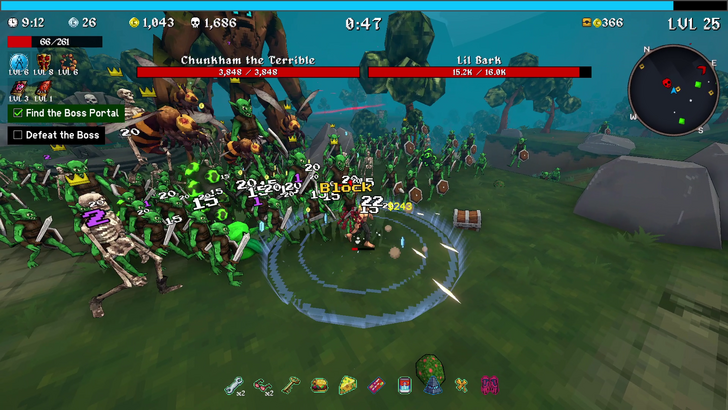
Now, that whole weapon-stealing mechanic is a neat idea on paper, but in practice, it makes investing in secondary weapons feel kind of pointless. You could honestly get through the game using just your primary weapon, and that’s a shame because experimenting with builds and collecting new gear is supposed to be one of the most fun parts of any reverse bullet hell.
Weirdly enough, the smaller versions of these bosses actually play better. Without those shared attack gimmicks, each fight feels more distinct: the Forest mini-bosses reward constant movement, while the Desert ones push you to rely entirely on things to cover you from its attacks.
Still, that’s more of an endgame problem; something you’ll only really notice once you’ve unlocked everything and experimented with every weapon and character. For most players, Megabonk remains an absolute blast and a standout among its peers. And really, isn’t that what counts in the end?
Is Megabonk Worth It?
The Amazing Midgame is Worth Every Cent
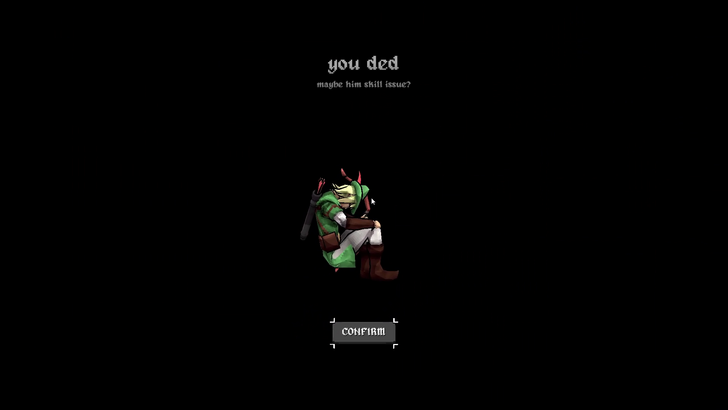
Beyond its slow early game and overly similar end bosses, Megabonk has been nothing short of a joy to play; an experience I genuinely think every fan of the genre should try at least once. It delivers something fresh through small but impactful gameplay tweaks that completely change how the formula feels. This is especially true if you’re into roguelikes, since Megabonk leans far more in that direction than most of its peers.
Get it. You won’t regret it.
| Steam |
$9.99 |
Megabonk FAQ
How many unlockable characters are there?
There’s currently 20 in total, which are unlocked by completing their achievements and then purchasing them from the store.
Can weapons be combined?
No, weapons work as they are. They cannot be combined with others.
Game8 Reviews

You may also like...



Megabonk Product Information
 |
|
| Title | Megabonk |
|---|---|
| Release Date | September 19, 2025 |
| Developer | vedinad |
| Publisher | vedinad |
| Supported Platforms | PC |
| Genre | Shooter, Action, Roguelike |
| Number of Players | 1 |
| ESRB Rating | RP |
| Official Website | Megabonk on Steam |