



| LEGO Voyagers | |||
|---|---|---|---|
| Release Date | Gameplay & Story | Pre-Order & DLC | Review |
LEGO Voyagers Review Overview
What is LEGO Voyagers?
LEGO Voyagers is a two-player puzzle-adventure game announced during Summer Game Fest 2025, set to release sometime in the future. Developed by Light Brick Studio and published by Annapurna Interactive, it's positioned as a spiritual follow-up to LEGO Builder's Journey.
Like previous LEGO games before it, the core objective here still centers on working with teammates and making use of surroundings to solve environmental puzzles.
LEGO Voyagers features:
⚫︎ Fully Co-Op Gameplay
⚫︎ Features Friend’s Pass
⚫︎ Physics-Based Puzzle-Platforming
⚫︎ Fully Cozy Non-Verbal Narrative
For more gameplay details, read everything we know about LEGO Voyagers’ gameplay and story.
| Digital Storefronts | |||||||
|---|---|---|---|---|---|---|---|
 Steam Steam |
 PlayStation PlayStation |
 Xbox Xbox |
 Switch 2 Switch 2 |
||||
| $24.99 | |||||||
LEGO Voyagers Pros & Cons
| Pros | Cons |
|---|---|
 Accessible Co-Op Gameplay Story is Simple Yet Effective Beautiful Diorama-Style Visuals Accessible Co-Op Gameplay Story is Simple Yet Effective Beautiful Diorama-Style Visuals |
Extremely Short Runtime Some Puzzles Are Tedious and Repetitive Little to No Replay Value |
LEGO Voyagers Story - 7/10
Two tiny bricks, one red and one blue, carry the whole adventure, and the game manages to tell their story without a single line of dialogue. Their chirps and the mellow soundtrack do more than enough to sketch out their journey. It's a simple narrative about friendship and chasing something bigger together, and the lack of words lets you read your own meaning into it, even if there might not really be one. It sucks, though, that the game ends far too soon. It’s shorter than even some episodic visual novels I know. It's a shame because even though they're just two bricks, the game makes you want to see them "grow" into more than they are—not literally, of course.
LEGO Voyagers Gameplay - 7/10
Controlling the two little bricks couldn’t be more straightforward, and the game makes the most of that simplicity by letting players figure things out naturally. The cooperative puzzles start and end strong, and the best moments feel like you’re really creating solutions together with your partner. The problem is that too many puzzles repeat the same beats, and by the halfway mark, it’s easy to notice how often you’re just stacking, carrying, or building yet another bridge. It’s approachable and fun, especially for those who have yet to touch a controller in their life, but it plays things too safe for my liking.
LEGO Voyagers Visuals - 9/10
Voyagers nails the look of real LEGO sets, with every brick catching light in a way that makes it feel pulled straight from a bin and placed into a diorama. The soft lighting and calm colors give the stages a tranquil mood, and touches like rippling water around the plastic pieces sell the illusion even further. However, the isometric camera doesn’t always serve the gameplay as well as it does the presentation.
LEGO Voyagers Audio - 9/10
LEGO Voyagers’ soundtrack is serviceable but nonetheless a good complement to the game's atmosphere. It hums along with a mellow vibe that matches the relaxing pace of the gameplay. It’s pleasant enough to be noticed, yet subtle enough that it never distracts from the core experience. Plus, who can say no to those two little bricks singing their hearts out when you press the square button?
LEGO Voyagers Value for Money - 4/10
Voyagers is easy to enjoy and approachable, especially if you’re playing with a friend, but it doesn’t have much to keep you coming back. $25 isn’t an outrageous price for a co-op adventure game, but at under five hours, the game ends far too early, and there’s little to no incentive to replay the game outside of your first playthrough. Add in the lack of crossplay, and the game doesn’t quite feel like it delivers enough to fully justify the price.
LEGO Voyagers Overall Score - 72/100
Two little bricks on an adventure isn't the most ambitious idea, but it works well because the game focuses more on the bond between players than on its challenges. Its simple puzzles are accessible to players of all ages, and the overall presentation creates a laid-back atmosphere that makes the whole experience feel like an afternoon spent with a friend. It doesn’t overstay its welcome, though some might wish it lingered just a little longer.
LEGO Voyagers Review: As Fun and As Short As LEGO Bricks
It’s a Good Thing I Have Friends
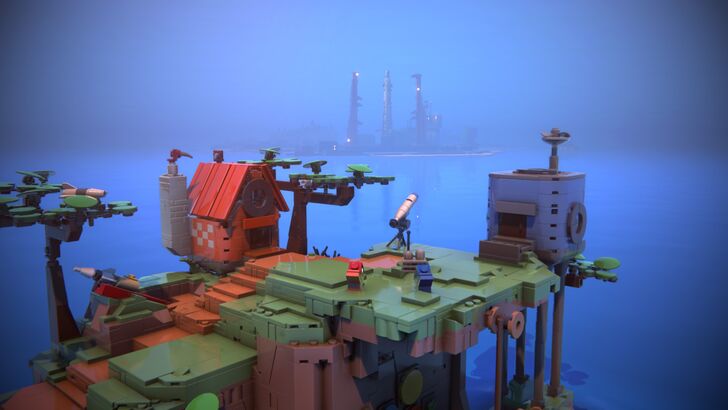
Building bridges and towers and all sorts of knick knacks with a friend feels different than doing it alone. Not just in a sense of bricks clicking together faster when four hands are working instead of just two, but in how our conversations flowed and our in-jokes stack up as our final creations ended up being a little reflection of both our quirks. LEGO Voyagers makes that dynamic unavoidable—mandatory, even—by requiring two players at all times. Non-busy friends are rare these days, and I was lucky enough to have someone to share the journey with. Although the game demanded our full cooperation, it was the friendship around it that made the experience more enjoyable. The laughter over small missteps, the shared triumphs in solving the simplest of puzzles that took us embarrassingly long to figure out, the way one person’s idea can shift the whole course of how a stage is tackled—all of these made our rather short playtime memorable.
This is supported by the fact that LEGO Voyagers stood out from the usual fare of licensed LEGO titles that we’ve grown so accustomed to over the years. Developed by Light Brick Studio, the same people behind LEGO Builder’s Journey, this title shed the famous film franchises and well-known superhero licenses for something more introspective. It was a risk, to be sure, to release a game that demanded a friend and relied on a wordless narrative to convey its meaning.
I was lucky enough to have experienced it with a close friend, and while there were more than a few moments of us just messing around, what came of it was an appreciation for the game’s minimalism. However, at the same time, we were kind of left in confusion when it ended so quickly just as when we thought the game was reaching its peak.
A Narrative so Short, so Sweet
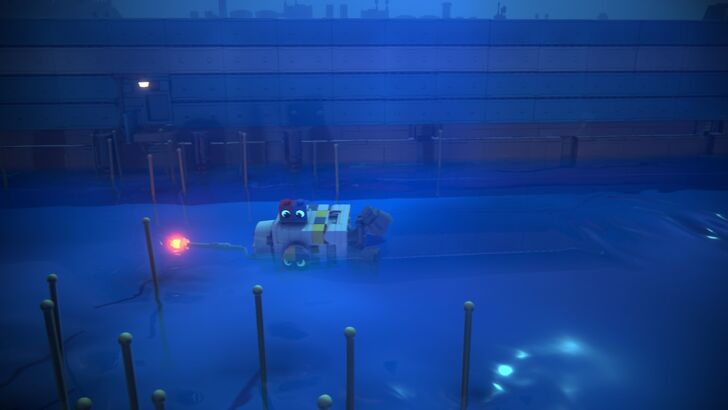
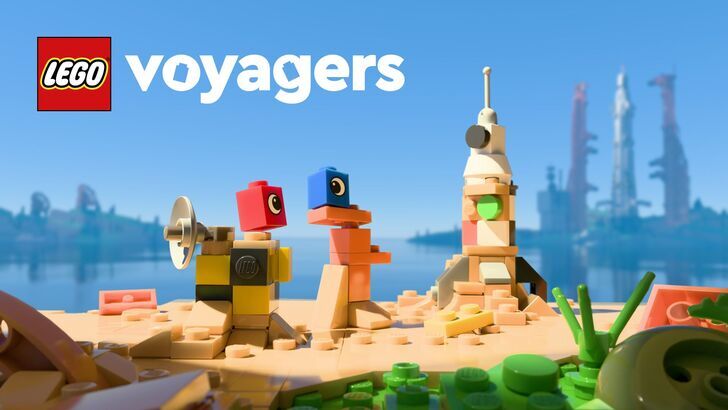
The stars of LEGO Voyagers are two 1x1 googly-eyed bricks, one red and one blue. Their lives begin quietly on a cozy little LEGO island, neighbors passing the time with small routines. One day, they spot a rocket ship blasting off into the distance, only for it to come crashing down not far from their island. The two then decide to rebuild the said ship, piece by piece, so they can set off together in pursuit of their own passions. Essentially, this is a story about two friends going on an adventure together, a journey that can easily resonate with anyone who has ever shared a dream with a close companion.
What I found most compelling about this is how it tells this story without using a single word. Most of the time, you’d be listening to the game’s mellow soundtrack that hums along in the background. This is often complemented by the bricks’ babbling, little chirps and coos that can sound silly, yes, but also cute.
Stages flow one into the next as the duo pushes forward with their adventure, and the way it unfolds feels both universal and personal. You’re never hit with text spelling out the moral of the story, but it’s not hard to see the little arcs of persistence and compromise. And while it’s easy to project whatever meaning you want onto these blocks, I liked how the game portrays the idea that following your passion is messy but more rewarding when it’s shared. Without giving away the specifics of the ending, much like real life, Voyagers acknowledges that growth and change often come with the pains of moving forward.
The morals of the game’s story aren’t always so poignant and dramatic, but it does the job that when me and my friend rolled credits, we were blasting a chorus of happy sighs.
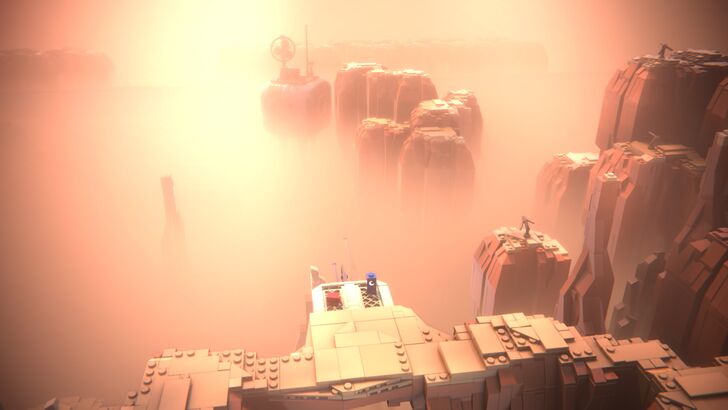
That is, however, one of the game’s weakest points, in that it is a rather short journey. Voyagers doesn’t even go past five hours. Our playime clocked in at under four, and when we hit what felt like the final stretch, we were hoping, pleading, that it wasn’t. It’s not that the ending is abrupt in a narrative sense, but it does leave you wondering what more could’ve been done with these characters and this setup if given just a little more time.
Puzzles Even a Baby Could Solve
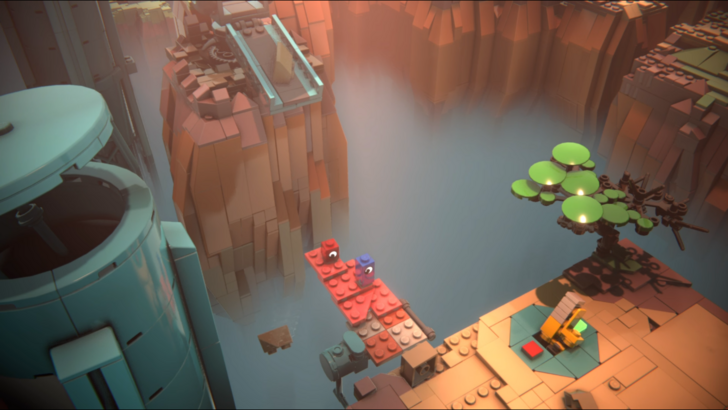
The journey to that ending is as simple as it gets. Each player takes control of one of the two googly-eyed bricks. You’ve got a joystick to move, a button to jump, one to snap into LEGO studs, and another to let out those babbling noises that call your partner’s attention. That’s the whole control scheme, and the game doesn’t bother with tutorials or pop-ups. It never needs to. From the first few minutes, it’s obvious what you’re supposed to do: get from point A to point B, together.
The puzzles are designed with that same philosophy of clarity. Objectives are never spelled out, but they don’t have to be. Much like a Nintendo platformer or something like Split Fiction, the game trusts you to learn through play. You try out what each button does, see how it interacts with the world, and before long you’re solving problems without ever being told how. Even a kid picking up a controller for the first time could piece it together. This is what makes this game accessible to even those who have yet to touch a game in their lives.
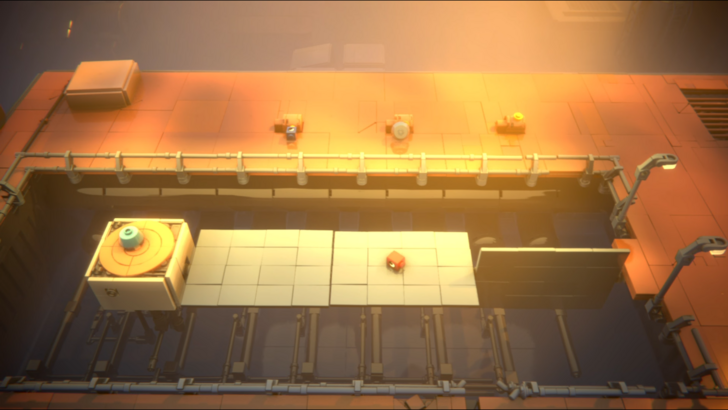
Early on, you’ll be collecting loose bricks and using them to build bridges to cross gaps. You’ll spin or stack pieces until they form something that lets both characters move forward. In these moments, the game is showing you the logic of its world. Progress comes from cooperating and creating with your companion. Soon enough, that cooperation deepens. One player holds down a lever to extend a platform while the other crosses, then flips the setup on the far side to return the favor.
Later, the tricks get more playful. You’re using a giant magnet to lift your partner across a pit while they hold on to dear life on a metal LEGO, or split tasks while piloting a vehicle together, with one player steering and the other managing speed. Each new point feels like a natural extension of the last, always rooted in cooperation, always anchored by the idea that two minds are better than one.
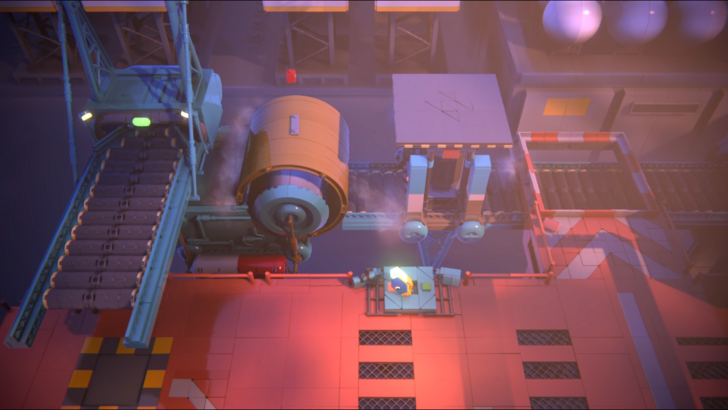
However, that simplicity is also the game’s weakness. Although the puzzles build on one another, the variety doesn’t stretch as far as it could. Too many puzzles boil down to the same beats of go build a bridge, move a block into place, carry an object from A to B.
The game’s short runtime makes this repetition easier to forgive, but it’s still tedious. There were points where my friend and I were sighing over our microphones, realizing we’d basically done a slightly different puzzle before, just in another area. It never drags long enough to become unbearable, and it’s certainly not hard to solve, but it does make you wish the game took more risks with its ideas, to become more creative with its puzzles; this is a LEGO game, after all.
I do appreciate, though, how the game doesn’t really punish you for making mistakes. If you fall into water, you’ll immediately respawn on the nearest safe platform. For younger kids or people who aren’t used to playing games, this makes Voyagers incredibly approachable. If you’re looking for a challenge, though, or for puzzles that require more than the most straightforward cooperation, you won’t find much here.
Dioramas Come to Life
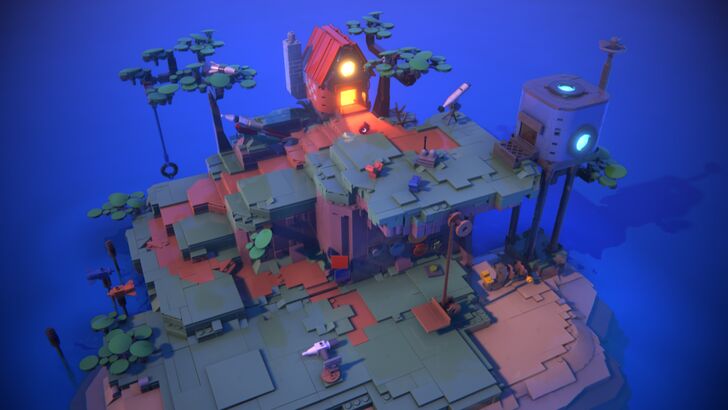
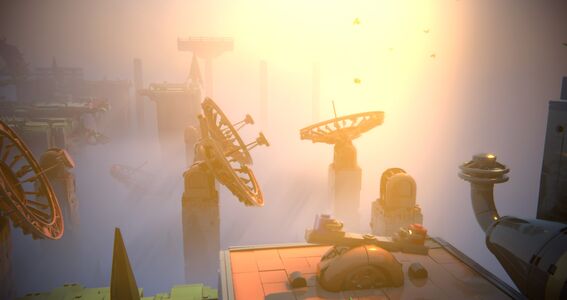
It also helps that the game looks amazing. It doesn’t lean into the exaggerated energy of the licensed LEGO titles. It opts for a more realistic art direction. Every single piece in the environment feels like an actual brick you could pull from a bin. The plastic sheen catches light, which then makes it look tangible. It feels closer to sitting in front of an actual diorama.
The lighting plays a huge role in setting that tone. Many stages are washed in an ambient glow that makes everything feel tranquil. Shadows stretch gently across bricks, and sunlight bounces off surfaces. There are darker stages too, but even then, the contrast isn’t harsh. It’s still mellow, still easy on the eyes.
Several diorama-like islands are surrounded by or sliced through with flowing streams, and the way the water interacts with the plastic pieces sells the illusion that these are hand-built sets. The reflection of bricks on the surface, the way ripples form as your characters move nearby, all of it works together to make you forget you’re staring at digital LEGO. This makes pausing at designated stops to admire the scenery with a friend feel almost rewarding.
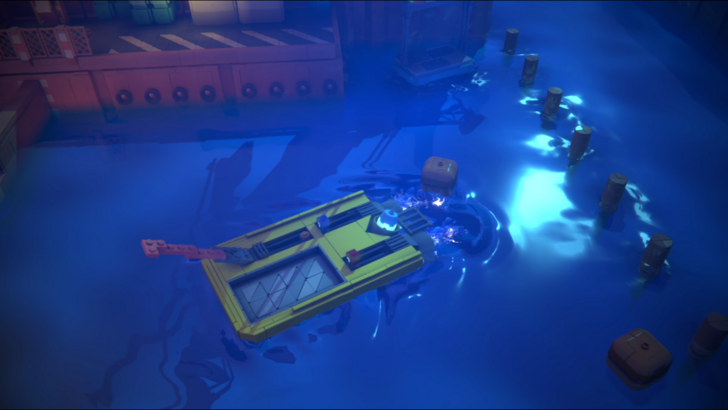
Almost. Because there are still things about the presentation that can sometime be an issue. The biggest culprit is the isometric camera. For the most part, it frames the dioramas nicely, giving you a good view of each set as if you’re hovering over a LEGO display on your desk. But when it comes to the actual act of playing, the angle can get in the way more often than you’d think. Platforming, for instance, is rarely demanding, but we still found ourselves missing jumps simply because it wasn’t clear where we would land.
This problem shows up in other ways too. Driving sections can be especially awkward. Steering forward is fine—the camera is set up to show where you’re heading—but the second you try backing up, the viewpoint doesn’t shift enough to show what’s behind you. Even outside of vehicles, there are times when the camera zooms out a little too far.
Now, these aren’t game-breaking problems. There’s no real punishment for missing a jump or hitting an obstacle, but these do happen consistently enough that they stick in your mind.
Is LEGO Voyagers Worth It?
Not Really; Friend’s Pass Helps, But There’s Little Else
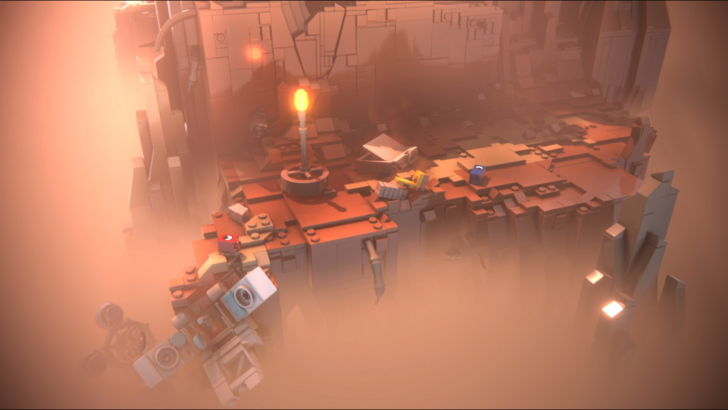
Me and the friend I dragged into playing LEGO Voyagers both came out of it liking the game. It’s not a hard game to like. It’s simple, lighthearted, and built on a cooperative foundation that reminded me a bit of something like It Takes Two, only stripped down to its most basic parts. Nothing about it is overwhelming or complicated, and honestly, anyone could pick it up and understand it within minutes. It’s so straightforward that even your grandmother could hop in and still keep up without a problem. For that, I respect what it’s doing.
However, it’s harder for me to say if I’d go out of my way to recommend it. Its current price is $25, which is inoffensive, really. The price itself isn’t terrible, especially compared to most modern releases, but the lack of cross-play holds it back. If you and your friend don’t happen to own the same systems, then good luck finding a different friend. But even if you do, console players will still need a subscription like PS Plus just to play online together. It does have a friend’s pass feature, which is nice since you don't need to buy two copies, but that only softens the blow a little.
What’s worse, though, is just how little there is to the entire game. Voyagers clocks in at under five hours, and once you’ve seen the story, that’s more or less it. Unlike other LEGO games, there aren’t hidden secrets or side paths to mess around with. The levels are direct, and unless you’re chasing achievements or you really want to replay its short, above-average story, there’s not much incentive to come back.
I do genuinely like LEGO Voyagers, and I’m glad I got to play it with someone. But when I think about what the game offers versus what it asks for, I can’t shake the feeling that it comes up a little short. It’s fun while it lasts, but it doesn’t last very long, and that’s just not enough.
| Digital Storefronts | |||||||
|---|---|---|---|---|---|---|---|
| Steam |
PlayStation |
Xbox |
Switch 2 |
||||
| $24.99 | |||||||
LEGO Voyagers FAQ
How Long to Beat LEGO Voyagers?
The game can be finished in 4-5 hours; however, there are reports of players completing it in less time.
Game8 Reviews

LEGO Voyagers Similar Games
LEGO Voyagers Product Information
|
|
| Title | LEGO VOYAGERS |
|---|---|
| Release Date | September 16, 2025 |
| Developer | Light Brick Studio |
| Publisher | Annapurna Interactive |
| Supported Platforms | PC (via Steam) PlayStation 5 PlayStation 4 Nintendo Switch Nintendo Switch 2 Xbox Series X|S |
| Genre | Adventure, Casual, Co-Op |
| Number of Players | 2 |
| ESRB Rating | ESRB E |
| Official Website | LEGO Voyagers Website |