


| Super Mario Party Jamboree + Jamboree TV | ||||
|---|---|---|---|---|
| Release Date | Gameplay & Story | Preorder & DLC | Base Game Review | Jamboree TV Review |
Super Mario Party Jamboree is back to test friendships in Jamboree TV! Read our review to see what it did well, what it didn't do well, and if it's worth buying.
← Return to Super Mario Party Jamboree + Jamboree TV main article
Super Mario Party Jamboree + Jamboree TV Review Overview
What is Super Mario Party Jamboree + Jamboree TV?
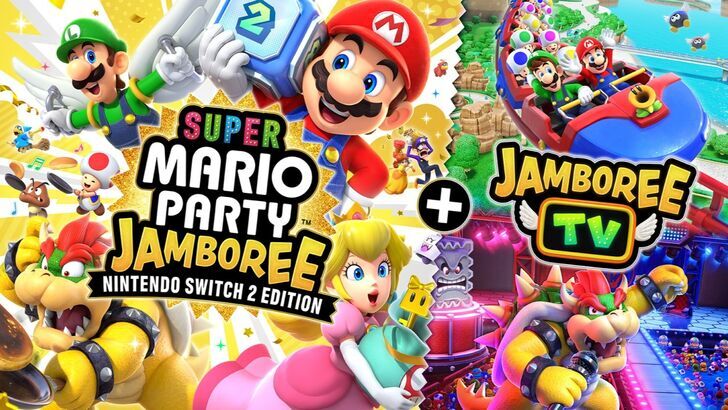
Super Mario Party Jamboree is the thirteenth home console installment in the Mario Party series and the third entry on the Nintendo Switch Platform after 2018’s Super Mario Party and 2021’s Mario Party Superstars. Developed by Nintendo Cube (formerly NDcube) and published by Nintendo, it is a multiplayer party game that retains much of the series’ core board-game mechanics, where players navigate themed boards to collect coins, purchase stars, and aim to outscore opponents. The Switch version was released on October 17, 2024, but an expansion for the Nintendo Switch 2 , Jamboree TV, was released on July 24, 2025.
The game is set on an island comprising seven different game boards, including five new environments—such as Mega Wiggler’s Tree Party and Goomba Lagoon—and two returning classics: Mario’s Rainbow Castle and Western Land. It introduces a mix of new and returning boards, such as Mario’s Rainbow Castle from the first Mario Party game and Western Land from Mario Party 2, alongside new ones like Mega Wiggler’s Tree Party and King Bowser’s Keep.
The game features over 110 minigames, the highest number in the series to date. New modes include Koopathlon, a 20-player online race through minigames, and Bowser Kaboom Squad, an 8-player cooperative battle against Impostor Bowser. Additionally, the game introduces Jamboree TV, a feature that allows players to access game data, settings, and music selections from the central hub area known as the Party Plaza.
Super Mario Party Jamboree + Jamboree TV features:
⚫︎ Massive Minigame Collection
⚫︎ Online 20-Player Koopathlon Mode
⚫︎ Single-Player Party Planner Trek
⚫︎ Motion-Controlled Game Modes
For more gameplay details, read everything we know about Super Mario Party Jamboree + Jamboree TV’s gameplay and story.
| Digital Storefronts | |||||
|---|---|---|---|---|---|
 Switch Switch |
 Switch 2 Switch 2 |
||||
| $59.99 | $79.99 (Physical Version) $19.99 (Upgrade Pack) |
||||
Super Mario Party Jamboree + Jamboree TV Pros & Cons
| Pros | Cons |
|---|---|
 Fun Mouse-Control Minigames The New Rulesets Make Party Mode Exciting Teamwork in Carnival Coaster Makes the Dream Work Fun Mouse-Control Minigames The New Rulesets Make Party Mode Exciting Teamwork in Carnival Coaster Makes the Dream Work |
Jamboree TV Feels Disconnected From the Base Game Camera and Mic Minigames Lose Their Novelty Quickly Base Game Doesn’t Get a Performance or Resolution Upgrade No New Game Boards |
Super Mario Party Jamboree + Jamboree TV Overall Score - 58/100
Quite frankly, Jamboree TV has a few great ideas, but the rest feels more like a proof-of-concept than something that the base game needed. Its biggest sin isn’t what it does, but what it doesn’t: integrate the entire thing meaningfully with the base game. Toss in a hardware requirement and some frustrating design quirks, and what you get is an expansion that’s fun for a night, but tough to recommend over other party games at the same price point or less.
Super Mario Party Jamboree + Jamboree TV Story - 5/10
As with most Mario Party games, the "story" here is really just whatever drama unfolds between you and your friends. Strip Jamboree TV away from the base game, though, and you’ll find almost nothing resembling a single-player experience. There are no unlockables, no achievements, not even a hint of progression; it’s just a menu of modes waiting for company. Play them alone and all you’ll get is the sobering reminder that you’re spending a Friday night shouting at a Joy-Con by your lonesome.
Super Mario Party Jamboree + Jamboree TV Gameplay - 7/10
This is still the same Super Mario Party Jamboree we know and love, and Jamboree TV spices it up with some fun new additions like mouse-control minigames and new rulesets that make Party Mode feel faster and more dynamic. However, the expansion feels disconnected from the base game, and its camera and microphone minigames burn through their novelty almost immediately. It’s a great time when the right people are in the room, but the lack of new game boards and variety in the new features keep it from being as strong as it could have been.
Super Mario Party Jamboree + Jamboree TV Visuals - 6/10
Jamboree TV takes advantage of the Switch 2’s much stronger hardware, with sharper resolution and richer colors that give the minigames some extra flair. It’s a noticeable step up from the base game, which still looks and runs exactly as it did on the original Switch. That’s the strange part, though. Why does only half the package get the visual upgrade? These improvements don't carry over to the original game, which makes the entire thing feel fragmented and uneven.
Super Mario Party Jamboree + Jamboree TV Audio - 7/10
The sound design here is exactly what you’d expect from a Mario Party title: upbeat tracks, minimal voice lines, a library of sound effects that make coin grabs and dice rolls pop. It serves its function, even if only a few of the music tracks will stick with you for long. It’s sad, though, that the microphone minigames can sometimes be hit-or-miss. Bowser Beats, for instance, often fail to register claps. It’s a small issue, but it’s worth mentioning here.
Super Mario Party Jamboree + Jamboree TV Value for Money - 4/10
Even at $20 ($80 if you don’t have the base game), Jamboree TV is a really, really hard pitch. Its best ideas are great, but they can only carry the weight of an expansion that leans too much on novelty. Its value becomes even more questionable when you consider that a USB camera is required to play three of the minigames within Bowser Live. This makes that $20 upgrade feel far less cheap than it might initially appear. Although you can play Bowser Live without a camera, doing so means you’re missing out on half of that game mode’s content. For the same price, or even less, you could grab a better game with far more replayability for your next game night.
Super Mario Party Jamboree TV Review: Not Quite What We Were Hoping For
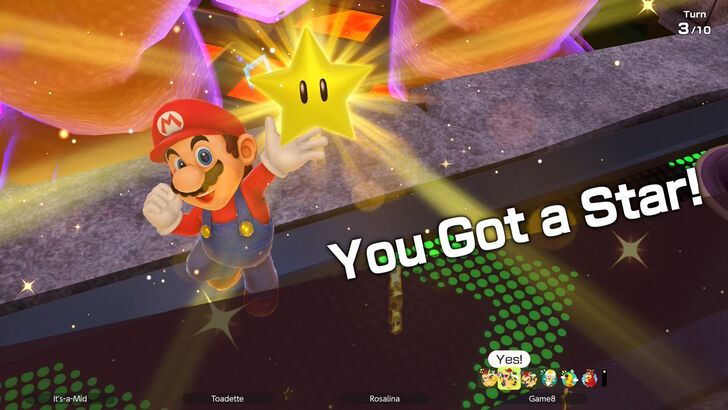
Okay, I may (ironically) have lost a friend or two because of Super Mario Party Jamboree. Maybe three, if we count the time someone stormed out of the room screaming after I snatched their star in the final turn. But, in my defense, that’s the beauty of Mario Party! It’s an exercise in patience and luck and the kind of betrayal you only laugh about later. We don’t often crack open Jamboree as often as Mario Kart World during our game nights, but when we do fire it up, we often take hours. There’s yelling, maybe some gloating, and the occasional "Don’t talk to me" afterward. We keep coming back to it regardless, though.
Jamboree, in case you’ve somehow avoided it the past couple of months, is the biggest Mario Party game to date. It came roaring in with over a hundred minigames, massive boards, and enough insanity to keep Joy-Cons flying for hours. And just when you think it can’t get more stuffed, along comes Jamboree TV, an expansion to the original that brings with it new rulesets, game modes, and minigames designed to show off the Switch 2’s gimmicks.
This expansion is brimming with fun additions, but it’s also the sort of thing that makes your wallet wince. Super Mario Party Jamboree is still very much Super Mario Party Jamboree. All the hullabaloo that comes with it is still there. Jamboree TV adds some good things, even if it sometimes feels like Nintendo's inviting you to an after-party you'd still have to pay to get into.
Our Not-So-Jolly Jamboree Experience
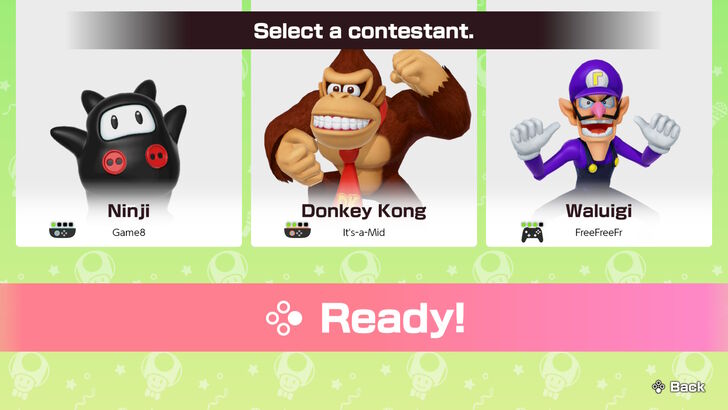
Full disclosure: Our Jamboree TV run wasn’t exactly what Nintendo probably envisioned. It was just me and two friends on the couch. Two of us had Joy-Cons, one each, and my extra Pro Controller ended up being more of a decorative piece because a lot of the Jamboree TV minigames don't support it. Our third player sat out for chunks of the session, which is never a great vibe for a party game. And since we only had one camera, only one of us could realistically dive into the new camera-focused games, which made things even more uneven. We make do with what we have, I guess.
But what’s new with Jamboree TV? The expansion adds 20 new minigames to Super Mario Party Jamboree, and I appreciate the attempt to shake up the formula. The big hook here is Nintendo finally flexing the Switch 2’s new capabilities. The camera, the microphone, and mouse controls, things they’ve been bragging about since the hardware was announced. Compared to their showing in Nintendo Switch 2 Welcome Tour, the implementation here feels more considered… though still uneven.
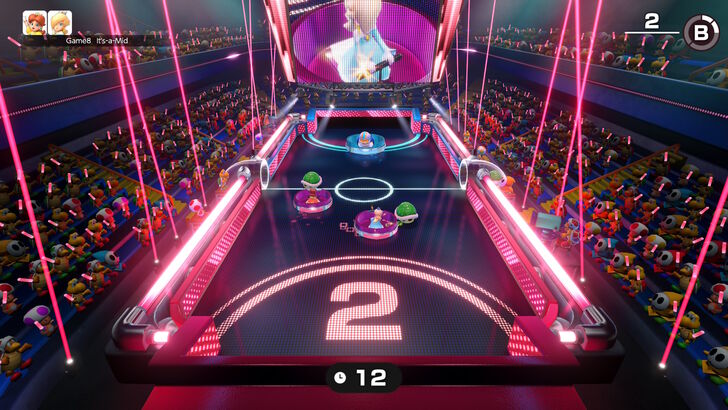
Mouse-controlled games make up the bulk of the new minigames, and they’re very fun. There are 14 of them, and most lean into precise or simple motion-based actions that make the Joy-Con-as-mouse concept feel natural. It is awkward at first, as the Joy-Con 2 controllers are too slender for people with large hands, but because these minigames rarely last more than a minute, they never overstay their welcome.
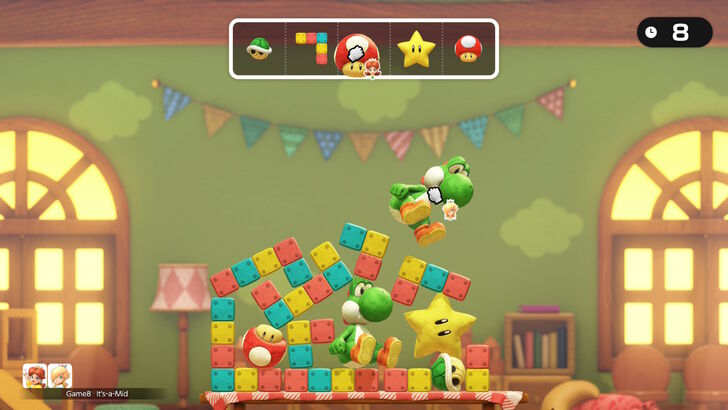
A couple of them even stand out. Shell Hockey is air hockey with a Koopa shell. Pull-Back Attack has that childhood nostalgia of yanking back a wind-up car and hoping it barrels into your opponent’s base. And Stuffie Stacker has you balancing blocks and Yoshi plushies with a partner to make a tower. The silly moments you can make with the tension of it all make the new input worthwhile.
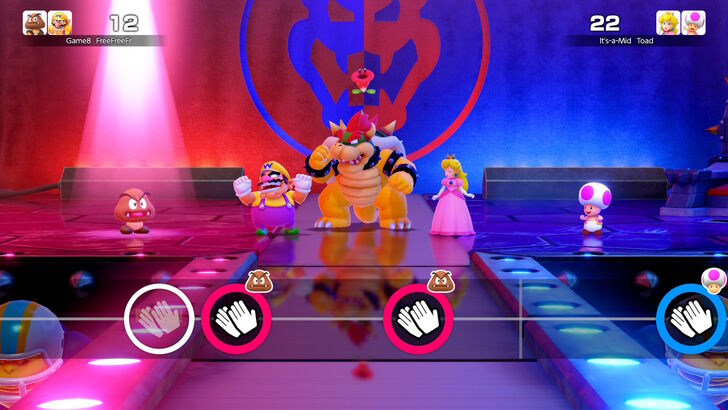
Unfortunately, the same can’t be said for the camera and microphone games in Bowser Live. There are only six of them total (seven if you count Bowser Finale), three for the camera, three for the mic, and the novelty fizzles fast here. For the first hour, we were yelling and flailing like unhinged contestants on a Japanese game show, and it was hilarious, sure. After that, though, we got bored. The camera games suffer from low-quality feeds and gimmicks that feel straight out of Xbox Kinect. For these minigames, you’ll have to own a camera. If you don’t own one, you’ll essentially be replaying the same three mic games on a loop in Bowser Live.
Speaking of, those microphone games don’t fare much better. One is a clapping minigame that isn’t precise enough to register consistently, and the other two boils down to yelling noises at your screen, which stops being funny after the first few rounds. Compared to the mouse minigames, which feel like an enjoyable experiment with the Switch 2’s new functionality, these come off as filler.
It doesn’t help the expansion's case that there are only a few of these Bowser Live minigames, and half of those are locked behind you having a peripheral that probably costs more than the $20 upgrade pack. It’s such a shame because Jamboree TV sells itself on these big gimmick-driven ideas, but the execution feels as though it’s a teaser for something better, like a WarioWare game down the line (I’m crossing my fingers that Nintendo takes the hint).
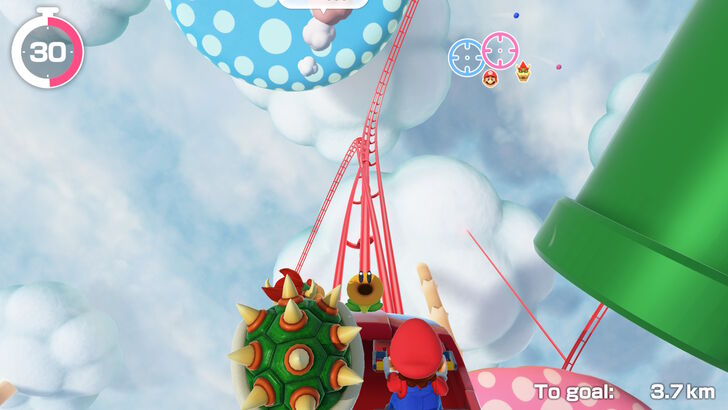
Carnival Coaster, though, is a new game mode that offers a similar mix of highs and lows. It's essentially an on-rails shooter controlled by your mouse, peppered with mini-games. You choose one of five tracks and race against the clock to reach the finish line. Taking down enemies and successfully completing objectives, like defeating a boss or rescuing someone, will extend your timer. It’s at its best when played with a partner you’re physically with, as you’ll need to work together to reach the finish. However, these rides are short. A bit more length and variety would have made a world of difference, but what's here is enjoyable enough.
New Rulesets are Actually Fun
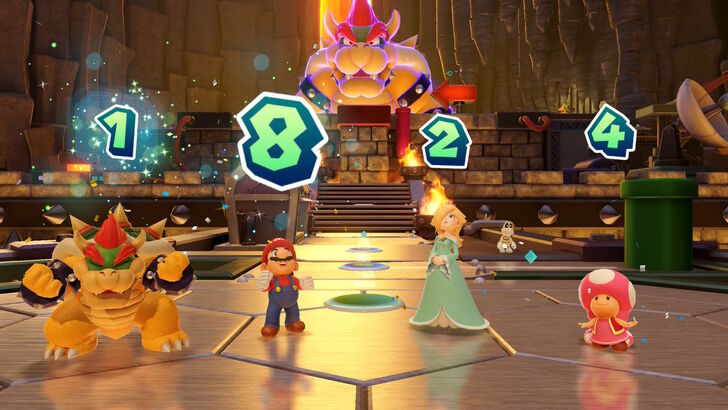
However, the fun part of any Mario Party game is, of course, the Party Mode. As I said above, this is still Super Mario Party Jamboree. Jamboree TV doesn’t rewrite that formula much, but it does add two new rulesets that give the mode a breath of fresh air: Frenzy Rules and Tag Team Rules. Both feel like Nintendo acknowledging that a lot of us don’t have 90 minutes to dedicate to one game, and sometimes we just want to ruin someone’s night in half the time.
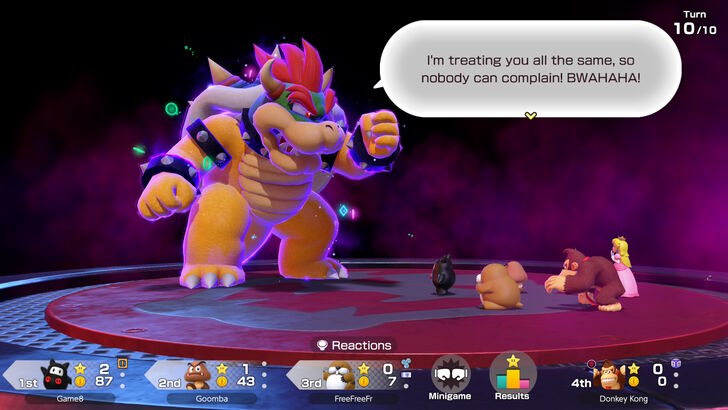
Frenzy Rules is my personal favorite, as it trims the fat of the regular game mode without losing much of the drama. A normal 10-turn match usually runs about an hour and a half, but Frenzy cuts that down to five turns, roughly 30 minutes. To compensate for the short runtime, each player starts with 50 coins, a Double Dice, and, most importantly, a star. That might not sound like much, but it changes everything. From turn one, the stakes feel high. You can immediately grab another star, invest in an early item, or blow coins on stealing your opponent's star. All of your moves here feel important, as you don’t have the luxury of playing the long game. One bad minigame or unlucky Bowser Space can tank your entire run, and that’s the most exciting part!
It also makes it so that the last-place player doesn’t have to wait for everyone to finish before they can play again. Frenzy Rules keeps the gap small enough that a clutch star steal or Bonus Star at the end of the game can flip the leaderboard. Our group went from strategizing to full-on shouting in half the usual time, and I love it.
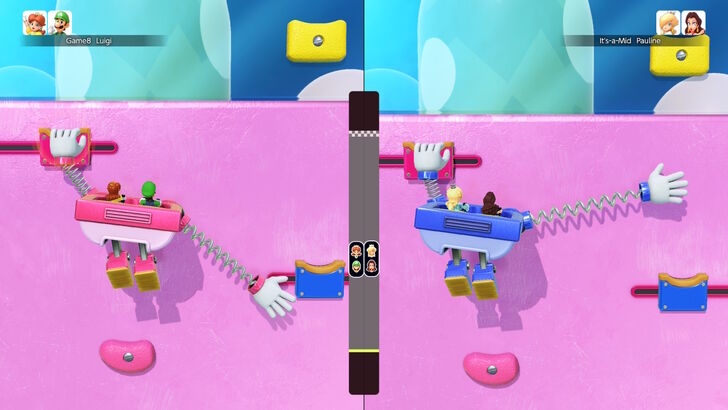
There’s also Tag Team Rules, which changes the vibe entirely. This mode pairs players into two teams of two, and while everyone still moves individually, the partners share coins, stars, and items. That small tweak adds layers of strategy you don’t often get in standard mode. Suddenly, every decision feels communal. Do we blow 40 coins on a star now or save for a Boo later in the round? Should one partner rush ahead to get a good position while the other hoards items? You can even purchase two stars in a single turn if you plan your turns right!
The minigame pool shrinks dramatically here, though, because Tag Team relies on two-vs-two bouts. Jamboree’s base game has the largest minigame count in the series, but only a fraction of those fit this format. After a couple of matches, we were already looping back to the same games. It doesn’t ruin the mode exactly, as it’s still fun to work together with a partner, but a little more variety here could go a long way.
Only Half the Game Got the Upgrade
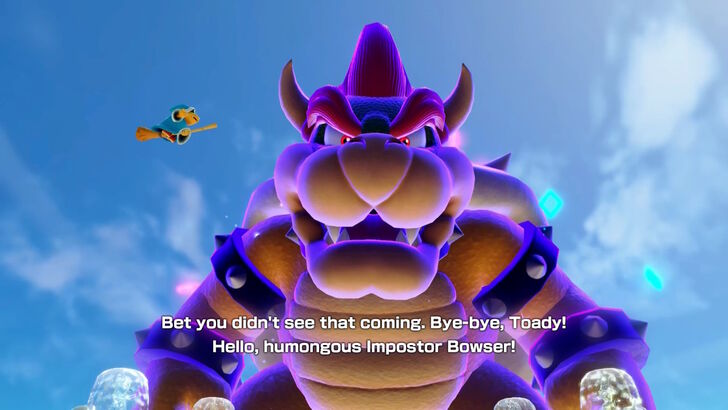
It’s worth noting that buying Jamboree TV can feel… weird. Not bad, exactly, but disconnected in a way that makes you wonder why they decided to make an expansion in the first place. From the moment you boot up the game, you’ll see what I mean. You’re immediately asked to pick between two separate options: Super Mario Party Jamboree (essentially the base Switch game) and Jamboree TV (the shiny new thing). The problem isn’t the choice itself but rather how these modes behave.
Take progress, for instance, if you want to increase your Player Rank or hunt achievements in Jamboree proper, none of that matters once you step into Jamboree TV. Likewise, if you rack up hours in Jamboree TV, don’t expect that effort to carry over to the main game. Even Party Mode is split between the two. And while Jamboree TV unlocks every board and character right from the start, hopping back to the original version throws you back to square one. That’s confusing design at best and downright frustrating.
This separation makes the expansion feel like a completely different app instead of being an actual upgrade of the base game, which is wild considering what I expected going in. I thought Nintendo might take the Breath of the Wild/Tears of the Kingdom approach, where an upgrade pack improves the core experience for everyone. Instead, vanilla Super Mario Party Jamboree looks and runs exactly the same as it did before, while Jamboree TV gets the resolution and performance boost. Why only half the package? It’s like an add-on room built onto a house, but without a door connecting it; you have to go outside, walk around, and enter separately. Sure, it works, but it’s not pretty.
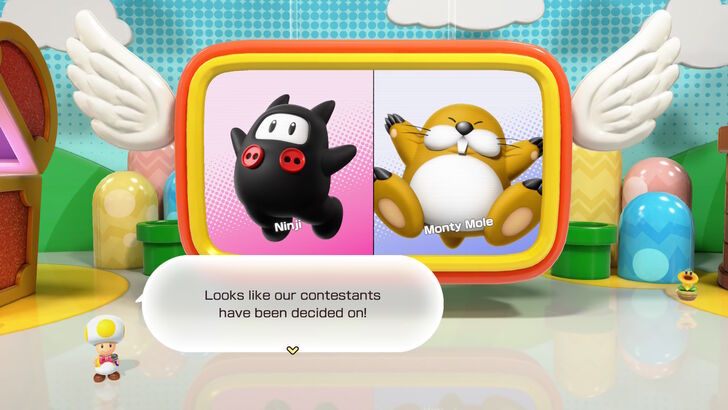
The clunkiness of this design doesn’t stop there. Changing characters in Bowser Live, for example, is weirdly inconvenient. You can’t just swap by talking to Toad like the base game; you have to exit out, sit through part of the staff credits (mercifully skippable), pick your character, then jump back in and watch an intro animation. It kills the pacing so much that, half the time, we just stuck with the same characters all night. Or worse, we bailed and launched the base Jamboree instead, even if that meant giving up on the better visuals and those fun new mouse-control minigames.
Is Super Mario Party Jamboree + Jamboree TV Worth It?
What a Party Pooper
Unless you’re absolutely dying to see what the Switch 2 can do outside of Nintendo Switch 2 Welcome Tour, I can’t really find a strong reason to recommend Jamboree TV, especially if you already own the base Super Mario Party Jamboree. It’s pitched as an expansion, but it feels more like an entirely separate app with a handful of cool ideas that don’t justify the price tag. Even at just $20, there are better ways to spend that money on the eShop.
That’s not to say there’s nothing good here. The mouse-control minigames are genuinely fun; my friends and I still pop into Free Play just for those. Frenzy Rules is a fantastic addition too, probably the best thing about Jamboree TV. These are good ideas, and they deserve credit for trying something different. The problem is that beyond those, the rest of the package struggles to hold your attention. Carnival Coaster ends before it even hits its stride, and Bowser Live, though amusing for a couple of minutes, comes off like a tech demo.
It doesn’t help that to fully enjoy everything Jamboree TV promises, you’ll need a camera. Nintendo’s official Switch 2 camera costs $55, which is more than double the price of the expansion itself. You can use a third-party USB cam if you have one, but if not, that $20 upgrade suddenly balloons into something closer to $50 to $75. And if you don’t own the base game, you’re looking at $80 for the bundle. That’s a hard pill to swallow when games like Donkey Kong Bananza just launched for $70 and deliver a far more cohesive experience. Even Mario Kart World sits at that same price and offers infinitely more replay value.
I appreciate what Nintendo is going for here, but Jamboree TV feels more like a proof of concept than an actual upgrade. There’s fun to be had, yes, but even that fades fast. If this is a glimpse of what’s possible in future titles, great. But as its own product, this just isn’t the kind of party you want to crash.
| Digital Storefronts | |||||
|---|---|---|---|---|---|
| Switch |
Switch 2 |
||||
| $59.99 | $79.99 (Physical Version) $19.99 (Upgrade Pack) |
||||
Super Mario Party Jamboree + Jamboree TV FAQ
What are Super Mario Party Jamboree + Jamboree TV’s Mouse Minigames?
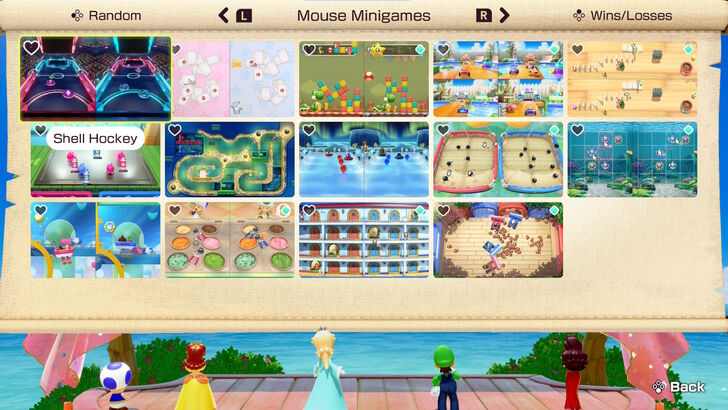
Jamboree TV adds 14 new minigames to Super Mario Party Jamboree that make use of the Switch 2’s mouse controls. These are:
⚫︎ Shell Hockey
⚫︎ Bowser Filter
⚫︎ Stuffie Stacker
⚫︎ Pull-Back Attack
⚫︎ Domino Effect
⚫︎ Bob-omb Makeover
⚫︎ Toad-ally Electric Escape
⚫︎ Ice and Easy
⚫︎ Bob-omb Toss
⚫︎ Net Gains
⚫︎ Get a Grip
⚫︎ What’s the Scoop?
⚫︎ Knock-Knock Match
⚫︎ Goomba Scoopas
Game8 Reviews

Super Mario Party Jamboree + Jamboree TV Similar Games
Super Mario Party Jamboree + Jamboree TV Product Information
|
|
| Title | SUPER MARIO PARTY JAMBOREE + JAMBOREE TV |
|---|---|
| Release Date | October 17, 2024 (Switch) July 24, 2025 (Jamboree TV; Switch 2) |
| Developer | Nintendo Cube |
| Publisher | Nintendo |
| Supported Platforms | Nintendo Switch 2 (Jamboree TV) Nintendo Switch |
| Genre | Simulation, Party |
| Number of Players | 1-20 Players |
| ESRB Rating | ESRB E |
| Official Website | Official Website for Super Mario Party Jamboree |