
| Crisol: Theater of Idols | |||
|---|---|---|---|
| Release Date | Gameplay & Story | Pre-Order & DLC | Review |
Overview
What is Crisol: Theater of Idols?
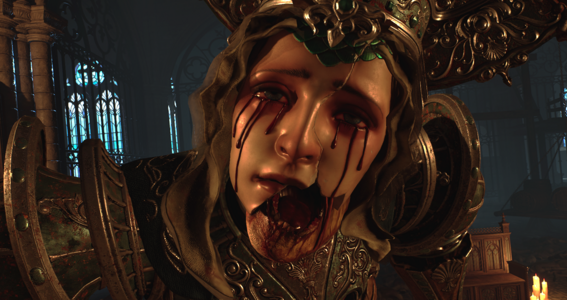
Crisol: Theater of Idols is a first-person horror game set in the twisted, gothic-barque world of Tormentosa. The game combines exploration, environmental puzzles, and combat powered by a blood-based resource system. Players navigate semi-open areas, uncover collectibles, and interact with a mysterious, cult-infused setting while facing enemy encounters and solving challenges to progress the story.
Crisol: Theater of Idols features:
⚫︎ First Person Horror Shooter
⚫︎ Blood-based Ammos
⚫︎ Exploration Focused
⚫︎ Environmental Puzzles Required for Progression
For more gameplay details, read everything we know about Crisol: Theater of Idols's gameplay and story.
| Digital Storefronts | |||||
|---|---|---|---|---|---|
 PlayStation PlayStation |
 Xbox Xbox |
 Steam Steam |
|||
| $17.99 | |||||
Crisol: Theater of Idols Review: Style Over Substance
Too High of an Expectation
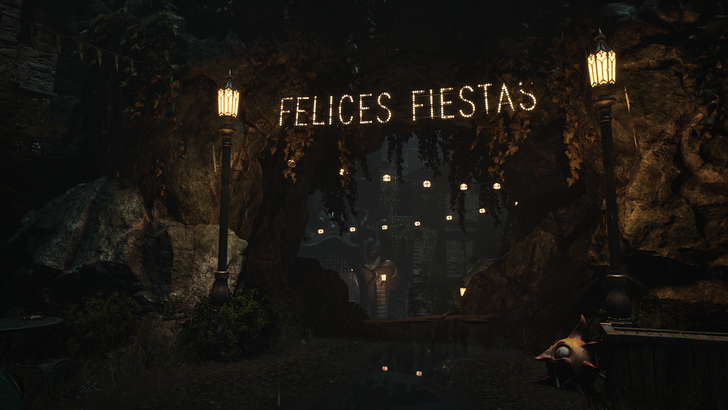
While horror as a genre has been thriving over the past few years, one particular branch has quietly faded into the background and that is first-person horror shooters. Back in the day, titles like BioShock and FEAR proved just how powerful this combination could be. They weren’t just about pulling a trigger but rather, they were about exploring decaying worlds, unraveling unsettling philosophies, and feeling constantly uneasy while doing it. So when Crisol: Theater of Idols appeared, positioning itself as the next big thing in that space, my interest was immediate.
Here was a game promising first-person shooting wrapped in religious horror imagery, surreal environments, and a theatrical, almost ritualistic presentation. On top of that, seeing Blumhouse’s name attached—even if they weren’t the developers themselves—only amplified my expectations. Like it or not, Blumhouse has become shorthand for modern horror credibility. Their involvement, even at a publishing or branding level, carries weight in the genre.
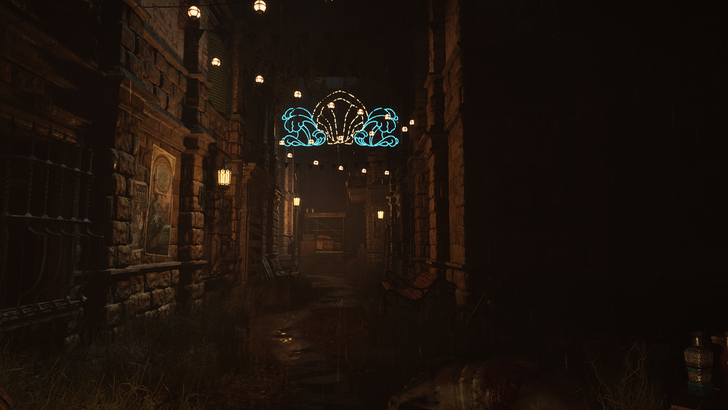
So I went into Crisol: Theater of Idols genuinely excited. I wanted this to be that long-overdue revival of first-person horror shooters. I wanted it to be bold, unsettling, and unforgettable. I wanted it to prove that this subgenre still had teeth. And maybe that’s where things started going wrong. Because the more I played, the more I realized that my expectations were higher than the game itself was willing—or able—to reach.
Tormentosa’s Gothic Dreamscape
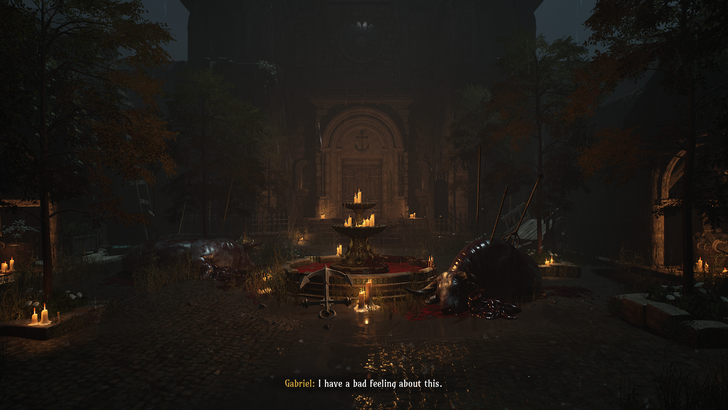
One thing I will give Crisol: Theater of Idols without hesitation is that it knows how to build a setting. From the moment you’re dropped into Tormentosa, the game commits fully to its vision: twisted, gothic-baroque interpretation of Spain that is equal parts sacred and corrupted. Towering cathedrals loom over the streets. Ornate statues stare down at you with hollow reverence. Altars, murals, and relics are everywhere, constantly reminding you that faith, devotion, and decay are at the heart of this world.
In that world is Gabriel—Gabe, for short—who finds himself trapped in this strange, suffocating place. Tormentosa isn’t just some random cursed town. It’s the very location of the cathedral that has been haunting his dreams, long before he ever set foot there.
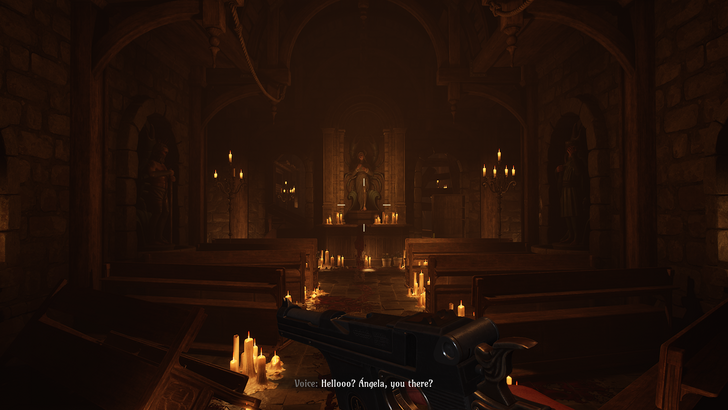
All we really know is that Gabe has been tasked by the Sun God with a divine mission and that is to restore the seal / prison gate, that’s keeping the Sea God contained. This imprisoned entity, meanwhile, clearly has its own agenda, as it believes that Gabe’s presence on the island is essential to its cause, and it wastes no time trying to make that clear.
As strong as the setting is, it’s also where Crisol starts showing its limitations. Before I dive deeper into where that starts to feel restrictive, though, it’s important to talk about how Crisol plays.
Objectives, Obstacles, and Blood-Soaked Corridors
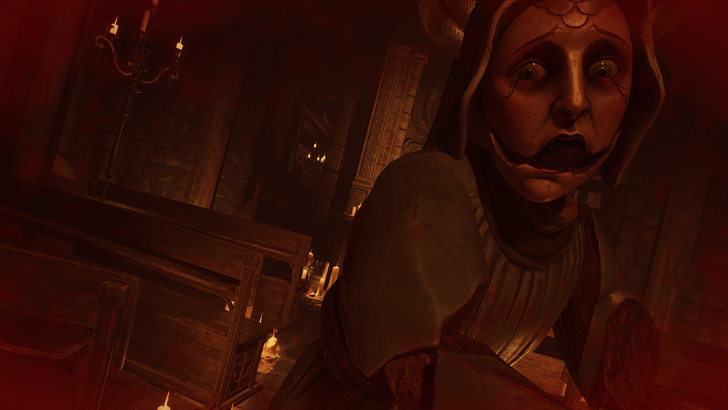
At its core, Crisol: Theater of Idols follows a pretty familiar structure. Most of your time in Crisol revolves around a simple rhythm: you’re given an objective, and you move across the map to reach it. Getting there, however, is rarely straightforward as the path is almost always blocked.
This is where the game’s puzzle elements come in. You’re regularly solving environmental challenges or manipulating the environment to open up new routes.
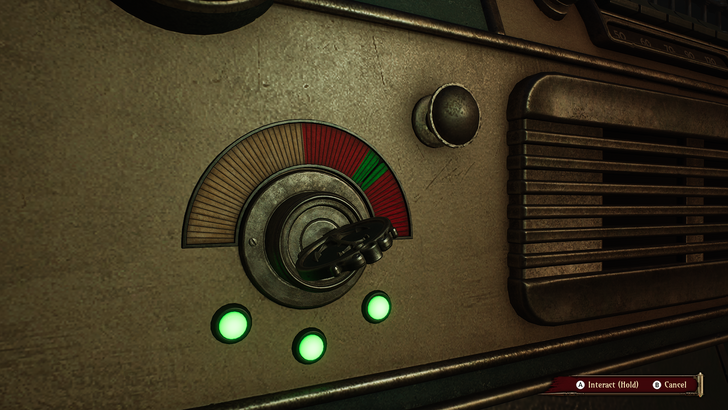
Between those puzzles, you’re navigating hostile territory because enemies jump you in corridors and plazas. Exploration also plays a significant role. The game uses a semi-open structure, with interconnected areas that gradually open up as you progress. Not every path leads to story progression though, some routes exist purely to reward curiosity, hiding collectibles, lore fragments, or coins that can later be spent in shops.
So, with the foundation laid out, let’s talk about why the narrative side of Crisol ended up being such a letdown.
Mystery Exists Without Meaning
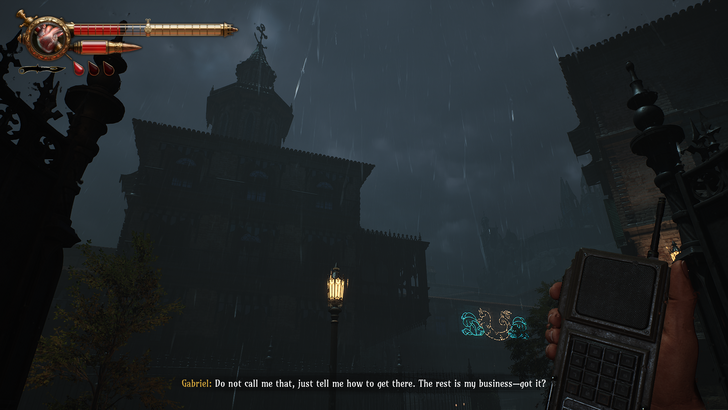
The story of Crisol: Theater of Idols has all the ingredients of a good religious, cult-centered horror narrative. Warring gods. A cursed island. Fanatical believers. A chosen protagonist. A setting built on faith, control, and manipulation. This is exactly the kind of setup that usually works on me. But from the very start, it failed to grab my attention. Not because the ideas were bad, but because of how they were told.
Crisol seems to assume that anyone who picks it up will immediately care about its world and its mysteries. It doesn’t really try to earn that investment. It just throws things at you and expects you to be interested.
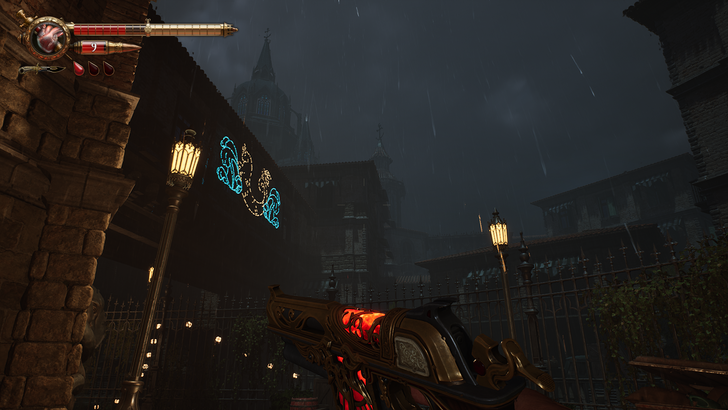
There’s obvious conflict between the Sun God and the Sea God. They clearly oppose each other, but the game doesn’t frame that conflict as something you’re meant to slowly uncover. It isn’t treated like a mystery you’re supposed to piece together. It’s just… there. You’re told it exists, and that’s it.
The same goes for Tormentosa itself. Everyone is gone. The island is mostly empty. There are barely any bodies. Aside from the Solaris—the Sun God’s believers—and some dead animals. That could’ve been a point that would make you want to look for answers. But again, it’s brushed aside.
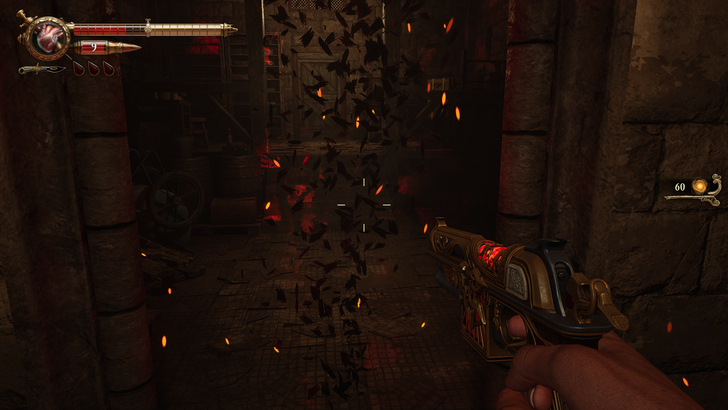
These mysteries aren’t built up. They aren’t framed in a way that makes you emotionally invested in solving them. They’re presented, then quietly ignored. So instead of feeling intrigued, I just felt disconnected.
And then there’s Gabe. My biggest issue with the story is him. I understand what they were going for. An edgy, troubled protagonist whose sole purpose is to fulfill his God’s ordinance. That can work. I’ve seen it work. But here, it just doesn’t. Gabe isn’t layered. He isn’t particularly interesting. Most of the time, he comes across as one-dimensional, delivering lines with very little emotional depth. He rarely feels genuinely scared, conflicted, or shaken by what’s happening around him. Even when I tried to put myself in his position, I couldn’t connect with him. Instead, I found myself rolling my eyes at his dialogue more often than I should.
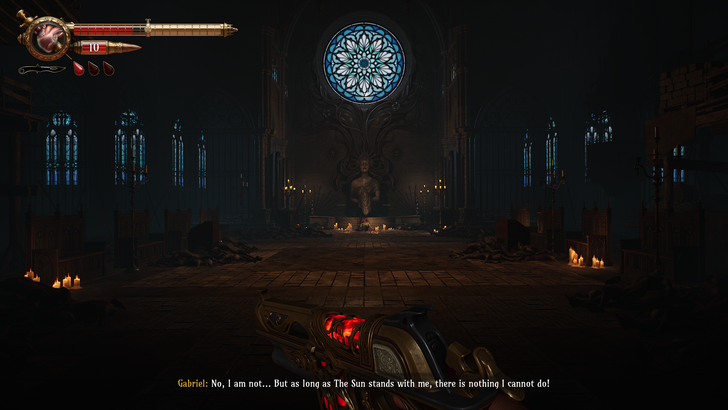
In any story-driven game, you need to care about the protagonist. They don’t have to be nice. They don’t have to be heroic. But they have to be compelling enough that you want to follow their journey. Gabe isn’t. He’s the one pushing the story forward, yet he’s also the weakest part of it.
Narrative is what gives meaning to everything you’re doing. When the mysteries aren’t framed properly, when the protagonist isn’t engaging, and when the dialogue doesn’t fit the setting, it becomes hard to care about what’s happening. You’re not uncovering secrets. You’re just moving from one plot point to the next.
First-Person “Shooter” With Combat That Barely Works
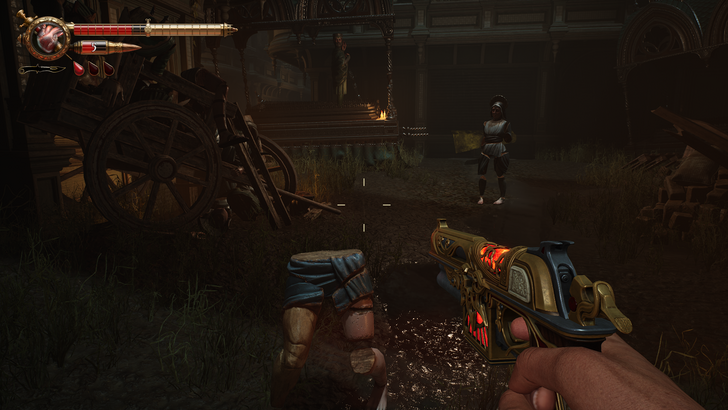
Moving on to gameplay, I have to start with the biggest letdown in Crisol: Theater of Idols: the combat. This game is marketed as a first-person horror shooter. So naturally, I went in expecting… a shooter. Something responsive. Something that feels good to control. Something where aiming, movement, and shooting work together in a way that feels intentional.
That is not what I got. From the start, aiming feels wrong. The sensitivity is way too high, and worse, you can’t properly tweak it to a comfortable level. No matter how much I tried to adjust it, it never felt natural. Every small movement sends your aim flying. Hitting targets becomes a challenge on its own, and not in a fun, skill-based way. The only workaround I found that actually helped was lowering my graphics settings to the lowest possible option. For some reason, that made things feel slightly more stable. That shouldn’t be necessary just to make basic shooting feel playable.
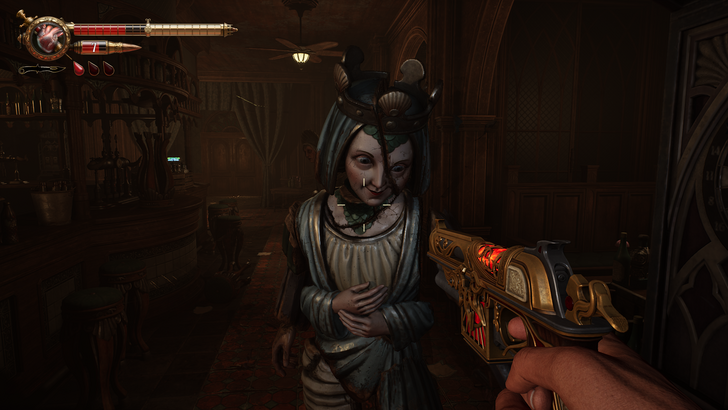
Then there are the enemies. And somehow, they manage to be both easy to kill and annoying to fight at the same time. On one hand, they’re shallow. Most of them go down after a few shots. There’s very little variety. No meaningful differences in how you approach them. No enemies that force you to rethink your strategy.
On the other hand, they’re weirdly tanky. Some enemies soak up more damage than they reasonably should. Others split their bodies when damaged, meaning that what should’ve been a finished fight suddenly turns into you shooting disembodied legs or crawling remnants. It doesn’t feel clever, it just feels messy because you’re stuck fighting enemies that are mechanically simple, but artificially stretched out. That combination is the worst of both worlds.
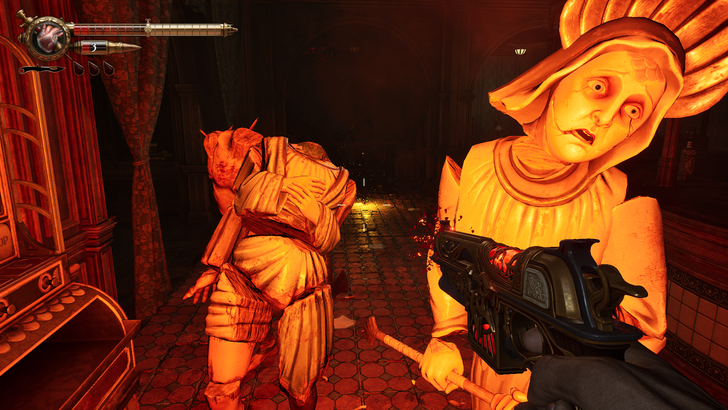
It also doesn’t take long before enemy behavior becomes predictable. Because there’s so little variety, you quickly learn their patterns. You know when they’re about to swerve. You know when they’re about to lunge. You know when they’re hiding behind certain corners or waiting in specific spots. After a few hours, combat stops feeling tense. Instead it becomes routine.
At the end of the day, the problem is simple: it isn’t fun. It doesn’t feel good to aim. It doesn’t feel good to shoot. It doesn’t feel good to fight. And because combat is such a core part of the experience, that weakness bleeds into everything else. This matters because when your main form of interaction with the world feels bad, the entire game suffers for it. No amount of atmosphere or lore can fully make up for mechanics that don’t work the way they should.
Blood as Both Ammunition and Lifeline
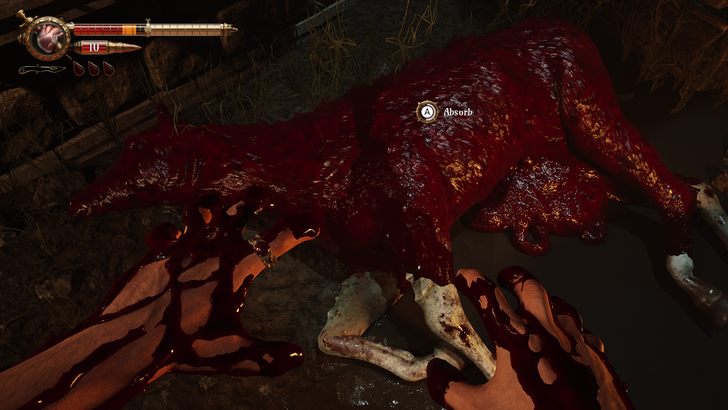
Now that we’ve talked about what’s not fun, let’s move to where Crisol actually manages to pull its weight, its core combat mechanic: the blood system. Instead of traditional ammo, your weapons are powered by Gabe’s blood. Your health and your ability to fight come from the same resource. Every shot you fire is literally costing you life. Every mistake in combat isn’t just risky, it’s draining you on multiple levels.
It creates natural tension. Do you keep shooting and risk dying faster, or do you back off and try to recover? Do you waste blood on weaker enemies, or save it for something worse ahead? There’s a built-in risk-reward system here that fits the game’s religious and sacrificial themes surprisingly well.
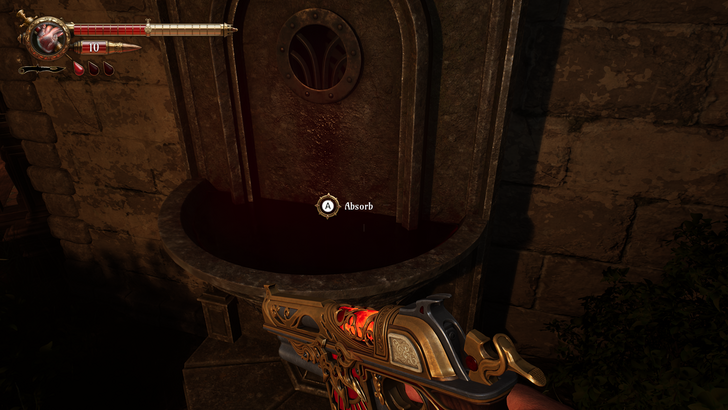
And to be fair, the game supports this system properly. Resources are distributed well. Recovery items like corpses you can drain and blood vials are placed frequently enough that you’re rarely worried about running completely dry. Even when you’re dealing with multiple enemies or a rough sequence, you’re usually given enough blood to recover if you’re paying attention.
So while the shooting itself feels bad, the idea behind it is strong. That’s what makes it frustrating. Because this is one of those mechanics that could’ve carried the whole experience if it had been paired with better execution. Instead, it ends up feeling like a great concept trapped in a clunky system.
Strong Atmosphere is Undercut by Tonal Mismatch
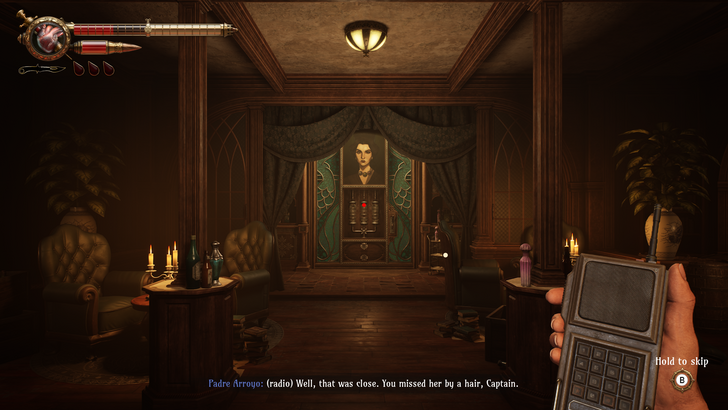
Another area where Crisol does well—at least most of the time—is environmental design. The world is incredibly detailed. Walls are covered in symbols. Altars are cluttered with offerings. Corridors are layered with shadows and religious imagery. More than once, I found myself slowing down and actually peeking into dark corners, half-expecting something to jump out. That's a good design.
The environments do a lot of heavy lifting when it comes to mood. Even when the story isn’t working and the combat isn’t engaging, the world itself still manages to keep you alert. If I were judging the game purely on its locations, I’d be much more generous.
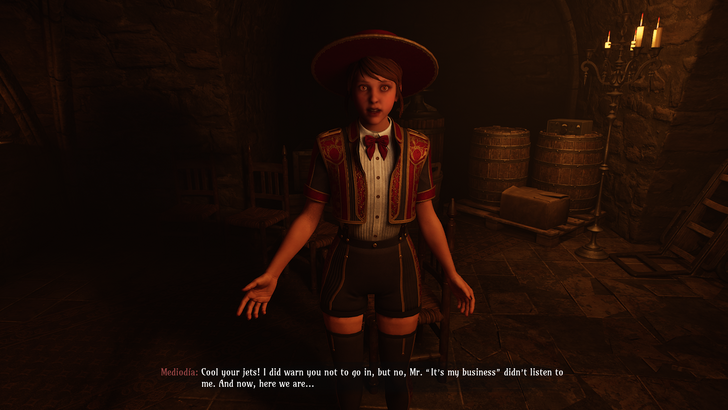
But then you look at the characters and the cohesion falls apart. Tormentosa is grimy, gothic, and decaying. It’s oppressive. It feels old and rotten in the best way. The characters, on the other hand, are often colorful, too exaggerated, and too stylized for that setting. They feel like they belong in a different game. That visual mismatch makes them stand out in the wrong way. Instead of feeling like part of the world, they feel dropped into it.
The same issue shows up in the audio. The background music and sound effects are actually good. They do their job. The ambient sounds, distant echoes, and subtle musical cues help maintain tension. On their own, they work. The voice acting on the other hand, is where things get messy.
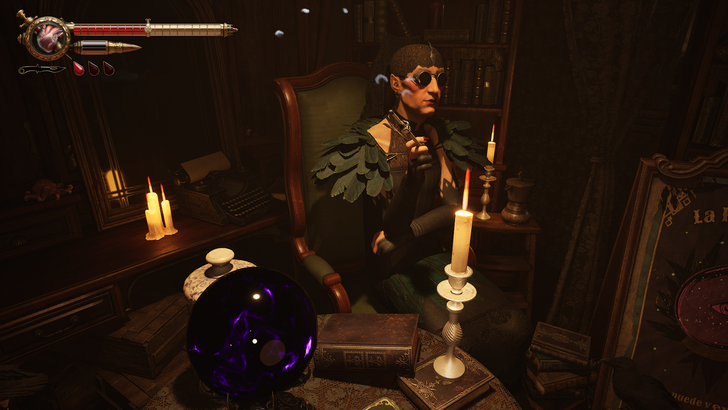
This isn’t a dig at the actors themselves, the problem is direction. A lot of the performances feel like those short internet drama clips where every line is delivered at maximum intensity. Everything is exaggerated. Every emotion is turned up to eleven. In a grounded religious horror setting, that doesn’t fit. It creates another disconnect between what you’re seeing and what you’re hearing.
And then there’s Gabe… who is extremely vocal. Not just during cutscenes or story moments, but constantly. He comments on things that don’t really need commentary. And when his health is low, he won’t stop groaning. If you’re wearing headphones, it’s annoying. If you’re playing on speakers and living with family or roommates, it’s awkward. Try explaining why your game sounds like someone is "suffering" nonstop in the next room.
These shifts ultimately break immersion. When visuals, sound, and tone don’t line up, the illusion breaks. And once you’re pulled out of the experience, it’s very hard for the game to pull you back in.
Is Crisol: Theater of Idols Worth It?
Buy It on Sale If You’re Curious
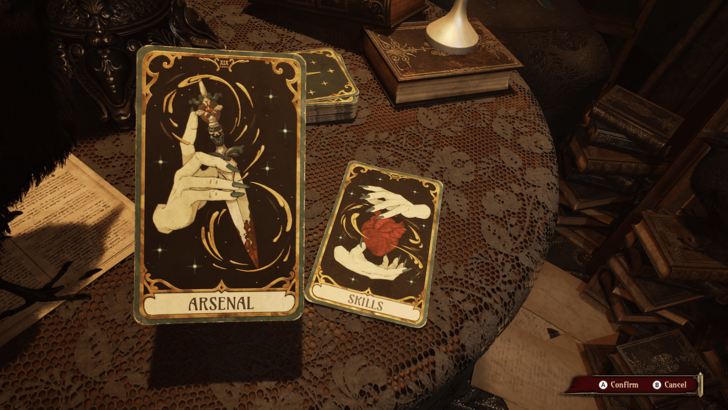
Overall, Crisol: Theater of Idols is a novel experience in some ways and a decent way to scratch that first-person horror shooter itch, but it comes with too many flaws to fully recommend without hesitation. The game has some genuinely interesting ideas. The blood-based combat system creates a risk-and-reward dynamic that fits the themes of sacrifice and survival. The environments are atmospheric, detailed, and haunting, and the religious horror aesthetic is consistently bold and intriguing.
That said, those strengths are constantly held back by weak execution. The shooting doesn’t feel satisfying, enemy encounters become repetitive, and the story fails to give you a reason to care. Gabe, as a protagonist, lacks the depth or charisma to carry the narrative, and the supporting characters’ dialogue often clashes with the grim gothic setting.
If you’re someone who loves religious horror aesthetics, enjoys experimental mechanics, and doesn’t mind rough edges, there is still something here for you. Moments of visual brilliance, interesting combat ideas, and glimpses of story ambition make it worth a look, especially if you can catch it on sale. At $17.99, it isn’t unreasonable for what you get, though it’s not the seamless, polished experience that fans of the genre might hope for.
Crisol: Theater of Idols FAQ
What Are Crisol: Theater of Idols’ System Requirements?
According to the game’s Steam page, below are the minimum and recommended requirements to run Crisol:
| System | Minimum | Recommended |
|---|---|---|
| OS | Windows 10 64-bit | Windows 10 64-bit |
| Processor | Intel Core i7-8700K / AMD Ryzen 5 3600X | Intel Core i7-8700K / AMD Ryzen 5 3600X |
| Memory | 16 GB RAM | 16 GB RAM |
| Graphics | NVIDIA GeForce RTX 2060 / AMD Radeon RX 6600 | NVIDIA GeForce RTX 2060 / AMD Radeon RX 6600 |
| Storage | 18 GB available space | 18 GB available space |
Game8 Reviews

You may also like...
 |
ROUTINE Game Review Psychological Horror, Stealth, Puzzle |
 |
BrokenLore: UNFOLLOW Review Psychological Horror |
 |
Vampire: The Masquerade - Bloodlines 2 Review Action, RPG, Horror |
 |
Slitterhead Review Action, Adventure, Horror |
 |
Shadows of the Damned: Hella Remastered Review Action, Adventure, RPG, Horror |