Blade and Soul Heroes Review Overview
What is Blade and Soul Heroes?
Blade and Soul Heroes is a free-to-play action MMORPG developed and published by NCSOFT, officially released globally on September 24, 2025 for PC and mobile platforms. It functions as a prequel to the original Blade & Soul MMORPG, exploring events that precede the main storyline by about three years.
The game follows a new protagonist named Yusol, whose goal is to rebuild her clan after it was destroyed and to exact justice upon those responsible. Along the way, the narrative introduces antagonists including Yi Chun and a cult known as the Heaven’s Fall. The backdrop remains rooted in the wuxia-inspired universe of Blade & Soul—martial arts, spiritual energy, and elemental affinities play key roles in shaping the world’s lore and conflicts.
One of Blade & Soul Heroes’ most notable features is its dual combat system, which allows players to switch between real-time action and turn-based strategy modes. In real-time mode, a lead hero engages enemies while four supporting characters provide linked support; in turn-based mode, all five members act on a traditional strategic order.
Blade and Soul Heroes features:
⚫︎ Dual Combat System
⚫︎ Expansive Roster of 40+ Characters at Launch
⚫︎ Characters with Elemental Affinities and Defined Roles
⚫︎ Gacha/Collection Systems
⚫︎ Gear and Stat Sharing
| Digital Storefronts | |||||
|---|---|---|---|---|---|
 Steam Steam |
|||||
 App Store App Store |
 Google Play Google Play |
||||
| Free-to-Play | |||||
Blade and Soul Heroes Pros & Cons
| Pros | Cons |
|---|---|
 Decent Story with Large Cast of Interesting Characters Vibrant Art Style Decent Story with Large Cast of Interesting Characters Vibrant Art Style |
Heavy Reliance on Stats Over Strats Its PvP Invites Power Creep The Entire Game Favors Whales Over F2Ps |
Blade and Soul Heroes Story - 7/10
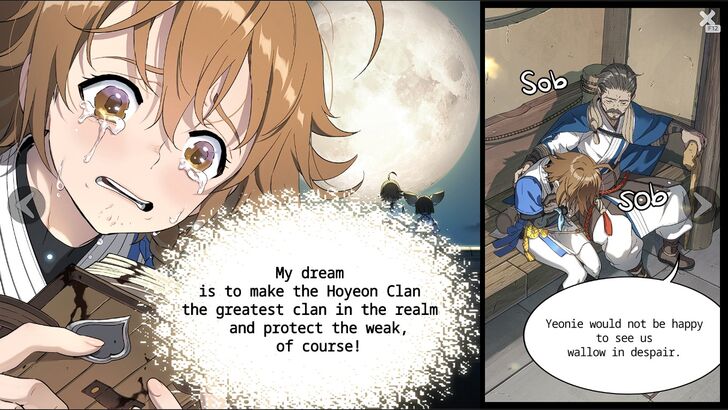
The story is decent enough, with Yusol’s quest for justice after the fall of the Hoyeon Clan giving you a clear reason to push chapter by chapter. There are some good character moments, especially when the game slows down and lets the cast goof around, often through side content and manhwa-style scenes. However, it is still an MMO, so the main plot doesn’t go beyond the usual MMO tropes, and too much of the early game is padded out with menial tasks that drag the pacing to a crawl. It’s serviceable and occasionally emotional, but it doesn’t leave a strong impression.
Blade and Soul Heroes Gameplay - 7/10
What Blade and Soul Heroes does well is give players a choice in how they want to fight, with both real-time action and turn-based strategy systems on offer. There’s no shortage of content either, whether you’re running dungeons, diving into raids, or testing yourself in PvP, and messing around with different character synergies can be genuinely fun. The problem is that, no matter the mode, fights often boil down to whoever has the bigger numbers, which makes strategy and reflexes feel secondary to raw stats. It also doesn’t help that its PvP feels entirely Pay-to-Win.
Blade and Soul Heroes Visuals - 7/10
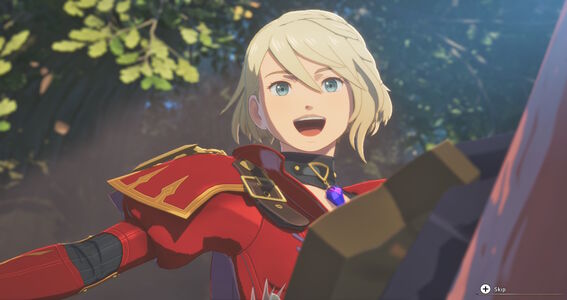
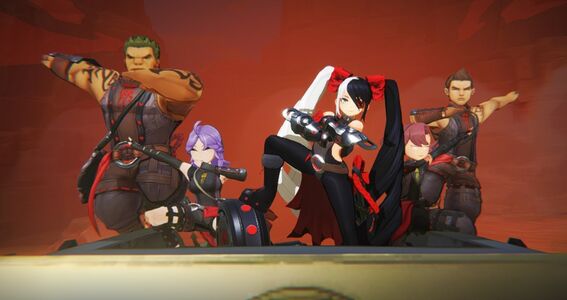
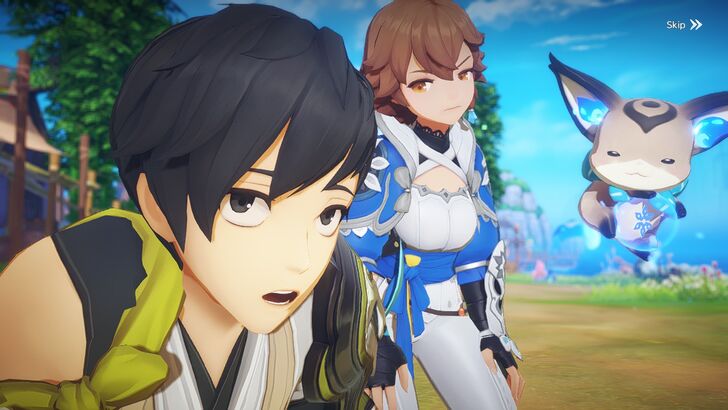
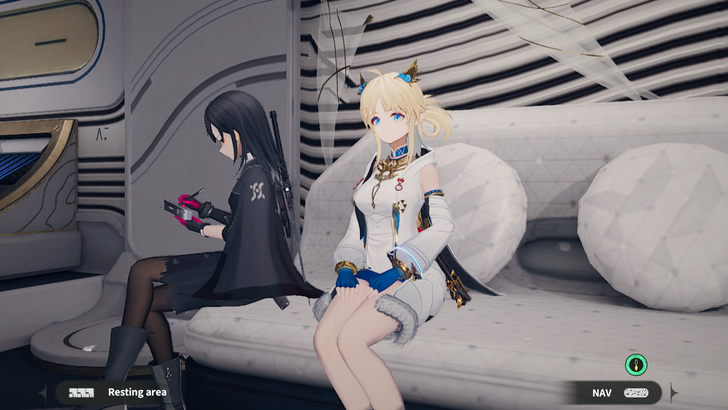
Blade and Soul Heroes has a bright and colorful look that’s easy on the eyes, with a cutesy art style that makes exploring its world feel lively. The character roster helps sell this too, since you can recruit all sorts of fun designs like a hulking minotaur or animal-like companions that stand out from the usual cast. However, a handful of designs lean toward the generic side, and even with the graphics cranked up, the visuals can look a bit blurry at times, which can take away from the otherwise nice presentation.
Blade and Soul Heroes Audio - 6/10
The soundtrack in Blade and Soul Heroes does its job well enough. It gives the game enough energy without ever feeling out of place. It’s not the kind of music you’ll be humming outside the game, but it fits the mood of combat and exploration. The voice acting, however, doesn’t quite match up, with some performances coming off flat and missing the weight needed to sell key moments. It’s not Arc Rise Fantasia-levels of bad, but it could definitely use more voice direction.
Blade and Soul Heroes Value for Money - 4/10
Blade and Soul Heroes might be free to jump into, but it doesn’t take long before the cracks in its monetization start to show. The subscription and gem system feel stingy, and the gacha model leans heavily on pushing players toward spending if they want to stay competitive. It’s possible to get by without paying, but the grind becomes painfully obvious, and the advantage given to those willing to spend more money makes the value feel lopsided.
Blade and Soul Heroes Overall Score - 62/100
Blade and Soul Heroes is easy enough to recommend as a quick download, but not as easy to stick with. The early hours can be fun, with a combat system that has enough flash to keep things moving, but it’s a heavily monetized gacha MMO. Although the presentation might feel lighthearted, the structure underneath is very demanding. What’s left is a game that can be enjoyable in short bursts, but one that demands more than most players will want to give.
Blade and Soul Heroes Review: Plenty of Blades, Not a Lot of Soul
Free to Try yet Costly to Stay
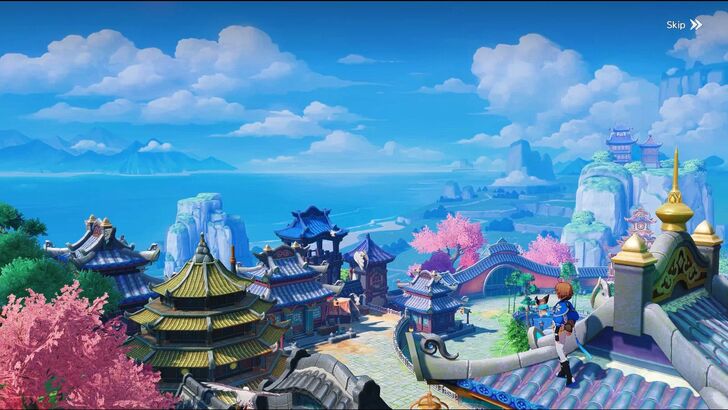
I never played the original Blade & Soul, so when I booted up Blade & Soul Heroes, I came in with no expectations for lineage or lore. I’ve dabbled in a few MMOs over time—not many, but enough to get the feel for group quests, gear progression, that sort of thing. What I have spent embarrassingly long hours on, though, are gacha games. Blade & Soul Heroes is a mix of both: an MMO layered with gacha mechanics. That combo is interesting, but nothing new. I mean, Tower of Fantasy is a prominent example of this. Regardless, I think it’s worth talking about what works, what doesn’t, and where Blade & Soul Heroes lands in my view.
First, a little history. Blade & Soul Heroes a spin-off of Blade & Soul, mid-2010s game, itself a long-standing Wuxia-themed (martial arts) fantasy MMO. This mobile version was actually released earlier in Asia (Korea as Hoyeon, Japan as Go-En) in August 2024. It tries to take some of what the original built and repackages it for more modern, free-to-play audiences, while also leaning into the pull of collecting and upgrading heroes. In Asia, it has already grown a small base of players who like the mixture of MMO tropes with the gacha grind.
One of the things I do appreciate is the fact that the game is free-to-play. That makes it much easier for people to simply give it a try without worrying about a price tag. You can play at your own pace, test it out to see if it clicks, and not feel punished for walking away if it doesn’t. That said, I wouldn’t say the game gets everything right. It has its share of problems, and while it can be fun at times, those issues do weigh on the experience.
A Massive World That's Not That Deep
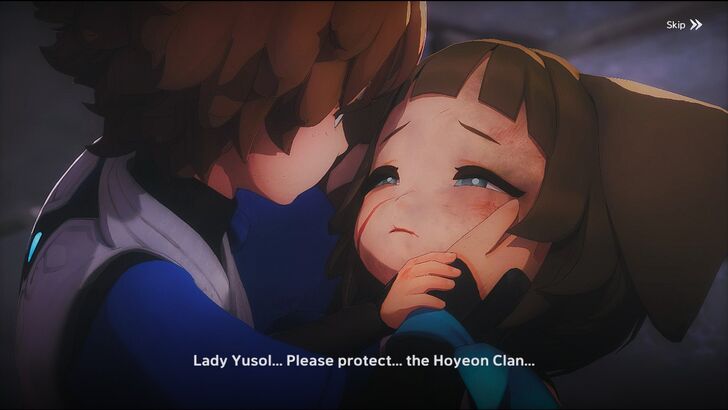
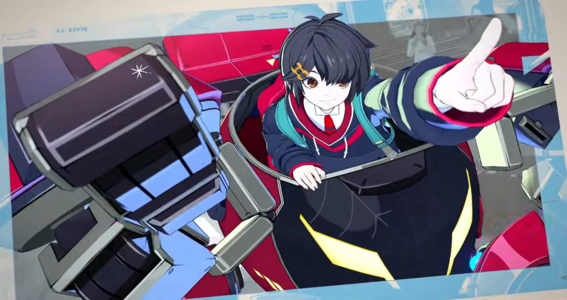
The story in Blade & Soul Heroes opens with a cinematic cutscene that sets the stage for the journey ahead. You see things through the perspective of Yusol, who witnesses the destruction of her home, the Hoyeon Clan, at the hands of dark forces. One of her closest friends dies in the attack, and that loss became the driving force for her entire quest. From there, she is motivated by rebuilding her clan, taking revenge on those responsible, and preventing something like this from happening again.
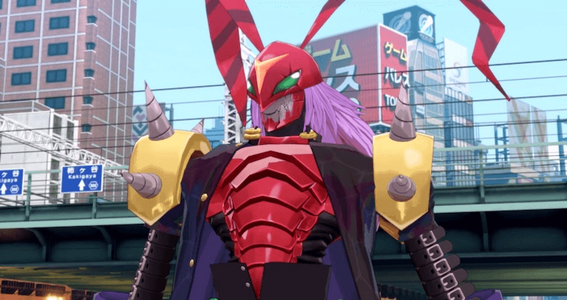
Her hatred is focused on Yi Chun, the person she fought during the clan's collapse and the figure toward whom Yusol directs her anger and pursuit. The game builds him up as a key threat but also ties him to a larger group called the Heaven’s Fall Cult. They serve as the real shadow behind much of the conflict, with their operations and secrets being teased over the course of the story. That part of the narrative leans into familiar MMO and gacha game setups, but it still provides enough structure to keep the events moving.
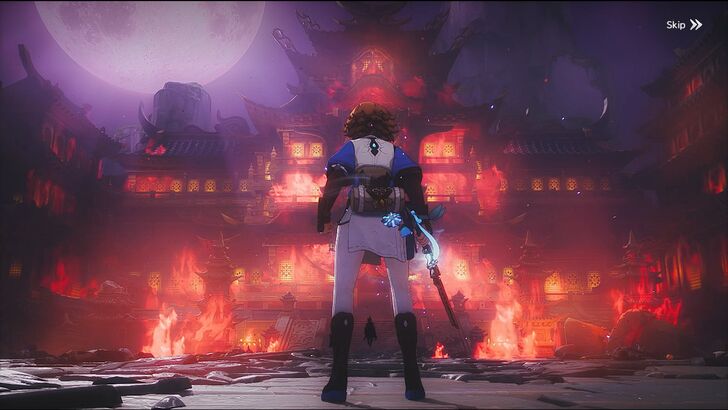
The world itself is set up to feel massive, with the game opening up more chapter by chapter. It has the kind of lore and background details that you would expect from a series that originally came from a full-fledged MMO. Yusol is not meant to face these dangers alone, and much of the story is about her making ends meet for her clan and gathering a group of allies.
The cast of characters you can recruit is wide, which makes sense given the gacha side of the game. Different heroes come with their own small arcs, and the narrative frames them as companions in Yusol’s effort to fight back against powerful factions and larger-than-life enemies. The world-building exists, though I would not call it deep or highly detailed. It is more of a backdrop for the systems at play rather than something that pulls you in on its own.
However, the game’s build up to all of these are incredibly slow. When Yusol returns to her clan a year after its ruin, much of her time is spent rebuilding from the ground up. And by that I mean literally starting small. You end up doing a large number of basic and often repetitive tasks in order to restore even just a fraction. Some of the jobs feel meaningful, but others edge into the silly side, and they can drag out the pace. The intention, perhaps, is to show the gradual progression back to power, but as a player, it can test your patience.
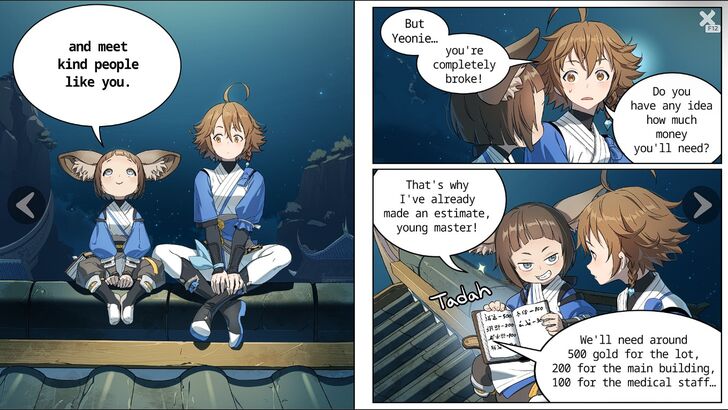
The story does try to offer emotional moments here and there. There are points that lean into melancholy, especially when certain characters’ backstories are shown in more detail. These often appear through the game’s mahnwa-style side content, which gives a little more life to the cast and makes them feel more fleshed out than they would be in the main chapters alone. I thought these moments were some of the better parts of the story, since they broke up the otherwise straightforward path and gave characters a reason to matter outside of combat stats.
I can’t say, though, that the story left much of an impact on me after about twenty hours of play. It hits familiar beats, and while it does its job of framing why you are fighting, collecting, and upgrading, it doesn’t go far beyond that. It’s serviceable, but generic, and I often found myself caring more about the gameplay systems than the actual plot.
Its Real-Time Action Combat is Flawed
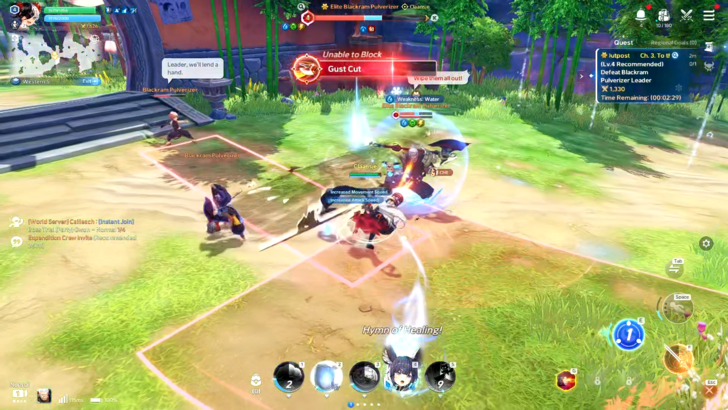
What probably got people talking about Blade & Soul Heroes in the first place is its attempt to do two different combat systems in one game. You’ve got real-time action combat on one side and turn-based strategy on the other. It’s not quite Trails in the Sky First Chapter or Trails Through Daybreak, but it’s neat that they’re here. At first glance, this sounds like a solid idea; it gives players two ways to play and keep things from feeling too samey. In practice, though, some parts work, some don’t and whether you like it really comes down to how much patience you have with the systems.
In the open world and during main quests, you’re mostly locked into real-time action combat. Here you control a single character directly while your four other party members back you up with their skills. The controls are straightforward: you’ve got auto-attacks, dodges, hero skills, and so on.
The dodge system in particular doubles as a parry if you time it right, which lets you negate incoming damage and debuffs. You get three charges of dash, and it refills slowly, even if you manage to parry something, which means you almost always have to be on the move. Some bosses still land debuffs even if you parry correctly, which can feel a little punishing, and using your dashes recklessly means you’ll miss chances to parry when you actually need it. So while the system looks simple, there is some risk-versus-reward in when you choose to spend those resources.
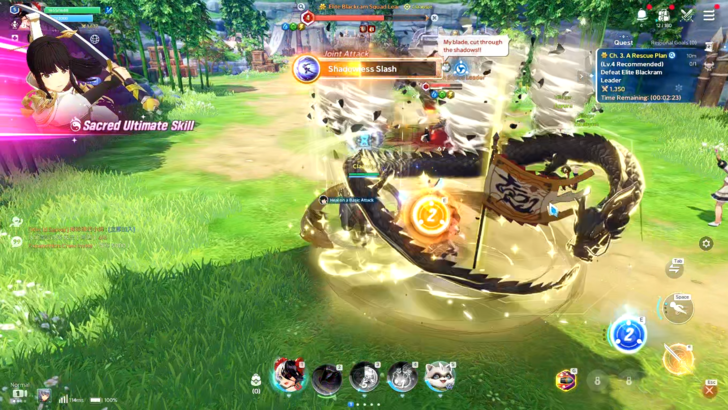
Hero skills tie into something called Sacred Skills. You can slot up to five of these, one of which belongs to your active character. Every Sacred Skill has its own effect, and as you use them in battle, you build up charges. Using them in sequence lets you activate powerful joint attacks that deal huge damage or interrupt enemy abilities. It also plays into an enemy weakness mechanic, where hitting them with specific skill types will build a weakness bar that, once full, lets you deal bonus damage. It’s not too complicated, and most of the time it boils down to saving skills for when you need to cancel enemy attacks. Still, it does add some depth to what otherwise can feel like button-mashing.
However, real-time combat also leans heavily on auto-attacking. You simply tap an enemy to target, and the game will automatically move to and attack them while you wait for your cooldowns to come back. This isn’t unusual for MMOs—Final Fantasy XIV does something similar—but here it can sometimes make you feel like the game is playing itself. I had moments where I would send Yusol on daily requests, step away to grab a coffee, and come back to find everything done. For repetitive tasks, I actually think this is a plus, since it cuts out the grind of menial farming. The game won’t run your main quests for you, and auto-battles only use basic attacks, not skills, so there’s still room for you to step in when it matters. But if you’re expecting fully hands-on action, you might find this too passive.
Even when you’re fully in control, the real-time combat doesn’t always feel great. The animations can be floaty, and the sense of impact isn’t really there. A lot of the strategy ends up being less about reacting in battle and more about what team you brought with you. The MMO roots show up through mechanics like area-of-effect attacks and boss patterns, but for the most part, you’re just pressing buttons and waiting for cooldowns to cycle.
Stats Over Strats is Not a Good Thing
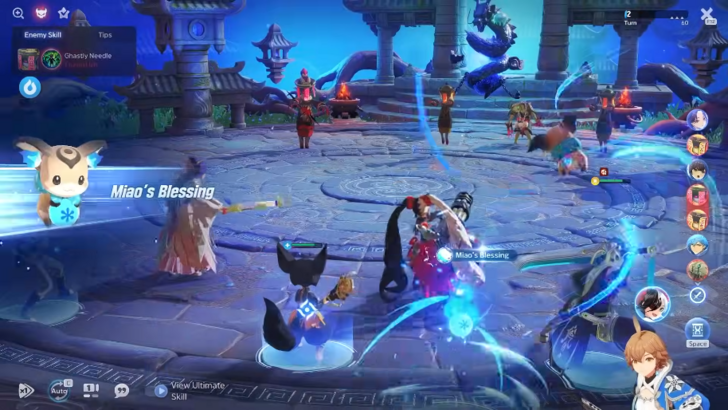
The turn-based combat system shows up later in the game once you unlock things like dungeons, raids, and PvP. These battles are 5v5 and shift the focus more toward team synergy than timing. Each hero has unique triggers for combo effects, and formations matter. Front row and back row placement can give you different bonuses. You even have the option to "Standby," which lets you skip a turn but come back faster or charge your ultimate more quickly. It’s a small but smart addition that adds a bit of strategy to what would otherwise be a straightforward back-and-forth exchange of skills.
Of course, stats still play a big role here. Like any RPG, the player with the stronger gear, higher levels, or better-upgraded heroes usually wins. There’s some decision-making involved in how you build your team and when to use Standby or combos, but don’t expect this to be the kind of turn-based game where clever strategy alone can overcome raw numbers.
Switching between real-time and turn-based styles can be jarring. If you prefer one system over the other, you don’t get much of a choice since the game locks certain content to one style. That means you’ll have to play both whether you like it or not. Still, I do give credit to the developers for trying something different here. Even if it doesn’t always come together cleanly.
Whales Get Rewarded, but F2Ps Get Little
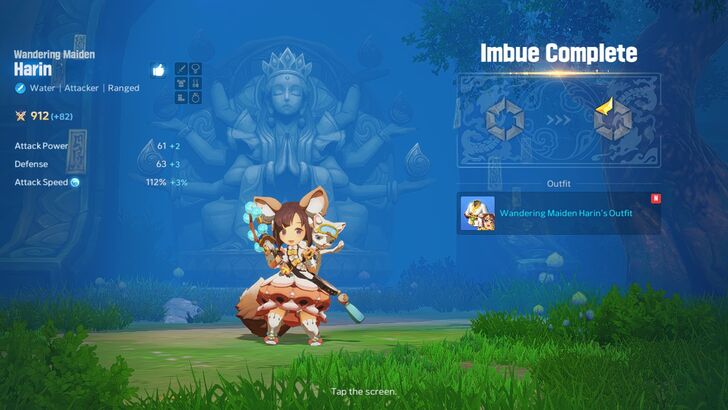
At the end of the day, Blade and Soul Heroes is still a gacha MMO, and that means you’re going to spend a good chunk of time (and maybe money) rolling for characters. This is probably the biggest point of friction for players coming from a traditional MMO background. MMOs already have their own grind and balance issues, but when you throw in a gacha system, the line between progression and pay-to-win gets blurry fast. For players who are used to steady gear upgrades and long-term grinding, the idea of chasing a .5% pull rate on a limited banner character is going to feel pretty harsh.
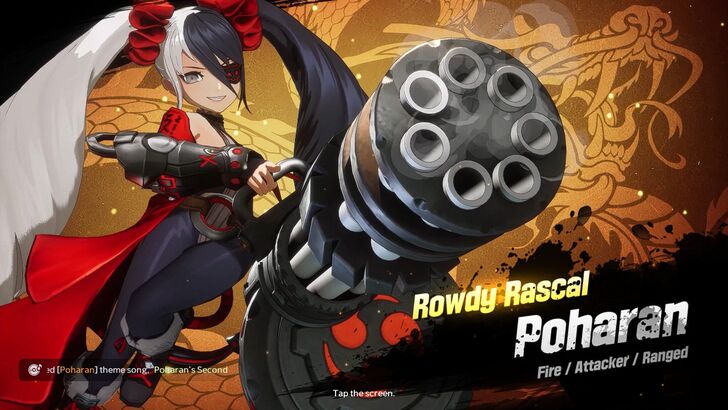
Let’s start with the basics: characters are acquired through banners, just like in most gacha games. The current one, at the time of writing, features Poharan, and she’s got a measly half-percent chance of dropping. That’s not unusual if you’ve played other gacha games, but it’s still frustrating, especially since these banner characters are usually the ones that define the meta. If you’re the type who doesn’t care about min-maxing or competitive play, you can get by with what you roll naturally. But for anyone looking to stay relevant in PvP, skipping banners isn’t really an option. New characters almost always bring power creep, and eventually, the older ones you invested in start to feel less effective.
Duplicates of characters are basically required if you want to maximize them. Pulling extras unlocks passive skills and strengthens your gear upgrades. That means even if you luck out and land the banner unit, you’ll probably need to roll several more times just to make them viable in the long run.
The in-game economy only highlights this gap. This makes it definitely a game for whales (those who spend a large amount of money for microtransactions). Take the game’s monthly-subscription that grants in-game currency per month for five dollars; this gives you 1,700 gems as long as you keep playing the game every day for the entire month. For context, a ten-pull costs 1,300 gems, so subscribing here essentially only gets you 13 pulls a month. That’s barely anything in a system where rates are under 1%.
By comparison, if you’re climbing high in PvP leagues, you can earn up to 1,200 gems per week without spending money. This sounds generous, but only if you’re already strong enough to win consistently, and to even do that, you’ve probably already spent a lot of money for it to even matter. Those who are already at the top get rewarded handsomely. For players stuck in the middle or lower tiers, those rewards won’t come close, and the cycle of falling behind only gets worse.
All of this builds into the classic problem that comes with most gachas: money equals power. The more you spend, the more pulls you get, and the faster you’ll snowball ahead. Free-to-play players aren’t completely locked out, since the game does hand out gems through events, story progress, and PvP participation, but it’s not enough to keep up with players willing to spend.
It doesn’t help that many of the game’s systems, like daily dungeon runs, have a cap. You can bypass this by purchasing more runs with cash, but this only reinforces the widening gap that leaves Free-to-Play players behind.
Is Blade and Soul Heroes Worth It?
No, It’s Too Pay-to-Win
I’ve always believed that free-to-play games are at least worth a try. You don’t have to spend anything to see what the game offers, and in the case of Blade and Soul Heroes, there is a decent amount of content you can experience that way. The opening hours, the introduction to its dual combat system, and even the early gacha pulls can give you a sense of fun without needing to open your wallet. Having said that, however, sticking with it is another matter entirely.
Underneath the presentation, this is still a predatory gacha MMO. The game’s design rewards the players who can spend more and punishes those who can’t keep up. The pull rates are egregious, duplicates are necessary for long-term worth, and PvP is built in a way that magnifies the gap between free-to-play players and whales. Even when I had fun, I could feel the systems pushing me toward spending money. The cutesy style and approachable gameplay don’t change that fact.
There’s some enjoyment to be found here, but it’s enjoyment that comes with a price, whether that’s your money, your time, or your patience. For anyone just curious about what Blade and Soul Heroes is trying to do, downloading it and giving it a spin isn’t the worst idea. For anyone hoping to stay long-term or climb its competitive ladder, I’d be much more cautious. Free-to-play means free to try, but it doesn’t mean free of cost.
| Digital Storefronts | |||||
|---|---|---|---|---|---|
| Steam |
|||||
| App Store |
Google Play |
||||
| Free-to-Play | |||||
Blade and Soul Heroes FAQ
Is Blade and Soul Heroes a Gacha MMO?
Yes, Blade and Soul Heroes is an MMO with gacha elements. This is mostly the game’s way of obtaining characters.
Game8 Reviews
Blade and Soul Heroes Similar Games
Blade and Soul Heroes Product Information
|
|
| Title | BLADE AND SOUL HEROES |
|---|---|
| Release Date | September 24, 2025 |
| Developer | NCSOFT |
| Publisher | NCSOFT |
| Supported Platforms | PC (via Steam) Mobile (Android, iOS) |
| Genre | Action, Adventure, MMO |
| Number of Players | 1-2 (Online PvP) |
| ESRB Rating | ESRB Teen |
| Official Website | Blade and Soul Heroes Website |