



| ANTHEM#9 | |||
|---|---|---|---|
| Release Date | Gameplay & Story | Pre-Order & DLC | Review |
ANTHEM#9 Review Overview
What is ANTHEM#9?
ANTHEM#9 is a gem-matching, deck-builder game featuring a striking anime-inspired visual style, paired with music and presentation reminiscent of Atlus’ popular Persona series. Players take on the role of a secret agent working for the ANTHEM#9 organization, battling powerful enemies and bosses to preserve world peace.
ANTHEM#9 features:
⚫︎ Roguelike progression
⚫︎ Gem matching puzzle gameplay
⚫︎ Three playable characters
⚫︎ Unique stages for every character
⚫︎ Combo-based survival mechanics
For more gameplay details, read everything we know about ANTHEM#9’s gameplay and story.
| Digital Storefronts | |||||||
|---|---|---|---|---|---|---|---|
 Steam Steam |
|||||||
| $14.99 |
ANTHEM#9 Pros & Cons

| Pros | Cons |
|---|---|
 Cathartic Audiovisuals Combos are Insanely Satisfying Very Replayable Intuitive, Despite Apparent Complexity Cathartic Audiovisuals Combos are Insanely Satisfying Very Replayable Intuitive, Despite Apparent Complexity |
The Timer is Just a Hindrance Underutilized Models Gets Repetitive Real Quick Each Run is Too Short |
ANTHEM#9 Story - 7/10
Sure, ANTHEM#9 has a story—or a backstory, rather. But that’s pretty much it. That’s not to say that it’s disappointing in that aspect, though. In terms of how it affects the experience actually playing it, I’d say it actually does itself a favor by allowing you to just keep playing the game.
ANTHEM#9 Gameplay - 7/10
Deckbuilder roguelikes are excellent and fun ways to spend minutes of your life trying to clear. This goes doubly for ANTHEM#9, which also added color matching as a core mechanic to combat. Unfortunately, though, each run is way too short to sustain the high points of a run, and the timer just subtracts to the overall experience without adding a single thing. Oh, and it actually does become repetitive pretty fast.
ANTHEM#9 Visuals - 8/10
ANTHEM#9’s whole visual identity is an overall positive bag of mixed goods. For one, the combat visual effects are still somehow satisfying despite being carried almost entirely by text-based assets. At the same time, the aesthetic theme somehow matches the game’s own rhythm, making immersion surprisingly easy even if you’re only staring at portraits and words. It’s just a darn shame that the great character models are severely underused throughout the entire game.
ANTHEM#9 Audio - 9/10
Near full voice acting, great music, and gratifying sound effects, all complimented by an escalating rhythm dependent on your current gameplay state? Count me in. Honestly, the only thing I can really criticize about this is that the developers seem to have forgotten that enemies, too, should have been treated just as well as the main characters.
ANTHEM#9 Value for Money - 8/10
Sub-$20 roguelikes are never not welcome, especially if they offer the kind of gameplay that allows anybody to drop in, get a run off, and then go do something else without making it feel like they’re not making progress. Sure, there are a number of gameplay-related pacing problems that actively discourage prolonged play, but that’s nothing compared to the satisfaction of pulling off hundred-hit combos on enemies.
ANTHEM#9 Overall - 78/100
ANTHEM#9 is a classic case of having too many great ideas forcibly shoved down the throat of a small-scale game. It's very fun to play, sure, and the audiovisuals are also high quality... but why is there a timer on each turn? And why is the screen always over halfway filled with text on an oversized UI? Other than that, though, everything else is quite solid.
ANTHEM#9 Review: Routinely Addicting
What Busybodies Love

As someone who currently juggles, uhh, four (or was it five?) gacha games, time is something I would be willing to get on my knees and beg on the streets for. Though my favorite RPGs would take precedence whenever they release, having a nightly grind so routine and mechanical that it feels like a second job means I rarely have the opportunity to touch other games.
Roguelike deckbuilders, however, are some of the main exceptions. After all, most of them can just be played for half an hour before you can dip and go back to your regular programming. And unlike RPGs, roguelikes allow you to play the game with satisfying progress before losing it all at the final turn without making it feel like a total waste of time.
Peace Through… Spiritual Battles?
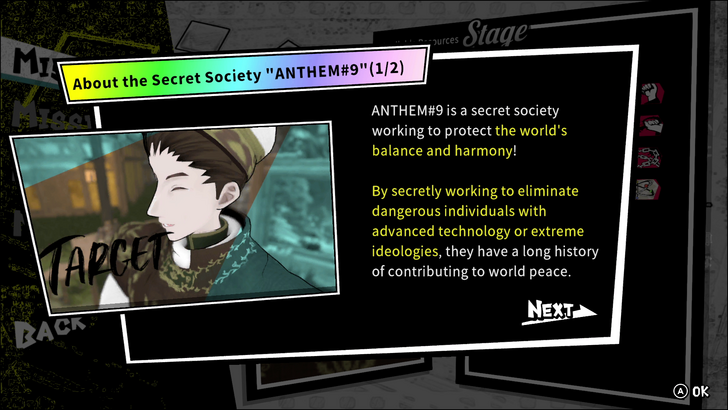
ANTHEM#9 puts you in the shoes of any of the three agents under the titular organization’s peacekeeping division. Their mission, straightforward enough, is to eliminate dangerous individuals with dangerous technologies or extremist ideologies.
How they do that, though, is the interesting bit; instead of bothering themselves with stuff like hacking, infiltration, and the like, they take to the spirit world and remove the undesirables there… It’s basically Persona. There, I said it.
And that’s basically it. ANTHEM#9 makes no effort at all to tell you who your target is, what you should do to get there, or even why they need to be taken out. All you do have are context clues taken from the enemies’ designs, the skills they use, and the boss’ titles and garb. Not having an actual story past the premise doesn’t impact ANTHEM#9’s gameplay at all, though. That just means you can keep playing, dying, and playing again without any of those pesky dialogue boxes and cutscenes ruining your fun.
Cards Aren’t the Only Things You’ll Be Matching
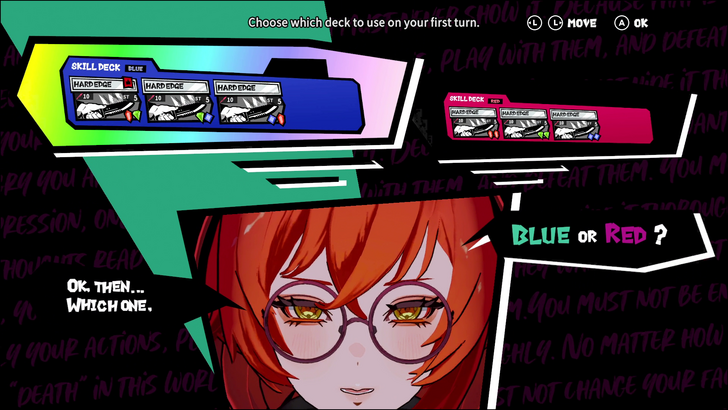
Setting aside the practically non-existent story, ANTHEM#9’s gameplay is anything but absent. In a nutshell, it’s a deckbuilder roguelike where the combat itself is a gem matching puzzle game.
All matches start with you getting a random set of colored gems and one of two “decks” of your choosing. Every “deck” has up to three cards and each of them require a certain sequence of gems activated in order to use. Typical matching game stuff. But what’s great about this is every card can be activated multiple times, and the game only cares about how many times a specific sequence of gems you arrange.
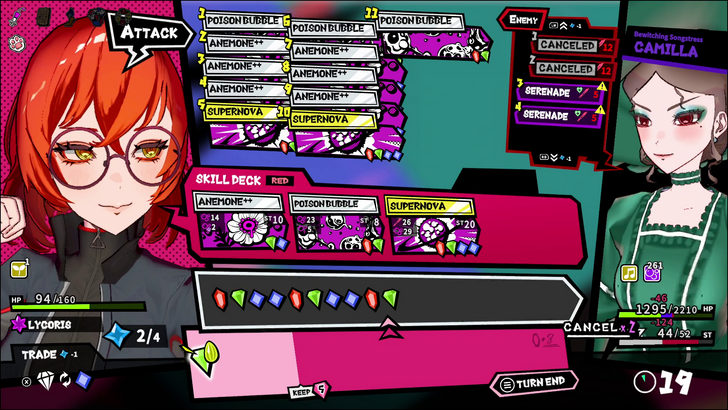
For example, if you have a card that needs a blue gem followed by a red gem, another that uses a red gem and then a green gem, and then lastly a card that needs a blue gem, followed by red, and finally a green, then you can activate all three cards simply by playing the cost of the last card because it also contains the sequence required by the previous two.
Unfortunately, it’s not like you’ll always get a good card with the perfect gem sequence to fit into your deck. More often than not, you won’t. But although you can change their gem sequence later on, that requires getting into the correct event tile and wasting a turn doing so instead of upgrading that skill to hit more.
Excluding that little hiccup, you’d normally only be able to get, say, 3-4 hits in per turn, depending on the gems you pull and the interaction of abilities between you and your opponent. But combined with the fact that many of the cards here combo off of each other or reference another card for bonus effects, this allows you to drown enemies with insane combos that hit a hundred times instead of single-digit farts.
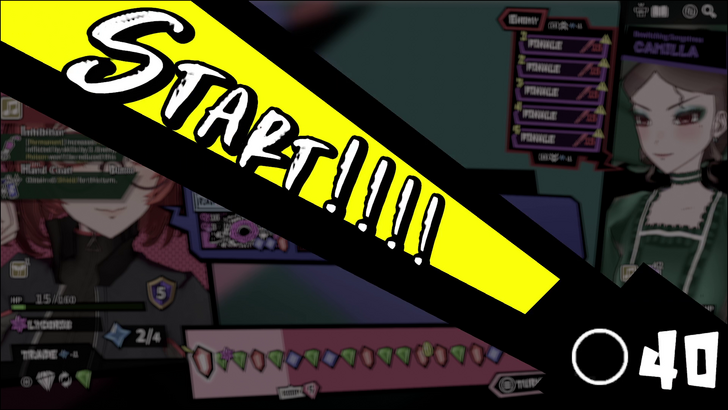
That alone is reason enough to keep going back to the game just to see your screen get filled with attack indicators with three-digit combo hits, really. And I love it.
I must say, though, why did they add a timer to your turn? They always give you a lot of time, sure, but in the grand scheme of things, I fail to understand why it’s there. For the most part, a good deck demands the same chain of gems to play, anyway, so you normally won’t even use ten seconds lining those up.
On the other hand, there are enemies that can mess with your gem colors, such as turning all reds into blues, or even completely shuffling your cards’ gem requirements. In those cases, you’ll need far more than forty seconds to plan around it, play the correct gems, get enough hits in, and survive the turn. As a result, success then leans too much on your ability to react rather than plan—and it’s very jarring, considering the opposite is true more than 90% of the time.
The Fun Starts Later
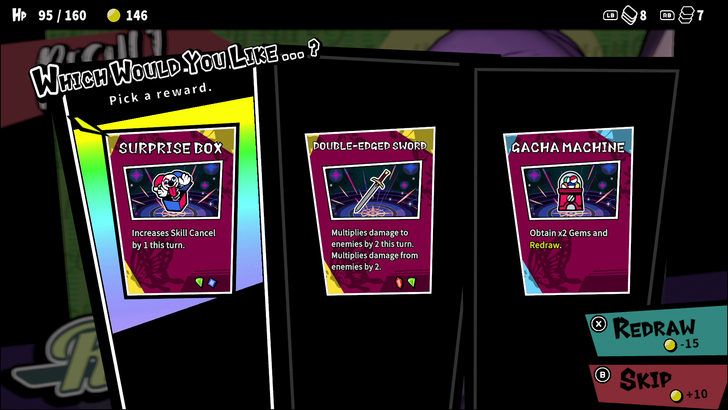
Though I say that the combos are amazing, you won’t actually gain access to them right off the bat, even if you luck out so hard that you’d make someone who pulled a 5-star in Honkai: Star Rail five times in a row seethe with jealousy. That’s because each character’s full arsenal is only slowly unlocked as you move up difficulties, essentially serving as the game’s progression system.
Makes sense. After all, the game would get real old, real quick, if you were able to pull off insane hit counts right from the start.
Unfortunately, though, getting to that point in itself is a massive pain, primarily because none of the fights here are easy. This is thanks to healing and shields being extremely scarce. As a result, the only effective way to survive is to mitigate damage entirely, as enemy actions can effectively be canceled as long as you hit them hard and often enough.
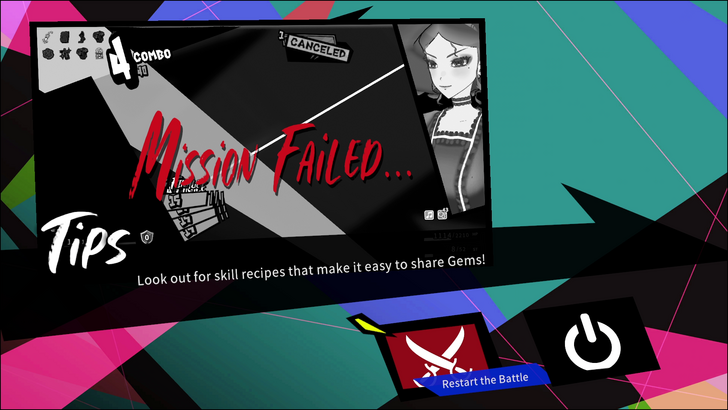
This is especially true for elite enemies, midbosses, and the final boss, as they are always brutally difficult, though not unfairly so. The final boss, in particular, always possesses some form of gimmick that will screw with your game plan, making beating it an exercise in futility unless you go in armed to the teeth or with layers of redundancy to your kit.
And you know how hard that is to do in a roguelike where the game barely gives you enough opportunities to prepare? It feels like torture sometimes, but that’s what we come for.
A Speedrunner’s Woe
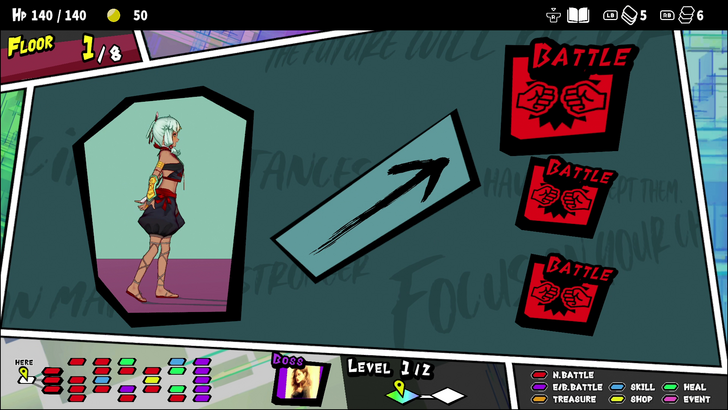
Unfortunately, though, creating a deck that allows you to hit a bajillion times will require some serious luck. That’s because, unlike other deckbuilder roguelikes such as Chaos Zero Nightmare, a run in ANTHEM#9 only lasts for so long. More specifically, there is a notable lack of opportunities to update your deck with all of the upgrades and modifications you need.
For reference, a single slot might require a replacement card, two upgrades, and, if necessary, one or two modifications to its required gem sequence in order to turn into an exploitative combo beast. That would, in total, require three to five areas to finish. Now consider that you have six cards to work on, barely over a dozen or two areas to power up, and must also take into account any possible interference or bad pulls—yeah, good luck.
On top of all that, the game’s rather brisk pace does make it feel quite repetitive.
There’s People Behind the Walls
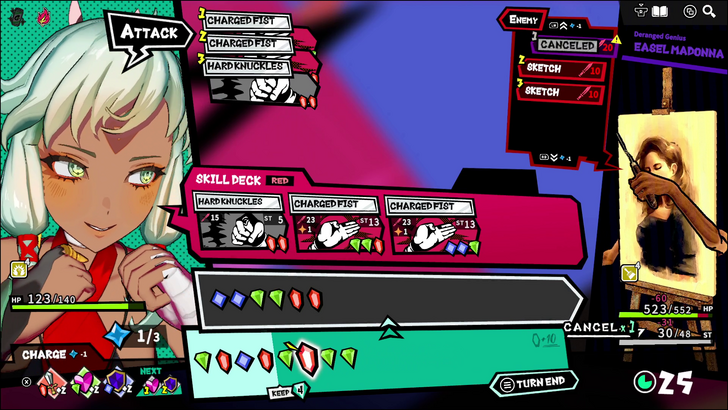
Honestly, ANTHEM#9 has some very amazing character and even enemy models, especially for its price point. They’re detailed enough, animated well, and even have idle behavior down pat like blinking and wetting their lips.
So why, pray tell, are they always stuck either behind a small pane to your left (or right), shown as a quick cut-in for a skill, or running in a narrow, horizontal window beyond appearing in full at the character selection screen? It’s such a missed opportunity to showcase the character models in their full glory, even if it means having less space to utilize the oversized UI.
As a result, instead of feeling like a game where you fight technologically and spiritually advanced antagonists, it ends up feeling like something from a few decades ago… which sort of sums up the game’s entire audiovisual experience.
Is ANTHEM#9 Worth It?
Get it When You’re Comfortable

While ANTHEM#9’s asking price isn’t that high, especially for a game that offers hella quick runs without the burden of meta-progression, it’s not something I would deem as a must-buy. Yes, it’s good, and yes, it’s very satisfying to play. But then again, there are a number of issues with it that can directly affect your enjoyment.
I would suggest either waiting for a sale, or just outright buying it if you’re interested in a matching game roguelike.