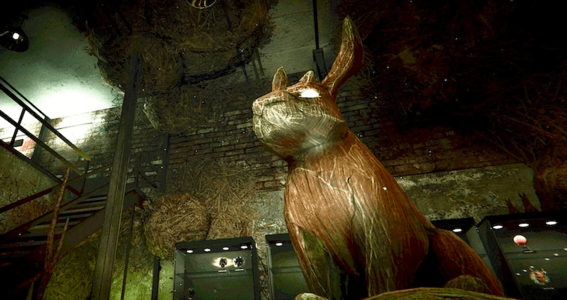

Abiotic Factor is a sci-fi survival crafting game set in a massive, mysterious underground research facility. Read our review to see what it did well, what it didn't do well, and if it's worth buying.
Abiotic Factor Review Overview
What is Abiotic Factor?
Abiotic Factor is a cooperative sci-fi survival crafting game that takes place in an expansive subterranean research facility during a catastrophic security breach. Players take on the role of newly hired scientists, choosing from a variety of roles.
Abiotic Factor features:
⚫︎ 90’s Inspired Sci-Fi Survival Crafting
⚫︎ Specialized Roles
⚫︎ Deep Crafting Systems
⚫︎ Large Interconnected Map
⚫︎ 6 Player Co-Op
⚫︎ Different Dimensions
| Digital Storefronts | |||||
|---|---|---|---|---|---|
 Steam Steam |
 PlayStation PlayStation |
 Xbox Xbox |
|||
| Price | $34.99 | ||||
Abiotic Factor Pros & Cons
| Pros | Cons |
|---|---|
 Layered Crafting System Flexible Skill System Abundance of Loot Excellent Worldbuilding Layered Crafting System Flexible Skill System Abundance of Loot Excellent Worldbuilding |
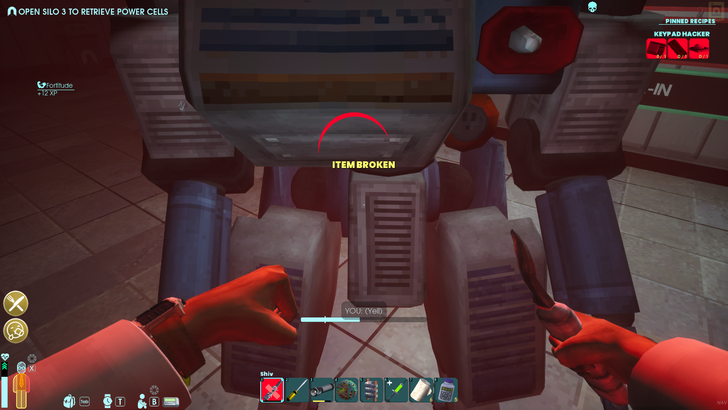
Steep Difficulty Curve for Solo Players Meager Inventory Space Weapons Break Quickly |
Abiotic Factor Overall Score - 86/100
Abiotic Factor is a standout in the survival crafting genre, blending humor, tension, and sci-fi chaos into one very replayable package. It’s smart, weird, and satisfying—but it’s also unpolished in a few areas. Some mechanics are left completely unexplained, and solo players might struggle without friends to divide the workload. Still, it’s a memorable experience that rewards experimentation and curiosity.
Abiotic Factor Story - 9/10
The game doesn’t rely on a traditional protagonist, but the premise itself—new hires trapped in a lockdown gone wrong—is immediately engaging. Narrative delivery is organic and immersive, spread across voice lines, terminal logs, and environmental clues. It follows its own internal logic well and doesn’t overexplain, letting the mystery breathe. While not overly cinematic, it’s surprisingly effective at building tension and intrigue without cutscenes or exposition dumps.
Abiotic Factor Gameplay - 9/10
The survival loop is compelling, creative, and full of smart design decisions that reward trial and error. Systems like crafting, character roles, and exploration feel layered and flexible. However, it does expect a lot from the player with very little direct guidance. Some mechanics aren’t taught at all, which may frustrate newcomers or casual players. Still, the sheer variety and cleverness of the systems more than make up for it.
Abiotic Factor Visuals - 8/10
The game leans into its 90s aesthetic with blocky charm and stark fluorescent lighting that fits the setting perfectly. It's not the most technically advanced or detailed game, but it knows exactly what kind of atmosphere it's going for and nails it. Environmental storytelling shines through cluttered labs and busted hallways, and visual clarity is strong. That said, animations and character models are stiff and simplistic, which may put off players expecting a more modern polish.
Abiotic Factor Audio - 8/10
Sound design is functional, the ambient hum of machinery, distorted alien shrieks, and frantic radio chatter build a strong atmosphere. NPCs are all voiced, and while not every performance is award-winning, the variety adds charm. Music takes a backseat, serving more as background tension than melodic standout, but it works for the genre. There are no glaring issues, but nothing exceptionally stands out either.
Abiotic Factor Value for Money - 9/10
For $34.99, you get a meaty, replayable experience that feels rich in both content and potential. Multiple player roles, skill systems, and co-op support give it strong longevity, especially in a group setting. The game feels packed with things to do and places to explore. It may not have the polish of bigger-budget survival titles, but what it offers is honest, chaotic fun. Just be ready for a bit of a learning curve.
Abiotic Factor Review: Brilliant Mess of Science and Survival
We’ve all been there, that first-day unease. Whether it’s a new school, a new job, or the first time stepping into a space you don’t quite understand yet, there’s always that fog of uncertainty. You move through unfamiliar hallways, shaking hands with people whose names you won’t remember, nodding at procedures that haven’t quite sunk in yet. You're waiting for that moment when everything starts to make sense—when orientation clicks, when your desk becomes familiar, when your new role feels just right.
Now imagine this: It’s your first day at a prestigious underground research facility. You’ve just gotten your ID, sat through an awkward but helpful orientation, and started to get a feel for the place. Then bam, security breach. Doors slam shut, alarms blare, and the entire facility goes into lockdown. You're sealed in with strangers, the building's personnel are panicking, and there are… things… roaming the halls. Not just agents of the company either. Things that shouldn’t exist. Things with mushy bodies and too many teeth.
Welcome to Abiotic Factor. Hope you brought a flashlight.
At its core, Abiotic Factor is a ‘90s-flavored sci-fi survival crafting game set deep within a subterranean research facility gone horribly wrong. Think Half-Life meets Minecraft with a sprinkle of SCP, but with more toilets, inventory micromanagement, and the unrelenting feeling that someone (or something) is watching you from the vents. It's the kind of game that doesn’t just want you to survive—it wants you to learn how to think like a scientist while doing it. Which, for me, is kind of a dream.
As someone who’s sunk an embarrassing number of hours into survival games, especially sandbox ones (hello, Minecraft), this scratched every itchy part of my brain. The compulsion to hoard items? Check. The joy of setting up a makeshift base in a cafeteria? Check. The quiet thrill of crawling through vents, flashlight flickering, praying to every science god you don’t aggro another monster from Dimension Whatever? Absolutely check.
But before any of that, before the monsters and the toilet jumpscares, Abiotic Factor does something clever, it welcomes you.
Orientation And Character Creation
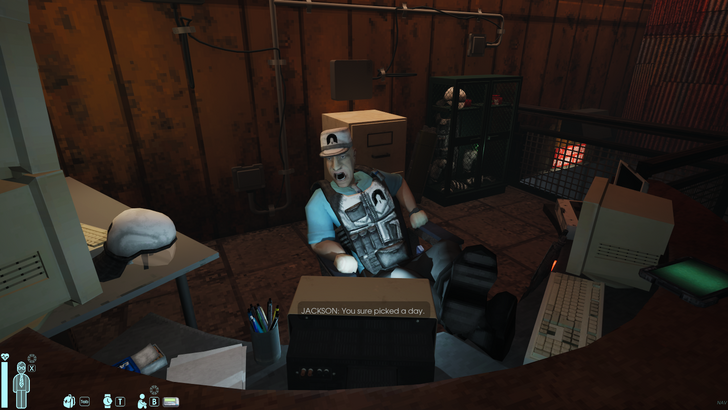
Abiotic Factor doesn’t just drop you into chaos. Not right away, anyway. It actually lets you settle in. You arrive as a new employee, freshly minted and ready to serve SCIENCE. The game’s tutorial cleverly masquerades as a standard company onboarding process. There’s a guard walking you through protocol, workplace safety, and the facility’s various sectors, muttering about how "there’s a lot going on today."
Eventually, you're prompted to pick your profession. This is where Abiotic Factor lets you start defining your playstyle. Want to be a Defense Analyst and brawl your way through alien threats? Go ahead. Prefer tending to hydroponic plants as a Phytogenetic Botanist? That’s valid too. Even the humble Somatic Gastrologist (chef) has a place here, especially if you’re the kind of player who likes to cook and gain more XP while everyone else is bleeding in a vent shaft.
Hell, you can even play as an Intern, which gives you no bonuses. None. Zip. But hey, if you want to cosplay corporate powerlessness, who am I to stop you?
I went with the Paratheoretical Physicist—which felt appropriately vague and science-y. It gave me a +3 to crafting, +1 to construction, and a few other perks that fit my hoarding, tinkering, "I’ll build a staircase out of vending machines if I have to" kind of mindset.
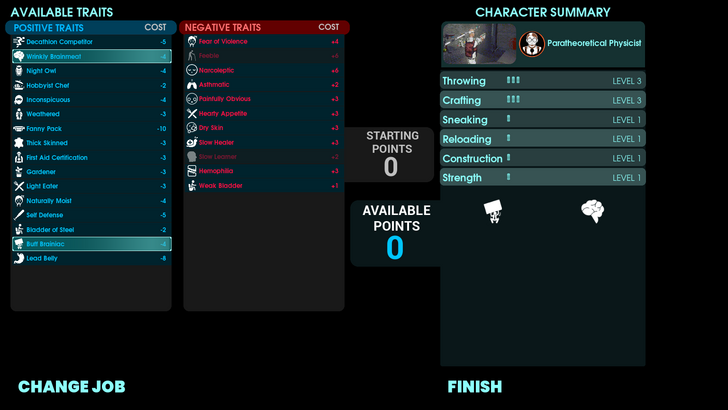
But here’s the neat part, the job you pick doesn’t lock you into a class. After choosing a profession, you get to fine-tune your character further through traits and skills. You assign points to various talents and you can select positive and negative traits to give yourself little gameplay nudges. It’s classic RPG stuff, but in a survival context, it works beautifully.
One trait might give you better hunger management, while another makes you more likely to catch a cold. And yes, you want some of those negative traits. Not just because they give you extra points to spend elsewhere (which they do), but because they help you build a character with flaws. A scientist who’s also narcoleptic. A botanist who’s scared of violence. A chef with a weak bladder.
That’s where Abiotic Factor got me. Not just with numbers and stats, but with flavor. I wasn’t just building a loadout, I was building a person. A slightly neurotic, semi-capable physicist with an overconfidence problem and an impressive collection of duct tape. Once you’re done with character creation, the game nods politely, tips its lab coat, and politely shoves you into the abyss.
Surviving The Lockdown
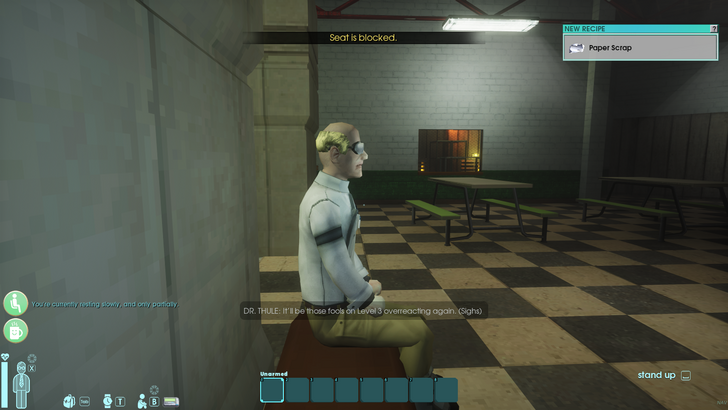
Welcome to the cafeteria, (the place you're rerouted to because the residences are on lockdown), things are about to go very, very wrong. There's no dramatic cutscene, no exposition dump. Just… silence. Something’s clearly off. Emails left on terminals mention strange readings. What follows is not a dramatic action set piece. You’re not pulling out guns and sprinting through explosions. You’re scrambling to read a facility map that doesn't quite make sense yet. You’re trying to figure out how the hell to craft a makeshift flashlight, because your current one just ran out of batteries and there’s definitely something moving in the hallway.
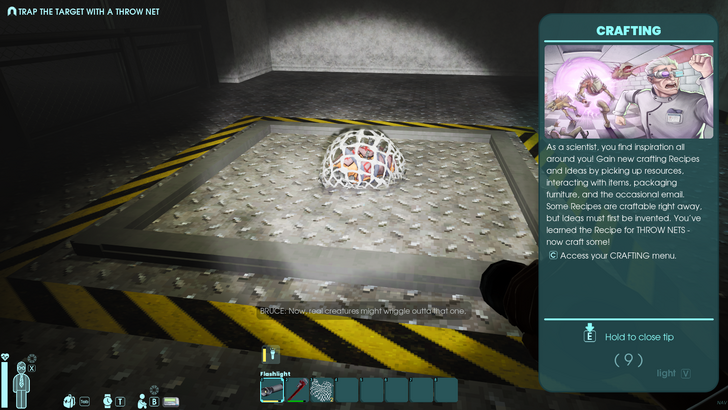
Abiotic Factor drops you into survival mode with just enough knowledge to be dangerous, and then it steps back. That’s part of the magic here. You don’t unlock a crafting recipe and magically gain the ability to create it. You need to figure out the materials required. Your character might have a hunch, sure—because you’re a smart little science goblin—but it’s up to you to test combinations, study your surroundings, and experiment.
Crafting becomes its own form of exploration. A mental map slowly builds as you remember which corridor had screws, which supply closet had duct tape, which bathroom had a supply of medicine. You’ll take apart computers, raid closet rooms for cloth, and break down filing cabinets because metal is metal, dammit.
It’s clever how Abiotic Factor turns its sterile, corporate environment into a natural resource zone. You’re not punching trees and mining rocks here, you’re ripping metal pipes out of walls and harvesting plastic. And you need it all. Because the deeper you go, the worse it gets.
Loot, Hoarding, And Inventory Panic
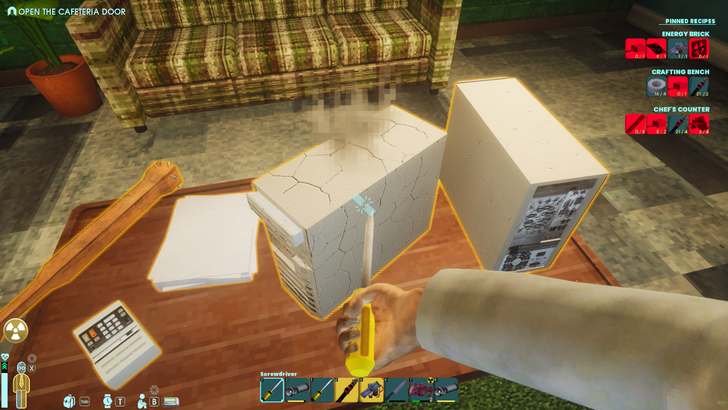
Let me tell you something, I am a hoarder. I hoard in ways that make inventory systems cry. So when I realized how much stuff Abiotic Factor lets you break down and collect? Oh, I was in my element. Everything is loot. Everything. Crates, tables, CPUs. Each one breaks down into bits you might need later. It’s a survival crafter’s dream and nightmare all at once. Because yes, you’re constantly rewarded for scavenging. But also? Your inventory space is a joke. A bad one. You can wear backpacks to expand your slots, but it never feels like enough. Before I knew it, I had built dozens of storage crates in various corners of the map—some in closets, some in bathrooms, some next to a corpse I kept forgetting was there. I told myself I was being organized. I was not.
Eventually I realized that common materials respawn. There’s no scarcity panic. But rare materials? Those are the ones you want to save. You’ll learn the difference the hard way—like when you dismantle a rare object thinking "Oh I’ll find another one later" and then don’t. Ever. But it’s a good kind of pain. The kind that teaches you to let go of your 84 pieces of scrap rubber and start building only what matters.
Unless you’re like me. In which case, you hoard and build everything anyway and deal with the consequences later.
Eat, Sleep, And Other Bodily Functions
Survival games are full of meters. Hunger, thirst, fatigue—you know the drill. And yes, Abiotic Factor has all of those. You’ll be cooking questionable meat from suspicious looking monsters, drinking from stagnant sink water, and finding awkward places to sleep, like break rooms. But the real kicker? You also need to relieve yourself. Yes. You have to poop.
I cannot stress how delightfully absurd this is. At first, I thought the bathroom mechanic was a joke. Like, "haha, my character has to pee, how immersive." But no. It's a real system. Ignore it, and you’ll face the consequences, both in your stat meters and your pride.
And then, it happened. The moment that cemented this game in my memory forever: I was sitting in the executive bathroom, mid-relief, door wide closed, I thought I was safe. I was not. Something—some grotesque, shrieking mass of teeth and wrongness—burst through the door and charged straight into the stall. I screamed, like actual scream.
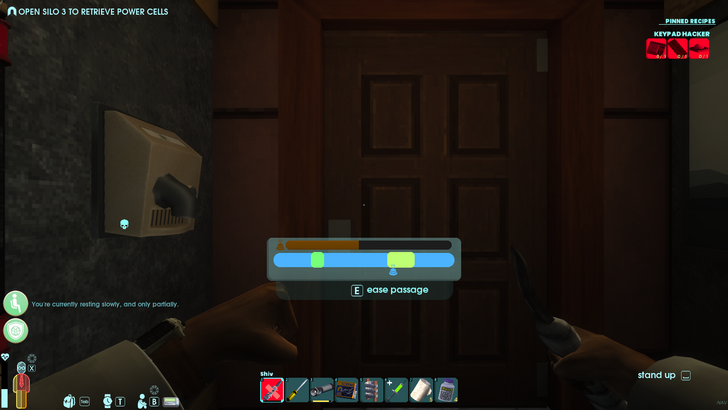
There’s something so uniquely horrifying about getting jumped while relieving yourself. No weapons drawn, no dignity remaining. Just you, a toilet, and an enemy who doesn’t care that you’re in the middle of something. But you know what? That moment was perfect. That’s Abiotic Factor in a nutshell. It balances dread and comedy with a kind of chaotic elegance. One second you’re min-maxing your agriculture skills and proudly building the hydroplant. The next, you’re doing a tactical sprint from a mutant because you’re about to soil your pants.
The humor here isn’t try-hard. It’s baked into the world. It’s the absurdity of treating workplace survival like it’s a normal Tuesday. It’s the way every system, even the toilet system, is built with just enough realism to be believably ridiculous. It keeps you laughing, even when you’re dying. Especially when you’re dying.
Mobile Base Building
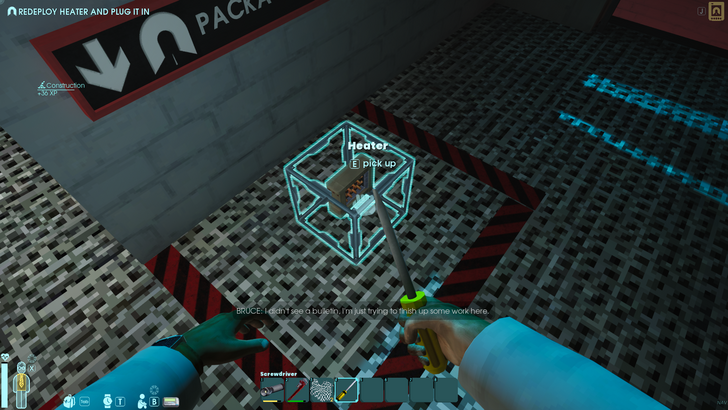
If you’re anything like me, the moment you boot up a survival crafting game, your first instinct is to build a base. Not just a little lean-to or a sad shack with a workbench in it—I mean a full-on fortress. Something with walls, defenses, and fifty chests all labeled "Misc." But Abiotic Factor doesn’t really give you that luxury. Not at first.
The map design is massive. Not in the traditional open-world sense, but in that sprawling, interconnected labyrinth kind of way. You’re stuck deep inside a vast research facility that’s been hit by who-knows-what, and every hallway, stairwell, service duct, and locked door feels like it leads somewhere. There’s no artificial padding here, it’s all tightly packed, smartly designed, and ripe for scavenging.
But with danger always around the corner and objectives constantly pushing you deeper into the facility, setting up one permanent headquarters just… doesn’t make sense. So I didn’t. Instead, I slowly turned into a nomadic researcher with a mild hoarding problem. I started setting up micro-bases—little survival pockets scattered around the map. A couple of crates here and there, a crafting station tucked behind a vending machine that might be trying to kill me. It felt weird at first, ditching the idea of a singular "home base." But this was the strategy the game wanted. You don’t plant roots here. You pivot. You adapt. You build where you need to, and you move when the creatures find you.

And eventually, once I got far enough into the game, I met the holy grail of base building: The forklift. The moment you get that glorious, clunky, whirring beast is the moment everything changes. You can finally consolidate. Move your life across the map. Uproot all your little survival huts and merge them into one glorious facility-turned-bunker. It’s one of those incredibly satisfying "now we’re cooking" moments in survival games. Suddenly, the scattered chaos of your early hours gains cohesion.
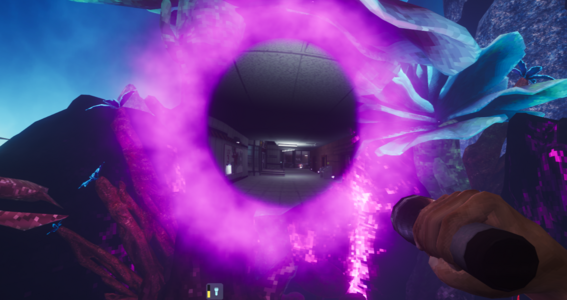
And that’s not even the full extent of where you’ll build. I won’t spoil it, but let’s just say the research facility isn’t the only location you’ll need to worry about. At some point in your adventure, you’ll find a portal. A portal that leads to a realm that makes the facility look downright cozy. The alien biome on the other side? It’s wild. Dangerous. But it also offers rare resources and secrets that could be key to your survival. Abiotic Factor takes everything you know about survival game pacing and turns it into a logistics puzzle wrapped in science fiction.
Lore, Atmosphere, and Worldbuilding
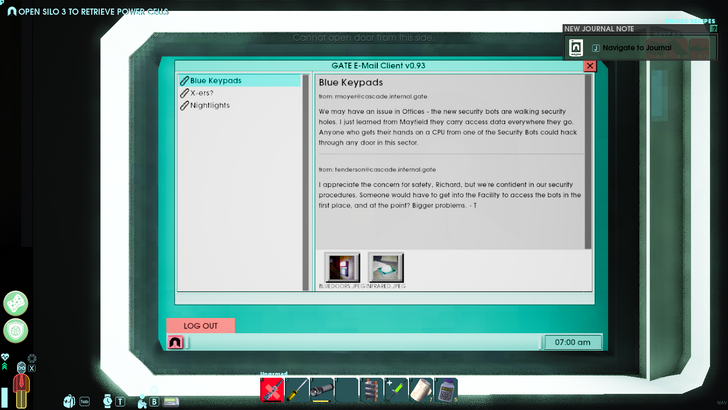
Here’s the thing I didn’t expect, for a survival crafting game, Abiotic Factor actually takes its narrative surprisingly seriously. Not in a heavy-handed, "let’s drown the player in cutscenes" kind of way, but in a deliberate, slow-burn sort of reveal. The storytelling here is deeply embedded in the walls of the facility, in the flickering monitors, the damaged break rooms, the emergency lockdowns. If you want to understand what’s really going on, you have to dig. You have to read the emails scattered across terminals. Listen to the audio logs echoing through abandoned research stations. Piece together the corporate horror story that slowly—and I mean slowly—unfolds beneath the chaos.
I was also pleasantly surprised with how alive the NPCs felt. You meet other survivors throughout the facility, and they aren’t just blank quest markers or exposition bots. They’re voiced. Fully. And not just with functional "this is your next quest" barks either—there’s emotion in there. Panic. Resentment. Exhaustion. One scientist is desperate to get back to work. Another is too terrified to leave a supply closet and lashes out leave the door open. One is literally dying, bleeding, but is still willing to help find a way to escape. The way they talk, how they react, what they don’t say. It paints a picture of a workplace mid-crisis, with very human cracks starting to show. The environment tells half the story, and the people—whether they’re present or long gone—tell the rest.
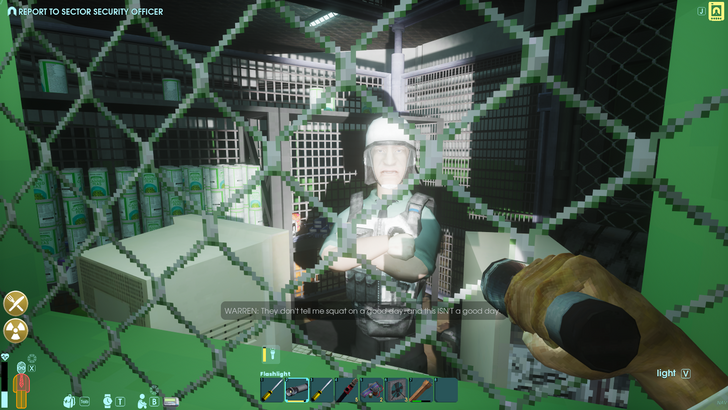
There’s no central narrator here. No exposition dump that says "okay here’s what happened." And thank god for that. The game respects your intelligence. It trusts that you’ll be curious enough to open a terminal, to follow the trail of voice logs that lead you to a horrifying realization about what this company was actually researching.
And all of this feeds back into the atmosphere. The tension. The creeping realization that this facility wasn’t exactly a shining example of ethical science before it all went to hell. You don’t need a narrator to tell you things went sideways. I actually wanted to learn more, not just about the monsters or the portals or the anomalies, but about the people, the scientists who made this mess and the workers trying to survive it.
It’s Dangerous To Go Alone
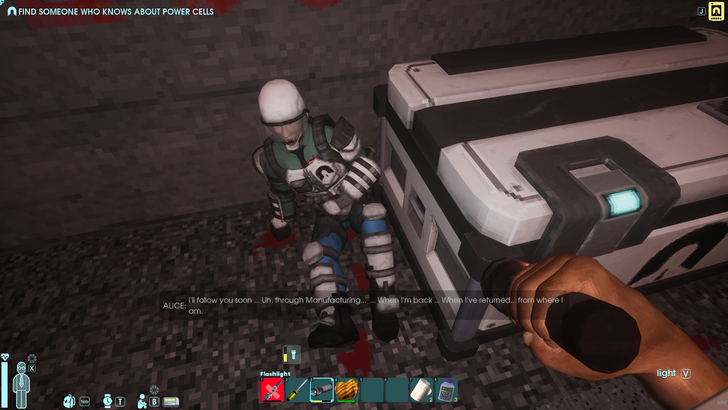
You can definitely solo the apocalypse, but the game doesn’t always want you to. Look, I like playing survival games solo the first time around. Something about the solitude sharpens the tension, forces you to think smarter, move slower, and genuinely rely on your own wits. And in the first few hours, this actually works pretty well. The game eases you in—lets you explore, die a few times, hoard a bunch of scrap fabric, all that good stuff.
But eventually, the cracks start to show. Not in the game design—let’s be clear—but in your stamina. Your patience. Your ability to do twenty things at once when you only have two hands and a desperate need for sleep. Because Abiotic Factor is balanced around a six-player co-op experience. You can absolutely solo it. But doing so means becoming a one-person research team, medic, cook, builder, and combat specialist.
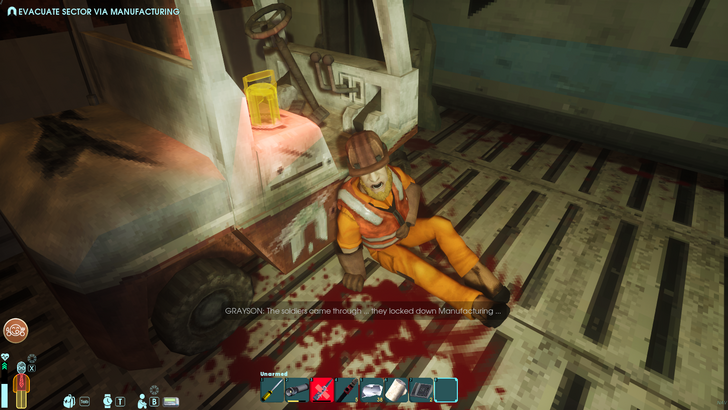
Where this really starts to hurt is in later sections of the game, where crafting and exploration both ramp up in complexity. The game never outright punishes you for being alone, but the time investment becomes noticeably heavier. Simple tasks like building a new workstation or setting up defenses that would take ten minutes in co-op can turn into half-hour solo slogs. And when you die (because you will die), having no one to revive you or help you recover lost gear is a particular kind of sting.
Now, throw in the complexity of crafting systems, the real-time needs of your character (food, sleep, water), and the sheer size of the facility, and it’s clear, this game was made to be shared. In Co-Op, you can divide up responsibilities—someone handles food, another crafts gear, someone else scouts ahead. You won’t be drowning in a hundred micro-tasks anymore, you’re solving problems as a team.
Progression also speeds up dramatically with friends. Materials get gathered faster. Base expansion becomes efficient. Specialized roles can start to shine. It’s not just about making the game easier, it’s about making it more alive. More chaotic. More human. But despite all that, I still found value in the solo run. There’s something uniquely immersive about being the lone survivor. It made every close call more dramatic. That said… I’m 100% grabbing a team for my next playthrough.
Learning Curve
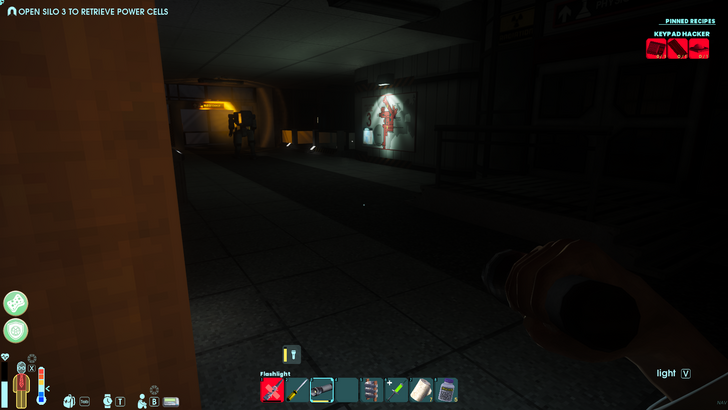
There’s a fine line between respecting the player’s intelligence and throwing them into the deep end with no floaties. Abiotic Factor straddles that line like a caffeinated intern trying to impress upper management. And for the most part, it works, but oh boy, it is not without its bumps.
Let me preface this by saying, I like games that don’t over-explain everything. Discovery is part of the joy in survival crafting. Stumbling upon a new recipe, figuring out what this weird battery-looking thing does, realizing you can repurpose furniture into materials, that’s gold. That’s part of what makes the genre compelling. And Abiotic Factor embraces that fully. It assumes you’re here to experiment. To mess around. To learn by doing (and by doing wrong, repeatedly).
There are also mechanics and systems that the game simply never explains. You’re left to intuit them, or worse, miss them entirely.
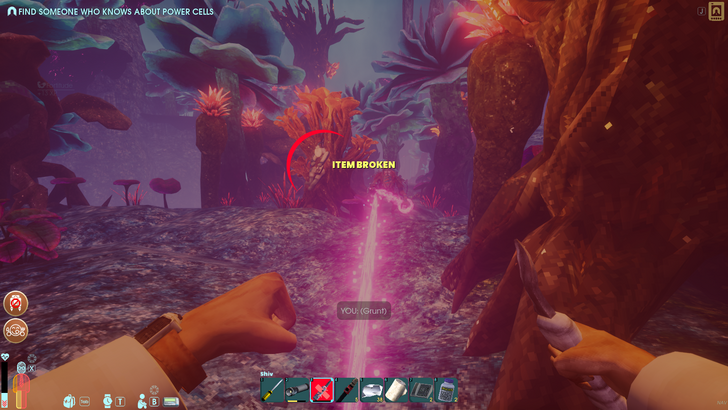
For example, you’ll come across places in the facility that are just slightly out of reach. There’s no ladder. No prompt. No parkour tutorial. You jump. You can’t make it. You wonder if you missed something. But no, the answer was there all along, in the muscle memory of FPS players: crouch jumping. Now, if you’ve played FPS games or anything with a bit of Half-Life DNA, this probably feels second nature. But if you’re new to that kind of movement, or just not expecting it, you might assume it’s a bug or an unreachable area.
And this is just the tip of the iceberg. There are other small but critical mechanics, like how to navigate certain facility hazards, that are never really explained. The game expects you to figure it out, or fail trying. It’s not about dumbing things down. It’s about clarity in design. Even a toggleable "hints" system could smooth out those sharp corners for first-timers, while preserving that sense of mystery for everyone else.
Still, I’ll give it credit—once you do learn the systems, Abiotic Factor becomes so much better. That’s the paradox here, the pain of learning leads to the pleasure of mastery. But getting over that initial hump? It’s rough. Rougher if you're solo. Roughest if you’ve never played a survival game before. But, if you’re willing to commit, to endure a few early frustrations and lean into the beautiful chaos of it all, Abiotic Factor offers one of the most unique and rewarding survival experiences in recent memory.
Is Abiotic Factor Worth It?
Survival Favors the Clever
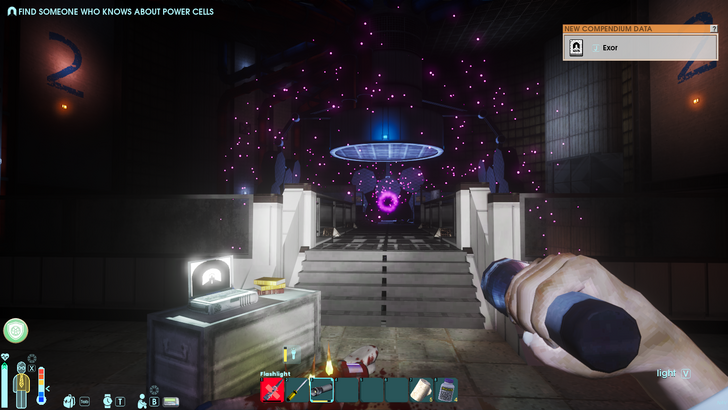
If you’ve ever looked at any office tool and thought, "I could survive the apocalypse with this," then Abiotic Factor is absolutely for you. But even if you haven’t, this strange, clever, deeply chaotic game has more to offer than just novelty.
This is a survival crafting game that does more than mimic its peers. It learns from them and then it mutates those ideas into something that feels genuinely fresh. It respects your intelligence while gleefully setting the floor on fire beneath you. It’s got teeth, sure, but it’s also got a wicked sense of humor and just enough warmth to make the whole descent into interdimensional madness feel personal.
It's not flawless. The learning curve can spike hard, especially for solo players or anyone unfamiliar with the more esoteric mechanics. But the payoff is there. Every inch of progress feels earned. Every improvised solution becomes a war story. And every player will likely walk away with their own bizarre anecdote about alien attacks during bathroom breaks or crafting mishaps in the middle of a monster chase.
With six-player co-op, extensive crafting and progression systems, a sprawling map full of secrets, and a surprisingly well-told narrative buried in emails, echoes, and audio logs—Abiotic Factor is an absolute standout in its genre. It's not just a survival game, it’s an experience. So, is it worth the time, the trial, and the occasional trip to the restroom under duress? Without question. Now if you’ll excuse me, I left my body in a vent and my forklift in another dimension.
| Digital Storefronts | |||||
|---|---|---|---|---|---|
| Steam |
PlayStation |
Xbox |
|||
| Price | $34.99 | ||||
Abiotic Factor FAQ
What Are Abiotic Factor’s System Requirements?
| System | Minimum | Recommended |
|---|---|---|
| OS | Windows 10 or later | Windows 10 or later |
| Processor | i5-9th Gen CPU or similar | i5-11th Gen CPU or similar |
| Memory | 8 GB RAM | 16 GB RAM |
| Graphics | GeForce GTX 1660 / AMD Radeon RX 5600 XT | GeForce RTX 3070 / AMD Radeon RX 6700 XT or better |
| Storage | 10 GB available space | 10 GB available space |
Game8 Reviews

You may also like...
 |
PEAK Game Review Climbing, Platformer, Roguelike, Action, Survival |
 |
Survival Machine Review [Early Access] Action, Survival, Indie, Casual |
 |
Among Us 3D Review 3D, Casual |
 |
S.T.A.L.K.E.R. 2: Heart of Chornobyl Review Action, FPS, Horror |
 |
Alone in the Dark Review Survival Horror, Action |
Abiotic Factor Product Information
 |
|
| Title | ABIOTIC FACTOR |
|---|---|
| Release Date | July 23, 2025 |
| Developer | Deep Field Games |
| Publisher | Playstacke |
| Supported Platforms | PC (Steam), PS5, Xbox Series X|S |
| Genre | Survival, Crafting, Adventure |
| Number of Players | 1-6 |
| ESRB Rating | M |
| Official Website | Abiotic Factor Website |