


| Aces of Thunder | |||
|---|---|---|---|
| Release Date | Gameplay & Story | Pre-Order & DLC | Review |
Aces of Thunder Review Overview
What is Aces of Thunder?
Aces of Thunder is a World War 2 combat flight simulator that drops players into the cockpit of historical aircraft for both solo missions and online multiplayer dogfights. The game emphasizes mission-based objectives, like intercepting enemy squadrons, protecting allies, and bombing strategic targets.
Aces of Thunder features:
⚫︎ Detailed, Historically Inspired Aircraft Models
⚫︎ Mission-Based Solo Campaign Set During WW2
⚫︎ Basic Flight Mechanics
⚫︎ VR Combat Flight
For more gameplay details, read everything we know about Aces of Thunder's gameplay and story.
| Digital Storefronts | |||||
|---|---|---|---|---|---|
 Steam Steam |
 PSN PSN |
||||
| $29.99 | |||||
Aces of Thunder Pros & Cons
| Pros | Cons |
|---|---|
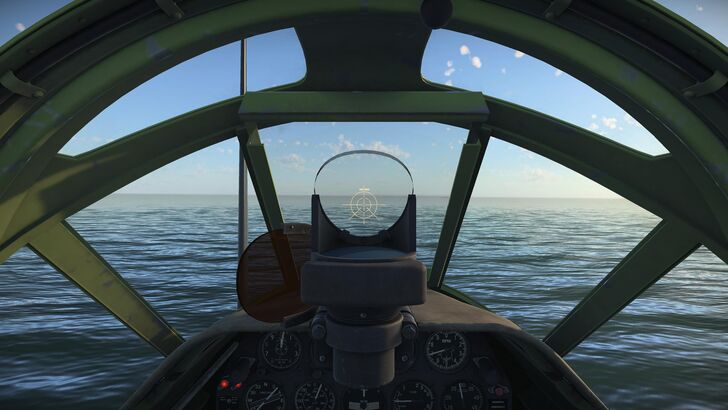
 Detailed Aircraft and Cockpits Decent Environmental Details Detailed Aircraft and Cockpits Decent Environmental Details |
Clunky and Unintuitive Controls Shallow Campaign Progression Technical Glitches with Weapons and Gameplay |
Aces of Thunder Story - 4/10
The story—or campaign, in this case—is disjointed and lacks cohesion. There’s no real narrative arc to follow and missions feel like isolated challenges rather than part of a larger journey. Objectives are clear enough to complete a mission, but there’s no sense of progression or payoff. While the lack of story doesn’t break the game completely, it leaves the campaign feeling shallow and forgettable.
Aces of Thunder Gameplay - 5/10
The gameplay loop is simple: complete missions, take down enemy planes, repeat. While the concept of a combat flight simulator is solid, the execution falters due to stiff, inconsistent controls and awkward handling. Missions lack variety beyond minor objective tweaks, and enemy behavior often feels random. Technical issues like guns failing to reload or bombs not deploying further disrupt the experience.
Aces of Thunder Visuals - 6/10
Visually, the game is its strongest point. Aircraft are detailed, cockpits feel authentic, and environmental textures are impressive. The lighting and atmospheric touches occasionally elevate the experience. However, no matter the attention to detail, and even as the best part of the game, the visuals still feel half as good compared to other modern flight or simulation titles. Technical presentation is just as stiff and rigid as the gameplay itself, with limited animation polish and camera responsiveness that mirrors the same awkwardness found in the controls.
Aces of Thunder Audio - 4/10
Audio is functional but forgettable. Music doesn’t enhance tension or immersion ,weapon sounds and engine noises are adequate, but inconsistent or detached in some cases, further contributing to a sense of unrewarding combat. Sound design exists, but it doesn’t elevate or meaningfully support the gameplay.
Aces of Thunder Value for Money - 4/10
At $29.99, the game overpromises and underdelivers. The solo campaign is repetitive, online multiplayer is largely inaccessible, and progression or replay incentives are minimal. There’s little here to justify the cost, especially for players without specialized VR hardware or flight rigs. Without meaningful content or a satisfying experience, the price feels high relative to what’s delivered.
Aces of Thunder Overall Score - 46/100
Aces of Thunder is a frustrating mix of ambition and missed potential. It looks good and has the trappings of a proper combat flight simulator, but core mechanics, campaign structure, and accessibility issues leave most players with little enjoyment. Technical problems, shallow progression, and poor online functionality compound the experience. The game has ideas worth exploring, but in its current state, it simply doesn’t succeed.
Aces of Thunder Review: No Aces Here
Disappointing Dogfights
I’ve had my fair share of simulators, from meticulously tuning cars in F1 titles, to charting flight paths in Microsoft Flight Simulator, there’s always a draw to games that demand patience, precision, and a willingness to learn. These aren’t games you "pick up and play" for five minutes. They’re games you commit to.
Combat flight simulators, though, are a special niche even within that niche. Games like IL-2 Sturmovik or DCS World don’t just ask you to fly—they ask you to think like a pilot under pressure, balancing navigation, weapons systems, and situational awareness while someone is actively trying to shoot you out of the sky. It’s demanding, intimidating, and when done right, incredibly rewarding.
So naturally, Aces of Thunder was on my radar. I went in expecting a steep learning curve, awkward early crashes, and plenty of moments where I’d stare at my screen wondering what button I forgot to press. But that’s part of the appeal. With these kinds of games, the struggle is supposed to be temporary. You invest the time, learn the systems, master the controls, and eventually, things start to click.
That was my mindset going in. I was ready to be humbled. I was ready to fail. I was ready to slowly build confidence in the cockpit. What I wasn’t ready for was how quickly that excitement would turn into disappointment.
World War 2 Skies and Mission-Based Warfare
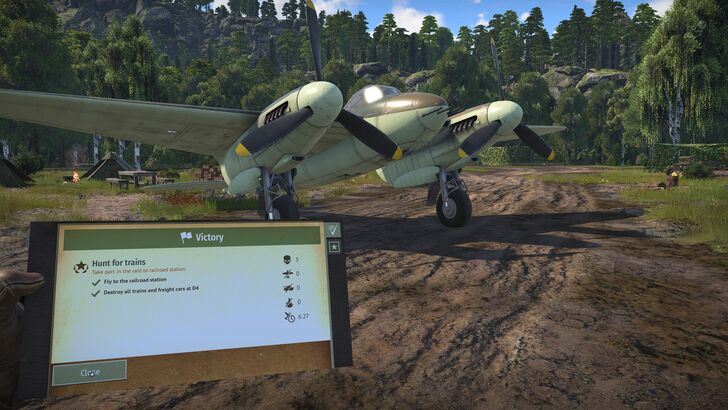
At its core, Aces of Thunder is a World War 2-era combat flight simulator built around classic aerial warfare. You step into the cockpit of historical aircraft and take part in a mix of solo and online missions that revolve around familiar wartime objectives—intercepting enemy squadrons, protecting allied forces, escorting bombers, and disrupting invasions before they gain momentum.
The single-player campaign is structured as a sequence of standalone missions rather than a heavily scripted narrative. Each sortie drops you into a new scenario with specific objectives, asking you to adapt to changing conditions and enemy patterns. One mission might focus on air superiority, while another emphasizes defensive flying or precise positioning to cover friendly units.
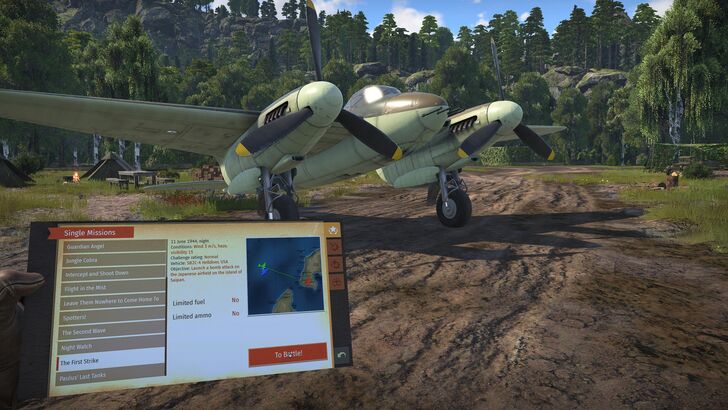
Progression, for the most part, is about learning through repetition. There’s no leveling or major mechanical upgrades to chase. Instead, improvement comes from understanding aircraft behavior, memorizing mission layouts, and gradually refining how you handle each encounter in the air.
What stands out immediately, though, is how little the game does to guide you through this process. Aces of Thunder offers virtually no proper tutorial system. You’re given basic prompts and control layouts, then left to figure things out on your own. For hardcore simulation fans, this might feel normal—even expected. Many serious flight sims operate under the assumption that players are willing to study manuals, tweak settings, and experiment for hours before feeling comfortable.
Again though, in theory, I was prepared for that. In practice, that lack of onboarding became the first warning sign of deeper issues.
Realism Meets Frustration
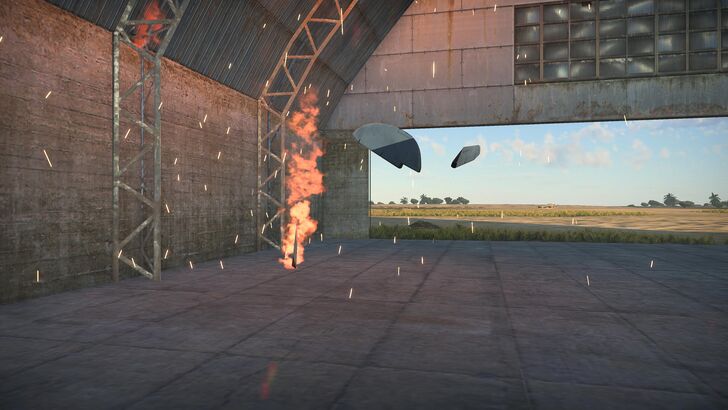
My biggest frustration with Aces of Thunder lies in its controls and overall usability—especially when played outside of VR. I’ll be upfront, I played the game on a standard flat screen using a DualSense controller. I don’t own a PSVR, and I wasn’t planning to buy one just for this game. Maybe if Aces of Thunder had completely won me over, I would’ve reconsidered. But it never came close to earning that kind of commitment.
While I’ve put hundreds of hours into various simulation games, I’m not the kind of player who invests in a full cockpit rig, custom pedals, and specialized hardware. I’m an enthusiast, not a purist. I expect demanding systems but I also expect them to function reasonably well with standard equipment.
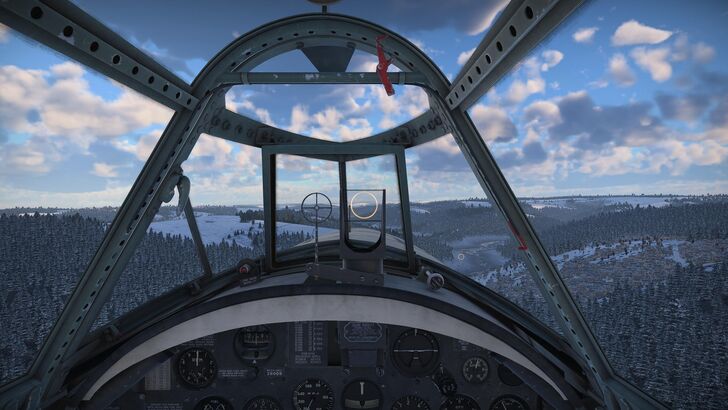
In my experience, Aces of Thunder simply doesn’t feel properly optimized for non VR play. On paper, it isn’t marketed as a VR only experience. If a game is not going to be optimized for flatscreen, then it should’ve been exclusively for VR.
Without a head-tracking device—or the patience to manually configure one through external setups—looking around your cockpit becomes an awkward, frustrating process. You’re essentially locked into stiff camera angles, constantly fighting the controls just to check your surroundings. In a game where situational awareness is everything, this becomes a serious handicap.
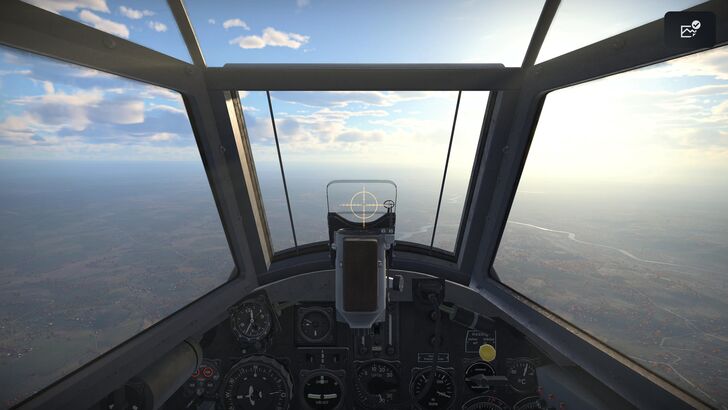
Being unable to smoothly scan the skies, track enemies, or quickly glance at instruments turns every engagement into a struggle. You’re not losing dogfights because you made poor tactical decisions. You’re losing because the game makes basic spatial awareness unnecessarily difficult.
Unless you’re willing to spend significant time tweaking settings, installing third-party tools, or investing in VR hardware, the experience on a flat screen is compromised. And if you don’t already own a flight rig or VR setup, you’re probably not in the mindset to jump through all those hoops just to make the game feel playable.
Control System That Never Clicks
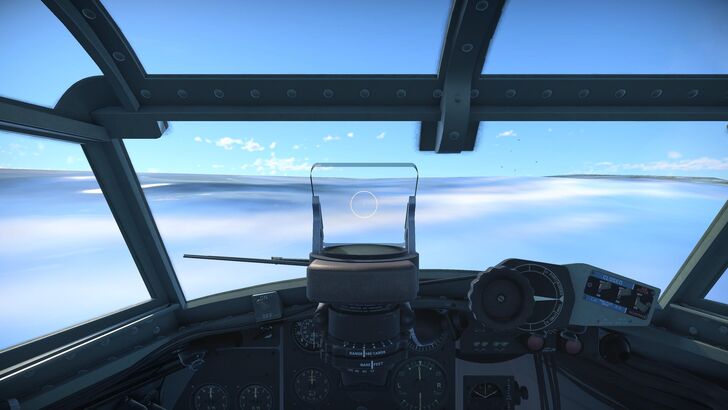
Then there are the controls themselves. I can’t speak for how the game feels with PSVR2 Sense controllers or a full flight rig, but on a standard DualSense, the default layout makes very little sense. Important functions are awkwardly placed and basic flight adjustments often require finger gymnastics that never become second nature.
Yes, you can rebind everything. And yes, I did spend time tweaking layouts, trying different configurations. But once again, that’s another layer of setup the game quietly expects you to endure before you’re allowed to have fun. Even after I finally found a layout that felt usable, another problem became clear and that is the flying itself just doesn’t feel good.
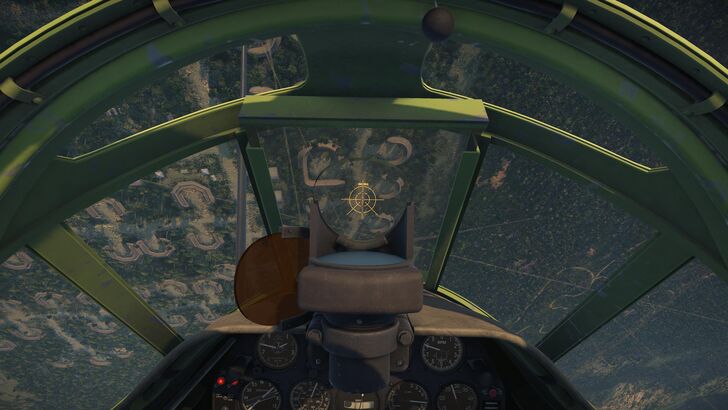
The best way I can describe it is this: Aces of Thunder’s aircraft respond sluggishly when you want precision, yet overcorrect when you try to make small adjustments. Not only does this make flying difficult but it also makes lining up shots an exercise in frustration and not skill.
On top of that, I ran into outright technical issues. There were multiple moments where my guns refused to reload, or bombs simply wouldn’t deploy. I tried rebinding keys. I restarted missions. I double-checked settings. Nothing consistently fixed it.
When you’re already fighting awkward controls, having core combat systems randomly fail only makes things worse. At that point, it stops feeling like you’re learning a complex simulator and starts feeling like you’re wrestling with a broken interface.
Campaign Without Momentum or Meaning
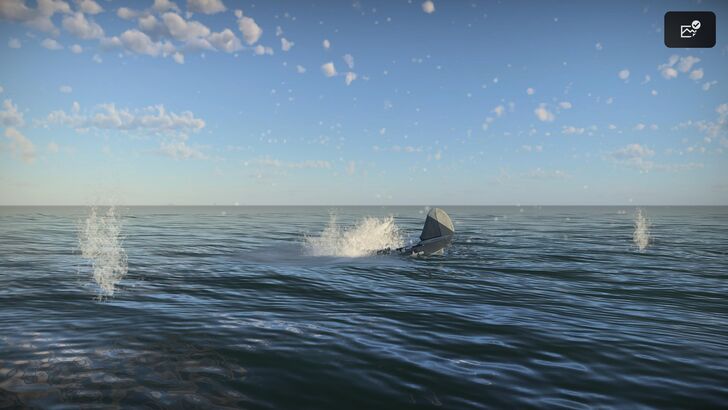
Another thing is while the campaign isn’t entirely bad—because it had mission variety and some scenarios can be genuinely engaging when everything works as intended—it made no real sense of progression. There’s nothing pushing you forward. You’re given a list of missions, you attempt them, and whether you succeed or fail barely matters. If you lose, you just retry. If you win, you move on. That’s it.
There’s no long-term motivation tied to performance. No feeling that you’re building toward something bigger. No mechanical reward for improving. Because of that, the campaign starts to feel like a loose collection of disconnected challenges rather than a cohesive experience.
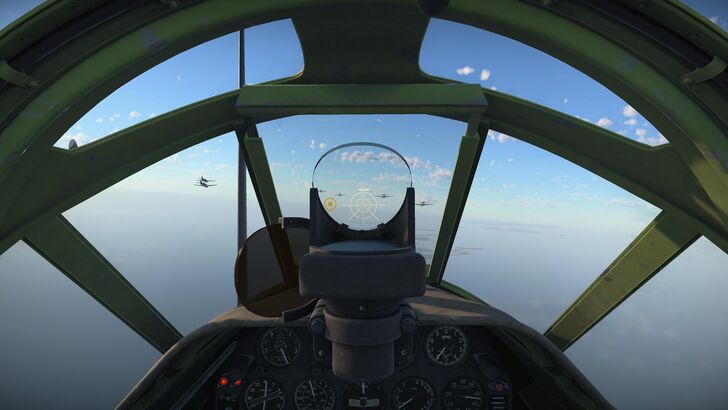
Enemy encounters don’t help, either. Instead of carefully designed formations or believable aerial tactics, many battles feel messy and random. Enemy planes often swarm in chaotic patterns, flying and firing without much apparent logic. Sometimes it creates spectacle. More often, it just creates confusion.
You’re not always outplayed, you’re just overwhelmed by erratic movement and inconsistent behavior. Without structure, pacing, or meaningful consequences, the campaign never builds momentum.
Aircraft That Blur Together
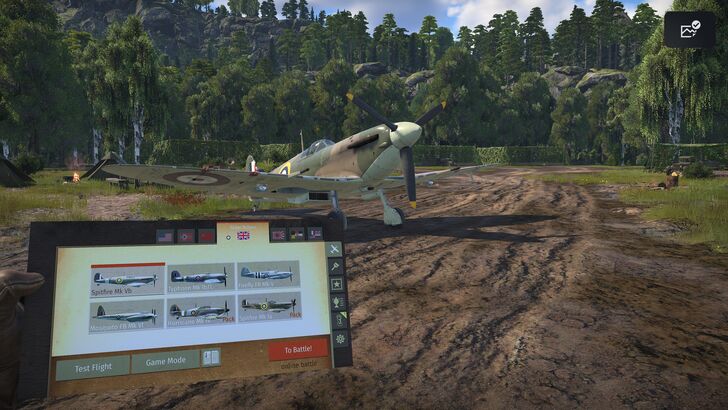
Another thing that didn’t incentivize you to move forward were the aircraft themselves. You’d think that having planes from different countries would add some excitement to the experience. On paper, it sounds great. Different nations, different aircraft, different playstyles. A chance to experiment and find a machine that truly fits how you like to fly.
In reality, the differences are minimal. Yes, there are cosmetic changes. But in actual gameplay, most planes feel remarkably similar. None of them stand out in a meaningful way. None of them dramatically change how you approach combat. And because of the underlying control issues, every aircraft ends up feeling equally janky.
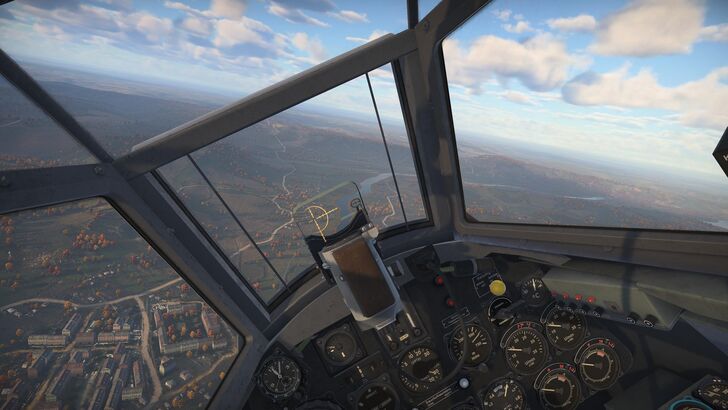
Instead of discovering a "favorite" plane that clicks with you, you just rotate through different models that all inherit the same handling problems. The same awkward responsiveness. The same struggle to maintain control. The same frustration during dogfights. No matter what you’re flying, the ride never really improves.
Online Play Rarely Takes Off
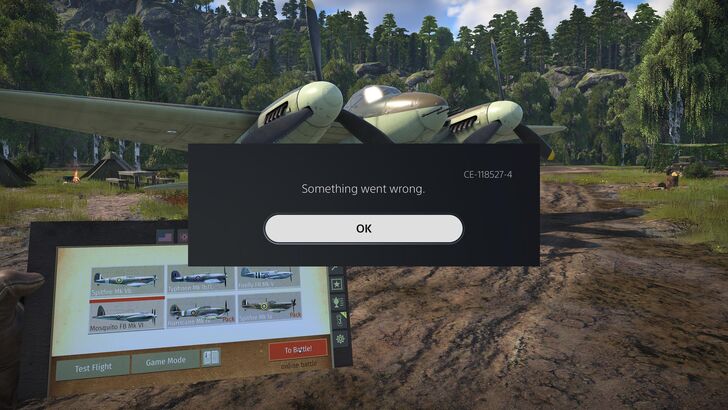
Hoping that multiplayer might redeem some of the game’s shortcomings, I spent a fair amount of time trying to engage with Aces of Thunder’s online mode. Keyword: trying.
In practice, connecting to online matches was a struggle more often than not. Roughly eight out of ten times I attempted to get in, I was met with server errors, failed connections, or outright downtime.
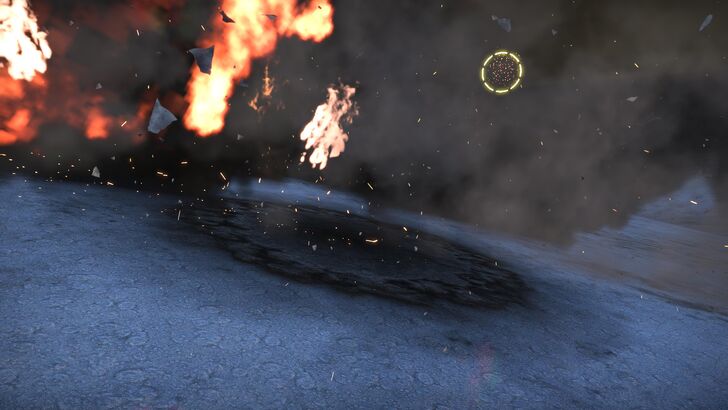
On the rare occasions when I did manage to get into a match, the experience mirrored much of what I’d already encountered in single-player. The same control frustrations. The same awkward camera limitations. The same difficulty maintaining situational awareness without specialized hardware.
Multiplayer should be where a combat flight sim truly shines—testing skill against real opponents, adapting to unpredictable tactics, and feeling the tension of aerial duels. Instead, technical instability and accessibility issues prevent it from ever reaching that potential. It’s hard to invest in an online mode when you can’t reliably access it in the first place.
Beautiful Cockpits
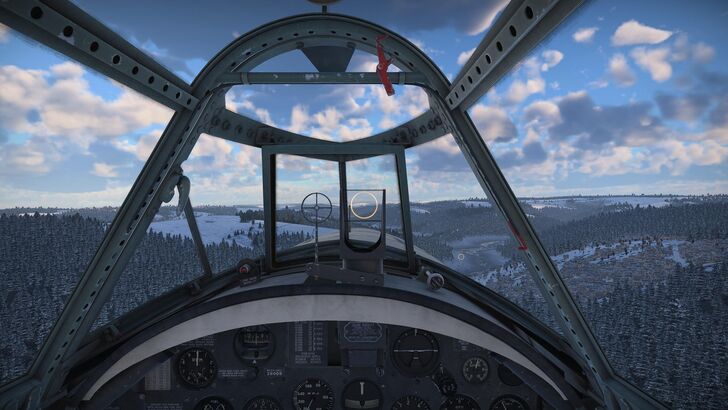
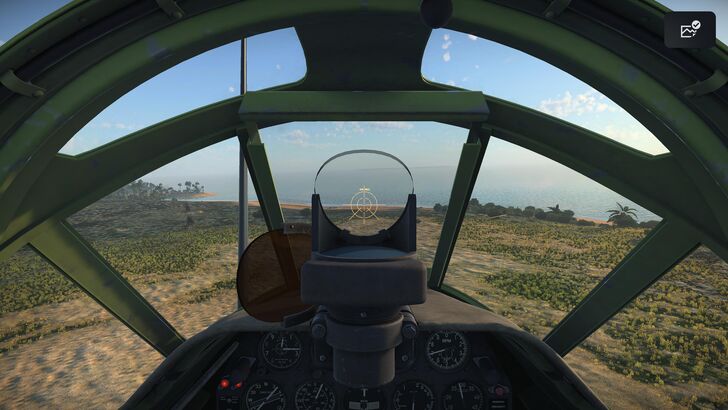
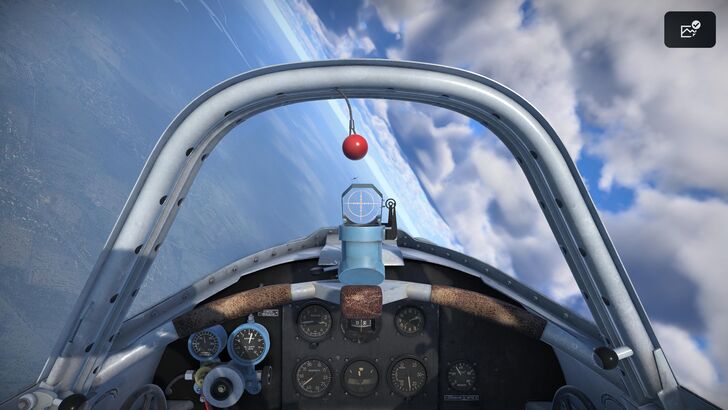
On the flip side though, if Aces of Thunder has one consistently strong aspect, it’s its visuals. The aircraft models are impressively detailed. Cockpits are packed with switches, dials, and instruments that feel authentic and carefully researched. Lighting effects and environmental textures often look excellent.
From a purely visual standpoint, there’s clear passion here. But there’s also a strange contradiction at the heart of its presentation. Despite aiming for realism in its models and environments, the actual gameplay is arcade-like. Damage feedback is inconsistent. Combat lacks the weight and tension you’d expect from a serious simulator. Explosions and hit reactions often feel simplified, sometimes even detached from what’s happening mechanically.
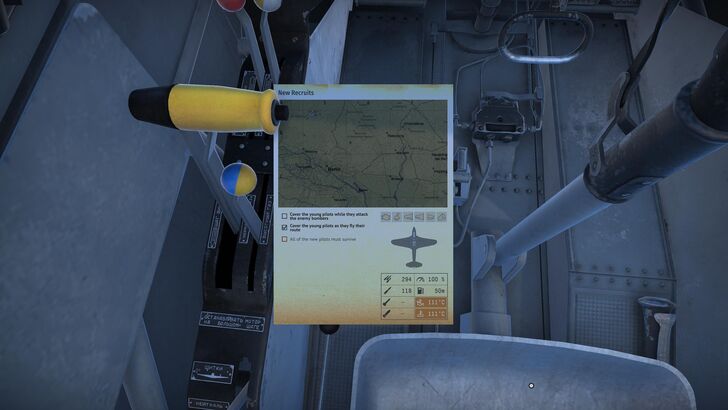
So while the game looks like a hardcore simulation, it doesn't feel like one. You’re sitting in a beautifully rendered cockpit, surrounded by meticulous detail, yet the moment-to-moment action doesn’t live up to that visual promise.
It’s like flying a museum-quality replica that handles like a toy.
A Game Built for Specialists, Not Enthusiasts
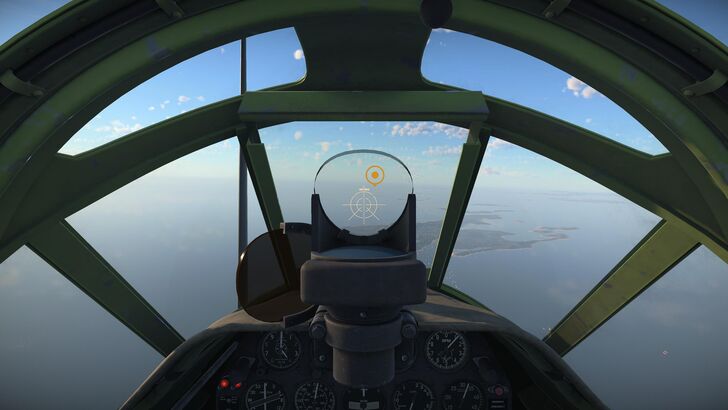
I want to be clear though, I don’t think Aces of Thunder is completely unplayable. If you’re a hardcore flight simulation devotee—someone with a VR headset or head-tracking setup, dedicated peripherals, and the patience to tweak settings for hours—you might be able to carve out a satisfying experience here. With the right hardware and enough technical tinkering, many of the game’s biggest issues can probably be minimized.
For casual flight fans, curious newcomers, or even mid-level enthusiasts like myself, there’s simply too much friction. Too many hoops to jump through. Too many compromises to accept. Instead of welcoming players into its systems, Aces of Thunder puts up barriers. It assumes dedication before it earns it. It demands investment before it delivers reliability or enjoyment.
And for most players, that’s a losing proposition.
Is Aces of Thunder Worth It?
Not Your Ticket to The Skies
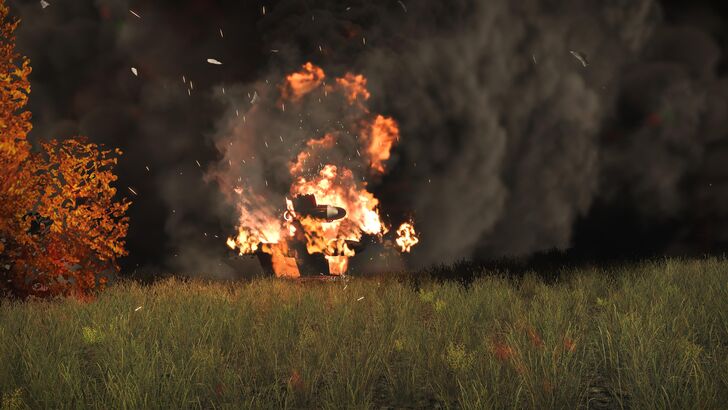
I wanted to like Aces of Thunder. It had the foundation of something special: authentic aircraft, detailed cockpits, and an ambitious attempt at realistic aerial combat. I went in ready to learn, ready to struggle, and ready to put in the time that serious simulators often demand. What I found instead was a game that consistently works against its own players.
Between confusing controls, poor flat-screen optimization, unreliable multiplayer, shallow campaign progression, inconsistent enemy behavior, and recurring technical issues, the experience never settles into something rewarding. Even when the visuals impress, they’re undercut by gameplay that feels awkward, unfinished, and disconnected from the realism it tries to project.
At $29.99, this is not a small, throwaway purchase. It’s priced like a complete, confident experience. And it simply isn’t one. There’s nothing here that truly justifies that cost. No compelling progression, no consistently satisfying gameplay loop, no feature that makes you feel like your money was well spent. Instead, you’re paying for frustration, workarounds, and unrealized potential. Unless major improvements are made, this is a game best left on the runway.
| Digital Storefronts | |||||
|---|---|---|---|---|---|
| Steam |
PSN |
||||
| $29.99 | |||||
Aces of Thunder FAQ
Does Aces of Thunder support HOTAS?
Yes, Aces of Thunder supports HOTAS (hands-on throttle-and-stick) setups. In fact, it’s the preferred way to play, as it provides more precise control over aircraft and a more immersive flight experience compared to DualSense controllers.
Can I play Aces of Thunder without VR?
Yes, you can play Aces of Thunder without a VR headset, but the experience is heavily limited. On a flat screen, camera movement is awkward, cockpit visibility is restricted, and controls feel stiff and unintuitive. While technically playable, non-VR players will struggle with situational awareness and overall control responsiveness.
Game8 Reviews

You may also like...
 |
Flight Simulator 2024 (MSFS) Review [PS5] Simulation |
 |
F1 25 Review Sim Racing |
 |
Assetto Corsa EVO Review [Early Access] Racing, Sports, Simulation |
 |
Sea Power Game Review [Early Access] Real-time Strategy |
 |
Farming Simulator 25 Review Simulation |
Aces of Thunder Product Information
 |
|
| Title | ACES OF THUNDER |
|---|---|
| Release Date | February 3, 2026 |
| Developer | Gaijin Entertainment |
| Publisher | Gaijin Network Ltd |
| Supported Platforms | PC (Steam), PS5 |
| Genre | Simulation, Shooter, Action |
| Number of Players | 1-8 |
| Rating | PEGI 12 |
| Official Website | Aces of Thunder Website |