
Overview
What is BrokenLore: UNFOLLOW?
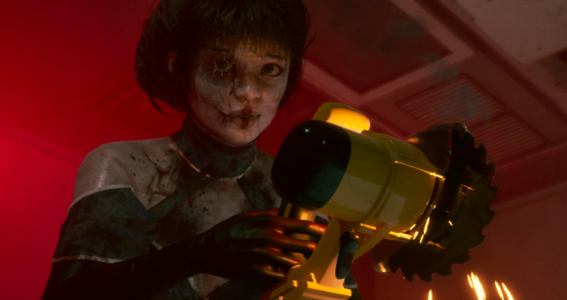
BrokenLore: UNFOLLOW is a first-person psychological horror game that follows Anne, as she grapples with the lasting effects of bullying and social pressures,while navigating a nightmarish world. Players explore a series of distorted environments while confronting sinister creatures.
BrokenLore: UNFOLLOW features:
⚫︎ Exploration of Anne’s Psychological State
⚫︎ Seven Chapters With Multiple Endings
⚫︎ Varied Locations That Highlights Where Anne Was Most Traumatized
⚫︎ Chase Sequence
⚫︎ Collectibles That Add To The Story
| Digital Storefronts | ||
|---|---|---|
 Steam Steam |
 PS PS |
 Xbox Xbox |
| $19.99 | ||
BrokenLore: UNFOLLOW Review: Psychologically Exhausting Walking Simulator
Cautious Familiarity
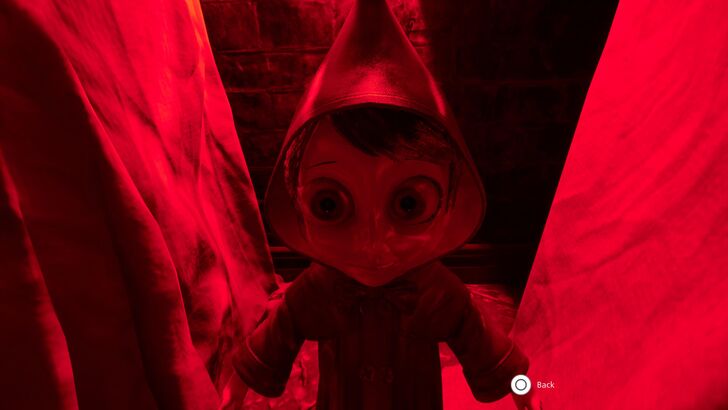
The BrokenLore franchise has never exactly tiptoed around its subject matter. From explorations of psychological isolation and fractured mental states to stories rooted in deeply personal trauma, it’s a series that has always aimed straight for discomfort. Themes like hikikomori culture and the lingering impact of abuse aren’t treated as background flavor, they’re the core of what BrokenLore wants to talk about, and the games have historically been unapologetic about that focus.
At the same time, the franchise has earned a reputation that’s harder to ignore, experiences that lean heavily toward glorified walking simulators. The atmosphere is usually there, but the gameplay mechanics don't always follow through. As someone who plays a lot of horror games—and has grown particular about what actually unsettles me versus what simply gestures at being disturbing—I came into UNFOLLOW with that history firmly in mind. I’ve tried a couple of BrokenLore entries before, and while I appreciated what they were attempting thematically, none of them truly left a lasting impression.
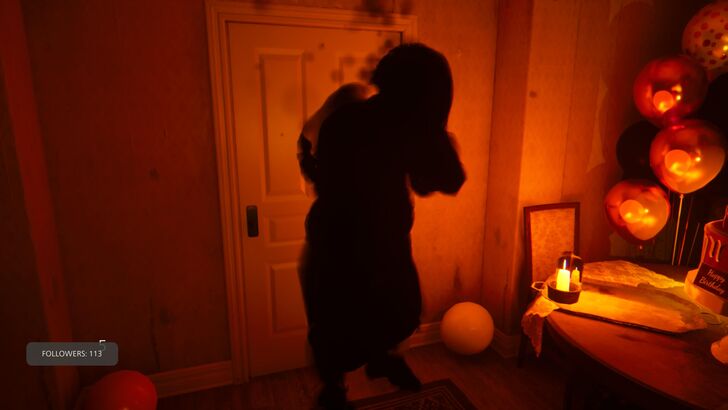
Still, I didn’t go into this latest entry cynical. With a cautiously optimistic mindset, I stepped into BrokenLore: UNFOLLOW, letting it pull me into Anne’s mind and her online-facing nightmare. I wanted to see if this entry could finally bridge the gap between heavy subject matter and genuinely effective horror—if it could do more than just ask to be taken seriously, and actually earn that attention.
Fractured Mind Told Through Ever-Warping Spaces
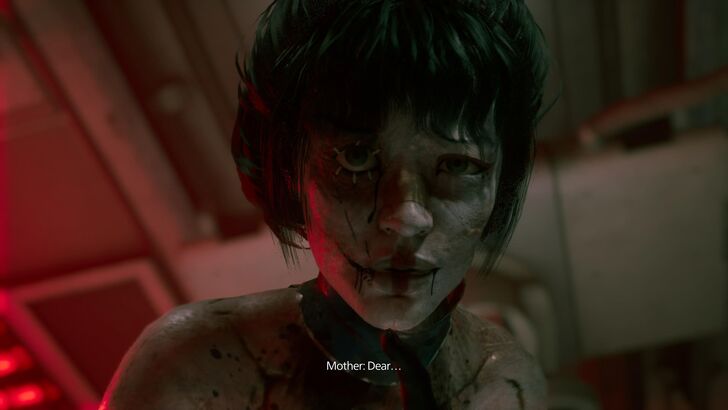
In BrokenLore: UNFOLLOW, we follow Anne as she spirals through a deeply internal struggle shaped by bullying, fractured parental relationships, and a steadily eroding sense of self-worth. These pressures manifest in increasingly explicit ways, touching on eating disorders, depersonalization, and derealization—conditions that don’t just inform the story, but actively dictate how the world around her behaves. Anne isn’t simply navigating spaces; she’s moving through reflections of her own mind as it bends, collapses, and distorts under the weight of unresolved trauma.
The game places us in a series of locations that initially feel grounded, only to unravel the longer we remain in them. Anne’s childhood home, her high school, and a hospital all appear at different points, each one warping further from reality as her mental state deteriorates. Eventually, UNFOLLOW abandons realism altogether, pushing us into liminal spaces reminiscent of the Backrooms, a not-so-subtle representation of Anne’s disoriented inner world.
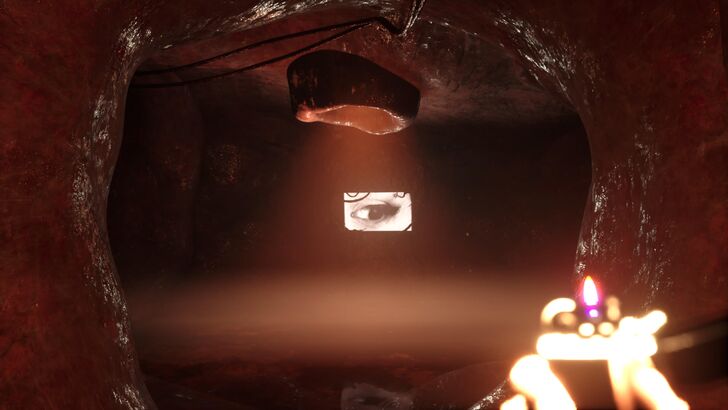
And then there’s the most unexpected setting of all: the literal inside of Anne’s digestive system. Yes, the game fully commits to that metaphor, for better or worse, using it as a blunt but memorable visualization of her struggle with control, consumption, and self-destruction.
Walking, Collecting, and Running
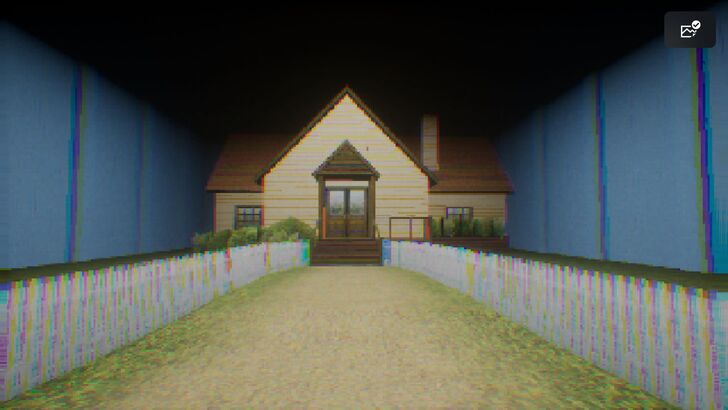
As much as I wanted UNFOLLOW to break new ground mechanically, the gameplay is largely a regurgitation of the BrokenLore formula. There are moments where it attempts to evolve, but those changes arrive late and don’t meaningfully reshape the experience. For the majority of the game, there’s very little here that would surprise anyone familiar with the franchise.
Moment to moment, "gameplay" is a generous term. Most of your time is spent walking through environments, collecting key items, and engaging with puzzles that barely register as obstacles. When tension does spike, it’s usually because you’re being chased—forced to run from a grotesque, homunculus-like monster meant to embody Anne’s deepest and darkest trauma. These sequences are meant to be harrowing, but mechanically they play out in a very straightforward way: move forward, don’t get caught, repeat.
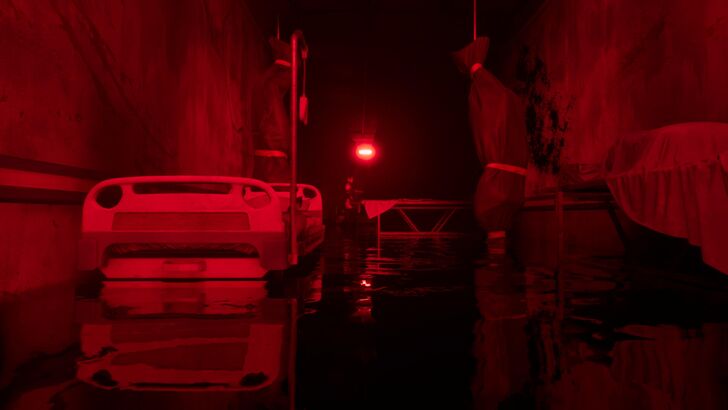
That’s the core loop. Walk, pick things up, solve a light puzzle, flee from a manifestation of trauma. With that foundation laid, it’s time to get into the actual review.
Length Outpaces Direction

I’ll get this out of the way first and start with what didn’t work for me—if only so we can end on a stronger note later. BrokenLore: UNFOLLOW is divided into seven chapters, each one clocking in at roughly thirty minutes to an hour. That already makes it noticeably longer than previous entries in the series. There are a couple of endings and depending on whether you replay the game from the beginning or jump between chapters using the chapter select, you’re looking at roughly four to eight hours of total playtime to see everything it has to offer.
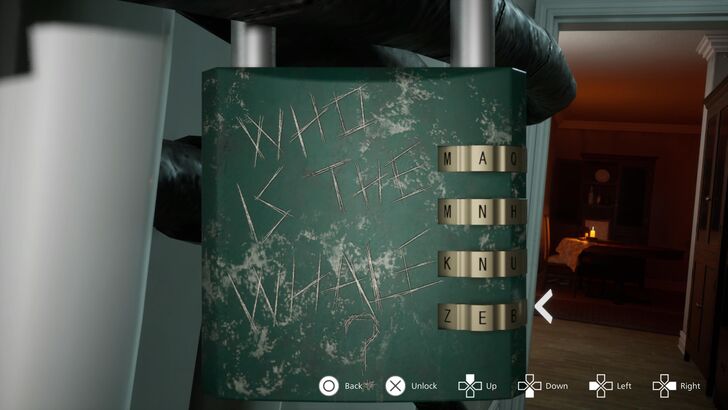
On paper, that sounds reasonable. In practice, the opening and mid-game struggle to justify that length. Large portions of the early experience have you wandering through environments with no clear sense of direction or objective. Because spaces constantly change after you trigger the "correct" event—often without much feedback—it becomes difficult to tell whether you’re making progress or simply retracing your steps. For a significant chunk of the game, you’re not just lost in Anne’s mental state; you’re lost mechanically, unsure of what the game wants from you at any given moment.
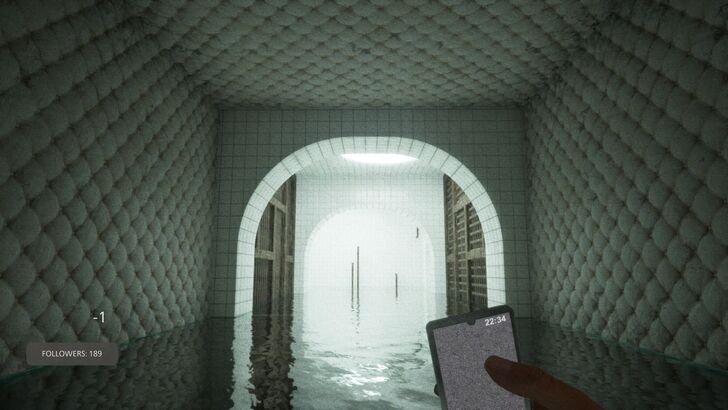
That confusion is compounded by level design that frequently collapses into maze-like layouts. Many locations eventually turn into labyrinths where navigation becomes a guessing game rather than a test of observation or problem-solving. Getting lost isn’t inherently bad in a psychological horror game, but here it feels less intentional and more like a byproduct of unclear design.
What makes this especially frustrating is the first-person presentation. The aggressive head-bobbing effect has no meaningful way to be toned down or removed, and when combined with constant backtracking and disorienting environments, it becomes physically uncomfortable. If you’re prone to motion sickness, UNFOLLOW does very little to accommodate you, and that’s a problem when confusion and forced wandering already define much of the early experience.
Puzzles Solve Themselves
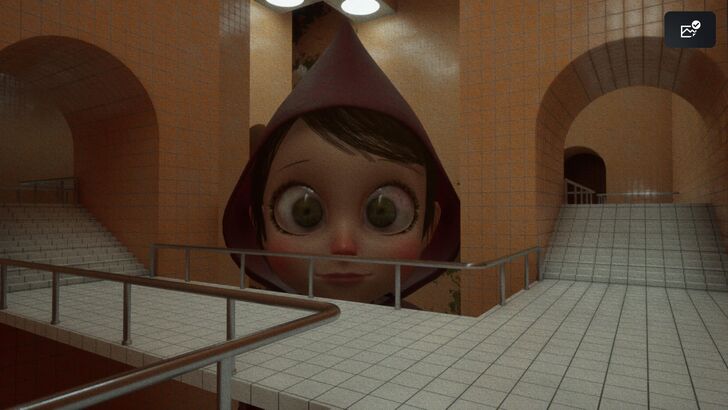
The puzzles in UNFOLLOW are, frankly, too simple to leave any kind of impression. They rarely ask you to think, observe, or experiment in a meaningful way. Most clues are placed directly in front of your face, to the point where solving a puzzle feels less like a moment of realization and more like following basic instructions. There’s no satisfaction in piecing things together when the game never gives you room to be wrong… or clever.
In a psychological horror experience, puzzles are often an opportunity to slow the player down, force them to engage with the environment, or reflect on the themes being presented. Here, they’re little more than speed bumps. You interact, you proceed, and you move on, with no lingering tension or sense of accomplishment. It’s functional at best, and forgettable at worst.
It’s Just Shocking
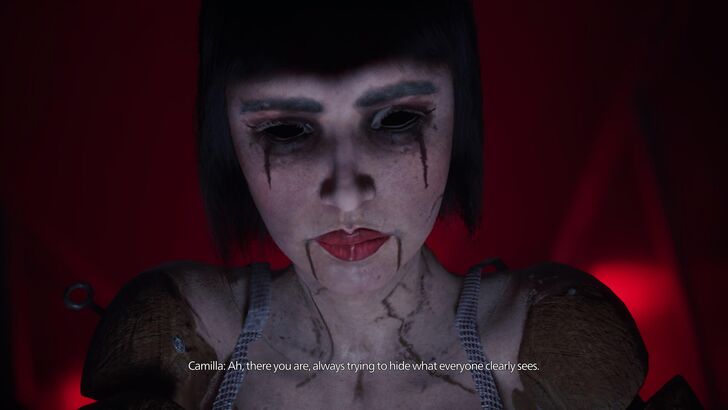
What bothered me more than anything, though, is UNFOLLOW’s heavy reliance on jump scares. I live and breathe horror. Psychological horror, especially, is one of my favorite subgenres because of how it lingers, how it makes you stop, think, and sit with discomfort. The kind of horror that paralyzes you, that makes you hesitate to move forward, is the kind that sticks with me. When a game can do that, it earns my respect.
Jump scares don’t do that. They’re cheap. They’re loud, abrupt, and fleeting. All they really provide is a false adrenaline spike—not fear, but shock. And there’s a difference. Once that moment passes, what’s left? Usually nothing. The game has already played its hand, and all that adrenaline does is push you into running away from the next threat as quickly as possible. That’s survival, sure… but it’s not compelling horror.
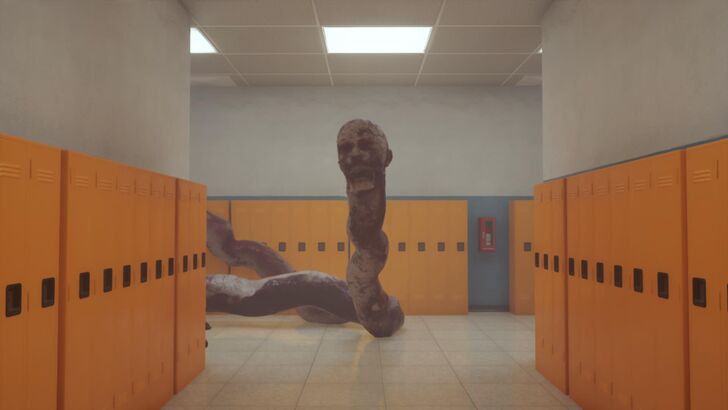
Instead of cultivating dread or unease, UNFOLLOW often opts for sudden noise and imagery to force a reaction. It’s effective in the most immediate sense, but it never lingers. There’s no time to process what you just saw, no moment where the fear settles in and makes you second-guess your next step. For a game that wants to live in the psychological horror space, that overreliance on jump scares feels like a shortcut.
Every Chapter Ends the Same Way
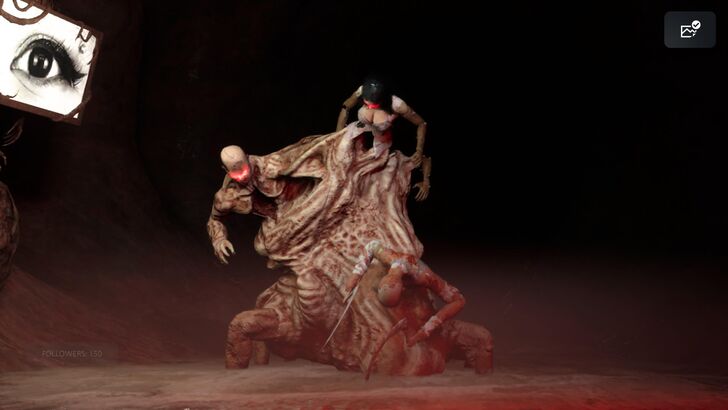
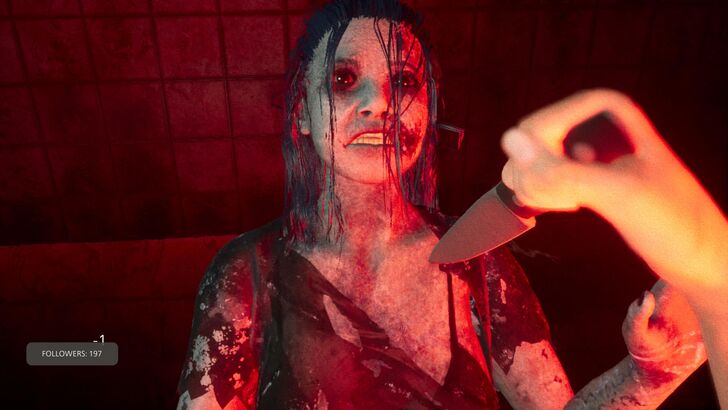
Alongside its reliance on jump scares, UNFOLLOW leans far too heavily on chase sequences. Nearly every chapter culminates in what essentially functions as a "boss encounter," and almost every one of them boils down to the same thing: outrun a large, grotesque monster until the game decides you’re safe. If you happen to have diokophobia, I can see how this might hit harder—but repetition quickly drains any fear these moments might have had.
The problem isn’t the idea of chase scenes themselves; it’s how predictably they’re used. When every chapter builds toward the same kind of climax, it stops feeling like escalation and starts feeling like obligation. Instead of dreading what might happen next, I found myself anticipating it. Anticipation could easily go hand in hand with fear, "When are they going to strike? Where are the monsters?" But in UNFOLLOW’s case, this formula just became exasperating. What should have been high-stress moments end up feeling like routine checkpoints in a formula the game never really challenges.
Gameplay Loop You Can Predict
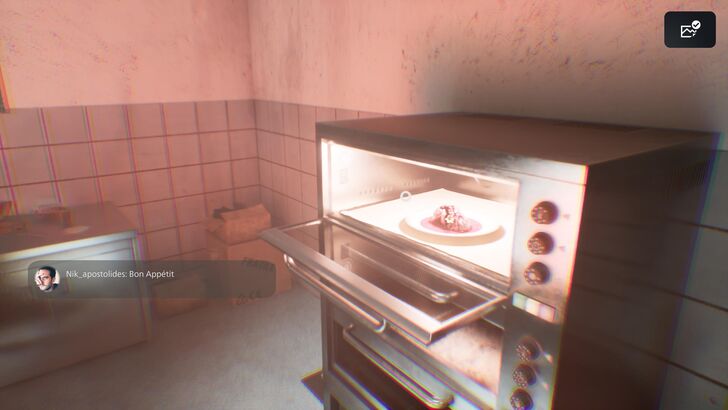
That sense of predictability extends to the game’s core loop. UNFOLLOW is so transparent about its structure that, after a certain point, the changing environments stop mattering. No matter where I was, I already knew what was coming next. Walk around. Look for the object or trigger that advances the chapter. Get chased. Repeat.
Once you recognize that pattern, the tension evaporates. The game doesn’t meaningfully remix its mechanics or subvert expectations—it simply swaps out the setting and asks you to go through the same motions again. Even moments that should feel unsettling lose their impact when you can see the gears turning behind the curtain. Horror thrives on uncertainty, and UNFOLLOW rarely allows that uncertainty to exist for long.
Late Game Shift That Comes Out of Nowhere
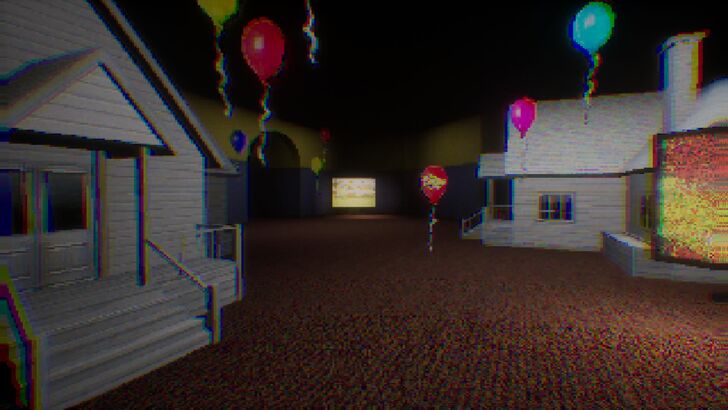
The setting does a lot of heavy lifting early on, and for the most part, it works. Being placed in spaces where Anne felt most vulnerable makes sense, and the final chapter—set inside her digestive tract as a manifestation of her eating disorder—is blunt, uncomfortable, and thematically consistent. That commitment, at least, feels intentional.
What doesn’t quite land are the environments leading up to that finale. The game’s detour into Backrooms-esque liminal spaces feels abrupt and underdeveloped. I can understand what it’s trying to convey—the vastness of Anne’s mind, the feeling of being trapped in an infinite, inescapable mental loop—but those ideas aren’t properly seeded earlier in the experience. There’s little foreshadowing, no gradual buildup toward that abstraction, which makes the shift feel disconnected rather than revelatory.
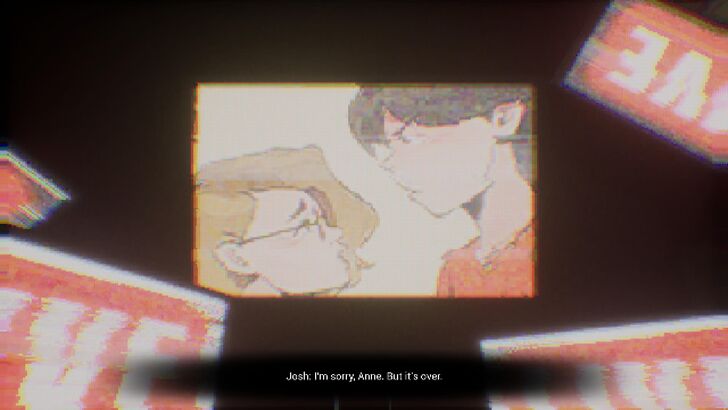
Instead of feeling like a natural escalation of Anne’s psychological state, these sections come across as out of left field. The symbolism is there, but it isn’t earned, and as a result, the late-game setting loses some of the emotional weight it could have carried.
Mystery Thread That Complicated Everything
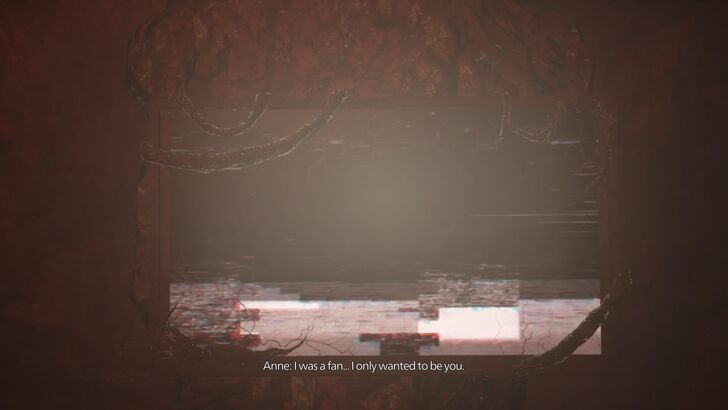
Staying on the topic of ideas that feel like they come out of left field, there’s a layer of UNFOLLOW’s storytelling that left me more confused than intrigued: its attempt at a mystery. Without spoiling specifics, the game features cameos from a few internet personalities, one of whom plays a particularly prominent role. This character is a YouTube creator—also a creator within the game’s world—and someone Anne deeply envies and aspires to become.
As Anne’s psychological state deteriorates, this YouTuber becomes entangled in her nightmare, appearing trapped inside a screen while being aware of Anne’s existence. Their connection is teased throughout the experience, and by the time the ending approaches, the game gestures vaguely toward what their relationship actually is. The problem is that it never fully commits to explaining or refining that idea. It hints, circles around it, and then moves on.
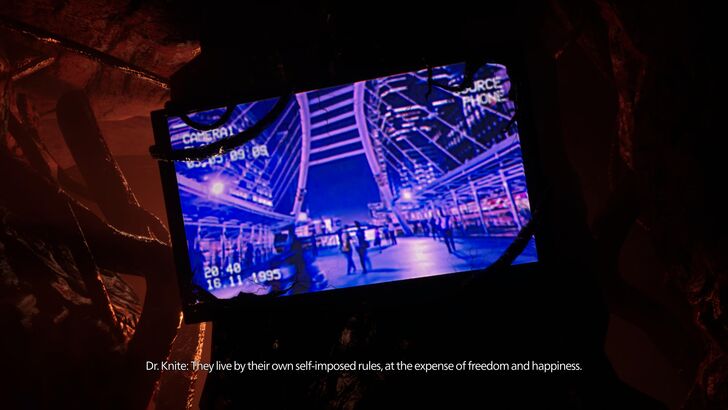
I did eventually understood the core emotional takeaway, which was Anne’s unresolved trauma and deteriorating mental state have caused her immense pain, to the point where she loses herself and ends up hurting others as well. She isn’t presented as a perfect victim—and that imperfection feels honest. But the game’s insistence on foregrounding this mystery muddies that message. Instead of sharpening Anne’s arc, it blurs it, pulling attention away from what actually matters.
It feels like UNFOLLOW couldn’t quite decide what it wanted Anne to be. On one hand, it wants to tell a focused, character-driven story about trauma and self-destruction. On the other, it wants to layer in a cryptic mystery involving online personas and identity. Rather than complementing each other, those elements end up mashed together in a way that never fully coheres.
UNFOLLOW’s Storytelling Actually Shines
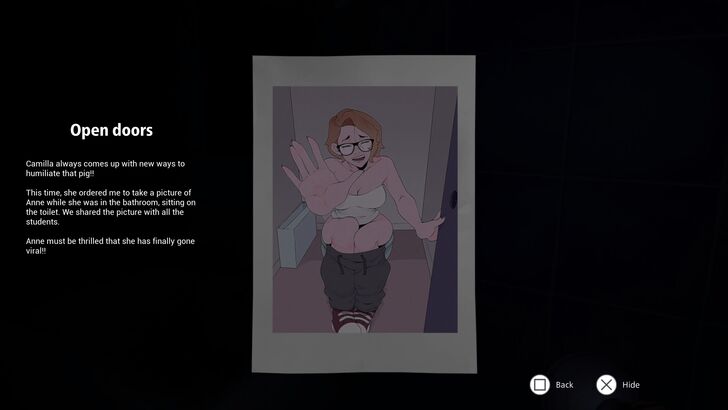
That said, it’s not all missteps. When UNFOLLOW stays grounded in Anne’s internal experience, it’s at its strongest. The disorienting nature of the environments works well as a reflection of her mental state, and the way the game visualizes her eating disorder—especially how it evolves over time—is uncomfortable in a way that feels authentic.
Storytelling is, without question, where the game does most of its heavy lifting. The monsters, while not mechanically interesting, are effective as personifications of the horrors Anne is facing. The bullying she endured is conveyed well showing how cruel and relentless the action really is, her home life is as emotionally damaging, and her self-perception as something that steadily erodes under constant pressure. These elements are conveyed clearly, and often powerfully, without needing excessive exposition.
Moments like these are where UNFOLLOW feels most confident and most effective. Which is why it’s hard not to wish the game had stayed focused on them. Had it committed fully to Anne’s psychological unraveling, rather than splitting attention with an underdeveloped mystery, the story could have landed with far more clarity and impact.
Is BrokenLore: UNFOLLOW Worth It?
Not for Horror Purists
If you’re a fan of the franchise or you’re just looking for a short, unsettling trip into the fractured mind, there’s value here. The game carries the series’ signature psychological horror elements, and for those who already enjoy BrokenLore’s style, it’s another chapter to explore.
But would I recommend it to someone chasing truly impactful, fear-inducing horror? Not really. Between the repetitive gameplay, overreliance on jump scares, and undercooked narrative threads, it struggles to deliver the kind of lasting tension and engagement that more focused psychological horror provides. If you go in with tempered expectations and an interest in Anne’s story, it’s worth experiencing—but don’t expect it to redefine the genre.
BrokenLore: UNFOLLOW FAQ
Do I Need To Play Every BrokenLore Game Before UNFOLLOW?
No. Each BrokenLore entry tells a self-contained story, so it’s not necessary to have played previous games to understand or enjoy UNFOLLOW.
What Are the Content Warnings for UNFOLLOW?
Players should be aware that UNFOLLOW includes mature and potentially triggering content, including but not limited to:
⚫︎ Eating Disorders
⚫︎ Body Dysmorphia
⚫︎ Depression and Anxiety
⚫︎ Bullying and Public Humiliation
⚫︎ Gore and Body Mutilation
⚫︎ Metaphorical Cannibalism
⚫︎ Depictions of Death
⚫︎ Almond Mom
Game8 Reviews

You may also like...
 |
Silent Hill f Survival Horror |
 |
Tormented Souls 2 Survival Horror, Action, Adventure, Puzzle |
 |
Luto Psychological Horror |
 |
KARMA: The Dark World Horror, Adventure |
 |
Post Trauma Adventure, Horror, Puzzle, Simulation |