


| Europa Universalis V | |||
|---|---|---|---|
| Release Date | Gameplay & Story | Pre-Order & DLC | Review |
Europa Universalis V Review Overview
What is Europa Universalis V?
Europa Universalis V is a grand strategy game by Paradox Interactive, and the fifth entry in the storied Europa Universalis game series. Set to be the biggest title of its kind to date, Europa Universalis brings personal ambitions and boundless creativity to the world stage, letting players rule how they see fit and write their own history.
Europa Universalis V features:
⚫︎ Hundreds of playable nations with unique bonuses
⚫︎ Revamped tutorial walkthrough
⚫︎ Expanded territories, populations, and estates system
⚫︎ Expanded armies and combat system
For more gameplay details, read everything we know about Europa Universalis V's gameplay and story.
| Digital Storefronts | |||||||
|---|---|---|---|---|---|---|---|
 Steam Steam |
|||||||
| $59.99 |
Europa Universalis V Pros & Cons
| Pros | Cons |
|---|---|
 Absolutely Anything Goes More Gameplay Layers Than a JRPG Just the Right Amount of Silly Rewards Every Minute Absolutely Anything Goes More Gameplay Layers Than a JRPG Just the Right Amount of Silly Rewards Every Minute |
The Required Reading is Atrocious Would Brick Most Systems |
Europa Universalis V Story - 8/10
Europa Universalis V doesn’t have a set story. Europa Universalis V doesn’t need a set story. Half the fun is diverting the course of known history and making the Papal States the military powerhouse it was always meant to be. Though the need for a personal direction may necessitate that not all games are equal, the potential for the best alternate history tale ever is too hard to ignore.
Europa Universalis V Gameplay - 8/10
This game is simply the peak of grand strategies, dwarfing even the likes of Stellaris and Crusader Kings. With every layer of gameplay discovered, ten more take their place—and yet, all cogs fit together in the grand machine of Europa Universalis’ takeover of the known world. If you’ve the mind, ambition, and the system specs to take it, the world and its riches are yours. Or it could just crash on you if you're unlucky.
Europa Universalis V Visuals - 8/10
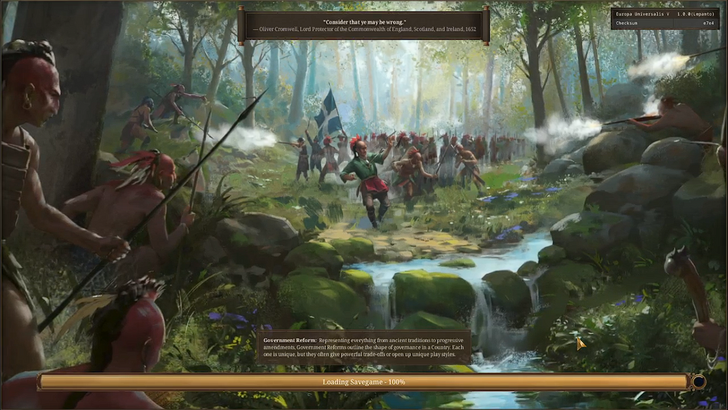
Europa Universalis V was never the spectacle that other grand strategy games were. It lacked the majesty of deep space and the wonder of Civ’s hexagonal grid. Still, a well-implemented, if a bit cramped, UI, and a solid understanding of the 1300s aesthetics across loading screens, portraits, and tapestries earn it a more than respectable score.
Europa Universalis V Audio - 8/10
This game’s music is excellently grand, mirroring the vastness of its scope and the absolute weight of the empires you’re set to helm. Though nowhere near as inspiring or uplifting as anything Firaxis has ever made for Civ, there’s no substitute for effective composition, and this game’s got the background music to carry it to the edge of any empire.
Europa Universalis V Value for Money - 10/10
Never has a game been worth the money through sheer density of content as Europa Universalis V. The absurdity of how much content this game gives you for the relatively meager price of $59.99 is too much to describe. Sink a few hundred hours into this game and find out for yourself, then you’ll have a few thousand more to spend before you truly get it.
Europa Universalis V Overall Score - 84/100
Europa Universalis V does not simply impress; it consumes. It rises as a monument to human ambition, weaving diplomacy, conquest, culture, and faith into a vast tapestry where the unprepared are first humbled, then enthralled. What begins as bewilderment in the machinery of empire soon becomes devotion; the bureaucracy that grinds you down but ultimately crowns you sovereign.
This is not a game you play so much as time you surrender — a world that devours hours and repays them with triumphs, tragedies, and the quiet satisfaction of mastery. This greatness, tempered only by Paradox's usual poor release optimization and engine problems, stands atop a mountain of many others like it as the grandest of grand strategies.
Europa Universalis V Review: The Grandest of Grand Strategies!
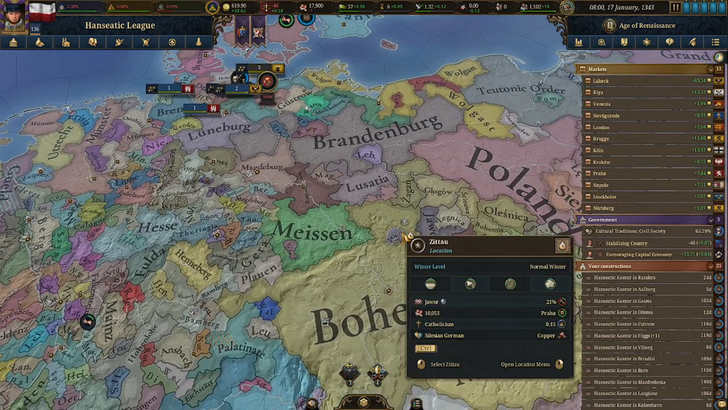
As much as I’d love to kick things off with a cheeky anecdote about my time managing kingdoms and juggling tax ledgers in other strategy games, it just doesn’t feel right to do so here.
Europa Universalis V commands a different sort of respect. Even with thousands of hours spent shepherding cities and empires across countless titles, sitting down with this game felt less like starting a new campaign and more like standing before a cathedral of strategy, and realizing I’d been playing with wooden blocks in comparison.
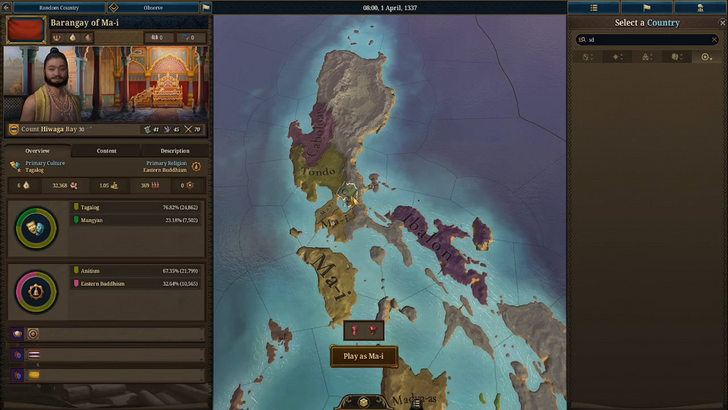
I marched in ready to conquer, crown raised and ego in tow. Instead, I was the one conquered, humbled by the sheer immensity of the map, the machinery of state, the merciless beauty of systems stacked atop systems.
And yet, there was magic to behold, still: somewhere between bewilderment, panic, and the inevitable rabbit holes, I felt something shift. The gears clicked, the fog parted, and suddenly I wasn’t drowning in divine bureaucracy — I was wearing the crown. I could feel the throne beneath my elbows.
Every opaque variable, every cryptic mechanic, every labyrinthine decision tree didn’t break me; it forged me. And if you take the leap, I suspect it’ll do the same for you.
So then — let’s begin.
Rewrite History From the 1300s Onwards
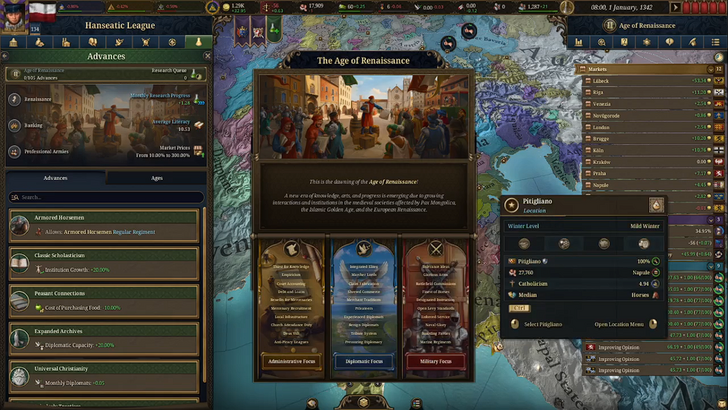
Let’s start with the “story” of Europa Universalis V, because, ironically, it’s the simplest thing to grasp amid the avalanche of systems and spreadsheets. And by simple, I mean that there isn’t one; not strictly.
Sure, you’re handed more than 500 nations sprawled across three continents to start, each steeped in history, culture, dynasties, and ambition, but the parchment is yours to fill from there. The narrative really isn’t handed to you; it’s wrestled into existence through your decisions, disasters, triumphs, and quiet diplomatic knife-fights amidst your necessary elbow-rubbing.
Across six sweeping ages, from the waning shadows of the late Medieval era to the roaring tempests of revolution, you are free to peel away from the charted course entirely. If history is a river, Europa Universalis V hands you the tools to dam it, divert it, flood the valley, and build an empire atop the ruins.
Want to transform the Papal States into a relentless war engine storming across Italy and finally give the Swiss Guard more than just parade duty? Feel like upending Japan centuries early and rewriting the fate of the shogunate? Or maybe you just want England to actually finish circumnavigating the world without tripping over itself. Whatever bizarre dream or audacious ambition strikes you, the framework exists in this sandbox to hold it.
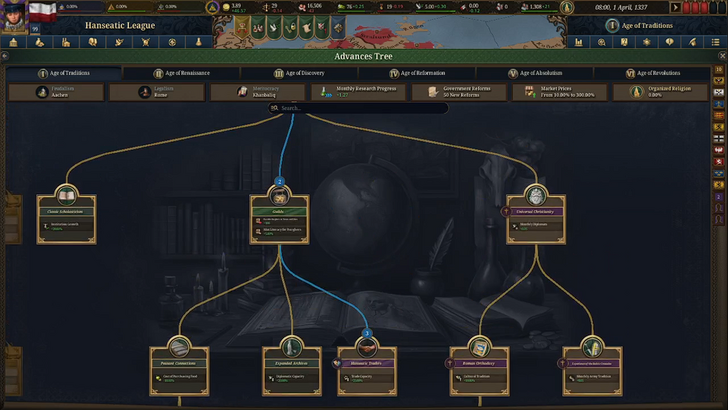
But how you forge that story… well, that’s where the humility kicks in. If you think you’re just moving through tidy eras like in Civilization VII, brace yourself. This isn’t a guided tour through time — it’s being hurled headfirst into the deep end of history and learning to swim by sheer force of will.
And that’s exactly where Europa Universalis V shines.
A King Atop A Mountain of Figures, Ledgers, Marching Orders, and Treaties
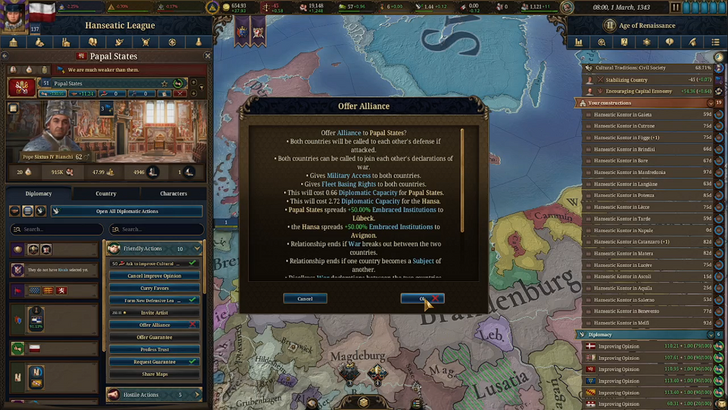
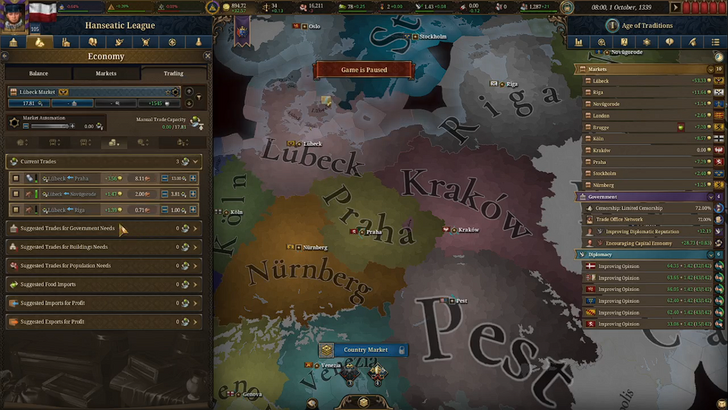
It’s honestly hard to know where to plant the first flag when talking about Europa Universalis V’s gameplay, so I’ll follow the game’s own lead and start where its tutorial does: money. In EU5, currency isn’t just a resource; it’s the pulse of your empire. Wealth fuels armies, diplomacy, infrastructure, prestige, and survival. Every ambition lives or dies by the ledger. As in history, as in life, the world turns not on ideals but on ducats.
Money in Europa Universalis V flows from many wells, though most rulers will find their riches in production, taxation, trade, and investment — roughly in that order. Each pillar has its own labyrinth of mechanics and modifiers, and unpacking them all would turn this review into a dissertation. Just trust that beneath every coin lies a tangle of systems feeding into one another with the precision (and menace) of a clockwork empire.
So, you’ve secured your treasury. What then?
That answer belongs entirely to you, sovereign.
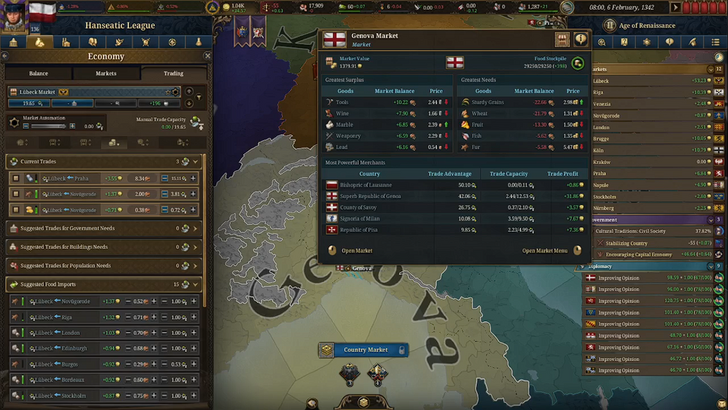
Perhaps you reinvest, spinning new commercial hubs across your provinces, paving roads to extend your reach and tighten your grasp. Maybe you nurture industry, stacking production buildings until your cities hum with labor and ambition. Or you wade into the diplomatic ocean, bartering, cajoling, flattering, threatening — making your will known among the 500-plus nations that share your world.
Or maybe you simply flood your coffers outward, showering wealth upon your subjects to bolster prestige, loyalty, and the myth of your benevolence. Whatever you choose to do, it’ll be in service to your goals in each game.
Your goals, gently suggested by your starting nation but by no means confined to it, sketch the outline of your destiny. They’re guideposts, especially valuable if you’re stepping into this grand theater for the first time. Veterans, of course, will arrive with wild builds and fiendish plans ready to deploy… though even seasoned emperors may find themselves blinking at the scale of what’s now under their command.
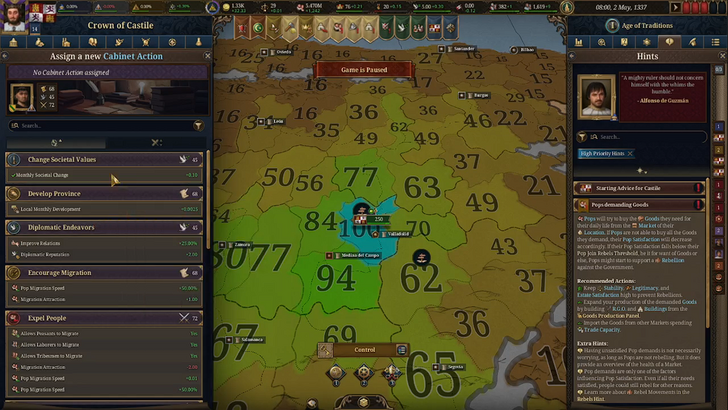
Because this isn’t just grand strategy. This is total strategy. Europa Universalis V obsesses over the macro — legislation, culture shifts, noble privileges, and religious authority — while still caring deeply about the micro, like the language spoken in parliamentary chambers, and what that says about your cultural identity.
You truly can’t click a button, nudge a slider, or highlight a province in this game without awakening five other systems demanding your attention in return. That’s the beauty — and the burden — of Europa Universalis V’s grand machinery.
It’s a system too sprawling to chart in full, yet not so immense that its contours can’t be felt. And within that vast clockwork, there are gears I admire… and a few that grind a little rougher than I’d like.
The Required Reading is Atrocious
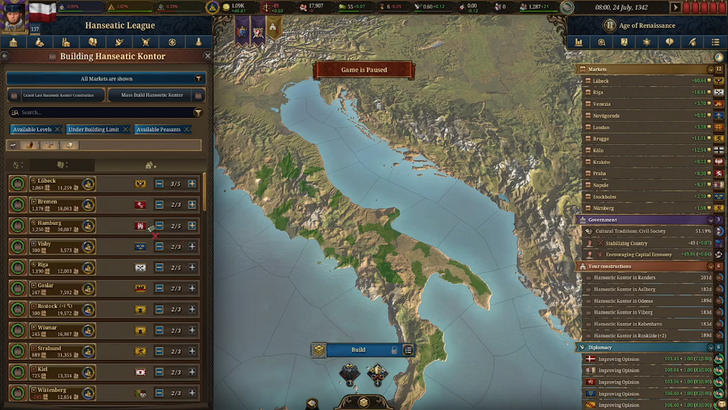
If you’re expected to rule like a sovereign, prepare to study like one too — because Europa Universalis V doesn’t hand you a crown so much as it drops a library on your desk.
To its credit, EU5 arms you well. A sprawling constellation of hints, layered tooltips, and contextual guides stands ready at every turn, each nested within another like scholarly matryoshka dolls. It’s elegant, it’s thoughtful, and at times it feels like a small miracle of UI design.
But make no mistake: you will read. You will read like a monarch being groomed for statecraft, flipping through virtual tomes just to coax your tiniest province into producing something more meaningful than dust and excuses. The knowledge is there, you just have to dig through a digital Britannica to harvest it, and not everyone can or would want to.
Taxing to Run for Most Systems
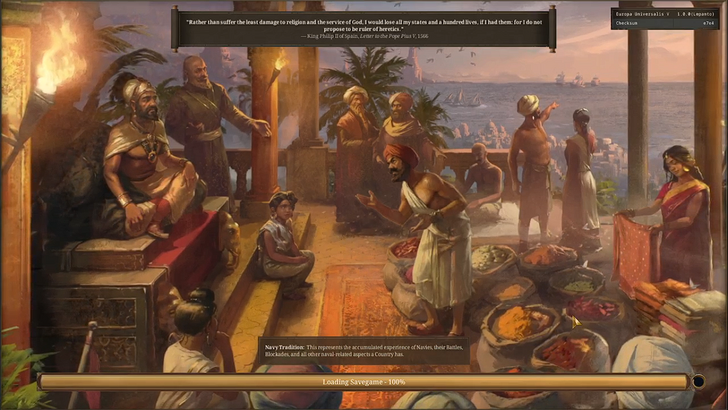
And then there’s the matter of actually running the game. Accessibility isn’t just about tutorials and tooltips — Europa Universalis V demands hardware tribute, too.
My mid-to-high-tier rig could technically handle it, and the late game had my fans sounding like they were preparing for liftoff. For more modest setups, I wouldn’t even bother. Quite simply, grand strategy at this scale is a stress test for you and your PC in equal measure, and one is bound to give.
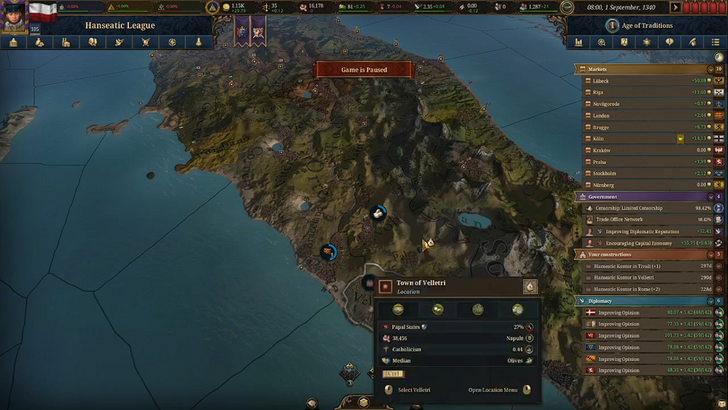
"Well, so just set your graphics to low, then," one might say, which is fair. Graphics are less important for games like these, where simple text and numbers determine the experience more than fidelity. Sadly, your CPU is a similar bottleneck for how quickly the game can run on its fastest speed, because the game utilizes your full processing power to do so.
If you’ve naught more processing power to give this game, then you can expect longer games on average, which isn’t so bad a downside so much as it is a mild inconvenience. Still, with how much the game already costs as a baseline, needing a great PC setup on top of that just to experience the game as the devs intended is rather disheartening.
Doesn’t Take Itself Too Seriously
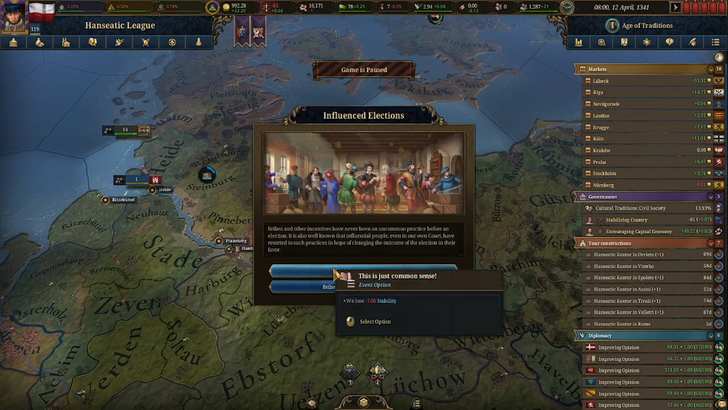
Now, onto what genuinely delighted me. With a game this dense and so rooted in medieval conflict, diplomacy, and the gritty machinery of empire, you might expect a relentlessly solemn experience. Yet Europa Universalis V has a wicked sense of humor tucked beneath its regal robes.
Random events pepper your reign, each offering simple choices with empire-shaping consequences. And in those moments, the game proves it’s not just a stern simulation, it’s capable of levity, absurdity, and the occasional royal facepalm.
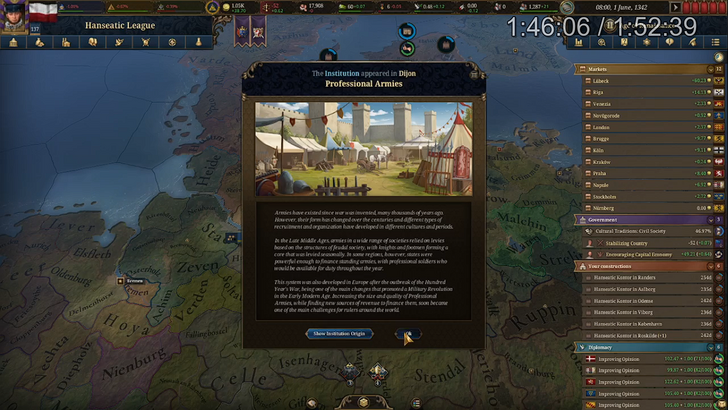
There’s nothing quite like spending an hour balancing your treasury, massaging noble egos, and planning decade-long infrastructure projects… only for a pop-up to inform you that your heir — future ruler of your painstakingly built realm — is, in official court terms, an idiot.
It’s absurd, it’s charming, and it reminds you that even the grandest strategy is still a story, and stories need laughter as much as they need blood and iron, and EU5 has all three to spare.
Complex Synergy That's Only Confusing the First Time
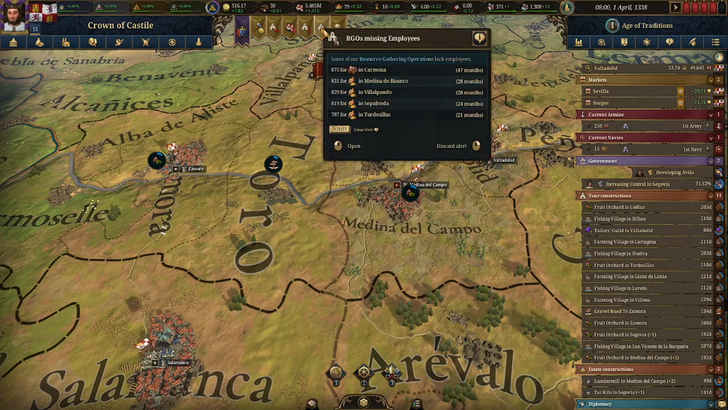
To shed more light on EU5's gameplay and to exemplify one of its strengths, I'll go over the simple concept of territories. Not how you use them, not how you exploit them. Just the territories themselves. Now, each country has a territory that, itself, can be subdivided into provinces. Provinces are lesser chunks of land, each named independently, that are made up of even smaller patches of land called Locations.
Now, each Location can host many buildings, up to a certain point, but each also has a unique slew of stats to consider. There are populations within each location, as well as their respective classes. Considering certain buildings can only be staffed by certain estates of people, this is something you must note. Each location also has terrain and vegetation features to note, which may affect how fast armies march through them and if traders pass by them en route to other places.
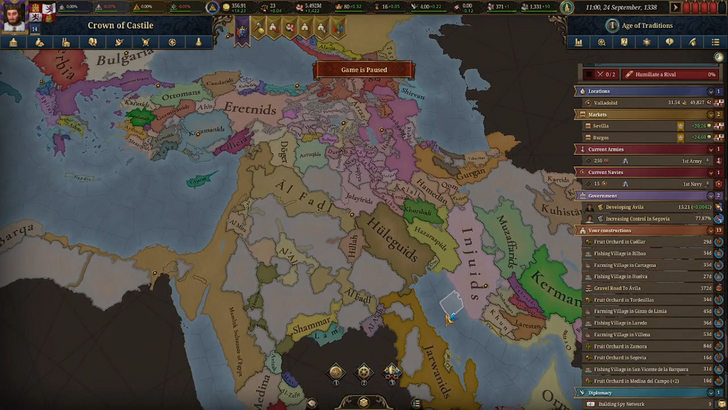
Of course, one must also consider the macro scale, as markets don't exist on the scale of locations. Provinces hosting many locations can have their own market, from which they derive food and other resources to fuel buildings in each location. If one runs out, people die, and the pivotal infrastructure starts to collapse. On the empire side of things, certain modifiers only exist at that level, giving country-sized buffs or debuffs to your entire population.
Now, all of that is just half of what you need to know about the conceivably simple concept of your starting territories. You're not even exploiting them yet; that's just them as a baseline. These aren't things you can change immediately, only make do with. If you're new to this, it's a veritable flashbang to the back of your skull, though, I daresay, not for very long.
See, one of this game's strengths is that, despite the jungle of systems, the game still has a lot of internal synergy and intuitiveness in its design. If you can fathom it, the game has a stat for that, with a tooltip to match. If you're confused the first time, you can get it as soon as the second playthrough, if not sooner.
Rewarding Every Minute of Doubtless Thousands
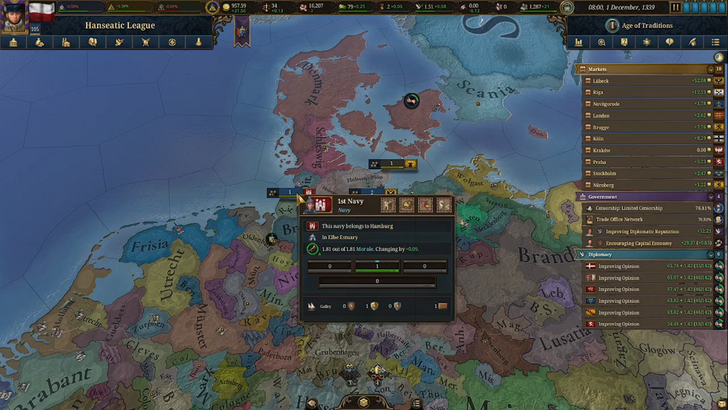
The final hook in Europa Universalis V’s grand design is how it makes every minute feel earned. Whether it’s a sudden event demanding your royal wisdom, a crisis flaring up across the border, or that long-awaited project finally clicking into place, the game cultivates its own variation of Civilization’s infamous “just one more turn” spell.
Yes, much of EU5 involves waiting as your careful plans take root and your empire hums along. But don’t dare walk away — not even for a moment. Time is never idle here. Alliances shift, neighbors scheme, economies wobble, and ambition never sleeps. In Europa Universalis V, history marches on with or without you… And the world will happily leave your empire behind if you’re not paying attention.
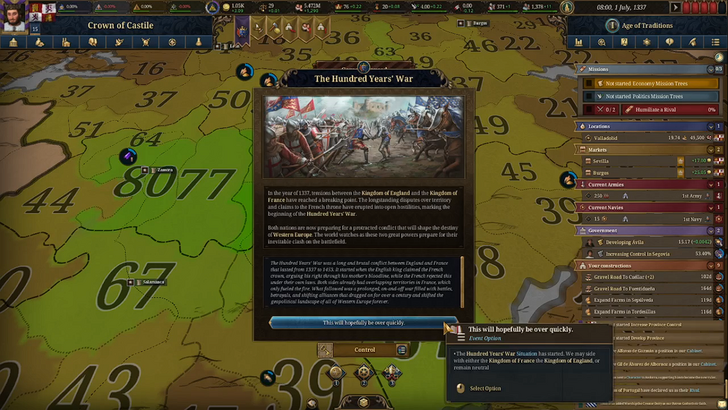
In many ways, this game feels like an engine-builder of sorts. Most of your time is spent paused, setting the pieces of your grand machinations before unpausing and watching everything fall into place with each passing month. Sometimes you fail, but with every failed idea, you learn just a bit more, earning you the precious reward of knowledge over triumph, if you don’t earn both from the outset.
And that’s a good thing, too, because these games take forever to finish. Depending on how developed your starting country was and how ambitious your goals are, a full playthrough from start to finish will last you from 8 to 12 hours, if not more. It’s an investment that pays off, which is more than what can be said for many 4X and grand strategy games nowadays.
Maybe Too Great for Some, But Great Nonetheless
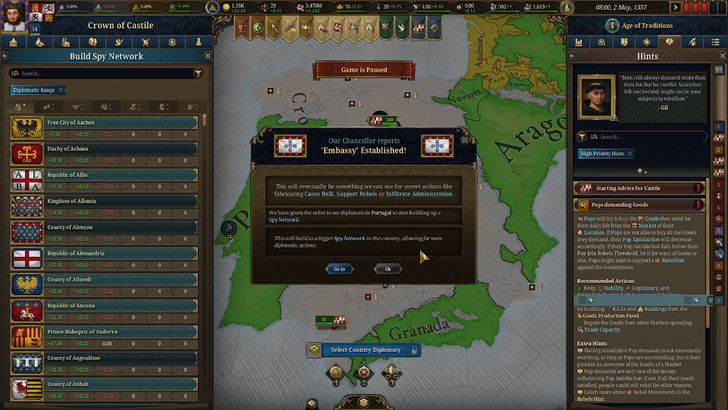
And here we arrive at the end of our long march through Europa Universalis V. The ambition behind this game was monumental, and Paradox has met that ambition head-on. This is not just a large game; it is vast, a continent-spanning colossus of systems, timelines, and possibilities. Its scale alone carries a certain gravity, the kind that grants value simply through the sheer breadth of what it offers.
Its mechanics interlock with impressive precision, even if there are… a few too many of them for all but the most dedicated sovereigns. The barrier to entry borders on scholastic; this is a game that expects you not only to rule but to read deeply. Yet those who stay the course are rewarded with a world that reveals itself layer by layer.
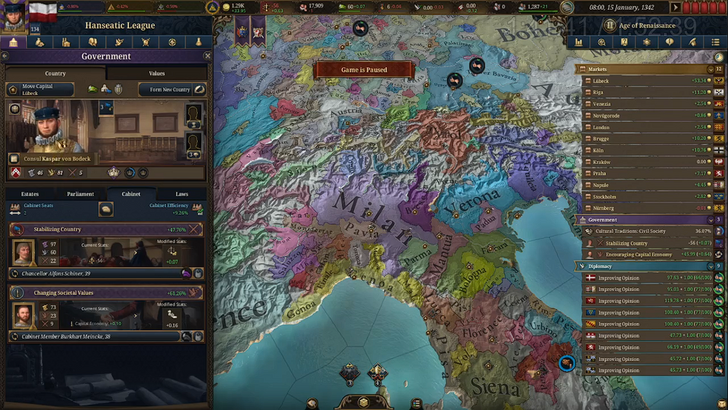
Visually and sonically, it is elegant and atmospheric, doing exactly what it needs to without extravagance. And the UI — though dense to the point of excess — is a triumph of clarity within complexity.
In the end, Europa Universalis V is not merely grand.
It is grand strategy distilled to its purest form — perhaps the grandest we have yet seen.
Is Europa Universalis V Worth It?
Even For $59.99, It Simply Has To Be
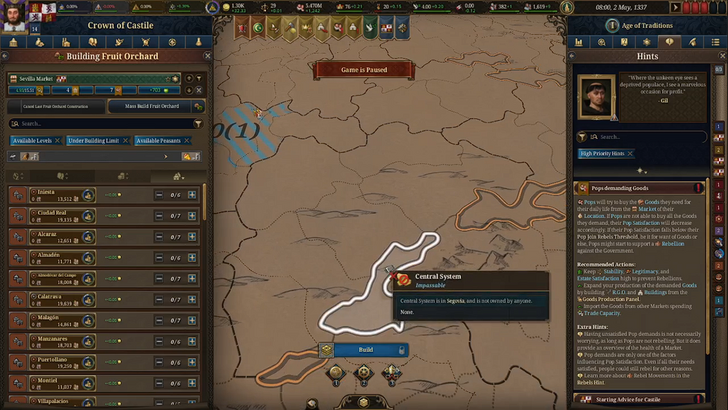
Although the game does carry the AAA pricetag of yesteryear of $59.99, it more than makes up for it through sheer content density alone. This is a game you can invest more hours into than you can imagine into and still end up finding more things to do. With hundreds of starting nations, a constellation of random events, and a dizzying range of strategies and historical what-ifs, the permutations here border on the infinite.
If your hardware can bear the weight, and your mind can weather the learning curve, Europa Universalis V is not a purchase you will regret. It can’t be. Not with this much going on.
| Digital Storefronts | |||||||
|---|---|---|---|---|---|---|---|
| Steam |
|||||||
| $59.99 |
Europa Universalis V FAQ
Which Countries Are The Best for Beginners in Europa Universalis V?
Although all of the game’s playable countries are immediately available upong starting the game, Europe Universalis does recommend a few specific countries for new players to try alongside a guided tutorial.
These countries are: Norway, Holland, Hungary, Ottomans, Naples, and Castile.
Game8 Reviews

You may also like...
 |
Civilization 7 Review | Too Big to Be Perfect 4X, Strategy, Simulation |
 |
Anno 117: Pax Romana Review [Demo] | All Roads Lead to Excellence Strategy, Simulation |
 |
Cities: Skylines 2 Review | Too Ambitious For Its Own Good Strategy, Simulation |
 |
Frostpunk 2 Review | High Praise in Low Temperatures City-Builder, Survival |
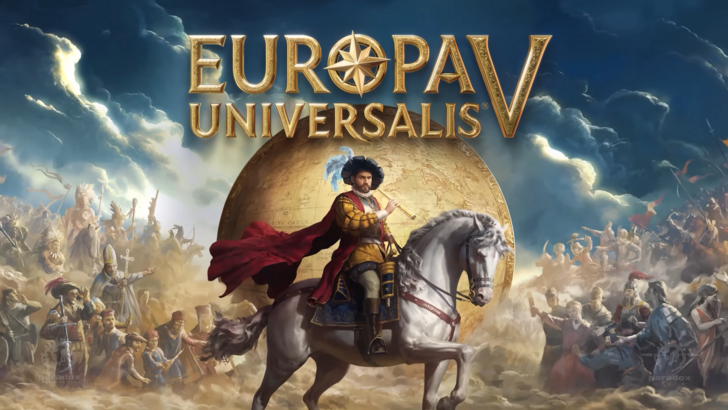
Europa Universalis V Product Information
 |
|
| Title | EUROPA UNIVERSALIS V |
|---|---|
| Release Date | November 5, 2025 (PC) |
| Developer | Paradox Tinto |
| Publisher | Paradox Interactive |
| Supported Platforms | PC (Steam) |
| Genre | Strategy, Simulation |
| Number of Players | 1 |
| ESRB Rating | PEGI 12 |
| Official Website | Europa Universalis V Website |