




Dialoop is an upcoming match-three puzzle game that strategically blends the classic formula with modern roguelite mechanics. Read on for a breakdown of the core mechanics and what makes this title the essential next step for the match-three genre.
The Next Evolution of a Classic

The Match-Three genre, though longstanding and universally understood, has long awaited a true evolution of its simple formula — a next step that respects the simple pleasure of matching tiles while injecting a deeper strategic layer. Dialoop is that evolution. By perfectly combining its DNA with the innate replayability and long-form strategy of the roguelite genre, it manages to transform an age-old classic into a fresh, compelling experience fit for the modern player.
We at Game8 were able to get our hands on it early and are ready to introduce you to what can only be described as the unexpected renaissance of classic tile-swapping tactics.
| Digital Storefronts | |||
|---|---|---|---|
 Steam Steam |
|||
| $7.99 |
A Distinct Match 3 Experience at its Core
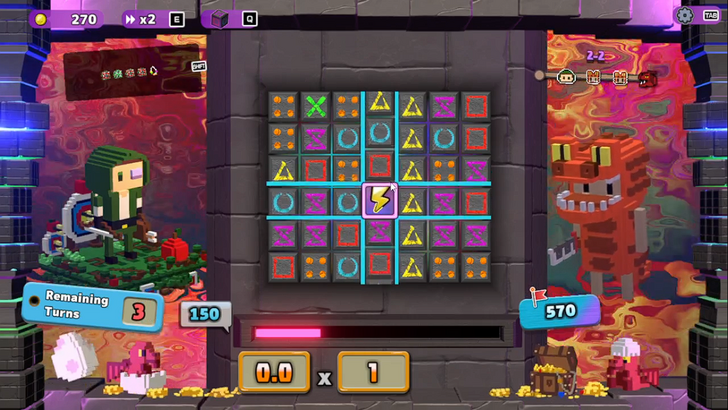
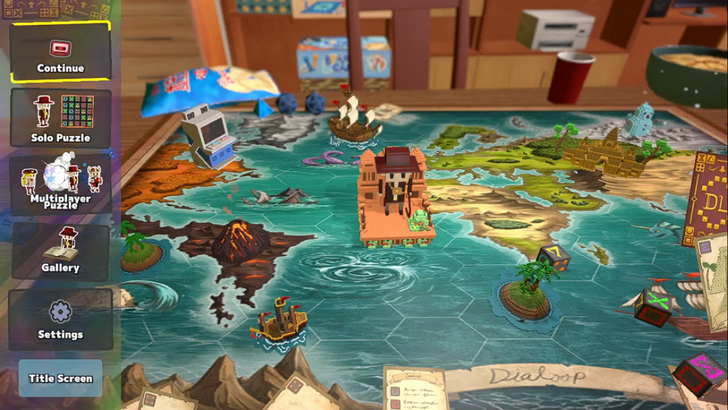
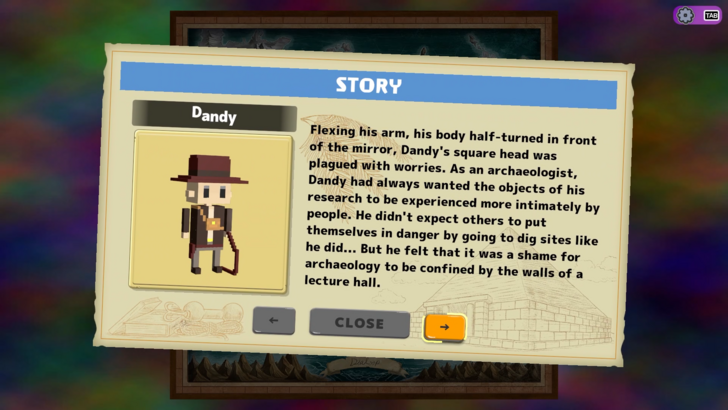
Dialoop is set in the real world, with the option to play as several different characters, spanning various locales around the world, like Egypt and Asia. The solo mode tells a different, personal story for each character, framing the core Match 3 challenge as either an adventure for ancient artifacts or a journey of reflection. Each stage challenges the player with a variety of enemies and puzzle conditions, culminating in a difficult boss monster, like a Sphinx or a Dragon, that requires strategic use of power-ups to defeat.
Dialoop’s basic gameplay follows that of any other Match 3 game; create groups of a minimum of 3 matching symbols by moving the tiles around. Aside from that basic similarity, however, things will be radically different from anything you’ve seen before.
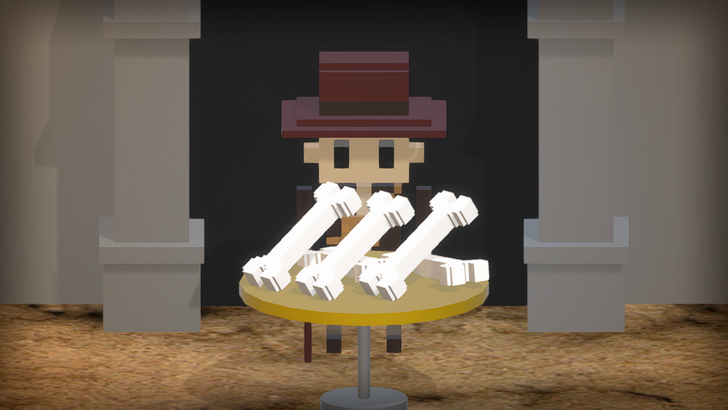
Firstly, Dialoop doesn’t restrict you to moving tiles to their adjacent spaces only, nor does it grant you the freedom to move tiles anywhere on the grid to create matches. Instead, Dialoop enables you to shift entire rows and columns at a time using a singular tile as a starting point. Think of it as a sliding puzzle that is seamlessly merged with the tile-matching grid while feeling like you’re manipulating a Rubik's Cube.
This instantly elevates the game’s strategic core above that of a normal Match-Three because, while a masterful series of movements can set up a cascade of matches, it can also reset your board completely if you’re not careful. Because tiles can wrap around the edges of the grid, this system also opens up other possible matches that were previously considered impossible, like symbols on opposite sides of the grid.
Harder than It Looks
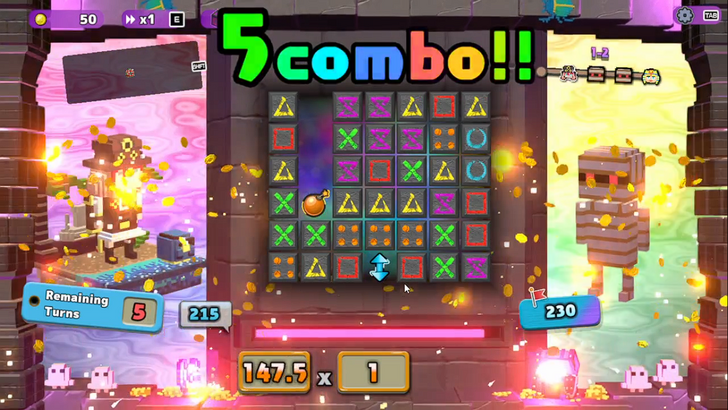
With this level of flexibility, you might be tempted to stick to matching just three tiles at a time, and this wouldn’t be a problem if the game didn’t have a turn limit. To make the most of your matches, you’re going to want to match tiles by multiples and set up combos, a series of consecutive individual matches that fall into place after your first initial match.
It’s harder than it sounds; I found myself having to think like a chess grandmaster — two, maybe three moves ahead to make sure my matches fall the way I want them to. I had to take in everything, consider every tile, think about how they would wrap around, and unlock avenues for unorthodox matches. Even the choice of what starting tile, the one I’d move around to affect the others, mattered, so I also found myself thinking about it for longer than any other Match-Three I’ve ever played.
Power-ups are an absolute must in the later levels. These are special tiles that have unique effects, such as clearing rows, columns, or areas, or randomly removing tiles around the grid when matched with tiles of the same color. Needless to say, they’re quite helpful in securing you the numbers to get past the level, but they’re best used in tandem with Combos.
Each combo can increase the multiplier of your final score for that match, although this usually requires additional mechanics to fully exploit. Power-ups can be triggered by Combos, and vice-versa, so together, the two make for a formidable score-making engine that can end levels in one or two matches.
That said, later levels still require a bit more oomph than a few multipliers. That’s where the buildcrafting aspect of Dialoop comes in clutch.
Roguelite Buildcrafting with Probabilities and Game-changing Relics
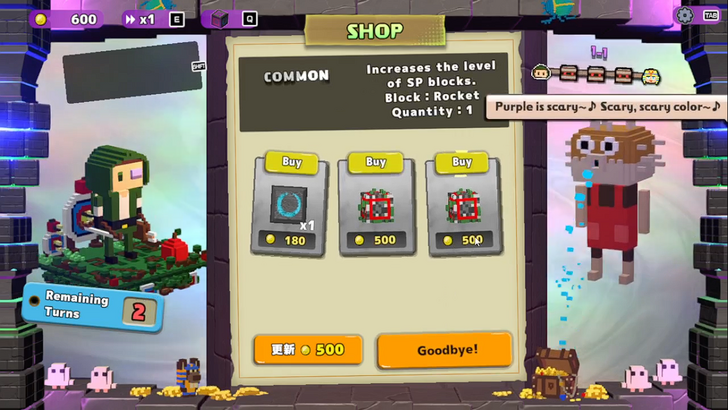
After successfully besting each level, you’ll be rewarded with a sum of gold and access to the mid-run shop. This shop is the cornerstone of the game’s roguelite buildcrafting, and where your run-to-run strategy begins to take shape.
The shop accepts gold as currency, and you’re awarded a base of 500 for each completed level, barring any other factors like Relics. This base amount is increased by the number of turns leftover from the previous level, meaning you’ll get a massive payout if you manage to hit the score goal on the first few turns.
The shop offers three items for sale, although it could be any combination of two things: Tiles and Relics. Tiles can be basic or special, and can have different levels that affect their score payout when included in a match. Special Tiles, meanwhile, can just be straight Power-ups or have special abilities that trigger when matched. All Tiles, when bought, are drafted into your "deck", which is a pool of tiles the grid draws from at the start of each level, or whenever the grid is refilled after a match.
These Tiles serve as the cornerstone of Dialoop’s buildcrafting system, which also leverages powerful passive abilities called Relics to improve your score. These purchasable items usually fetch a heftier price, but provide massive multipliers to every match that fulfil their specific parameters, such as having a specific number of tiles, using only a certain color, or even including a Power-up in the match.

Other Relics can change fundamental aspects of the game’s rules, like adding new rows and columns to the grid, increasing your payout at the end of each level, increasing your critical hit chance for even higher scores, or improving the shop in various ways.
These stacking multipliers are balanced by the game’s randomness, but they also allow you the opportunity to make your pool of tiles more reliable and efficient. Eventually, you’ll be facing bosses who give massive debuffs to your pool or certain tiles, so having a defined build is what makes or breaks a run in Dialoop, not just plain tile-swapping skill.
Before long, I found myself formulating the most broken builds and bringing them to life, tile by meticulous tile. My favorite build had to have been the Money build, where I started with the Lara Croft lookalike character for a 3000 gold injection at the start, followed by improvements to my gold rewards per level, and finally buying whatever expensive relic tickled my fancy.
Match-Three Against Other Players in Multiplayer Mode
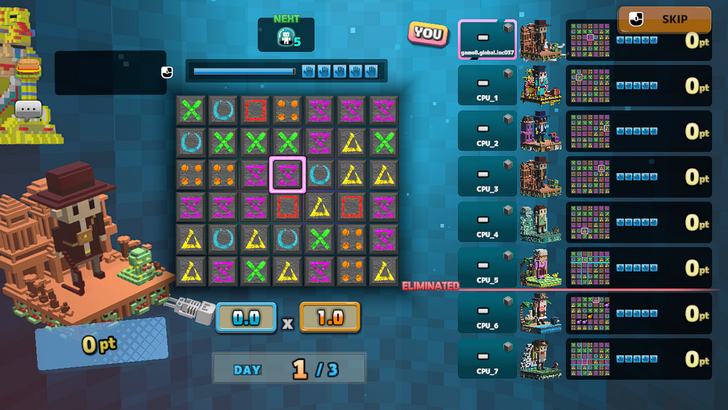
If you’re looking for an even bigger challenge, though, I’d recommend the game’s multiplayer mode.
Match-Three has had competitive multiplayer modes before across its history, but none have ever been like Dialoop’s, because instead of a 1v1 head-to-head score race, this game’s multiplayer mode is an elimination-style tournament of speed and reflexes.
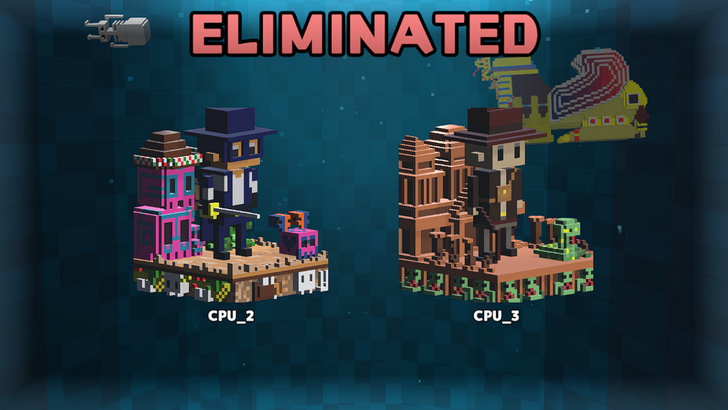
This mode pits up to 8 players in a race against time across three rounds. Here, players must achieve as high a score as they possibly can before time runs out, or until they run out of moves (usually 5), after which the round ends. The lowest two scorers are eliminated, and this repeats until there are only two players left to duke it out.
This new hectic pace is further emphasized by the multiplayer mode’s version of the shop, which just gives items for free, but players will have to scramble for them, as taken items are not replenished, and those last to finish their turn often find themselves bereft of powerful Relics. This mode also incentivizes making huge combos, as doing so sends blocker tiles into the enemy grids, possibly slowing them down.
Multiplayer is vastly different from the solo mode in that it cares more about speed and precision over careful buildcrafting, but it’s also different in that it gives you other people to show off your bling to.
Showing Off and Collecting Voxel Bling

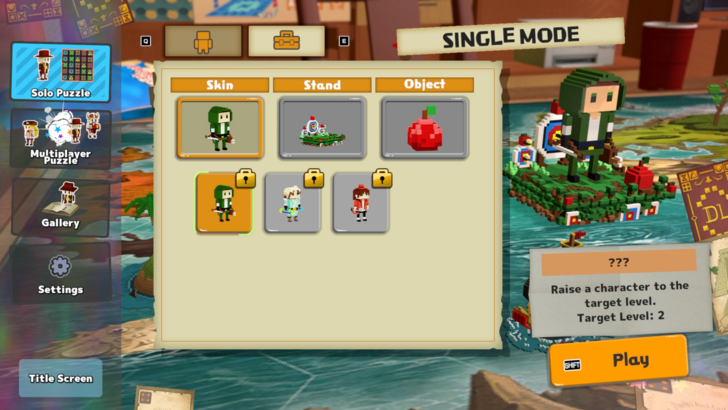
Dialoop features cosmetics and customization to up its replayability and provide a sense of reward and ownership to its players. Earned by leveling up characters through gameplay, these cosmetics range from new character skins to backgrounds, pets, and other items. None offer any in-game benefits to your single-player score or multiplayer standing. Still, they do grant style points, which is almost guaranteed to be something the modern player would appreciate.
A Must-Play for Match-Three Lovers
So, that’s Dialoop’s core in a nutshell. We genuinely applaud what this game has achieved in its endeavor to combine the old and the new. It didn’t just plant its flag solely on nostalgia; it also innovated a universally known genre in ways that respect its roots without ignoring the modern player’s expectations.
This is simply the Match-Three game of the future. If you’re looking for proof that the classics could still pack a punch, then Dialoop is the game you should be playing.
Releasing on Steam Early Access on December 8, 2025

Dialoop’s early access roadmap will be dedicated almost entirely to balance adjustments and ease of use, with additional multiplayer features and more quality content set to follow down the line.
The game is set to release on December 8, 2025, on Steam Early Access, and will only cost $7.99 as a one-time purchase. It’ll even come with a 10% discount for 1 week after the release, so wishlist the game now and grab a copy of the next step in Match-Three’s evolution when it comes out!
| Digital Storefronts | |||
|---|---|---|---|
| Steam |
|||
| $7.99 |
You May Also Like ...