
Overview
What is The Liar Princess and the Blind Prince?
The Liar Princess and the Blind Prince is a storybook-inspired action-adventure game developed by Nippon Ichi Software. The title originally launched in Japan for PlayStation 4, PlayStation Vita, and Nintendo Switch before arriving in Western regions in 2019, and later expanding to additional platforms such as mobile devices and PC.
In a dark forest filled with monsters, a lonely wolf accidentally blinds a young prince who had been drawn to her singing voice. In order to guide him safely and help restore his sight, the wolf trades her voice for the ability to transform into a human princess, concealing her true identity while escorting him through the dangerous wilderness toward a witch capable of healing him.
The game is a 2D side-scroller with light platforming, environmental puzzles, and an escort mechanic centered on protecting the prince. Playesr switch between the wolf and princess forms to navigate hazards and fighting monsters in the way.
The Liar Princess and the Blind Prince features:
⚫︎ Switch Between Wolf Form and Princess Form
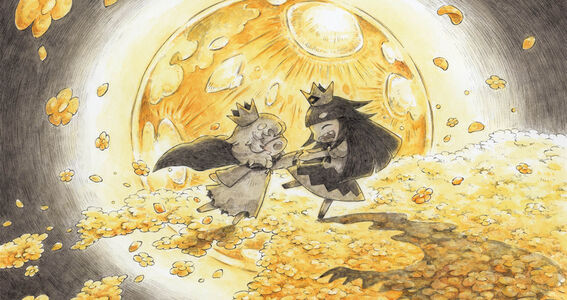
⚫︎ Hand-Drawn Picture Book Aesthetic
⚫︎ Guiding the Prince and Giving Him Commands
⚫︎ Flower Collecting
⚫︎ A Bittersweet Narrative
⚫︎ Atmospheric Soundtrack
| Digital Storefronts | |||||
|---|---|---|---|---|---|
 Steam Steam |
 eShop eShop |
 PS Store PS Store |
|||
| $19.99 | |||||
The Liar Princess and the Blind Prince Review: Lovely to Look at but Tedious to Play
Revisit a Fairy Tale From the Late 2010s
Once upon a time—more specifically, back in 2018—The Liar Princess and the Blind Prince was first announced for the PlayStation Vita, a platform that was already nearing the end of its life. The project itself came from one of Nippon Ichi Software’s internal pitching contest, something the company holds every year to let staff present original ideas that might not otherwise get made. It is the same program that previously gave us titles like Yomawari: Night Alone, which also started as a small concept before turning into a full release. It is a neat way to see experimental ideas reach the public, and for a long time, this specific story was tucked away on consoles and handhelds as a sort of cult classic.
That changed earlier this March when the game finally made its way to PC. It arrives on the platform carrying the same storybook aesthetic that defined its initial run, but time hasn’t necessarily smoothed out its rougher edges. The game looks great, and the narrative tastes bittersweet still, but the experience of playing it is thin. The game remains a beautiful piece of storytelling, yet once you look past the gorgeous ink-brushed forest, other aspects of the journey are undeniably lackluster.
Handholding to be Part of That World
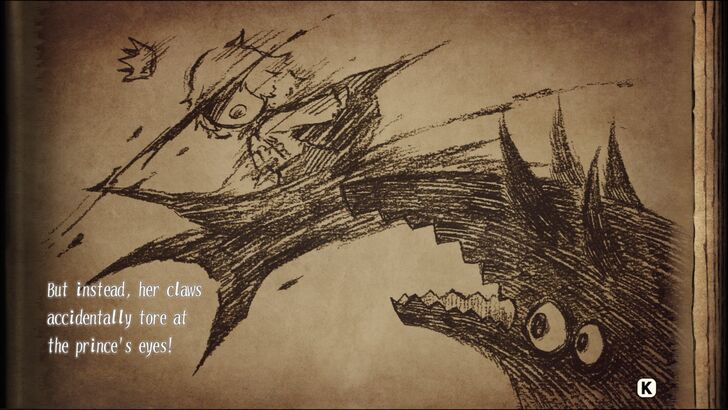
The story begins in a dark forest filled with monsters, where a large wolf sits on a cliff every night to sing to the moon. A prince from a nearby kingdom happens to hear and, moved by her beautiful voice, begins visiting the cliff to applaud her performances. The two develop a silent bond until one night, curiosity gets the better of the prince. He decides to climb the cliff to see who the singer is. Panicked that her monstrous appearance will disgust him, the wolf reaches out to cover his eyes but accidentally slashes them instead, leaving him permanently blind.
Consumed by guilt and learning that the prince has been imprisoned by his own family because of his injury, the wolf makes a deal with a forest witch; she trades her singing voice for the ability to transform into a human princess. In this new form, she rescues the prince and begins a long journey to lead him back to the witch, who is the only one capable of restoring his sight. The catch, though, is that she must keep her true identity a secret; if the prince ever discovers that his "princess" is actually the beast that blinded him, their journey—and their relationship—might fall apart.
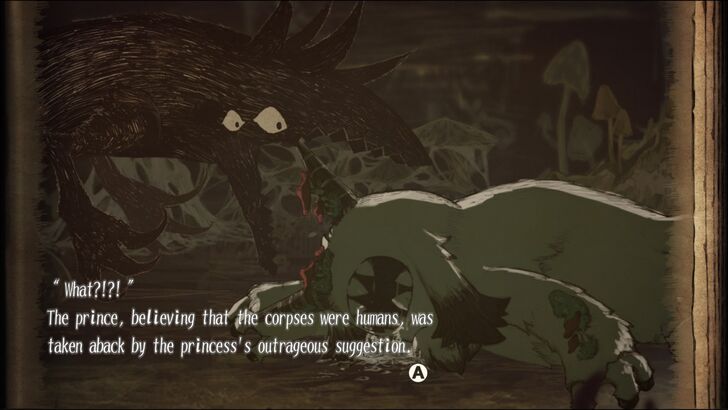
I found the direction of this narrative quite effective, mostly because it doesn't try to be more than a fable. It avoids unnecessary twists and turns and sticks to a simple path that feels very much like a classic bedtime story.
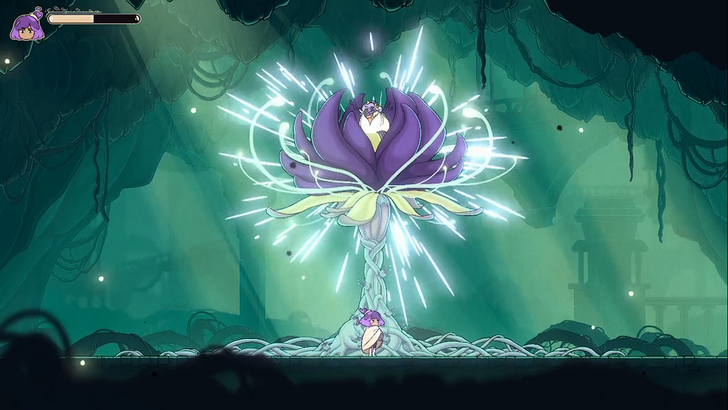
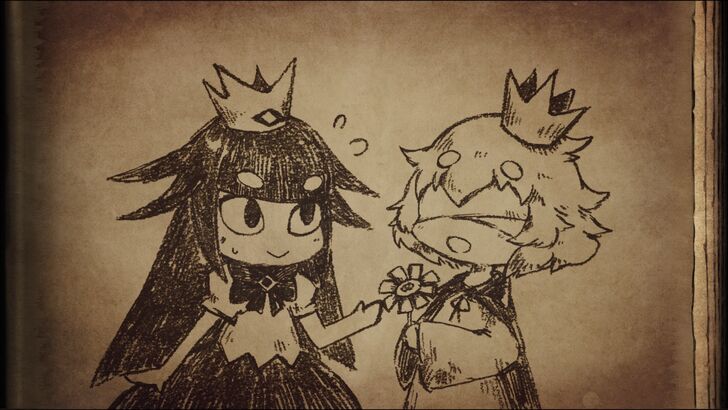
This is helped immensely by the storybook aesthetic. The game uses a hand-drawn style with muted colors and pencil-sketch cutscenes that look like illustrations coming to life. There is even a narrator who reads the lines, which makes the whole experience feel like you’re flipping through a physical book.
This softens the darker undertones. Like the original Grimm fairy tales, this is actually a pretty grim story about mutilation, social rejection, and deep-seated lies, but the framing makes those heavier themes easier to digest.
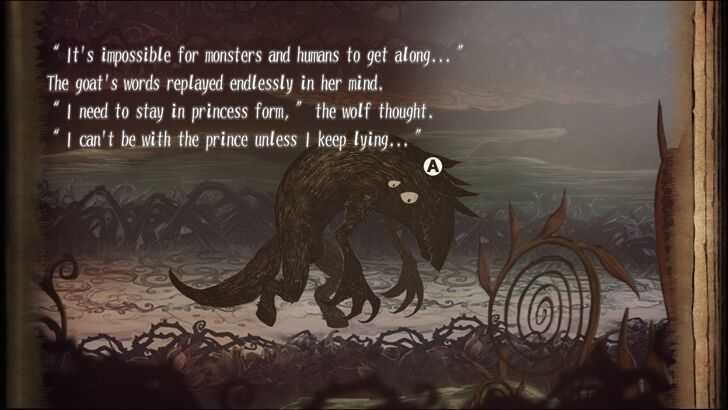
However, because the game leans so hard into this simple fairy tale structure, it ends up making the characters and the setting feel thin. I found both the princess and the prince fairly two-dimensional; she is the personification of regret, and he is the personification of innocent trust. There isn’t much growth beyond those initial traits. Even the forest inhabitants don’t feel like living parts of the world they are inhabiting.
This simplicity creates a disconnect when the game tries to touch on deeper themes like prejudice. The story wants to say something about looking past outward appearances and breaking down the barriers between monsters and humans. Yet, the gameplay contradicts this constantly. For instance, you are told that prejudice is wrong, but every single other creature in the woods is a monster that must be killed on sight lest you want them to attack the prince or the princess and return to the nearest checkpoint. It does not ruin the narrative, but it does undermine the message and makes the world feel simpler than the themes it hints at.
Puzzles and Level Designs are Shallow
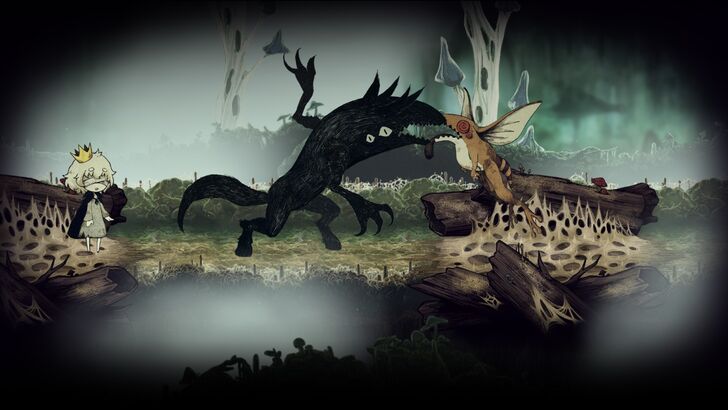
The story’s themes are good and all, but they eventually have to make way for the actual act of playing the game. This is where the experience starts to lose its luster. As a 2D puzzle-platformer, the loop involves guiding the prince through a series of hazardous environments. Because the prince is blind, he cannot move on his own; you must hold his hand in your human princess form to handhold him across the forest floor. However, the princess is physically weak and cannot fend off the monsters that inhabit the woods.
To deal with threats or clear obstacles, you have to transform back into the wolf. In this form, you are taller, faster, and capable of rending enemies with your claws, but you cannot hold the prince’s hand. This means you have to go back and forth between forms; you must clear a path as a beast, then revert to a human to lead the prince forward. You can also give the prince simple commands, like telling him to walk a short distance or hold an item, which becomes necessary for solving the various environmental puzzles scattered throughout the chapters.
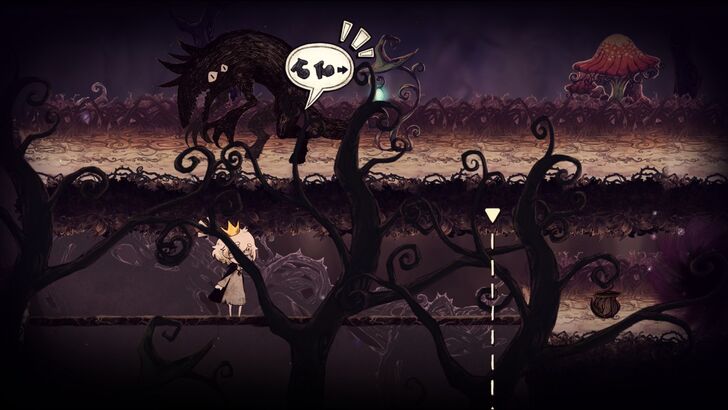
This, quite unfortunately, doesn’t translate into a compelling gameplay loop. The journey is broken up into several areas, but they all start to feel the same very quickly. Most levels rely on glowing flora or stray embers to provide light, which sounds atmospheric at first but leads to a lack of visual variety. Aside from a change in the primary color palette or the occasional weather effect, there isn’t much to distinguish one section of the forest from the next. Walking through these environments becomes a chore because nothing is exciting to look at or interact with.
The puzzle design also leaves a lot to be desired. For a game that relies so heavily on these obstacles to pace the story, the actual puzzles lack any real depth. Most of them are incredibly easy to solve and rarely require more than a few seconds of thought. You might have to weigh down a pressure plate or flip a switch in a specific order, but the solutions are always obvious. Because the challenge is so low, the act of leading the prince from one side of the screen to the other starts feeling like busywork you only want to do to get to the next part of the story.
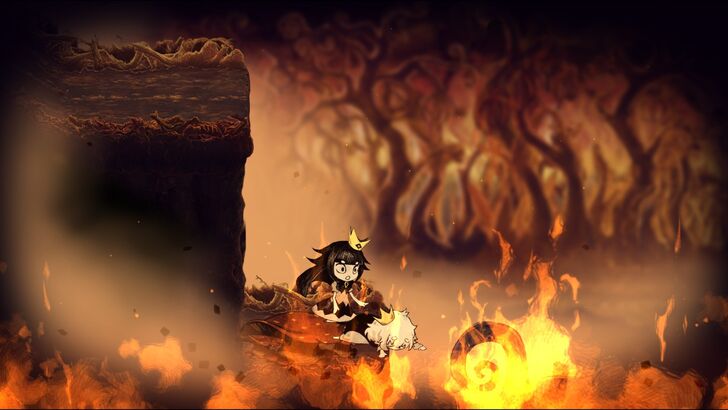
Platforming feels equally as unpolished. Movement as the wolf is strangely floaty. Meanwhile, guiding the prince as the princess requires you to be very careful about where both of you land. There is a very thin line between a drop that is safe and one that causes instant death, and the game doesn't do a good job of visually communicating that limit. It is frustrating to jump off a ledge only to die because you were a pixel too high.
This issue extends to the prince as well; since you can't always control exactly how he falls, he can easily miss a safe landing spot like a bouncy mushroom by a hair and die instantly. The game does at least autosave often, so restarting usually means replaying only a small puzzle or room. However, having to repeat the same tedious section multiple times because of awkward physics is more annoying than challenging.
To make matters worse, I encountered several technical oversights where the level design felt broken. On at least four occasions, I managed to jump onto a platform that the developers clearly didn't intend for me to reach. Because the game didn't account for me being there, I ended up physically stuck in the environment with no way to progress, forcing me to restart from the last checkpoint.
Is The Liar Princess and the Blind Prince Worth It?
Perhaps on a Sale
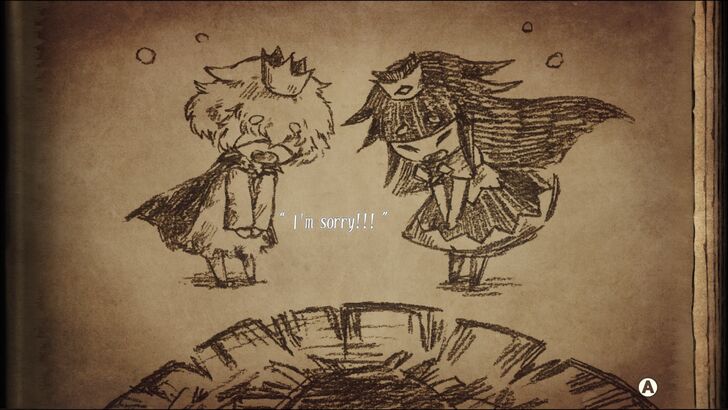
$20 is a relatively low price point for a modern game, and it’s the same amount I’ve spent on many other titles over the last year. In many of those cases, that investment bought me dozens of hours of gameplay and deep systems to explore. However, even with its low price, I find it difficult to immediately recommend The Liar Princess and the Blind Prince at its current price. The story tastes bittersweet, and the hand-drawn visual style is undeniably appealing, but the actual substance of the game feels too thin to justify the cost for most players.
The biggest issue is the length. My entire playthrough took about six hours to complete, which is quite short for a PC release in 2026. There are some side activities available, such as collecting flower petals hidden in the levels or gathering flowers to give to the prince to unlock some collectible bits. If you are a completionist and decide to hunt down every single one of these items, you might be able to stretch the experience by another two hours or so. But once that is done, there is very little reason to ever return to the forest.
In fairy tales, characters often go through trials to reach a "happily ever after," but as a consumer, you want to feel like the journey was worth the entry fee. Although the emotional payoff of the princess and her prince is touching, the frustrations and the brief runtime make this feel more like a game you should wait to pick up during a discount. It is a beautiful storybook brought to life, but as a game, it just doesn't provide enough to do.
| Digital Storefronts | ||||||
|---|---|---|---|---|---|---|
| Steam |
eShop |
PS Store |
||||
| $19.99 | ||||||
The Liar Princess and the Blind Prince FAQ
How Long to Beat The Liar Princess and the Blind Prince?
The story of The Liar Princess and the Blind Prince can be completed in about 5-6 hours. Completionists seeking to collect all items can bump this runtime up by two hours.
Game8 Reviews