| Tamagotchi Plaza | |||
|---|---|---|---|
| Release Date | Gameplay & Story | DLC & Pre-Order | Review |
Tamagotchi Plaza is a cheerful shop sim where you run quirky stores, help Tamagotchis, and turn a sleepy town into the next big festival hotspot. Read our review to see what it did well, what it didn't do well, and if it's worth buying.
Tamagotchi Plaza Review Overview
What is Tamagotchi Plaza?
Tamagotchi Plaza is a shop management and life sim set in the lively Tamahiko Town. As the newest installment in the Tamagotchi Connection: Corner Shop series, it puts you in charge of various themed businesses where you’ll complete interactive mini-games to boost your reputation. Outside of work, you’re free to explore the town, meet over 100 Tamagotchi residents, and lend a hand through charming side quests.
Tamagotchi Plaza features:
⚫︎ Over 100 Tamagotchi Chatacters
⚫︎ 12 Shops For Nintendo Switch, 15 For Nintendo Switch 2
⚫︎ 4 Upgradable Community Parks
⚫︎ Pastel Colored Aesthetic
⚫︎ Manageable Sized Map
⚫︎ Smartphone To Track Your Progress
For more gameplay details, read everything we know about Tamagotchi Plaza's gameplay and story.
| Digital Storefronts | |||||
|---|---|---|---|---|---|
 Switch Switch |
 Switch 2 Switch 2 |
||||
| $39.99 | $49.99 | ||||
Tamagotchi Plaza Pros & Cons

| Pros | Cons |
|---|---|
 Irresistibly Charming Visuals And Animation Wide Variety Of Shop And Mini-Games Strong Nostalgic Appeal Irresistibly Charming Visuals And Animation Wide Variety Of Shop And Mini-Games Strong Nostalgic Appeal |
Gameplay Loop Becomes Repetitive Quickly Paper-thin Narrative Character Encounters Become Forgettable After A While No Tutorials |
Tamagotchi Plaza Overall Score - 66/100
Tamagotchi Plaza is a good time, but a brief one. It’s colorful, charming, and inviting, with a core gameplay loop that’s easy to understand and surprisingly satisfying at first. But beneath its nostalgic wrapper and cheery presentation, there’s not much staying power. The minigames plateau, the story doesn’t quite bloom, and there’s only so much joy to squeeze out of repetition. That doesn’t make it a bad game, just one that could’ve used a few more layers. It’ll still make you smile, but probably not for very long.
Tamagotchi Plaza Story - 6/10
The premise is all fluff and no filling. You’re recruited by Prince Tamahiko to help your town become the host for the Tamagotchi Festival, and while that’s a cute kickoff, there’s not much narrative weight beyond it. Yes, over a hundred Tamagotchi characters have mini-stories you can unlock, but these interactions are mostly surface-level. There are small cutscenes that tell you what needs to be done next but none of it adds depth. It’s a town full of cute faces, not meaningful arcs.
Tamagotchi Plaza Gameplay - 6/10
There’s no real onboarding here. No tutorials. You’re just tossed into your first shop like a newly hired intern with zero training. And sure, that’s not the worst thing—it forces experimentation—but it can make for a clumsy first impression. The core loop is simple: run shops, earn Gotchi, upgrade parks. But once you figure out how each mini-game works, you’ve basically seen everything the game has to offer. The variety is decent across the twelve shops (fifteen on the Switch 2), but mastery comes quickly, and with it, the fun flattens out. It’s a sugar rush that fades faster than you’d like.
Tamagotchi Plaza Visuals - 7/10
Bright, bouncy, and absolutely bursting with nostalgic flair, Tamagotchi Plaza looks exactly how you want a Tamagotchi game to look. The Tamagotchis are lovingly animated, the environments are welcoming and fun to explore, and the UI is simple without being bland. The first few characters are memorable—quirky, cute, sometimes weird in just the right way—but after a while, their visual personalities start to feel less like distinct designs and more like palette swaps with new names. This isn’t revolutionary work, it’s cozy, not groundbreaking.
Tamagotchi Plaza Audio - 7/10
The audio is a perfect match for the visuals: cute and perky. It won’t win awards, but it works. Every interaction is punctuated with satisfying bleeps, boops, and Tamagotchi vocalizations that feel ripped straight from your childhood. The music is endearing—at least, the first ten times you hear it. After a few hours, it starts to annoyingly loop in your head whether you want it to or not. It's charming, but not endlessly listenable.
Tamagotchi Plaza Value for Money - 7/10
At $39.99, Tamagotchi Plaza offers just enough to justify itself, especially if you're buying it for younger players or longtime Tamagotchi fans. There’s enough to do, from upgrading parks to unlocking characters, and linking your Tamagotchi Uni even gives you access to exclusive content. That said, the lack of depth or evolution means the experience can burn out quickly, especially for older players. There’s no DLC, no online mode, no real long-term hook. But for what you pay, it’s a solid slice of lighthearted fun.
Tamagotchi Plaza Review: Short Lived Fun
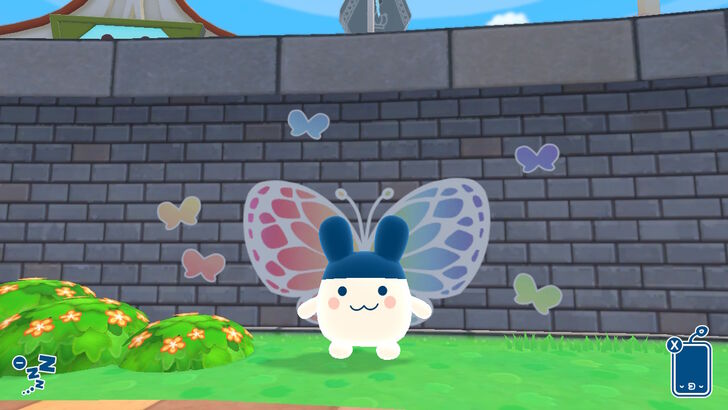
I’m not going to pretend I’m the most dedicated Tamagotchi historian out there. Do I know everything about the Tamagotchi world? Simple answer: absolutely not. But do I remember being a wide-eyed, jealous gremlin of a child watching my older sibling parade around their very own digital pet while I was told I was "too young for one"? Oh, you bet I do. The little egg with buttons and a needy pixel blob inside—it was all I wanted. And over the years, Tamagotchi has grown up. From beeping keychains to full-on adventure games, party games, corner shops, and more, the franchise has tried on many hats. Tamagotchi Plaza is the latest to join the family, and it’s not just trying on hats—it’s running the whole accessory store.
This one picks up the baton from the Tamagotchi Connection: Corner Shop series, which fans might remember from the DS era. You’re recruited by none other than Prince Tamahiko to revitalize a sleepy little town in hopes of hosting the grand Tamagotchi Festival. How do you prove the town is worthy? Easy: manage a bunch of quirky shops, earn Royal Status in each, and rake in enough Gotchi to spruce up the parks. It’s got just enough of a structure to feel like there’s a goal, but it never forgets that this is still a game about being cute, silly, and a little obsessive.
So. Let’s get on with the review, shall we?
Work Hard, Play Cute
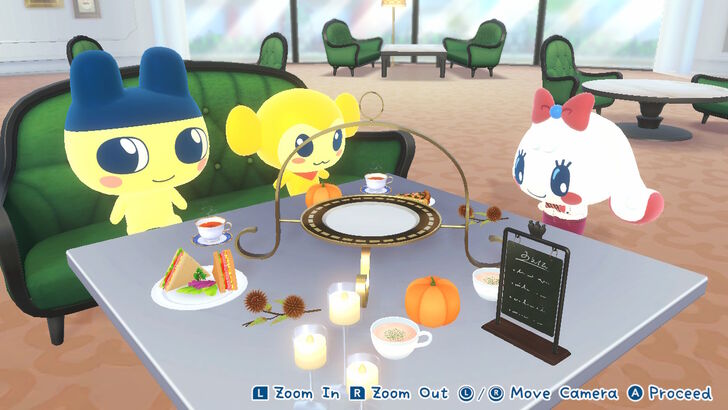
At its core, Tamagotchi Plaza is a game about working your tiny Tamagotchi butt off—adorably. There are twelve shops in total (fifteen for Nintendo Switch 2 users), each with its own mini-game and its own path to earning Royal Status. Your main loop is simple, even elementary: serve customers, earn Gotchi, upgrade your parks, repeat until all your shops are of Royal status and your town is ready to party.
The mini-games are all designed with just enough variety to keep you nibbling one more bite of the loop. One moment you’re running reps at the Personal Training Gym, button-mashing your way through ab workouts to help someone get jacked in twenty seconds flat, and the next you're meticulously setting tables in the Afternoon Tea Shop, aligning cakes, teacups, and frilly doilies like you're prepping for a royal baby shower. There’s something hilariously earnest about the whole thing, and that sincerity is part of what pulls you in. This isn’t a game trying to out-cool anyone. It’s just asking if you want to clean cavities at the Dentist Shop or dress someone up at the Tailor, and it delivers both with full sincerity.
Each shop feels distinct in what it asks from you, even if mechanically, some are simpler than others. The Manga Shop involves assembling panels according to customer requests. The Rap Battle Venue becomes a rhythm mini-game where you’re tapping out beats to win over the judges. And yes, I was shocked to discover that dentistry earns more Gotchi than rapping. Even in Tamagotchi land, the arts are underpaid.
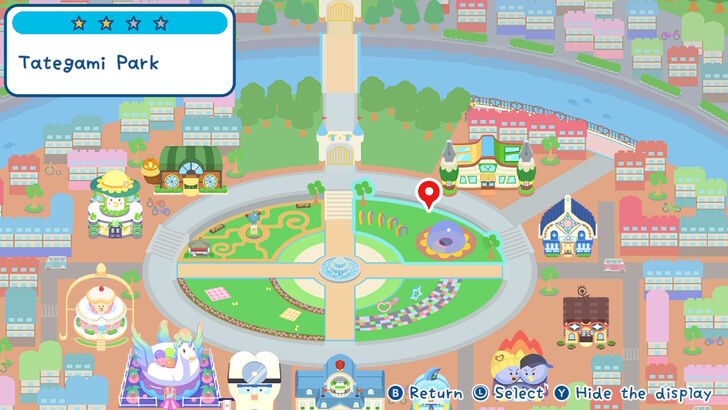
Then there are the parks. Tamahiko Garden, Tategami Park, Friendship Square, and Trend Palette each become more than just upgradeable backdrops. Every Gotchi you earn can be funneled into making these spaces flourish, and each upgrade tier—starting at 500 Gotchi and ramping up to multi-thousand prices—makes the town feel more alive. And yeah, I know it’s just pixels, but when you see a new decoration pop up or watch that adorable park worker bounce around with their chunky little feet, tell me you don’t feel something. It’s delightful. It’s serotonin in pastel.
The beauty of Tamagotchi Plaza is that it understands its appeal down to the granular level. It’s not just about succeeding; it’s about watching success unfold through sparkles, giggles, and the rewarding tap of a job well done. You unlock photos of the Tamagotchis you’ve helped. You wander the streets and see new NPCs appear, some even asking for your help. And it feels like you’re building something, even if that something is built out of sugar and hearts and glittery little paw prints.
Not All Shops Are Created Equal
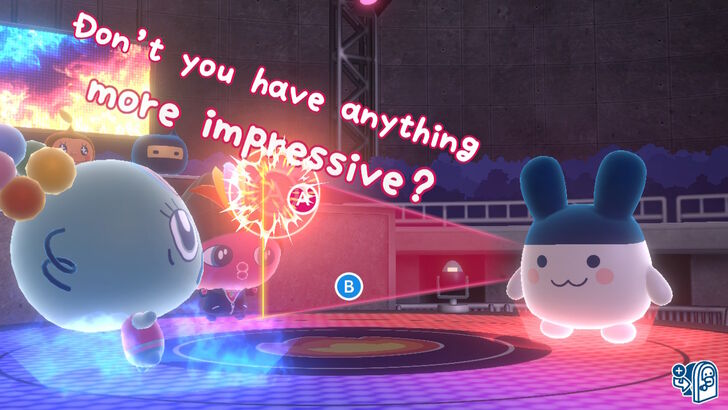
Let’s talk shop. Literally. My personal top three? Afternoon Tea Shop, Tailor Shop, and the Rap Battle Venue.
Let’s start with the Tea Shop. This one’s all about aesthetics. You’re given the freedom to choose how to lay out your table, centerpieces and fillers, tea, the finger food, pastries, the whole nine yards. You serve tea the way a fashion designer curates a runway—no clashing patterns, no wobbly towers of mille-feuille, just pure coordination bliss. It’s surprisingly meditative. You want cute? This is where cute lives.
Then there’s the Tailor Shop, which had no right being this charming. Every customer comes in looking for a new outfit, and you help put it together based on their preferences. But I won’t lie to you, Neliatchi is the real reason this made the list. I don’t care if she’s a bunch of pixels—she’s iconic. This little lady, who’s deeply obsessed with flowers and rocks, reminds me of that one childhood friend who always carried a magnifying glass and had a rock collection sorted by emotional value. She’s precious and completely sincere.
And finally, the Rap Battle Venue. This is the one that caught me off guard. It plays out like a rhythm game where you time button presses to the beat—surprisingly—with variations on the tempo and pattern that keep it from going stale too fast. I mean, I knew I’d enjoy setting teacups or organizing clothes patterns, but dropping Tamagotchi bars in front of a roaring crowd? That was a curveball. Even if the differences between beats are subtle, they add just enough spice to make it fun. That said, the fact that this venue earns less than the literal Dentist Shop? Comedy gold. Art imitates life, I suppose.
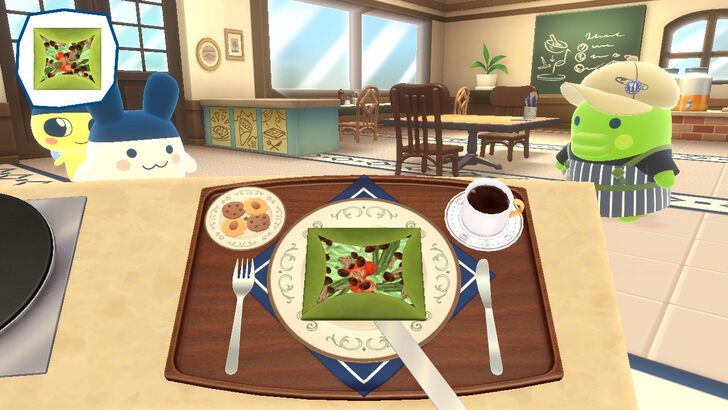
But while some shops feel fresh and lovingly animated, others… not so much. The Dentist Shop is the most egregious offender. It’s a barebones, tooth-cleaning game that feels like it was lifted from a free mobile app for toddlers. You brush. You pick up cavity bugs. That’s it. It’s over before you even realize it started. Which is fine once or twice—but you’ll need to grind every shop to Royal Status, and it becomes painfully clear which ones were built to entertain and which ones were built to… exist.
Some mini-games are mechanically shallow. Others, visually uninspired. The Bicycle Shop, for instance, has one of the blandest loops in the entire game: match a customer’s dream bike with parts from your catalog. It’s just item selection, no flair, no energy. Same goes for the Eyewear Shop. It’s cute the first time someone wants big round glasses, but after that, it’s rinse and repeat.
There’s also the issue of flow. Mini-games don’t scale in difficulty or evolve over time. Once you’ve figured out how to ace one, that’s it. And while there's a scoring system based on customer satisfaction, it rarely feels like you're chasing anything meaningful. You do it for Gotchi. You do it for the grind. And sometimes, you do it just to hang out with your favorite Tamagotchi again. But you're not doing it because the gameplay is particularly rewarding.
It’s a mixed bag, is what I’m saying. A very cute mixed bag, but mixed all the same.
The Little Things Between the Shops
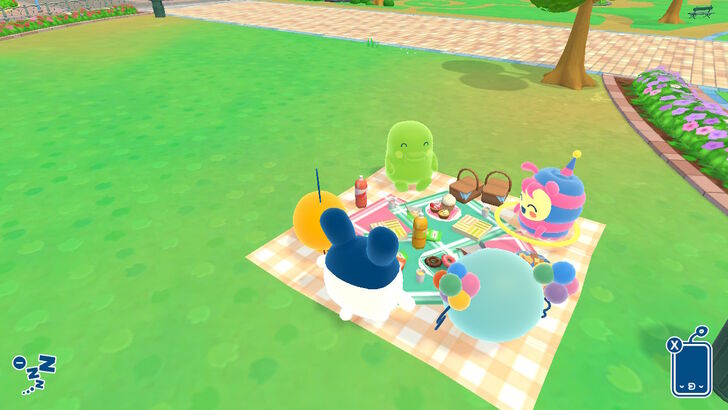
While most of the game is lived out inside these shops, the world outside is worth engaging with too. Wandering around between shifts, I found myself talking to different Tamagotchis on the street, helping them with tiny personal errands. Every time you do, you get a photo of them for your collection. It’s genuinely adorable, and these little interactions help give the town life beyond just your click-heavy commerce.
I didn’t expect to love just walking around in Tamagotchi Plaza. But that’s the thing—when the mini-games start to feel routine, it’s the in-between moments that carry the charm.
The Plaza is made up of different zones: the shops you work at, the parks you upgrade, and a few streets in between filled with Tamagotchi citizens just vibing. At first, you’re just focused on your job—getting those shops to Royal Status, earning Gotchi, keeping customers happy. But the more I wandered, the more the town started to feel like a real little place. Not because it's hyper-detailed or rich with lore (it’s not), but because it’s alive in a cozy, low-stakes way.
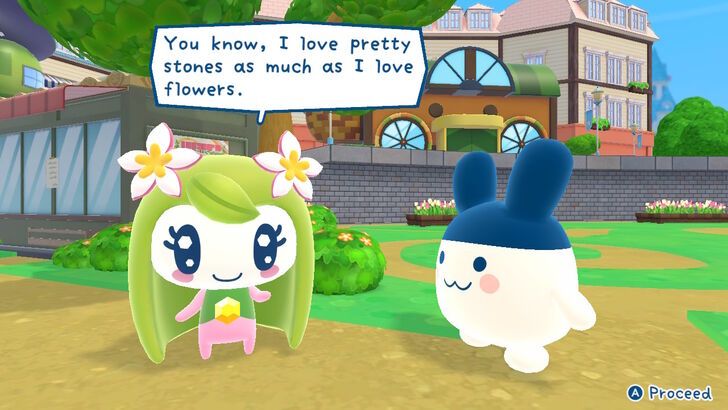
There’s a Tamagotchi lounging in the park, there’s another in a minor crisis. You run into them randomly, offer help, and if you succeed, you’re rewarded with a little photo of the Tamagotchi. It’s not just a collectible—it feels like a memory.
And then there are the parks themselves: Tamahiko Garden, Tategami Park, Friendship Square, and Trend Palette. Each one can be upgraded four times, starting with manageable costs (500 Gotchi) and scaling up to increasingly steep investments. But honestly? Worth it. Every upgrade transforms the space. It’s not just about aesthetics, either. These upgrades subtly affect your experience. More Tamagotchis appear, some of them with new quests or dialogue. There’s even a large worker Tamagotchi that does the renovations for you, bouncing around with the enthusiasm of someone who lives for their job. It's a minor detail, but one that stuck with me. Watching that construction worker jump around while the area blossoms into life is like getting a visual pat on the back.
I do wish the world had a bit more reactivity. There’s no day/night cycle, no weather, and very few permanent changes beyond the park upgrades. But for what it is—a cozy hub filled with quirky little guys and gals—it works.
Candy-Coated, but Hollow
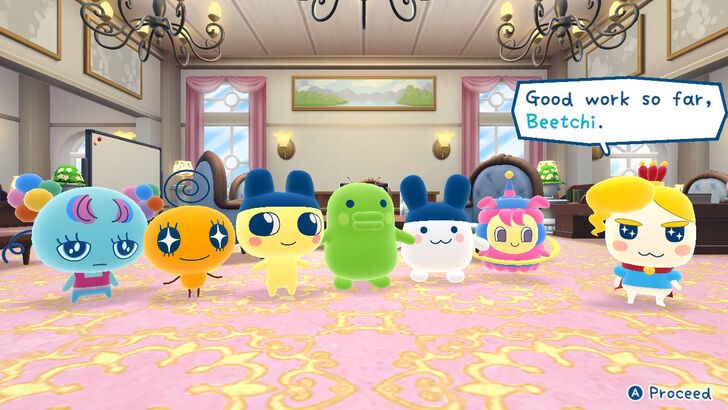
Here’s the thing, Tamagotchi Plaza is fun. It’s cute. It’s earnest and colorful and full of tiny joys. But at some point, even sugar can get stale.
Despite the variety of shops and their different mini-games, the game’s core loop never evolves. You're always doing a variation of "serve the customer, get the money, buy the upgrade," with no meaningful escalation in challenge, complexity, or creativity as the hours tick by. It’s a game that introduces all of its ideas within the first few hours, and then just… asks you to repeat them. Ad nauseam.
Don’t get me wrong—there’s nothing inherently wrong with a repetitive loop. Games like PowerWash Simulator or Unpacking build their identities on comfort through routine. But Tamagotchi Plaza doesn’t offer depth with that routine. It’s repetition without refinement. Even the best mini-games start to wear thin because the mechanics never expand. The Rap Battle stays mostly the same, the Gym doesn't add new equipment or challenges, and even shops like the Tailor or Tea House stop offering new parts after a while. Once you've hit Royal Status in a few shops, you've more or less seen all the game has to show.
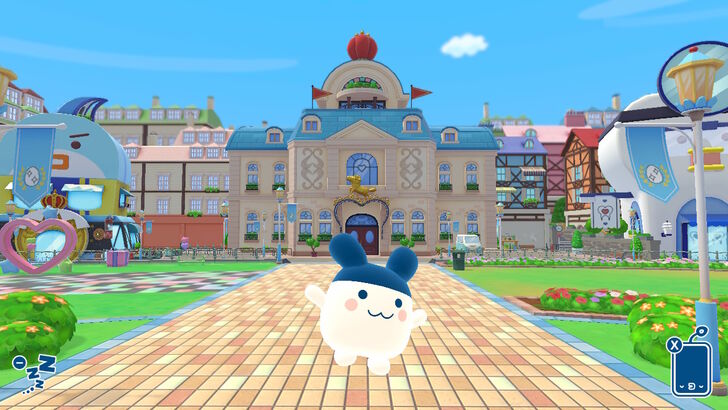
This simplicity might be forgiven in a pure kid's game, but Tamagotchi Plaza gestures at broader appeal. There’s just enough charm and polish to lure in nostalgic older players, only to leave them realizing the game plateaus too early. There are no modifiers, no added difficulty levels, no branching mechanics. You can’t even fail most of the mini-games in any meaningful way—just underperform, which still gets you some Gotchi and keeps the train moving forward. Progression becomes inevitable, not earned. And after a while, you start to feel like you’re just checking off boxes.
Worse still, the game’s story—if you can even call it that—is paper thin. Yes, you're recruited by Prince Tamahiko to help the town become the host for the Tamagotchi Festival. That’s cute! That’s a setup! But there’s no actual narrative progression tied to your efforts. Sure, there are some cutscenes scattered throughout, but they usually boil down to, "Okay, this is what we need to do next!", functional, but not exactly engaging. There’s even a little creature in your home who can track your progress toward being chosen, but their feedback is more like a status report than a story beat. They’ll tell you if you’re getting close, but it lacks any drama or sense of momentum. It’s all just… there. In a game that leans so hard into character and charm, a more dynamic or whimsical story could’ve added much-needed glue to hold it all together.
Is Tamagotchi Plaza Worth It?
Buy It for the Kids, Stay for Yourself
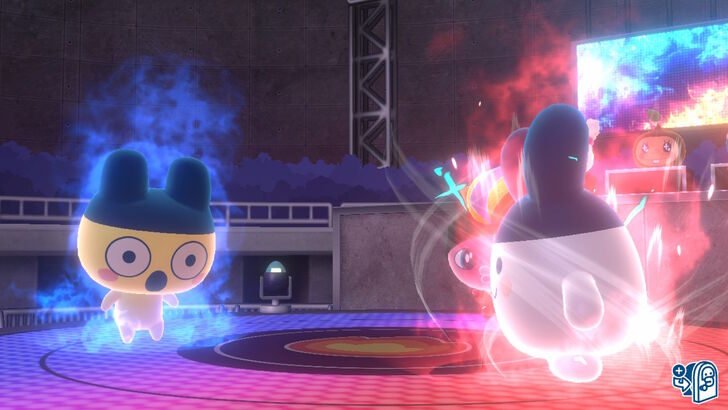
Here’s the truth, Tamagotchi Plaza is sweet. It’s soft. It’s kind of like finding a box of old stickers from elementary school—delightfully nostalgic, lightly chaotic, and weirdly comforting. But nostalgia, no matter how lovingly packaged, can only carry a game so far. This is a game made with heart. The characters are genuinely loveable. The music has that innocent spark that feels pulled from a dream you only half-remember. The mini-games? Occasionally inspired. Even when they aren’t, they’re rarely bad. And as a casual life-sim that keeps things light and colorful, it mostly delivers.
But I can’t pretend it didn’t start to wear thin after a while. The repetition sets in early. The systems are shallow. The story is forgettable. And while the loop is cozy, it’s not something I felt compelled to return to once I’d maxed out my parks and earned those royal crowns. So is it worth it?
If you’re a diehard Tamagotchi fan, the answer is a soft yes. You’ll smile, you’ll decorate, you’ll giggle once in a while with how cute everything is. If you’ve got young kids, even better—this is a fantastic introduction to time management games, with just enough variety to hold their attention without overwhelming them. And if you’re the kind of player who enjoys small joys without needing grand payoffs, Tamagotchi Plaza could absolutely find a home in your library.
But if you’re looking for something with bite—something that will evolve with you, surprise you, or challenge you in any meaningful way—this isn’t it. Tamagotchi Plaza is charming, but safe. Endearing, but shallow. Like a plush toy, comforting to hold, but not built to do much else.
| Digital Storefronts | |||||
|---|---|---|---|---|---|
| Switch |
Switch 2 |
||||
| $39.99 | $49.99 | ||||
Tamagotchi Plaza FAQ
How To Link Tamagotchi Plaza To Your Tamagotchi Uni?
Owners of Tamagotchi Uni must first finish handing out flyers in their Tamagotchi Uni, through the Plaza Link. After that, you can open your Tamagotchi Plaza, open the smartphone, select code then Tamahiko Tour, and input the code they got from their Tamagotchi Uni. For a more indepth guide, click the link below:
Does Tamagotchi Plaza Have A Physical Version?
Tamagotchi Plaza has a physical version released in Asia and Europe, but is only digitally released in the United States.
Game8 Reviews

You may also like...
 |
BitCraft Online Review [Early Access] Casual, Simulator |
 |
Casual, Simulator Climbing, Platformer, Roguelike, Action, Survival |
 |
MySims: Cozy Bundle Review Simulation, Adventure |
 |
Hello Kitty Island Adventure Review Adventure, Simulator |
 |
Garden Witch Life Review Farming, Simulation |
Tamagotchi Plaza Product Information
 |
|
| Title | TAMAGOTCHI PLAZA |
|---|---|
| Release Date | June 27, 2025 |
| Developer | HYDE |
| Publisher | Bandai NAMCO |
| Supported Platforms | Switch, Switch 2 |
| Genre | Simulation, Shop Management |
| Number of Players | 1-2 |
| ESRB Rating | ESRB 10+ |
| Official Website | Tamagotchi Plaza Website |