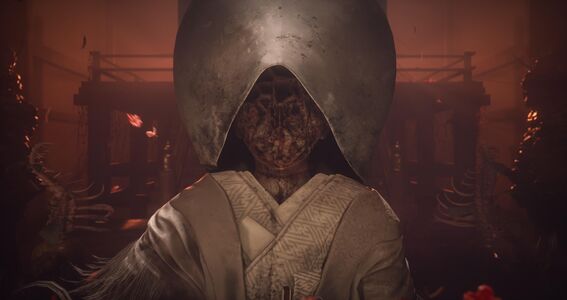

| Silent Hill f | |||
|---|---|---|---|
| Release Date | Gameplay & Story | Pre-Order & DLC | Review |
Silent Hill f Review Review Overview
What is Silent Hill f Review?
Silent Hill f carries the series’ legacy of psychological horror into 1960s Japan. Players step into the role of Hinako Shimizu, a schoolgirl caught in the haunting town of Ebisugaoka, where beauty and decay intertwine. To survive, she must solve intricate puzzles, confront grotesque threats, and make impossible choices that shape both her fate and those around her. Written by Ryukishi07, the game is layered with mystery, encouraging multiple playthroughs to uncover its many interpretations and endings.
Silent Hill f Review features:
⚫︎ Standalone Silent Hill Entry
⚫︎ Shifting Story
⚫︎ Psychological and Body Horror Focus
⚫︎ Puzzle Solving and Survival Mechanics
⚫︎ Grotesque and Atmospheric Visuals
⚫︎ Multiple Endings and New Game+
For more gameplay details, read everything we know about Silent Hill f Review's gameplay and story.
| Digital Storefronts | |||||||
|---|---|---|---|---|---|---|---|
 Steam Steam |
 Epic Epic |
 PSN PSN |
 Xbox Xbox |
||||
| $69.99 | |||||||
Silent Hill f Review Pros & Cons
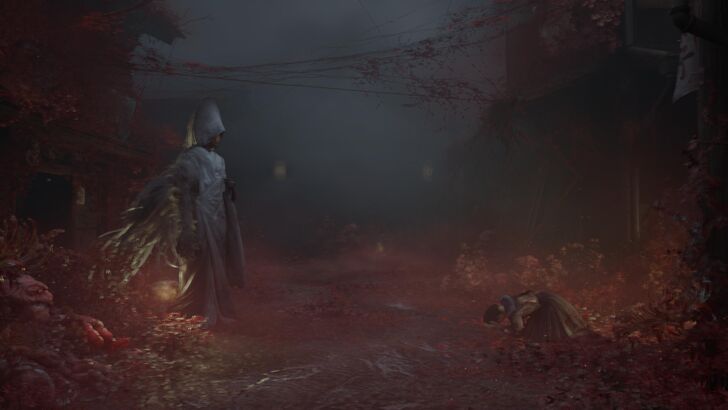
| Pros | Cons |
|---|---|
 Haunting and Unpredictable Story Modernized the Classic Silent Hill Survival Horror Formula Clever Puzzles Striking Visuals Haunting and Unpredictable Story Modernized the Classic Silent Hill Survival Horror Formula Clever Puzzles Striking Visuals |
Forced Enemy Clearing Encounters Occasional Technical Glitches |
Silent Hill f Review Story - 10/10
Silent Hill f delivers a haunting narrative that balances ambiguity with emotional weight, giving players just enough to piece together the truth without ever feeling spoon-fed. The characters are layered, their roles shifting as you interpret events, and the endings encourage multiple playthroughs to uncover new angles. It’s storytelling that lingers, unsettling yet compelling, and it never betrays the series’ psychological roots.
Silent Hill f Review Gameplay - 9/10
The gameplay loop feels both familiar and fresh, blending Silent Hill’s traditional puzzle-solving and exploration with new stamina, sanity, and combat systems. Combat itself is responsive, with satisfying dodges and counters, but the frequency of forced fights leans heavier than expected, especially for a series known for atmosphere over action. These moments don’t ruin the flow, but they can slow the pacing for players who crave the franchise’s quieter horrors.
Silent Hill f Review Visuals - 10/10
Grotesque yet purposeful, the visuals are some of the most striking the series has ever had, with flower-covered monstrosities that tap directly into psychological fears like trypophobia. Environments are rich in symbolism, from abandoned streets swallowed by blossoms to the unsettling nightmare realm of the cult. It’s not just horror, it’s visual storytelling that seeps under your skin, and every frame reinforces the atmosphere.
Silent Hill f Review Audio - 10/10
The soundtrack, guided by Akira Yamaoka’s signature touch, hits that perfect balance of dread and melancholy, pulling you deeper into the fog with every note. Voice acting across the cast feels authentic, heightening the emotional stakes of each scene. Combined with chilling sound design, the audio is both immersive and unforgettable.
Silent Hill f Review Value for Money - 9/10
At $69.99, Silent Hill f offers a lengthy, replayable experience with multiple endings, New Game+, and plenty of secrets hidden in its twisted world. The only drawback lies in its combat-heavy stretches, which can make parts of the game feel longer than necessary. Still, the sheer atmosphere, storytelling depth, and replay value make it worth the price of admission for horror fans.
Silent Hill f Review Overall Score - 96/100
Silent Hill f isn’t just a return—it’s a reinvention, keeping the DNA of the series intact while proving it can evolve in bold new ways. The storytelling, atmosphere, and audiovisual design are near flawless, with only minor bumps in pacing and technical polish holding it back from perfection. It’s an unforgettable horror experience, and easily one of the strongest entries in the franchise.
Silent Hill f Review Review: Horror in Full Bloom
Returning to the Fog
Trigger Warning: Silent Hill f contains graphic depictions of disturbing imagery including body mutilation, torture, and visuals that may trigger trypophobia. Beyond the gore, it also portrays heavy themes such as child abuse, bullying, and gender discrimination. This review will touch on these subjects and will contain images from the game. Reader discretion is strongly advised.
You step into a town, and almost immediately it feels wrong. That’s the thing about Silent Hill, it doesn’t just give you monsters—it gives you yourself, turned inside out. Every entry in the series begins the same way: a seemingly ordinary arrival in a cursed place, and then the slow unraveling of your nightmares, your guilt, your conscience, stitched into the fabric of the town. Many Silent Hill games end with multiple possibilities, some tragic, some bittersweet, and some downright bizarre. (The infamous alien endings, a long-running gag since the very first game that has become tradition, often granting players strange new weapons as a reward for surviving the madness.)
I’ve been here before. In fact, I’ve been here my whole life. I’ve played every Silent Hill since I was a kid, growing up in lockstep with the series as it twisted, reinvented itself, and occasionally lost its way. I know the inside jokes, the hidden references, the DNA of what makes Silent Hill tick. And I also know that Silent Hill is never just about monsters lurking in the fog. It’s not your traditional horror series. It’s about tearing you apart from the inside, making you question what you’re seeing, and then reminding you that sometimes the scariest place isn’t the town—it’s your own mind.
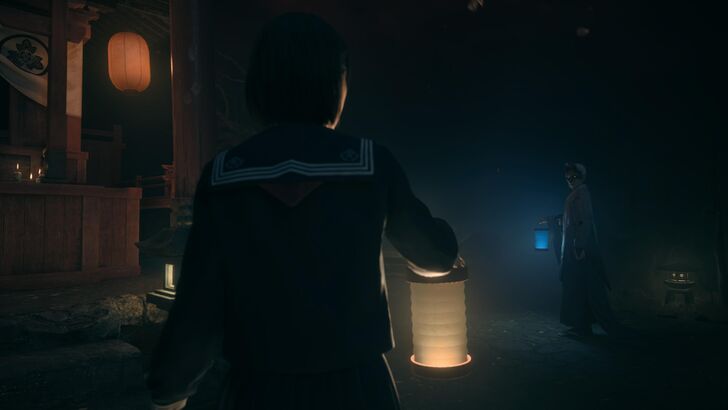
Silent Hill has always been designed to alter your mind, and Silent Hill f continues that legacy. I’ve spent almost my entire life trying to piece together what this series means—why it haunts me in ways no other horror game does. That’s why Silent Hill f feels like more than just a revival. It’s a new chapter in that long, unsettling conversation the series has been having with us for decades, one that drags the horror into a different time, a different place, but never lets you escape what Silent Hill really is.
Wrapped in Fog and Flowers
Silent Hill has always been about place as much as people, and Silent Hill f takes us somewhere the series has never gone before: 1960s Japan. Specifically, the fictional town of Ebisugaoka. It’s a quiet place, traditional and unassuming—until the fog rolls in and suddenly that stillness becomes suffocating. For the first time, the series drags its horrors eastward, layering Silent Hill’s signature dread over the muted palette of postwar Japan.
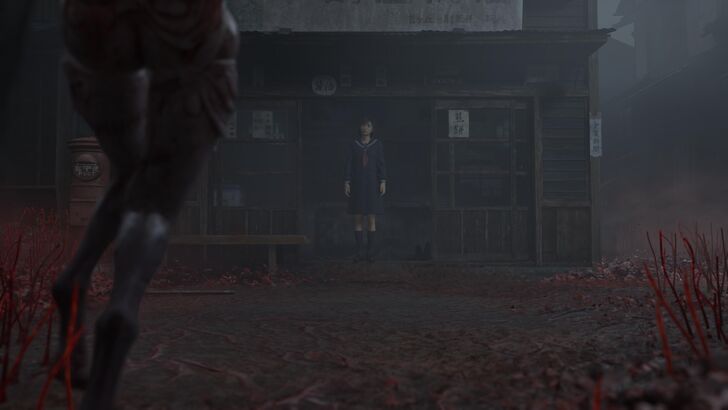
We follow four teenagers: Hinako Shimizu, our reluctant protagonist; Sakuko Igarashi, her cheerful best friend; Rinko Nishida, with her class-president aura; and Shu Iwai, Hinako’s partner in crime. They’re ordinary kids on an ordinary day, until it all fractures. Hinako, fleeing from home, wanders into town and seeks out her friends. They regroup in a familiar candy store, but just as quickly, everything changes. The fog creeps in. The world shifts. And, as Silent Hill always does, reality bends into nightmare with no explanation.
What follows is both terrifying and strangely beautiful. The gore here is different—botanical, blooming, invasive. Instead of blood-soaked walls or icy labyrinths, you’re stalked by flowers. That opening chase scene? It nearly broke me. I had flashbacks to Silent Hill: Shattered Memories, the game I couldn’t finish as a child because being chased by ice froze me in panic. Now, years later, I’m running from blossoms instead, and I finally got my full-circle moment: I finished the game. (Sure, yes, I survived other chase sequences in the series—looking at you, haunted house in SH3—but let me have this full-circle moment.)
For fun, I even let it catch me. Big mistake. If you’ve got trypophobia, good luck. Watching those blossoms consume me left me itching just writing this down. Flowers should be comforting, right? Not here. Not in Silent Hill.
The fog scatters the group, leaving you to crawl through Ebisugaoka’s narrow streets and worn-down corners, trying to find your friends. It’s a trek across a town you thought you knew, turned into something alien and hostile.
Monsters and Metaphors
But Silent Hill isn’t just about where you are, it’s about why. And that’s where Silent Hill f excels.
Hinako’s story hits hard. She’s fragile, victimized, and yet… sometimes the game makes you wonder, "Is she really the victim? Or is she something else entirely?" There are moments where the lines blur, where guilt, abuse, and identity intertwine so tightly that I honestly didn’t know who to root for. The writing thrives in that ambiguity. It’s not neat, it’s not spoon-fed, and it’s definitely not going to hand you a James-Sunderland-style revelation. Instead, it gives you scattered pieces and whispers so you can connect the dots yourself. You’ll leave with theories more than answers, which, in its own way, is exactly what Silent Hill has always been.
Of course, the series wouldn’t be complete without a cult. But don’t expect another Claudia-level baby-eating, apocalypse-starting zealot (looking at you, SH3). Here, the cult is a sly, fox-masked, and disturbingly focused on Hinako. Why her? You’ll need to play to find out, but I’ll say this much, once the truth clicks, it’s devastating.

Then there are the flowers themselves, red spider lilies, symbols of death and the afterlife in Japanese culture. Their use here isn’t just aesthetic; it’s thematic. They root the game’s horror in something culturally resonant while still keeping it universal.
The enemies? Classic Silent Hill in design and movement, but filtered through this new lens. A scarecrow that jerks like the infamous nurses—maybe a symbol of manipulation or lifeless conformity. Doll amalgamations—corrupted innocence, frozen smiles twisted into grotesque masks. And one I’ll never forget: a grotesque pregnant figure that attacks by hurling its offspring. It’s a chilling, if not heavy-handed, commentary on how women are often reduced to nothing more than vessels for childbirth.
Ebisugaoka may be fictional, but the setting, the enemies, the characters, it’s all layered metaphor, as Silent Hill has always been. A vibe. A nightmare. A mirror.
The Loop of Fear
At its core, Silent Hill f still plays like Silent Hill. The familiar loop is there, wandering the fog-soaked town, searching for your scattered friends, stumbling into horrors you wish you hadn’t found, and ultimately trying to escape. But here’s the twist, it’s not just about the town anymore. Ebisugaoka is already crawling with creatures and riddled with tentacle-like flowers. The whole place is hostile from the start. The real shift happens when you’re pulled into a spiritual nightmare realm, where the cult waits.
That jump between the town and dark side has always been a hallmark of the series, but here it feels fresh. Instead of a full town flipping into hell, you’re transitioning between two kinds of danger, the grounded dread of your own home streets, and the abstract, spiritual terror of the cult’s world. And the pacing? Surprisingly smooth. You don’t always notice the repetition—walk, explore, puzzle, chase scene, boss fight—because the game spaces everything out in a way that keeps you off-balance.
Sanity, Stamina, Survival
Where Silent Hill f really reinvents itself is in combat. Traditionally, you could get away with running from most encounters, dodging and weaving until you found safety. That option still exists—you can slip away by breaking line of sight—but this time, the game often locks you in. Sometimes you simply can’t move forward without clearing out every monster in your path. And these aren’t bosses; they’re just regular nightmares standing between you and progress.
To survive, you’re juggling three resources: health, stamina, and sanity. Health is obvious. Stamina fuels dodges, heavy attacks, and focusing. Pull off a perfect dodge, and you’ll restore stamina completely—a mechanic that rewards precision instead of panic. Heavy attacks hit harder at the cost of stamina, while focusing lets you sacrifice sanity to unleash devastating blows. Then there are counterattacks, perfectly timed parries triggered by visual cues that can turn the tide of a fight.
The whole system feels shockingly soulslike. Silent Hill has always been about clunky, desperate survival combat—swinging pipes like they weigh a hundred pounds. Here, there’s a rhythm. Risk-reward. Timing. It’s still suffocating, still terrifying, but it’s also mechanically satisfying. You’ll find yourself on edge not just because of what you’re fighting, but because of the constant decision-making behind every swing, every dodge, every use of sanity. It’s Silent Hill, but rebuilt on a new foundation of combat tension.
Puzzles, Maps, and Offerings
But let’s be real, Silent Hill without puzzles isn’t Silent Hill. Thankfully, the series’ trademark brain-teasers are in Silent Hill f, and they’re as deliciously maddening as ever. You’ll still be scouring your environment for cryptic notes, strange objects, and little connections that make your brain spark. The difference? You no longer need to keep a notebook at your side like in the old days. The game conveniently compiles all your puzzle clues into your journal. It feels modern without losing the charm of piecing things together yourself.
Navigation is still also clear. The map fills in automatically as you explore, marking objectives, locked doors, and unvisited areas. It’s a quality-of-life feature that keeps you from spiraling into frustration, while still letting you get lost in the best possible way.
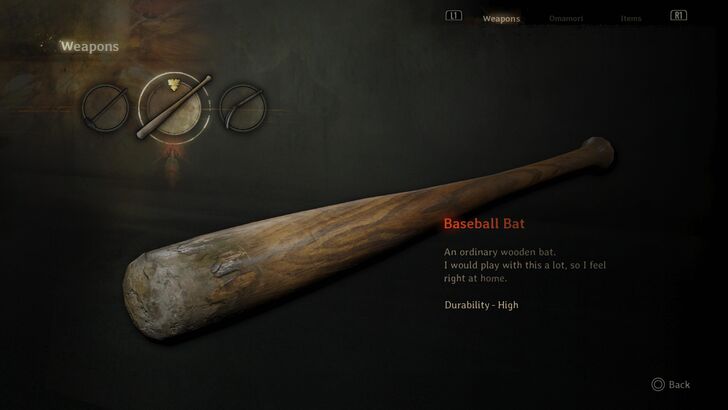
When it comes to items, you can carry up to three weapons, alongside health items and special consumables. Those special items? They’re versatile—healing you, restoring stamina or sanity, or serving as offerings at Hokoras (shrine-like save stations). And here’s something new, build up enough faith at these stations, and you can purchase Omamoris, wearable charms that give you passive boosts. It’s a clever system that blends traditional Silent Hill survival mechanics with cultural authenticity, grounding the game in its Japanese setting.
When Combat Stops Being the Scare
Now, I know everyone’s experience with Silent Hill f will vary. Some will come for the story, some for the atmosphere, others for the sheer thrill of surviving whatever monstrosity the game throws at them. And yes, objectively Silent Hill f is a great game. But for me, there’s one thing that stood out as a sore spot: combat.
Now, before you grab your pitchforks, hear me out. It’s not that combat itself is bad. In fact, it’s solid—tense, crunchy, even thrilling! Boss fights especially give you those "barely made it" moments, with health items nearby if you’re desperate. The issue is simply the amount of it.
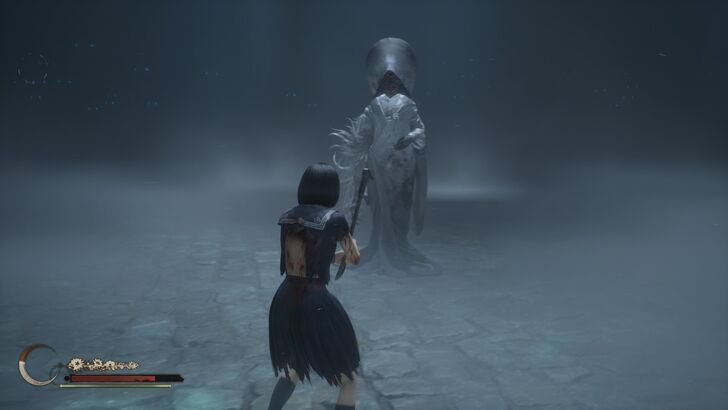
Compared to any other Silent Hill I’ve played, this one leans heaviest on combat. That’s fine if that’s your cup of tea—but some of us don’t play Silent Hill for its action. We come for the dread, the exploration, the slow-burn psychological terror. And when the game locks areas behind mandatory monster-clearing, that tension turns into routine. Scary becomes tedious the third time you’re forced to wipe out an area before moving on.
And the restrictions don’t help, three weapons max, most of which break after repeated use. You can fix them with tool kits, but those grew scarce for me toward the latter half of the game. I ended up hoarding them, which meant more worrying about durability than what was lurking in the fog. Honestly, if forced combat were dialed back by even a quarter, I think the pacing would’ve been tighter and the horror sharper.
So if you’re here for the atmosphere but don’t fancy a lot of action, just be prepared. Silent Hill f won’t always let you run.
Ghost in the Machine
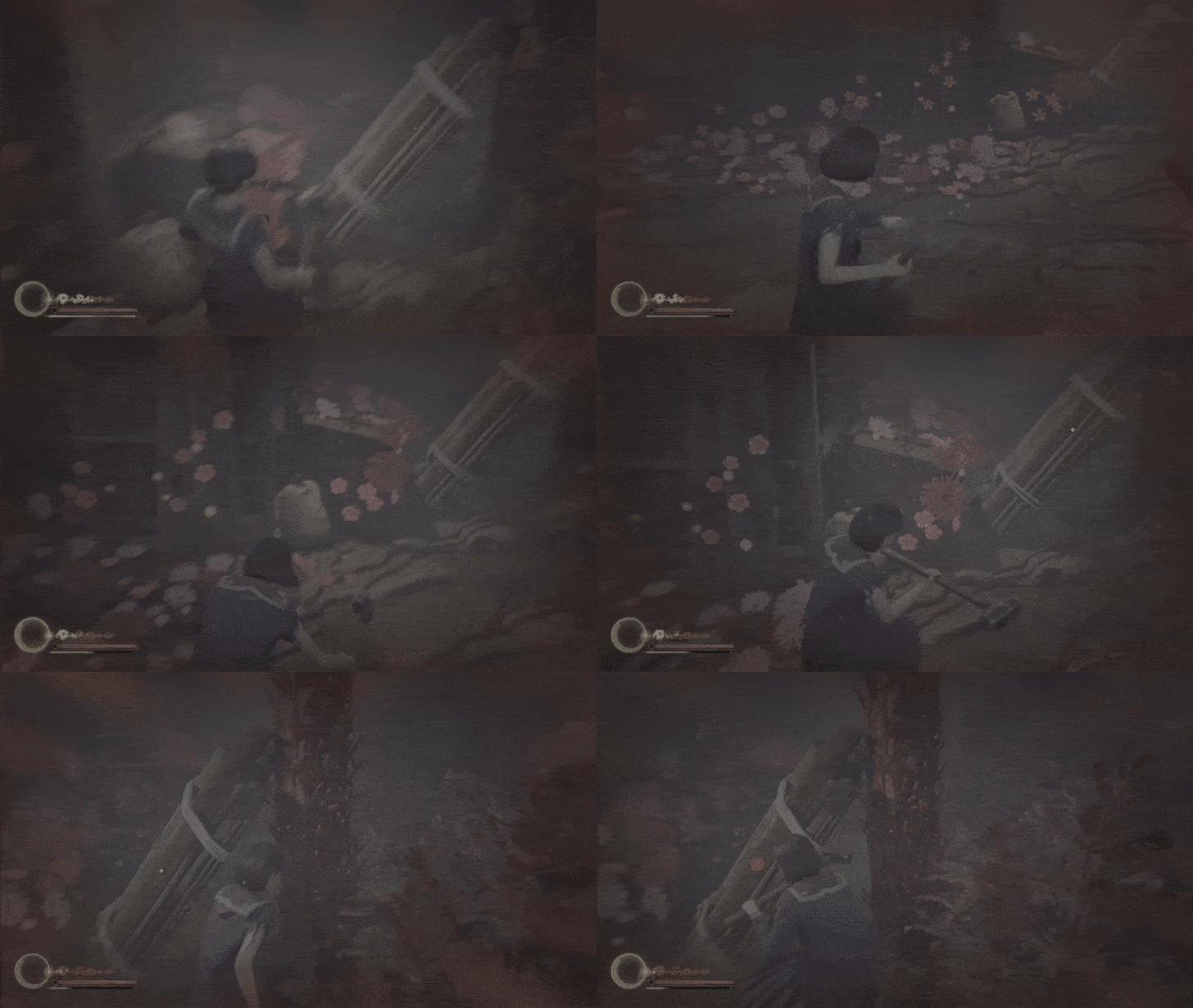
But the thing that truly broke immersion for me wasn’t the combat—it was the glitches. Now, maybe this was just my copy, but I’d be remiss not to mention it.
There were times I’d press focus and nothing would register… until after combat ended, when suddenly the game would decide to queue up everything I’d been pressing earlier. Other times, focus would just turn on by itself, like the game was possessed. Creepy in concept, frustrating in execution.
The worst was during a chase sequence. I survived by sheer dumb luck—dodging out of danger—because all three of my weapons happened to be sledge hammers. And when you’re holding a two handed weapon, you stop moving when you’re focusing. Not ideal when something is clawing its way toward you.
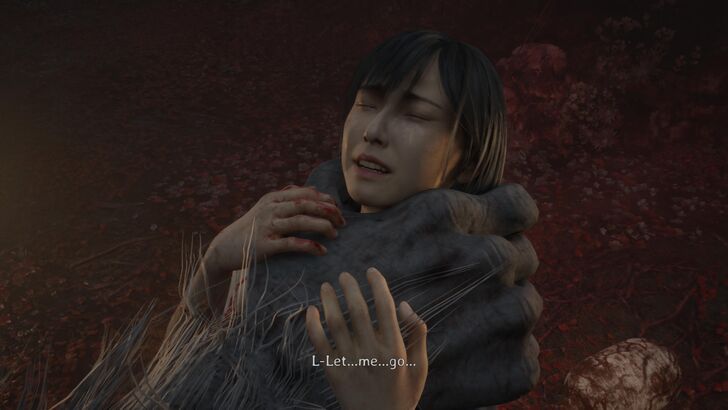
And no, it wasn’t my hardware. I actually swapped to a second controller just to be sure, but the glitch persisted. Both controllers worked fine on other games, so the problem was definitely in Silent Hill f, not on my end.
Now again, maybe this is just me. Maybe my copy had a bad day. But if this turns out to be universal, then I really hope the team patches it quickly. The official release is coming up on the 25th, and nothing kills the mood of Silent Hill faster than realizing you’re fighting your controller instead of the monsters.
Stories Meant to Haunt You
Now, I know I just finished picking at Silent Hill f’s rough edges, but let me be clear—when this game gets it right, it really gets it right. And nowhere is that more obvious than in its storytelling.
Silent Hill f doesn’t just lay out a neat, linear plot for you to follow. Instead, it walks that razor-thin line between clarity and ambiguity, showing you just enough to pull you in while leaving the most unsettling truths for you to piece together on your own. It’s a design choice that turns every strange shrine, every unsettling note, every whispered line of dialogue into something that might matter—or might simply haunt you as unanswered noise.

Then come the endings. Multiple outcomes that don’t just tack on alternate scenes but redefine your perspective of the whole experience. One conclusion leaves you hollow, another forces you to question what you saw, another might even tempt you to feel relief. And in true Silent Hill fashion, none of them feel final. Instead, they push you toward New Game+, daring you to go back in, to notice what you missed, to interpret it all differently with fresh eyes.
It’s that elusive quality the series has always mastered. Silent Hill has always been about the interpretation as much as the plot, and Silent Hill f might be one of the best executions of that philosophy.
Beauty in the Grotesque
And then there are the visuals. Silent Hill f doesn’t pull its punches, it aims straight for your deepest discomforts. Now, I’ve got a strong stomach for gore, I’ve played enough horror games and watched enough horror films to sit through blood and guts without batting an eye. But this? The trypophobic, fungal bloom of flowers breaking out of flesh, it’s a whole different level.
The genius is that the grotesque never feels like shock value. The horror is symbolic. Every bloom, every distortion of flesh and bone, ties back to trauma, to shame, to the fragility of the human body and psyche. It’s not gore for gore’s sake, it’s storytelling through disgust. And it works.
The town itself reflects that same oppressive beauty: fog-choked streets, shrines swallowed by vines, tunnels that feel like they’re closing in on you. You don’t just play Silent Hill f—you’re swallowed by it.
The Sound of Despair
And of course, what’s Silent Hill without Akira Yamaoka? The man’s fingerprints are all over this soundtrack, and from the very first note, you know you’re back in familiar, terrifying territory. The score is equal parts sorrowful and suffocating, tugging you between despair and a strange, almost masochistic curiosity. One track will drag you into the dirt, the next will keep you moving forward even though you know you shouldn’t.
But the brilliance isn’t just in the music, it’s also in the soundscape. Footsteps echo differently in the nightmare realm than in the town. Something rustles in the distance, but you never know if it’s behind a wall or just in your head. Add in voice acting that actually sells fear, desperation, and quiet resolve, and you’ve got an audio design that doesn’t just support the game—it defines it.
Silent Hill has always made you hear the horror before you see it, and Silent Hill f carries that legacy with terrifying grace.
Loop That Keeps You Hooked
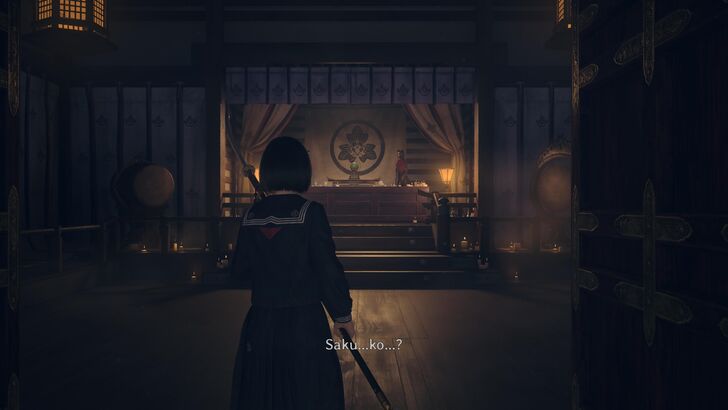
And while I’ve talked your ear off about story, visuals, and sound, it wouldn’t be fair to leave out the part where Silent Hill f actually shined the most, the gameplay itself.
Yes, the combat can be a little heavier than I’d like (we’ve been over that), but the systems surrounding it—the things you do moment to moment—are where the game really shines. The sanity mechanic, for instance, is such a clever addition. It isn’t just another bar to watch; it’s a living gauge of your stability in this nightmare. When your sanity is high, you feel sharper, more capable in combat. When it dips, the world feels heavier, crueler, and suddenly even small encounters spiral into panic.
Then there are the puzzles, and thank god Konami didn’t sand them down. They’re still unapologetically Silent Hill, cryptic riddles, twisted logic, that moment of triumph when you finally notice the detail you’ve been missing. The journal system is a godsend, neatly tracking every scrap of information you’ve collected without stripping away the satisfaction of solving it yourself. It feels like an update made with love for modern players, not just convenience.
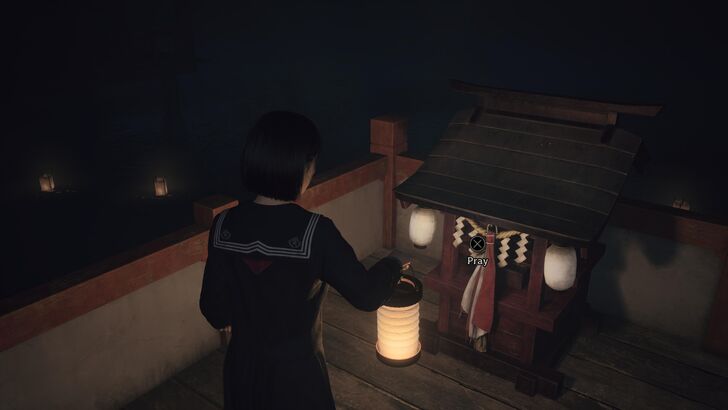
And don’t get me started on the Hokoras. Those shrines are so much more than save points—they’re little breathing spaces, moments to collect yourself, to turn in offerings, to decide what Omamoris you’ll carry with you into the next trial. It’s such a small thing, but it adds layers to the rhythm of play: push forward, retreat, regroup, and then step back into the nightmare with new resolve.
It all comes together into a loop that never gets stale. Explore, survive, piece things together, pray you’ve prepared enough for what’s next—and then dive back in. Classic Silent Hill bones, wrapped in fresh muscle.
Is Silent Hill f Review Worth It?
Step Into the Fog—You Won’t Regret It
Silent Hill f isn’t just another revival of a classic horror franchise—it’s proof that the series still has room to grow and isn’t afraid to change. While the DNA of Silent Hill is still very much here, this entry revolutionizes how it’s expressed, weaving in new mechanics, a fresh setting, and modern sensibilities without losing the heart of what makes the series unforgettable.
Yes, I had my gripes. The combat leaned a little too hard into action territory, and the glitches made me want to throw my controller once or twice. But when the dust settled, those were bumps in an otherwise unforgettable nightmare.
What really matters here is the story that refuses to leave your head, the grotesque yet meaningful visuals, the music that slithers under your skin, and the gameplay loops that keep you glued to the controller. These are all handled with the kind of care you’d expect from a team who knows what Silent Hill is. It isn’t cheap scares, it’s a haunting that lingers.
At $69.99, it’s not a small ask, but the value is undeniable. Between multiple endings, New Game+, and the sheer depth of its atmosphere, you’re not just buying a horror game—you’re investing in an experience that’ll stay with you even after the fog has settled.
So here’s my final word, Silent Hill f is worth every penny. If you’re brave enough to step into the fog, you’ll find a game that not only honors the legacy of Silent Hill but also proves the series can still evolve. And trust me, once you’ve seen what flowers can do here, you’ll never look at a garden the same way again.
| Digital Storefronts | |||||||
|---|---|---|---|---|---|---|---|
| Steam |
Epic |
PSN |
Xbox |
||||
| $69.99 | |||||||
Silent Hill f Review FAQ
How Do You Counter in Silent Hill f?
A visual cue appears when an enemy is vulnerable to a counter. Once you see it, press the heavy attack button to strike back. If you hold Focus, these visual cues last longer, giving you more time to react.
Is Silent Hill f’s Story Connected to the Mainline Games?
While Silent Hill f is part of the mainline franchise, its story isn’t directly tied to the original town of Silent Hill, where most past protagonists were drawn. Instead, the same mysterious force that haunts Silent Hill manifests in the town of Ebisugaoka, where Hinako’s story unfolds.
Game8 Reviews

You may also like...
 |
Silent Hill 2 Remake Review Horror, Survival |
 |
Post Trauma Review Adventure, Horror, Puzzle, Simulation |
 |
KARMA: The Dark World Review Horror, Adventure |
 |
Slitterhead Review Action, Adventure, Horror |
 |
Silent Hill f News |
Silent Hill f Review Product Information
|
|
| Title | Silent Hill f Review |
|---|---|
| Release Date | September 25, 2025 |
| Developer | NeoBards Entertainment |
| Publisher | Konami |
| Supported Platforms | PC, PS5, Xbox Series X|S |
| Genre | Survival Horror |
| Number of Players | 1 |
| ESRB Rating | M |
| Official Website | Silent Hill f Review Website |