
| Lost Soul Aside | |||
|---|---|---|---|
| Release Date | Gameplay & Story | Pre-Order & DLC | Review |
Lost Soul Aside Review Overview
What is Lost Soul Aside?
Lost Soul Aside is an RPG hack and slash game developed by Ultizero Games and published by Sony. It was released for the PC and PlayStation 5 on August 29, 2025. The game first started production as an indie project by sole developer Bing Yang. Gameplay footage of his demo went viral online, and PlayStation took notice, granting him resources such as a full development team, which would become Ultizero Games. The game has been said to take large inspiration from Final Fantasy XV and Devil May Cry.
Lost Soul Aside stars Kaser, who is on a quest to rescue his sister in the war-torn world they live in. On his adventures, Kaser is fused with a mysterious symbiotic entity known as the Arena, which grants him various skills, such as summoning a multitude of weapons at his disposal. Using the power of the Arena, which shows itself as a head of a wolf, Kaser encounters different enemies and powerful bosses and must go through them all to save his sister.
Lost Soul Aside features:
⚫︎ Action Adventure
⚫︎ RPG
⚫︎ Hack and Slash
⚫︎ Third Person
⚫︎ Story Driven
⚫︎ Fantasy Setting
⚫︎ 3D
For more gameplay details, read everything we know about Lost Soul Aside's gameplay and story.
| Digital Storefronts | |||||
|---|---|---|---|---|---|
 Steam Steam |
 PlayStation PlayStation |
||||
| Price | $59.99 | ||||
Lost Soul Aside Pros & Cons
| Pros | Cons |
|---|---|
 Combat is Fast, Flashy, and Full of Finesse Stellar Character Designs Fun Boss Fights Combat is Fast, Flashy, and Full of Finesse Stellar Character Designs Fun Boss Fights |
Technical Issues and Bugs Across Performance, Audio, and Visuals A Disspointing Story with Underdeveloped Characters Horrible Voice Acting Lack of Difficulty, Weak AI, and Repetiive Gameplay Loop |
Lost Soul Aside Story - 5/10
Unfortunately, the weakest aspect of Lost Soul Aside is its story. While the game introduces interesting characters and a plot that starts off with promise, it never quite reaches its full potential. The writing is all over the place, with awkward dialogue and questionable narrative choices that left me wondering if the supposed Final Fantasy inspiration was more surface-level than substantive.
Lost Soul Aside Gameplay - 8/10
Lost Soul Aside features flashy, engaging combat that encourages experimentation, with boss battles that can deliver thrilling tests of skill. Unfortunately, the weak AI, middling exploration, barebones puzzles, and an overall lack of challenge often drag the experience down, making it feel repetitive over time.
Lost Soul Aside Visuals - 7/10
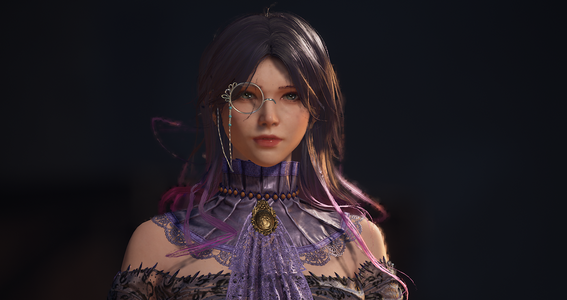
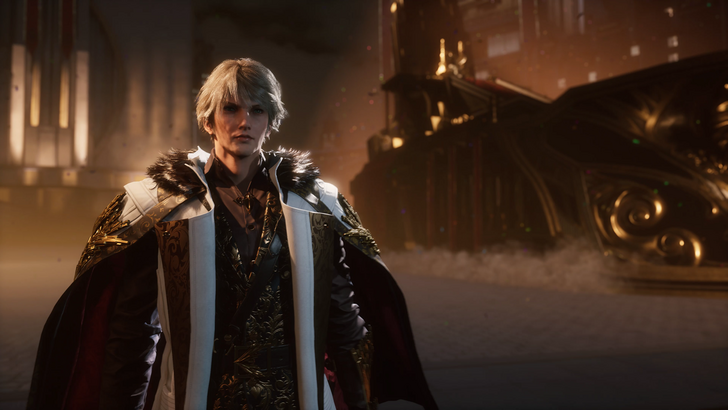
I love the character designs in this game, and it’s clear how much Final Fantasy has influenced them. From the over-the-top, layered fashion to the spiky hair, it feels straight out of Yoshitaka Amano’s sketches. Unfortunately, these artistic strengths are weighed down by technical issues, including frequent FPS drops, stuttering, bugs, and other distracting visual problems.
Lost Soul Aside Audio - 6/10
Lost Soul Aside earns points for its soundtrack, which is often grand and bombastic, fitting the scale of its battles and world. However, the impact is undercut by poor audio mixing. Abrupt transitions and awkward cuts frequently break immersion, making it difficult to fully appreciate the music. The English dub suffers from similar problems. Aside from a few solid performances, most of the voice acting is straight-up horrible.
Lost Soul Aside Value for Money - 6/10
Lost Soul Aside is unfortunately not worth its $60 price tag. Despite showing flashes of potential, it’s held back by too many flaws and lacks the level of polish expected from games at this price point. While the inclusion of New Game Plus is a nice touch, the weak story, performance hiccups, and overall rough edges make it difficult to justify replaying. At best, this is a title worth revisiting once it’s been heavily patched—or when it inevitably drops to a sale price.
Lost Soul Aside Overall Score - 62/100
Lost Soul Aside has been hyped for years as Yang Bing’s passion project, and you can definitely see the love that went into it. The flashy combat and stunning visuals hit some really high points, but the whole package feels like it could’ve used another year of polish. Performance hiccups and a pretty flat story, unfortunately, keep it from reaching its big ambition of being the “Final Fantasy of China.”
Lost Soul Aside Review: A Flawed Fantasy
A Passion Project Turned into a High-Budget Action RPG Game
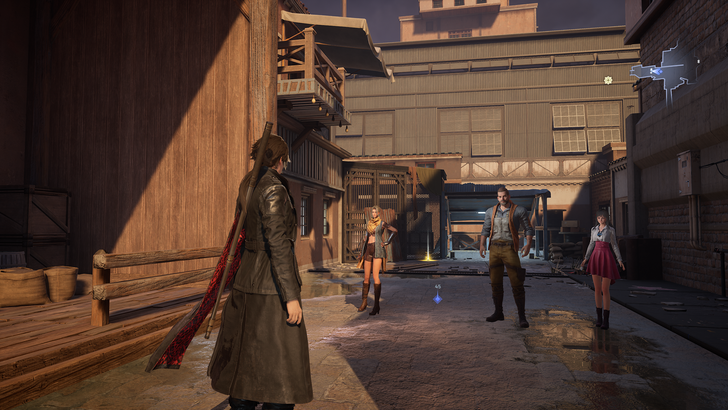
Before we start, I want to give credit where it’s due: congratulations to Yang Bing, the creator of Lost Soul Aside. If you didn’t know, this project started as a solo effort back in 2014 before catching the attention of Sony Interactive Entertainment, which later partnered with him. Since then, the team has expanded significantly, with development now handled by Ultizero Games and publishing by Sony Interactive.
This has always been a passion project for Bing, who has openly shared that Lost Soul Aside was inspired by Final Fantasy, particularly how the series blends fantasy with realism. He’s also cited Bayonetta, Ninja Gaiden, and Devil May Cry as influences for the game’s fast-paced combat. Those inspirations shine through clearly. Lost Soul Aside feels like an amalgamation of them all, delivering an action RPG hack-and-slash experience where you play as Kaser on a quest to save his sister. With that in mind, let’s start with the story.
Lost Soul Aside’s Story Starts Off Intriguing
The influence of Final Fantasy is unmistakable here. From the story beats to the character archetypes, Lost Soul Aside feels heavily inspired by that series. Kaser, the protagonist, immediately reminded me of Cloud, Noctis, Squall, and Clive. His design and personality echo the familiar FF mold of the quiet, stoic hero with a good heart who’s driven to protect others. His personal quest is to rescue his sister, Louisa’s soul, from the Voidrax, mysterious invaders from across dimensions.
The game starts on an intriguing note, with Louisa dreaming of the Voidrax, before shifting to the capital city, where Kaser reunites with her and their friends. Together, they are part of the GLIMMAR resistance, a group fighting back against the oppressive Empire, which feels strongly reminiscent of Final Fantasy 12 or even 7. Early on, you meet key characters like Selene, who has cared for Kaser and Louisa since childhood.
On that same day, the team plans to disrupt an imperial parade, but everything goes sideways when the Voidrax crashes the event. In the chaos, Kaser is separated from Louisa and forced to fight these otherworldly creatures. Eventually, he encounters a mysterious being called Lord Arena, who grants him incredible powers and bonds with him. From then on, Kaser sets out to find Louisa while traveling across dimensions, battling the Voidrax, and forming uneasy bonds with his new ally.
I really like how the story starts off more personal than epic. Rather than centering on saving the world, it focuses on Kaser’s determination to save his sister, and that smaller, emotional focus makes it more relatable. The character dynamics reinforce this, from his protective yet respectful bond with Louisa, to his admiration for Selene, to his evolving camaraderie with new allies like Gethya and Zena. The interplay between Kaser and Arena is a highlight so far, their contrasting personalities creating an almost sibling-like banter that adds levity to the otherwise somber narrative.
The Story is Undermined by Horrible Writing
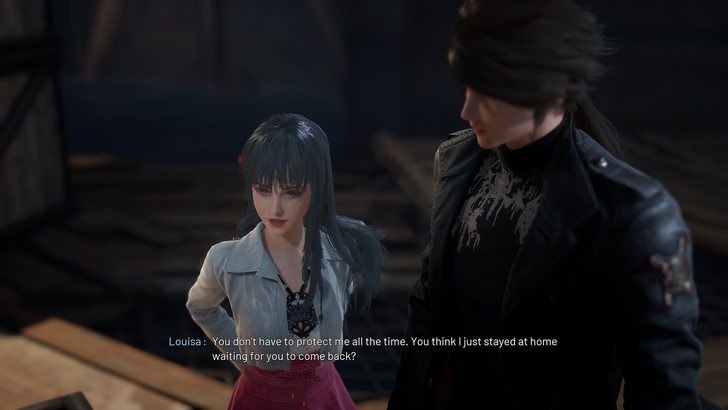
After finishing Lost Soul Aside, I have to admit the game ultimately doesn’t live up to its promising start. What begins with an intriguing premise quickly devolves into a generic fantasy storyline. That in itself wouldn’t be a major problem, but the execution is weighed down by poor writing, stilted dialogue that often feels unnatural, underdeveloped characters, and pacing issues so severe they sap the story of any momentum. As a result, even key emotional moments fall flat. Louisa’s soul being stolen, for instance, should have been a dramatic turning point, but the lack of meaningful buildup to her relationship with Kaser makes the scene feel hollow rather than impactful.
The game does include a glossary to expand on the lore and provide context, which on paper is a nice touch. However, the heavy reliance on it reveals a deeper issue. Important details are often introduced without explanation, leaving players confused unless they stop to dig through menus. Take Kaser and Louisa, for example. Their backstory, which reveals they were orphans who later joined a rebel alliance, is buried in the glossary rather than properly conveyed through the main story.
It’s a genuinely interesting detail that could have added depth to both characters and their relationship, but instead it feels like an afterthought. Even the rebel alliance itself is glossed over, with little meaningful context provided during the narrative. This tendency to skip over essential details is frustrating because these are the kinds of elements that should drive the worldbuilding and enrich the storytelling. Instead, they’re left to optional text, which robs the main narrative of weight and immersion. Worldbuilding should unfold naturally through the narrative and character interactions, not be relegated to optional text dumps.
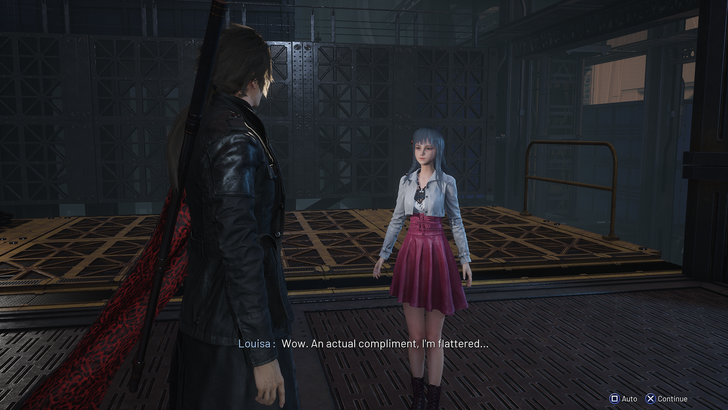
The dialogue itself is another major weakness, often coming across as stiff and unnatural. Whether this stems from translation issues or simply weak writing, the effect is the same: conversations lose their flow and emotional impact, undermining moments that should feel engaging.
What makes it even more disappointing is that the cast initially shows real promise. Their introductions are strong, and at first, I was intrigued to see where their arcs might lead. Unfortunately, most of these storylines either go nowhere or remain painfully surface-level. Without going into spoilers, it’s safe to say that if you’re hoping for the kind of layered, character-driven storytelling that Final Fantasy is known for, you won’t find it here. Instead, the writing often feels amateurish, squandering the potential of characters who deserved far more depth and development.
Hack and Slash Combat is Fast-Paced and Highly Rewarding
Despite what some have been saying, Lost Soul Aside is not a Soulslike in any meaningful way. The only real similarity is the presence of a stamina system tied to dodging and blocking. Beyond that, the game is firmly in the vein of fast-paced action titles like Bayonetta or Devil May Cry. And honestly, that’s a good thing, because the combat is shaping up to be one of its strongest features.
The game thrives on stylish action. Its combat system is easy to pick up but difficult to master, encouraging players to experiment with weapons, abilities, parries, and enemy patterns to bring down both monstrous creatures and towering bosses. Kaser has access to a wide arsenal, including a sword, greatsword, poleaxe, and scythe, all of which can be equipped and switched on the fly. Each weapon feels distinct, and the ability to seamlessly swap between them adds depth and variety to encounters.
Special mechanics further elevate the combat. Perfect dodges and blocks reward precision with Unbound Energy, which fuels counterattacks and empowers Kaser’s abilities. The Burst Purist mechanic allows for high-damage strikes when timed correctly, rewarding sharp reflexes. Players can also activate up to three Arena Powers once their gauge is filled, offering powerful techniques that refresh as damage is dealt. On top of that, the Fusion Merge system lets Kaser temporarily enter an empowered state, enhancing his attacks and adding dramatic flair to battles.
What makes this all work is the synergy between weapons, abilities, and counters. Even with basic light and heavy attack strings, there’s room for creative combos, and layering in perfect dodges, parries, and powers keeps combat constantly engaging. Equipment and accessories also play a big role, allowing players to tweak their style with various passives and bonuses. The result is a system that feels approachable at first but reveals a wealth of depth for those who want to master it.
The Game is Incredibly Easy
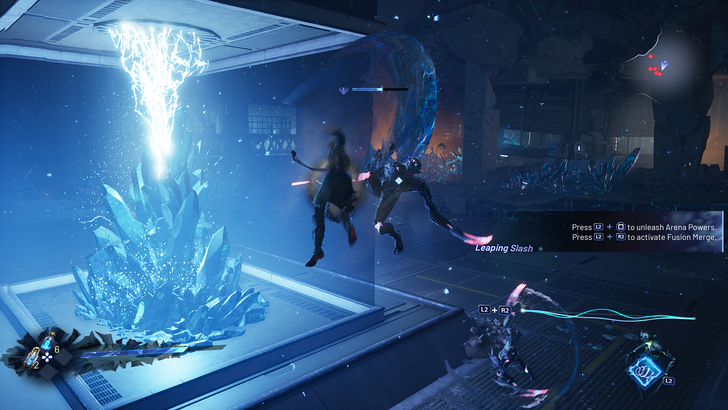
As much as I enjoyed the combat, it’s far from flawless. One of the biggest issues is the difficulty, or rather the lack of it. Enemies are incredibly easy, often taking too long to attack and relying on recycled patterns that are simple to read, dodge, or block. Healing items drop so frequently that the threat of defeat almost never feels real. To make matters worse, the game offers no selectable difficulty modes, which limits how challenging or engaging it can be for different types of players.
This lack of challenge feeds into broader problems with the gameplay loop. After a while, combat starts to feel repetitive, not only because of predictable enemies but also because the world itself, while visually striking at times, feels underdeveloped. Exploration rarely rewards curiosity, crafting is trivial thanks to abundant materials and money, and puzzles are insultingly easy, usually boiling down to destroying a crystal to unlock the next area. Even more baffling is the complete absence of side quests, which strips away a layer of depth you’d expect from an RPG.
Performance issues only make things worse. Frame rate drops, stuttering, and even janky movement while simply walking can break immersion. The combat, while flashy, also lacks a meaningful skill ceiling. Unlike Devil May Cry or Bayonetta, which reward creativity through stylish ranking systems, Lost Soul Aside gives little incentive to experiment. You can get by spamming a handful of moves, which makes battles feel shallow instead of empowering.
Boss Battles are a Spectacle, But Only One Boss Was Really a Challenge
Another thing worth noting regarding combat is that the boss battles in this game are real spectacles. I love how they make grand entrances, each with their own distinct fighting style. Unlike the standard NPC Voidrax, bosses feel noticeably tougher and smarter, really pushing your dodging and blocking skills to the limit. Sometimes you’ll even be fighting them alongside swarms of Voidrax, which raises the intensity even further. I hope this trend continues as I progress, because so far the bosses have been true standouts.
The first boss is definitely the weakest of the bunch, but still a cool introduction. He’s a hulking, muscle-bound Voidrax wielding a massive sword, and when he rushes in swinging, he can shred your health bar in seconds. Their designs are just as impressive as their mechanics, making each encounter feel memorable.
The only boss that truly offered any challenge was the second boss. While I enjoyed the spectacle of these fights, they were disappointingly easy overall, making this one of the least demanding hack-and-slash experiences I’ve played.
English Voice-Acting is Horrible
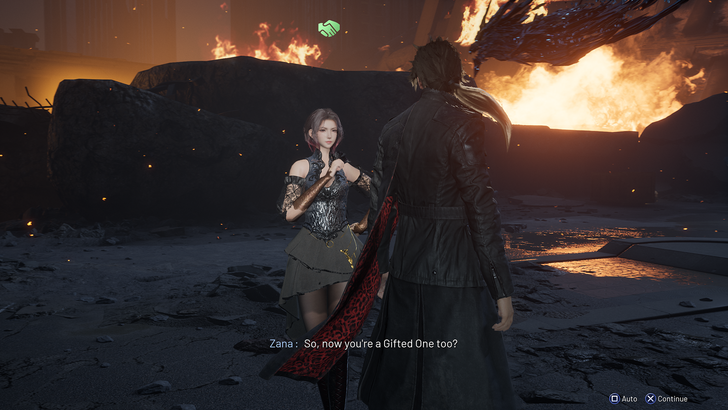
The English performances have been so underwhelming. Whether due to weak voice direction or inexperienced actors, much of the delivery comes across as flat and stiff. The protagonist, Kaser, is the most noticeable example. There are moments where he manages to convey emotion convincingly, but too often it feels as though he’s simply reading the lines without weight or personality. This lack of consistency makes it harder to fully connect with his character.
Unfortunately, the issue isn’t limited to him or background NPCs. Even important characters, like Selene, sometimes fall into awkward or jarring deliveries that break the immersion. That said, there are bright spots. Arena, for instance, is a standout. His arrogant and prideful tone feels natural and injects energy into his exchanges with Kaser, often elevating the scene.
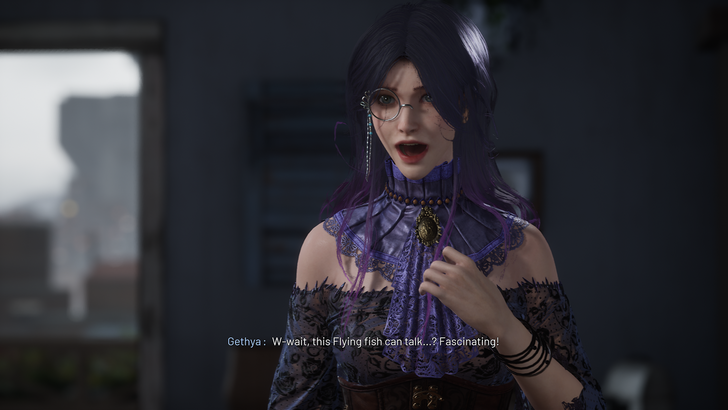
Apart from the voice acting impacting the story, it also weakens the characters. The designs themselves are fantastic—I’m especially a fan of Gethya’s look, and thankfully, her voice actress delivers a solid performance that matches the character. But with others, like Kaser, there’s a noticeable disconnect. His design is striking and memorable, yet the inconsistent delivery of his lines keeps him from fully living up to the potential of his visual presence.
A Gorgeous Game Riddled with Technical Issues
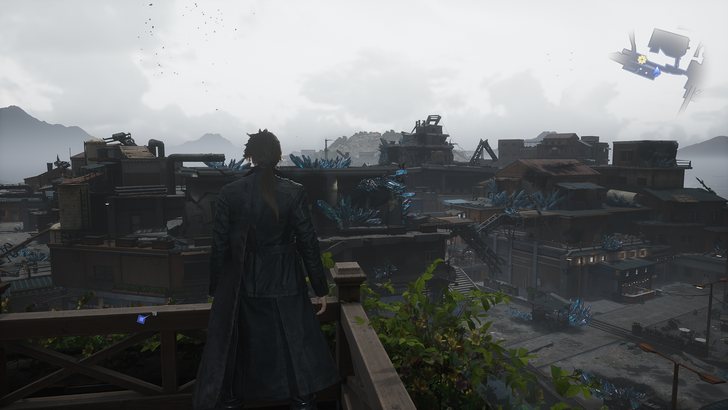
The developers are actively addressing bugs and technical issues, with a day-one patch already resolving some of the more glaring problems. For example, a strange bug I encountered before the update occurred during quests: if you opened the menu mid-conversation, the dialogue would either continue in the background and restart from the beginning or cut off entirely once resuming. Thankfully, this and several other issues have been fixed. That said, the game is still far from polished. I continued to run into odd bugs, such as characters suddenly going silent mid-scene or objects floating inexplicably, which chipped away at immersion.
Visually, the world design stands out, especially the integration of crystalline voidrax elements into both landscapes and cityscapes. The capital city in particular evokes a fascinating mix of influences, something between Midgar, Archades, and Oriflame, yet it manages to retain its own distinct identity.
On the technical side, performance remains frustratingly inconsistent. Stuttering and frame rate drops persist despite the patch, and the overall presentation feels under-polished, especially for a $60 title. Audio transitions are a particular weak point, with music and dialogue cutting off abruptly when moving between gameplay and cutscenes, leaving moments feeling rough and unrefined, and often take me out of the experience. Character animations also lack life, with stiff expressions and blank, unblinking stares during dialogue.
While forgivable in minor scenes, these flaws become distracting during major story moments where immersion should matter most. On top of that, gameplay can feel janky, simple actions like walking sometimes stutter, and the world is plagued with glitches and bugs. Altogether, the lack of polish drags down the presentation across every aspect of the game.
Stunning Character Designs on Par with Some Final Fantasy Games
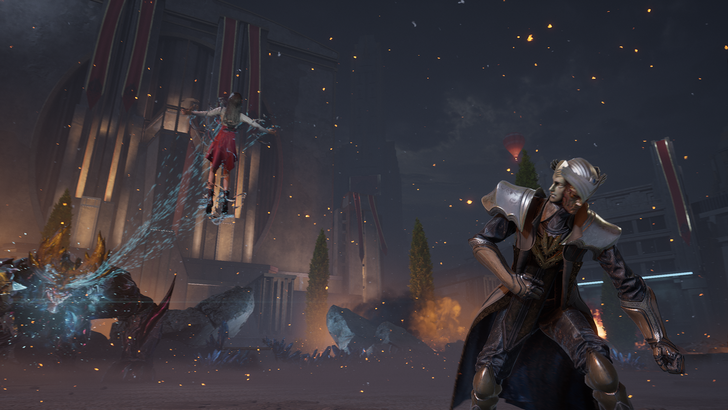
The game is undeniably flawed, but I genuinely loved parts of its world and especially its character designs. The Final Fantasy-inspired flair is clear in the cast, yet the game still manages to carve out its own identity through the striking designs of the voidrax. I love how they feel deliberately out of place. Their alien and otherworldly look makes them feel like entities a fantasy world cannot fully comprehend.
At the same time, they retain subtle fantasy elements, like the crystalline formations that surround their bases and the environments they inhabit. The character designs are equally impressive, embracing the “fashionable, pretty protagonist” aesthetic popularized by Final Fantasy. Kaser himself looks fantastic, while the supporting cast, including Selene, Gethya, and Zana, are all stylishly realized. It’s just unfortunate that the game doesn’t incentivize deeper exploration, with no meaningful side quests or worthwhile upgrades to uncover. Arena, in particular, stands out as an incredible design.
He is essentially a massive blue dragon, but what makes him even more impressive is his fused form with Kaser, where he becomes a floating dragon head that orbits and empowers the protagonist. I wish the game leaned even further into these voidrax concepts as the story progressed, because they’re some of the most visually and thematically compelling aspects of the world. I also enjoyed the cutscenes, but the characters’ expressions often lacked life—like, please, just make them blink more.
Is Lost Soul Aside Worth It?
Wait for a Sale
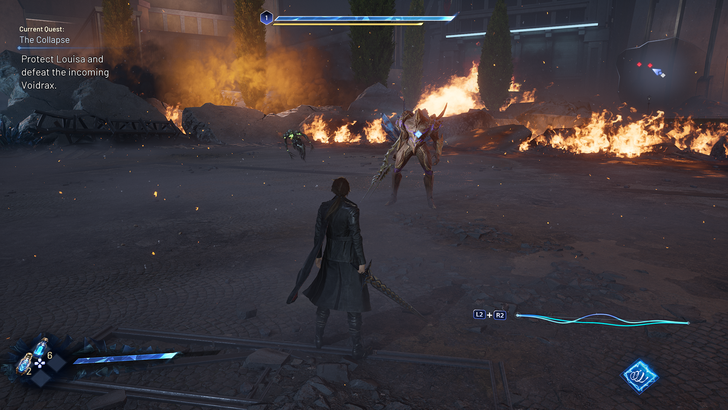
Unfortunately, Lost Soul Aside is hard to recommend at its $60 price tag. The game clearly carries a lot of passion and promise, but too many shortcomings drag down the experience and often ruin the fun. While future patches may fix some of these problems, in its current state it’s difficult to suggest, especially for anyone looking for a strong story. Even the combat, as flashy as it can be, isn’t enough to make up for its faults, and there are better hack-and-slash games available for less. In the end, it just doesn’t live up to its ambition, and while I did enjoy certain moments, the flaws constantly pulled me out of the experience.
| Digital Storefronts | |||||
|---|---|---|---|---|---|
| Steam |
PlayStation |
||||
| Price | $59.99 | ||||
Lost Soul Aside FAQ
When Was Lost Soul Aside First Developed?
The game’s development originally began in 2014 with solo developer Yang Bing.
Does Lost Soul Aside Have a Demo?
Yes, Lost Soul Aside has a playable demo for PC and PS5.
Game8 Reviews
You may also like...
 |
FF15 Action, Adventure, RPG |
 |
FF7 Rebirth Action, Adventure, RPG |
 |
FF7 Remake Action, RPG |
 |
Final Fantasy 16 Action, Adventure, RPG |
Lost Soul Aside Product Information
 |
|
| Title | Lost Soul Aside |
|---|---|
| Release Date | August 29, 2025 |
| Developer | Ultizero Games |
| Publisher | PlayStation Publishing |
| Supported Platforms | Platforms here |
| Genre | Action RPG |
| Number of Players | PS5, PC |
| ESRB Rating | M |
| Official Website | Lost Soul Aside Website |