

| Little Nightmares 3 | |||
|---|---|---|---|
| Release Date | Gameplay & Story | Pre-Order & DLC | Review |
Little Nightmares 3 Review Overview
What is Little Nightmares 3?
Little Nightmares III follows two young friends, Low and Alone, as they traverse the eerie world of Nowhere. Each wields a signature tool using them to solve environmental puzzles, clear obstacles, and fend off threats. Across sinister locations, the pair must hide, run, and fight their way past grotesque Residents while uncovering the mysterious mirror path that binds them to this twisted world.
Little Nightmares 3 features:
⚫︎ Two Playable Characters With Distinct Abilities
⚫︎ Four Major Chapters
⚫︎ New Gameplay Mechanics
⚫︎ Online Co-op
⚫︎ Post Launch Roadmap
For more gameplay details, read everything we know about Little Nightmares 3's gameplay and story.
| Digital Storefronts | ||||||
|---|---|---|---|---|---|---|
 Steam Steam |
 PlayStation PlayStation |
 Xbox Xbox |
||||
 Switch Switch |
Switch 2 |
|||||
| $39.99 | ||||||
Little Nightmares 3 Pros & Cons
| Pros | Cons |
|---|---|
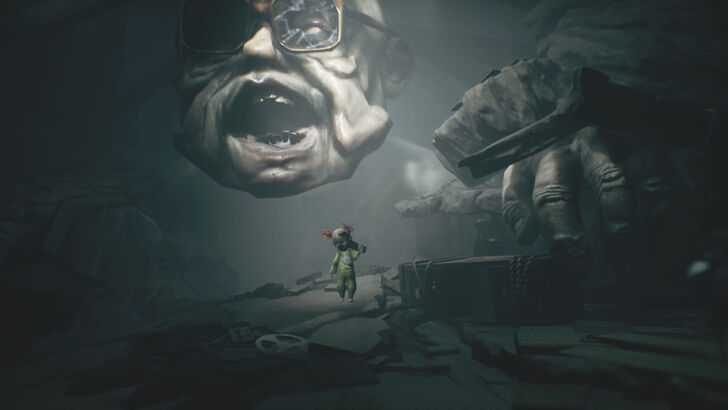
 Improved Combat Rhythm Expanded Platforming Masterful Visual Storytelling Great Sound Layering Improved Combat Rhythm Expanded Platforming Masterful Visual Storytelling Great Sound Layering |
Repetition Sets in Mid Game No Local Co-op Puzzles Lack Cleverness |
Little Nightmares 3 Story - 7/10
The story follows the series’ familiar path of silent protagonists, cryptic imagery, and surreal horror, but it lacks the sharper emotional pull of its predecessors. The symbolism remains intriguing, and the world still whispers its dark fairy tale, yet the characters feel more like vessels than voices. The pacing is slow but the ending will genuinely move you, still, the journey from beginning to end doesn't quite tie together into something memorable.
Little Nightmares 3 Gameplay - 8/10
Gameplay feels tighter and more responsive than before, especially with the addition of cooperative mechanics. The puzzles are serviceable—clever at times, mechanical at others—and the platforming remains the series’ eerie dance of trial and terror. Still, repetition creeps in after a few hours, and some segments lean too heavily on timing rather than tension. It’s enjoyable, just not groundbreaking. You’ll get what you expect from Little Nightmares, but not much beyond that.
Little Nightmares 3 Visuals - 8/10
Visually, Little Nightmares 3 is stunning in motion. The environments are meticulously layered, every shadow and flicker telling its own story. Supermassive nails the unsettling beauty that defines the series. Performance does falter towards the end of the game where frame rate drops and the game looks like a stop-motion film instead of polished. It’s gorgeous and grotesque in equal measure, and the art direction remains its strongest suit.
Little Nightmares 3 Audio - 7/10
The sound design carries the experience—from the soft echo of footsteps to the distant groan of unseen horrors. The soundtrack hums with quiet dread, though it rarely surprises. Where the previous games used silence to devastating effect, this entry sometimes overplays its cues. The result is effective atmosphere, but less resonance.
Little Nightmares 3 Value for Money - 7/10
At $39.99, the base game offers around six to eight hours of play, with solid replay value if you’re chasing collectibles or co-op runs. It’s well-made and cohesive, but doesn’t push enough new ground to justify a higher score. The Expansion Pass ($20) promises two new chapters next year, which could deepen the story and justify the investment, but as it stands, the core package feels slightly lean. Fans will find enough to love, but casual players might prefer to wait for a sale.
Little Nightmares 3 Overall Score - 74/100
Little Nightmares III is a beautifully crafted descent into familiar darkness, meticulously built, yet curiously restrained. Rather than daring to redefine itself, it settles into reverence for what came before, echoing its predecessors more than expanding upon them. For long-time fans, it’s a welcome return to a world of quiet dread, for newcomers, it’s a good game that stops just short of greatness.
Little Nightmares 3 Review: Still Great at Being Unsettling
The Weight of Tiny Terrors
Okay, so let me get this out of the way—Little Nightmares was never really a scary game. I mean, sure, it had its moments of shadows creeping under flickering light, the distant groans of something wrong in the dark, the slow dread of realizing you’re not alone. But it wasn’t "hide-behind-the-couch" scary. It was unsettling. Eerie. Claustrophobic. Thrilling. It was that specific brand of horror that doesn’t make you scream—it just kind of… stays with you.
Maybe it’s because I grew up with horror games—the kind that tried to actively traumatize you. After years of those, the Little Nightmares series never really frightened me. But it did unnerve me. It made me feel small. Powerless. Like a child again, peeking from under the bed and realizing that the monsters outside were just reflections of the ones within.
That’s always been the beauty of Little Nightmares, it doesn’t rely on fear, it builds it. Slowly. Through sound, through silence, through every little animation that makes your stomach twist. So when Little Nightmares 3 came around, I didn’t expect it to terrify me. I expected it to haunt me. To crawl back into that unsettling dreamscape I’ve been addicted to since the first game.
And, well… it did, kind of?
It still has that signature dread, that fragile melancholy wrapped in tension. But the question is, did it bring that same atmosphere as the first two? Did it carry the same weight, that feeling of being swallowed whole by a world that doesn’t care you exist? That’s where things get a little tricky.
I really wanted to give Little Nightmares 3 a higher score. I really did. This series has always been one of those quiet gems for me, a perfect cocktail of tension and tenderness, where every corner hides not just monsters, but meaning. The first two games were these beautifully twisted fables about fear, power, and survival, told with almost no words but all the emotion in the world. They didn’t need to shout, so they whispered, and that was enough.
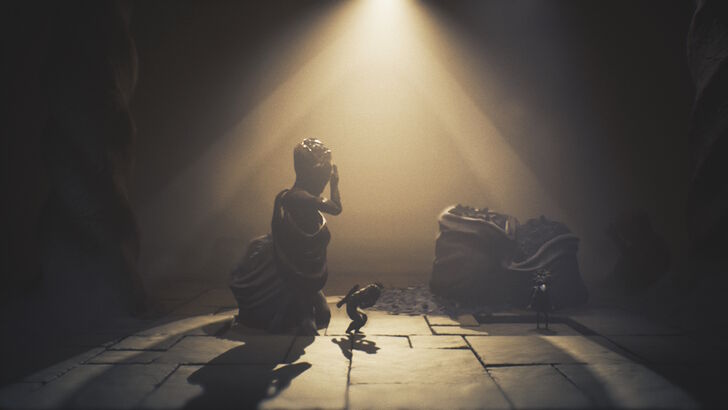
So when Little Nightmares 3 was announced, I was already sold. The trailers promised that same unsettling charm—the kind of game that doesn’t just scare you, but makes you feel small in the face of something much bigger and crueler. And to its credit, it does that. This is still Little Nightmares through and through. The eerie silhouettes, the creaking wooden floors, the way shadows stretch a little too far. It’s a good game. One I’d still wholeheartedly recommend to anyone who fell in love with this strange, wordless universe.
But… it doesn’t quite hit the same way. It’s like hearing a lullaby you’ve always known, only now it’s in a slightly different key. Maybe that’s nostalgia talking, or maybe the bar was just too high after Little Nightmares 2, but something about this one feels more comfortable than claustrophobic, more polished than personal.
Still, there’s a lot to love—and a lot to unpack.
Let’s get on with it.
Welcome Back to Nowhere
If you haven’t played Little Nightmares before, fret not—Little Nightmares 3 doesn’t demand a history lesson. It’s a standalone story set in the same haunting universe, where reality folds in on itself and childhood fears take physical form. You don’t need to know who Six or Mono were, or what The Maw or Pale City meant. All you need to know is that once again, you’re small, fragile, and desperately trying to escape a world that seems designed to swallow you whole.
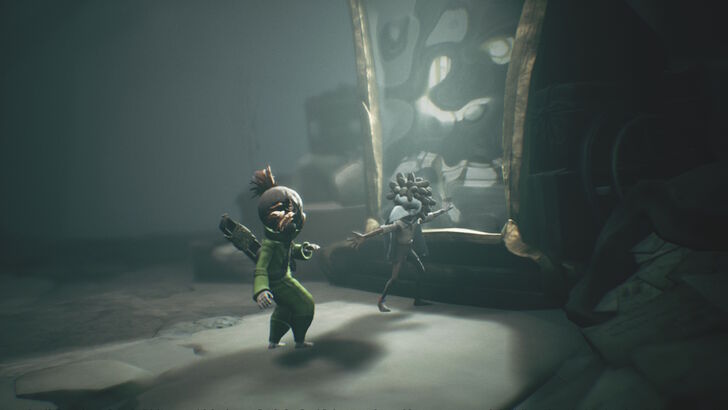
This time, the story follows two children: Low and Alone. Low’s a boy who wields a bow, quiet, deliberate, too calm for his own good. Alone, on the other hand, carries a wrench—scrappy, headstrong, the kind of girl who fights her way through when running isn’t enough. Together, they’re not just partners in survival, but two halves of the same instinct: fight and flight. You feel it in every step, in every puzzle that forces them to rely on one another, a fragile but essential bond against a world intent on breaking them.
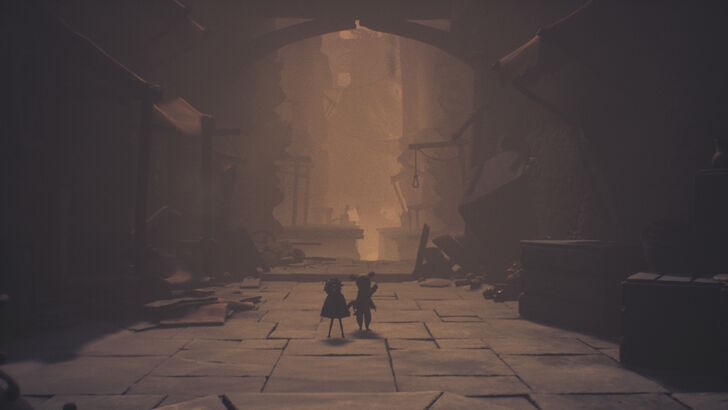
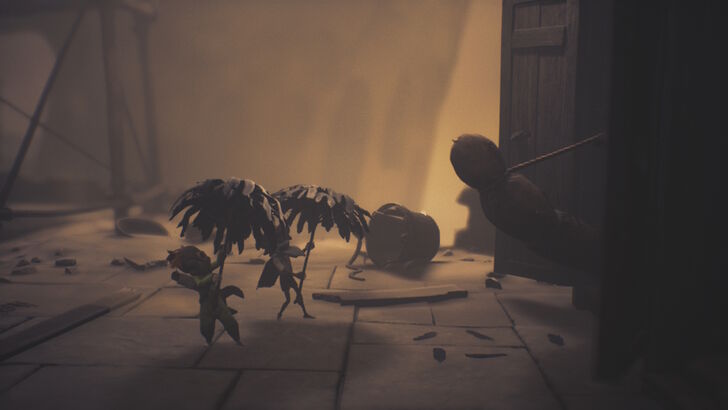
That world, of course, is Nowhere—a surreal landscape that shifts from place to place like a fever dream stitched together by fear. Every chapter feels like opening a different child’s nightmare: Necropolis, a sun-bleached desert of ruins and restless spirits. Candy Factory, where bright colors rot into something sickly sweet. Carnivale, a grotesque amusement park that turns joy into dread. And The Institute, a place that hums with the cold sterility.
Each world connects through mirrors—literal portals that blur the boundaries between dreams, memories, and nightmares. Low and Alone stumble from one to the next, always escaping, never really free.

The gameplay loop remains faithful to what fans know, a blend of platforming, puzzle-solving, stealth, hide-and-seeking, and chase sequences that test both timing and patience. You’ll crawl through vents, hide under tables, and sprint down collapsing hallways as monstrous figures reach out from the dark. There’s a light touch of combat now—not much, but enough to remind you that sometimes, survival isn’t just about running; it’s about fighting back when you have to.
But even when you’re armed, you never feel powerful. You’re still just a tiny voice against a world that doesn’t listen. And that, more than anything, is what makes Little Nightmares what it is.
Dance of Shadows and Steel
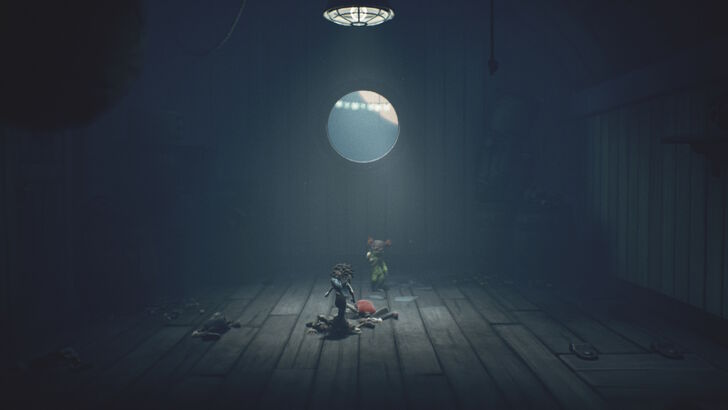
If there’s one thing Little Nightmares III finally figured out, its motion in combat—the feeling of being small, fragile, but not powerless. Combat has evolved into something that fits the series’ rhythm at last. Low’s arrow stuns enemies, while Alone’s melee attack deals the final blow. Together, they create a language of cooperation, and the satisfaction comes not from brute skill, but synchrony. It’s the quiet joy of getting it right, of trusting your partner without words. This co-op-driven design isn’t just functional, it’s emotional, tying every encounter back to the game’s theme of fragile companionship.
Unlike its predecessors, Little Nightmares III doesn’t use combat as punishment. Timing still matters but it’s forgiving in a way that keeps the tension alive without smothering it. Each encounter moves like choreography, every enemy a part of the rhythm. You’re not hacking away at monsters, you’re surviving them in tempo.
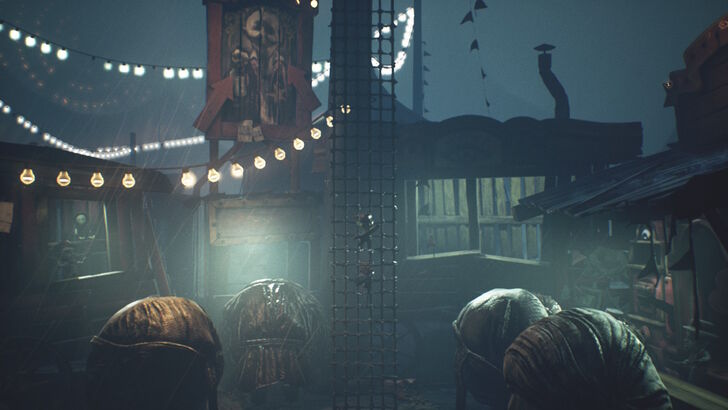
Outside of fights, the flow between puzzles, chases, and stealth sequences gives the early game an impressive cadence. For the first few hours, it’s thrilling, like you’re part of a living nightmare that keeps reinventing itself. But somewhere past the midpoint, the repetition begins to creep in. The deja vu is subtle at first—a chase that feels familiar, a corridor that ends the same way as the last—but by the third time you’re sprinting through collapsing halls, you can almost predict when the camera will tilt, when the music will rise. It’s still well-designed, but the unpredictability that once defined the series starts to thin out.
Even the puzzles, initially satisfying with their design and cooperative logic, start to flatten by the Candy Factory’s latter half. You’ll catch yourself solving them before the game finishes presenting them—not because they’re bad, but because the patterns have become too readable. It’s a strange feeling, the atmosphere keeps deepening, but the challenge plateaus.
Symphony of Shadows

If Little Nightmares III ever made me pause, it was in Carnivale. The third chapter is a visual fever dream, a haunting love letter to everything this series does best. It’s my favorite by far, not just because of its design but because it feels like the closest the new developers have ever come to understanding what made the series special.
Carnivale begins as a spectacle. Yellow lights pulse over crumbling attractions, laughter echoes from nowhere, and the air feels thick. There’s something almost beautiful about how the brightness decays. Every step forward drains more color from the world, as if joy itself is rotting away beneath the surface. It’s unsettling in that deliciously Little Nightmares way—you know something’s wrong long before you see it. By the time the chapter reaches its end, the carnival has collapsed into near-monochrome despair, its silence heavier than any chase scene before it.
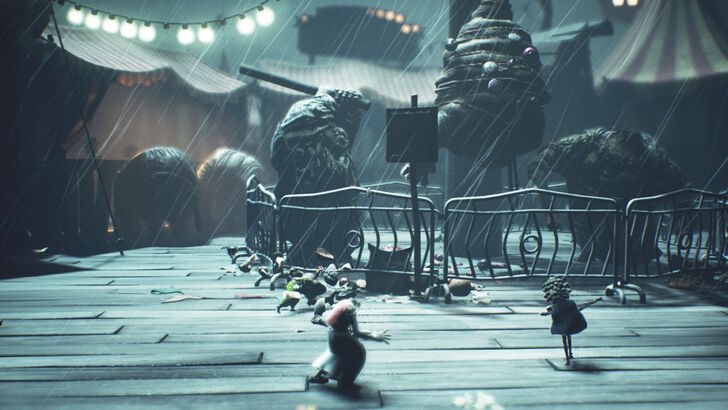
And then there’s the music. Oh, the music. The Carnivale theme is the kind of track that crawls under your skin—that mix of playful melody and creeping dissonance that feels like a carousel turning too slowly. It’s not just background noise, it leads the eerie feeling. Every track in Little Nightmares III carries that same eerie confidence, amplifying moments of dread and awe without ever overplaying them.
Beyond that, the overall art and sound direction across all four chapters remain cohesive, even with a new studio at the helm. The transition from Tarsier to Supermassive could’ve easily led to an identity crisis, but somehow, it didn’t. The textures feel familiar, the lighting is still weaponized emotion, and the world still feels like it’s collapsing in on itself at all times. The essence of Little Nightmares still lingers in every shadow.
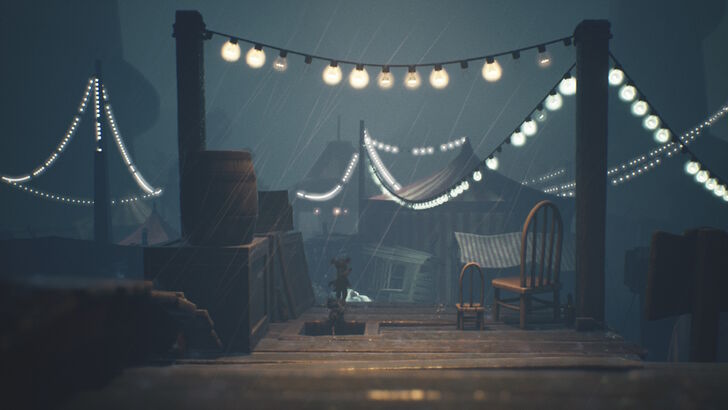
The audio design, too, continues to elevate the experience. The creak of wood under your feet, the muffled hum of something lurking beyond sight, the way each footstep sounds different depending on the surface—all these details build tension without needing to scream for attention. The moments of quiet, especially, are what get you. When the game decides to mute the world, when the music cuts, that’s when Little Nightmares III reminds you it still knows how to unsettle.
It’s easy to see where the passion went. In atmosphere, art, and sound, Supermassive didn’t just imitate—they internalized what made this series beloved. Little Nightmares III might falter elsewhere, but in its worldbuilding and sensory storytelling, it’s still unmatched.
A Nightmare I Wanted to Love
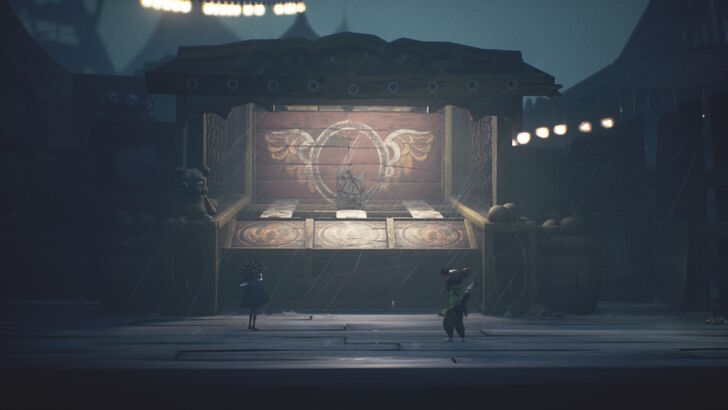
For every haunting set piece that Little Nightmares III conjures, there’s a moment that quietly reminds you this is a series still searching for its pulse under new hands. The pacing is fine on paper—each chapter runs about the same length, the transitions are smooth enough—but that rhythm is built on repetition. It’s not that the game runs out of ideas, it just keeps circling the ones it already used. You hide in the same type of locker, you run down the same narrow corridor, you solve puzzles that start to feel algorithmic rather than organic. It’s that sense of deja vu that dulls what should’ve been an escalating nightmare into something more routine.
By the third chapter, the surprises begin to flatten. The developers have nailed the mood, yes, but the mechanical language of the game becomes transparent. You can predict where a chase will start, where it will end, which prop will break, and which lever you’ll pull next. That sense of intuitive tension—the one that made the first two games so gripping—starts to fade.
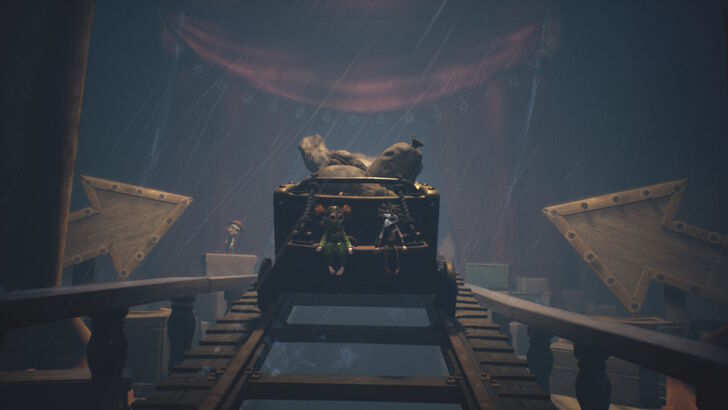
Part of that comes down to interactivity. Little Nightmares III wants to be cinematic, and to its credit, it’s gorgeous when it leans into that. But sometimes it leans too far. There were multiple sequences where I found myself wishing I could do something more than just watch events unfold. A simple QTE, a timed reaction, even a split-second decision would’ve made those moments hit harder. Instead, it often feels like the game is afraid to break its own rhythm—like it’s too polite to make you panic. And that politeness, in a thriller experience, feels oddly sterile.
The puzzles don’t escape that feeling either. What used to be intuitive and eerie problem-solving now feels more like checking boxes. Pull lever, drag crate, move on. There’s less of that dreamlike logic, less mystery in discovery. It’s efficient, sure, but it lacks the strange, almost childlike wonder of figuring things out the wrong way before stumbling into the right one.
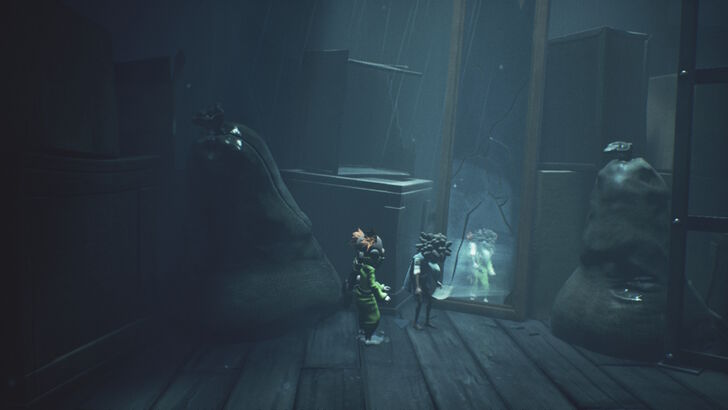
And then there’s the elephant in the room: no local co-op. Little Nightmares 3 should be about shared vulnerability, two small figures surviving something too big for them to comprehend. Experiencing that side by side with someone in the same room would’ve amplified the tension, the gasps, even the laughter when something inevitably went wrong. Instead, you get a functional but emotionally distant alternative (online co-op).
Tone-wise, Little Nightmares III feels safer. It’s more polished, yes, but it doesn’t take the same risks in its metaphors or imagery. The first two games thrived on discomfort—the kind that stuck with you, even when you didn’t fully understand it. Here, it’s as if the developers are holding back, unwilling to push too deep into that darkly symbolic territory. The monsters are grotesque, but less psychologically disturbing. The environments are eerie, but less intimate. It’s horror by observation rather than implication.

And maybe that’s just growing pains. Supermassive has inherited something precious from Tarsier, and you can feel their respect for it. But in that reverence lies hesitation. They’ve mastered the look, the sound, the structure—but not yet the feeling. The raw, unsettling emotional current that ran through Little Nightmares and its sequel is still missing, buried beneath all the polish and precision. Little Nightmares III is beautifully made, but beauty alone doesn’t haunt.
The Silence After
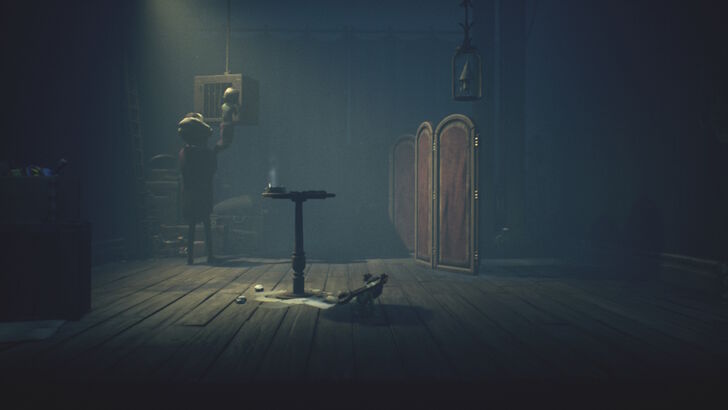
Even with its safer tone, Little Nightmares III still manages to stir something beneath the surface—a slow ache that lingers after the credits roll. It’s not the kind of game that makes you scream, it’s the kind that makes you sit in silence, staring at the screen for a moment too long. There’s sadness here, and wonder, and that peculiar sense of loneliness that feels almost nostalgic. It’s a nightmare, yes, but one you might secretly want to dream again.
The emotional throughline of the game isn’t terror—it’s endurance. These children don’t just run from monsters, they navigate through them, clinging to the faint idea of escape. Little Nightmares III feels less like a horror game and more like a lucid dream about survival—one where everything is both familiar and wrong, beautiful and broken. The tone is quieter, but it still resonates, especially in those small, wordless exchanges between Low and Alone. A shared glance before a leap. A moment of hesitation before stepping into the next mirror. The story doesn’t tell you what they feel, but you’ll find yourself filling in the silence with your own fears and memories.
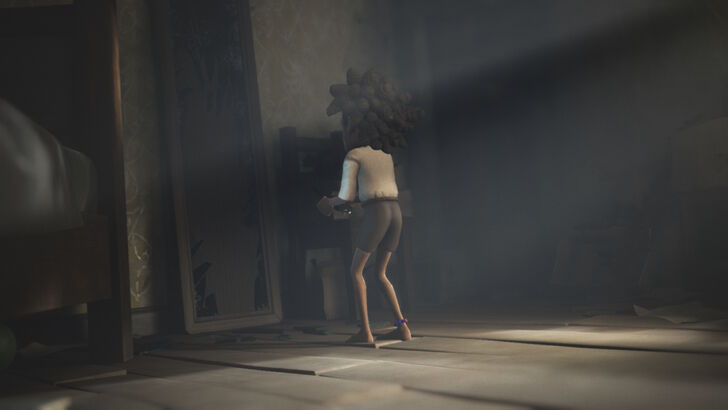
When it’s over, you won’t feel scared—you’ll feel hollowed out. You’ll either walk away haunted by its imagery or quietly melancholic, unsure what it all meant, but certain it meant something. And that’s the paradox of Little Nightmares III, even when it falters, it still manages to remind you why this series lingers in your mind.
Is Little Nightmares 3 Worth It?
Yes, But Only If You’re Ready for a Softer Nightmare
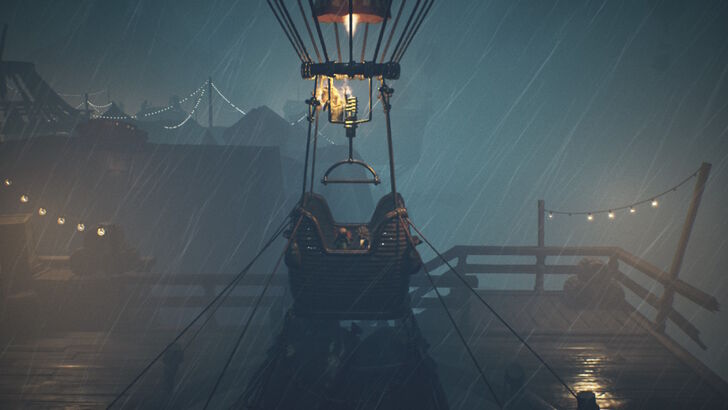
I really wanted to love Little Nightmares III—and in many ways, I did. It’s haunting, heartfelt, and carefully built, like a dream that someone took great care to craft. But it didn’t linger with me the same way the first two did. It’s a game I admired more than I felt, and that’s a quiet ache in itself.
For longtime fans, this is still a must-play—an essential continuation that respects the world’s fragile, eerie beauty. You’ll find new nightmares worth exploring, clever moments of fear and tension, and that unmistakable sense of being small in a world that’s monstrously large. But if you’re new to the series or chasing the same intensity as before, you might want to wait for a sale. At $39.99, it offers a complete experience, but not quite the emotional depth that made Little Nightmares unforgettable.
| Digital Storefronts | ||||||
|---|---|---|---|---|---|---|
| Steam |
PlayStation |
Xbox |
||||
| Switch |
Switch 2 |
|||||
| $39.99 | ||||||
Little Nightmares 3 FAQ
Is Little Nightmares III Connected to Little Nightmares 1 and 2?
While it’s set in the same universe, the story and protagonists of Little Nightmares III are not directly connected to the previous games. You can play it without any prior knowledge of the series and still understand what’s happening. However, the lore remains intertwined, and returning players may recognize familiar symbols, themes, and subtle callbacks that could lead to new interpretations—or spark even more theories about the world of Little Nightmares.
Game8 Reviews

You may also like...
 |
Bendy: Lone Wolf Review Roguelike, Action, Horror, Survival |
 |
Silksong Review Action, Metroidvania |
 |
No, I'm Not A Human Review Horror, Simulation |
 |
The Midnight Walk Review Horror, Adventure |
Little Nightmares 3 Product Information
 |
|
| Title | LITTLE NIGHTMARES 3 |
|---|---|
| Release Date | October 10, 2025 |
| Developer | Supermassive Games |
| Publisher | BNE LLC, Namco Bandai Games America Inc. |
| Supported Platforms | PC (Steam), PlayStation 4, PlayStation 5, Xbox Series X|S, Switch, Switch 2 |
| Genre | Puzzle, Horror |
| Number of Players | 1-2 |
| ESRB Rating | PEGI 16 |
| Official Website | Little Nightmares 3 Website |