




Kotama and Academy Citadel Review Overview
What is Kotama and Academy Citadel?
Kotama and Academy Citadel is a metroidvania set in a large school. You play as Kotama, a new student who’s aiming to become the Carmel Star to prove herself. To do this, she must gain the votes of the student body by increasing her popularity and helping them out with their troubles.
Kotama and Academy Citadel features:
⚫︎ Five areas to explore
⚫︎ Three weapons to collect, each with unique uses and upgrades
⚫︎ Mini-boss fights
⚫︎ Healing mechanic that consumes money instead of charges
⚫︎ Collectible NPCs for your main transport
| Digital Storefronts | ||
|---|---|---|
 Steam Steam |
||
| $19.99 | ||
Kotama and Academy Citadel Pros & Cons

| Pros | Cons |
|---|---|
 It’s a Visual Candy Simple Combat Mechanics Create Complex Combos The Healing Mechanic is Uniquely Punishing Temporal System Makes Exploration a Puzzle in Itself It’s a Visual Candy Simple Combat Mechanics Create Complex Combos The Healing Mechanic is Uniquely Punishing Temporal System Makes Exploration a Puzzle in Itself |
Barely Any Feedback on Your Attacks It’s Relatively Small for a Metroidvania Audio is Pretty Bland |
Kotama and Academy Citadel Story - 7/10
If you’re tired of platformers with edgy themes and convoluted narratives that demand digging through stacks of in-game newsletter and several trips to the toilet to make sense of them, Kotama and Academy Citadel’s story is a refreshing change of pace. It’s simple and easy to digest, with the feel of a school action slice-of-life anime from the ’90s to the mid-2000s. That said, it toys with some surprisingly strong themes that end up feeling underdeveloped, its pacing can be oddly erratic, and several seemingly important characters get far less screentime than you’d expect.
Kotama and Academy Citadel Gameplay - 9/10
For the most part, Kotama and Academy Citadel plays like your average metroidvania. There’s platforming, two-dimensional combat, and the familiar loop of collecting mobility upgrades to unlock more of the map to access even more upgrades. Where it differs starts in its strange healing mechanic; one that’s oddly more accessible, yet actively slaps the player’s hand for relying on it; and in its unique approach to combos, which gain potency through weapon switching and passive effects.
Kotama and Academy Citadel Visuals - 9/10
One of the biggest advantages of using 3D models in an effectively 2D game is visual consistency… provided the animations are up to snuff. Thankfully, that’s definitely the case here. Its animation work greatly complements the game’s highly stylized character designs, aesthetic themes, and flashy special effects, resulting in a presentation that feels cohesive and consistently impressive. It has a minor tendency to dip frames here and there, though, and a number of enemies barely telegraph their attacks. But, they’re nothing too egregious.
Kotama and Academy Citadel Audio - 7/10
The game checks most of the basic audio boxes you’d expect from an action title, with appropriate music, serviceable sound effects, and immersive ambient noise. That said, none of these elements are particularly great: the music isn’t very memorable, the sound effects lack punch, and the ambient audio often gets drowned out by all the action. Paired with the very prominently absent voice acting, and the overall sound design ends up feeling solid, but ultimately unremarkable.
Kotama and Academy Citadel Value for Money - 8/10
This amazing game is being offered for the very cheap price of 19.99 USD at full price. And honestly speaking, it’s quite worth it. Though, yes, the game is relatively short for a metroidvania at this price, the gameplay and visuals more than make up for the gap made by its length and just above-average audio.
Kotama and Academy Citadel Overall Score - 80/100
Kotama and Academy Citadel is a lighthearted breath of fresh air in a genre that seems to have been getting more than its fair share of rather dark or gritty-themed entries. It’s also, most importantly, fun, regardless of whether you’re engaging in its highs or lows. Highly recommended, especially considering its generous asking price!
Kotama and Academy Citadel Review: Love at First Death
Testing My Platforming Addiction Again
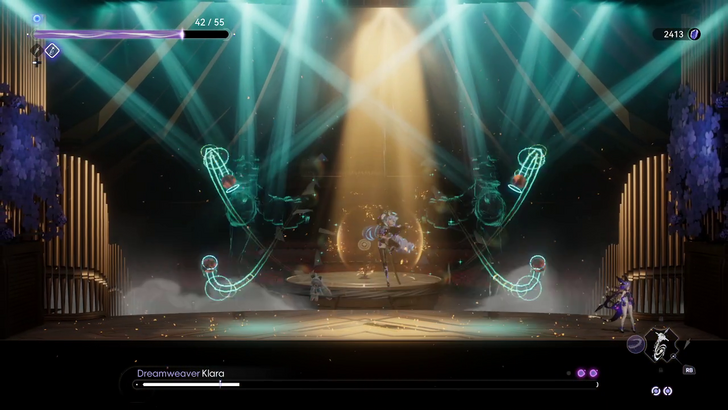
Kotama and Academy Citadel is very, very hard to miss among Steam’s sea of colorful titles. It boasts a clean, striking art style that accurately reflects the game’s excellent 3D models. And as someone who already has a, uhh, preference for this kind of anime-inspired aesthetic, trying it out was practically inevitable.
That said, my interest wasn’t just visual. I’m also a big fan of platformers in general (because I used to suck at them so hard), so the game managed to tickle my fancy twice over. Gameplay, however, was the real question, and to my pleasant surprise, Kotama and Academy Citadel didn’t need a few hours to hook me.
You see, unlike many metroidvanias whose opening sections tend to drag, this one gives you full access to its core mechanics right from the start. You’re equipped with almost all the combat tools you’ll be using throughout the game, and progression is gated purely by exploration rather than ability unlocks (though it does have it). The result is a game that throws you straight into the thick of things and lets you experience it at its best from minute one.
But what exactly is the game about, anyway?
Academy of Many Hazards
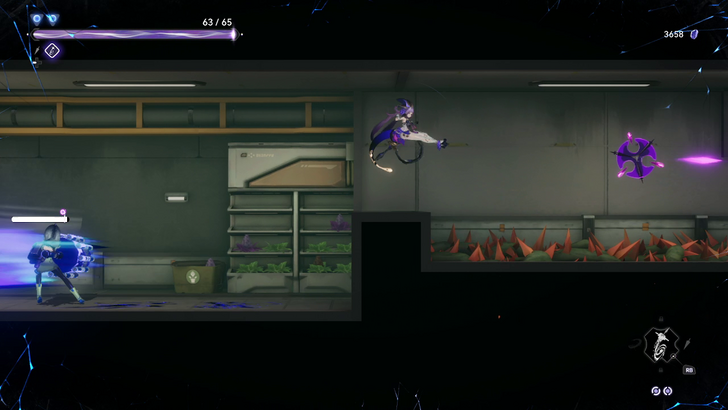
Kotama and Academy Citadel is a metroidvania set in an academy built like a citadel (because of course it does). But instead of straight hallways, stairwells, and neat little classrooms, this particular school is made up of large rooms stitched together by ladders, trapdoors, floating platforms, and other assorted hazards; platformer heaven for some, a laundry list of OSHA violations for others.
You play as Kotama, a new student aiming to become the next Carmel Star—basically the academy’s top student. Unlike in real life, though, where this might involve grades or extracurriculars, the Carmel Star title is earned democratically. And how do you secure enough votes?
By being everybody’s errand girl, of course.

Since Carmel Academy’s halls are not only populated by students, but also with dangerous monsters spawned from things like failed experiments and other, uhh, administrative oversights, most requests boil down to beating something (or someone) up, or retrieving something (or someone) lost deep within the academy’s winding—and often unsafe to access—corridors.
To help with this, Kotama has access to three weapons, the Temporal Coils, and even an entire train at her disposal. The controls themselves are straightforward: basic attacks, charged attacks, skills, and parries—all the fixings to create the standard metroidvania experience.
However, it diverges from the norm by how it approaches combos. See, instead of relying on your skill with the jump button and your various mobility tools, Kotama’s combat leans heavily on executing the correct button sequences in order or responding to enemy attacks with your own. In a way, this makes it feel more like a fighting game at times, which makes it even more satisfying if it leads to a victory screen.
Your Money or Your Life

These days, healing mechanics in metroidvanias, soulslikes, and their various crossovers tend to follow the same design philosophy: give players a limited healing resource, let it replenish at checkpoints, and allow upgrades as they grow stronger.
Kotama and Academy Citadel’s own healing mechanic mostly follows that same framework, but with a few key twists that make its approach far more unique, accessible, and, depending on your decisions, downright punishing.
Basically, you technically no longer have a limited number of resources to consume for healing because, instead of consuming charges that replenish at each checkpoint, you instead use money. It’s no different from ordering painkillers from Doordash, really; simply spend some credits anywhere you might be and viola! Your health bar’s all green again!
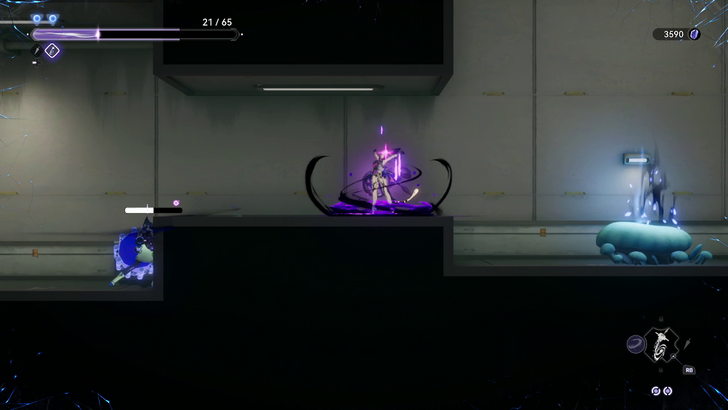
But before you go and assume that this makes Kotama and Academy Citadel a disappointingly easy game to clear, consider that almost everything in this game works off the power of fat stacks of cash; upgrading weapons? That costs money; buying equipment? This game doesn’t barter; modifying your gear? Pay up, bozo.
The catch is that enemies barely drop any currency at all. Your main source of income comes from relatively rare crystals scattered across the map, and even then, the payouts are mediocre at best.
So what happens when you hit a boss that takes a few too many attempts? You’ll want to upgrade your gear, but if you’ve already burned through your bank by paying for healing while eating sucker punches for half an hour straight, you’re out of options. As you can imagine, the only thing you can really do at that point is to cry while painstakingly farming for every scrap of coin you can from the map.
Slight of Hand as a Weapon
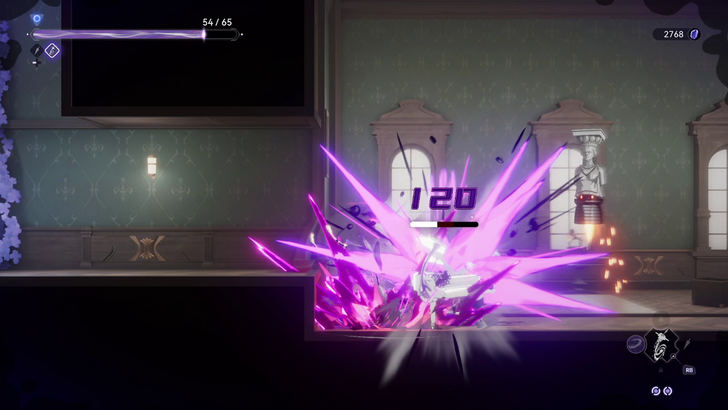
The rather technical feel of Kotama and Academy Citadel’s combat comes from its weapon-switching system, which allows you to seamlessly swap between weapons mid-combo once you unlock the ability. This lets you adapt on the fly while keeping pressure on enemies, rather than disengaging every time the situation changes.
For example, your starting weapon, the Umbrella Spear, is a heavily defensive tool built around deflections and counterattacks. The whip hammer, on the other hand, sits at the opposite end of the spectrum, favoring medium-to-short-range strikes that deal hefty damage. You can open with the whip hammer for big numbers, then switch to the umbrella spear the moment an enemy retaliates, deflecting their attack without ever dropping your combo.
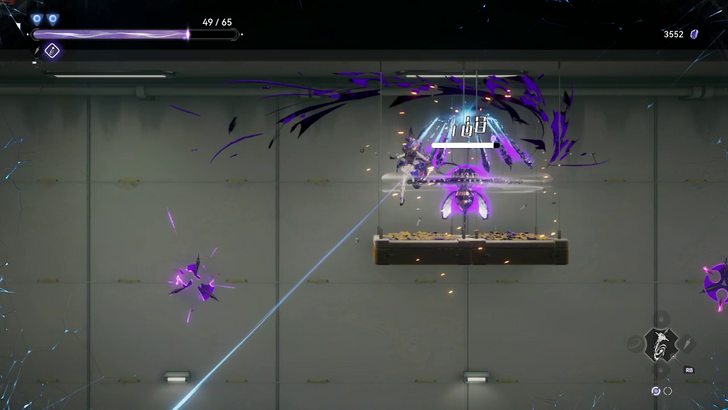
Take note, though, that this is all possible as long as you have energy. This is gained through the game's actual core mechanic; by attacking enemies to stack fluid counters on them, and then detonating it with an attack, Kotama gains energy to use her skills. In other words, Kotama and Academy Citadel’s entire combat advantage is built on momentum, which just makes it especially appealing to players looking for a more action-driven take on the metroidvania formula.
Lag behind, and you'll find yourself biting the dust... or become dirt poor. I don't know which is worse, to be honest.
Exploration Itself is a Puzzle
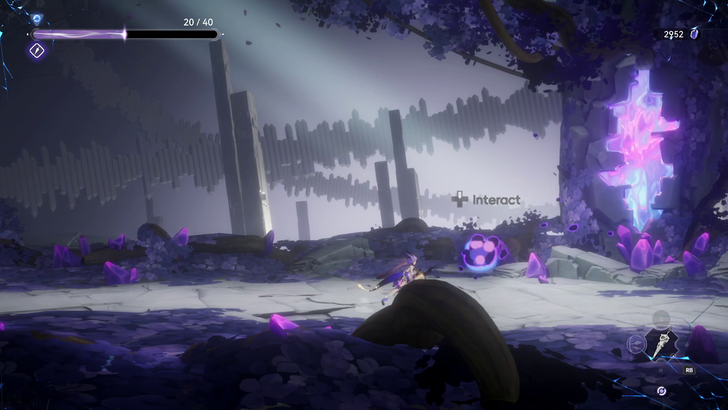
Hidden areas and puzzles are nothing new to the genre. Hollow Knight has them in spades, TEVI’s entire exploration schtick is trying to make you forget that there are new places to explore in previous areas, and Animal Well is basically a massive puzzle to solve. Kotama and Academy Citadel, meanwhile, sit roughly between the latter and the former two.
Enter the Temporal Coils. These are unique resources that replenish every time you rest at a checkpoint and are gradually consumed each time you enter a new area. The fewer Coils you have, the more dangerous an area becomes—enemies grow stronger, encounters become more diverse, and the academy’s halls start to feel noticeably more hostile the deeper you push in.
At the same time, these areas also become less useful the lower your Coil count drops. For example, NPCs can disappear entirely, quests can be locked out, and entire areas can be rendered inaccessible.
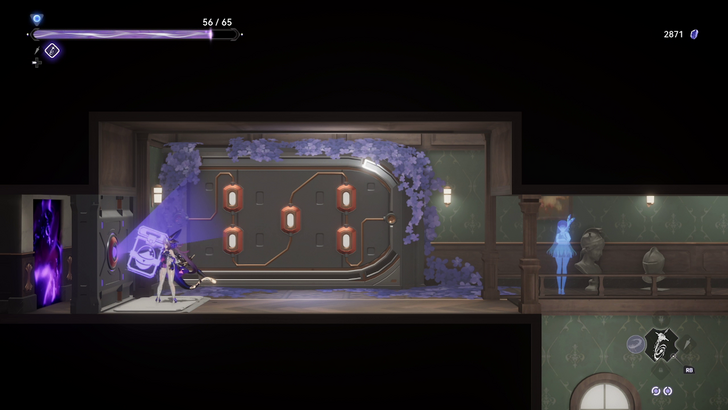
Unfortunately, this system also has its downsides. It’s remarkably easy to lose Temporal Coils unintentionally, as the game doesn’t differentiate between backtracking to the room you came from or stumbling into an entirely new one. The moment you hit a transition screen, a Coil is consumed, no questions asked. And if you’re trying to solve a puzzle that requires a specific amount, you’ll have to backtrack all the way until your checkpoint.
That’s just a very minor issue, though. These Temporal Coils and their effects are still a massively beneficial feature to the game. Their ability to introduce meaningful variance within the same areas purely based on the order you explore them is a genuinely clever design choice.
And that’s probably the best way to explain why I enjoy Kotama and Academy Citadel so much. Despite being a metroidvania, a genre not exactly known for flexibility, it constantly reshapes itself around even your smallest decisions. Combined with its combat and systems, the end result is an experience that feels fresh, deliberate, and quite memorable.
Is Kotama and Academy Citadel Worth It?
Yes. I’d Buy It Again if I Have To.

There’s no shortage of excellent metroidvanias these days, and the competition is fiercer than ever. Even so, I'm confident that Kotama and Academy Citadel will manage to carve out a niche for itself among its powerhouse peers.
That’s especially true if you’re looking for a more lighthearted take on a surprisingly violent school setting. And at this price point, it’s easy to pick up for yourself—and maybe even gift a copy to one or two friends.
| Digital Storefronts | ||
|---|---|---|
| Steam |
||
| $19.99 | ||
Kotama and Academy Citadel FAQ
How many weapons are there in Kotama and Academy Citadel?
Players have access to three weapons; the Umbrella Spear, the Whip Hammer, and the Liquid Sword
Are there other playable characters other than Kotama?
Not as of this review
Game8 Reviews

You may also like...





Kotama and Academy Citadel Product Information
 |
|
| Title | Kotama and Academy Citadel |
|---|---|
| Release Date | January 15, 2026 |
| Developer | Atomstring Games |
| Publisher | 2P Games |
| Supported Platforms | PC |
| Genre | Action, Platformer |
| Number of Players | 1 |
| ESRB Rating | RP |
| Official Website | Kotama and Academy Citadel on X |