Every Day We Fight is a turn-based tactics game where the characters you control are stuck in a time loop. Read on to learn everything we know, our review of the early access, and more.
Everything We Know About Every Day We Fight
Every Day We Fight Plot
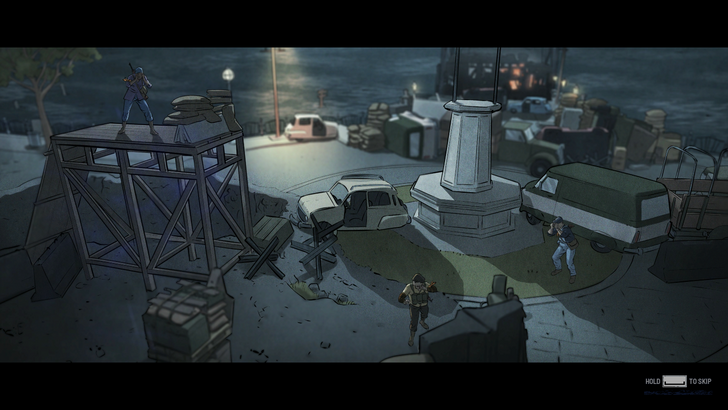
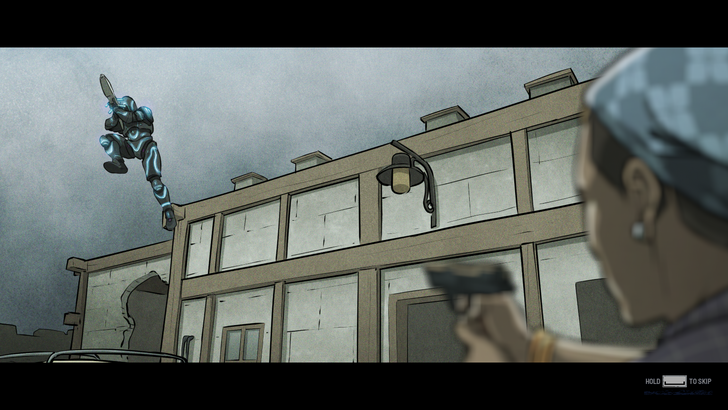
Set in a post-apocalyptic world frozen in time, Every Day We Fight follows the story of three survivors—Vivian, Leo, and Dylan—who find themselves immune to the stasis caused by an alien force known as the Rifters. Formerly from opposing nations, the trio must now work together to resist the alien occupation and survive a relentless time loop that forces them to relive events until they find a way to break the cycle.
Every Day We Fight Gameplay
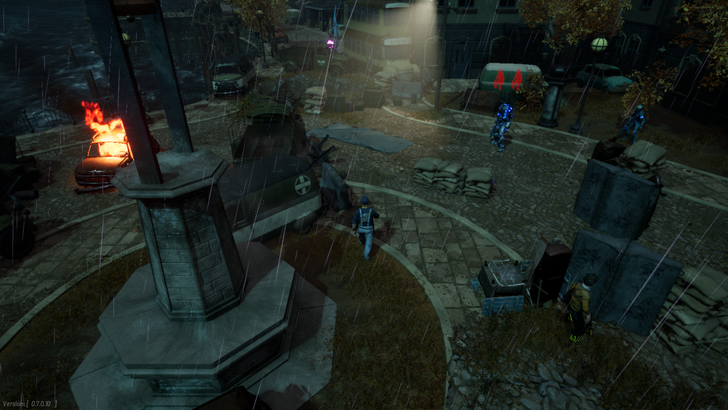
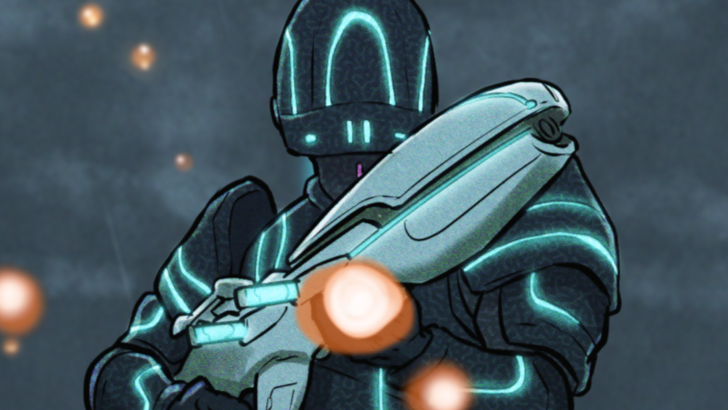
Every Day We Fight is a roguelite tactical strategy game that combines real-time exploration with turn-based combat. Players control three characters called Thorns, as they navigate a sandbox-style city, engage in strategic skirmishes, and gather resources to upgrade gear and unlock skills. Combat features an active twist, allowing for first-person aiming, area control, and reflex reactions.
Every Day We Fight Release Date
Every Day We Fight released on July 10, 2025 in Early Access. There is no date yet for the full release.
| Digital Storefronts | |||||
|---|---|---|---|---|---|
 Steam Steam |
|||||
| Price | $29.99 | ||||
Every Day We Fight Review (Early Access)
Gets Better Every Time You Die
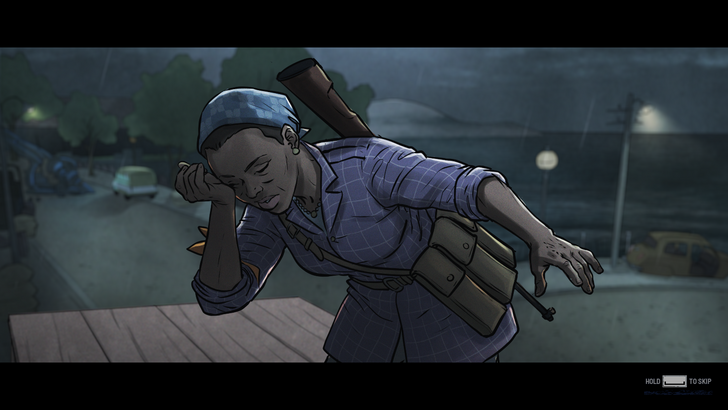
I’ve lived this day a hundred times, maybe more. Every time it starts the same, the streets are empty, the air buzzes with wrongness, and the city feels like it’s holding its breath. Everyone is frozen mid-motion, like a frame out of place. Like someone hit pause on the human race. All except three.
Welcome to Every Day We Fight, where time loops, aliens reign, and humanity is on ice, literally. Think Doctor Stone, but instead of science rebuilding society, you’ve got tactical guns, time anomalies, and three people from once-warring nations now stuck fighting side by side. It’s the end of the world and peace talks are over. Now it’s about survival, and maybe, if you loop enough times, victory.
At its core, this is a turn-based tactical roguelite with a twist: it feels like an action game. You’re not just issuing commands from a distant overhead perspective. You are Vivian, Dylan, and Leo, in the moment, crouched behind cover, peeking out to take your shot in a surprisingly immersive first-person view. Every encounter plays out like a tense dance between stealth, timing, and raw execution. And let me say this right up front: the tactical layer? It’s genuinely impressive.
So, without further ado… let’s talk about the part that caught me off guard the most.
Combat That Loops But Never Tires
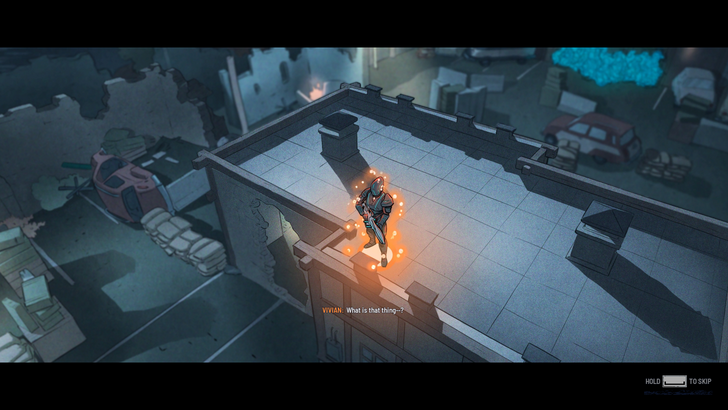
Every Day We Fight doesn’t just rely on cool concepts, it executes them. And nowhere is that more obvious than in the combat. You’d think "turn-based" would mean slow, maybe even stiff. But the moment I took my first shot in first-person, I realized this wasn’t going to be a typical tactical crawl.
Combat here is a hybrid beast. You start off in a real-time phase, sneaking around the city’s corners and alleys, deciding how to approach the fight. Then, the moment you engage, the turn-based phase begins. What surprised me most is how fluid the transition feels. No loading screens, no cuts, just tension mounting until you make your move. And once you're in it? The tactics come alive.
I loved that the game gives you room to plan. You’re not just dragging icons on a grid. You’re positioning your team in 3D space, behind cars, inside broken buildings, under balconies, scanning the terrain like a squad leader with too many bad memories. The way you place your three Thorns—Vivian, Leo, and Dylan—can change the entire rhythm of a fight. I kept them close, usually within each other’s line of sight, because certain skills only activate when allies can see one another. That one design choice alone adds layers of subtle strategy. Am I in cover? Yes. Can Dylan see Leo? Yes. Cool, that means Leo can pass him an action point or trigger covering fire if someone flanks us. It’s the kind of micro-planning that makes you feel smart when it pays off.
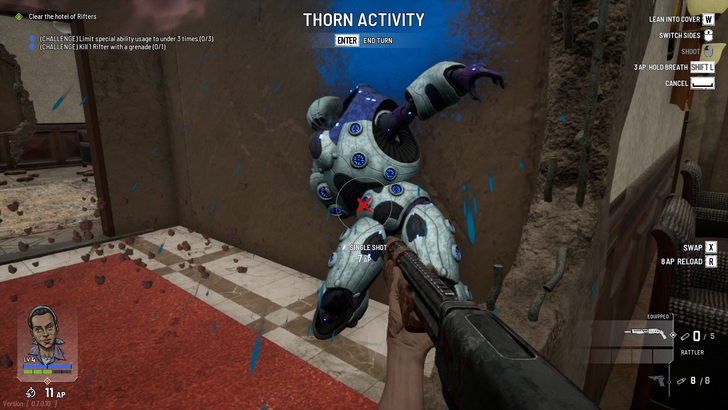
And when it’s your turn to act—this is the part that really caught me off guard—you actually aim. Like, you, personally. None of that "click and wait" stuff. You go into first-person, line up your shot, and pull the trigger. Hold your breath to stabilize the aim. I wasn’t expecting this much manual control in a tactics game, it’s tense, it’s satisfying, and it gives you a reason to care about who you’re aiming at—and where you’re aiming from.
Then there’s the reflex system, which lets you react during the enemy’s turn. If a Rifter targets you, you’re not helpless. You can run and hide. I love when a turn-based game lets you feel like you're still in it even when it's not your turn. And overwatching (covering zones), basically readying an action in a specific area so your character auto-reacts if something moves through it, adds even more strategic depth.
The first time I cleared an encounter without losing a character, I fist-pumped. The second time, I tried something bold, got cocky, and paid the price. But that’s the loop: test, fail, learn, adapt. It’s not about brute-forcing your way through, it’s about evolving, one death at a time. And somehow, even after failing repeatedly, I never felt punished. Just… looped. Sharpened.
If you’re coming from a background of action shooters, the systems here might feel surprisingly familiar. If you’re a strategy veteran, this might feel refreshingly unfamiliar in the best way. Either way, the combat in Every Day We Fight demands your attention and rewards it.
Dying to Explore the City
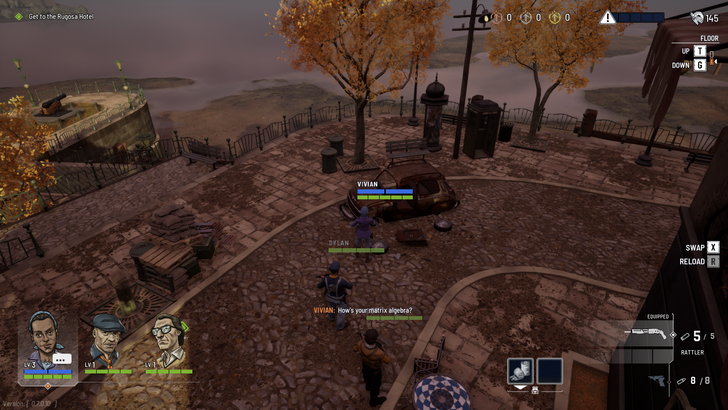
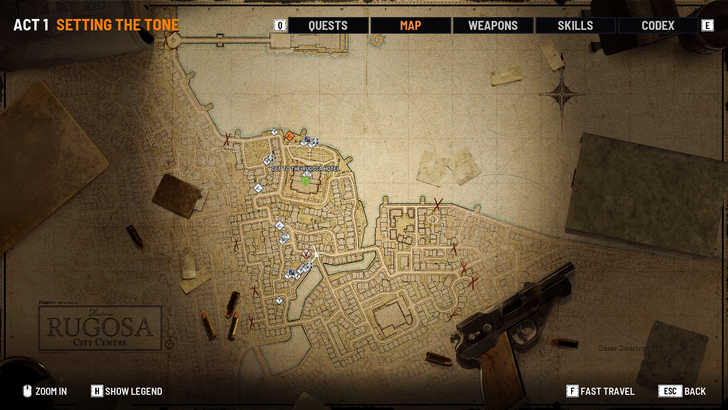
Death spits you back out in the sewers, and this place becomes home fast. It's your base of operations, your reset point, your quiet corner between time loops. And the city above? It’s small. Compact. Not some sprawling open-world map with dozens of fast travel towers. But that’s what makes it work. This world isn’t built for sightseeing, it’s built for circling. For poking at the edges of a mystery again and again until something new cracks open.
The longer I spent in the loop, the more I realized that exploration isn’t just encouraged, it’s necessary. After every mission or untimely demise, you return to the same city. But it’s never quite the same city. I started paying more attention to alleyways, rooftops, corners I’d ignored on earlier runs. And every time I veered off the obvious path, I was rewarded—sometimes with scraps for crafting, sometimes with a strange glimmer of lore, sometimes with a weird enemy skirmish that nearly wiped my squad. (Thanks for that, game.)
There’s a kind of slow-burn storytelling embedded in exploration. The game doesn’t shove exposition in your face. It lets you find it. You learn about the world not through cutscenes but through conversations between the three Thorns. Vivian, Leo, and Dylan talk. Like, actually talk. About the past. About what’s happening. About each other. These aren’t one-liner cardboard cutouts, they’re people unraveling just like you are. And you hear their thoughts mostly when you’re wandering, poking through wreckage or reading the city’s broken landmarks.
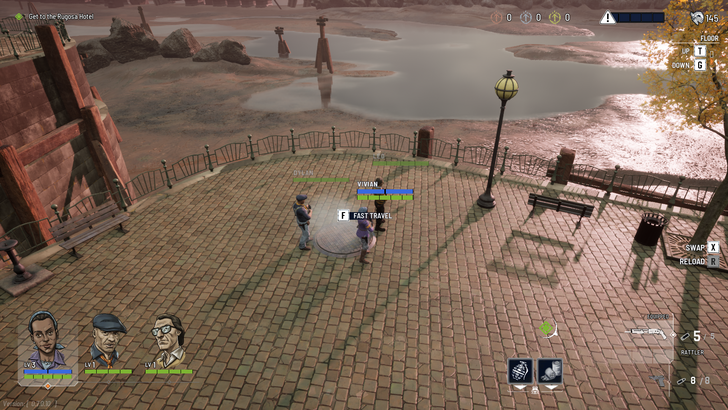
That’s the sweet spot, when the combat and the story take a breath, and you’re just walking through this city that keeps falling apart in new ways. Sometimes you stumble onto a manhole and unlock a new fast travel point (lifesaver). Sometimes you find a side encounter you weren’t expecting. They give you experience, sure, but also more reasons to care. Because this world? It’s broken in layers. And exploring lets you peel those layers back. One of my favorite moments wasn’t in a fight or a cutscene—it was just a quiet walk through a ruined square, listening to the three and what they were before the war ended and the end of the world began.
And like everything else in Every Day We Fight, exploring ties right back into the loop. The more you wander, the more you understand what you need to bring to the next fight. What resources to prioritize. Which enemies to target and how to weaken them. Which shortcuts are worth unlocking. Even leveling up is tied to your city adventures—those little scraps of progress accumulate until suddenly, boom, you’ve unlocked a new skill. Or a new strategy. Or just a better plan for next time.
Exploration here isn’t a break from the game—it is the game. A kind of urban archaeology by firelight, all while the clock keeps resetting. And for a game about fighting the same battle over and over again, it’s amazing how often the world still manages to surprise you.
Build, Break, Repeat
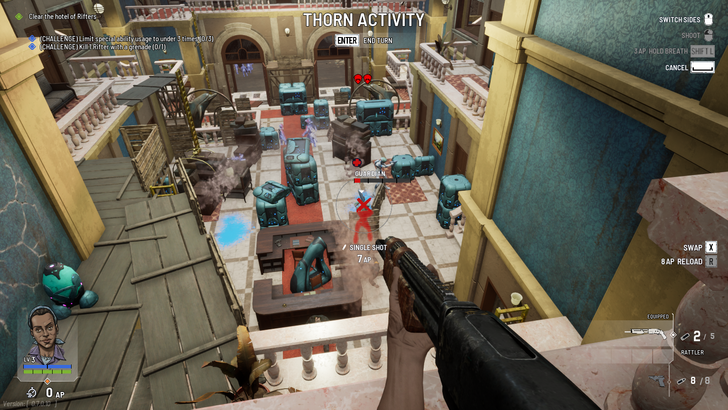
Progress in Every Day We Fight doesn’t come easy. It’s earned—through bruises, through scraps, through tiny breakthroughs in fights that previously stomped you flat. It’s the kind of game where getting stronger doesn’t always mean new weapons or more health, it means being smarter. Being more deliberate. Building better. And then watching that build shatter when the loop kicks you in the teeth.
Let’s talk skills first. Every Thorn has their own skill tree, and while they loosely follow traditional RPG archetypes (support, tank, DPS), the flavor is unique to each character. Vivian’s support is kill-based assists, rewarding aggression and positioning. Leo, on the other hand, gets things like covering fire and donating Action Points to his allies. Dylan? He’s the one you throw into the fire, taunting enemies, soaking damage, turning chaos into a plan.
It’s not just about assigning points and walking away. These skills interlock. Vivian might do better when Leo’s nearby to cover her. Dylan can draw enemies out of cover, setting up Vivian’s big shots. The game wants you to think in synergies, to build your team like a puzzle where every edge connects. And because each character has a unique voice—not just narratively, but tactically—it makes each level-up feel like a step toward cohesion, not just power.
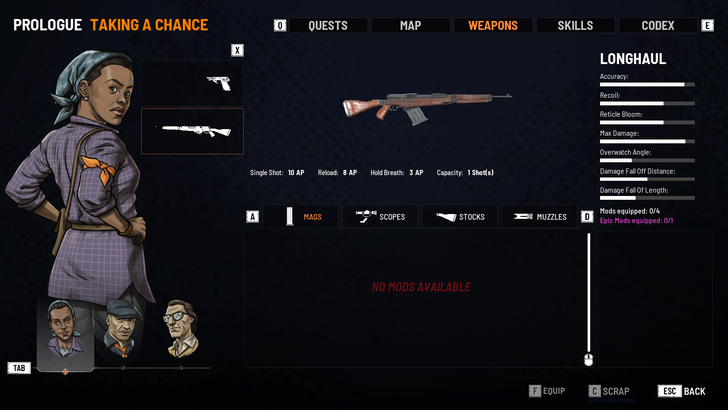
But skills are only part of it. There's gear. There's crafting. There are mods you can slap onto your guns—if, of course, you survive long enough to keep them. And here's where it gets deliciously cruel: mods are temporary. Die, and they're gone. If you're playing outside of story mode, you only get one checkpoint revert before the loop restarts from scratch. One. And to be clear—there are no manual saves here. The game autosaves at the start of each skirmish, which means if you mess up mid-fight, there’s no reloading to fix it. What’s done is done. So if you're holding onto a killer loadout with a tricked-out gun that makes you feel like you’re untouchable… maybe don’t get cocky.
There’s a constant balance here between short-term gains and long-term planning. Do I blow all my materials now on a risky mod I might lose? Or do I play it safe and stockpile for the next loop? That tension never really goes away and that’s a good thing. It makes your choices matter. It makes you matter. You're not just passively unlocking things, you're deciding how to move forward. And if you make the wrong call? You'll feel it. And then you’ll rebuild.
Honestly, the loop would fall apart if progression didn’t feel meaningful. But it does. Not just because your characters grow stronger, but because you grow smarter. You start anticipating enemy movement. You remember which alley hides a loot stash. You begin the mission already plotting your fallback routes. Progress in Every Day We Fight isn’t just measured in stats, it’s measured in decisions.
And that’s what keeps the repetition from feeling repetitive. You’re not just redoing things, you’re rewriting them. With every cycle, your build gets tighter, your run gets cleaner, and your plan gets bolder. And then, just when you think you've cracked it… the game throws you something new. A wrinkle. A Rifter variant. A twist that says, "Hey, this isn't the same loop. Try again."
Glitches in the Loop
No time loop is perfect. Sometimes you wake up with more questions than answers, or—if you're playing Every Day We Fight—a few design quirks that make you want to punch a hole through your screen.
Let’s start with the tutorials, or as I like to call them: lies. Look, I love a good learning curve. I’m all for games that let you piece things together, stumble, adapt, improve. But when a tutorial outright tells me to left click to aim and that button does nothing, we have a problem. The actual control was right click, It felt like I was being gaslit by the in-game tooltips.
And it’s not just the aim button. There are keybind overlaps that made my early hours weirdly chaotic. Like, crouching is set to Ctrl + L… but pressing L also opens the skills menu. So guess what happens every time I try to sneak behind cover? Boom. Skill tree. In the middle of a firefight. Yes, I could rebind it. Yes, it’s a small thing. But these small things add up, the default settings shouldn’t feel like a misstep.
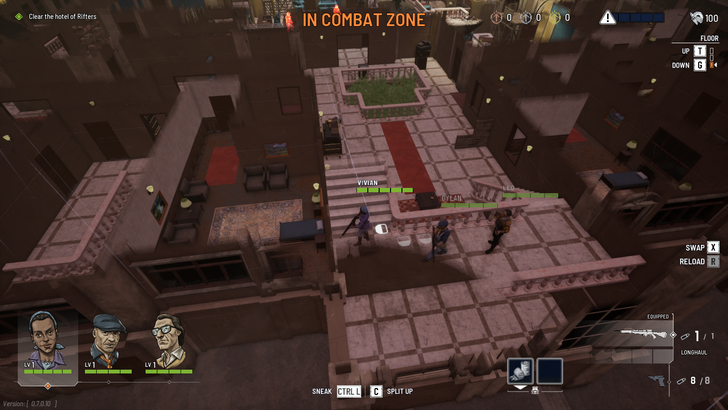
Then there’s the visual navigation issue. Some areas in the city stack vertically—you’ll go up stairs, enter multi-level buildings, or fight across different floors. Totally fine in theory. But the way the camera handles it? Not so much. The game lowers the walls so you can see your characters, but for some reason, the floors also go transparent. So even when I’m on the third floor, I’m seeing the second floor too. It’s like I’m trying to play XCOM inside a haunted dollhouse where I can’t tell which staircase leads where. It’s cluttered, it’s confusing, and during combat, it’s a straight-up hazard.
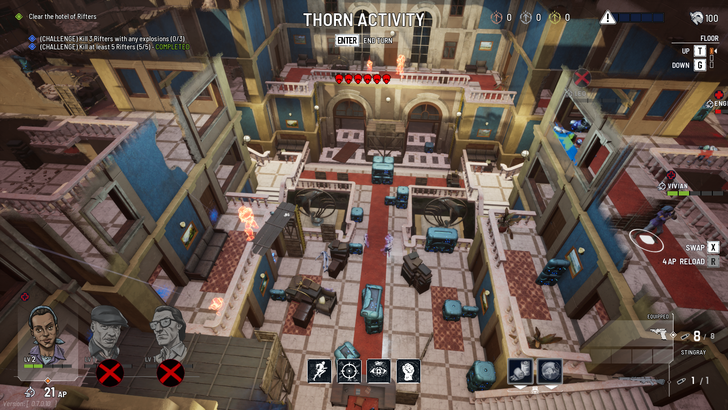
Speaking of combat hazards: difficulty spikes. I’m not against hard games. I like a challenge. But being thrown into a major fight right after Act One—with low stats, one unlocked skill per character, and enemies dealing 400 damage? That’s not just difficult, it’s mean. I died so fast I thought I’d missed something. And maybe I had, maybe the game really expects you to explore the city before doing these main missions. That’s fine once you figure it out, but the onboarding does nothing to suggest this. You learn the hard way. Or the very hard way.
And then there are the technical hiccups. Nothing game-breaking, but annoying all the same. Enemy movements sometimes don’t load in real time. The Rifters just blink across the map, and suddenly the game says it’s your turn again. Now, don’t get me wrong, none of these issues broke the game for me. But they did break the immersion. And in a game that’s otherwise so sharp and intentional, that stings a little. Because what’s here is genuinely good. Which is why these bugs and design oddities stand out like a sore, glitchy thumb.
Still, it’s Early Access. And that means there’s time to iron these wrinkles out.
Time Well Spent
For all its jank and occasional missteps, Every Day We Fight creates a loop that works. The repetition doesn’t grind you down, it builds you up. It’s less about replaying the same mission, and more about mastering it. Understanding it. Getting it just right this time.
Even its limitations—its small city, its tightly wound encounters, its sparse cutscenes—feel like intentional design. Like the game is asking you to fill in the blanks with your own curiosity, to earn its narrative. And while the story takes a quiet, piecemeal approach, the world still feels lived in. The three Thorns don’t just fight well together, they talk, they argue, they share. It’s through these quieter moments between the chaos that Every Day We Fight becomes more than just a roguelite tactics game.
The game is far from perfect. The clunky tutorials, the overlapping keys, the weird terrain visibility—these aren’t small annoyances. They’re real problems that break the flow, especially for newcomers. But they’re also fixable. The core loop? The tactical thrill of setting up the perfect ambush? That’s already in place and already good.
And in Early Access, that’s what matters most. The heart of the game isn’t just beating, it’s sprinting. And if the developers can iron out the friction around that beating heart, Every Day We Fight could become one of those cult classics people won’t shut up about for years. So, is it time well spent? Yeah. Even if you die. Even if you die a lot. Because in Every Day We Fight, dying isn’t failure. It’s the start of a better run.
Game8 Reviews

You may also like...
 |
The Precinct Review |
 |
Urban Strife Review [Early Access] |
 |
Into the Dead: Our Darkest Days Review [Early Access] |
 |
Dream Tactics Review |
 |
Metal Slug Tactics Review |
Every Day We Fight Product Information
|
|
| Title | EVERY DAY WE FIGHT |
|---|---|
| Release Date | july 10, 2025 (Early Access) |
| Developer | Signal Space Lab |
| Publisher | Hooded Horse |
| Supported Platforms | PC (Steam) |
| Genre | Turn Based Tactics, Roguelite |
| Number of Players | 1 |
| ESRB Rating | N/A |
| Official Website | Every Day We Fight Official Website |