| DRAGON QUEST VII Reimagined | |||
|---|---|---|---|
| Release Date | Gameplay & Story | Pre-Order & DLC | Review |
Overview
What is DRAGON QUEST VII Reimagined?
Dragon Quest VII Reimagined is set to release on February 5, 2026, for Steam, PlayStation 5, Xbox Series X|S, Nintendo Switch, and Nintendo Switch 2. It is a remake of the original Dragon Quest VII, released in Japan in 2000 and in North America in 2001. An earlier remake was also released for the Nintendo 3DS in Japan (2013) and later in North America, Europe, and Australasia (2016).
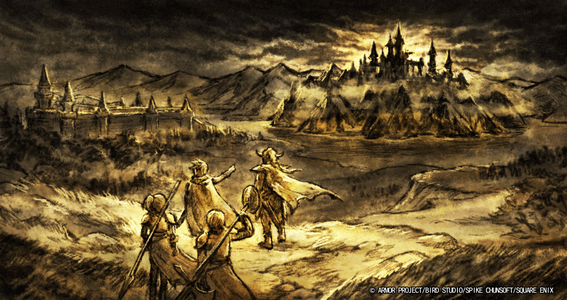
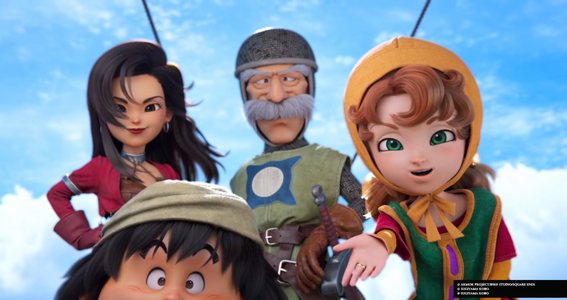
Starting on the isolated and peaceful Estard Island, players take on the role of Arus, a fisherman’s young son. Alongside his friends Prince Kiefer and Maribel, Arus discovers an ancient ruin containing mysterious fragments that, when put together, create magical tablets with the power to open gateways to different lands in the past.
The trio, with the help of friends made along the way, must journey into these unfamiliar, crisis-stricken locations and usher them into the present world. On their journey, our adventurers will face great evils and fight countless foes as they unravel the greater mystery behind the exiled lands’ catastrophes and work to fulfill their quest for global restoration.
DRAGON QUEST VII Reimagined features:
⚫︎ Streamlined Story From the Original
⚫︎ New Gameplay Features
⚫︎ Modern Dragon Quest Combat
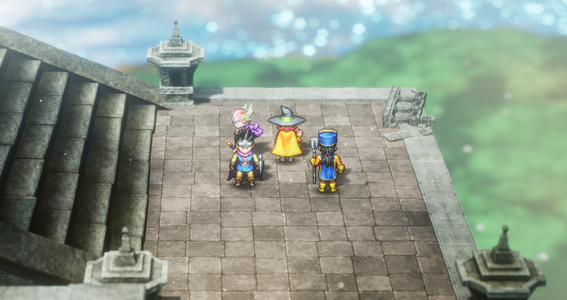
⚫︎ Diorama-Like Visuals
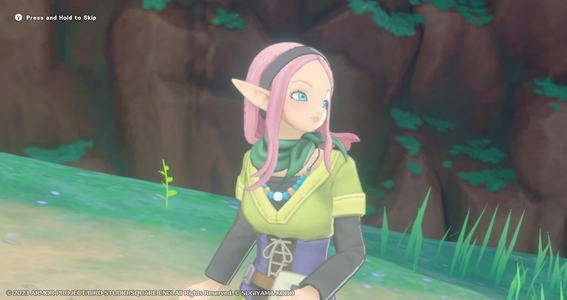
⚫︎ Voice Acting
For more gameplay details, read everything we know about DRAGON QUEST VII Reimagined’s gameplay and story.
| Digital Storefronts | |||||
|---|---|---|---|---|---|
 Steam Steam |
 Playstation Playstation |
 Xbox Xbox |
|||
 Switch Switch |
 Switch 2 Switch 2 |
||||
| $59.99 | |||||
DRAGON QUEST VII Reimagined Review: Convenience Isn't Always Better
Third Time's Not the Charm
For the past few years, Square Enix has made a point of reintroducing the world to Dragon Quest (DQ). Since the release of the Erdrick Trilogy remakes, the franchise has been the focus of their revival
project. And honestly, they’ve been spot on with how they’ve both modernized, streamlined, and reshaped the series to fit today’s audiences.
This time, however, we’re not looking at a remake, but a reimagining, as they call it.
DRAGON QUEST VII is no slouch when it comes to the best DQ titles of all time, but it is one of the more daunting titles in the series. While it’s still one of the series’ more successful titles, it’s infamous for its sheer length, atrocious pacing, and frustrating difficulty. Funnily enough, they’ve actually made a remake of the title for the 3DS, which addressed some of its pacing issues.
With an even greater focus on streamlining the story and modernizing the gameplay by applying what they’ve learned from their newer releases, calling it a reimagination of the original is definitely accurate. That being said, is this remake the best way to experience the game? Sadly, not, as there are too many sacrifices made in the name of convenience.
Better Pacing and Actual Closure
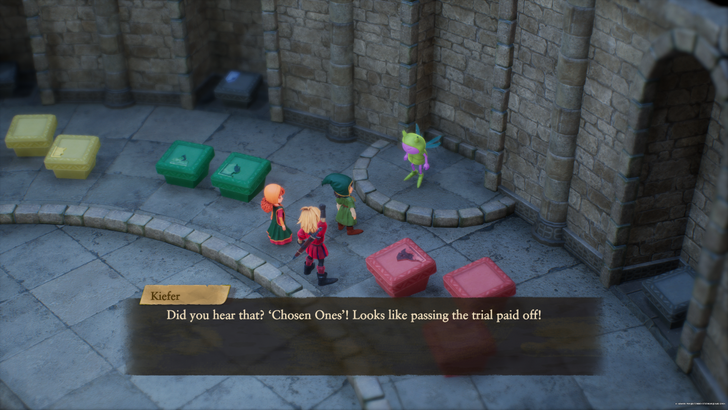
DRAGON QUEST VII Reimagined takes you on a journey where you fill the shoes of a fisherman’s son, growing up on an isolated island. Dreaming of what could be out there, you and your fellow childhood friends discover a mysterious shrine that takes you to different islands.
It doesn’t take long for you and the gang to realize that you have actually been time-traveling to visit and potentially fix the problems those islands face. As the plot develops, it turns out that the islands in the present timeline are sealed away by the Demon King, and it’s up to you and your friends to stop him and save the world.
The overall narrative of DRAGON QUEST VII Reimagined is more or less a collection of short stories that make up the overarching story related to the main plot. In a way, it feels episodic in its approach, since each of the unique scenarios that take place in the past doesn’t necessarily connect to the others.
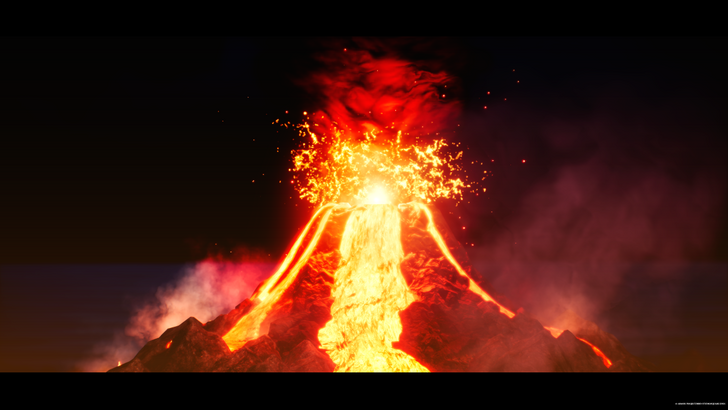
That said, the level of each episode is certainly a hit-or-miss. Some story arcs are much better than others, making the narrative a rollercoaster of sorts. I wouldn’t say there were more weak episodes, but the collective doesn’t feel as punchy as the other titles. Some stories, like Ballymolloy and Regenstein, were notable highs, but not much else stood out.
It’s not surprising that the pacing feels much better this time around. Compared to the original, you’re already off to the races after the game’s first two hours, where it would take double and triple the amount of time in the DS remake and original PlayStation release, respectively. The streamlined narrative definitely makes for a much smoother experience. We’ll get to the actual consequences of the streamlining, but just remember, the experience is about twice as fast now.
Of course, we also have to address Kiefer’s return, as his return is certainly one of the key additions to the game’s narrative. Without spoiling the narrative too much, it was definitely a good thing to finally have the closure that addresses his premature departure from the game. There are even a couple of key fan-service moments and lore tie-ins to ensure his return makes sense.
However, it feels cheap overall. Considering the number of reductions that were made to many of the game’s subplots, his return comes a little too late and resolves a little too quickly for my taste. It’s fan service through and through, but they could’ve at least made it a little longer so that there’s more time for it to sink in.
Masterclass in Visuals
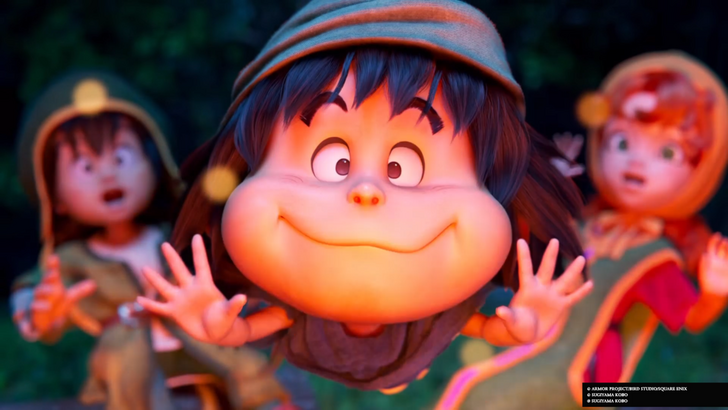
I wasn’t a believer of the game’s diorama-like art style at first, and that’s coming from a huge Akira Toriyama fan. But seeing the game in motion really blew me away. The game just looks extremely appealing to watch and play, with buttery-smooth animations for each character and monster. Each combat encounter looks amazing, and it honestly feels like this is their best work yet in terms of their 3D graphics.
While the game did lose some of its charm by removing some things like the character outlines and the colors being much more muted in tone, it’s still one of the best-looking Dragon Quest remakes to date. I, for one, am excited to see how this art style and aesthetic hold up as they continue remaking more of the franchise’s older titles.
Overdone Voice Acting and Subtitles
While I praised the voice acting in my first impressions, playing through the game definitely changed my mind. And no, there aren’t any problems when it comes to the main crew. It’s more directed to the NPCs you encounter in your journey, regarding their many accents and dialects. In short, they went overboard on the English voice acting and localization, making some dialogue and subtitles hard to read, let alone understand.
The dialogue and NPCs in the L’Arca and La Bravoure arcs were among the biggest offenders in this regard, as there were times when I had to contextualize what was being said. I think it might have been better to at least tone down the dialects and accents in the subtitles to make it easier to follow, even with the colorful voice acting.
Older Problems Require Modern Solutions
Let’s move on to its gameplay. The reimagined version introduces numerous quality-of-life changes to create a more streamlined, modern experience.
For starters, the game allows you to choose not only a difficulty setting, but also ways to modify it to your liking. You can choose to face stronger monsters, resulting in tougher battles, but have your party heal after every battle. Or, you can choose to gain more experience points, proficiency points, and more gold after every battle, but deal less damage against monsters.
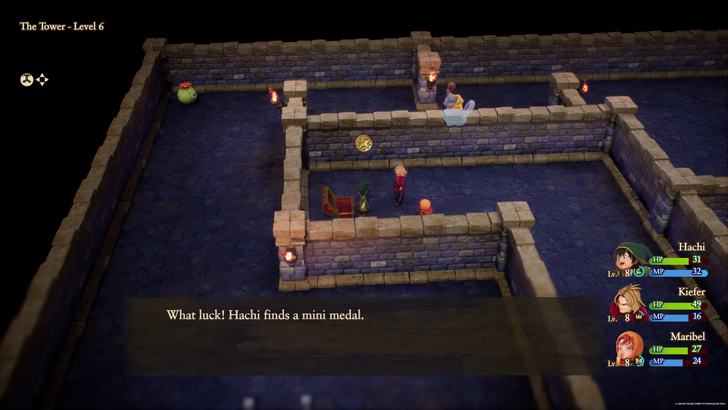
Exploration is also much simpler, as treasure chests and quest objectives are always labeled on the game’s maps. The addition of the Zoom spell as soon as the game starts also cuts most of the backtracking time since you can go back to visited areas without needing a Chimaera Wing. One significant addition that helps both its exploration and pacing is being able to skip combat entirely if your level is high enough, where you can outright defeat enemies on the field.
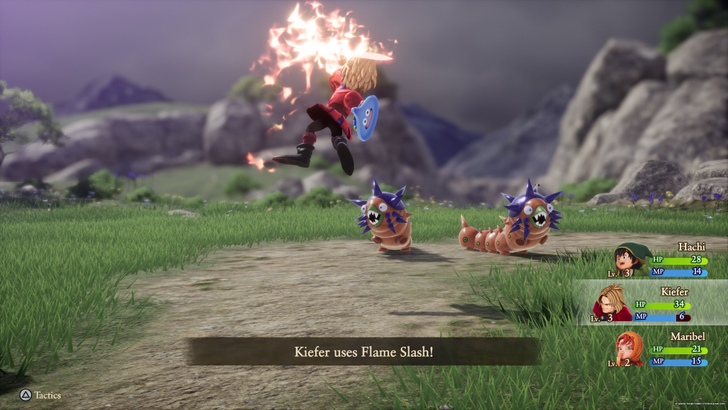
As for combat, it’s largely the same as with any DQ title, but it feels closest to Dragon Quest 11 because of the addition of the new Worked Up and Let Loose! vocation commands. These are special commands only accessible when the character has the Worked Up status, similar to how Pep Powers worked in the aforementioned title.
One of its biggest changes, however, is the Moonlighting system, which addresses one of the original game’s core pain points by allowing players to train two vocations at once. For context, proficiency points earned don’t change regardless of the strength of the monster you’re facing in the original, which made grinding vocations a huge challenge.
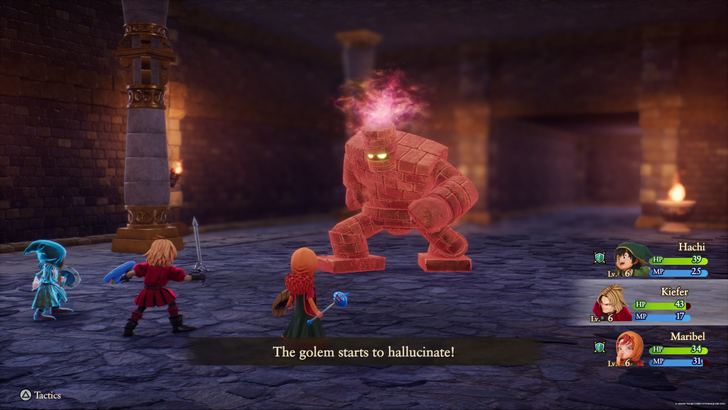
With this change, it not only quickens the process but also bolsters the game’s combat design by being able to mix and match two different vocations for stats and for the skills you learn. There’s also the addition of new Monster Heart accessories that create avenues for even stronger and specialized builds, which puts even more focus on how much they want vocation matching to be a thing.
The Price of Convenience
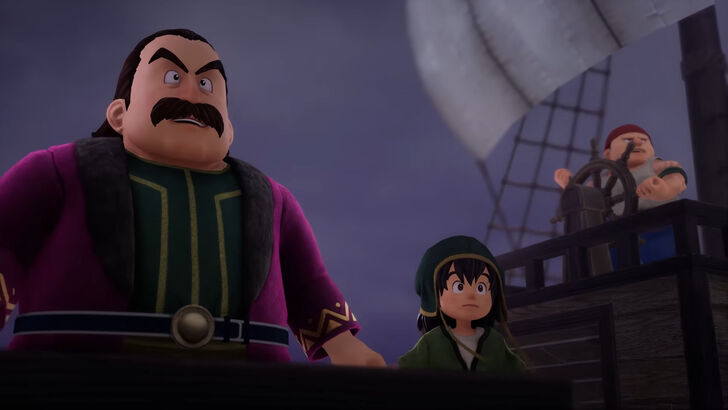
Now, I said we’d talk about the consequences of making the game too convenient, and here we are. Cutting content is certainly a sore spot when it comes to remaking games, and it’s definitely felt here.
For instance, some islands and features from the previous remake and the original were removed to make it more linear. Certain islands were made optional, and, sadly, not all islands in the original or the remake received the same treatment.
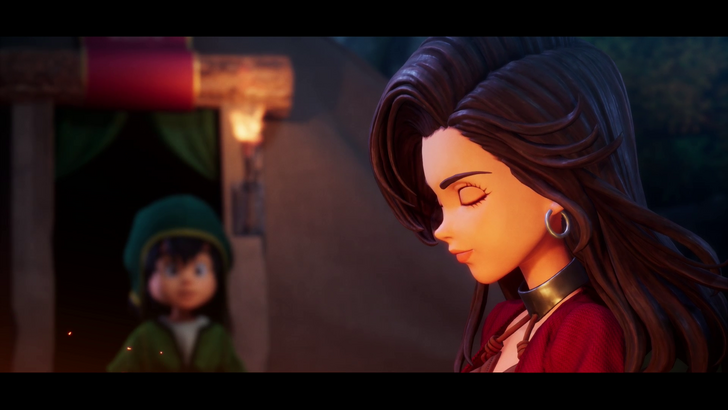
There’s also the case of the gameplay loop in general, as part of what makes the original memorable (or notorious) is the fact that finding the tablet fragments is something that you need to explore for. With these being listed in the map, exploration felt a little pointless.
I would just need to Zoom to this place, get the fragment, then Zoom out. It would’ve probably helped if there were an option to remove the map markers, since the encyclopedia already provides enough information or hints on where to find some of the more obscure fragments.
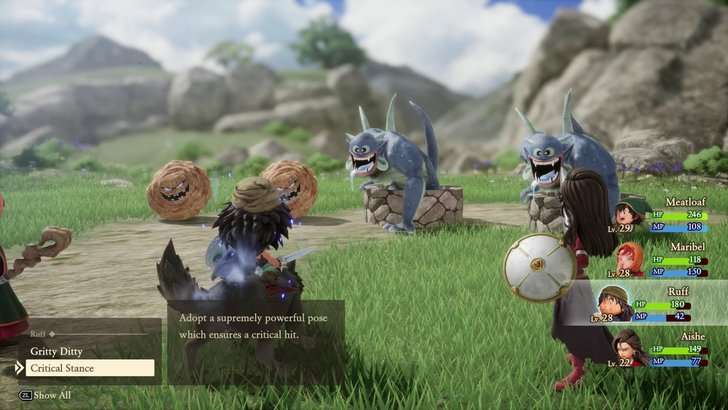
Additionally, the difficulty of the game was also greatly diminished, and it certainly felt like a shell of what to expect in a DQ game. For context, most DQ games have segments or areas where the difficulty spikes, but I hardly encountered any challenges in my experience with the Reimagined version because of the many additions that made things easier.
Angel Statues that heal HP and MP, the surplus of restorative items, and the strength of enemy encounters feel too one-sided in your favor. Even death in the Reimagined version was nerfed, as would be 1 HP after dying in combat, and losing an entire encounter was a measly 1000G tax.
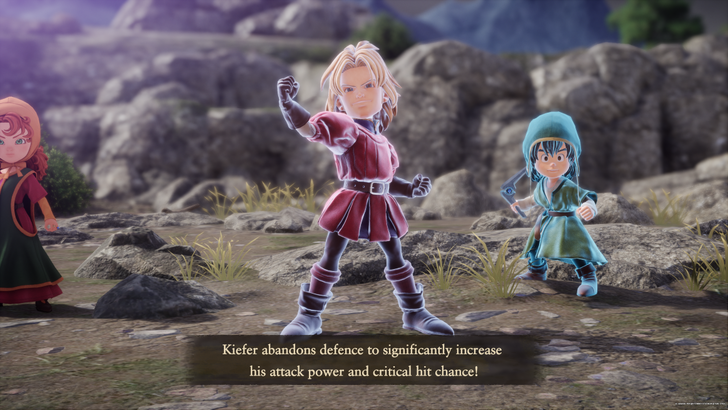
It felt as if the game was just letting me through, with no pushback or challenge whatsoever. There wasn’t a need to strategize or optimize my characters since I would have more than enough healing to triumph in any combat encounter. Exploration was just a few Zooms with a little walking on the side. It became a clear case of making things too easy, even though the franchise was already simple enough to understand and never needed it.
Is DRAGON QUEST VII Reimagined Worth It?
Good, But We’ve Seen Better.
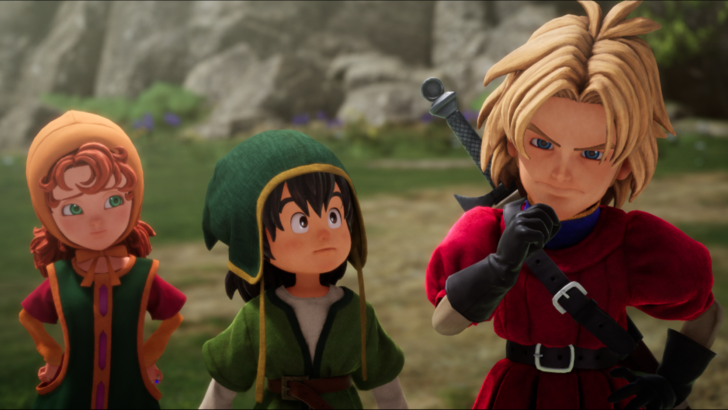
All things considered, DRAGON QUEST VII Reimagined is still a good title. The better-paced narrative, combined with modernized turn-based combat, makes this remake much easier to follow and play in the series. However, the consequences of streamlining the game made it less satisfying than intended.
The lack of challenge and the multitude of quality-of-life improvements have dumbed down the overall experience entirely, especially when compared to the likes of the remakes in the Erdrick Trilogy or the latest installment in the mainline series, DQ11.
All of these changes have made the game the easiest in the series, by far. But if Square Enix’s intention was to create the definitive version of the game while creating the best entry point into the franchise, then they have certainly missed the mark. I wouldn’t recommend it to newcomers looking to get into the series at full price, as there are far better options that better represent the historic franchise.
DRAGON QUEST VII Reimagined FAQ
How Do I Unlock Intermediate Vocations in DRAGON QUEST VII Reimagined?
To unlock Intermediate Vocations, certain Beginner Vocations must be maxed out. Here are the unlock conditions of each of the seven (7) Intermediate Vocations:
⚫︎ Gladiator - Must have Warrior and Martial Artist maxed out.
⚫︎ Sage - Must have Mage and Priest maxed out.
⚫︎ Armamentalist - Must have Warrior and Mage maxed out.
⚫︎ Pirate - Must have Thief and Sailor maxed out.
⚫︎ Luminary - Must have Dancer, Troubadour, and Jester maxed out.
⚫︎ Paladin - Must have Martial Artist and Priest maxed out.
⚫︎ Monster Wrangler - Must have Thief and Shepherd maxed out.
Incidentally, Advanced Vocations also require specific Intermediate Vocations to be maxed out as well. Here are the unlock conditions of each of the three (3) Advanced Vocations:
⚫︎ Champion - Must have Gladiator and Paladin maxed out.
⚫︎ Druid - Any two of Sage, Pirate, and/or Luminary maxed out.
⚫︎ Hero - Any three of Gladiator, Paladin, Sage, Pirate, Armamentalist, Luminary, and Monster Wrangler maxed out.
Game8 Reviews