
| Depersonalization | |||
|---|---|---|---|
| Release Date | Gameplay & Story | Pre-Order & DLC | Review |
Depersonalization is an RPG told in an anthology format with heavy Lovecraftian themes. Read our review to see what it did well, what it didn't do well, and if it's worth buying.
Depersonalization Review Overview
What is Depersonalization?
Depersonalization is a narrative-driven game built around an anthology format, where each chapter stands alone and explores a distinct genre or theme. It serves as a growing archive of unique and varied stories—an ever-expanding collection housed within a timeless library, beyond the bounds of linear chronology.
Depersonalization features:
⚫︎ Multiple stories—modules to explore
⚫︎ BRP-based systems
⚫︎ Heavy Lovecraftian themes
⚫︎ TTRPG mechanics
⚫︎ Multiplayer coming soon
⚫︎ Character records carry over between stories
 Steam Steam |
$19.99 |
Depersonalization Pros & Cons
| Pros | Cons |
|---|---|
 Near-Endlessly Replayable Beautiful Spritework and Music So Much to Do, so Little Time Near-Endlessly Replayable Beautiful Spritework and Music So Much to Do, so Little Time |
Completion Can Be Tiresome Story Quality Can Be Inconsistent Poorly Explained Mechanics |
Depersonalization Overall Score - 82/100
Anthologies often suffer from a certain issue; some stories may be great, but others tend to fall flat. The difference in writing styles also often clash, which tends to create a rather jarring experience. This inconsistency makes recommending them difficult, at least in the general sense. For the most part, though, that isn’t true for Depersonalization; its story arcs are actually rather consistent. What you’re left to take note of can only be described as a wondrous, if painful experience of experiencing its thought-provoking and
Depersonalization Story - 7/10
At first, Depersonalization might feel like a series of unrelated stories set across different times and cultures. But while there really isn’t a straightforward plot, a theme connects them all, centered around the main characters of Yog Sothoth, Her avatar Aforgomon, and Their trusted aide in Anan. Each albeit broken and seemingly directionless, trope-filled tale can be experienced in any order and still resonate in its own way. That said, fully understanding the bigger picture often requires multiple playthroughs—a rewarding process for some, but potentially frustrating for those looking for a more direct narrative.
Depersonalization Gameplay - 7/10
This is the first RPG I’ve played where I genuinely felt like an infant fumbling in the dark, trying to make sense of a system that outright refuses to explain itself. Maybe it’s because the game does a flat-out terrible job of telling you what you can do, much less why you’d want to do it. But once things started to click, I found myself getting pulled in deeper, even if most of it still felt like mechanics were thrown in just to keep you busy. It’s messy, overwhelming, and at times downright confusing… but strangely enough, that’s also part of the pull.
Depersonalization Visuals - 9/10
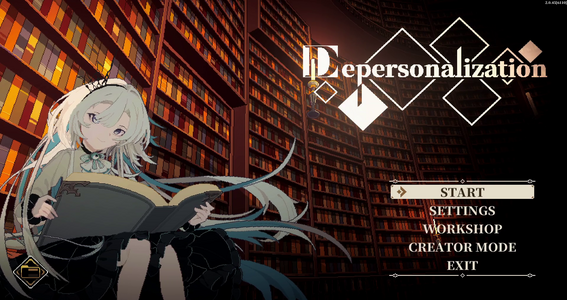
Aside from some admittedly lazy spritework, everything else about Depersonalization’s visuals is stunningly beautiful. From the soft light filtering through pixelated windows to the striking character art that goes beyond mere high-res flair, every element feels carefully considered. The interface and backgrounds, too, shifting from somber to downright horrific, carry a quiet intent—meant to evoke awe, but always with a sense that not everything is being shown yet.
Depersonalization Audio - 9/10
Games with music so good you linger in an area just to hear it are rare enough to deserve pedestals. Depersonalization more than earns that honor, pairing every moment with music that perfectly heightens the mood without ever overstepping it. The sound effects are just as deliberate: sharp, eerie, and often unsettling in the best way. Just steer clear of the “voice overs”—they're AI-generated and sound worse than what you'd hear in mass-produced TikToks or mass-produced YouTube shorts. Luckily, they’re completely skippable and in no way essential to enjoying the story.
Depersonalization Value for Money - 9/10
On its own, Depersonalization’s $19.99 price tag sits squarely in the middle of the genre’s typical range, making it hard to call either expensive or cheap. But once you factor in everything it offers, it starts to feel like a steal. With its endlessly replayable structure, especially considering the community-created stories and Interlude mode, it’s a game that easily justifies the cost and then some.
You may also like...
 |
Eriksholm: The Stolen Dream Review | The Quiet Ones Strike Best Eriksholm is a quiet, deliberate journey. One that grips not through spectacle, but through emotional weight and precision. |
 |
Worship Review [Early Access] | Sacrilegiously Satisfying At its heart, Worship is a creative, stylish, and ambitious take on the roguelike genre—one that offers plenty of dark charm, challenge, and personality. |
 |
Slay the Princess Review | She’ll Take Your Breath Away Slay the Princess has astounding surreal horror storytelling, stunningly unnerving visuals, exceptional voice performances, and excellent use of background music. |
 |
Dungeon Stalkers Review [Final Playtest] | Just Another Stalker The microtransactions make the game unhealthy, the random gear drops determine if you’re competitive, and the whole thing just feels way too slow. |
Depersonalization Review: I Wasn’t Ready for This
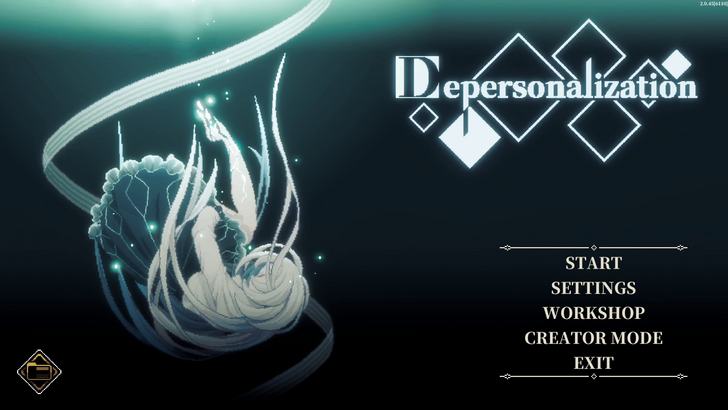
I initially purchased this game several months ago after being baited by the thumbnail. Can’t be too bad, right? It was just $19.99. Plus, I’ve had a pretty good experience with getting carried away by thumbnails thanks to games like Sailing Era, Noctuary, and The NOexistenceN of you AND me.
Unfortunately, at that time, the translation for Depersonalization was… less than good. Okay, it was basically unreadable, especially considering that I had other things to read at the time. So I dropped it, thinking that maybe things would be fixed later. And, it did… almost an entire half a year later from when I bought it.
If you’ve ever played Call of Cthulhu and Live A Live, imagine compressing the two together and you’re already more than halfway to understanding what Depersonalization plays like. It’s essentially a video game version of tabletop BRPs (Basic Roleplaying), built around a collection of stories rather than a single, self-contained narrative.
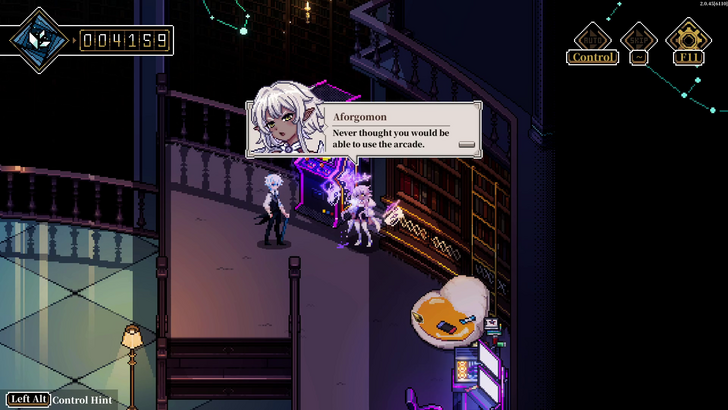
You play as Anan, the faithful and host of the outer god Yog-Sothoth and Her avatar, Aforgomon—technically. In truth, you only directly control Anan during the prologue. Everywhere else, he assumes the existence—not the role—of a character within each story. These characters are the ones who resolve their narratives against the backdrop of some world-ending scenario, before eventually merging back into Anan’s consciousness.
The mechanics of each run is simple. You go in, try to prevent the world from ending, and die if you fail. As for why there’s an abundance of timelines facing the end, well… you’ll have to play the game to find that out. And that’s going to be quite difficult, especially at the start, because—
Immersive, Though Poorly Explained Mechanics
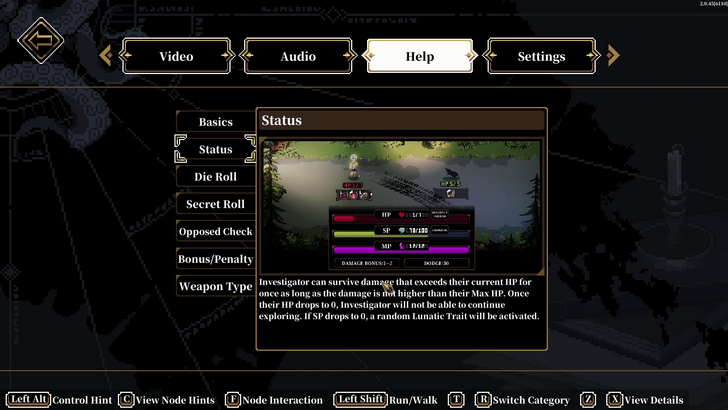
If you’re feeling intimidated by the idea that this is a horror game with heavy Lovecraftian themes and some combat, don’t be—because that’s not even the most troublesome part. No, that honor goes to playing the game itself, because Depersonalization really, truly hates holding your hand.
Most games start with a tutorial, right? Some dedicate entire prologue sections to it, while others try to keep things unobtrusive with simple pop-ups during gameplay. Depersonalization? It just throws a table of text at you. Don’t feel like reading it? Too bad—the game doesn’t care.
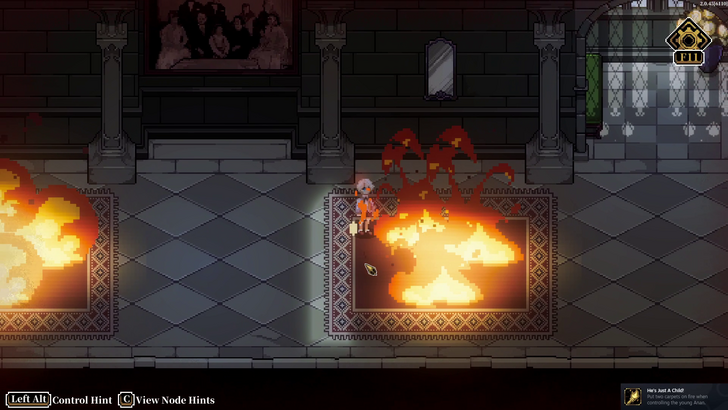
Most of the time, you’ll only realize you missed something important after accidentally interacting with some random object that, for whatever reason, was secretly critical. One of the most memorable moments for me happened early on, when I found out that burning the carpet in my own house—a decision that felt completely unnecessary—actually made it easier to escape an eldritch monster later.
After experiencing that, I just started clicking on everything. Won’t miss anything that way, right?
Endlessly Replayable, for Better or for Worse
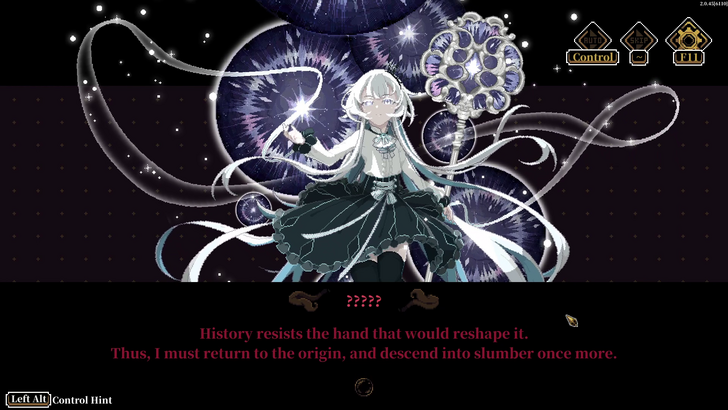
Again, the way each story—or module, as they’re called—works in Depersonalization is simple on paper: go in, resolve the scenario, and get out. Easy, right? Sure, if you’re fine with any ending, including the bad ones. But if you’re aiming for the “true” ending, you’ll need to replay each module several times, learning from failed runs until you finally piece together a path through all its traps, red herrings, and roadblocks.
As you can imagine, that gets tiring fast, especially if you’re not the kind of player who enjoys clicking on every obscure object that wouldn’t even register on a normal run. Worse, some interactions aren’t intuitive at all, like fights you’re meant to lose, even after the game hands you a shiny new power-up just to fake you out. That’s just foul. Thankfully, the true endings usually make the struggle worth it, delivering not just the proper story conclusion, but also a new character you can bring into future adventures.
This is especially true if you’re a fan of JRPGs that give you full control over character creation. You can throw your custom character into a gauntlet of world-ending scenarios, watch them adapt and evolve, then take them into whatever comes next. It’s a weird, eerie, endlessly repeatable ride—and a darn engaging one at that.
Character Management is Almost Unnecessarily Deep
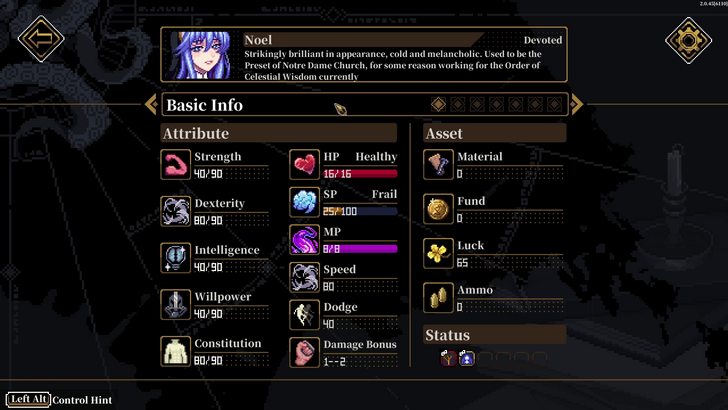
One feature I found surprisingly robust—and sadly neglected by the game’s already lacking onboarding—is the character customization system. And not just the usual “tweak a few stats and pick a class” kind of system, either. This lets you fine-tune almost every aspect of your character except their appearance, which is limited to a selection of preset avatars (though the game will eventually support appearance customization in the future it seems).
You can assign skills across a wide range of specialties, from investigation, combat, and crafting, to even occult magic; a crucial thing to diversify, since each module demands different approaches and abilities to fully explore its narrative branches. For example, you might start the first module as a skilled investigator to sniff out the church’s secrets, then return as a sharpshooter to break through guarded areas using that knowledge, and finally as a grappler to take on the boss who struggles to land hits on physically gifted characters.
You can even build some truly bizarre but viable combinations, like a sporty support who dodges everything while buffing allies, or a beefy frontliner built to counter eldritch horrors with spells. And if all that sounds like too much effort, the game also offers pre-made builds that work perfectly fine right out of the gate.
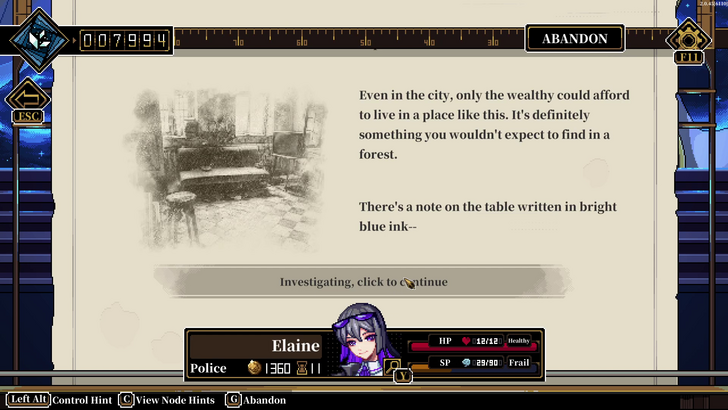
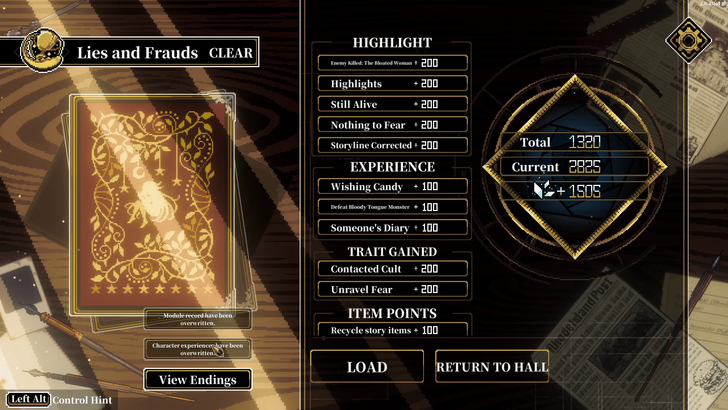
On top of all that, you can further develop your characters through the Interlude system, best described as a “life between adventures” kind of mode. Here, characters can train their stealth, work out to boost physical stats, study to expand their magical and occult knowledge, or even take on solo commissions to earn extra points. It’s a great way to shape your builds between modules and adds a layer of long-term progression that ties everything together nicely.
An even nicer feature is that progress carries over between modules and Interlude sessions. So, for example, if you finish a module with a character loaded with gold, you can bring that wealth into the next one and start with a hefty cash bonus. It’s a small detail, but one that makes your choices—and successes—feel like they actually matter in the long run.
Yes, they even carry over their health among other more essential resources. So, if those are low, well… you can always just delete them.
The Developers Are (Now) Very Responsive
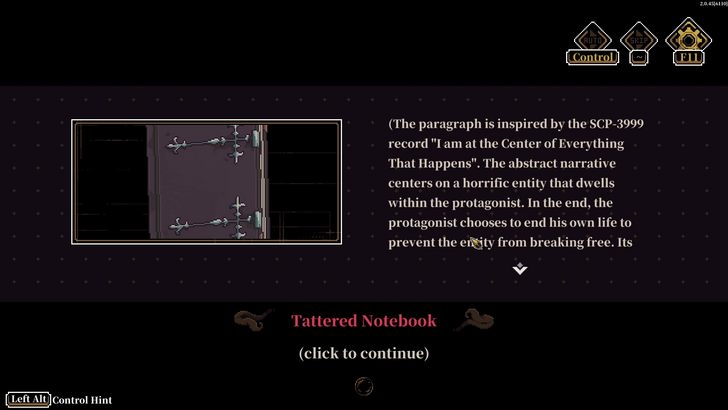
While it’s generally true that anthologies suffer from uneven storytelling—thanks in part to having different writers and styles—the quality across Depersonalization’s modules is surprisingly consistent. Sure, the shifts in writing style can be a bit jarring when moving from one story to the next, but overall? Pretty well done.
The same couldn’t be said for the localization... at least not back then. When I first picked up the game a few months ago, the text was littered with typos, mismatched pronouns, clunky grammar—you name it. Thankfully, that’s no longer the case. Things have improved significantly, with most of the rough edges smoothed out to the point where errors are rare and the overall reading experience feels far more polished.
Yes, there was quite a gap between release and these improvements, but the game’s development has recently kicked into a sort of overdrive. The devs have been pushing out fixes nonstop, even going so far as to retranslate and overhaul parts of several modules. They’ve also begun actively responding to negative Steam reviews, seeking out and addressing specific issues. While this may not be a direct pro
for the game as it stands, if they keep this momentum, Depersonalization has a very bright future ahead.
Is Depersonalization Worth It?
By Yog Sothoth, It Is
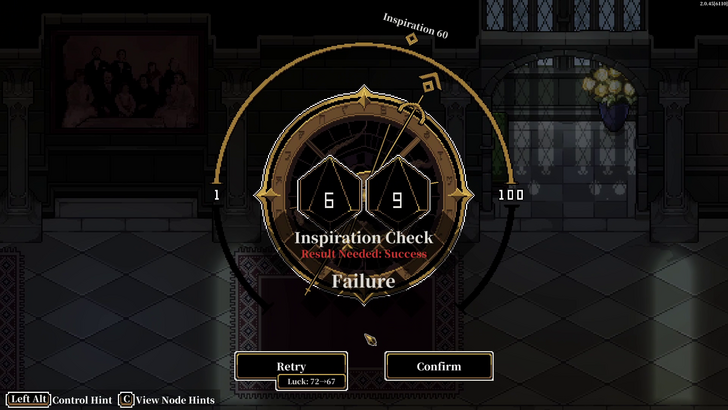
While Depersonalization is far from a perfect game, it’s hard not to give it a chance, especially once you spend a few hours with it and realize just how much passion went into its creation. Its stories pull from all sorts of influences, from SCPs and Lovecraft to the occasional dash of Agatha Christie. Sure, it’s a messy tangle of systems and mechanics, but there’s intent behind the clutter. And with aesthetics this striking, it makes a pretty convincing case to stick around.
| Steam |
$19.99 |
Game8 Reviews

Depersonalization Product Information
 |
|
| Title | Depersonalization |
|---|---|
| Release Date | August 9, 2024 |
| Developer | MeowNature |
| Publisher | Nino Games |
| Supported Platforms | PC |
| Genre | RPG, Psychological, Horror |
| Number of Players | 1 |
| ESRB Rating | TBA |
| Official Website | Depersonalization on Steam |