Everything We Know About Bladesong
Bladesong Plot
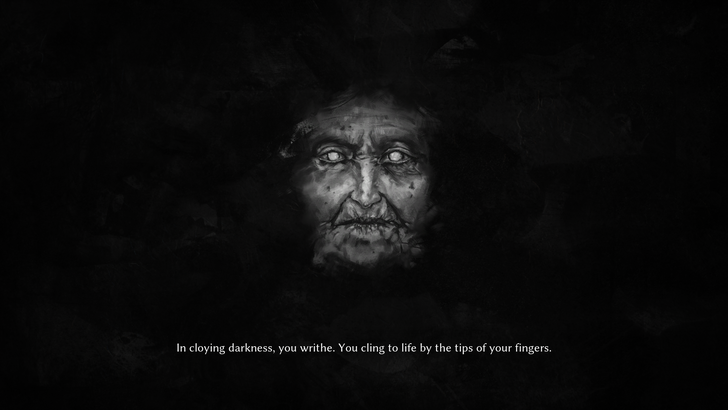
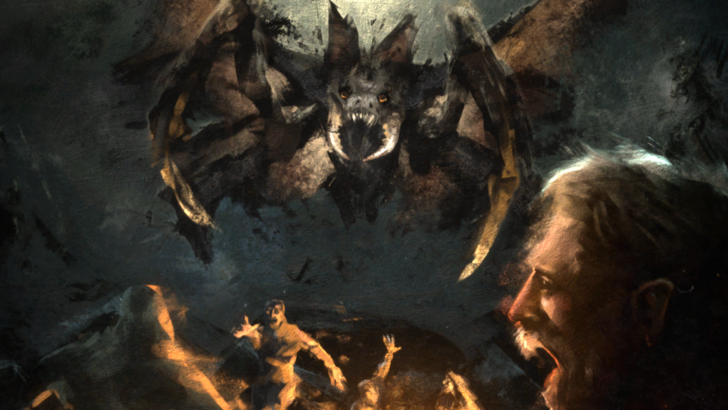
Bladesong follows a blacksmith arriving in Eren Keep, one of the last bastions of civilization after the world fell into ruin. As the city’s swordsmith, you craft blades for commission while uncovering mysteries, including the disappearance of the previous blacksmith. Your work and decisions shape alliances, interact with factions, and influence the fragile balance of power within the Keep.
Bladesong Gameplay
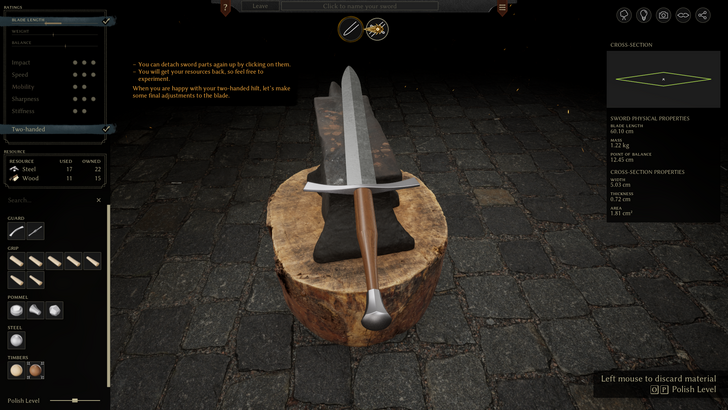
Bladesong combines text-based RPG storytelling with detailed swordsmithing mechanics. Players take commissions, craft weapons using a freeform modular system, and customize every aspect of their blades, from shape and balance to materials and engravings. Materials range from metal and leather to wood, obsidian, and ivory, and players can grow their collection of parts and tools over time. The game features Campaign Mode for structured progression and Creative Mode as a sandbox, along with illustrated locations to explore, factions to interact with, and community tools for sharing creations.
Bladesong Release Date
Bladesong was released in Early Access on January 22, 2026. A full release date has not been announced yet.
| Digital Storefronts | ||
|---|---|---|
 Steam Steam |
||
| $19.99 |
Bladesong Review (Early Access)
Sharp and Shaping Up
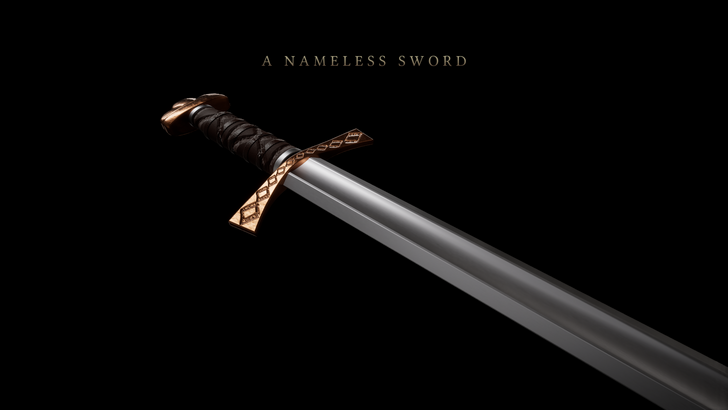
Hear ye, hear ye—a text-based, choose-your-own-adventure (CYOA) RPG has dropped under the name Bladesong. And no, this isn’t a Wizards of the Coast wizard project for D&D 5e. This is something far more peculiar, and honestly, far more charming than I expected.
Bladesong puts you in the soot-covered boots of a blacksmith, not a chosen hero, not a legendary warrior, not a world-saving prodigy. You are someone who forges weapons. Someone who listens to stories, rumors, and pleas from adventurers passing through town. Someone whose work, slowly but surely, begins to shape the fate of others.
When I first stumbled upon it, I’ll be honest, I wasn’t expecting much. An old-school, mostly text-driven RPG in Early Access, centered around crafting? On paper, that sounds niche at best and dangerously dry at worst. My main curiosity came from how in-depth the swordsmithing system looked in previews and screenshots. "Limitless Possibilities," that was enough to make me wonder whether this was going to be genuinely engaging or just overly complicated for the sake of realism.
And because it’s in Early Access, I went in with my expectations firmly lowered. Lo and behold, I was pleasantly surprised. Not in a "this is decent for an unfinished game" kind of way. More in a "wait, why am I still playing this at 2 AM?" kind of way.
Before we dive into mechanics, systems, and all the nitty-gritty details, though, let me properly introduce you to what Bladesong actually is and why this unassuming little text-based RPG ended up sticking with me far longer than I expected it would.
A Blacksmith’s Tale
At its core, Bladesong feels like what would happen if a classic CYOA RPG and a blacksmith simulator decided to have a very nerdy, very detailed baby. Imagine the branching narratives of something like Pathfinder. Then layer it over the presentation style of text-based RPGs like the Eldrum series. Finally, anchor the whole thing around a surprisingly robust sword-forging system. That’s Bladesong.
And if that still sounds abstract, here’s a more modern comparison: it’s basically Kingdom Come: Deliverance’s Legacy of the Forge DLC but stripped down to text, menus, and imagination. It’s minimal on the surface. Dense underneath.
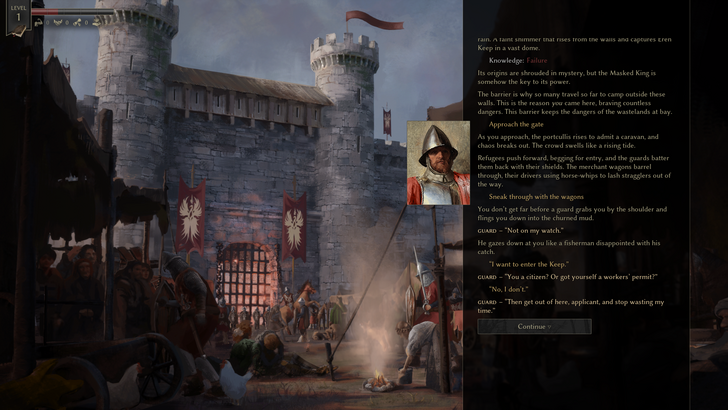
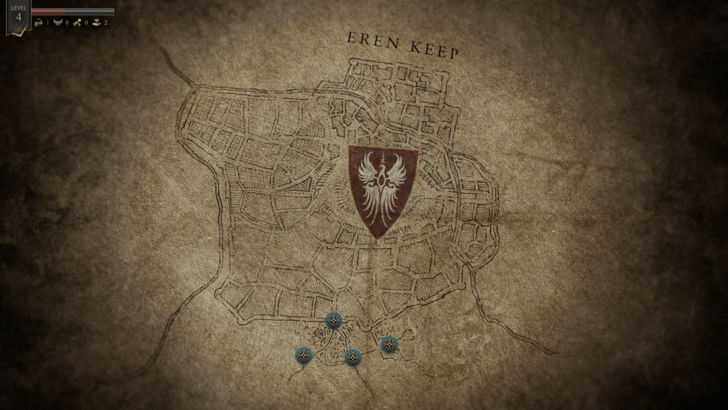
The setting follows the same philosophy. Simple, but quietly gripping. The world has fallen into chaos after the mysterious "Voices" disappeared. Whatever peace they once maintained is gone, and now most of the land outside is dangerous, unstable, and unpredictable. The last real bastion of safety is Eren Keep—ruled by the tyrant and savior, Masked King—a fortified city where magical walls protect the people inside.
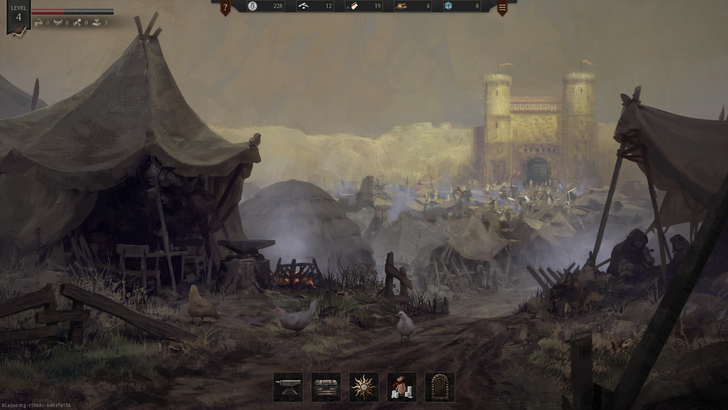
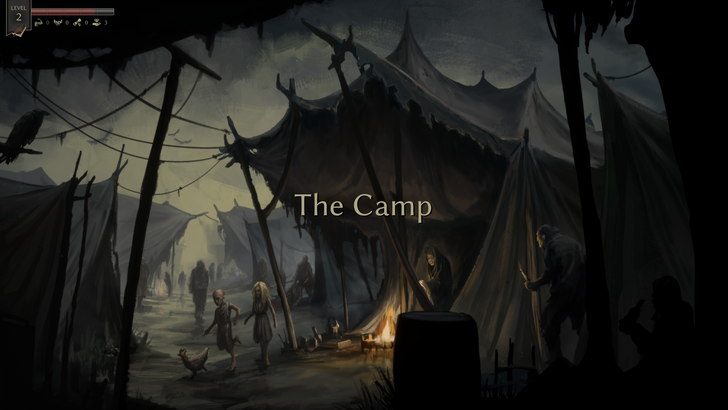
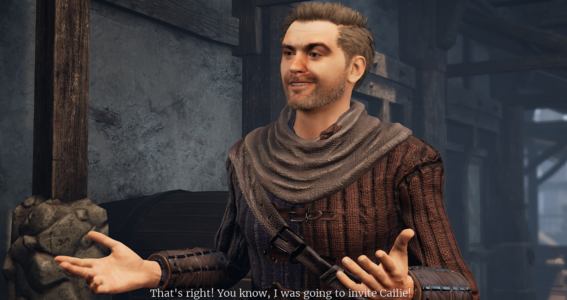
When the city’s resident blacksmith goes missing, our arrival in the camp surrounding the outer gates doesn’t go unnoticed. We quickly catch the attention of the city’s general, who has been searching for their next potential asset.
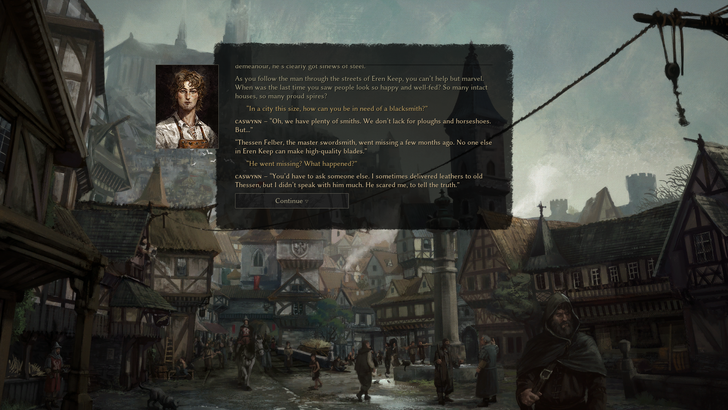
However, what starts as a simple "fill in for the missing blacksmith" situation slowly unravels into something messier. There are political tensions simmering. Sightings of cult-like groups. Factions maneuvering behind closed doors. Bandits and raiders circling the outskirts. Monsters are eating people. And somewhere in the middle of all that mess, we’re just trying to do our job.
Adventure Meets the Anvil
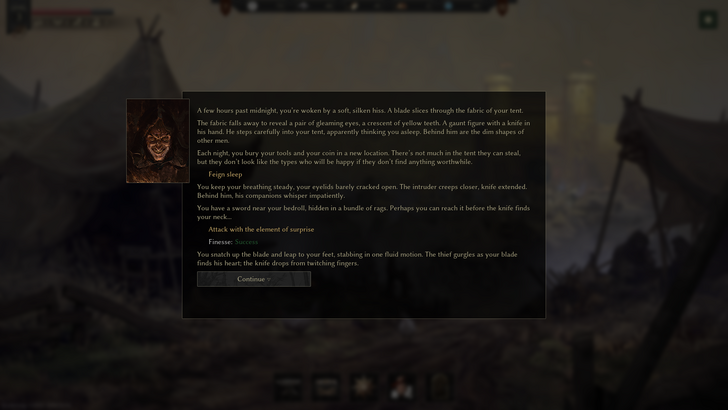
Structurally, the game revolves around a steady day-and-night loop. During the day, we work. Players take commissions. Listen to requests. Then head to the forge and start crafting swords. At night, we explore. This is when we leave the safety of our forge and step into the mystery. We travel across the map, investigate locations, encounter strangers, uncover secrets, and sometimes stumble into danger.
For example, when exploring places like the Lost City, we can run into all kinds of unexpected situations. Sometimes we’ll stumble onto cult gatherings or suspicious rituals, where we’ll need the right stats to escape safely. Other times we might find ourselves stuck in a physical obstacle, like needing enough strength to push a boulder out of the way. Failing means being forced to retreat back to camp, losing time and opportunities in the process.
It’s a simple loop on paper. Work by day. Wander by night. But Bladesong is very good at making that loop feel meaningful, tying everything together. Your nighttime failures or discoveries, affect what you can do the next day. Over time, the loop starts feeling like a cycle where every decision we make is a deliberate choice.
Creativity Is The Progression
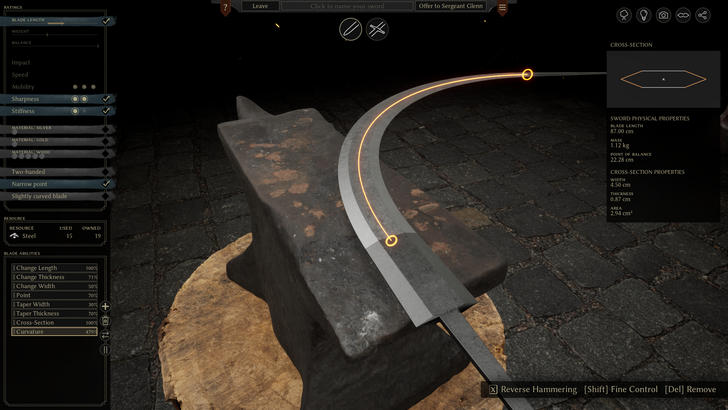
I want to start with the gameplay. Having played Kingdom Come: Deliverance’s Legacy of the Forge, I thought I already had a decent idea of what to expect from a blacksmith-focused system. Something detailed, sure, but still mostly confined to following recipes. Bladesong goes in a different direction. It isn’t extensive in the sense of throwing a hundred overlapping mechanics at you. Instead, it’s extensive in how much creative freedom it quietly hands over.
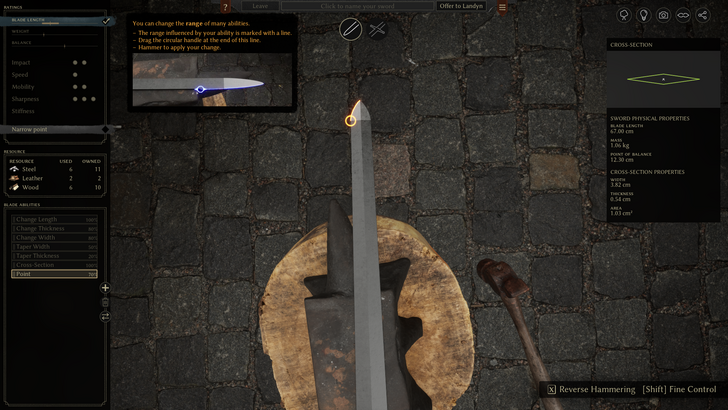
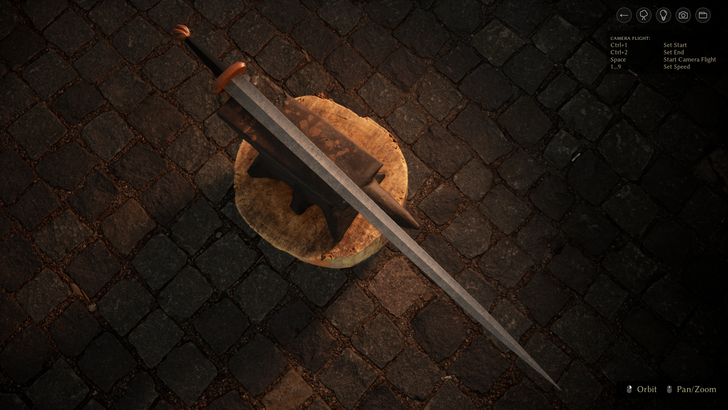
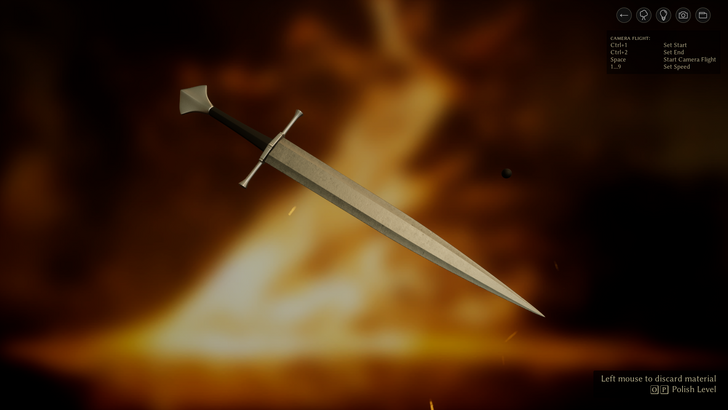
Every time you forge a weapon, you’re not just filling out a template. We start with a raw chunk of steel working our way through a series of abilities and steps that let us shape it however you want. We’re free to craft almost anything we can imagine within the limits of what abilities we’ve unlocked, as long as it meets the client’s requirements. Players can give the blade a subtle curve to improve its balance, or spend extra time decorating the hilt with ornaments.
If something isn’t working, undoing the changes doesn’t make you lose materials, so players are never punished for trying new ideas. Because of that, forging becomes more about solving problems creatively, finding your own style, and learning what works through experience.
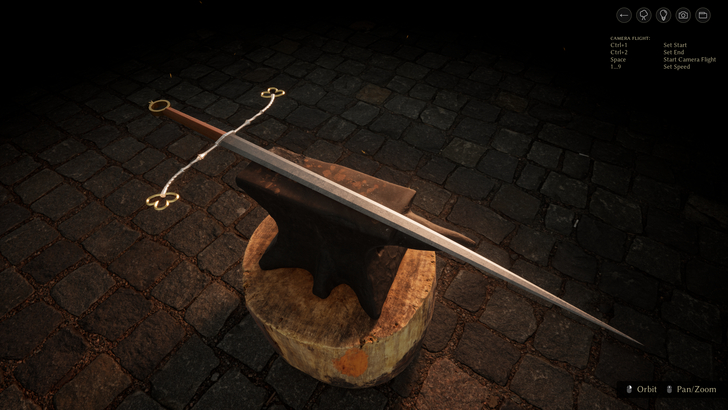
Most commission requirements—like sharpness, balance, or hilt type—are given as ranges rather than strict numbers. And because the game won’t let you finish a commission if the requirements aren’t met, it’s impossible to fail any commission. Instead of wasting materials, players are encouraged to keep adjusting until the sword meets client criteria. Creative solutions like widening the blade to increase sharpness, adjusting the hilt for balance, where experimenting and thinking through your design become a satisfying puzzle.
That philosophy extends to progression as well. In most RPGs, your skill points go into the usual suspects. Strength, vitality, wisdom, dexterity. Or maybe into combat skills, magic trees, stealth perks, you know, things that define how you fight. In Bladesong, all of that funnels into your identity as a blacksmith.
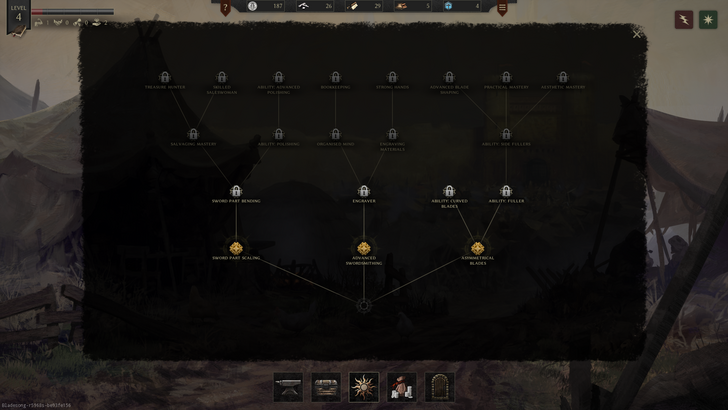
Progression in Bladesong never felt like I was being pushed into a narrow role. I wasn’t building toward being "the guard guy" or "the pommel specialist." Instead, it felt like I was slowly learning the full language of forging. Each upgrade opened up more ways to shape, tweak, and refine my work, while passives made gathering and salvaging materials smoother over time. On top of that, finding books and blueprints kept expanding what I could actually make. The more I unlocked, the more flexible my designs became, to the point where it started feeling like I could attach almost anything to a sword hilt if I was creative enough.
Commissions, Factions, and Materials
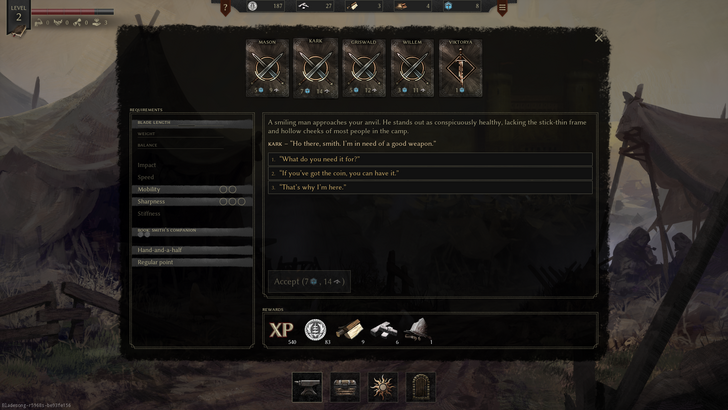
One thing I didn’t expect going in was how much the commissions themselves would matter. At first, they just seem like standard jobs. Someone needs a sword. Someone wants a specific type of blade. But pretty quickly, I realized that most of these commissions come with their own stories. The act of providing a service is even tied directly to what’s happening in the world, especially early on when you’re trying to earn your way into Eren Keep. Seeing how my choices, my designs, and the people I equipped influenced the world around me was impressive. The game acknowledged that our work as blacksmith mattered within the narrative. It made the loop of crafting and exploring feel meaningful in a way I didn’t anticipate.
Once you’re inside the Keep, Early Access currently opens up two factions out of the planned five. If you take on commissions for them, you earn reputation points alongside your usual rewards, which slowly pushes you deeper into their side of the story. So you’re not just choosing jobs based on money or difficulty. You’re also choosing who you’re aligning yourself with, even if the game never spells that out in big bold letters.
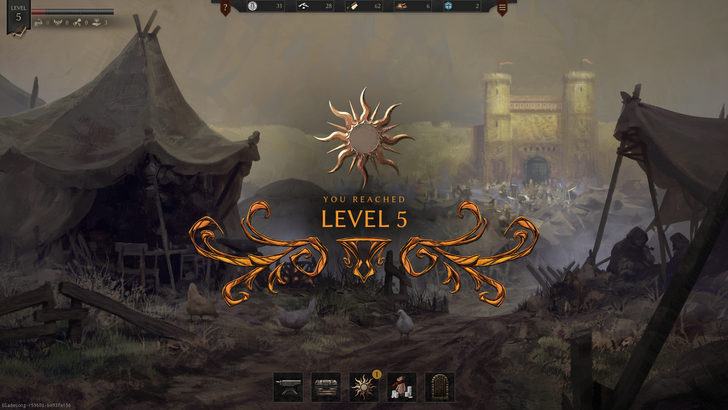
Progression-wise, commissions give you experience, but you can’t just grind them endlessly. Every day, you’re given a limited amount of action points, and each commission costs a certain amount to take and complete. Once you’re out, you’re done for the day. No squeezing in one more job just to level up faster.
Early on, there’s also the very real possibility that you’ll simply run out of materials. Before you unlock your first merchant, your access to steel and components is pretty limited. It’s entirely possible to accept a commission, start working on a blade, and then realize halfway through that you don’t actually have what you need to finish it.
That scarcity matters because it naturally slows your progress and forces you to make decisions about what to focus on, when to explore, and how to approach your work. It turns what could be a simple crafting loop into something deliberate, where planning ahead and prioritizing becomes part of the challenge.
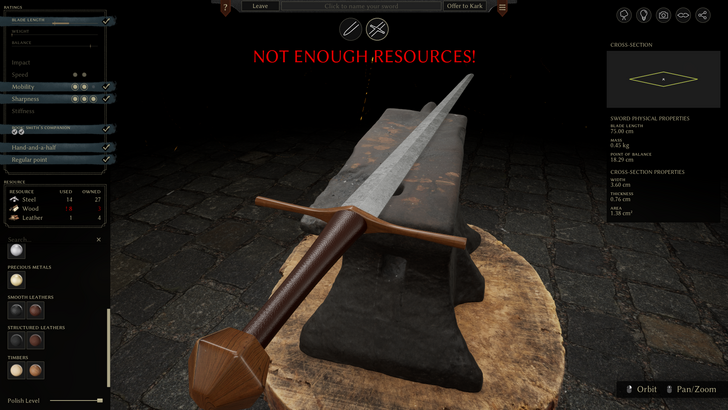
Thankfully, the game doesn’t punish you for this. If you have to leave a commission unfinished, it carries over to the next day. The sword doesn’t reset. Your progress isn’t wiped. Once you get more materials, you can just pick up where you left off. It’s a small quality-of-life feature, but it makes a huge difference, especially early on when resources are tight.
Once you’ve explored more of the map and met the merchant, this becomes much less of an issue. You can visit them during the day whenever you want, stock up, and basically make sure you’re never completely stuck. From that point on, material management becomes more about budgeting and planning rather than pure survival.
Daily Limits and Status Effects
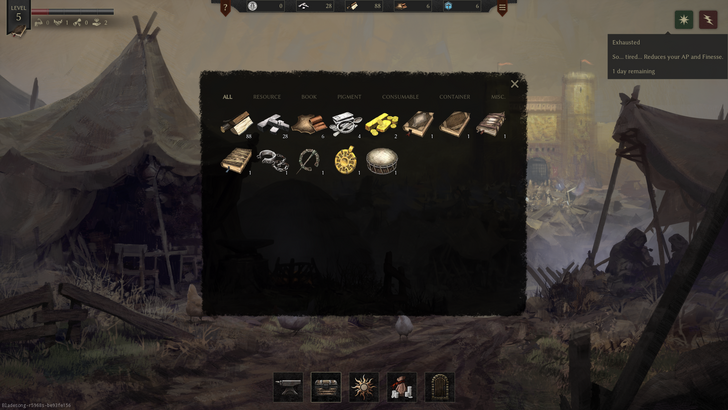
Remember when I mentioned that you only get a certain number of action points each day? Early on, that number usually sits at around eight. That’s your baseline. That’s what you’re working with if everything is going fine. But in Bladesong, everything is NOT going fine.
Your daily AP is affected by status effects, and those come from how you live your life in the game. Some of them are helpful. Some of them are absolutely not. If, for some reason, you don’t get proper rest the night before, you wake up exhausted the next day and start with fewer action points. That immediately limits how much work you can get done. Fewer commissions. Less progress. Slower reputation gains.
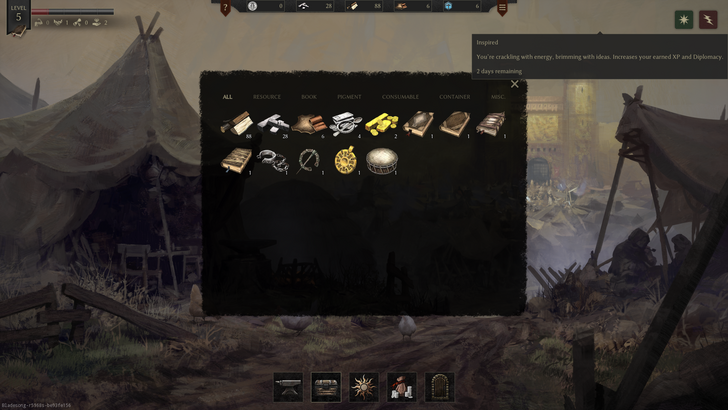
On the other hand, if something good happens, you can end up inspired. When that happens, you earn more experience from your commissions. Same amount of work, better results. It sounds simple, but it changes how you think about your time.
The experience of juggling these small but meaningful limits turns what could be a simple daily grind into something alive. Every decision feels like it has consequences, and even the tiniest choice can shift how your day unfolds. It makes the world feel connected, the story and your role in it feel responsive.
Came for the Crafting, Stayed for the Story
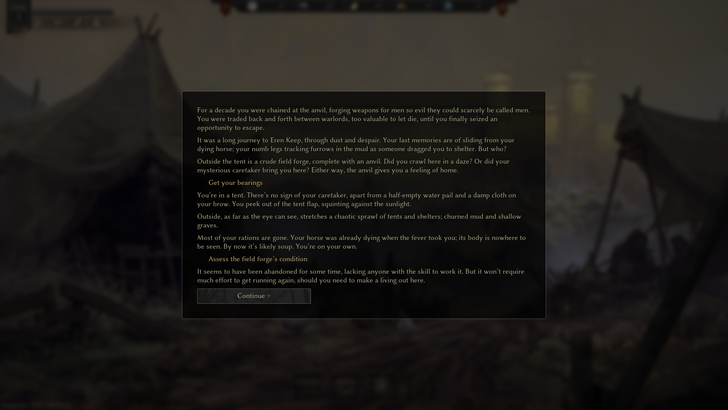
Now, for my last point but definitely not the least: the story. I’ve played a lot of tabletop-inspired RPGs over the years. As a forever GM who desperately wants to just be a player sometimes, I’ve gone through everything from old-school systems to Pathfinder to more modern narrative-heavy RPGs. So when I see heavily inspired TTRPG games, I usually already have a pretty good idea of what I’m getting into.
That’s why I wasn’t expecting Bladesong’s narrative to hook me. On paper, it’s simple. You’re a blacksmith with a past. You arrive in a broken world. There’s political tension. There are mysteries. There are factions. There’s a fragile safe haven in the middle of chaos. None of that is new.
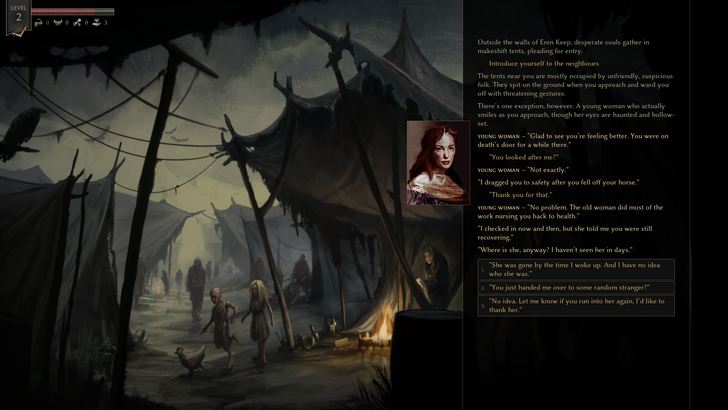
But the way it’s presented works. Our character has a backstory; while it’s not overly detailed with some massive lore dump, it’s introduced in a way that makes it feel personal, like something you’re slowly remembering rather than something being explained to you. And from the start, the game plants questions in your head and refuses to answer them right away.
Who were the Voices, really? Why did they leave? Is the Masked King good or evil? Why did the previous blacksmith disappear? And why does it feel like everyone knows more than they’re letting on? Those questions quietly drive the entire experience.
You’re not just working to earn money or reputation. You’re working because you want to understand what’s going on. Every conversation feels like it might contain a clue. Every exploration segment feels like it could lead to something important.
Now, to be clear, the game is still pretty linear. The choices are there, but it’s obvious that, at this stage of Early Access, a lot of them are being funneled in the same general direction. You’re given options, yes, but you can usually tell that the story is heading toward a specific destination, no matter what.
Normally, that kind of railroading would bother me. Here, I didn’t mind it as much. Because the writing does a good job of making your actions feel intertwined with the narrative, even when the end results are similar. The way characters react to you, the tone of certain scenes, the relationships you build, those things shift based on how you play, even if the main plot beats stay consistent.
I found myself more invested in that story than I expected. As I mentioned before, the core loop is day for commissions, night for exploration and story. The game clearly wants you to enjoy mastering the craft of blacksmithing, and I did. I spent plenty of time experimenting, tweaking designs, and trying to perfect my work. And while I enjoyed the whole process of experimentation and design tweaking, I felt even more compelled to play because I wanted to know what happened next.
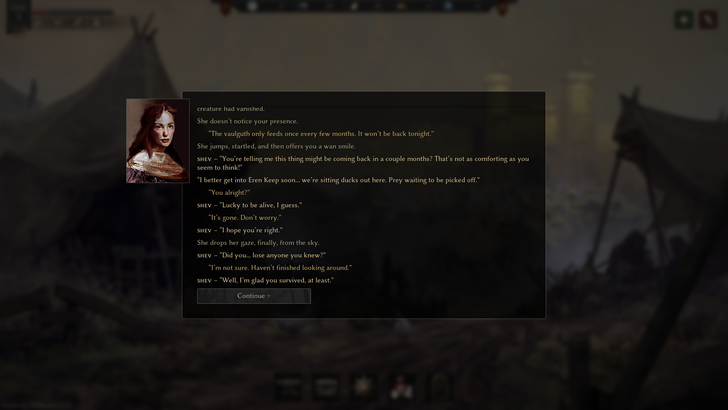
I wanted the next conversation. The next reveal. The next political shift inside the Keep. The next piece of the puzzle. Right now, Early Access only includes the prologue and Chapter 1. And after finishing what’s available, I can say I’m impatient for more.
Impressive for Early Access
At the end of the day, Bladesong isn’t trying to be for everyone. It’s slow, text-heavy, and asks you to read, think, plan, and pay attention. It doesn’t hold your hand, and it doesn’t rely on flashy presentations to entertain you. Most of its appeal comes from its systems, writing, and quiet, immersive world rather than its visuals or action.
If you enjoy narrative-driven RPGs, tabletop-inspired games, or crafting-heavy simulations where your choices feel meaningful, this is absolutely worth checking out. That said, it’s still Early Access. The story is railroady at times. Some systems are rough around the edges, and there’s plenty of room to expand both the technicality of the gameplay and narrative depth. You can tell the developers have a clear vision, but what’s here is only the beginning.
What Bladesong already offers is thoughtful, cohesive, and genuinely promising. There’s potential here for something really special, and even in its current state, it’s already compelling enough to draw you in. Chances are, it’ll surprise you the same way it surprised me.
Game8 Reviews

You may also like...
 |
Kingdom Come: Deliverance 2 Legacy of the Forge Review Action, RPG, Open World |
 |
Rue Valley Review Adventure, RPG, Indie |
 |
Disco Elysium Mobile Review Narrative-Driven, RPG |
 |
Baldur's Gate 3 Review RPG, Adventure |
 |
Of Ash and Steel Review Action, RPG, Survival |
Bladesong Product Information
 |
|
| Title | BLADESONG |
|---|---|
| Release Date | Early Access January 22, 2026 |
| Developer | SUN AND SERPENT creations |
| Publisher | Mythwright |
| Supported Platforms | PC (Steam) |
| Genre | Narrative-Driven RPG, Simulation |
| Number of Players | 1 |
| ESRB Rating | N/A |
| Official Website | Bladesong Official Website |