


As We Descend is a roguelike deck-builder centered around your defense of a city as it descends into the earth. Read our review of its early access build to see what it did well, what it didn't do well, and if it's worth buying when it fully releases!
Everything We Know About As We Descend
As We Descend Story Plot
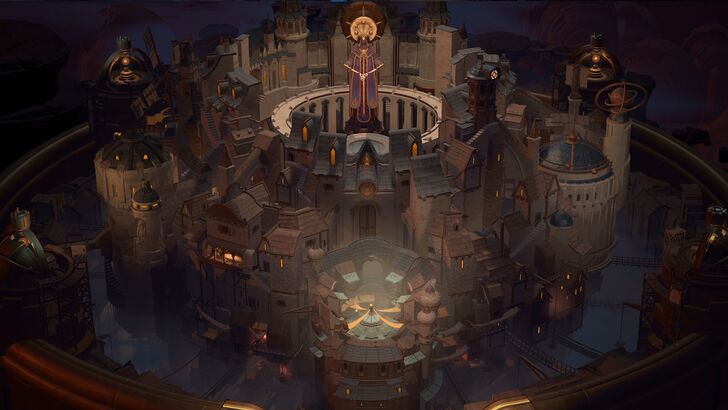
As We Descend places players in the pivotal role of Warden of the Wall, charged with safeguarding a Vault-City teetering on the brink. Tasked with organizing expeditions, recovering vital resources and cargo, and fending off the monstrous forces besieging its defenses, players must strategically command their envoys and units across the vast theatre of the Vault-City’s plunge into the planet’s core.
With a choice of three origins—Votive, Guild, and Sacrosanct—players will have every advantage: the support of the Vault-City’s people, the full range of its services, and the power to ensure that all remain safe As We Descend ever deeper.
As We Descend Gameplay
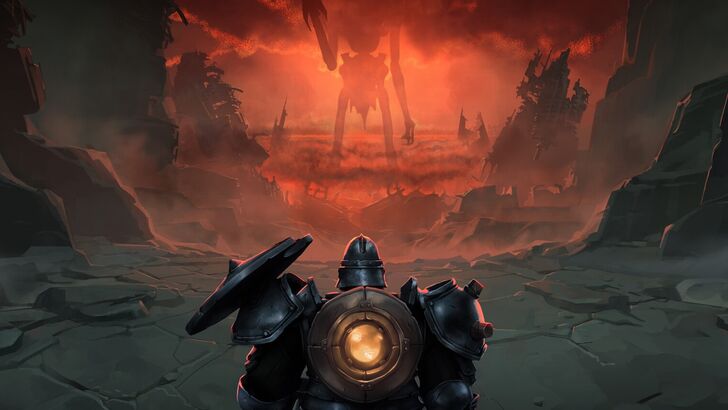
As We Descend centers its gameplay around core tactical roguelike deckbuilding mechanics, challenging players to continually refine their deck with each level while managing the resources needed to do so.
Players alternate between two main strategic theaters: the Vault-City, where they manage envoys, purchase new cards, heal units, unlock tech, and tackle random events for rewards—and the expeditions, where they chart paths through the miasma, battle hostile creatures, and scavenge vital resources to haul back home. What players manage to retrieve shapes the cards and services available to them in the Vault-City going forward.
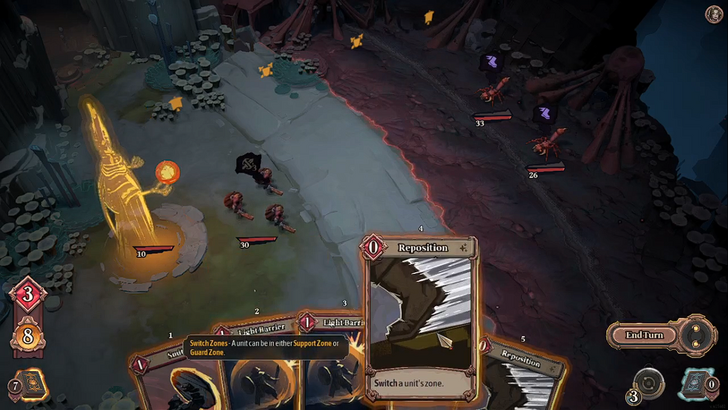
Combat focuses heavily on unit positioning across two distinct zones—Guard and Support—as well as the clever use of keywords like Rend and Armor, and the Stagger mechanic, which allows players to wear down enemies before delivering a finishing blow.
After battle, players can scavenge the field in a high-risk, chance-driven mini-game, spending their limited pool of scavengers to roll the dice on what they recover.
The game ends when the Vault-City’s Lantern—the guiding beacon cutting through the miasma—is destroyed in a siege, bringing the descent to a final, desperate halt.
As We Descend Release Date and Time
Broke Ground for Early Access on May 28, 2025
As We Descend entered its Early Access period on May 28, 2025, for the PC (Steam). The game’s full release date is yet to be revealed, but we’ll update this article with that information as soon as it is available. Stay tuned!
 Steam Steam |
|||||
| Price | Free-to-Play | ||||
|---|---|---|---|---|---|
As We Descend Review [Early Access]
As Deep As Roguelike Deckbuilders Can Get
React however you like, but few games on this earth fire as many of my neurons at once as roguelite deckbuilders. I was there when Slay the Spire laid the cornerstones of the genre and defined it for years to come. I spent sleepless nights tearing heaven a new one when Monster Train dropped—not to mention when its sequel arrived years later.
There’s just something about trimming down a generic toolkit into a synergy engine that makes a healthy sleep schedule entirely optional for me. Almost every major new entry in the genre gets at least a passing glance as I size up my next obsession. Wildfrost, Dungeons & Degenerate Gamblers, Across the Obelisk, SpellRogue—they all get a shot at being the next big one. And now, we turn our eyes to the latest.
As We Descend is a roguelike deckbuilder unlike any other, with as many strata as the earth itself propping up a gorgeously stylized subterranean world, like Fallen London and Warhammer 40,000 had a lovechild in Skyrim’s Blackreach. It’s deep. It’s exquisite. But in what ways, exactly? Well, that’s what this review is here to excavate. So if you’re done messing around in the dirt, we’ve got depths to plumb.
Say Hello to The Vault-City’s Newest Warden of the Wall
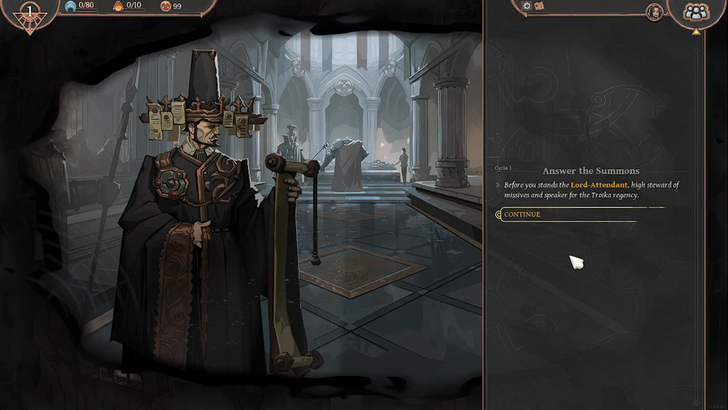
I went back and forth on whether we should kick things off with this game’s story and setting, because, honestly, it’s a lot. But also… not really. It’s the kind of world that thrives on atmosphere and subtext, while simultaneously serving up a visual and thematic feast, like an art gallery you’re far too much of a rube to fully appreciate on the first pass. Still, there’s really no better place to begin than with the player character. And what protagonist doesn’t get saddled with a critical obligation the second the game starts?
You are the new Warden of the Wall. Whether you're part of the church's clergy or a member of Vault-City’s guild—your origin shaping your playstyle—you’re handed the grim duty of managing expeditions beyond the city’s walls and defending against the monstrosities that inevitably follow. It’s a thankless role, one you can’t exactly turn down, but it’s not something you’re expected to handle alone. The Vault-City and its inhabitants are yours to leverage—if you have the resources to barter, the cunning to negotiate, and the tactical sense to send out your precious few envoys wisely.
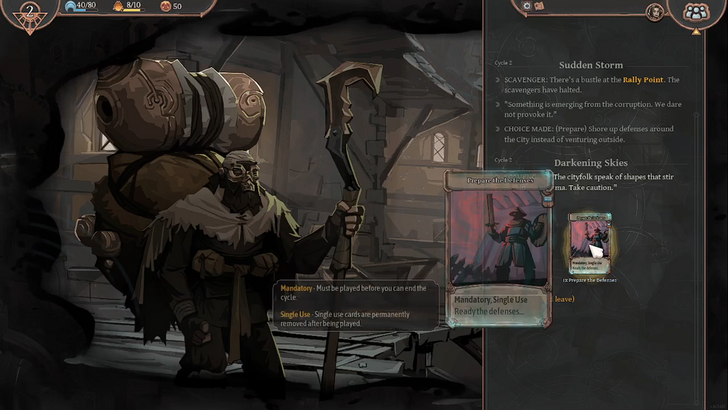
Already, this is a pretty cool setup for your character, though the world-ending odds stacked against you aren’t exactly groundbreaking. I mean, Monster Train has you squaring up with God at one point. What is unique here is how a run actually plays out. And it’s funny I bring up Monster Train, because structurally, As We Descend is surprisingly similar, especially since the Vault-City itself travels with you, and it’s you venturing out and making choices to spice up your deck.
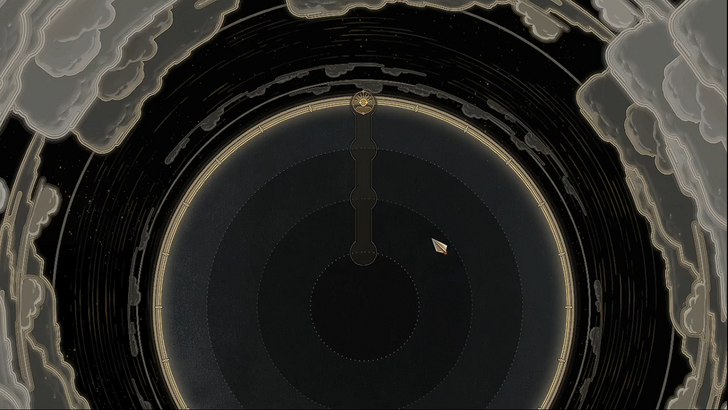
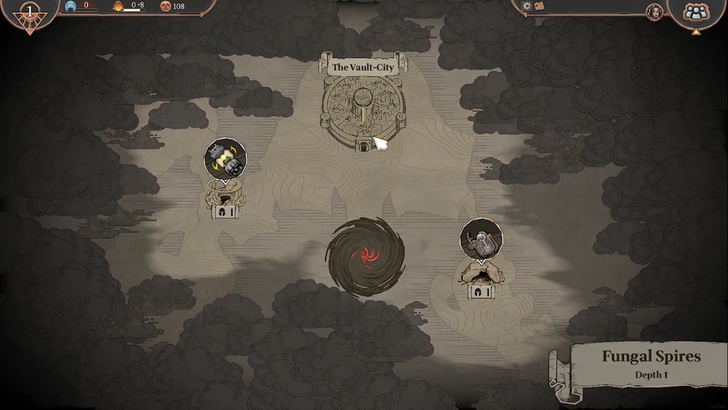
Here’s how it works: each run is divided into different depths. The Early Access build features only three for now, but it’s likely the full release will include many more. Each depth is segmented into Cycles—periods of time during which the Vault-City drills further into the earth. Each Cycle gives players a chance to spend their cards within the Vault-City, trading resources to gain buffs from its many people, services, and facilities.
You can also dispatch Envoys, Allies, and other specialized liaisons to resolve encounters across the city, like the random events at the Market Plaza or the health and healing-focused ones near the Caretaker. Once you’ve handled your affairs at home, you’re left with Expedition cards, which allow you to venture into the miasma and recover more resources for the next Cycle.
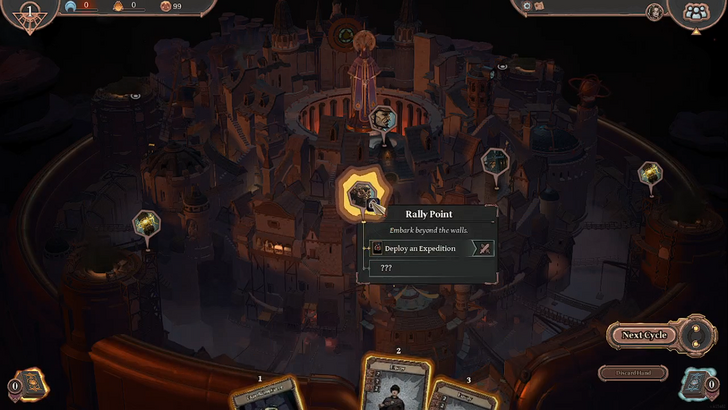
Once a Cycle ends, the next begins—redrawing your Envoys, Expeditions, and any other cards earned in the previous round. Sometimes, though, you won’t be allowed to go on Expeditions. That’s because monsters have reached the gates, and you’ll need to defend the city—or it’s game over. Lose your Lantern—that towering, suspiciously god-shaped statue at the heart of the Vault-City, and also your one true lifeline—and it’s lights out.
It’s during these Expeditions and siege events that the other half of As We Descend’s core gameplay loop comes to life. And boy, does it run deep.
You may also like...
 |
Pokémon TCG Pocket Review | On the Rise to Be the Very Best! Pokémon TCG Pocket’s focus on community and the social experience shines through, and with highly anticipated updates like trading on the horizon, it’s set to grow as an engaging, social experience, much like Pokémon GO. |
 |
All in Abyss: Judge the Fake Review | Danganronpa As a Waifu Poker Game All in Abyss: Judge the Fake is not the most honest game at the table, but it sure knows how to put on a show. The boss battles and Danganronpa-style executions steal the show with thematic gimmicks that keep each match feeling unique, even when the game’s balance falters. |
One of the Most Complex and Rewarding Deckbuilder Combat Systems I’ve Ever Seen

While As We Descend’s city-side resource management can be summed up in a reasonably sized paragraph, its combat system? That’s another story. I could never fully capture the absurd intricacy of this thing without constructing a wall of text tall enough to keep out the Mongol horde—but I’ll try.
Boiled down to its most important elements (and glossing over plenty of nuance that’s better experienced than explained), As We Descend’s combat revolves around three core mechanics: Zones, Keywords, and Stagger. Technically, Stagger is a keyword—but it’s THE keyword, and it comes with its own little subsystem to obsess over during every fight.
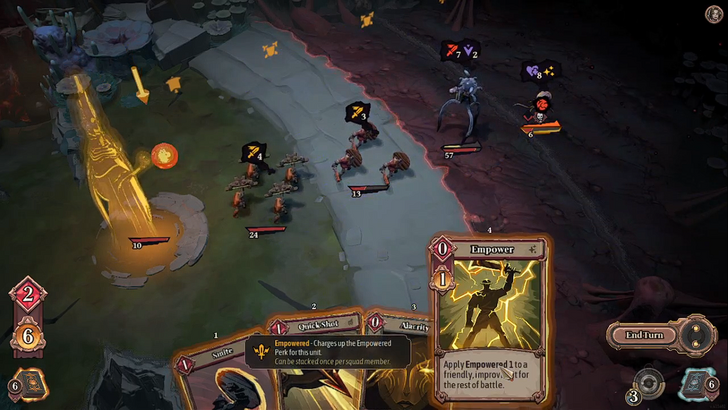
Let’s start with Zones. The battlefield is split into two sides—yours and your opponent’s—and each side is further divided into two Zones: Guard and Support. These Zones play a key role in how combat unfolds.
Units in the Guard Zone are the frontline—they’re hit first by default attacks that don’t specifically target the Support Zone, allowing them to soak up damage for the rest of your party. Only melee units can auto-attack from Guard (and yes, auto-attacks are a thing), though ranged units don’t face the same restriction. Some card effects also only trigger when the unit using them is in the Guard Zone.
The Support Zone functions similarly, but with a few important differences. If there are no units in the Guard Zone, default attacks spill into the Support Zone instead. And, just like with Guard, certain card effects only activate when used from this backline. Managing your position between these two Zones is crucial—there are no traditional party positions or ranks here. This is how you control who takes hits and when.
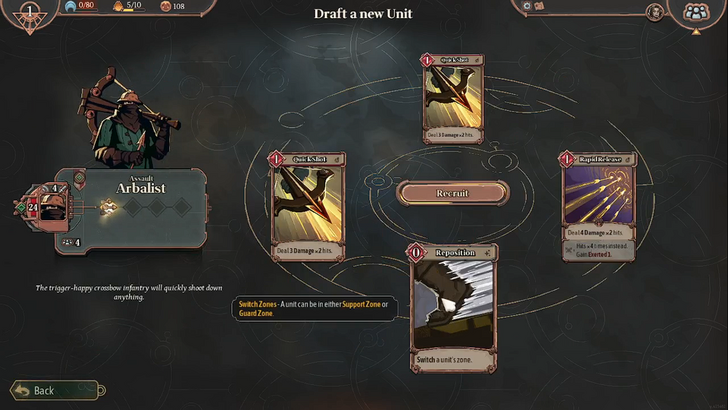
Then we have the Keywords—the building blocks of every card. The deck structure here is wildly different from other deckbuilders (we’ll get to that later), but for now, just know that each card has keywords that define its effects. Barrier grants a temporary shield. Burn applies a damage-over-time effect. There are too many to list, but it’s the synergy between them that keeps the whole engine humming.
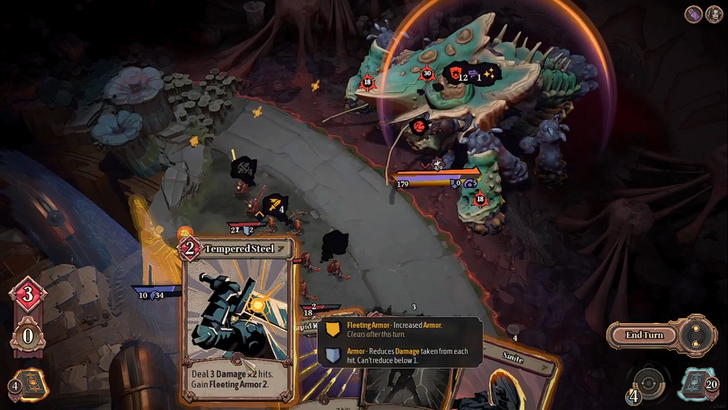
Now let’s talk about the crown jewel of the system: Stagger.
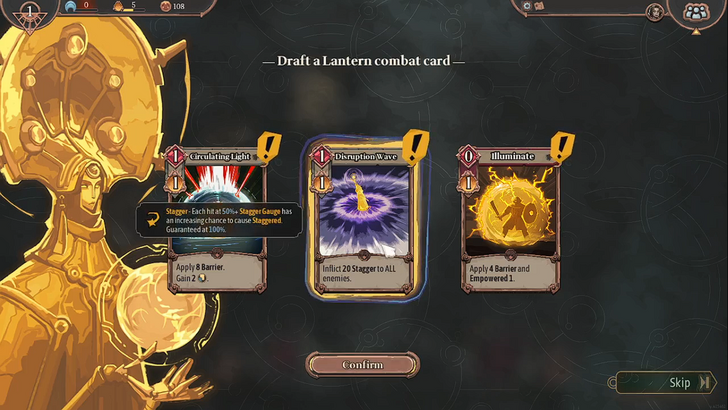
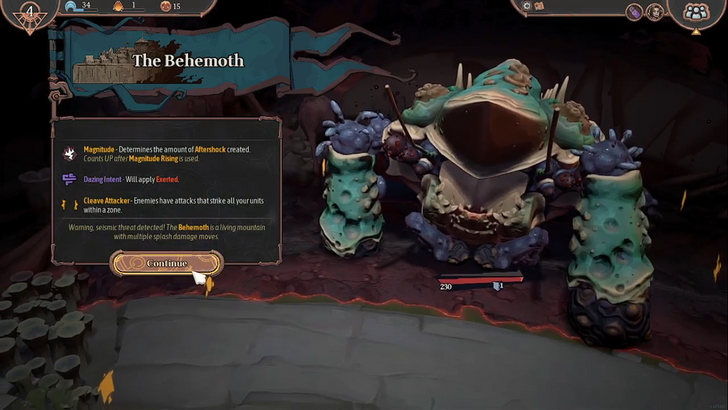
Stagger is more than just a status effect—it’s practically a game mode within a game. It builds up on enemies either when they take hits or when it’s directly applied as a status effect. Once an enemy is staggered, they’re stunned for a turn, and their body reveals critical nodes—weak points that can be targeted for 50% bonus damage per hit.
But that’s not all. Some of these weak points don’t just take extra damage—they have their own HP bars. Destroying them can inflict debilitating debuffs or even strip an enemy of entire mechanics, turning a drawn-out tactical slog into a straightforward damage race you’re suddenly favored to win.
Each fight operates on a limited action economy, controlled by an energy system not unlike Slay the Spire’s. But As We Descend throws in a twist with a secondary resource called Favor—a sub-energy system that doesn’t refresh at the start of each turn. Hell, it doesn’t even refresh after each fight. Instead, you have to earn Favor while roaming around the Vault-City. It’s a rare and valuable currency used to power your most devastating abilities, and managing it wisely is often the difference between scraping by and utterly dominating.
Honestly, I’ve barely scratched the surface. I haven’t even touched on the auto-attacks, perks, techs, debuffs, the distinction between Lantern and Unit Cards, the Rune ability, or the overwhelming buffet of status effects—enough to fill an appendix by the time this review’s over.
But that’s exactly the point I’m trying to build up to: As We Descend is deep, complex, and wholly synergistic. And it’s all the better for it.
 |
Yu-Gi-Oh! EARLY DAYS COLLECTION Review | Pot of Mid Maybe next time Konami will summon a more exciting lineup, but for now, we’re left with a handful of cards that, while decent, don’t offer much beyond a trip down memory lane. |
 |
Card-en-Ciel Review | If Raves Were a Card Game Card-en-Ciel is a roguelite deckbuilder that teeters on the edge of feeling more like a rhythm game. Its audiovisuals are so peppy and animated that it’s hard to associate them with the dark tones roguelikes and roguelites usually embrace. |
Never Too Much Going on At Any Point

As We Descend walks a razor-thin line between complexity and confusion—and so far, it hasn’t stumbled. That’s thanks to the brilliance of its overlapping combat and city-building systems, each stacked with its own internal layers that interconnect in meaningful ways. Despite the sheer number of moving parts, there’s never too much going on at once.
A big part of that comes down to the game’s excellent pacing and onboarding. The interactive tutorial does a great job of easing players in, and the tooltips—abundant and thorough—ensure that no keyword or mechanic is left unexplained. Every system feeds into the next, reinforcing and rewarding strong play rather than simply piling on more to manage.
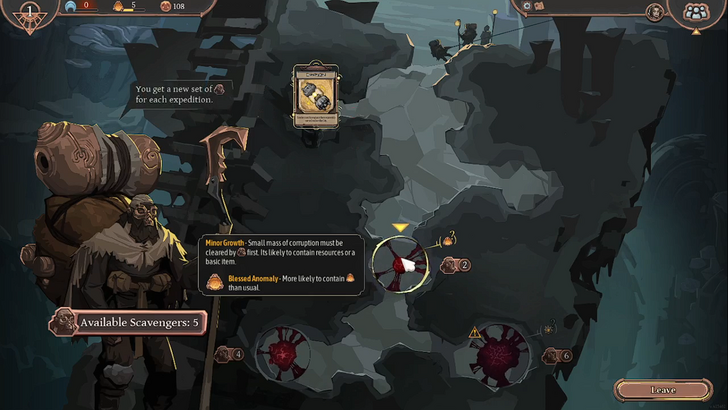
There’s no better showcase of that synergy than the scavenging loop. After each fight, players can send limited-use scavengers to pick over the battlefield in a chance-based mini-game, prioritizing which resources to bring back to the Vault-City. Those resources, in turn, feed into the next Cycle, showing up alongside your Envoy and Expedition cards. From there, they can be spent on city services—whether it’s upgrading unit skills, adding new cards, or healing wounded allies.
Fight well, scavenge more. Scavenge well, specialize better. Specialize better, and you fight even smarter. Fight smarter, and you’re more likely to survive and scavenge. And so the loop begins anew. It’s a tight, rewarding loop, one capped off by clever boss encounters that use the Stagger system to great tactical effect. It makes As We Descend not just a competent deckbuilder, but a distinctive one, especially in a genre where true originality is increasingly hard to find.

It’s all about synergy and keeping that positive feedback loop running strong, and As We Descend nails it. Those decks I mentioned earlier? They’re tied to individual units and shuffled together at the start of each run, making synergy easier to achieve through smart compartmentalization. Events back in the Vault-City? They come with Baldur’s Gate 3-style skill checks, where your Envoys’ stats directly influence your success rate, giving real weight to how you build them and rewarding smart investments with extra resources. Every system feeds into the next, and the game has carved out just enough space for them to breathe without turning into a min-maxing nightmare.
Style Takes Over Story, But Not Substance
There’s one very minor hiccup worth noting in As We Descend, and I chalk it up more to the game’s Early Access state than to any real flaw in its design. For all its striking presentation—with a moody, London by Lamplight vibe drenched in gothic ecclesiastic steampunk (which I’m personally a huge fan of)—and its deeply satisfying mechanical depth, there’s not much explicit storytelling going on, at least not yet.
Almost everything is subtextual. We aren’t given clear motivations for why the Vault-City is drilling ever downward, what exactly the miasma is, where these corrupted creatures came from, who runs the city, or how its factions operate. The lore is there, technically, scattered across flavor text, but it follows a Soulslike model—fragmented, cryptic, and spread across item descriptions and unit entries. Personally, I prefer a more narrative-forward approach—one where the world-building seeps in around a solid core of character-driven storytelling, rather than the other way around.
Still, I’m confident the devs can bring more of that into the full release, along with additional depths, factions, cards, and boss fights. Even in its current form, As We Descend is about as deep as a roguelike deckbuilder can get without becoming more trouble than it’s worth. It’s layered, rewarding, and constantly engaging, if a little too lost in its delivery sometimes.
This isn’t the next Slay the Spire—not yet. It’s not finished. But as the saying goes: as above, so below. Where the Spire rose and carved out a new subgenre, the Vault-City is burrowing into the earth, ready to bring the genre to depths yet unseen.
Game8 Reviews

As We Descend Product Information
 |
|
| Title | AS WE DESCEND |
|---|---|
| Release Date | May 28, 2025 (Early Access) |
| Developer | Box Dragon |
| Publisher | Coffee Stain Publishing |
| Supported Platforms | PC (Steam) |
| Genre | Strategy, Card, Roguelite |
| Number of Players | 1 |
| ESRB Rating | RP |
| Official Website | As We Descend Website |