




| God of War Sons of Sparta | |||
|---|---|---|---|
| Release Date | Gameplay & Story | DLC & Pre-Order | Review |
God of War Sons of Sparta is a PlayStation exclusive Metroidvania set in the ancient lands of Laconia, back in Kartos’ youth. Read our review to see what it did well, what it didn’t do well, and if it’s worth your money.
← Return to God of War Sons of Sparta main article
God of War Sons of Sparta Review Overview
What is God of War Sons of Sparta?
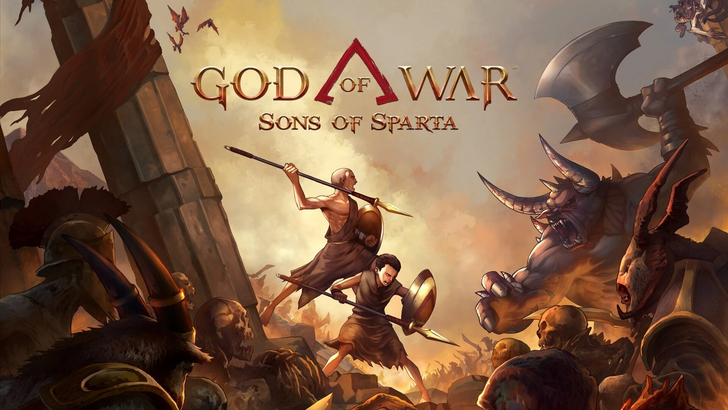
God of War Sons of Sparta is a PlayStation-exclusive metroidvania spinoff of Santa Monica Studio’s historic God of War series. Set in the ancient past of Kratos’ youth, long before his many future trials, Sons of Sparta tells the story of Kratos and his brother Deimos as they take part in the Agoge, a rigorous martial training program for Spartan children.
God of War Sons of Sparta features:
⚫︎ 2.5D pixel art graphics
⚫︎ Classic metroidvania combat
⚫︎ Skill trees and upgrade mechanics from modern GoW games
⚫︎ Puzzle and precision platforming mechanics
⚫︎ Fully-voiced dialogue
| Digital Storefronts | |||||
|---|---|---|---|---|---|
 PS PS |
|||||
| $29.99 | |||||
For more gameplay details, read everything we know about God of War Sons of Sparta's gameplay and story.
God of War Sons of Sparta Pros & Cons
| Pros | Cons |
|---|---|
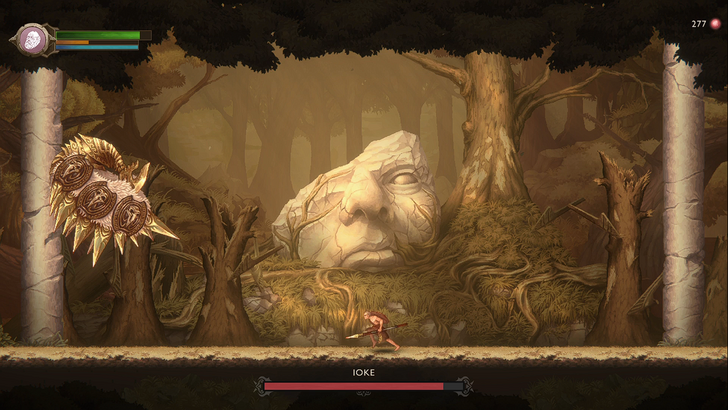
 Phenomenal Pixel Art Borrowing the Best from the Later GoW Games Surprising Depth and Difficulty Phenomenal Pixel Art Borrowing the Best from the Later GoW Games Surprising Depth and Difficulty |
Does Nothing for the IP More Pointless Collections |
God of War Sons of Sparta Story - 7/10
Sons of Sparta’s story is competent, well-paced, and entertaining, but it also lacks the usual bombast of other God of War titles (yes, even the later ones). It also offers little value to the IP itself, save for a few lorepoints to add to the already confusing timeline of Kratos’ journey. It’s basically an extra chapter of the GoW journey that you need not experience to appreciate everything else, but it is at least a well-made one.
God of War Sons of Sparta Gameplay - 8/10
Though unassuming at a glance, Sons of Sparta has surprising depth in its mechanics and gameplay features, borrowing skill trees and upgrades from modern GoW. The Metroidvania aspects are engaging and well-designed, if meandering, and the progression is simple and effective. The collection aspect is unnecessary but optional. Overall, it’s nothing special compared to the heights of the IP or genre, but you won’t regret playing it.
God of War Sons of Sparta Visuals - 9/10
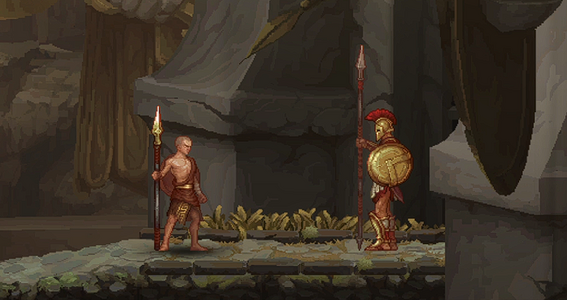
Sons of Sparta’s biggest draw is its pixel-art adaptation of GoW’s distinct visual style, particularly its early days, when Hellenistic fashion was all the rage. The characters and backdrops pop despite the new style, though the limitations of 2D space do make it far less impressive than every other cinematic moment the other GoW games had to offer.
God of War Sons of Sparta Audio - 8/10
Sons of Sparta’s fully voiced dialogue does a lot for its audio quality, especially because they got TC Carson voicing Kratos again. It’s rather strange hearing old Kratos be gentle and doting as he narrates the story for his daughter, stranger still hearing a younger voice actor mimic Carson’s cadence, but it ties together to a neat audio experience in conjunction with the game’s music. It’s neither grand nor epic enough to go any higher, but you’ll love it all the same.
God of War Sons of Sparta Value for Money - 8/10
$29.99 is more than a fair price for Sons of Sparta. Sure, it carries the AAA pedigree of the GoW IP, but the devs and publisher didn’t take that as a sign to bump up those prices to match. It’s far from perfect, but the game’s status as an official spinoff made sure that it has good quality in game design, content density, and enjoyment, all for an affordable price.
God of War Sons of Sparta Overall Score - 80/100
Sons of Sparta feels unnecessary, though not outright bad. It’s a prequel some fans may have wanted, just not in this form, leaving it minor in the broader God of War saga. Taken on its own, however, it’s polished and well designed, with strong mechanics, striking visuals, and excellent voice work. More indulgent detour than essential chapter, it still matches the series’ recent highs in most respects.
God of War Sons of Sparta Review: Indulgent, Insignificant, Impressive
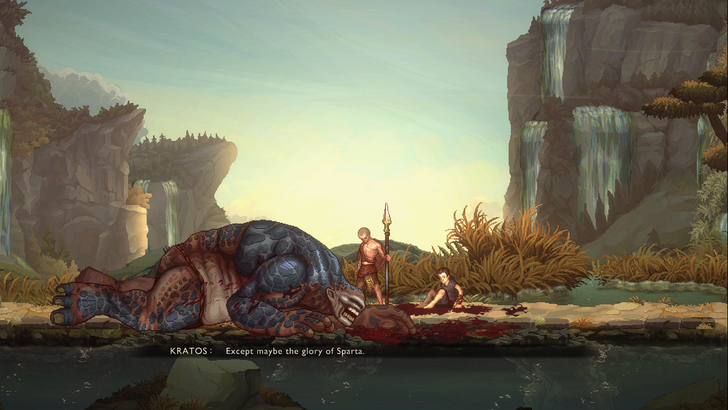
If you had told me back in 2023 that the next God of War game would be about Kratos’s younger days in ancient Sparta, I’d have been excited for the three years since then. If you followed that up by telling me that said game would be a Metroidvania, I’d be a bit confused but still on board.
I know that’s how it’d go down because that was my reaction when Sons of Sparta was dropped without warning on a random State of Play event. I wasn’t disappointed, but I certainly wasn’t ecstatic or excited. I knew that, for me, more GoW was a good thing no matter what form it came in, but I also knew that this series hadn’t had an entry like this since God of War: Betrayal flopped back in 2007.
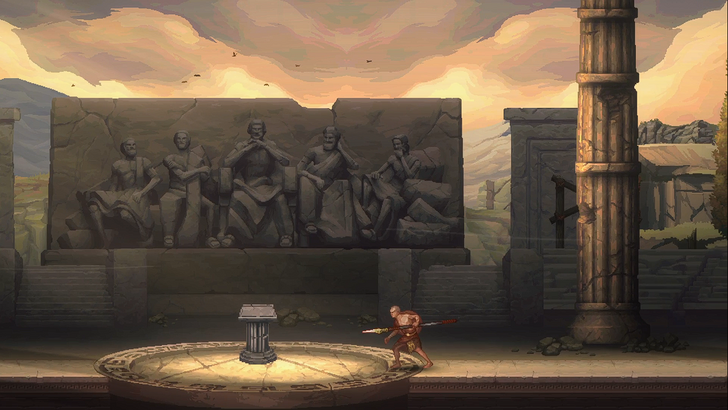
Considering the series’ history with these kinds of mechanics, I wasn’t holding my breath for Sons of Sparta. In fact, I pitied it. It had the unfortunate position of being a new GoW game, but not the one anyone wanted or expected. I thought this game would be stillborn and awful on arrival, but all of these fears proved unfounded.
Sons of Sparta is indulgent and not really a key piece to the narrative God of War has been weaving through the years, but it is still a game by Santa Monica Studio. As such, the quality of the game’s mechanics, visuals, audio, and overall implementation all shine to a AAA level, despite not costing anywhere near as much. There’s much to cover, so let’s shake our fist at the gods one more time and begin where Kratos’ journey took its first steps.
A Tale of Two Brothers in Arms
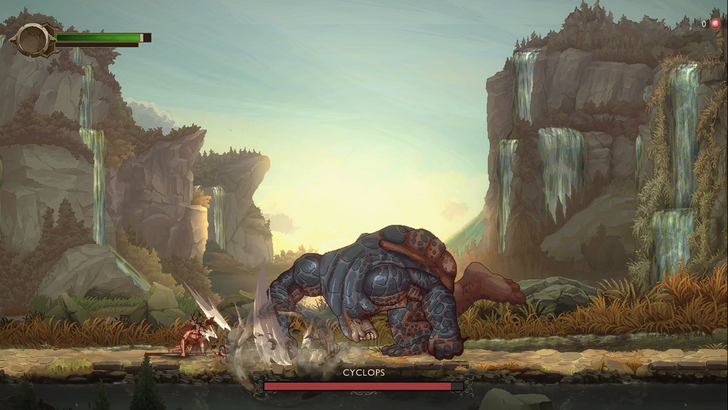
As you may have guessed from the title, Sons of Sparta tells the tale of Kratos and his brother Deimos, long before they became the Ghost of Sparta and the unwilling captive of the gods, respectively. The whole story takes place in Laconia, the provincial region of Sparta, only it’s as steeped in ancient myth and legend as the rest of the early God of War titles.
The framing narrative for this game involves Kratos’s first child, Calliope, who, as a result of being disagreeable with her mother, is being told a tale of discipline and harsh lessons by Kratos himself. As the Spartan general recalls his days as a youth in Laconia, the game begins in the most God of War way possible. But we’ll get to that later; let’s discuss how this game’s story is both really well-made and entirely pointless in the grand scheme of GoW’s sweeping narrative.
First off, I’m a huge fan of how the devs framed this entire escapade with Deimos. Considering what happens to him and Kratos down the line, it would’ve been difficult to tell this tale otherwise. I won’t spoil how this tale of two brothers eventually ends, but know that the framing narrative of this being a memory being told as a cautionary tale isn’t an accident, and is a rather elegant solution on the devs’ part. It’s also just nice to see a callback to the first game with the mention and inclusion of Calliope.
Secondly, lore-wise, there is some value to this game that GoW buffs like myself would appreciate. Kratos and Deimos’ difficult childhood was never a secret to us fans, but to provide this much detail and story to an otherwise blurry period of the timeline does help straighten things out chronologically while also fleshing out the world.
The unfortunate final thing to say about this game’s entire story, however, is that it’s a few years too late and was introduced at a time when Kratos hadn’t just finished his Greek arc, but his Norse one, too. This entire spin-off is two story arcs removed and doesn’t serve anything more to the IP than the code it’s written on.
Is this damning? Absolutely not. The game’s story is acceptable in a vacuum and can even be entertaining at times; it’s just unnecessary, and that’s a sentiment you’ll see me throw around a few more times in this review, because that’s Sons of Sparta in a nutshell. On its own, the game’s story is rather standard, if enlightening. This makes it nothing to write home about either, so it settles at just above the middle-ground for quality.
Back on track with how this game begins in the most God of War way possible, let’s discuss the game’s mechanics by going over your first encounter: a cyclops.
Hacking and Slashing the Spartan Way
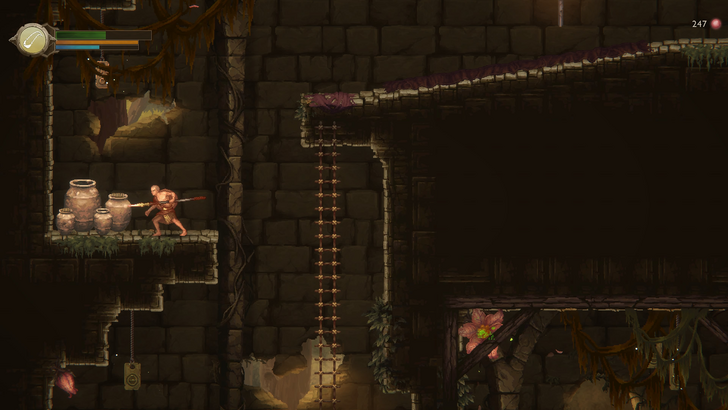
Your first fight begins the moment Kratos reminisces from the start screen. Unfortunately for you, it’s a boss fight, and it precedes any sort of tutorial. You’re expected to figure out the controls mid-fight and eventually win with Deimos pulling a finisher to save the day.
Questionable choice, as it’ll undoubtedly trip up a game journalist or two, but there really is no better way to start a game from an IP known for its high-powered boss battles. Once you figure out what to do, the crux of this game’s systems makes itself clear as a proper tutorial section on your way back to the gates of Sparta plays out.
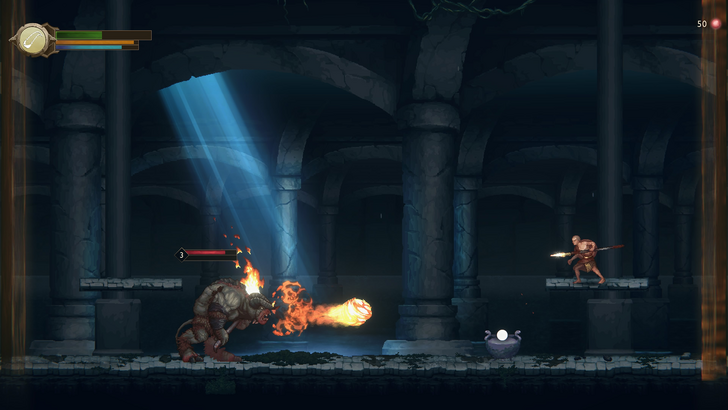
Sons of Sparta is an RPG metroidvania in the same vein as something like Dead Cells or Blasphemous, putting players through fast-paced combat and platforming gauntlets in equal measure as they explore a rich world full of enemies and secrets. Of course, since this is God of War, it isn’t as simple as jumping and slashing enemies until red orbs pop out—though you do end up doing a lot of that.
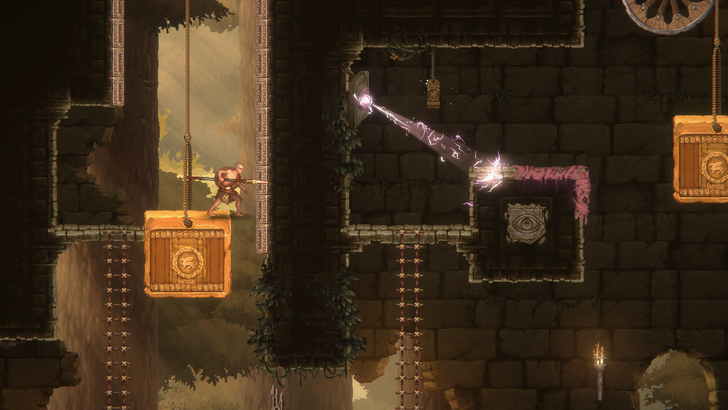
No, there are also puzzles, collectibles, and progression-based boons waiting for you between the dungeon crawl sections. Special traversal mechanics gate your progress to certain parts of the map, and earning new ways to fight is usually the answer.
On the topic of fighting, Sons of Sparta’s combat operates using the basics of metroidvanias, with its 2D combat including jumps, long and short ranged attacks, and activatable skills. Unlike other metroidvanias, though, the game has special "Spirit Attacks" you can trigger to increase enemy stun bar, which will then allow you to finish them off if ever filled.
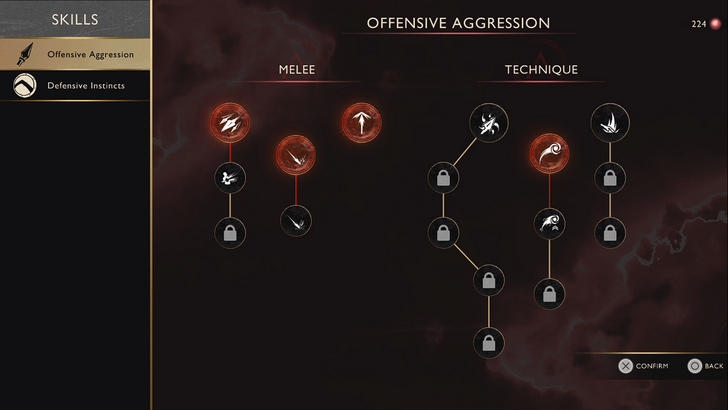
Yes, stun bars. As in, the very same ones featured in God of War (2018) and God of War Ragnarok that let you execute stunned enemies. That’s not the only mechanic Sons of Sparta borrowed from those later games, as your combat options can eventually evolve through the game’s skill trees, which encompass your basic attacks, defensive, and evasive options. These can be upgraded using those Red Orbs you’ve been collecting from enemies in much the same way you can for those two GoW games I previously mentioned.
That’s the first thing you’ll notice about this game once you get playing; though it’s set as the earliest point in the IP’s timeline, long before God of War, it’s actually designed with the series’ modern principles in mind. Yes, this is despite the unusual choice of genre, and honestly, it kinda works.
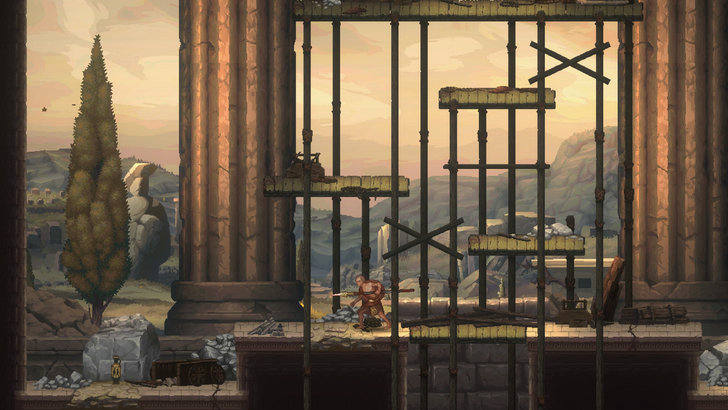
I feared the metroidvania format because I didn’t think it would fit. I expected progression to be linked to procedural generation, maybe new weapons every run, or even just stat boosts per upgrade, like how they did for the early GoW games. While fun for everything else, it feels out of place for God of War, where Kratos is usually limited to a set of specific weapons that can be upgraded through a skill tree if we’re talking the reboot games.
Fortunately, that is exactly what they did for Sons of Sparta, though to a lesser extent. I’m a huge fan of this implementation, as it grants the game a surprising and welcome depth that would’ve been missed otherwise.
Exploring Laconia, One Collectible and Upgrade at A Time
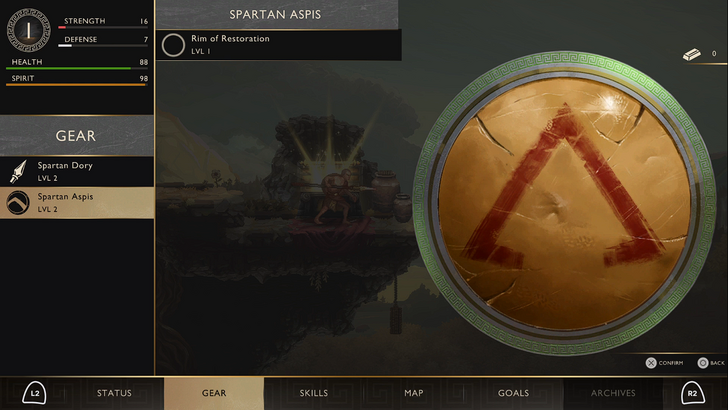
Moving on to the game’s other mechanics, I want to talk about the game’s many, MANY collectibles. These collectibles serve as incentives for exploring the map and bypassing particularly difficult puzzles or combat encounters. The modern GoW games had these too, with both GoW (2018) and GoW Ragnarok having their own collection pages and literal hundreds of things to gather throughout the map.
While this worked for those games, providing additional bonuses, questlines, and mechanical unlocks for each collectible set, it just seems like an artifact of adaptation for Sons of Sparta. A relic of a system borrowed for a genre it doesn’t necessarily fit with, these collectibles serve little more purpose than currency and clout, and provide no bigger dopamine hit than what you’d expect.
The world is less open in Sons of Sparta, and frankly, a lot of the collectibles are easy to find while being pointless to boot. I really don’t see a reason for it to be among the systems the devs borrowed from modern GoW titles, but at least another of said systems was adopted alongside it.
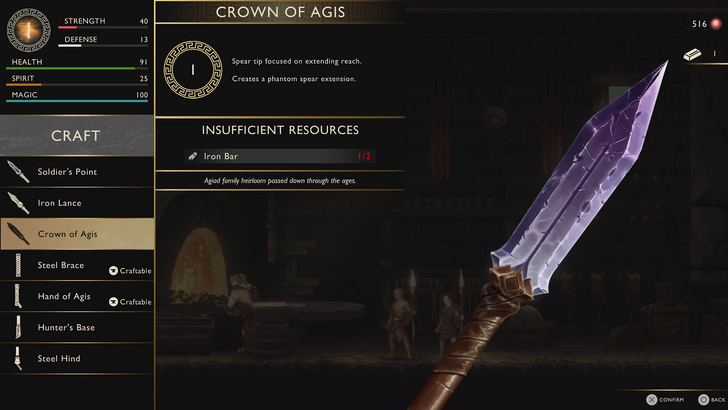
Weapon upgrades! You love them, you need them, and they can make any action game better if done well. I was a huge fan of how the modern GoW games did their weapon upgrade system, letting you gather your own materials to have some crotchety blue guy craft them for you. It’s pretty much the same here, and to my surprise and delight, the guy giving you upgrades is just as ornery and terse as Brokk was.
Each upgrade pushes you toward a certain build, be it a focus on dodging, parrying, evading, or continued attacks, etc., though you do only have two weapons that can be upgraded this way, at least at the start. Again, more of the good modern bits were applied to a lesser extent. Definitely a plus for the game’s score, and that’s not the last of what it has to offer.
God of War Like We’ve Seen and Heard Before (That’s a Good Thing)
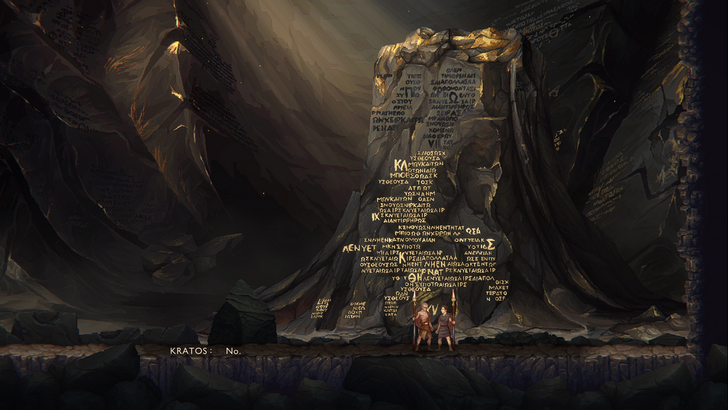
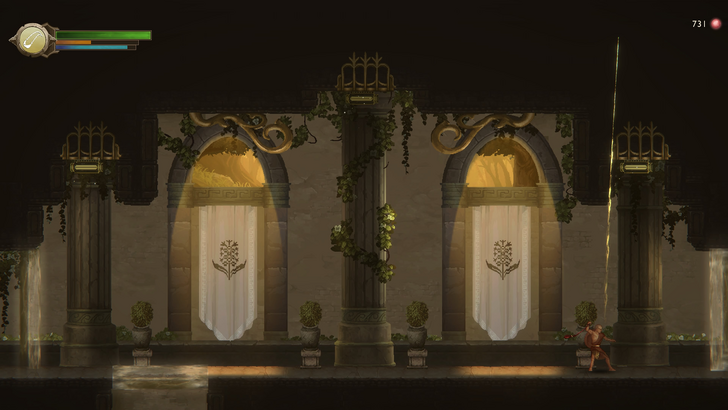
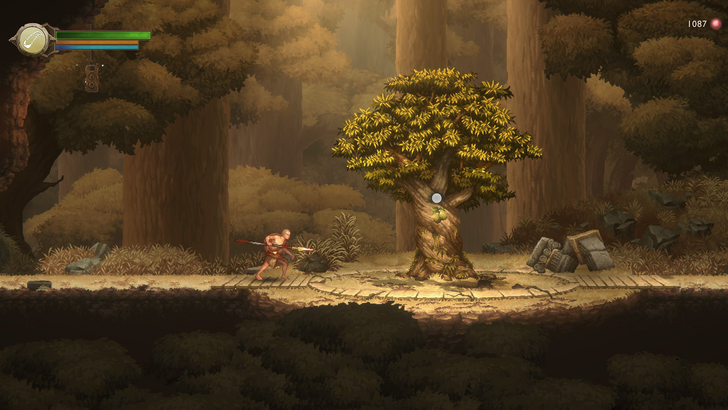
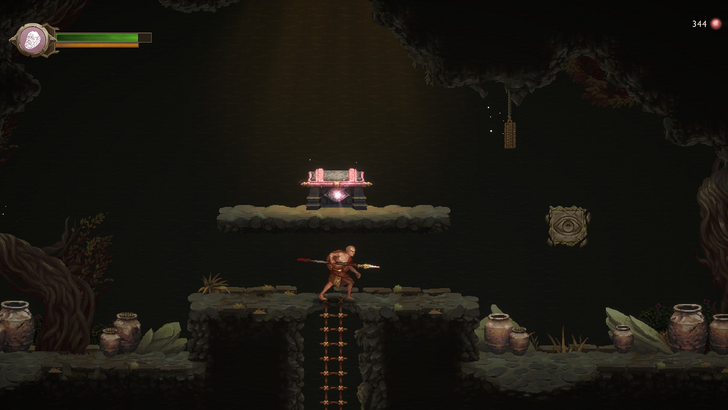
God of War has always been cinematic. Be it through city-destroying boss fights, overtly loud dialogue courtesy of TC Carson, or literal cinematic masterpieces with the later games. I figured the limited scope and POV of metroidvanias would somewhat diminish the IP's identity, but I was sorely mistaken. Sons of Sparta’s pixel art is a sublime, 2.5D creation that I should’ve expected from the makers of FNAF: Into the Pit.
From the parallax of the multiplanar settings to the fluidity and complexity of the static backgrounds, this game’s visual chops were by no means lessened by the fact that it’s 2D. In fact, I’d even go as far as to say this looks better than the first couple of God of War games, though I think I’ll chalk that up to technical limitations at the time.
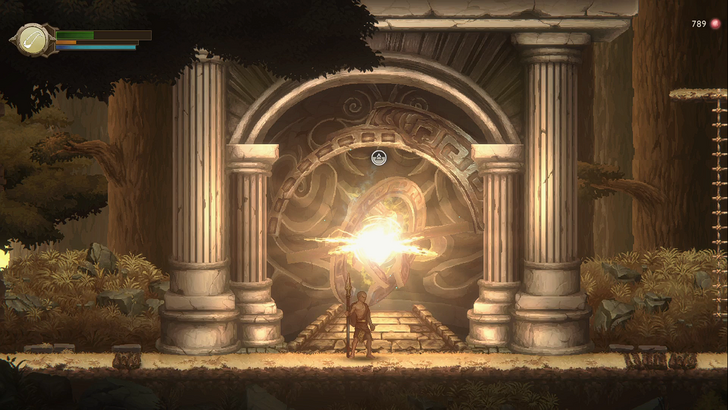
Oh, and the game’s sound doesn’t fare any worse because TC Carson’s back and booming as the voice of Kratos, or at least the older one narrating. The younger Kratos has a new VA, but they’re killing it too. The fact that all the dialogue is voiced sells this game’s quality alongside the equally epic backing tracks that many have come to expect from the GoW games.
Together, these sights and sounds betray a level of quality that a lesser game simply can’t match. This is a Santa Monica Studio game, and you won’t forget it.
Does Nothing for the IP
Now, while games should be reviewed and judged based on their merit alone, not all games exist in a vacuum. Specific, unique criteria exist for specific contexts in which a game is released. In the case of a prequel to a longstanding series, one should judge the value of the prequel based on how well it rounds out the holes in its timeline’s history and its significance to the other, precursor sequel games.
For Sons of Sparta, that value is rather low. As I’ve alluded to earlier, the best narrative value this game can provide is regarding the particulars of Kratos and Deimos’s troubled childhood before the latter’s abduction. Nothing that comes after is really recontextualized, and the game could’ve never been released without much consequence to the lore as it is established.
This isn’t necessarily a bad thing, considering the game as a product is very well made, but it’s something to consider if you’re buying this as a fan of the game’s continuity, lore, or universe. If you’re just here to play a banging Metroidvania, though, then this game has your back.
A Spinoff in Every Sense of the Word
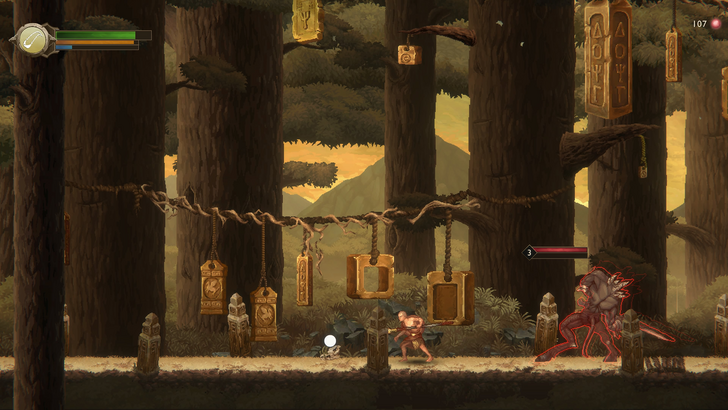
Overall, Sons of Sparta is a spinoff in the purest sense of the word, and I don’t mean that derogatorily. It’s a quality game with some real punch behind it in most respects. The gameplay is modern and drawn from the IP’s latest entries, and the visuals are superior in animation, quality, and technique, and the sound is carried hard by the original voice cast and quality soundtrack.
Sadly, its existence is largely inconsequential, and doesn’t make as big a splash in its own lane as it ought to. Insignificant, some might call it. Indulgent for the lorehead but not for anybody else? Perhaps. Impresive? Absolutely.
Is God of War Sons of Sparta Worth It?
Worth the Red Orbs
At $29.99, God of War Sons of Sparta is a AAA game masquerading as a AA one, which isn’t a very common thing to see nowadays. The excellent gameplay, visuals, and sound all make it very worth the price, with the plain story not affecting its quality much, apart from alienating it from significance in its own timeline.
That last bit isn’t gonna cost you anything or diminish from the value of the game as a product, though, so barring some low replayability due to the inherent formula of a Metroidvania like this, I’d say this game is worth the Red Orbs.
| Digital Storefronts | |||||
|---|---|---|---|---|---|
| PS |
|||||
| $29.99 | |||||
God of War Sons of Sparta FAQ
Is God of War Sons of Sparta Canon?
Yes. According to the game’s developers, Sons of Sparta is a canon part of the official God of War timeline, as confirmed by the game’s developers on a PlayStation Blog post.
How Do I Unlock Fast Travel in God of War Sons of Sparta?
Fast travel can be unlocked in God of War Sons of Sparta by entering and completing the trials of specific divine temples around the map. Found in the basement of each divine temple, such as the Temple of Apollo and the Temple of Hestia, these fast travel portals can let players teleport from one temple they’ve already visited to another.
Game8 Reviews
You may also like...
God of War Sons of Sparta Product Information
 |
|
| Title | GOD OF WAR SONS OF SPARTA |
|---|---|
| Release Date | February 12, 2026 |
| Developer | Mega Cat Studios |
| Publisher | Santa Monica Studio |
| Supported Platforms | PlayStation 5 |
| Genre | Action, Adventure, Platforming |
| Number of Players | 1 |
| ESRB Rating | ESRB T |
| Official Website | God of War Sons of Sparta Official Website |